Marketing

See Our Blogs

Explore insights on SEO, AI, and digital marketing strategies designed to help your business grow, stay visible, and adapt in a constantly evolving online landscape.

Beacon_Icon_resouse

Over the last few years, there has been an uptick in people searching for mental or behavioral health services. The online movements that encourage people to speak openly about issues they’re facing have made some feel better about asking for help. 

While this shift in societal perspective is great, there is now a huge disparity between behavioral health professionals and people in need of help. Often, people searching for support may not know what to look for. 

So, with the rapidly growing industry and people looking for your services, it’s time to jump on the trend. Here’s a guide on why now is the best time to invest in digital marketing and how to do so effectively.

Are you not sure where to start with your marketing plan? Learn how Beacon Media + Marketing has helped mental health professionals create an effective marketing strategy.

Why is There Behavioral Health Market Growth? 

Several factors can contribute to why there has been a rise in behavioral health market growth. As stated previously, the societal acceptance and push for help have left some feeling more comfortable seeking help. 

Another factor has been a reaction to the pandemic where some may have realized issues they were dealing with, or it arose during that time. No matter the reasoning, it’s clear that the industry has faced tremendous growth and is seemingly continuing to rise. 

The market’s growth was seen with an 11.3% rise in 2020. It was projected that the behavioral health industry would grow from USD 77.62 billion in 2021 to USD 99.40 billion in 2028. 

Many people with behavioral health issues such as substance abuse, alcoholism, or eating disorders also face mental health problems. So even if someone may not know to look for behavioral health services, mental health professionals may lead them in that direction. 

According to a 2017 study, over 15% of American adults have at least one behavioral health disorder. Despite this large number of people diagnosed with a behavioral disorder, only 14,6% of adults had used mental health services in 2013. This is a significant disparity in people receiving help for their disorder. 

So how can you help close that large disparity? Marketing your behavioral health services to make yourself available to the public is the best way. 

What Are the Benefits of Marketing Your Behavioral Health Services?

Choosing to market your behavioral health services is a big step in growing your practice, clinic, or facility. It’s a way to bring brand awareness to those who may need your services. When you’re marketing, it works to connect you with potential clients. 

Although connecting with people that you can help is the main highlight of marketing, you have a few other benefits. The following are some of the benefits you can get when effectively marketing your behavioral health practice. 

1. Gain Clients

The most notable benefit is the growth you’ll see in gaining clients. Most people associate marketing with a way to get new clients or customers for your service or product. It’s a way to create brand awareness that will bring in people looking for the services you are providing. 

2. Hire New Staff

When you’re gaining clients, you’re growing in a way that may need more staff on your team. Marketing your services can help you find qualified candidates to fill positions and help more people in your area. The income you may receive can help fund the expansion as you offer more help in your community. 

3. Open Other Locations

Another great benefit to marketing your services is that when you’re gaining new clients, you’ll be able to open other locations. It benefits you as you see more clients seeking your services, and you’ll be another option for people in other areas. Most people look for services in the area they live near so that you can provide excellent health care to more people in need with more locations. 

4. Expand Your Services

Hiring new staff or opening up new locations allows you to expand your services. Right now, you may only be able to help people with substance abuse, but with more behavioral health professionals on your team, you can provide more services. You can look forward to offering more services to your community so people have every facet of help that they may need available to them. 

5. Get Qualified Leads

If you’re effectively marketing and have an updated website with all your current services, it can help separate the people who don’t need your help. People should easily tell which services they can get with your practice, clinic, or facility all online. This will lead to fewer phone calls and more success in treating current and new clients. 

Do you need help creating a marketing strategy? Learn how Beacon Media + Marketing can help you. 

How to Take Advantage of the Behavioral Health Market Growth

A few ways to gain new clients with little marketing, including a therapist directory listing. However, this will only be so effective. 

Many people search online for their mental or behavioral health services. They may occasionally use a recommendation from their primary physician but typically go online to find what they’re looking for. 

In other words, you need to ensure that your behavioral health practice, clinic, or facility is SEO-optimized. It will help make you a top search result, and one of the first resources people look at. 

So, what marketing elements should you add to your strategy? The following are a few ways to utilize marketing to reach your target audience and gain new clients. 

1. Website

Screenshot of Alli home page

Your behavioral health website should be updated with all current services, locations, contact information, and any other information people need to know. When your website reflects the current state of your practice, clinic, or facility, it ensures no confusion about the services you may provide. 

It’s also suggested that you’re transparent about what people need to know. This can include whether you take insurance, which is a big concern for many.

You should also ensure that your website design is up to date. When websites look old, people are less attracted to your practice and may leave the site at a high rate. So, create a website design that is appealing and also reflects the brand of your behavioral health practice. 

2. Local SEO

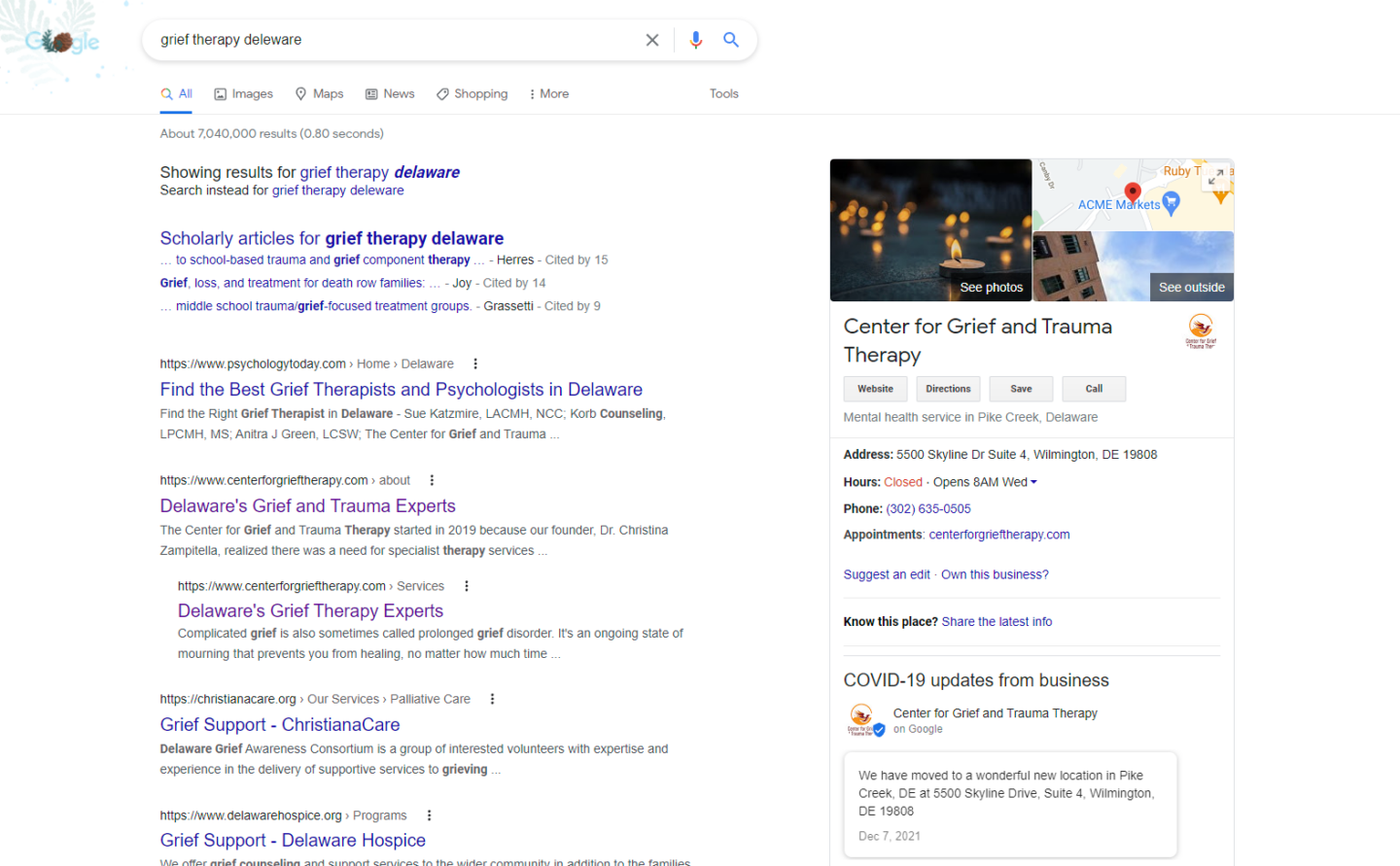
Woman looking at Center for Grief & Trauma Therapy Google My Business

One of the most important elements that you need to include in your marketing strategy is how well you’re hitting local SEO. It’s essential to have this since many searches for services near their area. 

A way to show up for local searches is by enrolling the physical location of your practice, clinic, or facility into Google My Business. When people search for behavioral health services, the location of your practice will appear at the top of the search. It will also include an information card with your hours, address, contact information, and peer reviews. If you’re an online-only service, you won’t be able to use this function and should consider other methods of hitting SEO goals. 

Another way to have excellent local SEO is to include city or state names on your website. When they’re included in your website’s headers or subheaders, it flags the search engines as a possible result for what someone is looking for. Even including the location names in your blogging can help boost the local SEO of your practice. 

3. Blogging
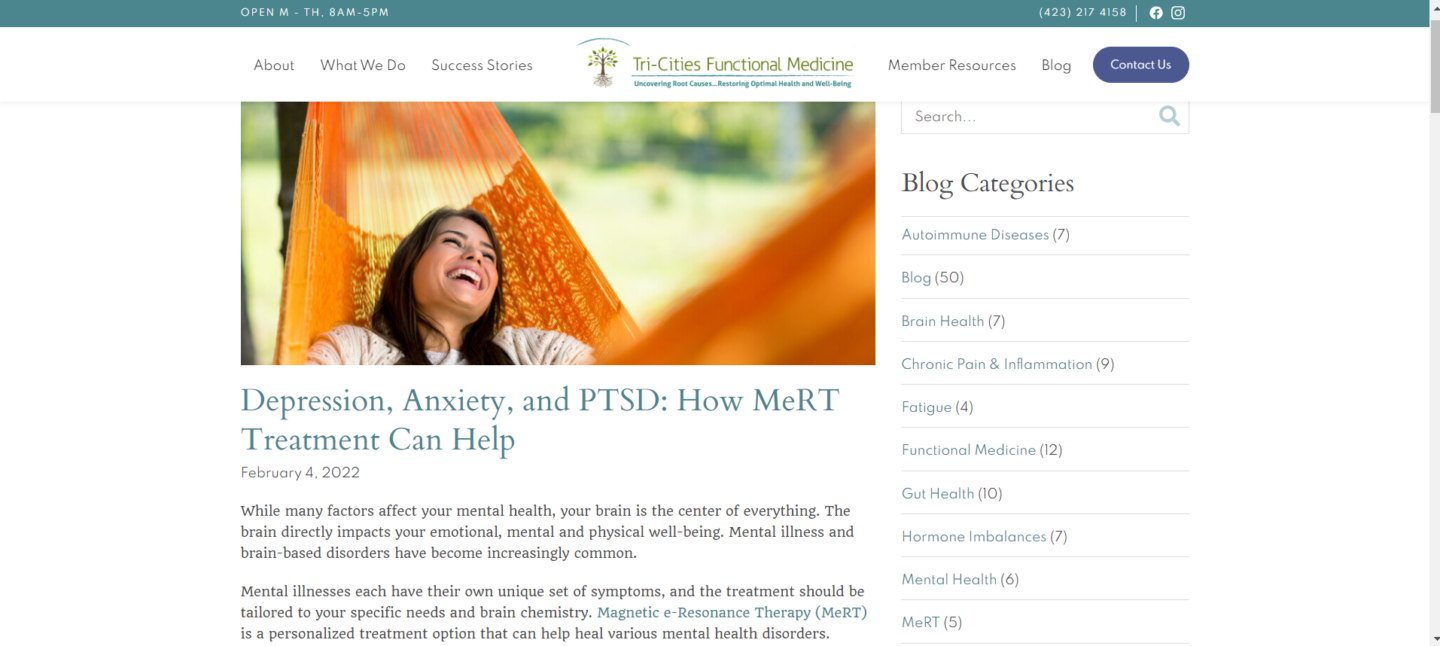
Screenshot of Tri-Cities Functional Medicine website

Blogging can be one of the best ways to reach your target audience. Your blogs can be a resource for people that are looking for help. 

When they search for a specific question regarding your behavioral health specialist, you can answer those through blogs. Your blogs will be a way for people to get educated and see that you’re an outlet for receiving help. 

Another benefit to blogging is that people will see the educational aspects and see that you’re a qualified professional that can help them. You can also use blogs as a way for people to learn more about your practice, clinic, or facility. 

4. Social Media
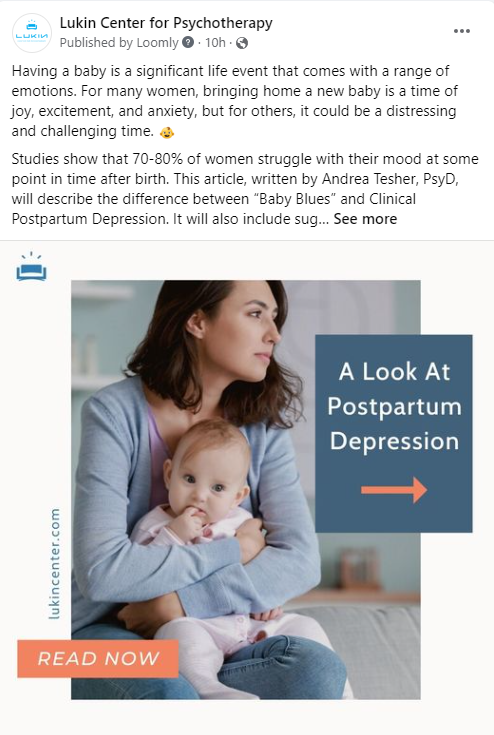
Screenshot of Lukin Center Instagram post

Social media can be one of your biggest marketing tools. People can use it to promote their brand or show people more about themselves. 

For your practice, clinic, or facility, there are a few key elements that you should focus on with your social media, including:

  • Consistent branding
  • Educational videos or posts
  • Getting to know you
  • Promotion of brand and events

Using social media is a great way to reach a new audience that you may not otherwise. If you’re providing quality content, people will be more likely to like and share it with others, bringing in more brand awareness. 

Why Should You Use a Behavioral Health Marketing Agency? 

Hiring a digital marketing agency is a great way to put the focus back on your clients. We know that marketing is time-consuming and needs much attention. But the work that you do as a behavioral health practitioner is essential for helping those in your community.

When you choose to get help with your marketing, it’s a way to prioritize the work that you’re passionate about. You won’t need to use as much time and effort when trying to gain new clients and expand your practice, clinic, or facility.

Beacon Media + Marketing should be your first choice when hiring a behavioral health marketing agency. We often work with health care professionals that see an improvement in their practice through their brand and new clients. 

At Beacon Media + Marketing, we can provide several services that you can choose from. Some of our services include blogging, social media, paid ads, branding, graphic design, website design and development, SEO optimization, and video production. 

With our help, your practice can reach new levels of community support. We’ll take care of the marketing while you help those in need of behavioral health services. 

Are you ready to see how Beacon Media + Marketing can help? Get your free consultation! 

You have several options when it comes to marketing your mental health practice. You can do the marketing yourself, hire someone in-house to do it, hire a freelance marketer, or utilize a digital marketing agency. 

While the option of keeping it in-house might be appealing, it could limit the growth of your practice in the long run. Marketing effectively can take a lot of money and time. And having a heavy workload with your clients may hinder your availability to market yourself. 

So, what would be your best solution to this problem? Here are ten benefits of hiring a digital marketing agency for your mental health practice and why investing in marketing your practice is essential. 

Are you interested in how Beacon Media + Marketing can help your mental health practice? Learn more about what work we’ve already done and how we can help you!

Does Your Mental Health Practice Need To Do Digital Marketing?

Marketing your mental health practice online is crucial for gaining new clients. The demand for mental health professionals is seemingly through the roof these days. But it can still be difficult to find the right clients that match your specialty. 

While adding your services in a therapist directory listing is a good start, this isn’t the most effective way to gain new clients. Creating a strong online presence is your best option for investment. 

Most people look online when trying to find a mental health therapist that can help them. In other words, your practice must be listed as one of the first places that they can seek help from. When you invest in digital marketing properly, you’ll see a greater return on your investment. 

Being online is the gateway to connecting with new clientele. However, you need to ensure that your website and brand are top quality since it is the first impression people will have of your practice. So, when you have an effective online presence with a great website, social media, blogging, and brand, you’re more likely to draw people into your services. 

You can benefit from digital marketing because you’ll gain new clients. But the real benefit to marketing your services is that you’ll be able to help more people than you would otherwise. It’s a way for people to know that you’re a resource for them and that you can help change their life positively. 

What Are the Benefits of Hiring a Digital Mental Health Marketing Agency?

Now that you know why you should invest in marketing your services let’s talk about the benefits of hiring a digital mental health marketing agency. 

While you are great at your job, that may not mean that you will excel at marketing. It’s an entirely different field and can often feel overwhelming. There are many moving pieces that need constant attention, and marketing is an ever-evolving field that requires a lot of research and technical know-how to succeed. 

So, using a digital marketing agency such as Beacon Media + Marketing will allow you to grow your practice in unbelievable ways. The following ten benefits are just a few highlights of why hiring a digital marketing agency for your mental health practice can be the best solution for experiencing substantial growth and getting the highest ROI.

1. Get Professionalism and Expertise

Professionalism and expertise illustration

One of the biggest benefits of hiring a marketing agency is getting the highest level of professionalism and marketing expertise in the services you choose. Agencies often include a whole team of marketing experts who have the combined skill and manpower to provide a wide range of services very well. 

A skilled mental health digital marketing agency will help you solidify your brand, create a personalized based on your marketing goals, and produce high-quality content that stands out. This level of quality brings a new level of professionalism to your practice. When people look up your practice, they’ll see how well put together it is and feel drawn to you. 

It’s also great to have expert insight into what marketing strategies work well and what doesn’t. Having a team of experts allows you to focus on your clients while we take care of the rest. You won’t be required to learn every nuanced thing but rather utilize multiple resources to get the job done effectively. 

As a digital marketing agency, we’ve helped many clients achieve amazing results. Read one of our client case studies to see what we could do for your practice:

2. Widen the Talent Pool

Widen the talent pool illustration

When working with an agency, you’re using a whole team of talented people. Most people aren’t excellent at all things marketing. So, an agency has a collection of talented people in different areas such as graphic design, blogging, social media, and website design and development. 

In other words, this ensures that your marketing consists of high-quality work all across the board. It won’t be lopped-sided with your social media being the best over everything, but rather a well-rounded collection for your practice’s brand. 

3. Gain New Perspective

Gain a new perspective illustration

While no one knows your business as well as you, its easy to get stuck in your own perspective on what you have to offer. A digital marketing agency can provide a fresh perspective on how to best represent your brand and attract the right kinds of client to your doorstep.  

At coinciding with the last benefit, with a digital marketing team, you have access to a whole collection of valuable perspectives. From website design to paid ads campaigns, each marketing expert will have something unique to offer to your marketing efforts. 

At Beacon Media + Marketing, our team works together to create strategies and product work that represents your practice well. We work together on projects so we can get new ideas and perspectives. In other words, our next great idea for your practice is a collective effort.

4. Stay Up To Date

Stay up to date illustration

Your job is to help your clients with whatever mental health problem they may face. Our job is to stay on top of the trends and understand how to get your practice to its fullest capabilities. 

Utilizing a marketing agency ensures that your practice’s online presence is with or ahead of the trend. Your brand will never look old, and we ensure that we’re getting you into every marketing space that will benefit you. 

Do you need help staying on top of trends? Our social media team at Beacon Media + Marketing can help you!

 5. Stay Involved in the Process

Stay Involved in the Process illustration

Just because you’re hiring a digital marketing agency for your mental health practice doesn’t mean that you’re giving up all control. You’ll still be able to give final approval on all projects and even work with your agency to find new ways to grow.

Even though you won’t need to invest as much time into your marketing, you’ll still have a high level of control and interaction if that’s what you’d like. We’re here to support you in the ways that you need so your practice can reach its full potential.

6. Focus on Growing Your Practice

Focus on Growing Your Practice illustration

Since effective marketing takes a significant amount of time, you may not be able to do it yourself. It can turn into you spreading yourself too wide and not allowing focus on the important things. 

When you get help from a marketing agency, it allows you to focus on your clients and grow your business. We take care of the marketing to get new clients to you, so your mission becomes providing quality services that change your clients’ lives. You’ll gain excess time that can be invested back into your patients and continue to grow your practice. 

7. Save Money with Outsourcing

Save Money with Outsourcing illustration

Many people think that keeping their marketing in-house will save them money. They’ll try to do it themselves, hire a marketer, or have another staff member take it on. However, this is highly time-consuming, and hiring another person often becomes more expensive with payroll and benefits. 

When you hire a digital marketing agency, it allows you to save money in the long run. There’s flexibility in what services you’d like to invest in and the level of work and quality you’d like to be put into it. In other words, you’re only paying for specific services that you want or need and can change that as your business grows. 

8. Create a Cohesive Marketing Strategy

Create a Cohesive Marketing Strategy illustration

Another great benefit of having a marketing agency for your mental health practice is that we create a cohesive marketing strategy for you. Having a strong marketing plan is essential to the effectiveness of your work. It can even vary if you’re an online-only counseling service.

Your marketing agency will work on a plan that will be consistent across your blogging, social media content, and other marketing services. A digital marketing agency should understand the importance of brand awareness and will ensure the same branding and core messaging is being used across all channels. 

When outsourcing work to various individuals or specialists, it can be difficult to ensure your brand is being represented well through every outlet. You may find your website has a very different tone and look than your social media posts or video content. Taking all these services under a single agency ensures all work is being funneled through the same strategy. 

9. Be Consistent in Publishing Content

Be Consistent in Publishing Content illustration

Many people who try to do it themselves will often fall behind on their blogging or social media posts. When someone’s job is to make your content, it will always be done. 

As stated previously, marketing well takes time and effort. When you have an agency dedicated to your marketing, the work is efficient and timely. They’ll create a wide spread of content that will be high quality and published on a consistent schedule. 

10. Achieve Greater Results

Achieve Greater Results illustration

Although you’d probably be able to get some leads by marketing your practice yourself, it may not be as effective. When an agency takes you on as a client, they’re dedicated to growing your business. It will ensure that the content is good quality and engages your target audience. 

It also means that you can get numbers on what is working or not. The agency you work with should take time to analyze and understand data about your account and may even provide regular reports on performance. In other words, you’ll have great content with numbers to back that up and can use the data to achieve greater results and grow your practice. 

Why Should You Choose Beacon Media + Marketing?

Beacon Media + Marketing should be your first choice when hiring a mental health digital marketing agency. We specialize in marketing for mental health professionals through brand-centric, high-quality content people can connect with. 

Beacon provides a wide range of mental health marketing services all work together to help you grow your practice. Some of our services include blogging, social media, paid ads, branding, graphic design, website design and development, SEO optimization, and video production. 

With our help, your practice can reach new levels. We will work together to take on all of your digital marketing needs so you can focus on what you’re truly passionate about. 

Are you ready to see how Beacon Media + Marketing can help your practice? Get your free consultation! 
Written by Sabrina Martinez, updated and revised by Sara Jokela 4/3/25.

As a therapist, you’re used to connecting with people and establishing relationships that allow your clients to heal, grow, and enjoy a more fulfilling life. However, your ability to help more people and build trust from the get-go hinges on you how you market your counseling services.

With a solid mental health marketing strategy, you can connect with potential clients on a deeper level and guide them toward taking the first step in improving their mental health. While having a well-designed website and putting out content regularly are essential for getting in front of people who need your services, your marketing efforts won’t get you anywhere if your brand and content doesn’t resonate with people.

Receiving counseling can be a deeply personal journey requiring someone you trust to guide you. So, what you put online needs to reflect that you’re the right choice for them.

So how should you market your counseling services? At Beacon Media + Marketing, we believe the key is making a deep connection with people online. That’s why we dig deep in getting to know the mental health practices we work with, the clients they work with, and the impact they have on their communities.

Are you not sure how to create your marketing strategy?Learn how Beacon Media + Marketing helps mental health practices.

With effective marketing strategies, such as social media engagement, SEO, content marketing, and networking, you can attract and retain clients by adapting to new marketing approaches in a digital landscape.

Why Should You Market Your Private Practice Counseling Service?

Marketing your mental health or behavioral practice can be one of the most impactful things you do. When done correctly, you’ll be able to bring in clients that need help. You’ll notice an increase in clientele that match your criteria for an ideal client after your mental health marketing plan has been implemented.

It’s great for you since you’ll be gaining more clients for your private practice, mental health practice, clinic, or facility. However, it can be life-altering for someone looking for mental health services. If you’re a good fit for them, the counseling service will be invaluable to them.

The point of marketing your service is to gain better brand awareness and show people in your area that you’re a service that can help them. It’s a way to connect yourself with potential clients while getting to them before your competition does. Marketing your counseling service is a beneficial two-way street.

Marketing your services typically means that you’re working on the way to gain brand awareness. And while this is helpful, you need to connect with your potential clients so they feel compelled to seek your services.

While you can ensure that your website is great and accompanied by quality content, this isn’t the only factor that people need. People looking for mental health treatment for themselves or their loved ones typically spend much time researching the best solutions, which means that you’re competing with every other provider in your location or online.

In other words, it makes it crucial to stand out amongst the rest of the mental health practices in your area. And how do you do that? Creating a personalized marketing strategy that reflects who you are and why you do what you do.

This includes putting yourself online to show your potential client what your personality is like and how you can help them. By representing yourself well, you make it easy for clients to learn the education level, niches and specialties, and modalities of your clinicians.

So how can you integrate that into your counseling service marketing strategy? The following are a few elements that you should consider when creating your digital content on how to market counseling services.

1. Empathize With Potential Clients

Including empathy in your marketing strategy is crucial. Since you’re providing help for someone who may have been emotionally hurt or is hurting, you need to show that you care for them. You and your current clients may know that you deeply care about helping, but that also needs to be conveyed online.

Consider what your potential client feels like in their mental health journey and create content tailored to that person. Aiming at your target audience is important for all platforms, especially in your blogging and social media content. These two areas are how people find out who you are, what you know, and how you can help them. Utilizing social media platforms like Facebook, Instagram, Twitter, and LinkedIn can significantly enhance your online visibility and engagement with potential clients. Ensure that you’re showing your empathetic side.

The first step in effectively empathizing with potential clients is having a clear idea of who your ideal client is. Narrowing down your target audience allows you to focus marketing to the clients who you love to work with and that benefit the most from your services. This includes asking yourself questions like:

  1. What is the purpose of your clinic? What specific problems, approaches, or solutions are you and your therapy team the most passionate about?

  2. What is your clinics’ area of expertise? What certifications, publications, etc. make you stand out from competitors?

  3. What is your service area and how do you plan to deliver therapy? Will you only see patients in office, or will you take teletherapy clients as well?

What is the persona of your ideal client? What is their family situation, their gender, age, race, economic status, education level, and personality traits?

Once you’ve developed a clear persona for your target audience, you can better understand who is at the other end of your marketing efforts: a real person with a unique background and specific needs.

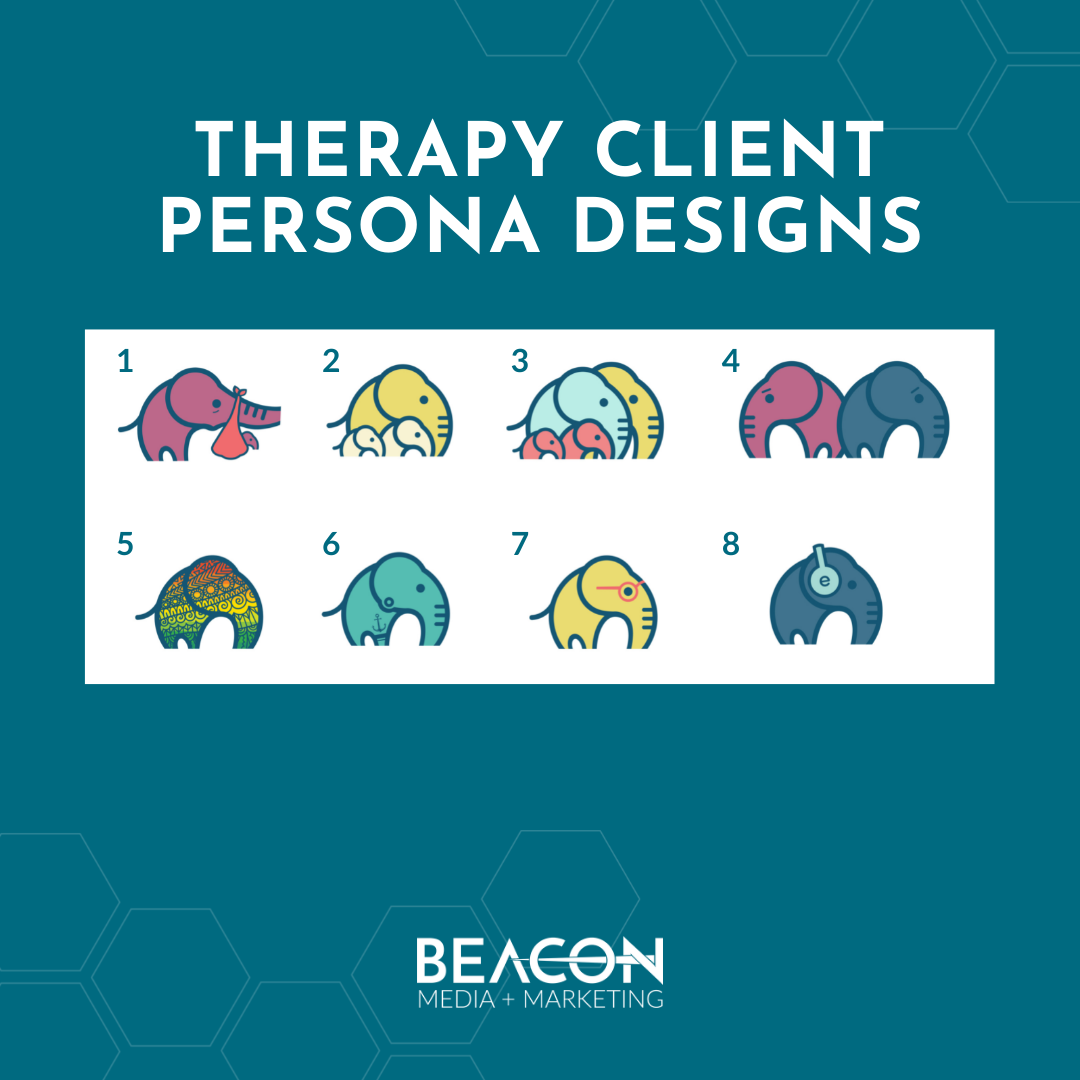
It’s important to note that you might have more than one type of client you’d like to reach. For example, our client Ellie Mental Health is a large franchise that provides for a wide range of people. To best capture the multiple personas we’d be working with, Beacon’s marketing team put together a fun visual representation we could refer to.

Therapy Client Persona Designs by Beacon Media + Marketing for Ellie Mental Health

2. Focus on Your Client’s Problem

Instead of telling someone how your services are excellent, take a personable approach. Yes, you can still say that you provide amazing services, but how do you do so? Instead of creating content that boasts about your services, lay out the problems you can solve for your clients seeking mental health support.

In other words, what is your specialty of care? Creating educational content that shows your depth of knowledge can help someone feel more comfortable handing over their trust to you. Showing your clients your ability to solve their problems balances the personable and business side of marketing your behavioral health services.

3. Connect on Similar Values

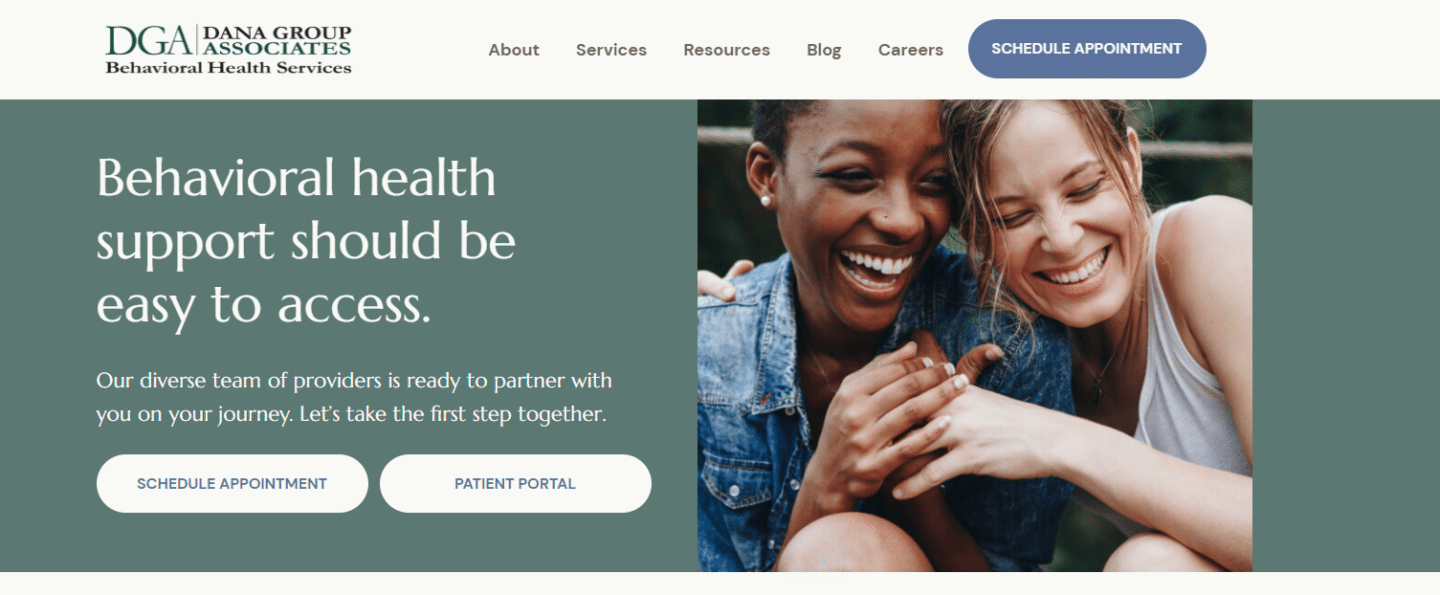
Screenshot of Dana Group Associates Behavioral Health Services website

Connecting with your clients can happen through your branding and core messaging. When you show what your practice, clinic, or facility values are, it’s more likely that you’ll draw someone in with similar values. It’s a way to feel connected on a deeper level so your clients feel like they can open up to you have behavioral health problems they’re dealing with. 

For example, Ellie Mental Health values diversity and inclusion. They want to show that therapy services are for all. Reflecting this value in their branding and content allows people who have similar values to feel comfortable and connected to their brand. 

Do you need help discovering your brand? Learn how Beacon Media + Marketing can help you!

4. Promote Personalization

Everyone is different, so the clients you treat are that way. Even if they share similar behavioral health challenges, they may have the same treatment method or necessity of care. Your content should emphasize how every client is treated as a unique and valued human being. 

Showing your ability to adapt to a person’s situation provides a welcoming feel for someone that may be struggling to seek help. You’re not just looking for another patient to walk through your door. Rather you’re excited to learn more about that person and how you can potentially help them. 

5. Respond to Reviews

Reviews about your practice, clinic, or facility are typically left online. People find value in peer experiences and may be turned away by the sight of bad reviews. Whether it’s a positive or negative review, you should respond to it diplomatically. 

When it’s positive, ensure that you’re thanking them for taking the time to receive care from your services and leaving a review. If you’re faced with negative reviews, you can take this time to: 

  1. Potentially take the criticism and learn how to improve. 

  2. Be empathic towards their experience. 

  3. Offer a solution to their problem and show you’re willing to listen. 

6. Stay Active on Social Media Advertising

Social media has evolved over the last several years from personal to branding. Most businesses have taken to utilizing social media to gain more customers. You can do something similar with your counseling service social media accounts.

Each platform has a built-in audience that works well for specific content. If you have a good social media presence, it will allow people to see posts from educational to personal. Incorporating social media advertising can help you target specific demographics on platforms like Facebook and Instagram, allowing potential clients to get to know you deeper when you’re responding to comments, adding community events, joining webinars, and more.

7. Be Transparent

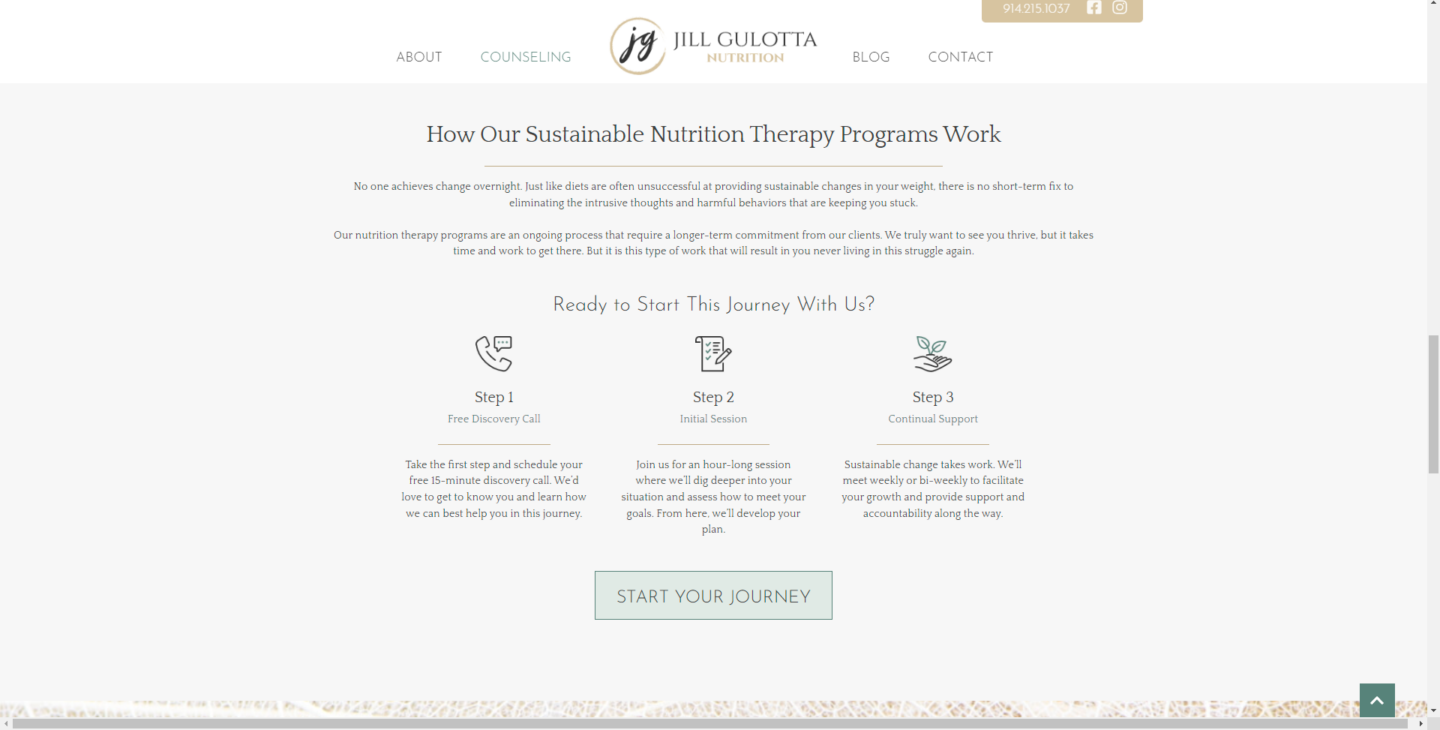
Screenshot of Jill Gulotta Nutrition website showing how their programs work.

To some, marketing may seem like a way to present only the best parts of your brand. And while this may work for businesses, it may not bode well with behavioral health clients. They want to trust you without having to worry about you deceiving them on how your services could help. 

Be transparent about your process, values, purpose, and mission. If you don’t accept insurance, make this clear and explain why. It can be easy to lose trust, so provide your potential clients with all of the information they need to know from the beginning. 

8. Build the Relationship

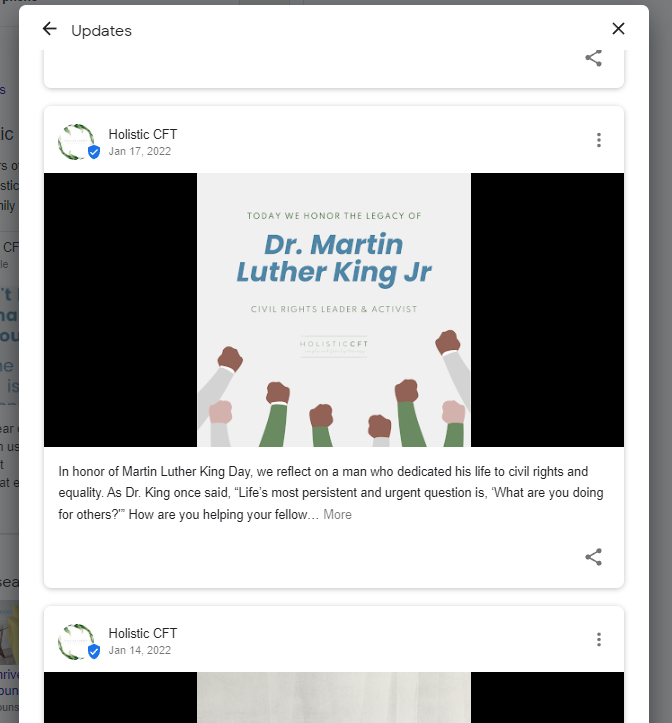
Screenshot of Holistic Couple and Family Therapy's Instagram post

People value human connection. And when they are opening up to someone about problems they’re facing, this connection becomes even more crucial. 

Once you get a lead, go the extra mile to make a connection and treat them with respect. Ensure that you don’t prioritize your potential clients over current ones and vice versa. Each person you’re treating needs to know that you value them coming to you for help. 

Building a Strong Online Presence

Create a Professional Website for Your Counseling Service

In today’s digital age, having a professional website is essential for building a strong online presence for your counseling service. Think of your website as your digital storefront—it’s often the first impression potential clients will have of your practice. A well-designed website should not only be visually appealing but also provide essential information such as your services, credentials, and contact details.

To ensure your website stands out and effectively attracts potential clients, consider the following tips:

  • Clear and Concise Domain Name: Choose a domain name that reflects your practice’s name or specialty, making it easy for clients to find you online.

  • User-Friendly Platform: Opt for a website platform like WordPress or Wix, which are both user-friendly and easy to update.

  • Visually Appealing Design: Your website should reflect your practice’s brand and values. Use a clean, professional design that is easy to navigate.

  • Essential Pages: Include key pages such as a homepage, about page, services page, and contact page to provide comprehensive information about your practice.

  • SEO Optimization: Optimize your website for search engines by incorporating relevant keywords and meta tags. This will help improve your website’s visibility on search engines, making it easier for potential clients to find you.

By creating a professional and optimized website, you can establish credibility, increase your online visibility, and attract more potential clients to your counseling service.

Identifying and Targeting Your Ideal Client

Research Your Target Audience

Identifying and targeting your ideal client is a cornerstone of effective marketing and building a successful counseling practice. By thoroughly researching your target audience, you can gain valuable insights into their needs, preferences, and behaviors, allowing you to tailor your marketing efforts and services to meet their specific demands.

When researching your target audience, consider the following aspects:

  • Demographics: Gather information on age, gender, location, income level, and education level. This data helps you understand who your potential clients are.

  • Psychographics: Delve into the values, interests, and lifestyle of your target audience. This helps you connect with them on a deeper level.

  • Pain Points: Identify the challenges, concerns, and goals of your potential clients. Understanding their pain points allows you to offer solutions that resonate with them.

  • Online Behavior: Analyze their social media usage, search engine queries, and online activities. This information helps you determine where and how to reach them effectively.

  • Referral Sources: Understand how potential clients find out about your practice. This could be through word-of-mouth, online searches, or referrals from other mental health professionals.

By comprehensively understanding your target audience, you can create targeted marketing campaigns, develop relevant services, and establish a strong online presence that resonates with your ideal client.

Search Engine Optimization (SEO)

Optimize Your Website for Search Engines

Search engine optimization (SEO) is a critical component of any effective marketing strategy. By optimizing your website for search engines, you can improve your online visibility, drive more traffic to your site, and attract potential clients to your counseling service.

Here are some key steps to optimize your website for search engines:

  • Keyword Research: Identify relevant keywords and phrases that your target audience uses when searching for counseling services. Use tools like Google Keyword Planner to find popular search terms.

  • On-Page Optimization: Optimize your website’s title tags, meta descriptions, headings, and content with relevant keywords. This helps search engines understand the content of your pages and rank them accordingly.

  • Content Creation: Develop high-quality, engaging, and informative content that addresses the needs and concerns of your target audience. Regularly updating your blog with valuable content can also improve your search engine ranking.

  • Link Building: Build high-quality backlinks from reputable sources to increase your website’s authority and ranking. Reach out to local businesses, mental health directories, and other mental health professionals for potential link-building opportunities.

  • Technical Optimization: Ensure that your website is mobile-friendly, fast, and secure. A well-optimized website provides a better user experience and is favored by search engines.

By implementing these SEO strategies, you can enhance your online presence, attract more potential clients, and establish your counseling service as a trusted and authoritative source in the mental health industry.

Why Should You Get Help From a Marketing Agency for Marketing Strategies?

Marketing takes much time and effort. It’s important that you focus on it as much as treating your clients. When you’re not effectively marketing, you lose potential clients and aren’t allowing yourself to be the best version of your practice, clinic, or facility. 

When you choose to get help from an agency, you’re allowing yourself to focus on your clients and the help that they need. You may also find it difficult to understand the marketing landscape compared to treating behavioral health patients. 

Entrusting Beacon Media + Marketing with your counseling services allows us to show the world who you are. We can help you market better through many services such as social media, paid ads, SEO optimization, blogging, website development and design, branding, graphic design, photography, and video. 

If you’re struggling with establishing your behavioral health brand, we can work with you to see who you are. This ensures that your brand is consistent across your content, and people get a clear idea of who you are. We want to help you discover the full potential of your practice. 

Are you ready to take the next step on your marketing journey? Get your free consultation!
Originally published by Beacon Media + Marketing. Updated and revised by Jennifer Gracey, Web Content Strategist & Writer on 07/24/23.

Behavioral health services really make a big difference in helping people improve their physical and mental well-being. For example, whether someone’s dealing with addiction, substance abuse, food disorders, or negative relationship patterns, there are so many people out there struggling. The good news is that a lot of these issues can be resolved with professional treatment — which is where behavioral health services come in.

Truth be told, marketing for mental health services is no walk in the park. It’s a tough nut to crack. First, some people who desperately need help simply don’t know how to seek the help they need. And then there’s the stigma surrounding mental illness and behavioral health care that acts as a roadblock for many people who really need help.

But that’s where Beacon Media + Marketing comes in! We’re experts in behavioral marketing services, and our goal is to help you shine brighter than the competition. We’ll work with you to create a strong brand and develop content that not only educates but also engages — and builds a framework of trust with your ideal clients.

Now, here are five key elements you’ll want to include in your marketing strategy for behavioral health. These tips will take your clinic to the next level and help you reach the people who really need your help. Let’s get started!

Ready to work with a Behavioral Health Marketing Agency that really gets your industry? Learn about our full suite of mental health marketing services.

Why Should You Market Your Behavioral Health Service?

The marketing of behavioral health services holds significant importance for several compelling reasons.

First, a primary objective is to attract a larger client base to your practice or clinic. Through the implementation of a robust digital marketing strategy, you can enhance your client roster — thereby opening doors to opportunities for service expansion, the recruitment of additional staff members, and even the establishment of new locations. This growth enables you to extend your reach and provide a path of assistance to a greater number of individuals in need.

Second, behavioral marketing assumes critical importance in aiding the local community. For example, when individuals confront challenges in their behavioral health, they often grapple with the confusion of where to seek assistance. Whether they are in their youth or an adult ready to pursue professional treatment, it is imperative that your practice assumes the role of a dependable resource. Failing to optimize your website’s navigability or lacking a substantial online presence deprives those in need of the opportunity to access vital support precisely when it is most crucial.

By effectively marketing your behavioral health services, you position your practice as a primary destination for individuals seeking assistance. Through a well-crafted online presence, you contribute to raising awareness and empowering those grappling with behavioral health issues.

By being readily available and visible to those in need, you extend a lifeline to individuals seeking guidance and promote a sense of hope and self-empowerment.

There are people who need your services, and we’re here to help you reach them. Contact Beacon Media + Marketing for your personalized behavioral health marketing strategy. 

What Elements Should You Include in Your Behavioral Health Marketing Strategy?

Now that we’ve gone over why you should market your behavior health service, it’s time to dig into the specifics. The following elements are ways to help effectively market your practice, clinic, or facility to have you appear at the top of searches and make an impact on the people you’re to help. 

In other words, creating a strong and persistent online presence will ensure that you will always be one of the top considerations for help. You won’t need to rely on physician recommendations which still helps — and can tap into a new client base. So, here are five elements to consider when creating your marketing strategy. 

1. Website

Screenshot of Jill Gulotta Nutrition website

In today’s digital age, having an online presence is essential for any business, including mental health clinics. And your website serves as a virtual storefront — allowing potential clients to find and learn about your clinic, services, and approach. Additionally, your site also establishes credibility and legitimacy, demonstrating that your clinic is professional and trustworthy.

  • Accessibility and Convenience: A website makes your mental health clinic easily accessible to a wider audience. This enables prospective clients to find information about your services at any time, from anywhere, allowing them to learn about your clinic and make informed decisions about seeking treatment. At the end of the day, it saves time for both clients and staff, as routine inquiries can be addressed through the website’s content, FAQs, and contact forms.
  • Appointment Booking: A well-designed website can offer online appointment booking functionality, streamlining the scheduling process for potential clients. This feature allows individuals to conveniently book appointments based on their preferences, increasing the likelihood of conversion. It also reduces phone calls, administrative work, and improves overall customer experience.
  • Educational Resources: Your behavioral health website can also serve as an educational resource for individuals seeking information about various mental health conditions, treatment options, coping strategies, peer support services, and general well-being. And by providing informative articles, blog posts, or downloadable resources, you can position your clinic as a trusted authority and nurture potential clients, even before they become clients.
  • Branding and Differentiation: Your website enables you to showcase your clinic’s brand identity, values, and unique selling points. Through web design elements, color schemes, imagery, and a unique tone of voice, you can create a distinct brand image that resonates with your target audience. And a well-crafted website helps you to differentiate your clinic from competitors — and establish a memorable presence in the minds of visitors.
  • Trust and Privacy: Privacy and confidentiality are paramount in mental health treatment. And a website can emphasize your clinic’s commitment to patient privacy and data security. You can also highlight the measures you have in place to protect client information and ensure HIPAA compliance — fostering trust among potential clients who may be concerned about sharing sensitive information.

Want to learn how Beacon can take your website to the next level? Learn more about our website design services.

 2. Local SEO

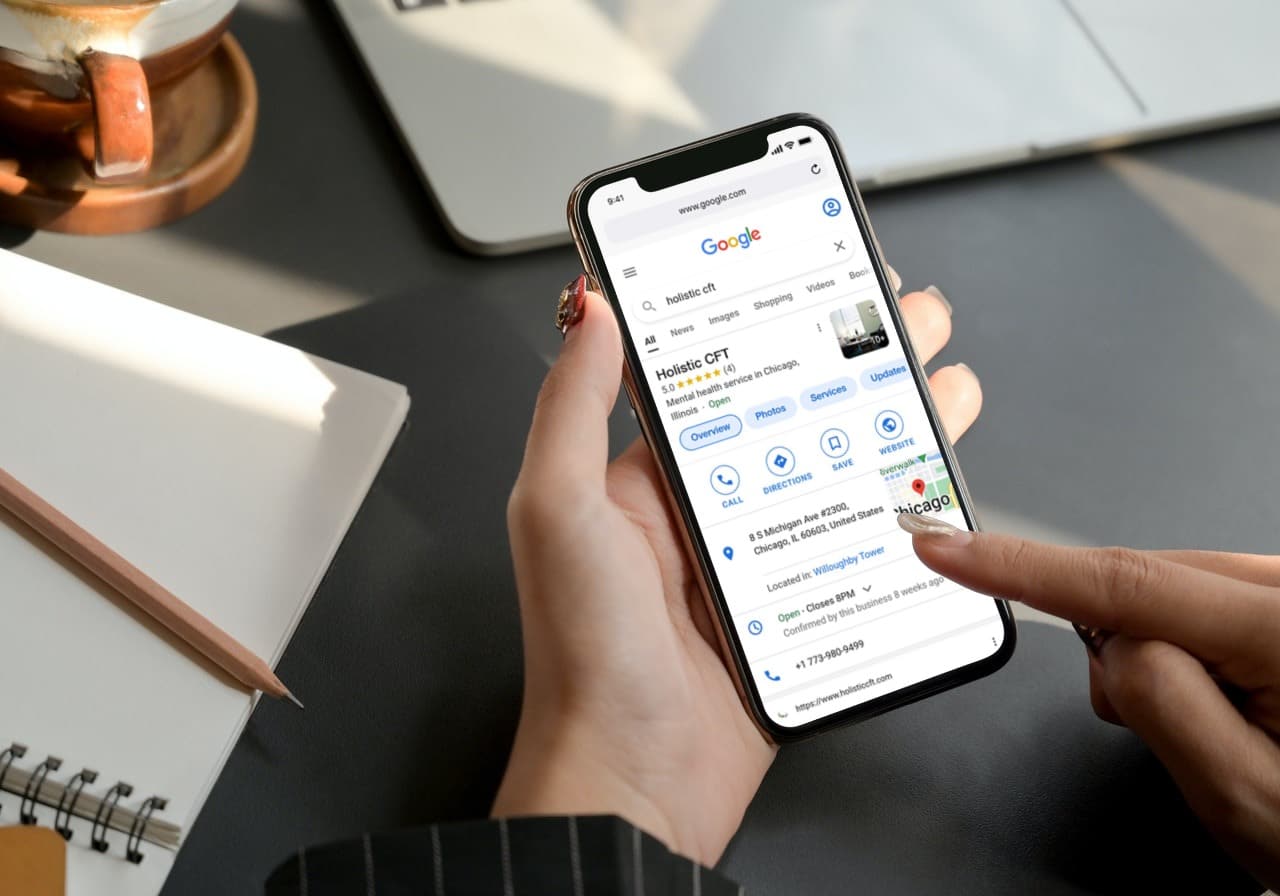
Person researching Holistic CFT - a behavioral health clinic - on Google My Business on their mobile phone.

One of the most important factors you have to consider for your marketing strategy is targeting local SEO. Even if you’ve identified your target audience, being one of the top resources when someone searches for behavioral health services in their area is critical. 

Local SEO is also crucial for marketing a behavioral health clinic because it helps you reach your target audience effectively within your local community. Here are some reasons why local SEO is important:

  • Targeted Visibility: Local SEO strategies aim to optimize your clinic’s online presence for local searches. Basically, when potential clients search for mental health or behavioral health services in your area, a well-implemented local SEO strategy increases the visibility of your clinic in search engine results. This helps your clinic to be prominently displayed to individuals actively seeking mental health services near their location.
  • Increased Web Traffic and Conversions: By optimizing your website and online listings for local searches, you can attract more relevant traffic to your clinic’s website. Local SEO focuses on incorporating location-specific keywords, creating localized content, and optimizing your online profiles, such as a Google Business Profile listing. As a result, your clinic becomes more discoverable to local users who are more likely to convert into clients.
  • Competition in Local Market: The mental health field can be highly competitive, especially in densely populated areas. And local SEO helps your clinic stand out from the competition by increasing your visibility in local search results. When potential clients are presented with multiple options, appearing at the top of search results enhances your clinic’s chances of being chosen and sets you apart as a trusted and accessible local provider.
  • Online Reviews and Reputation: Local SEO strategies often involve managing and leveraging online reviews and ratings. But positive reviews from satisfied clients play a significant role in attracting new clients. Local SEO helps you monitor and respond to reviews on platforms like Google, Yelp, and Healthgrades, allowing you to build a positive online reputation and establish trust with potential clients who heavily rely on reviews for decision-making.
  • Mobile and Voice Search: With the increasing popularity of smartphones and voice assistants, local searches have become more prevalent. The fact is, many individuals use voice commands or mobile devices to find nearby mental health services. And local SEO ensures that your clinic’s website and online profiles are optimized for mobile and voice search — making it easier for potential clients to find and contact your clinic while on the go.

3. Branding

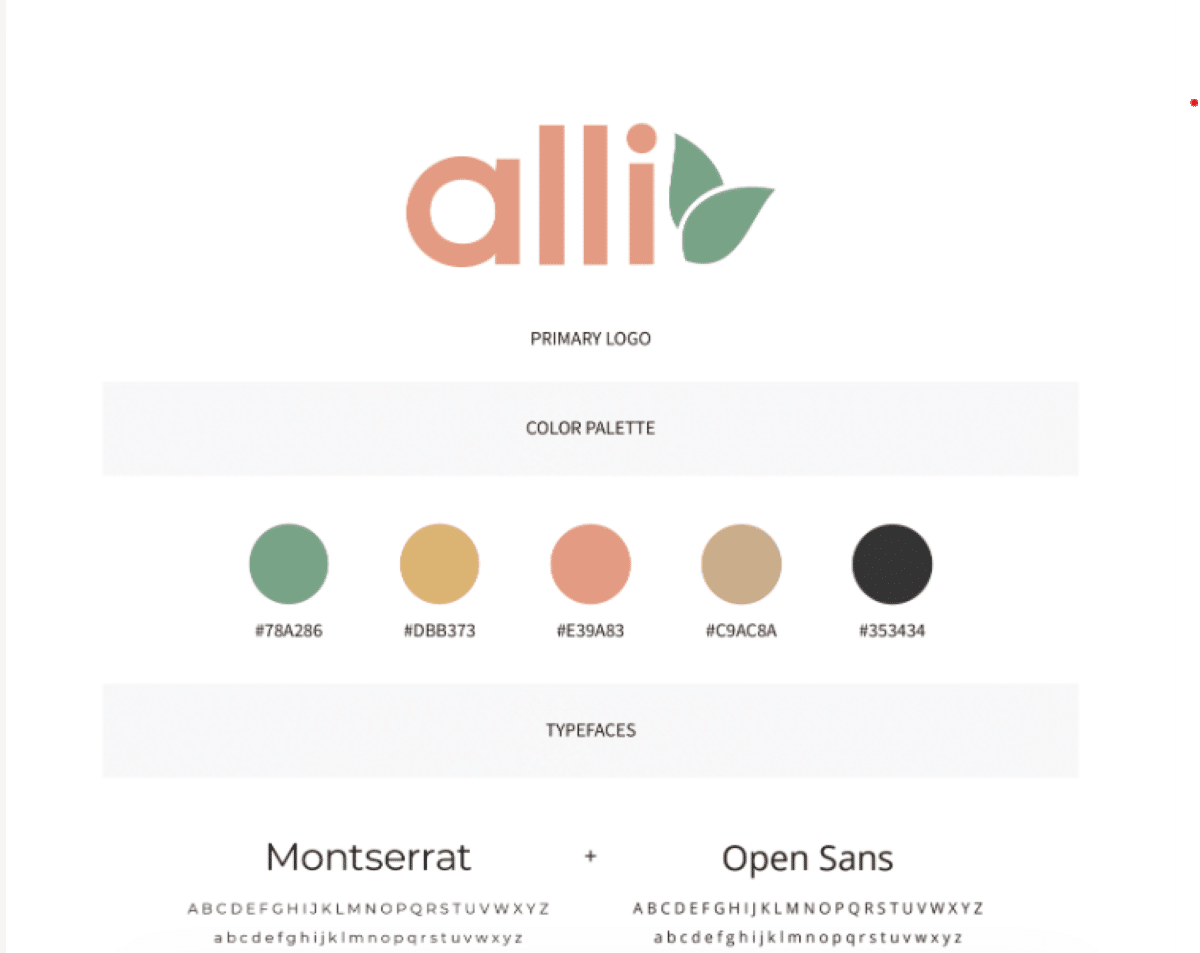
Alli Mental Health branding guide

The branding of your practice, clinic, or facility is crucial to drawing people in. Whether this includes community-based services or other programs, branding is an excellent opportunity to figure out your behavioral health service and why it’s important to you. 

Branding is also essential for marketing a behavioral health clinic because it helps create a strong and recognizable identity for your clinic, establishes trust, and differentiates your clinic from competitors.

A few reasons why branding is important in the context of marketing a behavioral health clinic include:

  • Trust and Credibility: Effective branding builds trust and credibility among potential clients. And this is critical because as mental health is a sensitive and personal matter, individuals seeking behavioral health services are often looking for a clinic they can trust. Thus, a well-defined brand identity with clear messaging, professional design elements, and consistent communication helps establish trust, conveying that your clinic is reliable, reputable, and capable of providing high-quality care.
  • Differentiation: In a competitive market, branding helps your clinic stand out from the crowd. By developing a unique brand positioning and identity, you can differentiate your clinic from other behavioral health providers. Branding allows you to communicate what makes your clinic special, whether it’s a specific approach to therapy, specialized treatment programs, a focus on holistic care, or a particular target population. Effective branding helps potential clients understand the unique value and benefits your clinic offers.
  • Emotional Connection: Behavioral health is deeply connected to emotions and personal well-being. A strong brand identity helps you forge an emotional connection with potential clients. By creating a brand that aligns with their values, aspirations, and needs, you can resonate with individuals on a deeper level. Emotional connection through branding increases the likelihood of individuals choosing your clinic as they feel understood, supported, and confident in your ability to address their mental health concerns.
  • Consistency and Recognition: Consistency in branding across all touch-points, including your website, social media, print materials, and physical space, creates recognition and reinforces your clinic’s identity. A consistent visual identity, including logos, color schemes, typography, and imagery, helps people associate these elements with your clinic, making it easier for them to remember and recognize your brand. Consistency also extends to the tone of voice and messaging, reflecting your clinic’s values and personality.
  • Patient Loyalty and Referrals: Building a strong brand not only attracts new clients but also fosters patient loyalty. When individuals have a positive experience with your clinic, they are more likely to become loyal clients and recommend your services to others. A strong brand identity, positive reputation, and memorable experiences contribute to patient loyalty and generate valuable word-of-mouth referrals, which can be a significant source of new clients for your clinic.
  • Professionalism and Perception: A well-crafted brand identity conveys professionalism and expertise. It enhances the perception of your clinic as a trusted and reliable mental health provider. A cohesive and polished brand image instills confidence in potential clients, as it signals that your clinic is committed to delivering high-quality care, adhering to professional standards, and investing in creating a positive client experience.
  • Effective Marketing and Communication: Branding provides a solid foundation for all your marketing and communication efforts. A well-defined brand identity guides your marketing strategies, ensuring that your messaging, visuals, and promotional materials are aligned with your clinic’s values and goals. It helps you communicate your unique value proposition, effectively reach your target audience, and build recognition and recall in the minds of potential clients.

Are you not sure how to brand your behavioral health service? Contact Beacon Media + Marketing so we can help you discover your brand.

 4. Content Management

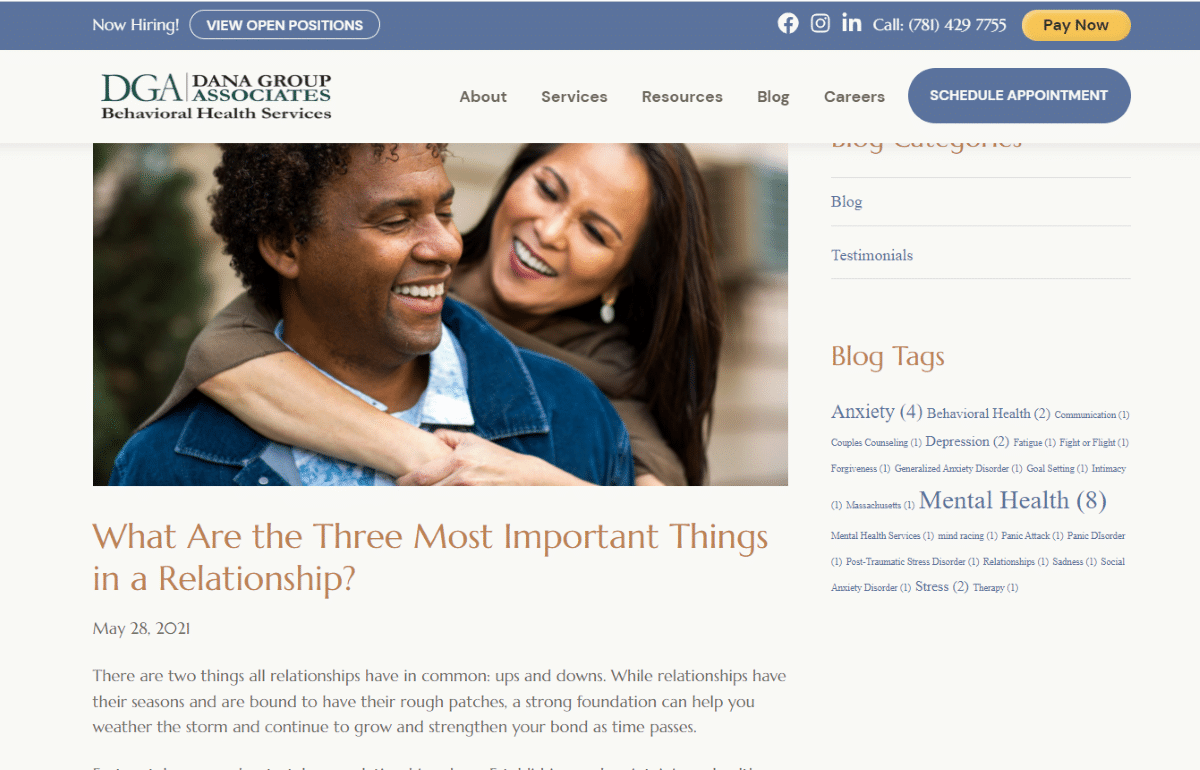
Screenshot of Dana Group Associates Behavioral Health Services website blog

The content offered on your website holds immense value for individuals or families seeking support. By accessing the information provided, visitors can gain a comprehensive understanding of the extensive assistance your services can offer.

In addition, incorporating blogging into your marketing strategy has the potential to profoundly impact someone’s life. Acknowledging behavioral health issues, whether personal or concerning children or loved ones, can be challenging for many individuals. Correspondingly, knowing when and how to seek help becomes a formidable task.

Blogs also serve as a powerful tool to establish yourself as a valuable community resource. As individuals inevitably have questions regarding behavioral health, creating and sharing informative blog posts can assist you in addressing these inquiries efficiently.

A few great impacts of regular blogging include:

  • Increased web traffic
  • Establishing expertise
  • Establishing brand awareness
  • Audience engagement
  • Thought leadership
  • Lead generation
  • Long-term value

By optimizing your blogs to rank highly in search engine results, people searching for answers will be directed to your blog as a prominent resource. Not only does this provide them with the desired information, but it also enhances your brand awareness and credibility. In sum, developing a well-thought-out blogging strategy for your marketing endeavors will elevate your clinic’s dependability — and drive increased traffic to your website.

5. Organic Content 

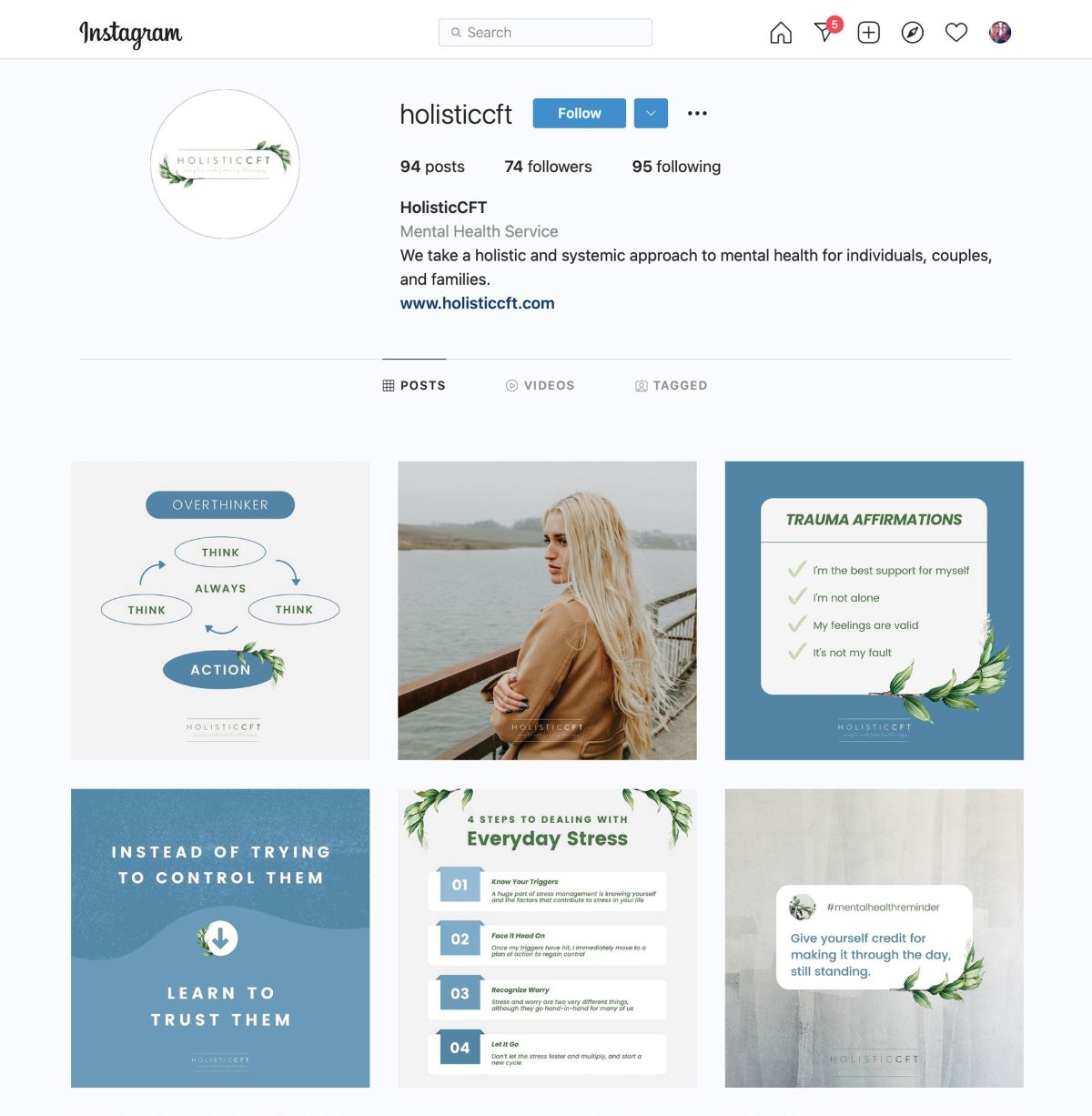
Screenshot of Holistic CFT Mental Health's Instgram

It’s no secret that the internet is a powerful platform of influence, and establishing your online presence holds immense potential for normalizing conversations surrounding behavioral health. By leveraging social media marketing, you can enhance your credibility, expand your reach, and actively contribute to destigmatizing behavioral health issues.

Through strategic social media campaigns, you can create organic educational content that fosters a deeper understanding of behavioral health, ultimately breaking down barriers and building a sense of connection within your community. This positions you as a trusted resource, prompting individuals to turn to you for guidance and support, above other alternatives.

While traditional advertising can be an avenue for reaching new audiences, it is essential to navigate the intricate stipulations and restrictions pertaining to alcohol and drug addiction. This can present challenges in effectively reaching adolescents and adults who may be in need of your assistance. Consequently, your online presence through social media becomes crucial in reaching and engaging with individuals who may not yet realize they require help.

Your organic social media content serves as a reflection of your brand and professional identity. It also presents an invaluable opportunity to establish a profound bond with individuals seeking assistance. When the time comes for them to seek help, your clinic will be the trusted service they turn to, owing to the connection you have fostered through your compelling and informative social media presence.

At the end of the day, the internet’s influence is significant, and harnessing its power through social media marketing can play a pivotal role in normalizing individual or family behavioral health conversations. By creating educational content, building credibility, and reaching a broader audience, you can help to destigmatize behavioral health issues, establish trust, and position yourself as a go-to resource. Leveraging your online presence through social media becomes essential for reaching individuals who may be unaware of their need for help, ultimately solidifying your clinic’s role in their journey toward recovery and well-being.

Why Should You Choose a Marketing Agency to Help You?

Bringing in the expertise of a dedicated marketing agency can work wonders for your practice, clinic, or facility, allowing you to focus on what truly matters — your clients. This is because marketing efforts demand considerable time and energy, which is better spent on providing top-notch care to those who rely on you.

In addition, juggling projects and responsibilities such as managing your website, social media presence, blogging, and advertising can feel overwhelming. And it’s crucial for all these elements to work harmoniously, aligned with a cohesive and effective marketing strategy. However, staying on top of each aspect can be a constant challenge as marketing practices continuously evolve — requiring ongoing learning and adaptation.

But that’s where the fun begins! By partnering with a dynamic marketing agency like Beacon Media + Marketing, we take the weight off your shoulders, allowing you to focus on your true passion. We’ll craft an innovative and impactful marketing strategy that propels your business to new heights.

Our comprehensive range of services includes captivating website design and development, memorable branding, engaging social media management, attention-grabbing advertising campaigns, captivating blogging, and so much more. Whatever aspect you need assistance with, we’re with you every step of the way. And our talented team will not only handle the technicalities of your program but also provide valuable insights into the data behind your marketing efforts — enabling continuous improvement and growth.

So, let the experts handle your marketing endeavors while you dedicate yourself to what you do best. With Beacon Media + Marketing, you’ll experience the thrill of watching your business flourish, as our partnership unleashes the full potential of your practice, clinic, or facility.

If you’re ready to focus on your passions and let someone help you through your marketing strategy, get a free consultation to learn how we can help you!

*Originally published by*Beacon Media + Marketing. Updated and revised by Sara Jokela December 19th, 2024.

Marketing can pose quite a challenge for any business, requiring a blend of creativity and effectiveness. However, when it comes to mental health marketing, things can get even trickier to grasp and execute successfully.

Notably, the pandemic of 2020 ushered in a significant shift in marketing strategies, especially for practitioners who had previously relied on in-person services. Many have transitioned to providing fully remote care, necessitating a change in how they promote themselves.

Given that you’re now operating solely online, your digital presence will play a pivotal role in every aspect of your practice. It’s crucial to have a well-thought-out digital marketing strategy to attract potential clients and nurture existing ones. To get you started, here are ten invaluable tips to market your online counseling practice.

Are you interested in how we’ve helped mental health practices like yours? Learn more about how we can help you!

Why Do You Need To Change Your Marketing? 

Are you curious about why it’s crucial to adapt your marketing strategies if you’re transitioning to a remote practice? It’s possible that signs of ineffective marketing haven’t revealed themselves yet for mental health professionals. However, sticking to old methods might hinder your ability to attract new clients.

Google Always Changes the Rules

Here’s the thing: Google implemented changes to how healthcare professionals can utilize their tools, including Google My Business. Unfortunately, without a physical location, your mental health practice and website won’t be able to leverage this tool.

The Google Search Pitfall for Virtual and Telehealth Mental Health Practices

Consequently, when individuals search for “therapists in my area,” or search by location, your practice won’t appear as one of the leading providers. Instead, it will display practices with physical, brick and mortar locations nearby.

But don’t worry, falling behind some competitors doesn’t mean it’s all doom and gloom. Many people have discovered that online or teletherapy suits their preferred therapy treatment method. There’s a significant demand for your services; you and other therapists in your practice or collective just need to know how to effectively market to this target audience.

10 Tips on How To Market Your Online Counseling Private Practice

To effectively market your online mental health practice, it’s crucial to prioritize your online presence and optimize your website, blogs, and overall content for search engine optimization (SEO). Boost your chances of being discovered by being active on social media, sharing educational videos on YouTube, or even creating an educational podcast.

Additionally, consider investing in paid advertising on platforms like Google Ads and social media to specifically target potential clients who are actively searching for therapy services.

One key strategy for marketing your online service is leveraging search engine tools to improve your ranking on search engines. Are you ready to learn some valuable tips on how to enhance your online marketing efforts for your mental health practice? Let’s dive in!

1. Identify Your Niche and Your USP

Discovering and clearly identifying your niche is crucial for successful online marketing. By doing so, you not only determine the services you’ll offer, but also scope of educational content you’ll share with the world. Focusing your expertise and knowledge and then highlighting it to potential clients establishes credibility and ensures that when people think about that specific topic, you’ll be the first name that comes to mind.

Additionally, it’s vital to identify your unique selling proposition (USP). With numerous options available to potential clients, it’s important to answer, “What sets you apart from the competition?” Whether it’s your comprehensive medication management services, patient-centered care or additional above and beyond resources you provide, it’s your distinct qualities that truly represent your practice and make you stand out. Embrace your uniqueness and let it be the driving force behind your success. For those in a private therapy practice, this means staying updated with marketing trends and focusing on quality services to attract and retain clients.

2. Identify Your Target Audience and Strategize

Discovering your target audience is absolutely crucial to understanding who would be genuinely interested in your services. This can be determined by focusing on your areas of expertise, such as offering support to individuals dealing with depression, anxiety, PTSD, trauma, and more. Once you have a clear idea of the people you want to assist, formulating your marketing strategy to reach potential clients becomes a smoother process.

It is equally important to consider the type of clientele that you work exceptionally well with and vice versa. Establishing a safe and connected environment, particularly in an online setting, can pose its challenges. Dedicate time to envisioning your ideal client, and tailor your marketing efforts to effectively target that specific audience.

By implementing these practices, you can truly captivate and engage with your intended audience, while providing the level of support they need.

3. Create a Great Website and Position Your Practice

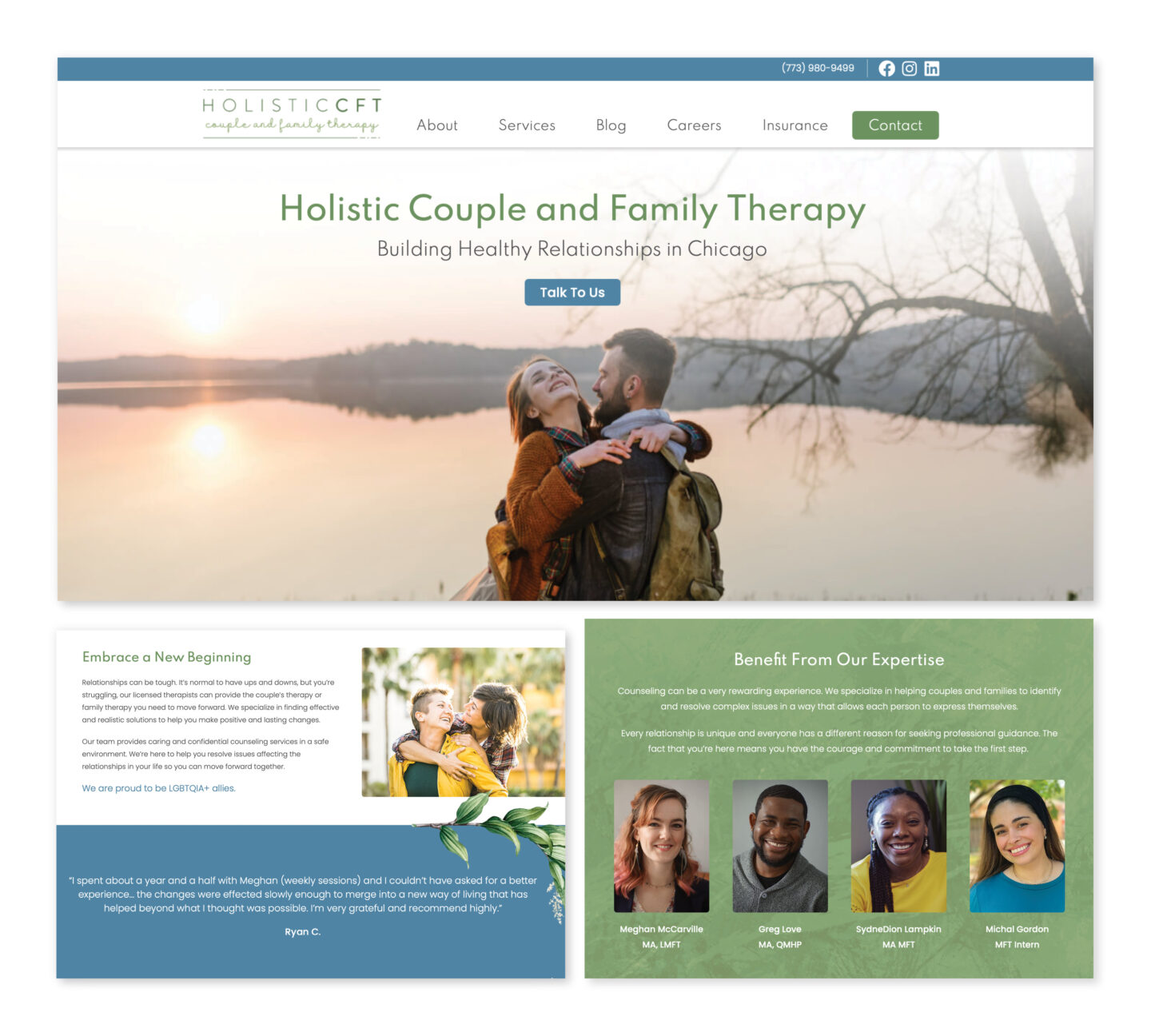
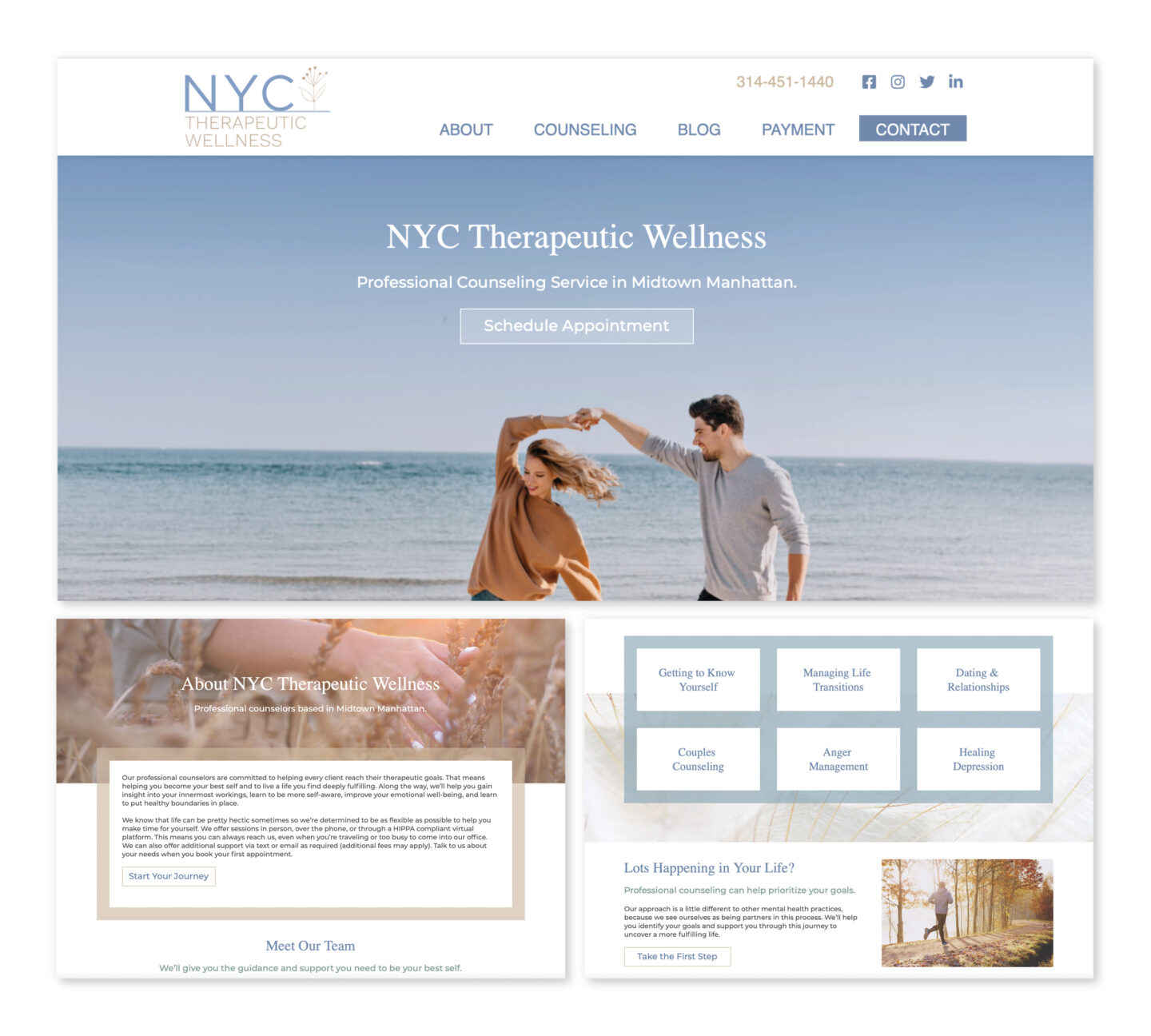
Screenshots from Holistic CFT's website by Beacon Media + Marketing

When it comes to finding a mental health provider, most individuals turn to online search engines. That’s why it’s crucial to create a stellar website that truly showcases who you are and how you can assist these potential clients.

Your website should not only offer a clear depiction of your services and modalities, but also provide easy navigation that guides visitors towards scheduling an appointment. Don’t forget to include an online contact page, as many people prefer this method over making phone calls due to anxiety. Additionally, ensure that your website has SEO-optimized pages, loads quickly, and contains helpful information that resonates with your brand. And of course, make it simple for visitors to get in touch with you.

By following these strategies, you can enhance your online presence and make a lasting impression on those seeking mental health support.

Do you need help creating a great website? Learn more about how we can help you! 

4. Support Your SEO By Blogging Regularly

Blogging is an exceptional method for turbocharging your overall SEO efforts. Search engines recognize your page as a valuable resource that can address clients’ burning inquiries. To captivate readers further, ensure high quality content on your blogs incorporate compelling calls-to-action that entice them to book an appointment with you.

If you’re ever grappling with writer’s block, fear not! Crafting a mental health blog marketing strategy tailored to your services and offering educational and useful content is always a wise move. Remember, your blogs should showcase your expertise to establish credibility and position yourself as their ultimate choice. Oh, and don’t forget to amplify your reach by sharing these captivating blogs on social media platforms, driving traffic to your articles and, ultimately, your esteemed website. Collaborating with other mental health professionals can also enhance your content and broaden your audience.

5. Use Social Media To Facilitate Engagement

Social media is an invaluable tool for cultivating your online practice and promoting therapy services. It offers myriad possibilities to attract people to your services, such as bolstering brand awareness, sharing client testimonials, and spotlighting your remarkable online therapy team.

Harnessing and utilizing the power of social media goes beyond promotional efforts — it extends to educating others about mental health and establishing credibility in the field. Envision captivating posts, encompassing vibrant visuals or thoughtful videos, where you break down complex mental health topics and beckon readers to explore your blog for a deeper understanding. Remember: success lies in generating consistent and compelling content across various platforms. Those platforms include the big five:

  • Facebook
  • Instagram
  • LinkedIn
  • Pinterest
  • YouTube

Use Google Ads To Reach More Potential Clients

Google ads offers a powerful solution to amplify your online presence for your private practice. Imagine capturing the attention of potential clients seeking licensed online counselors in their state — your website appears right at the top of Google’s SERP. By leveraging the Google ads function intelligently and strategically, you can achieve this coveted position.

Additionally, your Google Analytics provides invaluable insights into your audience. Understanding what your audience looks at when coming to your website empowers you to fine-tune your ad strategy based on their preferences. Unlocking the potential of this dynamic tool can help bolster your reach and achieve impactful results.

Are you interested in how we can help you advertise? Learn more about how we can help you!

7. Network to Earn Clout and Build Credibility

When it comes to networking, there are numerous social platforms available such as Facebook groups. However, if you’re looking to build a solid professional network, really establish your credibility, showcase your expertise in your field, and enhance the visibility of your practice online, LinkedIn reigns supreme. For medical professionals and therapists, it’s a phenomenal digital tool that enables meaningful connections within the industry.

Connecting with like-minded individuals in your medical community not only keeps you informed but also opens doors for potential recommendations and referrals. It also offers a glimpse into the professional and technical side of your practice, allowing others to witness your expertise.

As a platform, with LinkedIn, you have the opportunity to address crucial mental health issues and promote valuable education in a way that differs from the more casual interactions on other platforms. And leveraging this platform as excellent way to make a lasting impact in the mental health field is a longterm marketing move that just makes sense.

8. Use Social Proof to Show and Tell

Testimonial from Dana Group Associates social media

Are you looking for a foolproof strategy to attract new clients to your therapy practices? Well, here’s a rock solid tip: Testimonials are gold! By showcasing how you’ve helped people, testimonials can do wonders to bolster your social clout and business reputation. This is especially true if you primarily offer or are looking to shift to online or telehealth services. In these cases, you’ll definitely need to take it up a notch to establish your credibility.

In this digital age, social reviews play a huge role in people’s decision-making process. And when it comes to online services, they’re even more crucial. Because let’s face it, we’ve all been — at one time or another — the skeptic out there questioning the quality of a service or product we’ve seen online. By using solid evidence that proves you’re capable and that you genuinely care about your clients, you’ll win them over in no time! So, no matter what, make you’re sharing those awesome testimonials from your past clients on your website, social media posts, and wherever else you can think of!

9. Utilize Video to Showcase Your Personality

Effective and meaningful connections can be challenging to establish through online platforms, as judging someone’s character and personality is often easier in person. However, there are ways to overcome this hurdle and showcase your true self. Utilizing videos on your social media accounts and website can serve as a powerful tool to convey your unique personality.

By allowing people to catch a glimpse of your genuine self, you significantly increase the likelihood of potential clients scheduling an appointment. Consider creating interview-style videos or engaging in candid conversations to demonstrate your comfort and professionalism, ultimately assuring clients that they will feel at ease during their sessions with you. Let your personality shine through the lens, and watch as your connections with ideal clients deepen and flourish.

10. Set the Tone By Creating a Positive Atmosphere

Even though you may not be physically present in an office, maintaining a professional appearance is crucial. As a significant portion (if not all) of your client and business transactions take place online, consider investing in high-quality equipment such as a camera, microphone, reliable internet, and HIPAA-compliant video call software.

Remember the power of first impressions: an uncluttered, tidy and professional-looking background, as well as appropriate attire, play a significant role in your client’s overall experience with you as their mental health provider. Neglecting these aspects may lead potential clients to lose trust and turn away. Every tiny detail contributes to the marketing of your online presence, so ensure you pay careful attention to each one.

Enhance Your Online Presence

Establishing a strong online presence is crucial for therapists to reach a wider audience and attract potential clients. A well-optimized online presence can help therapists build trust, credibility, and visibility in the competitive mental health industry.

Claim and Optimize Your Google Business Profile

Claiming and optimizing your Google Business Profile is an essential step in enhancing your online presence. A complete and accurate Google Business Profile can help you appear in local search results, Google Maps, and other Google services. This can increase your visibility, credibility, and attract more potential clients to your therapy practice.

To optimize your Google Business Profile, make sure to:

  • Claim your business listing and verify your identity
  • Complete your profile with accurate and up-to-date information
  • Add high-quality photos and videos to showcase your practice
  • Respond promptly to reviews and feedback from clients
  • Use relevant keywords in your profile to improve search engine optimization (SEO)

By taking these steps, you can ensure that your therapy practice stands out in local searches, making it easier for potential clients to find and trust your services.

Create a Consistent Visual Brand

A consistent visual brand is essential for building recognition, trust, and credibility with potential clients. A well-designed visual brand can help you stand out from the competition and establish your therapy practice as a professional and reputable business.

To create a consistent visual brand, consider the following:

  • Develop a unique and recognizable logo that reflects your practice’s values and mission
  • Use a consistent color scheme and typography across all your online platforms
  • Create a style guide to ensure consistency in your branding across all materials
  • Use high-quality images and graphics to showcase your practice and services

By maintaining a consistent visual brand, you can create a cohesive and professional image that resonates with potential clients and reinforces your practice’s credibility.

Expand Your Reach and Credibility

Expanding your reach and credibility is crucial for attracting new clients and growing your therapy practice. By getting listed in top directories and leveraging other online marketing strategies, you can increase your visibility, credibility, and attract more potential clients to your practice.

Get Listed in Top Directories

Getting listed in top directories is an effective way to increase your visibility, credibility, and reach a wider audience. By listing your therapy practice in reputable directories, you can:

  • Increase your online presence and visibility
  • Improve your search engine optimization (SEO)
  • Attract more potential clients to your practice
  • Establish your practice as a reputable and trustworthy business

Some top directories to consider include:

  • Psychology Today
  • GoodTherapy
  • BetterHelp
  • Yelp
  • Google My Business

Make sure to complete your listings with accurate and up-to-date information, and use relevant keywords to improve your SEO. By doing so, you can ensure that your therapy practice is easily discoverable by those seeking mental health services, ultimately helping you attract new clients and grow your practice.

Why You Should Choose Beacon Media + Marketing to Help

Are you struggling to put your marketing ideas into action? Not sure where to begin or how to create an effective mental health marketing strategy? Look no further!

At Beacon Media + Marketing, we specialize in helping online counseling practices (like yours) thrive. By entrusting us with your marketing needs, you can focus on what truly ignites your passion: helping people by providing quality mental health counseling services. We understand that marketing effectively can be a time-consuming endeavor, and that’s why we’re here to lend a hand.

With our wide range of services — from social media management and paid ads to SEO optimization, blogging, web design and development, branding, graphic design, photography, and video — we have everything you need to boost your mental health branding and reach the top of search results. All of which help with attracting potential clients.

Let us take care of your mental health marketing and branding needs so you can dedicate more time to what matters most: making a difference in people’s lives through counseling. Partner with us at Beacon Media + Marketing and experience the power of effective marketing.

Are you ready to take your online counseling practice to the next level? Get your free consultation!
Many therapists can use therapist directories to help gain new clients. It can be an effective way to reach people actively looking for help. 

However, this may not be enough to reach new clients in your area or people who need help. Online tools like Google My Business can help people find your clinic when searching for therapists in their area. But without dynamic content, it can be hard to reach the top results of searches. 

So, why is a therapist directory listing not enough? Here is a breakdown of why therapists should invest in digital marketing and how it can transform your practice. 

Do you need help with mental health marketing? Learn more about how Beacon Media + Marketing can help you.

Why a Therapist Directory Listing Isn’t Enough

Although a therapist directory listing is a great place to start, it won’t be enough to reach your target client base and generate leads. When trying to find a therapist, many people spend extended amounts of time researching different therapist options in their area to see who might be their best fit. 

They need to know that the person they’re choosing can be trusted and is knowledgeable. It can be difficult opening up to people about their mental health, trauma, or anything else going on in their life. You can’t fully convey your trustworthiness and knowledge about your specific practice through a therapist directory. 

A therapy marketing strategy will be extremely beneficial to your practice. A strong marketing plan will allow you to reach your target audience effectively. 

Your mental health marketing plan should include using different online tools to promote your clinic. When people research your practice, you should give them a library of content that provides them with your mission, a clear brand, how you can help them, and why you should be their choice.

This can include: 

  • Organic social media posting
  • Google My Business
  • Google ads
  • Facebook ads
  • YouTube videos
  • Blogging
  • Effective website

Utilizing these other tools will create content that will reach new people. It will also allow people to research and learn more about your mental health therapy service. Adding these tools into your strategy can help reach new mental health clients that a therapy directory couldn’t. 

Why Therapists Should Invest In Digital Marketing

Digital marketing is a great way to reach new clients and be a resource for people. Utilizing these online platforms and tools will bump up the SEO on your website and allow you to be at the top of therapy searches. 

Here are a few reasons why you should invest in digital marketing. 

1) Develop Your Brand and Stand Out

With digital marketing for your mental health practice, you need to develop a look and message that is unique to your business and stands out to your target audience. Your brand is a way for your potential clients to know who you are, why you practice, and how you can help them. 

Your brand includes several elements, including your colors, fonts, tag lines, key messaging, and logos. All of those factors combine to give someone a feeling and idea behind your business that goes beyond just how it looks. For your mental health brand, you should be trying to show that you’re educated in your field, trustworthy, and welcoming. 

Having a welcoming brand will invite potential clients to choose you for their mental health services. Your brand should be unique to you and stand out. 

2) Expand Your Reach

Another excellent reason to invest in digital marketing is that it will expand your reach. A great way to achieve that is through an SEO-optimized website. But even if you’re using helpful tools like Google My Business, it can be hard to reach an audience that isn’t actively searching for mental health therapists. Paid ads are another great way to show up at the top of searches and geolocated advertising in your area. 

With digital marketing, you can utilize platforms like social media to increase your reach. Organic posting can help display your brand and act as a way for potential clients to learn more about you and have a contact outlet. With organic posting, you can be authentic, reach new people, and build brand awareness. 

Want help with your social media marketing? Check out our social media services. 

3) Find People Where They Are

Although teletherapy has emerged, in-person therapy is still the way to go for many clients. It’s essential that you rank high when people search for therapists in their area. You also need to consider how effective your local SEO is with voice searches.

Organic content is an excellent way to get people in your area to find you. With the help of social media, you can join local communities that will show people that you’re offering a great service being provided in their area. 

Blogging is also a great way to reach people in your area or online. You’ll be able to answer commonly asked questions and provide helpful tips and tools for your client’s mental health. Providing unique content like podcasting is a great way to reach a broader target audience. 

4) Guide Them Towards Making an Appointment

Choosing a therapist is a big decision. Many people spend extended amounts of time researching providers in their area and consider a few therapists before choosing. If you have a better online presence than your competitors, they’ll likely be drawn to make an appointment with you. 

You can achieve these leads through effective branding and a great website. Having an updated and easy-to-use website is an excellent way for people to feel more inclined to work for you. 

Your mental health website conveys to people that you are professional and want to help them. It’s the first impression that will stick with your potential clients the most. So your website should be clean and allow them to book an appointment with you through the website easily. 

5) Be a Resource For People

Not only is your content a way to rank high on search engines, but it’s also a way to be a resource for people. Many people will search online for medical advice and trust the first thing they see. As an expert in your field or mental health niche, you need to show that you provide valuable, trustworthy information. 

Putting out content allows you to educate people searching for mental health services and those who may not realize that they need help. Creating educational content for people is a great way to establish your credibility and show people that you are knowledgeable about the field and can help them. 

YouTube videos or ads are a great way to provide educational content to reach people. Many people use videos to get information, and people have a higher retention rate with videos. So, providing educational content will help you maximize your credibility and allow you to reach new people. 

Do you need help creating videos? Check out our video production service to learn more! 

Why Should Therapists Partner With a Digital Marketing Agency?

Even with an excellent mental health marketing strategy, it can be hard to balance on top of running your practice. It’s hard to manage all of the moving pieces of your website, social media accounts, advertisements, and being there for your clients. Here are a few key reasons why you should partner with a digital marketing agency. 

Focus on Your Expertise

Even though you’re an expert in your field, it doesn’t mean you’ll have much experience in SEO, blog writing, or making videos. Partnering with a digital marketing agency allows experts like us to figure out what your ideal client is cooling for and how to reach them best. 

Choosing someone to help you with your marketing will take the burden of learning and juggling everything off your plate. Your primary focus should be your clients, and choosing to partner with an agency will allow you to do so. 

Creating a Cohesive Marketing Strategy

Understanding and creating a cohesive mental health marketing strategy can be complex. You may not know which keywords to target or how your content can work cohesively together. 

Partnering with an agency will help build and maintain your brand. We will create an organized plan that combines website design, social media, Google advertising, SEO, and more to grow your online presence. 

Marketing Takes Time

Running your practice takes up a lot of time, and with the growing demand for mental health therapists, it can be hard to keep up on your client appointments. You might think that you can save a lot of money by doing your marketing yourself (or not doing any marketing at all). However, marketing means new clients, which means growth, and increased ROI. 

At Beacon Media + Marketing, we’ve had clients that grew their practice so much that they had to add additional counselors to their team, move to larger buildings, and expand their offerings. When you entrust a marketing agency to help you, we will take care of all the content creation and heavy lifting so you can focus on what you’re most passionate about. 

Why Should You Choose Beacon Media + Marketing? 

When you choose to partner with Beacon Media + Marketing, you’re choosing to grow your practice. We will help you optimize your SEO and create real client conversions. Not only that, we’ll help you stay passionate about your work. 

Since we’re passionate about what we do, we want to ensure that your brand reflects how you feel. We can help create a logo and brand that suits you with our amazing team. We want you to focus on the “why” behind your mission and embrace your passion for helping your clients. 

You won’t need to research how to create an excellent website or effectively use social media; we’ll do that for you. Our web team can help create the website of your dreams and allow potential clients to feel more empowered to book an appointment with you. We’ll also take care of the organic content that is true to your brand and educational, from social media to blogging. 

At Beacon Media + Marketing, we want you to be passionate about your work the way we are. We provide great marketing for therapists that will help you grow your clinic. By choosing to partner with us, you’ll be able to focus on your clinic and not worry about how effective your marketing is. 

Ready to see how we can help you? Get your free consultation! 

While there has been a major uptick in the number of people accessing teletherapy and online mental services, there is still just as many people visiting mental health practices in person. As you look to grow your client base, you need to make sure that people looking for therapy in your local area can find you — and that’s where local SEO comes in. 

While all of the same search engine optimization rules apply when marketing to a specific city or service area, there are a few extra bases you need to cover to ensure that your practice is at or near the top of the google search results for potential clients in your location. 

Here are just a few statistics on why your marketing strategy for your mental health practice needs to focus on local SEO: 

If you’re serious about growing your mental health clinic and want to get more qualified leads and patients in the door, you need to take a close look at if your practice shows up in local searches. If not, you’re missing out on a massive opportunity to help new clients and book more therapy sessions. 

At Beacon Media + Marketing, we’ve watched clients take their place at the top of Google’s search rankings and experience impressive growth as a result. Here’s our expert guide to leveling up your therapist local SEO.  

Want to leave your local SEO strategy to the experts? Learn more about our mental health marketing services.

 1) Utilize Your Mental Health Clinic’s Google My Business Profile 

Your Google My Business profile is the top tool you should be utilizing from your local SEO toolbox. People can’t book appointments with you if they can’t find your mental health clinic online. And if you don’t include information on your location, hours, and how to contact you, most searchers won’t take the time to look. 

Ideally, when someone performs a local search on a keyword you want to show up for, your google my business listing shows up as well. For example, if you search “grief therapy Delaware” our client at the Center for Grief and Trauma is the featured listing. 

Screenshot of a local SEO mental health practice Google search

As you can see, when performing this search on desktop, the Google My Business listing is the first thing to catch your eye. It’s visual, includes all contact information in one place, and stands out from any other mental health practice on the search engine results page (SERP). 

What Factors Affect Google My Business Rankings 

When someone performs a local search on Google, there are three ways Google ranks these results: 

  1. Relevance: How well does the business match what the searcher is looking for? For example, if someone searches for couples therapy, practices that specialize in this service would ideally show up as one of the top listings. 
  2. Distance: How close is a business to the location term or searcher’s location? If the searcher uses a specific location in their text, such as “anxiety therapy Sacramento,” Google uses this to find businesses nearby. However, if a more general search with terms like “depression counselor near me” is used, Google uses information they know on the searcher to pull local results. 
  3. Prominence: How well known is the business? Google pulls information from the client’s listing, website, directories, and other factors to determine the credibility and popularity of businesses that match a search term. A business’s SEO position on the results page also affects this ranking — so the higher a business’s website ranks organically, the more likely a business is to come up higher in GMB listings. 

How To Optimize Your Google My Business Listing 

Now, what do you do if you search for your mental health practice and it doesn’t show up on Google Search or Google Maps? You need to make sure that your profile has been created correctly, is filled out thoroughly, and is SEO optimized for local searches. 

To make sure your GMB is set up for success, make sure it includes the following factors: 

1. Set Up Your Google My Business Listing 

If you haven’t already done so, the first step to getting your mental health clinic on Google and boosting your local SEO is creating a free Google Business Profile. When setting up this account, you will need to enter your business name, address, contact information, business categories, and other information. It’s also possible that someone else has already listed your practice. In this case, you’ll need to claim your listing.  

2. Verify Your Mental Health Clinic on GMB

Once your profile is created, Google will ask you to verify your business. The most common way this happens is via a postcard that is sent to the business location you included during the setup portion. It can take a couple of days for this to show up in the mail. This postcard will have a verification code on it that you need to enter into your profile. You may also have the option to verify by phone or email. 

3. Optimize Your Listing for Local SEO 

If you refer back to that handy local SEO statistics infographic, you’ll see that 92% of people choose a local business from the first page of the SERP. That means that if you don’t show up on the first page of Google, customers are unlikely to see or choose your mental health practice.

While we know that mental health websites are one of the most essential tools a therapist can have, a Google My Business listing is almost just as important. In fact, some sources claim that a complete and accurate GMB account gets on average seven times more clicks and 70% more location visits than uncompleted listings. 

This means to get the most out of your local SEO efforts, you need to fill out every single section on your Google business profile. Of course, you need to have the correct location and contact information listed. And you need to keep your hours up to date. 

Choose the right category for your mental health practice and include a full list of services you offer. You also want to select attributes and highlights that apply to your business. Google uses the attributes you choose to show up higher on the search listings for people searching for those features. For example, you can list attributes such as “online care” and “online appointment” if you offer teletherapy appointments, which helps improve your rankings for people in your area looking for online therapy services. 

You also need to include a business description, which should naturally include SEO keywords. However, don’t use this spot to keyword stuff. You want to sound human and encourage searchers to click on your listing. It should give people a good overview of what makes your practice unique and how you help.

Here is an example of our Google My Business Listing description: 

Google My Business listing description from Beacon Media + Marketing for Local SEO

We’ve included SEO-specific keywords, such as our office locations, services, and credentials. 

We also love the Center for Grief and Trauma Therapy’s description, which not only clearly lists their specialties and services but also captures their compassion and dedication to the clients they serve: 

Google My Business listing description from Center for Grief and Trauma Therapy, a mental health practice, for Local SEO

4. Maintain Your Google My Business Profile 

More people are interacting with and using Google listings to make purchasing decisions. While about 50% of engagements with Google My Business listings are website clicks, many people search for the information they need in your listing. For this reason, you need to post regularly on your account, add plenty of pictures and videos, and interact with people who ask questions or leave reviews. 

We recommend that you post onto your Google My Business account at least once a week. At Beacon, we manage several of our client’s GMB profiles and we treat them like a social media account. This is a great spot to post updates, such as a new office location or changed office hours, and to include links to blogs, special offers, and events. And we recommend that you try to upload a new photo or graphic at least once a week and new videos when possible. 

Google My Business updates post  from Holistic CFT, a mental health practice, for Local SEO

Finally, if someone interacts with you on your Google My Business account, make sure not to leave them hanging! When someone asks a question, it’s likely other searchers have wondered the same. Use the Questions and Answers section to show people you’re active and give people more information about your mental health clinic. And any time someone leaves a review, whether it’s good or bad, always respond. It can be a simple thanks for some kind words about your office staff or an apology for a bad experience. 

Need help managing your GMB profile? Here’s how we can help. 

Once your Google My Business listing is claimed, completed, and up to date, you’ve already taken a major step toward showing up for voice searches. And while most people focus their SEO efforts on written text, voice search optimization has taken off in recent years. 

It’s estimated that 75% of US families will own smart speakers by 2025. While there are certainly some issues with accuracy for current voice technology (75% people of see that as being a major roadblock), more people are searching the internet without ever looking at a screen. And this is most significant for local searches. 

One 2018 study found that 76% of smart speaker owners were using local voice search at least once a week. Whether looking for a new restaurant to eat at or asking for directions to a new store, people often ask their Alexas, Googles, or Siris to help them get there. 

While location searches, such as “therapist near me” will pull up a google my business listing or Yelp listing, you also need to make sure your website is optimized for people who use voice search for finding industry-specific information. 

One way you can do this is by incorporating questions and long-tail keywords. While someone typing into a search bar might use short keywords, such as “therapist Florida,” people often use longer phrases when speaking, such as “Who is the best therapist in Florida?” The ”People Also Ask” section of Google is a great place to find SEO-friendly questions and FAQs to add to your site to draw in more local website visitors.  

3) Remember Mental Health SEO Basics

Any SEO mental health strategy, whether local or national, should follow SEO best practices. This includes a properly indexed, user-friendly site that focuses on relevant, high-quality content. Avoid publishing pages with low, unoptimized content. You want to aim for at least 300 words on each page with carefully chosen keywords that appear in multiple headings, the title, and throughout the copy. Be careful not to over-optimize — Google (and most likely your readers) is not a fan of keyword stuffing. 

When focusing on local SEO, you want to incorporate location-specific keywords. Here’s a great example from our client NYC Therapeutic Wellness: 

Screenshot of NYC Therapeutic Wellness website, a mental health practice

By targeting “Midtown Manhattan” in headings and other sections of the website, you can increase your chances of having your website rank high for mental health practices in your location. If you have practices in multiple locations, you’ll want a page for each city you’re located in to target local clients in each of those cities. 

Learn about Google E-A-T and its impact on your SEO strategy

Not sure where to begin with your local SEO keyword strategy? Let our SEO experts help improve your rankings. 

Boost Your Local SEO With the Mental Health Marketing Experts 

At Beacon Media + Marketing, we specialize in mental health marketing, including website development, Google My Business management, SEO strategy, PPC advertising, blogging, and more. If you really want your mental health practice to show up higher in local search engine rankings, you need a robust, cohesive strategy that is designed with a small, local business in mind. 

We’ve been serving small businesses in Anchorage, Reno, and other cities in the US for more than 20 years. And we’ve seen amazing success with therapists across the country in boosting their local SEO and growing their client base. We’d love to help you do the same. 

Need help gaining new leads? Schedule your free consultation.  

Social media platforms are no longer just a place to watch cute cat videos and post what you ate for lunch that day. They have evolved into an effective spot for businesses to market their products or services online and develop a deeper connection with their customers. And for many businesses, a great social media content strategy is the primary way to generate leads and see substantial business growth.

In the past, advertising often felt like a shot in the dark. A business would put out an ad and hope it would bring in more leads. Now, social media invites conversation between businesses and consumers. People like, comment on, and share content they find engaging. And all of these reactions become trackable data businesses can use to narrow down their target audience and evaluate if their strategy is working.

At Beacon Media + Marketing, we’ve watched many of our clients flourish with a lead-generating social media content strategy. Here are just a few of the amazing businesses we’ve had the chance to work with that saw real results from working with a social media digital marketing company:

  • Port Chilkoot Distillery gained 2,148 new Instagram followers and generated 290 leads in the first six months
  • Premier Health and Medicine gained an average of 78 quality leads a month and tripled new patient monthly onboarding
  • Anchor Lutheran School had 50K impressions on their social media video and saw a 34% increase in new student inquires
  • Any Mountain achieved a national reach of 2 million people and received over 100,000 views on their video

With the right structure and a clear plan in place, you can see results like this for your business. However, it’s not enough to simply post on social media. If you’ve created a social media account for your business and haven’t seen much audience engagement or return from your posts, it’s time to reconsider your social media strategy (or maybe create one to begin with). Here are five steps for getting intentional with your digital marketing and creating a social media content strategy that generates real leads.

Want to leave the strategy session to the lead-generation experts? Here’s how we take your social media to the next level.

1. Determine Your Marketing Goal

At the core of your social media content marketing campaign is your marketing goal. It is the base for the following steps we’re going to discuss and is the metric you use to determine your success. You might be thinking that your goal is to generate leads. That is what we promised you after all, right? Knowing you want to generate leads is a great step in the right direction, but you need to digger even deeper and come up with more specific, measurable goals for your business social media. Do you have a specific revenue goal you’re trying to hit? How many leads a month is your business capable of handling? How many of these leads need to convert and become customers for you to meet your revenue goals? Is there a particular item or service you want to sell more of?

You also want to determine a reasonable timeline for these goals, remembering that it can take months for your marketing efforts to really take off. And if you have a long-term annual goal, break it up into smaller chunks to track progress. For example, if you want to increase sales by 200% in one year, you can track sales growth on a monthly and quarterly basis to make sure you’re working toward this objective.

2. Identify Your Target Audience

Your social media content shouldn’t be written to capture the attention of anyone and everyone who might be on social media. It needs to be tailored to a specific target audience that are the most likely to be interested in and purchase your product or service. This can be broken down by gender, occupation, age, hobbies, or essentially any criteria that the people you did business with have in common.

For example, one of our target audiences at Beacon is mental health providers who are seeking mental health marketing services to connect with clients or grow their practice. 

Facebook post from Beacon

Identifying your target audience in your social media strategy allows you to focus your money, time, and resources on people who are much more likely to engage with your content and turn into a lead. It also helps you strengthen your brand through the creative process, allowing you to focus on images and messaging that capture this specific audience group.

Not sure who your target audience is? Consider who you do business with most already. If you already have a social media account that’s been up and running for some time, look at who interacts with your content.

3. Choose Your Social Media Platforms

There are several social media platforms you can post content on, and not all of them are right for your business. You need to consider which platform will be most successful in helping you generate leads and accomplishing your marketing goal. And you need to know which social media platform your customers are actually using.

Let’s take a look at the top six social media platforms for business:

  • Facebook: A popular social media marketing platform for all audiences, Facebook has over 2 billion users a month. Whether you’re a B2B or B2C business, Facebook is an effective place to create content, put out ads, and generate leads.
  • Instagram: A platform that uses images and videos as content, Instagram is a great place to show, rather than tell, people about your offerings. There are over 1 billion monthly Instagram users, and it integrates seamlessly with Facebook. While older audiences are using Instagram more, this platform is most popular among younger audiences, with 71% of users being 35 and under.
  • Twitter: Twitter’s audience is smaller at approximately 350 million users and is great place to post updates and news. Since twitter has a tweet length limit of 280 characters, you don’t need to curate long content to connect with your audience and create content that’s worth retweeting.   
  • LinkedIn: For B2B marketing, LinkedIn is a strong choice for social media content marketing. As a more professional, formal platform, LinkedIn marries conventional social media marketing with professional networking. It’s easier to connect directly with the decision makers who will making purchasing decisions for their business and gain trust with B2B clients.
  • Pinterest: Like Instagram, Pinterest relies on visual content. However, this platform is unique as many people use it more like a search engine than to connect with others or share personal information. Pinterest is a place to learn new skills, increase productivity, find workout routines, or look for products to redecorate your house. It’s a great place to share information, like infographics and blog posts, and to market for an ecommerce business.
  • YouTube: The top social media platform for videos, YouTube has over 2 billion users a month and reaches every demographic. It’s a social media platform and search engine in one, and people use it to consume a wide range of content, from educational and marketing videos to comedy and entertainment.

4. Create a Social Media Content Calendar

Do you struggle to post on your business social media accounts regularly? A social media content calendar is a great way to keep you accountable and bring structure to your strategy. It helps to plan your posts at least a month ahead. It might look something like this:

Beacon content calendar example

As you map out your month’s posts, here are a few considerations to keep in mind:

  • You need to find the right balance for posting. While you want to post on a consistent basis, you don’t want to overdo it. Many people find the sweet spot for business social media posts is about 3-5 posts a week.
  • Have a variety of content types. Get the word out about your new blog post, share an article on a relevant topic, post an infographic, add a new video or talk to your audience live. You can even assign a certain day of the week to a specific content type (e.g., you always post a video on Fridays.
  • Always include a visual. People are often drawn to visual content and may scroll past posts that are only text. Always include some type of visual in your posts, whether that’s an image, an infographic, or video.
  • Having a messaging plan. Your tone and voice should be consistent across all marketing and be created with your target audience in mind. Make sure every post you write is true to your brand and follows the same messaging strategy.

Your calendar can be as basic or complex as you want. You can simply layout your topics for the month or go a step further and include links for images, the title for your post, and a post snippet.

Social Media Calendar Template

Download our free social media calendar template for your business and start each month with a clear plan.

5. Generate a Social Media Graphics Template

We just mentioned how important visuals are for your social media posts. While your content calendar helps you keep consistent with your messaging and content distribution, a social media graphics template helps make sure every post is visually attractive and on-brand. This is especially important when posting on platforms like Instagram and Pinterest.

Here is an example from our client Red Raven CBD that showcases what a cohesive social media design looks like.

Red Raven Instagram graphics overview

And here’s one more from our Beacon Instagram.

Beacon Media + Marketing Instagram Graphics Overview

Satisfying, right? By pulling from each of these brands’ colors, bringing in the logo, and adding a few elements that are consistent throughout each post, we’ve created posts that are not only visually appealing on their own but attractive from a big-picture POV as well.

Want to know how we did it?

  1. Use a program like Canva or Adobe InDesign to create your graphics. If you’re looking for something that’s free or beginner friendly, Canva is a great choice.
  2. Establish a couple of elements you’ll use throughout your posts. For example, Red Raven CBD uses the crow from the logo, mountain imagery, and the color red.
  3. Create a template for each kind of post you’ll be doing. You can use one template for testimonials, one for blogs, one for FAQs, etc. 
  4. Create a photo gallery of imagery that matches your brand. This can be a folder where you keep original photography, a Shutterstock collection with stock imagery, or a combination of both.
  5. Save your templates and switch out the messaging for each content type. This helps streamline the process and keeps your content cohesive.

Create a Lead-Generating Social Media Content Strategy With Beacon Media + Marketing

Are you struggling to do this whole social media thing on your own? Take your online presence to the next level and put out content that converts. Beacon Media + Marketing can handle your social media content from strategy to execution. We can help you get your brand out to the world in a way that appeals to your target audience and pushes them to take the next step.

Need help connecting with leads on social media? Start a conversation with us to see how we help.  

More people are seeking mental health services than ever before, which means now is the time to revamp your mental health marketing strategy and build your client base. With the COVID-19 pandemic, we’ve seen immense growth in the field of mental health, to the point that some mental health professionals are spending more time on the phone with potential clients than they are in sessions. However, just because your phone is ringing doesn’t mean your practice is seeing substantial growth or bringing in the right clients.

If you’re seeing an influx in unqualified leads reaching out to you (and by unqualified we mean people reaching out who are unfamiliar with your services or generally a poor fit for your practice), it means that your current marketing efforts aren’t targeting the right people. For example, if you’re a therapist located in New York that specializes in treating women’s mental health concerns but you’re consistently getting calls from men in Delaware asking if you’re accepting new clients, there’s probably something askew with your marketing.

Creating a mental health marketing strategy that targets your ideal client is the key to experiencing true growth and finding your happy spot as a therapist. In this blog, we’ll discuss how you can identify your ideal client, if you don’t already know who they are, and what you need to do to target them more effectively.

Ready to make your mental health marketing strategy? Tell us how we can help.

Who Is Your Ideal Client? Narrowing Down Your Mental Health Niche

Whether you’re just getting started as a therapist or you have several years of running your own practice under your belt, you likely have a type of client you like to work with best. Your ideal client will be unique to you, your specialties, and your passions.

You may assume being a generalist and accepting anyone who needs mental health services is the best way to build a client base. After all, if you’re struggling to get new clients and are desperate for new leads, it’s hard to rationalize not marketing to anyone and everyone who is looking for therapy. 

However, many therapists experience more growth by narrowing down their services. When you choose a niche and stick with it, you may actually see an increase in clients. Specializing in a specific area allows you to establish yourself as an expert in that subject. This lets you build credibility with your target audience and focus on what you’re most passionate about. And narrowing down your focus means you’re narrowing down your competition.

Questions for Discovering Your Ideal Client

If you don’t already have a clear idea of who your ideal client is, ask yourself these questions:

  1. What fills you with passion and gives you purpose as a therapist?
  2. What subject do you know so much about you could teach on it?
  3. What clients have you had the most success with in the past?
  4. Do you prefer providing one-on-one, couple, or group sessions?
  5. What is the gender, age range, characteristics, and background of your ideal client?
  6. Do you plan to accept insurance or only accept out-of-pocket payments?
  7. What is your service area?
  8. Will you be offering in-person therapy, teletherapy, or both?

These questions will help you narrow down what kind of clients you want to draw to your practice. You’ll also begin to discern some of the characteristics of your ideal client, which will be useful when you start to market to them.

How Mental Health Marketing Draws in Your Ideal Client

Once you have a clear idea of who your ideal client is, you can get laser-focused in your marketing. Marketing takes a lot of time and money, so the key to success is identifying the exact kind of client you want to draw to your practice and only putting effort into attracting those people. This is a much more productive use of your time and resources as you can spend less time weeding out unqualified leads (or answering phone calls that lead nowhere) and instead focus your energy toward fulfilling your passions and helping people that are a good fit for your practice.

Establishing Your Brand

Now, what goes into a great mental health marketing strategy? At the foundation of your marketing strategy is your brand, which ties in closely with your niche. Your mental health brand is what sets you apart from your competitors and gives clients a reason to visit you. This means developing a strong brand story, creating your missions and value statements, understanding your messaging and purpose, and designing logos, colors, and other visual elements that people can associate with your brand.

Making Your Website Accessible

Once you’ve clearly developed your brand, you need an accessible website that is easy to navigate so your ideal client can quickly identify that your practice is exactly what they’re searching for. This mental health website should be visually appealing. It should have a clear goal and purpose. And website visitors must be able to quickly find your services and know how to get in touch. The fewer barriers to access the better. Clear, eye-catching call-to-actions should be on every page of your website.

Learn about Google E-A-T and its impact on your SEO strategy

Creating Content That Matters

Next, you need content. Blogs, videos, and social media content serve several essential purposes in your mental health marketing strategy:

  • Create brand awareness
  • Educate your audience
  • Generate new leads
  • Convert leads into new clients

Mental health is a very personal topic. People put a lot more thought into choosing a mental health provider than they do when deciding what they want to eat for lunch. Your ideal client is out there, but they need to know you exist and trust you enough to reach out. Good content helps fulfill both of these needs.

What’s the key to putting out content that converts your ideal client into an actual client? Creating content that matters. People can often tell when you’re just trying to sell them something. Instead, aim to make a real connection with the person on the other end of your content. Your goal is to start a conversation with your audience and to offer them something of value.

Getting the Word Out

When you create content, the hope, of course, is that people will see it. With a strong SEO strategy and distribution plan in place, you can push this content into the world where your ideal client can see it. With SEO, your goal is to get your content on the first page of Google when people search specific keywords. A well-optimized blog ensures your ideal audience can find you when to search terms related to your services.

A content distribution strategy is another way to take the same piece of content and maximize its reach. Let’s say you’ve written a high-quality, educational blog. You can distribute this blog by posting a link to it on social media, creating a press release, converting it into a visual slideshow, making a podcast, or repackaging it into a white paper or e-book. Not only does this get as many eyes as possible on your content, it also saves you time by getting the most from every piece of content you produce instead of just focusing your strategy on creating more content that only a few people see.

Start Reaching Your Ideal Client

Concentrating your mental health marketing on your ideal client brings motivation and joy to what you do. You can focus on treating the issues you are most qualified to address and connecting with people that are the perfect fit for your practice. If you’re ready to make every phone call count, we can help you create a mental health marketing strategy that checks all the boxes.

Ready to get laser-focused in your marketing? Schedule your free consultation now.

There is so much more to blogging than just trying to get a piece of content up on your website. Businesses tend to get wrapped up in meetings and are constantly on the go, which makes it difficult to really take the time to sit down, research the topic, and actually put in the effort to writing a successful blog for your website. While you may think that hurrying to get a blog post up will help your business, you are only hurting it and here’s why. 

Curating a successful blog post takes time, and there are a lot of major details you may be missing out on that we want to make sure you are honing in on – which is why Beacon Media + Marketing is here to shift your focus and get the website traffic and SEO rankings your business should be receiving. In this blog, we are going to give you a breakdown of the top five principles every blog could use. 

We can help you develop the perfect content strategy. Schedule a free consultation! 
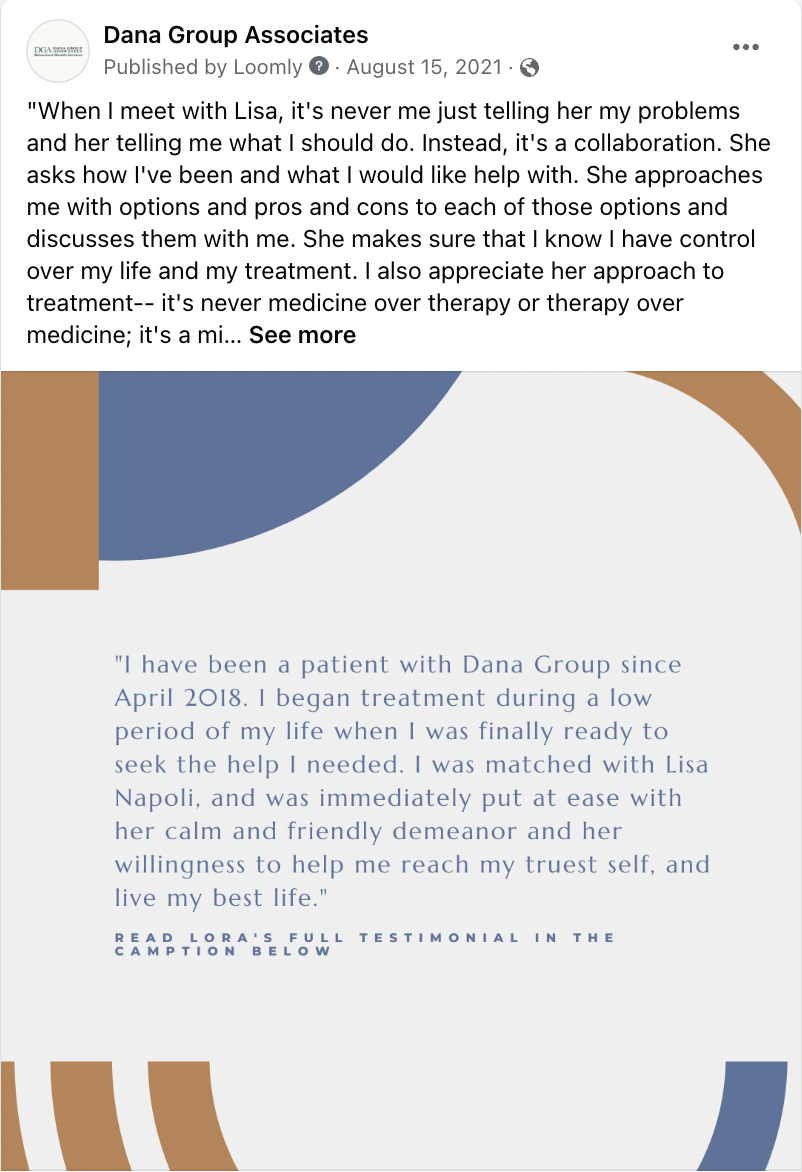
1. Structure and Format  

The number one principle every blog should use is ensuring the content you write is well structured and you have a plan. Blog posts aren’t meant to just live and sit on your website. Instead, we want your audience to engage with the blog, read it, digest it, and have an experience. In order to do this, you must make sure your content has structure to it – meaning don’t scatter and jot down your thoughts just anywhere throughout the blog. Keeping your thoughts clear and organized will not only help the flow of content, but it will also help keep your brain focused.  

Once you have your thoughts in line and you know exactly how you want your blog to sound, you can then begin shaping the content, making it engaging and compelling for your audience or users to read. Nailing the tone you want to use and understanding your messaging can really help achieve these goals. Do you want your blogs to be more on the professional side, focusing on statistics and reaching a more serious audience? Or do you want your blogs to have a friendly and fun, yet informative, tone? It all depends on the type of business you run or work for. 

2. Relevant Subheadings 

The next big item on the list of things you want to make sure you are including throughout your blog is relevant subheadings. You may be wondering why you would need subheadings – isn’t the point of a blog to just get information out? Wrong. Subheadings are extremely important and here’s why. 

When you write a blog without subheadings, what do you see? A lengthy page with just a bunch of words on it. The reason behind subheadings is that they break up the page. When the user only sees a bunch of text with the same font throughout what they are attempting to read, it may be difficult to concentrate, or you may lose your place easily. When you incorporate subheadings, this gives the reader a chance to easily digest and navigate through the content they are reading, which will in turn result in better engagement and user experience. 

Aside from breaking up the content throughout the page, they also allow readers to know what each section covers before reading it. This makes content “scannable” – so readers are able to scan through the content, while focusing on a part of the blog that has the information they’re looking for. Not to mention, all types of headings are a huge component for SEO ranking and keyword placement.

3. Calls to Action

This is an absolute MUST for any blog! Calls to action, often known as CTA’s, encourage the user  to make a second click. A call-to-action is extremely powerful and can come in many different forms. You can have a CTA button towards the end of the blog, throughout the blog, at the very beginning of a blog, or wherever you see it fitting best. 

The first step in deciding what call-to-action you want is figuring out what action it is you want your visitors or users to take. Do you want them to contact you? Do you want them to sign up for your mailing list? Monthly newsletters? Do you want them to purchase a specific product? 

Understanding what your users are actively engaging with the most will help you determine what action you want them to take. Always think about the page path for your user and the overall goal. What is it that you want to obtain or achieve? 

4. Internal Linking 

Internal linking is  because it gives you the chance to link to another piece of content to your website. For example, let’s say you are writing a blog about health and wellness, and you are addressing a mental health topic. What you can do is highlight the word “mental health” and insert a link that will take the user to a service page that has  more information on mental health. 

We recommend using at least three to five internal links on not only blogs but throughout the rest of your website as well. When the user sees something that is hyperlinked, chances are they will click on it and want to browse and engage more with the rest of your content, while also boosting your SEO. 

5. Meta Descriptions 

Meta descriptions are an important key feature that many people overlook. Most times, the platform you are using to create a website or write blog posts, service pages, or subpages, there is a section on the backend of your website where you can write a meta description or enter in a keyword that best reflects the topic you are addressing. Meta descriptions are important because they are the snippet Google displays on the search engine results page. 

Meta descriptions have a big impact on your SEO and SERP rankings . Every time you create a new page or post in the backend of your website, you want to make sure you are inputting into the meta description section. When you do this, you are giving your website a chance to populate all over search engines, making your website or page rank higher than others. To improve click-through-rate, make sure your meta description is easily readable for all audiences, clear, and compelling. 

A well-written meta description that gives readers a clear idea of what the page is about draws in more website visitors. If you do not write a meta description yourself, Google pulls an excerpt from your blog/web page, and it may not give searchers the best idea on what the blog is about.

Tackle Blogging from A Different Perspective 

All in all, blogging can be a very crucial aspect in generating more website traffic, creating better user experiences, and bringing more business straight to your doorstep. At Beacon Media + Marketing we offer a blogging distribution package personalized just for you! 

If you are looking for more than just a couple of blogs posted every month and want to go the extra mile in really boosting your SEO, we have just the solution you need. We will first optimize and produce high-quality blogs for your website and then we will work to repurpose this content and distribute it to other platforms. 

Our content distribution package includes a video that is then published on our Beacon Media News YouTube Channel, a press release that will be reached by tons, and a spotlight feature on our Beacon Media News website. Give your content a purpose and invest in repurposing blog content that can be sought out by many other news outlets and sources to improve visibility. 

Are you ready to take your blogging to the next level? Click here to get started! 

It’s an age-old dilemma: You want to generate more leads for your company, but you simply don’t have the time to walk every new sales opportunity to the end of the sale funnel. And let’s face it, no one enjoys being on either side of a cold call. With an intuitive automated sales process in place, you can literally nurture leads in your sleep. Best of all, you can guide customers to a purchase in a way that is organic, engaging, and effective.

When it comes to developing a lead generation strategy, it’s essential that every step of the process works together. This cohesive plan should start by attracting someone new to your business and end with converting them into a lead.

At Beacon Media + Marketing, we’ve dived headfirst into the world of digital lead generation and have partnered with SharpSpring to give our clients all the benefits of an automated sales process and CRM. From setting up your lead generation ecosystem to creating engaging email blasts that are tailored to each individual, we take care of all the details.

Ready to invest in a lead generation strategy that pays for itself? Schedule a free consultation now.

What Are the Benefits of a Lead Generation Strategy?

Automation has completely changed the game when it comes to generating leads. With so many things pulling at you at once, you can use whatever it takes to save you precious time, which equates to more money made down the road. Not to mention, sales automation platforms have the ability to make customized decisions based on people’s interactions with your content and track data in real time, which you can use to analyze and optimize your lead generation efforts.

Tailored Email Marketing

While it might seem like a digital lead generation strategy takes away the personalized touch from the sales process, it can do just the opposite. When first interacting with a potential lead, you have little to no information on them. Rather than heading straight for the sale, a lead generation strategy takes email marketing to the next level.

One of the worst mistakes you can make when creating an email marketing plan to generate leads is assuming every person who visits your website is exactly the same. By creating segments, you can target your messaging based on buyer persona and deliver emails based on activity. A smart email marketing campaign understands the importance of quality over quantity, and it knows to back off when a potential lead is not interested in the content sent out.

Efficient Communication

With an integrative lead generation ecosystem, you can easily organize all your leads and communicate with them all from one place. By automating the process, you remove the chance for human error. Never again will you miss a lead because a website visitor is unaccounted for, it’s after business hours, or someone on your team walks away from their computer.

You’ll also have more capacity to build relationships and nurture leads that are genuinely interested in what you have to offer. By taking care of the initial contact for you, your automated sales platform can weed out unqualified leads from your list. This allows you to invest more time in website visitors who are already interacting with your content. These are the same individuals who are more likely to purchase something from your company down the road, making your processes more efficient and increasing your ROI.  

Comprehensive Analytics

An effective lead generation strategy is dynamic and adaptable. By gathering detailed data on every person in your contact list, you can adjust and refine your strategy as you see what works — and what doesn’t. This allows you to react quickly if your email messaging is stale, your call-to-actions aren’t spurring enough, or you’re looking for your target audience in the wrong places. 

With attribution data, you can track which channels are generating the most leads and identify where to spend your budget based on performance. You can also look at the entire lead generation journey to see not only which channels are bringing the largest number of leads but also the best quality.

You can analyze each landing page in your lead generation campaign to see which are converting the best. With A/B testing, you can optimize each page to see which call-to-actions perform the best and find ways to better user experience and drive them to act.

Cohesive Marketing Strategy

Lead generation is not meant to be a standalone service. Rather it works together with your other marketing efforts to smoothly take potential customers through the entire sales funnel in a unified, practical manner. With an automated sales process, you can ensure sales and marketing are on the same page with identical goals in mind.

Tools that capture attention, like blog posts and social media campaigns, work together with automation and email marketing to convert a visitor into a lead. A consistent design across all channels reinforces your brand, building authority, credibility, and recognition.

Once a lead is generated, your automated sales platform continues to work with your social media, blogs, videography, and other marketing pieces to convert them into a paying customer. Retargeting campaigns work to pull leads back into the sales process after their interest fades or they haven’t made a purchase yet.

This is just the beginning of the journey. All your marketing efforts should continue to engage current customers. Your CRM collaborates with other aspects of your content and advertising strategy to increase brand loyalty and promote subsequent sales, pulling from the data and information you’ve already gathered from the lead generation stage.

Adding on Lead Generation: Your One-Time Vs. Ongoing Investment

With our new ecosystem management and lead generation package, you can take a step back from handling every step of the sales process yourself and enjoy all the benefits we’ve discussed in this blog. If you’re interested in how an automated sales process and state-of-the-art CRM can help generate leads, boost sales, and build brand loyalty with existing customers, we’d love to show you how we could help.

Our package is two-fold, including both a one-time investment for ecosystem setup and an ongoing monthly plan.

The initial setup phase includes several steps to build your new CRM and prepare for future lead generation and automated sales efforts:

  • Migrating previous customer data to new CRM
  • Developing an as-is and to-be business process design
  • Setting up your reporting and analytics dashboard
  • Strategizing your campaign, including a smart-email and sales pipeline
  • Customizing content to match your company’s branding and messaging
  • Implementing security settings and assigning roles accordingly

Once we’ve finished setting up your ecosystem, we will continue managing and creating content to effectively generate leads and guide them toward a sale. Through extensive data analysis and internal strategy, we’ll continue to optimize and build campaigns around performance and your company’s revolving goals. We’ll create new automations on a monthly basis, which is essential for allowing us to build relationships with your customer base.

You’re not alone if your business has been struggling with drawing in new leads or finding the time to nurture leads once they show interest in what you have to offer. Your time and resources are limited, and lead generation can consume all the capacity you have.

If you’re ready to add ecosystem management to your marketing services, our team at Beacon Media + Marketing is standing ready to help your business reach your heights. 

Are you as excited as we are? Schedule your free consultation to get started!

At Beacon Media + Marketing we design, develop, and host websites for many businesses and non-profits.

Our clients are spread as far and wide as Alaska, California, Illinois, Minnesota, New York, Delaware, West Virginia, Florida, and Washington, with many others in between. We’ve been in this game since 2012 and we like to think we’ve got it down to an art-form. Our team include an in-house website copywriter, website designer, and website developer, which means we function as a one-stop shop for all of your website development needs.

Are you an Anchorage business in the market for a new website? We’d love to help.

What Do The Best Websites in Alaska Look Like?

Want to check out our work? Here are some Alaskan websites we’re really proud to have developed:

What’s the best website development company in Anchorage, Alaska? Beacon Media + Marketing, of course.

Discover the cost of website design and what to consider before getting a new website.

Other Alaskan Website Design Companies We Like

However, we spend a lot of time learning about best practices, including new trends and tactics, In this line of work we spend a lot of time online learning best practices, getting inspiration and admiring the competition’s work.

We’ve never been ones to shy away from good honest competition. We also want to do what we can to lift others in our industry, so here are five of the other most highly regarded website design companies in the Anchorage area:

  1. Sundog Media has been around since 1996 and has a strong reputation for high quality work. They design, host and manage websites. Their focus is on WordPress websites and feature a 100% satisfaction guarantee.
  2. Thrively Digital focuses on small to medium sized businesses and does a lot of work with tourism companies. Their websites are responsive and they do not limit their sites to just WordPress.
  3. Red Carrot Design offers website design, development, and support. They also focus on WordPress designs and offer a high level of creativity and uniqueness to their designs.

So there are three other companies to consider when looking for website quotes. No matter who you go with, we hope the experience is a positive one and you get the website that is going to help your company succeed and grow.

Need a new website? Schedule a free consultation today.