
We’re Charting Growth for Group Practices
Get Seen, Trusted, and Chosen by the Right Clients
We partner with counseling centers, psychiatric practices and therapists to strengthen online presence, improve search rankings, and turn digital interest into scheduled appointments.
Launch Your Mental Health Clinic Into a New Phase of Growth
Fully Booked One Month, Empty the Next?
Your work changes lives. Our role is to help the right clients find you. Through targeted mental health marketing, search engine optimization, and AI-optimized content strategies, we strengthen your online presence and create consistent, measurable growth.
From therapy practices and group counseling centers to psychiatric clinics and multi-location mental health organizations, we understand the nuance of your industry. Compliance matters. Messaging matters. Compassion matters. That’s why we combine data-driven strategy with thoughtful storytelling — so your digital presence reflects the quality of care you provide.
Expert Marketing Solutions for Mental Health Providers + Clinics
- Private Mental Health Practices
- Outpatient Mental Health Practices
- Multi-Location Mental Health Clinic
- Online (Telehealth) Mental Health Practices
- National Mental Health Franchises
- Addiction + Rehab Centers
CASE STUDY
for Beyond Health Care
for Horizon Services
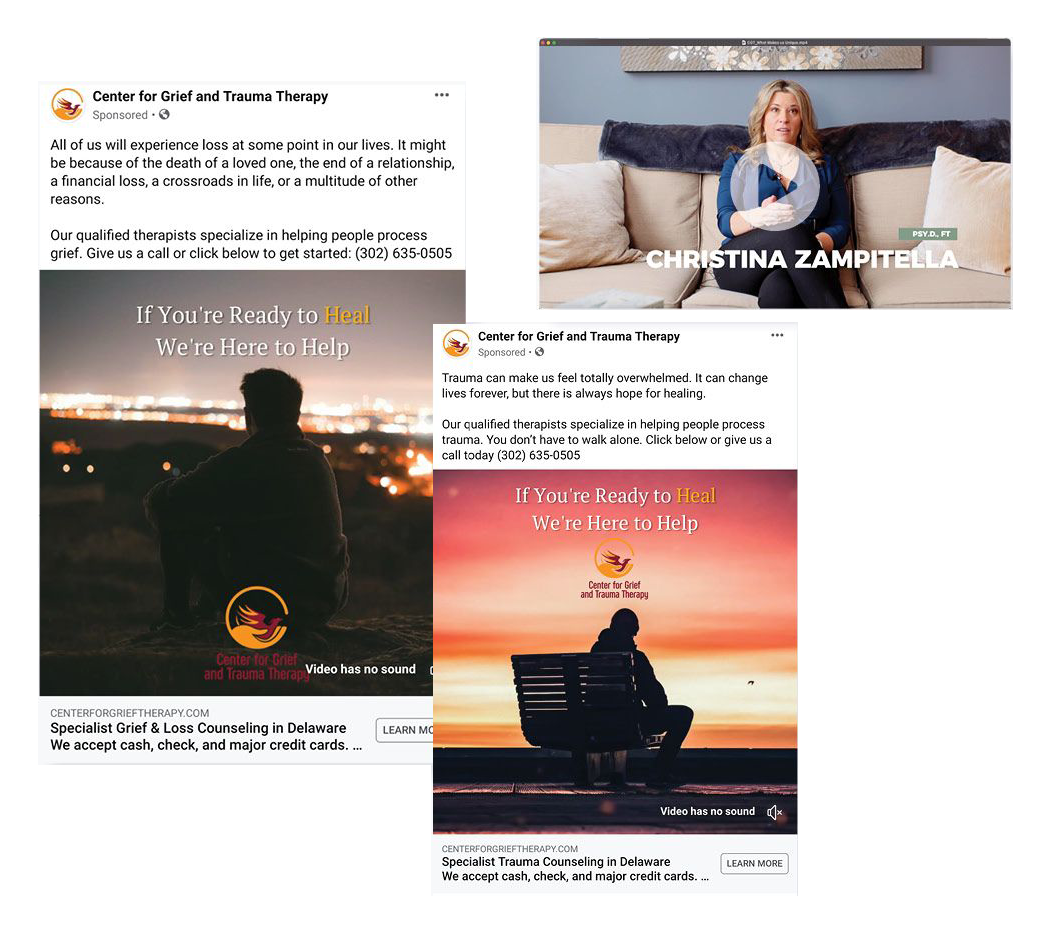
Increase in leads converted for Center for Grief and Trauma Therapy
How We Scaled a Private Pay Practice from $30k to over $500k in Less Than 18 Months
Dr. Christina came to Beacon with the vision of building her private practice. She provides niche mental health services for an issue she’s deeply passionate about and wanted to expand her reach to help even more people within her specialty.
We created a comprehensive mental health marketing strategy that focused on building awareness, attracting the right clients, and pushing conversions. The results were beyond what she ever expected.
Struggling to Stand Out in a Crowded Therapy Market?
At Beacon Media + Marketing, we help mental health providers and practices grow in a way that actually feels sustainable. That starts with getting clear on who you want to serve and how you want to show up. From there, we build a strategy that makes it easier for the right clients to find you, understand what you offer, and feel comfortable reaching out.
Here, everything is designed to support steady, consistent inquiries—without forcing you into marketing that feels uncomfortable or out of alignment.We also focus on simplifying what can feel overwhelming by bringing structure, clarity, and direction so you know what’s working, what’s not, and what to do next.
Our Specialized Mental Health Marketing Services
Mental Health Web Design
Your website design is your patient’s first impression
of your clinic.
Mental Health SEO + AIO
Mental Health Social Media
Mental Health PPC Ads
Increase brand awareness, generate leads, and gain conversions.
Mental Health Branding
Discover your mental health clinic’s mission & capture that in eye-catching visual statements.
Mental Health Content Marketing
It’s all about connecting with and helping people. Blogs allow you an outlet to do just that

Turn Your Mental Health Website Into an AI Visibility Asset
Your website should continuously evolve to stay visible in AI-powered search experiences. We help mental health practices refine existing content, strengthen topical authority, and improve the signals that Google, ChatGPT, Gemini, Perplexity, and other AI platforms use to recommend providers.
AI-Ready Content
Modern search rewards websites with clear, comprehensive, experience-driven content. We continuously optimize your pages to improve visibility where patients are searching today.
Stronger Topical Authority
Rather than simply adding more pages, we strengthen the relationships between your services, conditions, locations, and educational resources to build lasting authority.
Better User Experience
Small improvements to navigation, page structure, and internal linking make your website easier for both patients and search engines to understand.
Search Intent Alignment
We refine existing content to answer the real questions prospective patients ask, helping your website match both traditional search and AI-generated responses.
Trust & Credibility Signals
AI systems look for expertise, accuracy, and consistency. We help reinforce your practice’s credibility with content that’s well-structured, evidence-informed, and patient-focused.
Ongoing Website Optimization
AI search is changing rapidly. We continuously refine your content strategy, so your website evolves alongside search, not behind it.
Explore Our Insights
Take a closer look at the tools, tips, and strategies that help your practice grow with confidence.

Most mental and behavioral health practices assume Google is their primary discovery channel. And for many, it is. But some practices, when they actually pull their analytics data and trace where new patients first encountered them, find something unexpected: Google isn’t the biggest source at all.
Sometimes it’s referrals from a well-maintained Psychology Today profile. Sometimes it’s organic social media discovery. Sometimes it’s direct traffic from people who heard about the practice through word of mouth and went straight to the website without searching for anything. And sometimes it’s a combination of channels working together in ways the practice never intentionally built.
When a practice’s biggest visibility source isn’t Google, it raises a more interesting question than “how do we fix our Google ranking?” It raises the question of what it actually means for a practice to be visible in 2026, and what a genuinely resilient patient discovery presence looks like across the fragmented digital landscape patients are actually navigating.
Not sure which channels are actually driving patients to your practice? Let’s dig into your data together and find out what’s really working.
Key Takeaways
- Google is the dominant search channel for most practices, but it’s not the only meaningful one, and for some practices it isn’t even the primary source of new patient discovery.
- Provider directories are a larger part of the picture than most practices realize. Health Affairs research found that 44% of privately insured patients used a mental health provider directory, and 53% of those patients encountered inaccurate information there.
- When a non-Google channel is driving the most visibility, it’s usually because that channel was tended to more consistently than the others, not because it’s inherently superior.
- The practices with the most resilient patient acquisition don’t rely on any single channel being their biggest source. They build enough presence across enough channels that no single one becoming unavailable would cause a crisis.
- Understanding which channels are actually driving discovery is the first step to investing in the right places and fixing the ones that are quietly underperforming.
What Does It Actually Mean When a Non-Google Channel Is Driving the Most Visibility?
Usually one of two things: either that channel was built intentionally and is producing exactly the results it was designed for, or it was built somewhat accidentally and is outperforming Google because the Google presence was underinvested in relative to the competition.
The first version is a success story worth understanding and replicating. A practice that built a strong Psychology Today presence, maintained current photos and specialty language, and generated consistent reviews has a directory-driven pipeline that’s producing results through genuine investment and attention.
The second version is more common and more instructive. A practice that has strong referral network relationships producing word-of-mouth leads, but weak Google SEO, weak social media presence, and inconsistent directory listings, isn’t proof that word-of-mouth beats digital marketing. It’s proof that the practice built one thing and neglected others, and the thing it built is carrying the whole load.
Both versions point toward the same conclusion: visibility tends to come from wherever consistent attention has been paid. And the practices that pay consistent attention to multiple channels simultaneously end up with the most resilient and sustainable patient acquisition pipelines.
How Important Are Provider Directories as a Visibility Source, and Are Most Practices Managing Them Well?
Directories are more important than most practices give them credit for, and most practices are managing them poorly enough to actively undermine themselves.
Research published in Health Affairs found that 44% of privately insured patients who received specialty mental health treatment had used a mental health provider directory to find their provider. And of those patients who used a directory, 53% encountered inaccurate information, including wrong phone numbers, outdated insurance listings, and incorrect addresses. Those inaccuracies directly contributed to patients ending up with out-of-network providers and unexpected bills, which means directory errors aren’t just a marketing problem. They’re a patient experience problem with real financial consequences.
For practices, the implication is clear. A directory that’s driving patient discovery is only working for you if the information there is accurate. An outdated Psychology Today profile that lists insurance plans you no longer accept, a phone number that’s changed, or a specialty description that doesn’t reflect your current clinical focus isn’t just unhelpful. It’s actively harmful to the patients who rely on it.
The directory management behaviors that matter most:
- Quarterly audits of every active directory listing to verify that phone numbers, addresses, insurance information, and specialty descriptions match what’s currently accurate for the practice
- Consistent naming conventions across all platforms, since inconsistencies between how a practice’s name, address, and phone number appear across directories confuse both patients and the AI systems that cross-reference this data
- Regular photo updates on any directory that displays images, since current, welcoming photos signal an active practice to evaluating patients in a way that stock images or outdated headshots simply don’t
- Active review management on any directory that supports reviews, since recency and volume of reviews are significant factors in how directory search algorithms rank practices within their results
What Does Strong Referral-Based Visibility Actually Reveal About a Practice?
That it’s doing something right clinically and relationally, but possibly missing a significant growth multiplier by not pairing those referrals with a strong digital presence.
Referrals are the highest-converting patient acquisition channel in behavioral health. A patient referred by a trusted physician, former patient, or school counselor arrives with a built-in level of trust that no advertising can replicate at the same cost. When referrals are the dominant source of visibility for a practice, it’s almost always because the practice’s clinical quality and interpersonal warmth have created a network of advocates who proactively send patients.
But referral pipelines have a ceiling that digital channels don’t. The ceiling is determined by the size of the referral network, the frequency with which network members encounter someone who needs therapy, and the reliability with which those encounters lead to an actual recommendation. That ceiling is fixed at any given point in time, and it can be disrupted by network members retiring, relocating, or simply shifting their patterns.
Practices that pair strong referral networks with strong digital visibility create a pipeline that benefits from both. The referral produces a warm, high-trust lead. The digital presence validates that referral when the patient inevitably Googles the practice before calling. And the digital channels reach patients who would never receive a personal referral but are actively searching for exactly what the practice offers. This combination is where the most resilient practices operate.
| Primary Visibility Source | What It Signals | Its Natural Ceiling | What to Build Alongside It |
|---|---|---|---|
| Google organic search | Strong SEO and content investment; consistent publishing | Algorithm changes; increased competition; keyword saturation | Directory presence; social media awareness; paid advertising as a supplement |
| Provider directories | Well-maintained profiles; consistent review presence; clear specialty language | Directory algorithm changes; inaccuracy erosion; competitor profile improvements | Google SEO; social media; direct website traffic through content |
| Referral network | Strong clinical reputation; trusted professional relationships | Network size; referral partner availability; seasonal and geographic variation | Digital presence that validates and extends referrals; content that reaches non-referred patients |
| Social media | Consistent content; authentic clinician presence; engaged community | Platform algorithm changes; content fatigue; reach limitations without paid support | SEO to capture patients who search after discovering on social; directory listings for conversion |
| Paid advertising | Active investment in reaching ready-to-book patients | Budget; rising CPL; platform policy changes | Organic channels to reduce dependence; owned content for patients who aren’t ready to book yet |
| Direct / branded traffic | Strong brand recognition; word-of-mouth; community visibility | Depends on ongoing community presence and brand awareness investment | SEO for patients who don’t know the practice name yet; social media for brand reinforcement |
What Should a Practice Do When It Discovers That One Channel Is Carrying Most of the Weight?
Two things at once: protect the channel that’s working and start building the ones that aren’t.
The instinct when something is working is to invest more in it. And there’s a version of that which makes sense. If your Psychology Today profile is your strongest visibility source, making sure it stays current, well-photographed, and actively reviewed is smart maintenance. If your referral network is your biggest pipeline, continuing to invest in those relationships is essential.
But treating the strongest channel as the only channel worth investing in is a compounding vulnerability. The visibility source that’s doing the most work today is the one that will be most disruptive when it changes, and every channel changes eventually. Algorithm updates, policy shifts, platform restructuring, and competitive pressure affect every channel over time.
The parallel work of building the underperforming channels doesn’t require abandoning what’s working. It requires acknowledging that a practice whose entire patient acquisition depends on one source is one disruption away from a significant problem, and that building toward a more distributed visibility foundation is a form of strategic risk management rather than a distraction from what’s already working.
How Does Understanding Your Visibility Sources Change How You Invest in Marketing?
Dramatically, and in very specific ways.
A practice that knows its primary visibility source is organic Google search can make a confident, data-driven decision to maintain that investment and allocate remaining budget toward directories or social media that are underrepresented in its current traffic mix. A practice that knows most of its patients come through Psychology Today can prioritize keeping that profile current and review-rich while building organic search presence to reach the larger pool of patients who don’t start their search on directories.
A practice that doesn’t know where its patients are coming from is making investment decisions in the dark. And that’s unfortunately the situation most practices are in, not because the data doesn’t exist, but because nobody has connected the available analytics tools in a way that makes the full picture visible.
Getting that visibility picture into focus requires:
- Google Analytics 4 configured to track traffic by source and medium, so organic search, direct, referral, and social traffic are clearly separated and measurable over time
- UTM parameters on any directory or paid channel links, so traffic from Psychology Today, Healthgrades, or paid campaigns is distinguishable from general organic traffic
- A simple intake question, either in the contact form or during the first session, asking new patients how they heard about the practice, since self-reported discovery data often surfaces channels that analytics tools miss entirely
- Regular review of Google Search Console to understand which search queries are driving organic clicks and whether those queries are shifting over time
Our SEO team helps mental and behavioral health practices set up and interpret the tracking infrastructure that makes these visibility insights actionable, so investment decisions are based on real data rather than assumptions about which channels are working.
What Does a Genuinely Resilient Visibility Profile Actually Look Like for a Behavioral Health Practice?
It looks like no single channel accounting for more than 40 to 50% of new patient discovery, with meaningful presence across at least three or four distinct channels that operate independently of each other.
That distribution means a Google algorithm update doesn’t crater inquiry volume. A Psychology Today search ranking change doesn’t eliminate discovery. A slow month for referrals doesn’t cause a revenue crisis. Each channel is contributing something, and the loss of any single one would be noticeable but not devastating.
Building toward that kind of distributed visibility isn’t a project with a clear finish line. It’s an ongoing discipline of maintaining what’s working, building what’s underrepresented, and periodically reviewing whether the channels in the mix still match where patients are actually looking. The digital landscape shifts, and the practices that stay ahead of those shifts are the ones that treat visibility as a strategic priority rather than a marketing task to be delegated and forgotten.
Beacon helps mental and behavioral health practices build this kind of multi-channel visibility strategy from the ground up, including the video and content presence that reaches patients across the awareness-stage channels that pure search optimization can’t touch.
Whether Google is your biggest source or your weakest link, the goal is the same: a visibility presence that holds up no matter what shifts.
Start building that with Beacon today, and let’s make sure your practice is never dependent on a single channel to stay visible.

Here’s an uncomfortable thought experiment. Open a private browsing window right now and pretend you’re a patient searching for a therapist in your city. But don’t go to Google. Go to Bing. Try Apple Maps. Ask Siri. Search on TikTok. Pull up Yelp. Check Psychology Today.
What you find, or don’t find, on each of those platforms tells you something important about where your practice is visible and where it has handed the advantage to someone else without even realizing it.
Most mental and behavioral health practices have never run this experiment. And most are losing patients to competitors on platforms they’ve never thought to optimize for, quietly and consistently, while all their attention stays fixed on Google.
The patient discovery landscape in 2025 is fragmented across more platforms than most marketing strategies account for. Here’s which ones are doing the most damage when left unaddressed.
Ready to find out which platforms your practice is invisible on? Get a full website audit from Beacon and let’s see the full picture.
Before You Keep Reading
- More than 1 in 3 U.S. patients use platforms like Facebook, Yelp, and WebMD to research and select a healthcare provider, meaning Google is far from the only game in town.
- Bing powers Microsoft Copilot and captures a meaningful share of health searches from older adults, corporate device users, and iPhone users who default to different search behavior than you might expect.
- Apple Maps and Siri are the default local search tools for hundreds of millions of iPhone users, and most practices have never claimed or optimized their Apple Business Connect listing.
- Yelp and WebMD function as genuine provider discovery platforms with their own search algorithms, review ecosystems, and patient audiences that operate entirely separately from Google.
- TikTok’s search function is increasingly where younger patients discover mental health providers through content before they ever perform a traditional search.
Why Are Non-Google Platforms Sending Patients to Your Competitors?
Because your competitors claimed those platforms and you didn’t. Or they’ve kept them current and you haven’t. Or their content shows up when a patient searches there and yours doesn’t exist to compete with it.
The mechanism is simple. It’s the consequences that are invisible.
Patient discovery has never been exclusively a Google activity, but the degree to which it has fragmented across platforms in the past few years has accelerated dramatically. Research analyzed by eMarketer found that more than 1 in 3 U.S. patients use platforms like Facebook, Yelp, and WebMD to research and select a healthcare provider. That’s a substantial and largely overlooked segment of the patient population using channels that most practices have either never optimized for or set up once and forgotten about years ago.
The practices that appear consistently across those platforms aren’t doing anything exotic. They’ve simply understood that patient discovery happens wherever patients happen to be looking, and they’ve made sure they’re visible in those places. The practices that haven’t made that leap are handing competitive advantage away for free.
What Is Bing Actually Doing to Your Practice Visibility and Why Does It Matter?
More than most practice owners realize, and through two distinct pathways that compound each other.
The first pathway is direct Bing search. Bing processes billions of searches monthly and has a disproportionately strong user base among older adults, Microsoft Windows users, and employees on corporate devices whose IT departments have set Bing as the default browser search engine. For a mental and behavioral health practice serving adults over 40, or operating in markets with large corporate or government employment bases, Bing’s audience is not a niche afterthought. It’s a significant pool of prospective patients who are searching for providers in exactly the way you’d want them to.
The second pathway is Microsoft Copilot. Copilot is Microsoft’s AI assistant, integrated into Windows, Edge, and Microsoft 365. When a user asks Copilot to recommend a therapist, it pulls from Bing’s index and Microsoft’s local business data. A practice with a well-maintained Bing Places profile and strong Bing search visibility is significantly more likely to surface in those AI-generated recommendations than one that has never touched its Bing presence.
Claiming and optimizing a Bing Places for Business profile takes an afternoon and costs nothing. Not doing it costs patients who will never find you there.
How Many Patients Are Finding Providers Through Apple Maps and Siri Without You Knowing?
A number worth taking seriously, especially for practices in markets with high iPhone penetration.
When an iPhone user asks Siri “find a therapist near me,” or opens Apple Maps and searches for mental health services, they’re not getting Google results. They’re getting results from Apple Maps, which pulls from Apple Business Connect listings and the data Apple licenses from sources including Yelp. If your practice hasn’t claimed its Apple Business Connect listing, you’re invisible in this channel entirely, regardless of how strong your Google presence is.
And it’s not a small channel. iPhone accounts for more than half of U.S. smartphone market share. Every one of those users has Siri as their default voice assistant and Apple Maps as their default navigation and local search app. For a local mental health practice, that’s a significant portion of the mobile search audience that can be reached through a free listing that most practices have never claimed.
What Apple Maps optimization requires:
- Claiming your Apple Business Connect listing at businessconnect.apple.com, which is free and takes about 30 minutes to complete
- Adding accurate hours, phone number, website, and specialty descriptions so the listing provides useful information to patients who find it through Siri or Apple Maps searches
- Uploading current photos of the practice, since Apple Maps displays images prominently and a profile with current, welcoming photography performs significantly better than one without
- Maintaining consistency with your Google Business Profile information, since inconsistencies between platforms create confusion for both patients and the AI systems that cross-reference local business data
| Platform | Who’s Using It to Find Providers | What Happens When You’re Not There | What It Takes to Fix It |
|---|---|---|---|
| Bing / Microsoft Copilot | Older adults; corporate device users; Copilot AI users | Competitors with Bing presence capture this audience entirely | Claim Bing Places; run Microsoft Advertising; optimize for Bing Webmaster Tools |
| Apple Maps / Siri | iPhone users (50%+ of U.S. smartphone market); voice search users | Invisible to Siri recommendations and Apple Maps local results | Claim Apple Business Connect listing; add photos and accurate information |
| Yelp | Research-stage patients checking reviews alongside Google | Missing from a platform that feeds Apple Maps and AI systems | Claim profile; encourage reviews; add specialty and insurance information |
| WebMD / Healthgrades | Patients specifically seeking healthcare provider information | No presence on a platform built specifically for healthcare discovery | Claim and optimize profiles; keep specialty and contact info current |
| TikTok Search | Younger patients (18–34) discovering providers through content | No awareness among the fastest-growing therapy-seeking demographic | Publish clinician-led content using searchable mental health keywords |
| Facebook Search + Local | Community-connected patients; referral-adjacent audiences; 35–55 age group | Missing from local community discovery and Facebook’s healthcare search | Keep Facebook business page current; engage with local community content |
Is Yelp Actually Relevant for Mental Health Provider Discovery in 2025?
More than most clinicians would expect, and for two reasons that extend well beyond Yelp itself.
The first is direct: Yelp’s healthcare category is genuinely active, particularly in urban and suburban markets where patients are accustomed to using Yelp as a research tool across service categories. A practice with a claimed, active Yelp profile with current reviews reaches a segment of patients who cross-check Yelp alongside Google rather than using Google exclusively.
The second is structural: Yelp data feeds Apple Maps. The reviews, photos, and business information on a Yelp profile directly influence how a practice appears in Apple Maps search results and, by extension, in Siri recommendations. An optimized Yelp profile isn’t just good for Yelp. It’s infrastructure for Apple Maps visibility, which means ignoring Yelp has downstream consequences that most practices have never connected to their Apple Maps presence.
The combination of these two pathways makes Yelp worth at least the basic investment of a claimed, current profile with accurate information and an active review presence, even for practices that never considered it part of their marketing strategy before.
What Is TikTok Search and Why Is It Increasingly Relevant for Behavioral Health Practices?
TikTok’s search function has evolved into a genuine discovery tool, particularly for younger adults who are more comfortable researching mental health topics through video content than through traditional text-based searches. The mental health content ecosystem on TikTok is enormous, and a meaningful number of users who are considering therapy are finding their way to specific practices and clinicians through TikTok content before they ever perform a Google search.
This matters for practices for two reasons:
- Searchable content builds platform-specific visibility. TikTok’s algorithm surfaces content in search results based on relevance to the search query, which means clinician-led video content that addresses common mental health concerns, therapy approaches, or the experience of seeking care can appear when a user searches for those topics on TikTok specifically.
- TikTok discovery precedes Google searches for many younger patients. A patient who discovers a clinician through TikTok content is significantly more likely to then Google that practice, visit the website, and book an appointment. The TikTok presence functions as the first touchpoint in a discovery journey that converts through traditional channels later.
A practice doesn’t need to go viral on TikTok to benefit from this. It needs consistent, searchable content from real clinicians speaking authentically about the things their ideal patients are already looking for. Our social media marketing team helps mental and behavioral health practices build this kind of platform-specific content presence efficiently and consistently.
How Should a Practice Prioritize Fixing Its Non-Google Visibility Without Spreading Too Thin?
With a triage approach that addresses the highest-impact gaps first rather than trying to fix everything simultaneously.
Start with the free, high-impact fixes that have been sitting unclaimed. Apple Business Connect and Bing Places cost nothing, take minimal time, and reach meaningful patient audiences that are currently invisible to practices that haven’t claimed them. These should be the first stops.
Next, audit the platforms that are claimed but outdated. A Psychology Today profile with a three-year-old photo and generic specialty language is actively working against the practice for every patient who finds it. A Yelp page with no photos and reviews from 2019 signals abandonment. A Facebook business page with the last post from eight months ago sends a message that nobody wants to send. Updating these costs time but not budget.
Finally, evaluate which new platforms are worth active investment. TikTok and Instagram require consistent content creation and won’t produce results from a single post. But for practices serving younger demographics or wanting to build awareness-stage visibility, they represent genuine growth channels that most competitors still underinvest in.
The goal isn’t omnipresence. It’s strategic, consistent visibility across the specific platforms where the patients your practice is best positioned to serve are actually doing their research. Beacon works with mental and behavioral health organizations across the country to do exactly this kind of platform-specific visibility audit and build the presence that turns missed discoveries into booked appointments.
Your competitors don’t need to be better than you to beat you. They just need to be visible where you aren’t.
Let’s map where you’re missing and build a presence that covers the full landscape before another patient finds someone else first.

Ask a practice owner to name their referral sources, and you’ll get a real answer. The hospital discharge planner. Two pediatricians. The EAP contract. The church counseling program down the road. They can tell you which ones send steady volume, which ones dried up last spring, and which relationship needs a lunch. If one of them disappeared tomorrow, they’d feel it inside a month and be working the problem that week.
Now ask the same owner where their patients find them online.
The answer is almost always Google, said with a shrug, the way you’d name the weather.
How Did Google Become the Only Room?
Nobody decided this. There was never a meeting where a practice owner looked at the options and concluded that one company’s algorithm should sit between them and every prospective patient in their county. It happened the way most concentration happens, which is quietly, because the thing was working and it was the only thing anybody could measure.
Google was generous for about fifteen years. It gave us clean numbers, a dashboard that updated overnight, and a story we could tell the board. Everything else in the discovery landscape was harder to see, so it got treated like it wasn’t there. Marketing budgets follow measurement, and measurement followed Google.
Nobody decided this. It happened while everyone was busy running a practice.
So the practice ended up with a single point of failure at the very top of the funnel, and the owner who would never accept that from a referral relationship accepted it from a search engine without ever knowing they’d made the trade.
I want to be careful here, because this is not an argument that Google stopped working. Google works. It’s still the biggest room in the building. The point is narrower and, I think, more uncomfortable: it stopped being the only room, and most practices have not adjusted their behavior to match.
Where Are Patients Actually Finding Providers Right Now?
Start with the one nobody expects. According to Statcounter data compiled by Backlinko, Bing now accounts for roughly one in ten U.S. searches across all devices, and close to one in five on desktop.
Desktop. Sit with that for a second, because in behavioral health it matters more than it does almost anywhere else.
Think about who’s on a desktop in the middle of a Tuesday. Somebody at work. On a Windows machine, in Edge, defaulted to Bing, using their lunch break to look up whether their insurance covers therapy, because the work computer is the one their spouse won’t pick up and scroll through that evening. That’s not a rounding error in your traffic. That’s a person doing the most private search of their year on the only device where it feels safe, and if you’ve never once checked how your practice appears on Bing, you have no idea whether you were there for them.
Then keep going, because Bing is only the first surprise.
There’s the insurance plan’s provider directory, which for a huge number of patients is the actual first stop, ahead of any search engine, because coverage is the gate everything else has to pass through. There’s Psychology Today, Healthgrades, and the specialty directories, where people compare profiles side by side using filters before they visit a single practice website. There’s the map listing. There’s a Facebook group for parents of teenagers where somebody asked for a recommendation last week and four people answered. There’s a Reddit thread from 2023 that still ranks.
And now there’s the newest one. rater8’s 2026 Patient Choice Report, a survey of nearly a thousand U.S. adults, found that among patients who searched for a provider in the past year, AI tools were cited as an influence slightly more often than Google search itself, and slightly more often than a recommendation from another doctor.
Every one of those is a room where a decision about your practice gets made, and most of them have never appeared in a marketing conversation at your practice.
What Does This Concentration Actually Cost You?
Here’s what makes this so hard to catch. The failure is completely silent.
When a referral partner stops sending patients, you notice. The volume drops, somebody says something, you pick up the phone. When you’re invisible on a channel you were never on, nothing happens at all. There’s no drop, because there was never a number. There’s no complaint, because the person who couldn’t find you doesn’t know you exist and has no way to tell you.
You don’t get a notification telling you that you were invisible.
This is also why the dashboard can’t save you. Analytics is a rearview mirror pointed at the roads you already drove. It reports faithfully on the channels you’re in and says absolutely nothing about the ones you’re not. A practice can look at a report showing 80% of traffic from Google and read it as proof that Google is where the patients are, when it’s equally consistent with Google being the only place they ever bothered to show up.
Your analytics can only report on the rooms you’re already standing in.
And the one question that’s supposed to close this gap mostly doesn’t. “How did you hear about us?” gets you whatever comes easily to mind. It gets you the last thing, not the first thing, and certainly not the six things in between. A patient who heard your name in a Facebook group in March, checked your reviews in April, found you again through their insurance directory in June, and finally called in July is going to say “I think I found you online.” That answer is true and nearly useless.
What Would You Do If This Were a Referral Problem?
You’d already know, which is the whole point of framing it this way.
You’d start by finding out where the volume actually comes from instead of assuming. You’d look at the sources you’d never worked and ask whether there was a relationship worth building. You’d stop treating the largest partner as permanent. You’d diversify, not because the big one is bad, but because depending on one of anything is a decision you should make on purpose rather than drift into.
That’s it. That’s the entire strategic move, and there’s nothing clever about it. The reason it hasn’t happened isn’t that owners lack sophistication. It’s that this work is unglamorous, it’s spread across a dozen platforms nobody owns, it produces no dopamine, and there’s no dashboard that makes it feel like progress. So it stays undone in practices that are otherwise run beautifully.
Why This Matters More in Behavioral Health Than Anywhere Else
Now the part that actually keeps me up.
The person looking for you is not running a channel strategy. They’re not optimizing their search. They finally decided, after weeks or months of talking themselves out of it, that they’re going to do something about this. And in that moment they’re going to look in whatever room they happen to be standing in. The work laptop. The insurance portal, because money is the thing they’re most afraid of. The group chat with the one friend who’ll get it. Whatever their kid’s pediatrician wrote on a sticky note.
The person looking for you isn’t running a channel strategy. They’re scared, and they’re looking in whatever room they happen to be standing in.
We say “meet them where they’re at” constantly in this field, and we mostly mean it emotionally. Meet them in their fear, in their ambivalence, in their shame. That’s right, and it’s not enough anymore. Meeting people where they are is also a logistics problem now. It means being present in the physical and digital places they’ll actually be standing in when the window of courage opens, because that window does not stay open long, and it does not reopen on your schedule.
A practice that’s only findable in one room is asking every prospective patient to walk to it. Most of them are barely able to make the first step as it is.
So here’s what I’d ask you to sit with this week. If your practice’s presence on Google went away on a Thursday morning, how would you find out? And how long would it take?
I’d love to hear your answer, especially if it’s the uncomfortable one.

Climb Aboard With a Customized Marketing Plan
Are you ready to take your mental or behavioral health practice to its next stage of growth? Let’s partner up and build a strategy that gets you there now.

Mental Health Marketing FAQs
How can Beacon help my mental health practice grow?
Can Beacon help my practice stand out in a crowded market?
If this is the first time you’ve considered outsourcing your social media marketing to an agency, it’s understandable that you might have reservations. Maybe you fear that no one will be able to capture your industry like you can or that you’re going to spend a lot of money on marketing and never see a return on your investment.
Outsourcing your social media marketing to a digital marketing agency can be a game-changer for your healthcare business. Agencies have access to the team, resources, and tools to effectively manage your social media accounts, create compelling content, and implement a successful strategy that will help you achieve your marketing goals. With their experience and knowledge of industry best practices, you can efficiently and effectively gain a strategy tailored to your business needs.
When partnering with our expert team at Beacon Media + Marketing, you save valuable time that you can direct elsewhere – whether that be sales, processes, management, or serving clients directly.
Do I need SEO for my mental health practice?
Our team at Beacon fully understands that AI has the potential to revolutionize social media marketing and content creation. By leveraging the power of AI, we can create more personalized, effective, and engaging content that resonates with our target audience. However, we recognize that AI is still in its early stages, and it’s important for us to use it responsibly and ethically. We believe that a human touch is still essential in creating authentic, relatable, and accurate social media content.
We view AI as a resourceful tool that can help us when we’re feeling stuck creatively or need a boost in motivation. By using AI to gather new ideas and insights, we can take inspiration and make it our own —like a brainstorming session but with the added benefits of data and analysis. Ultimately, our goal is to use AI as a tool to enhance our content creation process and improve our overall strategy, while maintaining the human element that makes our content unique and engaging.
How important is my website for converting clients?
The Beacon team uses a variety of social media tools to help us create, manage, and optimize our social media presence. We use Canva, an easy-to-use design tool, to create high-quality graphics and images for our social media posts. Adobe Photoshop and Premiere are also essential tools we use for more advanced design and video editing tasks. For free stock photography, we turn to Unsplash, Pixabay, and Pexels.
Buzzsumo is a tool we use to conduct content research and track social media shares in our industry. We also rely on Answer the Public to identify questions and concerns our target audience may have and generate new topics and ideas for our social media posts. Linktree is another tool we use for managing multiple links in one place, while Sparktoro provides in-depth research on our target audience’s interests, demographics, and social media behaviors. Zubtitle is an excellent tool for adding subtitles to videos, and Grammarly ensures all punctuation and grammar are accurate in our content.
For data-driven insights and automation, we use Jasper.ai and Chat GBT. These tools assist us with social media management, content creation, and innovation. To create high-quality audio and video content that engages our audience, we turn to Descript. Loomly is our go-to scheduling platform, which allows us to save time, improve collaboration, and provide valuable insights and analytics on our social media content.
How do you market therapy services without feeling salesy?
While we’d love to tell you that we could help your business blow up tomorrow, the reality is that results don’t happen overnight. Building a strong social media presence takes time and consistent effort. Clients often have high expectations for immediate results, but at Beacon, we believe that it’s crucial to set realistic expectations from the outset. It’s for this reason we choose to be very transparent in what results we expect you’ll achieve and how long it should take to start reaching your marketing goals.
The first thing that we like to establish with new clients is defining what success means for you. Is it increased engagement? More followers? Form fills? Webinar sign-ups? Increased web traffic? Once we’ve taken time to learn your goals, we like to emphasize that social media is an organic marketing method, meaning that it is an ongoing process that requires consistent posting and a clear strategy to take off. It’s not a quick fix and will most likely not deliver an instant ROI – it’s a long-term investment.
It’s also key to understand that brand awareness is an essential component of social marketing, and if you’re a newer company or have a poor online presence, it can take time to build a loyal following. Consistently producing high-quality content and engaging with your audience is key to building brand awareness and establishing your business as an authority in your industry.
And while it does take time to see tangible results, we also like to emphasize that social media marketing is measurable and can provide significant value to your business over time! Regularly tracking metrics and making adjustments to the strategy based on the results is essential to achieving long-term success.
Ready to Grow Your Mental Health Practice?
Our mental health marketing methodology ignites growth and builds your client base from the ground up.