We’re Charting Growth for Group Practices
Get Seen, Trusted, and Chosen by the Right Clients
We partner with counseling centers, psychiatric practices and therapists to strengthen online presence, improve search rankings, and turn digital interest into scheduled appointments.
Launch Your Mental Health Clinic Into a New Phase of Growth
Fully Booked One Month, Empty the Next?
Your work changes lives. Our role is to help the right clients find you. Through targeted mental health marketing, search engine optimization, and AI-optimized content strategies, we strengthen your online presence and create consistent, measurable growth.
From therapy practices and group counseling centers to psychiatric clinics and multi-location mental health organizations, we understand the nuance of your industry. Compliance matters. Messaging matters. Compassion matters. That’s why we combine data-driven strategy with thoughtful storytelling — so your digital presence reflects the quality of care you provide.
Expert Marketing Solutions for Mental Health Providers + Clinics
- Private Mental Health Practices
- Outpatient Mental Health Practices
- Multi-Location Mental Health Clinic
- Online (Telehealth) Mental Health Practices
- National Mental Health Franchises
- Addiction + Rehab Centers
CASE STUDY
for Beyond Health Care
for Horizon Services
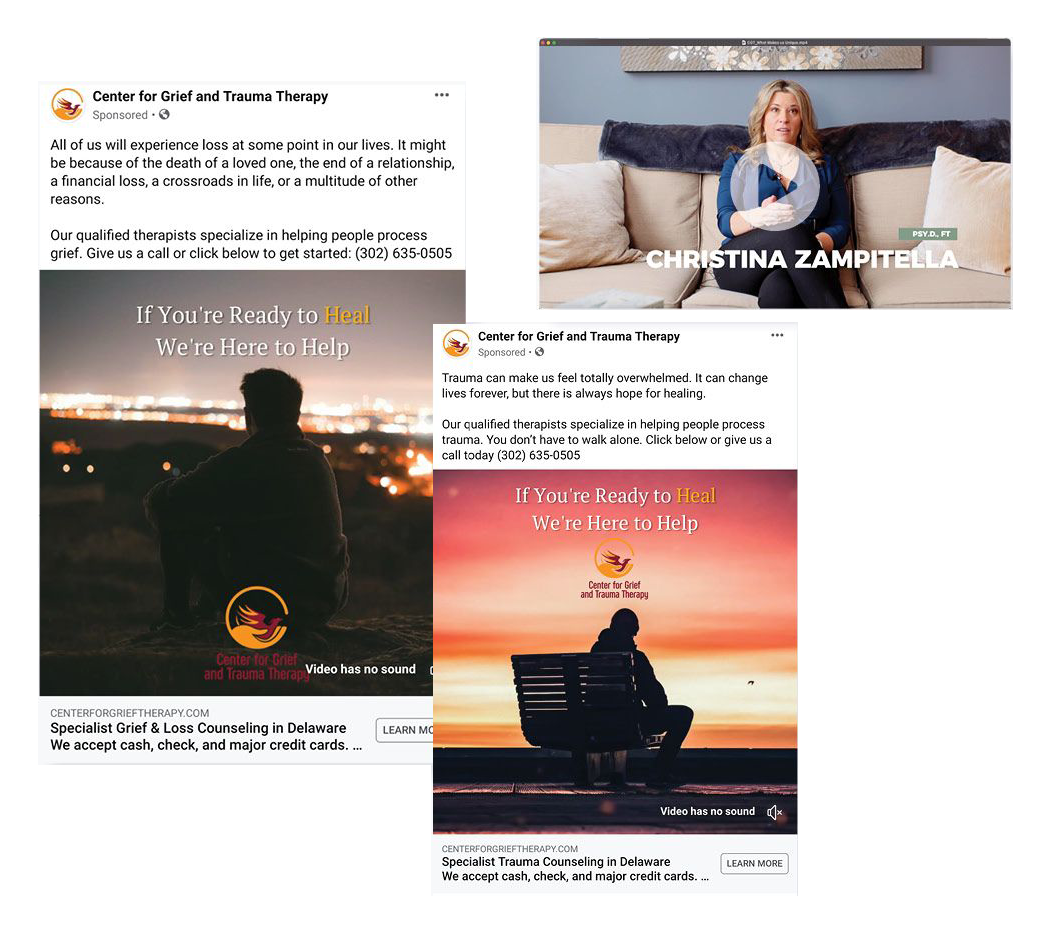
Increase in leads converted for Center for Grief and Trauma Therapy
How We Scaled a Private Pay Practice from $30k to over $500k in Less Than 18 Months
Dr. Christina came to Beacon with the vision of building her private practice. She provides niche mental health services for an issue she’s deeply passionate about and wanted to expand her reach to help even more people within her specialty.
We created a comprehensive mental health marketing strategy that focused on building awareness, attracting the right clients, and pushing conversions. The results were beyond what she ever expected.
Struggling to Stand Out in a Crowded Therapy Market?
At Beacon Media + Marketing, we help mental health providers and practices grow in a way that actually feels sustainable. That starts with getting clear on who you want to serve and how you want to show up. From there, we build a strategy that makes it easier for the right clients to find you, understand what you offer, and feel comfortable reaching out.
Here, everything is designed to support steady, consistent inquiries—without forcing you into marketing that feels uncomfortable or out of alignment.We also focus on simplifying what can feel overwhelming by bringing structure, clarity, and direction so you know what’s working, what’s not, and what to do next.
Our Specialized Mental Health Marketing Services
Mental Health Web Design
Your website design is your patient’s first impression
of your clinic.
Mental Health SEO + AIO
Mental Health Social Media
Mental Health PPC Ads
Increase brand awareness, generate leads, and gain conversions.
Mental Health Branding
Discover your mental health clinic’s mission & capture that in eye-catching visual statements.
Mental Health Content Marketing
It’s all about connecting with and helping people. Blogs allow you an outlet to do just that

Turn Your Mental Health Website Into an AI Visibility Asset
Your website should continuously evolve to stay visible in AI-powered search experiences. We help mental health practices refine existing content, strengthen topical authority, and improve the signals that Google, ChatGPT, Gemini, Perplexity, and other AI platforms use to recommend providers.
AI-Ready Content
Modern search rewards websites with clear, comprehensive, experience-driven content. We continuously optimize your pages to improve visibility where patients are searching today.
Stronger Topical Authority
Rather than simply adding more pages, we strengthen the relationships between your services, conditions, locations, and educational resources to build lasting authority.
Better User Experience
Small improvements to navigation, page structure, and internal linking make your website easier for both patients and search engines to understand.
Search Intent Alignment
We refine existing content to answer the real questions prospective patients ask, helping your website match both traditional search and AI-generated responses.
Trust & Credibility Signals
AI systems look for expertise, accuracy, and consistency. We help reinforce your practice’s credibility with content that’s well-structured, evidence-informed, and patient-focused.
Ongoing Website Optimization
AI search is changing rapidly. We continuously refine your content strategy, so your website evolves alongside search, not behind it.
Explore Our Insights
Take a closer look at the tools, tips, and strategies that help your practice grow with confidence.

There’s a lot of advice floating around about what behavioral health practices should do during a summer slowdown. Start a blog. Refresh your website. Plan your fall campaign. And most of that advice is genuinely useful.
But there’s an equally important conversation that almost nobody is having: what should practices stop doing when things slow down?
Because some of the habits, reactions, and default behaviors that kick in when a schedule gets lighter aren’t just unhelpful. They’re actively working against the practice. They drain energy, waste budget, create confusion, and in some cases make it harder, not easier, to come out of summer in a stronger position than when it started.
If you’re going to use the slower season well, that means being as intentional about what you stop as you are about what you start.
Want an honest look at what might be holding your practice back? Reach out to Beacon today and let’s find out together.
Key Takeaways:
- Stop going silent on marketing channels that compound over time. Pulling back on SEO, content, and social media during a slow season resets momentum that took months to build.
- Stop making reactive budget decisions based on short-term anxiety. Cutting marketing spend across the board during a slowdown is one of the most expensive things a practice can do heading into fall.
- Stop treating every slow week as a crisis that requires a strategy overhaul. Seasonal dips are predictable, not a signal that something is fundamentally broken.
- Stop neglecting the patients already in your pipeline. Existing patients and warm leads deserve as much attention as new acquisition efforts, especially in summer when dropout risk rises.
- Stop putting off the infrastructure work that only gets harder to do when the schedule fills back up. A slow season is the window, not the waiting room.
Why Is It Worth Talking About What to Stop, Not Just What to Start?
Because addition without subtraction is exhausting. And in a specialty where clinician burnout is already running at crisis levels, adding more to the plate during a slow season without removing anything first is a recipe for a summer that feels busier than the busy season but produces far less.
The behaviors worth stopping during a summer slowdown fall into two categories: the reactive ones that kick in out of anxiety when appointments slow down, and the habitual ones that have just been running on autopilot without anyone asking whether they’re actually working.
Both are worth examining. And both tend to be surprisingly easy to let go of once you’ve named them.
Should You Stop Pulling Back on Marketing Channels When Things Feel Slow?
Yes. Pulling back on marketing during a slow season is one of the most common and most costly mistakes a behavioral health practice can make.
It feels logical. Fewer patients are booking, so why spend money trying to reach them? But that logic misunderstands how most behavioral health marketing actually works.
Channels like SEO, content publishing, and social media don’t produce results on a week-to-week basis. They build over months. A consistent publishing cadence signals to search engines that a site is active and authoritative. Social algorithms reward accounts that show up regularly. And the organic search rankings you’ve been building don’t pause politely while you take a summer break. They quietly erode.
Research published in PMC confirms that digital content marketing produces compounding returns in healthcare settings, with consistent investment generating stronger patient trust and engagement over time than sporadic bursts of activity. Stopping mid-build doesn’t save money. It wastes the investment you’ve already made.
The behaviors to stop specifically:
- Stopping blog publishing because it feels low-priority when the schedule is light, since the content you don’t publish in July is the ranking you don’t have in October
- Pausing social media entirely rather than adjusting tone and frequency, since platform algorithms penalize inactivity in ways that take months to reverse
- Suspending paid campaigns completely rather than adjusting budget and strategy, since pauses reset the machine-learning optimization that makes those campaigns efficient
Should You Stop Making Reactive Budget Decisions Based on a Light Schedule?
Absolutely. And this is one of the hardest habits to break because the impulse to cut costs when revenue feels uncertain is deeply human and not entirely irrational.
But the timing matters enormously.
Cutting marketing spend across the board in July means walking into the fall demand surge with less visibility, weaker rankings, and a pipeline that wasn’t being fed during the months when the patients who convert in September were doing their research. The practices that held or increased marketing investment during slower periods consistently outperform those that cut back, capturing more share of voice at exactly the moment when competition for it is lower.
The reactive budget behaviors worth stopping:
- Cutting SEO and content budgets first because they feel abstract, when these are actually the channels with the longest runway and the most to lose from interruption
- Reducing paid advertising to zero rather than right-sizing it to the season, since some presence is almost always better than none for brand visibility and campaign continuity
- Making budget decisions without data, since cutting a channel that was generating low-cost leads because the schedule is light may eliminate the very thing keeping warm prospects in the pipeline
The better question isn’t “what can we cut?” It’s “where can we reallocate to get more strategic value from the same investment during a lower-volume window?”
| What to Stop | Why Practices Do It | Why It’s Counterproductive | What to Do Instead |
|---|---|---|---|
| Going silent on content | Feels low-priority during a slow season | Resets SEO momentum built over months | Maintain cadence; use slower weeks to build ahead |
| Cutting marketing budget reactively | Revenue feels uncertain; costs feel easier to control | Depletes pipeline entering peak fall demand season | Reallocate strategically rather than cut across the board |
| Treating every slow week as a crisis | Anxiety about caseload triggers overreaction | Leads to strategy pivots that undo built momentum | Benchmark against same period last year; zoom out |
| Ignoring warm leads and existing patients | Focus shifts entirely to new patient acquisition | Patient dropout increases; warm leads go cold | Proactive re-engagement outreach; retention focus |
| Postponing infrastructure work | Waiting for a “better time” that never arrives | Same friction points carried into fall volume | Use slow weeks to audit, fix, and build systems |
| Chasing vanity metrics | Surface-level numbers feel reassuring when bookings are down | Wastes time and energy on data that doesn’t drive decisions | Focus on CPL, conversion rate, and organic ranking movement |
| Overhauling strategy mid-season | Slow season feels like proof something is fundamentally wrong | Reactive pivots create inconsistency and wasted effort | Adjust tactics within existing strategy; don’t restart |
Should You Stop Treating Every Slow Week Like Something Is Fundamentally Wrong?
Yes, and this one matters more than it might seem.
A summer slowdown in behavioral health isn’t a signal that your marketing is broken, your brand is failing, or your practice has somehow lost its competitiveness. It’s a seasonal pattern that repeats predictably, driven by school schedules, vacation disruptions, and the general pace of summer life.
When practice owners treat a predictable seasonal dip as an emergency, they make decisions from anxiety rather than strategy. And anxiety-driven decisions in marketing almost always produce worse outcomes than patient ones.
The signs that a practice is treating a normal slow season like a crisis:
- Changing the marketing strategy mid-season based on two or three quiet weeks rather than comparing against the same period in prior years
- Launching promotions or discounts on services that don’t need them, trained by the impulse to “do something” rather than by evidence that pricing is a barrier
- Redesigning the website, rebranding, or pivoting positioning in response to a seasonal dip that would have resolved naturally by September with no changes at all
- Over-posting on social media in a frantic push for visibility that produces content without strategy and often comes across as performatively busy rather than genuinely useful
The antidote to crisis thinking during a slow season is data. Compare this July to last July. Look at your year-over-year trends. If the dip is consistent with prior years, it’s seasonal, not structural. And that distinction changes everything about how to respond.
Should You Stop Focusing Entirely on New Patient Acquisition During a Slow Season?
Yes. And this is one of the most productive shifts a practice can make when things slow down.
New patient acquisition gets almost all of the marketing attention in most behavioral health practices. But during a slow season, the patients who are already in or adjacent to your pipeline deserve equal focus, and they’re often significantly cheaper to convert and retain than brand-new leads.
The patient groups worth actively engaging during a summer slowdown:
- Current patients whose scheduling has become inconsistent, who benefit from a proactive, warm check-in from their clinician’s team rather than waiting to see if they reschedule on their own
- Lapsed patients from the past six to twelve months who left for reasons unrelated to dissatisfaction and may be ready to return with a gentle, personal outreach rather than a marketing email
- Warm leads who submitted an inquiry but never converted to a booking, who may simply need a low-pressure follow-up or a piece of content that answers the question that was holding them back
- Referral partners who haven’t sent anyone recently, who may just need a casual reconnection conversation to be reminded that your practice is actively accepting new patients
None of these require a new campaign or additional budget. They require attention and intention, both of which a slower schedule makes more available. Our mental health team helps practices build retention and re-engagement strategies that work alongside acquisition efforts, not instead of them.
What Is the Single Most Important Thing a Practice Should Stop Doing This Summer?
You should stop waiting.
Waiting for fall to fix the website. Waiting for a busier month to have the strategy conversation. Waiting until there’s more time, more money, more certainty before doing the work that would make the practice more visible, more trustworthy, and more ready for the demand that is already coming.
The summer slowdown is not a waiting room. It’s a window. And the practices that walk into September ahead of their competition aren’t the ones that waited more patiently. They’re the ones that stopped waiting and used the quieter weeks to build something that actually lasted.
If your practice is ready to stop waiting and start building, our strategy team is here to help you figure out exactly where to start.
Sometimes the most strategic thing you can do is stop doing the things that aren’t working.
Reach out today and let’s figure out what your practice should stop, start, and double down on before fall arrives.
Patients are finding mental health providers in 2026 through a mix of Google searches, AI-generated answers, online reviews, therapy directories, social media, Reddit-style community conversations, referral sources, and direct recommendations. The patient journey is no longer linear. Someone may hear about your practice from a friend, look you up on Google, read reviews, scan your website, ask an AI tool for options, check provider bios, and still wait days or weeks before reaching out.
That means mental health practices can no longer rely on one channel to drive patient acquisition. Visibility matters, but trust matters just as much.
The practices that grow in this environment are the ones that show up clearly and consistently across the places patients are already researching care.
Want to understand how patients are finding your practice? Contact us today to audit your patient journey.
What Practices Need to Know
- Patients are using more than Google to research providers.
- AI search, reviews, directories, social media, and referral networks all influence decisions.
- Your website still matters, but it is only one part of the journey.
- Patients want clear, plain-language content that helps them feel informed.
- Trust is often built before someone ever fills out a form.
- Practices need consistent messaging across every major touchpoint.
Why Has the Mental Health Patient Journey Changed?
The way people choose mental health providers has changed because the way people research everything has changed.
Patients are not always starting with a simple Google search and clicking the first website they see. They may compare providers across several platforms. They may ask AI tools for therapy options in their area. They may read Reddit threads to understand whether their symptoms are “normal.” They may watch short-form videos about anxiety, trauma, ADHD, or relationships. They may look through reviews, insurance information, provider bios, and social media before deciding whether to contact a practice.
This matters because mental health decisions are deeply personal. Patients are not just looking for the closest provider. They are looking for someone who feels credible, approachable, and safe.
That trust is built in pieces.
A strong website helps. So does a complete Google Business Profile. So do helpful blogs, clear service pages, updated directories, authentic social content, and consistent reviews.
The modern mental health patient journey is less about one big conversion moment and more about a series of small confidence-builders.

Where Are Patients Searching for Providers?
Patients may find your practice through many different channels, including:
- Google search
- Google Maps
- AI search tools
- Online reviews
- Therapy directories
- Social media
- Reddit and online communities
- Insurance directories
- Referral partners
- Word-of-mouth recommendations
- Paid ads
- Blog content
- Local community resources
This does not mean your practice has to be everywhere, but it does mean the places where you do show up need to feel accurate, active, and aligned.
If your Google Business Profile says one thing, your website says another, and your directory profile has outdated availability, that creates confusion. If your social media sounds warm and helpful but your website feels cold or generic, that creates a disconnect. If a referral partner sends someone to a service page that no longer reflects what you offer, that creates friction.
Patients are piecing together their impression of your practice from multiple sources, so every touchpoint should help them feel more confident, not more confused.
How Is AI Changing the Way Patients Research Care?
AI search is changing how patients gather information before they ever contact a provider.
Instead of typing one search into Google and scrolling through links, people may ask AI tools questions like:
- How do I know if I need therapy?
- What kind of therapist should I see for anxiety?
- What is the difference between therapy and psychiatry?
- How do I find a trauma therapist near me?
- What should I ask before booking with a therapist?
- Is telehealth therapy a good option?
These questions shape what patients expect when they reach your website.
If your content clearly answers real patient questions, it becomes more useful for both human readers and AI-influenced search systems. If your website is vague, outdated, or overly clinical, it may not provide enough context for patients to feel ready to take the next step.
AI search also raises the bar for clarity. Patients may arrive at your website with more background knowledge than before. They may already understand the basics of CBT, EMDR, medication management, couples therapy, or ADHD testing. What they still need is reassurance that your practice is the right fit.
Your content should answer:
- Who do you help?
- What concerns do you treat?
- What services do you offer?
- What should a patient expect?
- How does someone get started?
- What makes your approach trustworthy?
Clear, helpful content is no longer optional. It is part of how patients evaluate care.
Why Do Reviews and Directories Matter So Much?
Reviews and directories are often part of the decision-making process before someone ever visits your website.
Patients may compare providers on Google, Psychology Today, TherapyDen, Zocdoc, Healthgrades, insurance directories, or other platforms. They may look for ratings, specialties, location, availability, photos, insurance details, and provider descriptions.
For mental health practices, these details matter because patients are trying to reduce uncertainty.
They want to know:
- Is this practice active?
- Do they treat my concern?
- Do they accept my insurance?
- Are they taking new clients?
- Do other people seem to trust them?
- Does this provider feel like someone I could talk to?
Updating therapy directory profiles can improve visibility and reduce confusion. Make sure provider availability, specialties, telehealth options, location details, and contact information are current.
Reviews also influence credibility. Positive reviews can support local SEO, strengthen trust, and help patients feel more confident choosing your practice. Responding to reviews, when appropriate and compliant with privacy standards, can show that your practice is attentive and professional.
What Role Does Social Media Play in Patient Decisions?
Social media may not always be the final conversion point, but it can strongly influence familiarity and trust.
Patients may see a post about anxiety, burnout, relationships, parenting, trauma, or medication management, and start to feel like your practice understands their needs. They may not book right away, but your content becomes part of their awareness.
For mental health practices, social media should not feel overly polished or generic. It should feel human, ethical, educational, and grounded.
Good social content can:
- Explain common concerns in plain language
- Normalize getting support
- Introduce providers
- Share service information
- Promote blogs and resources
- Highlight community partnerships
- Address seasonal stressors
- Keep your practice top-of-mind
Different platforms serve different roles. Instagram can work well for visual mental health tips, short educational posts, and approachable reminders. LinkedIn is useful for professional updates, referral partner education, hiring, thought leadership, and community credibility.
Social media does not replace your website or SEO strategy. But it can make your practice feel more familiar before someone is ready to reach out.
How Can Practices Build Trust Across the Full Journey?
Trust is built through consistency.
When patients see the same clear message across your website, Google Business Profile, directories, reviews, social media, referral materials, and intake process, they are more likely to feel confident taking the next step.
Start with the basics. Make sure your practice name, address, phone number, hours, provider availability, and service descriptions are accurate everywhere. Then look at the emotional experience of your marketing.
Does your website sound approachable? Are your provider bios warm and specific? Do your service pages clearly explain who you help? Are your calls to action easy to find? Does your intake process feel supportive?
Patients prefer clear, plain-language content over generic marketing copy. They want to understand what you do without having to translate clinical language or marketing jargon.
Mental health marketing should prioritize authenticity and transparency. Ethical marketing matters because patients are often making decisions from a place of stress, uncertainty, or vulnerability.
The goal is not to pressure someone into care. The goal is to help them feel informed enough to take the next step.
What Should Mental Health Practices Audit First?
If your practice wants to better understand how patients are finding you, start by auditing your most important touchpoints.
Review:
- Google Business Profile
- Website homepage
- Core service pages
- Clinician bios
- Contact page
- Therapy directory profiles
- Review platforms
- Social media profiles
- Blog content
- Paid ad landing pages
- Referral partner materials
- Intake response process
Then ask one question: Does this make it easier or harder for someone to trust us? If the answer is unclear, that touchpoint needs work.
The patient journey in 2026 is more fragmented, but that does not have to be a problem. It simply means practices need to think beyond one platform, one ad, or one website visit.
Patients are researching across more channels than ever. In order to stand out, your practice needs to show up with clarity, consistency, and trust wherever those decisions are being shaped.
Want to know where your patient journey may be losing people? Beacon Media + Marketing helps mental and behavioral health practices improve visibility, strengthen trust, and turn more inquiries into scheduled appointments. Contact us today to start your patient journey audit.
There’s a version of your practice that a potential patient encounters online right now, and there’s the version of your practice that actually exists. How close those two are to each other is one of the most important and underexamined questions in behavioral health marketing.
When fall demand arrives and someone who has been quietly considering therapy finally decides to act, they’re going to do research. They’re going to find your website, your directory profile, your Google reviews, maybe your social media. And in the space of about ten minutes, they’re going to decide whether your practice feels trustworthy, accessible, and like the right fit for what they’re dealing with.
What you do between now and September determines what they find when they look.
Making your practice easier to choose isn’t about reinventing your brand or launching a new campaign. It’s about removing the friction, ambiguity, and outdated information that quietly costs you patients every single day. Summer is the window to do that work. And it pays off at exactly the moment when it matters most.
Want to know how easy your practice is to choose right now? Talk to the experts at Beacon Media + Marketing and let’s take an honest look together.
A Quick Look:
- Credential clarity and insurance transparency are the top factors patients use to filter practices, and both need to be immediately visible on your website and profiles.
- Your specialty messaging needs to be specific enough to make the right patient feel immediately seen and the wrong one feel comfortable self-selecting out.
- Social proof in the form of recent, specific reviews is one of the highest-trust signals a hesitant patient evaluates before reaching out.
- A warm, human digital presence across multiple platforms reduces the emotional distance between a cautious browser and a booked patient.
- Every unnecessary step between finding your practice and contacting it is a patient you’re losing, and summer is the time to remove those steps.
What Do Patients Actually Look for When Choosing a Behavioral Health Provider?
More than you might expect, and in a more specific order than most practices account for.
A peer-reviewed study published in PMC examining provider selection factors found that patients most consistently prioritize medical license and certification, followed closely by whether the provider accepts their insurance. Online reviews, recommendations, and specialty fit follow as secondary but meaningful filters.
What that means practically is that before a patient ever evaluates your warmth, your therapeutic approach, or your bio, they’re running a faster preliminary filter: are you licensed, do you take my insurance, and are other people saying you’re good?
If the answers to those questions aren’t immediately visible and clear on your website and directory profiles, you’re being filtered out before the real evaluation even begins.
Getting those basics right isn’t glamorous work. But it’s the foundation on which everything else a patient considers is built.
Is Your Credential and Insurance Information as Easy to Find as It Should Be?
For most practices, the honest answer is no.
Credentials are often buried in a bio that requires scrolling past several paragraphs of general practice philosophy to find. Insurance information is either missing entirely, or it’s in a footnote that says “please call to verify,” which is exactly the kind of friction that stops a motivated patient from taking the next step.
Before fall, every behavioral health practice should make sure:
- License type and number are clearly stated on each clinician’s bio page, in plain language that a patient who isn’t a clinician can understand and verify if they want to
- Accepted insurance plans are listed clearly on the website, ideally on both the contact page and a dedicated insurance or fees page, rather than requiring a phone call to find out
- Out-of-pocket fees and sliding scale information are addressed proactively, even if the answer is a range rather than a fixed number, because cost ambiguity is one of the most common silent reasons patients don’t follow through
- Telehealth availability is explicitly stated, including which states the practice is licensed to serve virtually, since a growing number of patients are searching specifically for telehealth options
- Directory profiles match the website on all of the above, since inconsistency between platforms erodes trust and suppresses visibility in both traditional and AI-powered search
How Specific Does Your Specialty Messaging Need to Be to Actually Convert Fall Patients?
More specific than most practices are comfortable with. And that discomfort is worth pushing through.
Generic positioning, “we treat anxiety, depression, and life transitions,” is accurate but not compelling. It doesn’t give the right patient the immediate sense of recognition that makes them feel like they’ve found someone who gets it. And it doesn’t help a practice stand out in a local market where every other website says roughly the same thing.
Specific positioning does the opposite. It narrows the audience and deepens the resonance. A clinician whose bio says “I specialize in working with adults navigating career transitions, identity questions, and burnout, particularly those in high-pressure professional environments” is speaking to a much smaller group, but that group feels immediately seen in a way that a generic list of conditions never achieves.
Making specialty messaging more specific before fall involves:
- Dedicated service pages for each specialty the practice treats, written in the language patients use when they describe their own experience, not clinical terminology
- Clinician bios that name specific populations, experiences, or approaches rather than listing every possible presenting issue in broad strokes
- Blog and FAQ content that goes deep on the specific concerns your ideal fall patients are dealing with, back-to-school anxiety, seasonal depression, relationship stress, year-end burnout, written from the inside of that experience rather than above it
- Social media content that speaks directly to your niche audience rather than trying to appeal to everyone, because content that resonates with a specific person converts that person far more reliably than content designed to be universally palatable
| Ease-of-Choice Factor | What “Easy” Looks Like | What “Hard” Looks Like | Summer Fix |
|---|---|---|---|
| Credential clarity | License type visible on every clinician bio; easy to verify | Credentials buried in paragraph text or missing entirely | Reformat bios to surface license type and years of experience in the first two sentences |
| Insurance transparency | Insurance list and fee range clearly on the website | “Please call to verify” as the only insurance guidance | Add a dedicated fees and insurance FAQ page or section |
| Specialty specificity | Each clinician’s niche is clear; dedicated service pages exist | Generic list of conditions with no depth or differentiation | Write or rewrite one to two specialty pages and update clinician bios |
| Social proof | Recent reviews across multiple platforms; practice responds to reviews | Few reviews; most posted more than six months ago; no responses | Run a summer review request campaign; respond to all existing reviews |
| Digital presence warmth | Social content features real people; bios sound human; website tone is inviting | Stock photos, clinical language, and generic copy throughout | Rewrite one bio; replace one stock photo with a real team photo; post two human social pieces |
| Contact friction | Short form; fast response; clear next steps; mobile-optimized | Long intake form; no automated response; unclear what happens next | Trim the contact form; add automated acknowledgment; rewrite confirmation copy |
| Directory consistency | Name, address, phone, and specialties match across all platforms | Outdated info on Psychology Today; different phone number on Healthgrades | Audit all major directories and update in one dedicated session |
Why Does Social Proof Matter So Much Right Before a High-Demand Season?
Because when fall demand spikes and a patient is comparing your practice to two or three others in the same search result, the practice with more recent, more specific, and more human-feeling reviews wins, all else being equal.
A PMC-published study on social media and patient decision-making found that 81% of respondents believed medical practices should maintain a social media presence, with online reviews and patient testimonials ranking among the most influential factors in choosing a provider. In behavioral health specifically, where the decision is emotionally loaded and the stakes feel high, a patient who sees ten recent reviews describing warm, effective care is experiencing something close to peer permission to reach out.
Summer is one of the best times to build review momentum because:
- Caseload is lighter, giving clinicians and practice managers more bandwidth to make thoughtful, personal review requests without it feeling like an afterthought
- New reviews posted in July and August will be recent enough to still feel current to a patient evaluating your practice in September and October
- Responding to existing reviews signals to both patients and search algorithms that the practice is active, engaged, and paying attention
- Addressing any negative reviews thoughtfully and professionally is far easier to do with intention during a slow season than under the pressure of a full fall caseload
How Much Does Your Practice’s Digital Warmth Affect Whether Someone Chooses You?
Significantly, and in ways that are easy to underestimate because warmth is harder to measure than page speed or star ratings.
But consider what a cautious, first-time therapy seeker is actually experiencing when they land on your website. They’re not in a neutral emotional state. They’re already anxious, already unsure, already bracing for the possibility that this won’t be the right fit or that reaching out will feel awkward or clinical or unwelcoming.
Every element of your digital presence either meets that person where they are or increases the distance between them and a booked appointment.
Digital warmth in a behavioral health practice looks like:
- Real photos of real people on the website and social media, because stock photography of serene sunsets and disembodied hands holding mugs signals nothing about the human beings a patient will actually be working with
- Website copy that sounds like a person wrote it and is speaking to another person, not like a compliance document drafted to cover all possible liability
- Social content that normalizes the experience of needing support, posted by clinicians who are willing to show up as themselves rather than as a brand logo
- Confirmation and follow-up emails that acknowledge the courage it takes to reach out, not just the administrative next steps
None of this requires a production budget or a brand overhaul. It requires the willingness to let the practice’s humanity show through, and summer is a quieter, lower-pressure window to make those changes before the people who need them most are looking. Our behavioral health marketing services help practices develop this kind of warm, specific, human presence consistently across every channel that matters.
What Is the Single Most Impactful Thing a Practice Can Do Right Now to Be Easier to Choose?
Read your own website as if you were a nervous, researching potential patient who has never heard of your practice.
Not as the practice owner or clinician who knows exactly what you do and why it matters. As someone who is scared, who isn’t sure if they’re ready, who is comparing you to two other practices in the same tab.
Ask yourself:
- Within 10 seconds, can I tell who this practice helps and what makes it different?
- Can I find the insurance information without calling?
- Do the clinician bios make me feel like I’d be safe in a room with these people?
- Is there anything on this page that would make a nervous person feel more nervous?
- What happens after I submit this contact form, and does it feel like a beginning or a bureaucratic wall?
The gaps that exercise reveals are your summer roadmap. Each one you close is a patient who makes it all the way through to a booked appointment instead of quietly closing the tab and trying somewhere else. And if you want a partner to help you close them systematically before fall, our strategy team is built for exactly that.
Fall patients are doing their research right now. Make sure what they find when they look at your practice makes the decision easy.
Reach out today and let’s make sure your practice is as easy to choose as it deserves to be.
Climb Aboard With a Customized Marketing Plan
Are you ready to take your mental or behavioral health practice to its next stage of growth? Let’s partner up and build a strategy that gets you there now.
Mental Health Marketing FAQs
How can Beacon help my mental health practice grow?
Can Beacon help my practice stand out in a crowded market?
If this is the first time you’ve considered outsourcing your social media marketing to an agency, it’s understandable that you might have reservations. Maybe you fear that no one will be able to capture your industry like you can or that you’re going to spend a lot of money on marketing and never see a return on your investment.
Outsourcing your social media marketing to a digital marketing agency can be a game-changer for your healthcare business. Agencies have access to the team, resources, and tools to effectively manage your social media accounts, create compelling content, and implement a successful strategy that will help you achieve your marketing goals. With their experience and knowledge of industry best practices, you can efficiently and effectively gain a strategy tailored to your business needs.
When partnering with our expert team at Beacon Media + Marketing, you save valuable time that you can direct elsewhere – whether that be sales, processes, management, or serving clients directly.
Do I need SEO for my mental health practice?
Our team at Beacon fully understands that AI has the potential to revolutionize social media marketing and content creation. By leveraging the power of AI, we can create more personalized, effective, and engaging content that resonates with our target audience. However, we recognize that AI is still in its early stages, and it’s important for us to use it responsibly and ethically. We believe that a human touch is still essential in creating authentic, relatable, and accurate social media content.
We view AI as a resourceful tool that can help us when we’re feeling stuck creatively or need a boost in motivation. By using AI to gather new ideas and insights, we can take inspiration and make it our own —like a brainstorming session but with the added benefits of data and analysis. Ultimately, our goal is to use AI as a tool to enhance our content creation process and improve our overall strategy, while maintaining the human element that makes our content unique and engaging.
How important is my website for converting clients?
The Beacon team uses a variety of social media tools to help us create, manage, and optimize our social media presence. We use Canva, an easy-to-use design tool, to create high-quality graphics and images for our social media posts. Adobe Photoshop and Premiere are also essential tools we use for more advanced design and video editing tasks. For free stock photography, we turn to Unsplash, Pixabay, and Pexels.
Buzzsumo is a tool we use to conduct content research and track social media shares in our industry. We also rely on Answer the Public to identify questions and concerns our target audience may have and generate new topics and ideas for our social media posts. Linktree is another tool we use for managing multiple links in one place, while Sparktoro provides in-depth research on our target audience’s interests, demographics, and social media behaviors. Zubtitle is an excellent tool for adding subtitles to videos, and Grammarly ensures all punctuation and grammar are accurate in our content.
For data-driven insights and automation, we use Jasper.ai and Chat GBT. These tools assist us with social media management, content creation, and innovation. To create high-quality audio and video content that engages our audience, we turn to Descript. Loomly is our go-to scheduling platform, which allows us to save time, improve collaboration, and provide valuable insights and analytics on our social media content.
How do you market therapy services without feeling salesy?
While we’d love to tell you that we could help your business blow up tomorrow, the reality is that results don’t happen overnight. Building a strong social media presence takes time and consistent effort. Clients often have high expectations for immediate results, but at Beacon, we believe that it’s crucial to set realistic expectations from the outset. It’s for this reason we choose to be very transparent in what results we expect you’ll achieve and how long it should take to start reaching your marketing goals.
The first thing that we like to establish with new clients is defining what success means for you. Is it increased engagement? More followers? Form fills? Webinar sign-ups? Increased web traffic? Once we’ve taken time to learn your goals, we like to emphasize that social media is an organic marketing method, meaning that it is an ongoing process that requires consistent posting and a clear strategy to take off. It’s not a quick fix and will most likely not deliver an instant ROI – it’s a long-term investment.
It’s also key to understand that brand awareness is an essential component of social marketing, and if you’re a newer company or have a poor online presence, it can take time to build a loyal following. Consistently producing high-quality content and engaging with your audience is key to building brand awareness and establishing your business as an authority in your industry.
And while it does take time to see tangible results, we also like to emphasize that social media marketing is measurable and can provide significant value to your business over time! Regularly tracking metrics and making adjustments to the strategy based on the results is essential to achieving long-term success.
Ready to Grow Your Mental Health Practice?
Our mental health marketing methodology ignites growth and builds your client base from the ground up.