content marketing

Chart The Waters

Explore insights on SEO, AI, and digital marketing strategies designed to help your business grow, stay visible, and adapt in a constantly evolving online landscape.
Beacon_Icon_resouse

There are a couple of reasons why we love HVAC marketing. First, we respect your commitment to exceptional customer service. Second, we appreciate the service businesses like yours provide in keeping people safe and comfortable during the winters. Third, we love working with our HVAC marketing clients to create a brand that makes a splash in your local community.

If your business has grown to a point where you’re ready to bring on a HVAC marketing partner, we’re glad you’re here. Stick with us, because we’re going to set out a step-by-step checklist to help you identify all the areas in which your business can grow, scale, and thrive.

Want to jump in the fast lane? Schedule a free consultation now.

HVAC Marketing Relies on a Strong Brand

Step one: Create a brand so your HVAC company stands out from the rest.

A brand is so much more than a pretty logo and a catchy slogan. It needs to capture the essence of your business. Is your business family run? Are you locally born and bred? Are you the experts in your field? Is there something you do that your competitors don’t? What gives you an edge?

You need to create a brand story that customers will remember. One of the most interesting aspects of HVAC marketing – particularly if you’re working in the residential space – is that emotions always sell more than facts. (Okay, yes, you got us. Big commercial sales are a different story, but for the purposes of this blog we’re going to focus on direct-to-consumer sales.) People care how you make them feel. They want to trust you and they want to feel safe in your hands.

Once you get this right, it will set the tone for all of the steps to come.

Start HVAC Marketing Through Local Search

Step two: Make your presence known on Google so customers can find you.

Okay, now that you have a brand, the easiest way to start getting sales is to set up a Google My Business profile. It’s free and it means you’ll show up right at the top of the list when people search for things like “HVAC near me” or “Boilers near me.” You can add information about your business, such as contact details and opening hours, to make it as easy as possible for people to connect.

Importantly, Google My Business has a review tool (more on that later), so make sure you check it regularly to acknowledge people who leave good reviews and thank people who leave bad reviews. Think of this as constructive criticism that can help you address customer concerns, improve parts of your business, and figure out how to deliver a better service to people in your area.

Set Up HVAC Marketing Ads on Facebook

Step three: Capitalize on the opportunity to reach people through Facebook.

The next most important step, when it comes to connecting with people in your area, is to run Facebook Ads targeted to your ZIP code. This ensures your name is delivered straight into the pockets of anyone who might be looking for you (or might need your services in the future).

Brand recognition is key here. We don’t need to tell you that HVAC is a highly cyclical business, so it makes sense that HVAC marketing follows similar patterns. Often, it’s about being in the right place at the right time, so you should plan a strategy that runs over 12 months to maximize impact.

Get Reviews to Boost Your HVAC Marketing

Step four: Collect reviews everywhere you can to build trust.

Reputation is the most valuable thing any business has. Nothing will help your business grow like word of mouth; however, reviews are a pretty close second. Remember how we touched on them earlier? Google My Business is a great way to get reviews. You can also collect them on a Facebook business page or by emailing customers and asking them to write a review at the end of each job.

Reviews don’t just have to sit and collect dust. You can also repurpose them as content and share them on all your social media channels as well as your website. They’re extremely persuasive if someone is thinking about working with you for the first time. HVAC jobs can be expensive, every new customer will want reassurance they’re in safe hands. Again, it all ties back to trust.

Start Creating Helpful HVAC Content Online

Step five: Invest in helpful “how-to” videos and blog content to attract new customers.

This might be a little bit outside your comfort zone, but content is one of the easiest ways to make sure your business shows up at the top of the results page on Google. When it comes to HVAC, the most common questions inevitably start with, “How to.” Here are some examples:

  • How to clean my air ducts
  • How to re-light my pilot light
  • How to reset my thermostat
  • How to safely maintain my furnace
  • How to tell if my boiler needs replacing

Creating a series of short videos, or a series of helpful blogs, is a big investment when it comes to time. However, it can pay dividends, because it establishes your business as a local authority and gives you a chance to make a great first impression before a customer even picks up the phone.

Optimize Your Digital Sales Eco-System

Step six: Make it as easy as possible for customer to take the next step.

A digital sales eco-system is a relatively new concept when it comes to marketing. The idea is that you should optimize your efforts so that you can generate leads while you sleep.

This means making it clear who you are and how you can help customers in your area (brand), making your business as easy as possible to find (Google My Business + Facebook), helping them understand why you’re the best choice (reviews + content), and making it super clear what they need to do next. For example, get in touch! Set up an appointment! Schedule a free consultation! Keep it consistent and make sure it’s super clear on every platform you’re using.

There are lots of digital tools available to streamline this process so you can take online bookings. Simply put, a digital sales eco-system means the leads come to you. All you have to do each morning is check your inbox for messages and look over your appointments for the day. That’s it.

Keep Your HVAC Marketing Strategy Fresh

Step seven: Remember that marketing evolves quickly so you can’t set-and-forget.

The last thing we want to mention quickly is that digital marketing changes all the time. The steps we’ve laid out in this blog won’t change, but your strategy and messaging may. It’s worth setting aside a bit of time every month to research best practice to ensure you’re up to date. This is a simple way to ensure you’re maximizing ROI on your time and money while growing your business.

Want to Bring on an HVAC Marketing Partner?

If you’re nodding your head in agreement, but thinking there’s no way you’ll have enough to time plan and execute all of these steps on top of running your business, don’t stress.

That’s where we come in. Beacon Media + Marketing is a digital marketing agency based in Anchorage, Alaska, and Reno, Nevada. We specialize in helping HVAC businesses reach the next level – for example, Moore Heating. We achieved a 742% increase in web traffic with more than 180 new client inquiries every month. Sound good? You could be our next successful case study.

Ready to get started? Schedule a free consultation here.
There’s a big difference between good copywriting and bad copywriting. A huge difference. A massive difference. A monumental difference. But it’s about more than just choosing the right words for the job, it’s about connecting with your audience and persuading them to act.

In this guide, we tell you everything that you need to know about copywriting – what it is, why it matters, and why you should consider outsourcing it for your company.

Want to talk about copywriting? Schedule a free consultation today.

What is copywriting, anyway?

Copywriting is any words related to your brand: your tagline, website copy, sales brochures, social media content, press releases, and everything else that uses text. It’s very common, when you’re starting out, to write everything yourself. But if you want to make your words work (and by work…we mean sell) then it’s time to think about getting a professional copywriter.

Also, copywriters have nothing to do with copyright law, despite the fact it sounds the same.

What does a copywriter do?

Copywriters write words that promote your business and persuade your customers to buy your products or services. It broadly falls into two different categories:

  1. Developing the creative parts of a brand (like packaging and advertising campaigns).
  2. Creating ‘sales’ related collateral (like emails, website copy, and blog posts).

Copywriters are also very skilled at content marketing, which is integral to helping your brand presence grow online. This includes SEO (Search Engine Optimization) to ensure customers can find you when they need your products or services through platforms like Google.

How can a copywriter help your business?

Wherever there are words, copywriters can help. This includes:

  • Writing the copy for a company’s website
  • Content marketing like blog posts and articles
  • Crafting paid advertising copy
  • Coming up with creative headlines for an advertising campaign that’s going to run on billboards or in magazines
  • Crafting social media content for channels like Facebook, Instagram, Twitter, and more
  • Writing a company’s in-house magazine, newsletter, or intranet content
  • Email marketing (promotional emails to your customers)
  • Packaging copy (if you’re a business with tangible products)
  • Crafting landing pages that convert
  • Video scripts to tell your brand story

Marketing for the first time? Here are the top digital marketing trends for 2021.

Why should I use professional copywriting services?

While anyone can write, not everyone is a writer. Anyone can nail two pieces of wood together, but not everyone can build a house. See what we’re saying? Your brand is just as precious as your house, so it’s important to find someone you can trust to do the job well. Here’s why:

  • Readers only read 20% of the content on the page (which means that 20% better be working hard)
  • Nearly 75% of readers pay attention to spelling and grammar (meaning there’s no room for mistakes)
  • Eight out of 10 people will read a headline, but only two people will go on to read the rest (which means your headlines need to do some serious heavy lifting)

It’s reasons like this that explain why getting a professional copywriter is so important if you want to grow your company. Is your website working hard enough? Are your emails actually persuading anyone to buy anything? Is your social media marketing getting results?

When you use a professional copywriter, you can trust that your brand is not just producing words – it’s producing words that actually work. This is essential to growing your business.

How can copywriting grow your brand?

Companies are as unique as their owners. They all have a different tone and style. Professional copywriters can adapt their writing to fit the personality of your brand and to suit the needs of your audience. By doing this, they create content that persuades your audience to act. That action could be straight to purchase, booking a sales call, or requesting more information.

Not only can copywriters help your brand grow your bottom line, but they can also help you increase your brand awareness and brand equity (how many people recognize your brand). They do this by creating memorable content that is shareable and relatable to your audience.

What are some common copywriting mistakes we see?

  1. Not bothering with audience personas. If you want to connect with your audience you’ve got to know who they are and what they want.
  2. It’s full of spelling and grammar mistakes. Sloppy mistakes like this show your audience that you don’t care. So why should they?
  3. Getting the voice wrong. Every brand has (or should have) its own unique voice and way of writing. Every word needs to match that brand voice (seriously…like, imagine if Red Bull started to sound like an insurance firm!)
  4. You’re being too verbose. Don’t use 50 words if you can say it in 10. One of the hardest things in the world is keeping it simple, but simplicity is often the key when it comes to good copy.
  5. You’re writing for yourself and not your audience. You need to lead with the benefit to your audience at all times, not the benefit to your company.
  6. There’s no clear call to action. What do you actually want your audience to do? Make it clear what people should do to take the next step.
  7. Forgetting SEO. When it comes to getting your business found, you need to make good friends with Google. And that means writing highly searchable content that follows the rules of SEO.
  8. Trying to say too much at once. We get it, your brand is great. But you can’t say everything about it all at once. Write with a singular and explicitly clear purpose.
  9. Not considering readability. Our brains like to scan content quickly to make decisions on whether it’s useful, so it’s essential to avoid huge blocks of text.
  10. Relying on adjectives, not proof. You need to be able to back up what’s said, not just keep throwing in superfluous adjectives about how great your company are.
  11. Not telling your story well enough. We have a functional and emotional side of our brain. When we buy something, both sides are helping us choose where to spend our dollars. Your brand’s story is an important emotional trigger, but are you telling it right?
  12. Not having a clear purpose. Why are you even writing something in the first place? Every piece of content – and every word within it – should have a clear purpose. Don’t just write something for the sake of it. No-one benefits from shouting into the void.
  13. Articulating your special offers wrong. Special offers are a great way to increase sales but they need to be positioned in the right way that don’t devalue your brand.
  14. Missing opportunities. There are opportunities everywhere to use words to sell – your website, your transactional emails, your signage (and plenty more).

Want some examples of copywriting that converts?

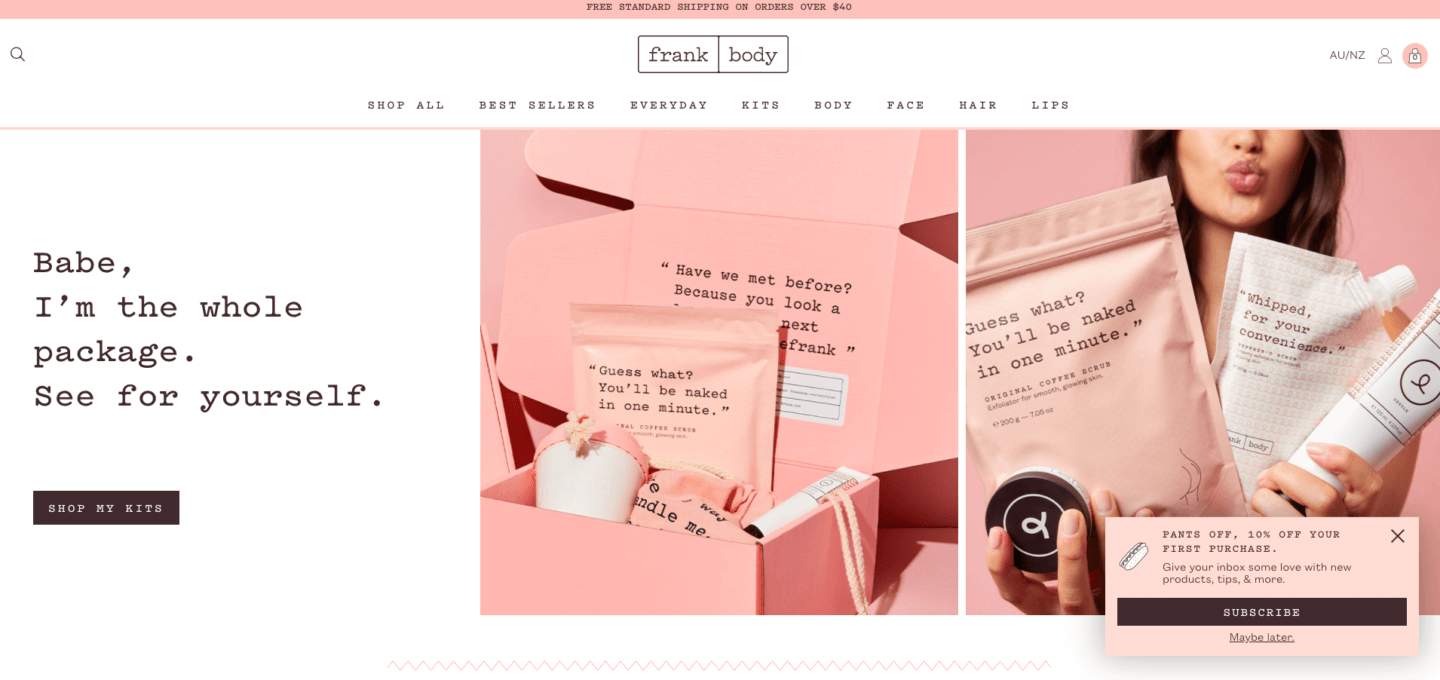
Frank Body

This beauty brand oozes personality. From the packaging to the website and everything in-between, it’s intrinsically Frank every time. But it’s not just quirky – every word drives action.

  • Clearly shows the products and their fun tone of voice and product descriptions.
  • A fun ‘10% off’ call to action encouraging people to sign up for the newsletters.
  • ‘Shop My Kits’ calls to action makes it clear what the reader needs to do next.

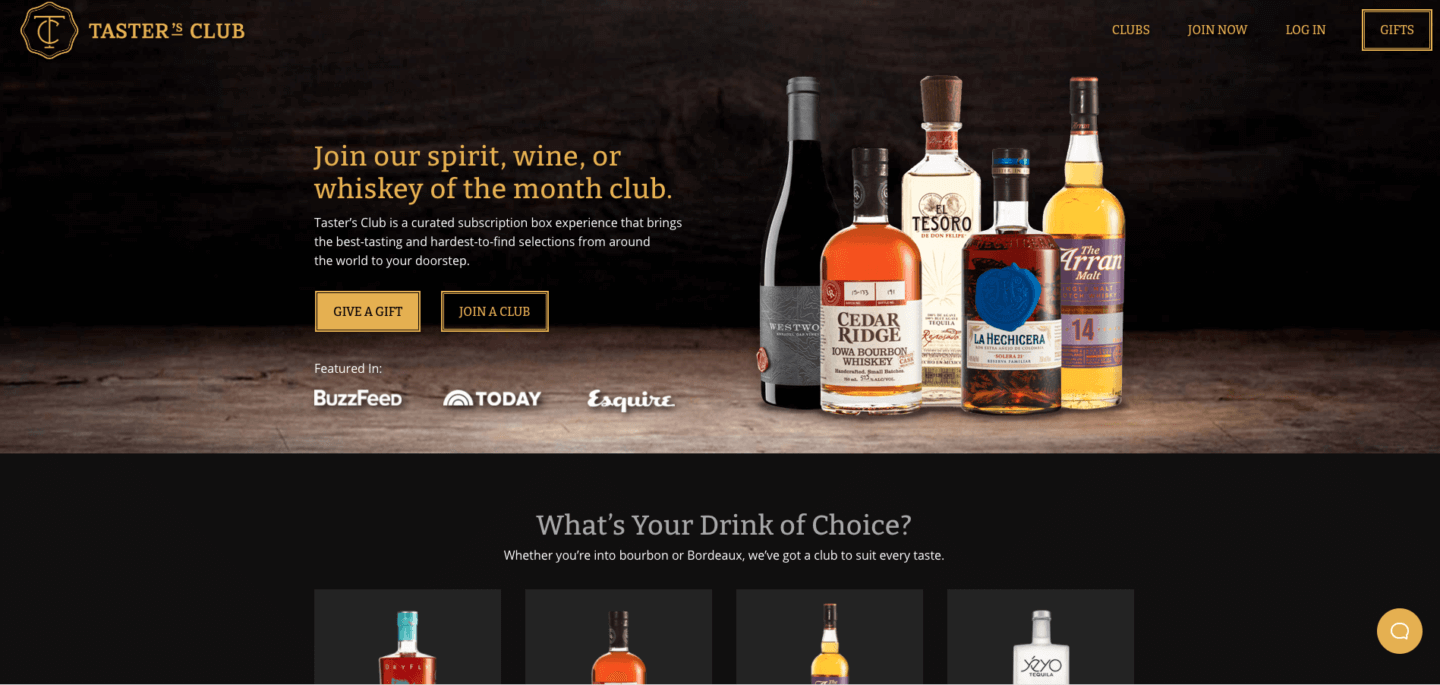
Tasters Club

This whisky club has nailed simplicity. Check out this beautiful home page:

  • A single headline says exactly who this company is and what it offers.
  • The two very clear calls to action are worded in a way that’s super inviting – driving people straight to the content they need.

Nike

Okay, okay, we’re putting in the big guns here. Copywriting is more than just content marketing and social media. It can also become intrinsic to your brand. Nike’s tagline ‘Just do it’ is one of the world’s most iconic copywriting examples. It’s globally recognized and is just as powerful as the brand name itself. Want something this good for your brand? Get a copywriter. Just do it.

  • What can we say? It’s a thing of beauty.

Patagonia

If you’re an eCommerce site, your product descriptions are one of the most important things you’ll ever write. They need to rank for Google, provide practical information for your audience, and give shoppers the warm-and-fuzzies that make them want to buy, all at once.

We love how Patagonia has written theirs. Although it’s just a product listing, it manages to reinforce the company’s key messaging around sustainability and make the shopper feel good.

  • Short, concise product descriptions that fuses the functional with the emotional (functional = technical details like what it does and the weight; emotional = environmental information, which pulls on the emotive tendencies of readers).
  • Expandable sections for ‘Features’ allow more functional information and ‘View Impact’ which delves into the environmental impact of the product.

Ready to work with a copywriter?

If you’ve been persuaded by the power of words, we’d love to hear from you. Schedule a free consultation.

About 5.7 million people turned in to watch the Super Bowl across the United States. The game is great, of course, but we’d be lying if we said we didn’t also tune in to watch the commercials. Marketing and advertising go hand-in-hand, and we love checking them out to see what themes are emerging, what trends are in style, how the best in the business use content can be used to surprise and delight huge audiences… and what ideas we can use as inspiration for all of our own marketing campaigns.

This year didn’t disappoint! We’ve rounded up some of the best examples we saw at Super Bowl LV and we’re going to tell you why they were our favorites. We help all our clients make touchdown-worthy marketing strategies this year, so if you want something that jumps off the screen, call us today.

https://www.youtube.com/watch?v=g6CVKs77X74

Bud Light: “A Lemon Of A Year”

Bud Light used the Super Bowl to present its new lemonade seltzer, inspired by 2020, which as we all know was “a lemon of a year”. The ad shows literal lemons falling from the sky, first as a drizzle, then as a hard pour that begins wreaking havoc on everyone in sight. People are getting knocked over, sporting games are being disrupted, someone’s wedding ends in disaster, a first date goes horribly, and people are running for cover in business buildings.

The story it tells is both hilarious and strangely relatable, because the lemons are a perfect metaphor for the coronavirus pandemic. The main characters of the ad were a group of friends enjoying a barbecue in someone’s backyard discussing when Bud Light came out with the lemonade seltzer. One friend replies, “Probably when 2020 handed us all those lemons”. Cue the memory of lemons terrorizing the town.

Video was the perfect format. The Bud Light team thought outside the box to sell the new lemonade light seltzer during the game. The bubbly beverage is one of many flavors which are now available around the country. This type of video marketing resonates with so many people because it shows a variety of events that are quite frankly, ruined, because of the lemons (aka the pandemic). It’s a shared experience, and everyone watching had a good laugh. We also found it impressive that they delivered a campaign that expressed the bitterness of 2020 without actually saying the word “pandemic” or “coronavirus”.

Conor Mason, senior brand director of Bud Light Seltzer Lemonade, was quoted in Campaign US saying, “We wanted to use some of those relatable moments from 2020, whether it’s a bad haircut, a postponed wedding or canceled travel plans, and take those lemons and turn them into Bud Light Seltzer Lemonade.”

Bud Light also included a live and inclusive call-to-action during the actual Super Bowl game as a part of their marketing strategy. In real-time, fans were able to tweet #LemonsIntoLemonade and #Sweepstakes for a chance to win an entire case of the Bud Light Seltzer Lemonade. Delicious.

UberEats: Wayne’s World Is Back

UberEats graced viewers with a blast from the past, with a commercial featuring the beloved Wayne’s World cast of Mike Myers and Dana Carvey. In the ad, the iconic pair promoted the use of UberEats as a way to support local restaurants (oh hey! As passionate supporters of local businesses, we give kudos for this). They engaged in a hilarious dialogue, going back and forth as they discussed how they would never use marketing trends such as trending dances, cute babies, large text, or celebrity cameos to get people to use the app. Of course, flash forward, and they’re both doing popular TikTok dances, holding baby versions of themselves, flashing bold text across the screen, and suddenly sitting next to rapper Cardi B.

Cardi B goes on to urge people to support local and use UberEats to get their favorite meals delivered to them. “Y’all know I love to eat, and right now we have got to be supporting our local restaurants — like the Griddle Cafe in L.A.,” she says. “So many spots are struggling right now, and it’s up to us to eat local! That’s why I teamed up with Uber Eats and my boys Wayne and Garth to help.”

This type of engaging video content is compelling because of its use of iconic characters that appealed to two very different demographics, Wayne’s World and Cardi B. It’s designed to surprise you and grab your attention – and for us, it worked. Influencer marketing is powerful when used well! The unlikely partnership worked well to emphasized the company’s values (you can read more about values-based marketing here), including its diverse customer base and commitment to supporting small businesses. Add a dash of humor, and you’ve got a perfect campaign for the Super Bowl.

Michael B. Jordan Is Amazon’s Alexa 

Amazon’s ad started with a fictional employee praising the design of the company’s latest smart speaker. Boring, right? It’s shot in a gray office with dull blue light. “I literally couldn’t imagine a more beautiful vessel for Alexa to be… inside,” she says. However, her train of thought drifts off as a bus pulls up outside, plastered with an ad for Michael B. Jordan’s new Prime Video series, Without Remorse.

We then cut to a couple of fantasy scenes, where the employee interacts with Alexa… who has now taken up residence in Jordan’s body. This commercial takes a beat to hit its stride, but it seizes the element of surprise and uses humor to show how the new product can be used in real life. She asks Alexa to turn on the sprinklers, add items to her shopping list, read her audio book, and more. The ad ends with the woman accidentally getting distracted and starting the sprinklers for the second time when her frustrated husband says, “Things are getting way too wet around here!”

Amazon found a creative way to unveil the fourth-generation Echo Dot. What’s interesting about this ad is that, although Alexa has a female voice, the ad shows Jordan as the one voicing the Echo. Historically, most virtual assistants have all been female and results have shown that consumers have been primarily men. According to voicebot.ai, 57.8% of men had access to smart speakers compared to 42.2% of women. This ad might be Amazon’s attempt at targeting women and flipping the script of female-centered virtual assistants. We found this especially compelling because it created a new narrative that was disguised in a humorous and sexy way and led to many discussions after.

Learnings You Can Use in Your Own Marketing

Super Bowl commercials are amazing every year. And while air time during the game is incredibly expensive (a 30-second slot costs about $5.6 million), you can learn from them and roll out some of the strategies in your own marketing efforts. Here are some of our key takeaways:

  1. Relatability is key. Bud Light proved that people respond to shared experiences. As a consumer, you think the brand is on the same page as you, that it understands you, and is therefore creating products for people like you. Don’t be afraid to share stories and feelings about things that are going on in your life, because chances are your client base will be able to relate.
  2. You can have fun with marketing trends. Marketing trends go in and out of fashion all the time, especially when it comes to finding new ways to capture people’s interest online. You don’t have to copy everyone else! The UberEats commercial showed that putting your own spin on things can not only take people by surprise, but make them stick around long enough to listen.
  3. Values should always (ALWAYS) come first. UberEats also showed the importance of clearly defining your brand values and sticking to them. People care about their local communities, so highlighting local businesses has been an integral part of the company’s marketing efforts. In this case, it makes a global company seem approachable. Spend the time to define your values.
  4. Know your key demographics. Amazon knows it’s got a reliable male customer base when it comes to artificial assistants. It’s looking to expand its female customer base, and you can rest assured that nothing in this commercial happened by accident. The team knows exactly who its targeting, what her priorities are, what her lifestyle is like, and what will make her likely to purchase this product. Doing the research will help you maximize ROI on your own campaigns.

Content marketing doesn’t have to include a Super-Bowl-level marketing budget. It can start with a simple content strategy that you can implement tomorrow. Let’s start somewhere together.

Call us to schedule an appointment and get your new marketing strategy into play.

Way back in 2018 (it feels like a lifetime ago, doesn’t it?), Entrepreneur said podcasting was “the next marketing frontier.” At the time, Statista predicted there would be more than 100 million podcast listeners in the United States alone by 2021. And guess what? They were right.

Here are some interesting statistics from the team at Podcast Hosting:

  • 75% of Americans are familiar with the term “podcasting”
  • 55% of Americans have listened to a podcast (about 155 million people)
  • 24% of Americans listen to a podcast weekly

They reach an incredibly broad spectrum of people, meaning they’re an excellent tool to add to your marketing toolbox, and they’re still growing in popularity. The switch to mobile makes them easy to access while listeners are on the move – whether that’s driving, walking, working out, or cooking.

We’re a generation of multitaskers, and it’s rare that we’ll sit down and focus on a single piece of content unless it’s truly exceptional, so it’s important to make content that suits the needs of your target audience. Podcasting is the easy-going cousin to traditional strategies like blogging. It follows a similar structure, but it works in a fundamentally different way. In the words of AJ Agrawal, founder or Verma Media, “podcasts inspire conversation, while blogs tend to provoke thought.”

Here at Beacon Media + Marketing, we love a trend. We know that a huge number of Americans love podcasts, and since we’re committed to helping American small businesses grow, scale, and thrive, we’ve finally joined the podcast train. We’re excited for you to hear it!

Click here to listen to our podcast, or contact us to discuss content marketing.

Introducing ‘The Beacon Way’ Podcast

So, what’s our podcast actually about? At the time of writing, we’ve launched three episodes, which talk about our origin story. Our founders, Adrienne Wilkerson and Jennifer Christensen, love sharing their knowledge and experience with other business owners. (They’ve definitely ridden their share of ups and downs on the way to creating the seven-figure company we know and love today!).

Adrienne and Jennifer launched the first inbound marketing agency in Anchorage, Alaska, back in 2012 when they merged their two companies. They knew a lot of the same people, and traveled in a lot of the same circles, but they never actually met until they were in a shared client meeting one day. They’re award-winning speakers who specialize in providing practical marketing advice from the trenches of their own company, with entrepreneurial tips galore. When we describe them as a “dynamic duo,” we really mean it. They’re best friends and business partners and their podcast will take you on a journey, laughing about the highs and revealing the truth about the hard knocks.

There are lots of lessons that can save you a lot of time and energy in the early phases of your business. Take, for example, the clients you want versus the clients that actually pay the bills. “These are what we call ‘non-sexy’ clients,” says Jennifer. “These clients are the ones who need and can see the value of your services.” It’s an important lesson, but it can take a while before it sinks in. Even then, the type of client you need can change over time as your business evolves. Raise your hand if you can relate, right? Check our Episode 2 for more insights on this topic.

As business owners, it’s important to stop every now and then so you can reflect on your journey. We know exactly what it’s like to be so busy working IN your business instead of ON your business. Even as marketers, it can be hard to make time to do you own marketing, so we really wanted to put ourselves out there and walk the talk. This stuff is really important. And hey, if you’re looking for a little extra help in the marketing department, we welcome you to call us at any time.

Want to go ahead and schedule a free consultation? Click here.

How to Make Your Own Podcast

Planning a podcast is similar to planning other types of content marketing.

If you haven’t come across this term before, content marketing is an umbrella term that describes a type of marketing that focuses on information – for example, stories, how-to guides, reports, and so on – to stimulate interest in your products or services. Most often it takes the form of things like blogs and videos. It’s important to note that this type of marketing doesn’t sell directly. Instead, as our friend AJ Agrawal said earlier, it provokes a thought or starts a conversation that invites the prospective customer or client to reach out. The key is to make it as interesting as possible.

As a business owner, you might not be familiar with the content creation process. We want to make it as easy as possible for you to succeed, so here’s a step-by-step guide to nailing your content. These principles cover everything from blogs to videos, podcasts, and more.

Step 1: Plan

We’ve all heard the saying, “Fail to plan; plan to fail.” When it comes to content marketing, nothing has ever been more accurate. Remember, you’re fighting with every other business on the internet to capture your customer’s attention, so you need to make it interesting and meaningful. This doesn’t mean your plan has to be elaborate. In fact, a couple of bullet points will do the trick! Just make sure you have a clear message and you don’t dive off on too many tangents along the way. People’s time is precious, so you need to keep things moving to keep them engaged.

Need help developing a plan? Call our friendly team.

Step 2: Execute

Block out time on your calendar and just get it done. Don’t push it for other meetings. Don’t push it for other deadlines. Commit to spending time growing your own business, because if you don’t – who will? It’s important to give yourself every possible opportunity to succeed. If you think best at 6am, or 10pm, lock it in then. Start by listing your bullet points and then simply color in the gaps.

If you’re creating a video, add two or three sub-points under each one with a shot list to match. If you’re writing a blog, expand those sub-points into paragraphs. If you’re recording a podcast, use those sub-points or paragraphs to keep your conversation on track. Don’t overthink it, make excuses, or procrastinate. Just start. Then keep going. It will be done before you know it.

The only caveat we’ll add to that is to make sure you record good quality sound. Crackling phone lines, delays over video chats, or sloppy editing will make people turn off faster than… oh, what do you know? They’re gone. You don’t have to have the latest and greatest audio gear, but make sure the sound is clear and free from background noise with a decent level of volume.

Can’t stop procrastinating? Hello! It’s us again.

Step 3: Share

Here’s another business cliché: “Done is better than perfect.” It’s important to make the content great. That’s a non-negotiable. But people are actually more forgiving on the polish than you might expect. A good introduction, good music, good graphics, and good synopses are all very nice to have, but don’t let them prevent you from sharing your content. We know from experience how easy it is to get hung up on details, but if they stall you unnecessarily, they’re not serving your business.

Pick a hosting platform (we’ve chosen Buzzsprout for ours) and upload the audio with an image of either you or your business logo. Then share the link on every social platform where you have a presence: LinkedIn, Facebook, Instagram, you name it. Pay attention to the feedback you get, and use this to refine your technique for episode two. Remember, the point of this exercise is to inspire conversation, so make it a two-way street and keep engaging with your listeners.

 Don’t make us feel like that kid waiting to be picked in gym. Say hello!

Final Thoughts on Podcasts

Podcasts are here to stay, and they’re only going to get more popular in the future. We’re so excited to be bringing The Beacon Way to small business leaders around the United States. It’s never too late to get started, so if you’ve been working on a podcast idea for your business. We encourage you to take action and make it happen. It’s a great way to build your brand, reach new audiences, and if you’re anything like us, have a whole lot of fun reminiscing along the way.

What are you waiting for? Let’s talk content marketing.

2021! Never before have we been so excited about the start of a new year! (At least, not since we welcomed the new millennium in 2000 – how was that two decades ago already?) The past 12 months have been like no other. If all your marketing goals went out the window, don’t be too hard yourself. You’re certainly not alone! However, with all the hope and good vibes 2021 is bringing in, there’s absolutely no better time to reset and invest your energy into planning for the year ahead.

We get that goalsetting can be intimidating. But without clear digital marketing goals, you’re basically throwing your time and energy into a great big black hole. Start by asking yourself what you want to achieve, because this will help the rest of your strategy fall into place.

Are you looking to:

  • Build brand recognition?
  • Generate more leads?
  • Get higher engagement rates?
  • Strengthen relationships with current clients?
  • Distinguish yourself from competitors?

Keep reading, because we’ve suggested five digital marketing goals you might like to consider for 2021. We’ve also given some tactics you can put into place to flip the script on the year that was. What’s that, you say? You’re starting to feel a little optimistic? So are we!

Tired of scouring the internet for answers? Contact us and let’s talk goals.

Goal #1: Refresh Your Brand

Your brand is a vital part of your business. It represents the first impression you make on all your clients, and if it doesn’t live up to their standards, you probably won’t see them again. Deciding to update your brand, whether that’s a refresh or a total rebrand, can go a long way toward generating leads and converting sales. However, it involves careful thought.

Refreshes are often expressed through subtle changes such as updating the logo, color palette, collateral, or tone, to modernize your look and attract attention. It’s important that your brand refresh rolls out across every aspect of your marketing presence, from the sign outside your office to your social media and website. Here are three things to consider:

  1. Reinforce Your Existing Identity

If you’re planning to refresh your brand, make sure to take existing brand assets into account. You want any changes you make to live holistically with what already exists. Remind people who are you are, what you have to offer, and why they should be your customers.

  1. Rediscover Your Brand’s Potential

Everything changed in 2020, and you’ll need to continue changing and adapting in the new year. To do this, you’ll need to rediscover your brand identity in order to remain relevant to your audience. What made you go into business in the first place? What drives you today? What problems do you solve? What values govern your day-to-day practices?

  1. Revise Your Brand’s Voice

Your brand messaging will evolve as your business grows and new competitors arrive on the scene. It’s a good idea to regularly review your brand voice because from time to time, you may find that your voice needs a bit of refreshing. This shows that you are listening to your customers, paying attention to what works, and actively looking for ways to improve.

Goal #2: Get a Content Strategy

If your content didn’t bring in the results you hoped to achieve in 2020, it’s time to re-evaluate your strategy. If you fail to create a solid content marketing strategy, you’ll also fail to drive traffic to your website, generate leads, and more. Good content strategies are driven by business objectives. If you’re not quite sure how to start developing a content strategy that aligns with your 2021 goals, ask few questions:

  • What do you want your content to accomplish?
  • How are you measuring the effectiveness of the content?
  • What is your target audience?
  • Where are the gaps in your current content?
  • What are your content strengths and how can you optimize them?
  • How will you distribute the content?

Goal #3: Revamp Your Website

When it comes to promoting your business, your website will be more important than ever in 2021. The pandemic accelerated the move toward digitization, and having a website allows you to market your business online in this highly digital world.

It’s clear that more people will be using the Internet to find products and services. Your website will need to be more reliable, faster-loading, and consumer-friendly, or you’ll get left in the dust by the competition. Is your website up to the task? Some benefits of updating your website include:

  • Your website will rank higher on search results.
  • Your target audience will connect with your story.
  • You’ll strengthen your brand image.

It also provides opportunities to diversify your business. U.S. consumers are estimated to have spent more than $709 billion on eCommerce in 2020, which is an increase of 18%. If you want a slice of this pie, your clunky old website has to go. On top of potential revenue growth, updating your website also means you may be able to automate some processes, such as scheduling appointments or managing inventory, which will help save valuable time as we kick into the new year.

Goal #4: Boost Your Socials

It’s no surprise that 2020 saw unprecedented changes in social media usage. For many companies, social media won’t just be a part of their business in 2021, it will be their business. The last 12 months have shown us just how important social media is in generating and maintaining human connections, not just when it comes to building a brand online, but from a personal perspective as well.

Social media plays a crucial role in driving sales, providing customer service, and improving brand awareness. A strategy is essential to social media success. Before you draft your social media plan, take a step back. Evaluate the current state of your social media accounts. Which platforms are you using? How are you using them? Have they been effective so far? Once you have these answers, you can start developing your social media strategy. Here are a few things that will get you started:

  1. Research the Competition

Start by gathering information about your target audience and what type of content they interact with. If you’re not sure how to do this, hashtags are a great way to determine trends. It’s important to remember that people interact with different social media platforms in different ways, so you’ll need to put some thought into which ones will be most effective for you. It’s also a good idea to check out what your competitors are doing on social – you can learn from their mistakes and adapt the strategies that are working for them for your own business needs.

  1. Develop a Content Plan

This goes back to Goal #2. (Gah! Seems like it was so long ago. We’ll wait while you quickly scroll up to check… OK cool, ready to proceed?) Quality content that resonates with your audience is crucial for the success of your social media channels. We feel like we can speak to everyone on this topic: no-one wants to see boring, generic, impersonal content in 2021. Surprise your audience! Aim for quality over quantity. Few high-quality posts will be much better for your brand than many half-baked ones.

  1. Time to Get Graphic

We all know that posts with images perform better. Visual content, such as infographics, can be powerful material in social media. It’s worth investing some time to get these right. Make sure the colors and fonts match your brand guide, to keep a consistent look and feel, and think outside the box to come up with creative and engaging ways you can present information visually.

  1. Engage meaningfully

Responding to your audience on social media shows them that you care. If you actively engage with your followers you can spark conversations and show them that your brand has a human side. It’s important to be consistent in your approach, so make sure you stick to your brand personality.

  1. Monitor Merformance

If you find that your social media metrics are down in 2021, that’s okay. Keep trying until you find out what works and make necessary adjustments across your platforms. Great social media engagement often requires a process of trial and error (nowadays we prefer to call it A/B testing), so don’t be afraid to throw a bit of spaghetti at the wall and see what sticks. It’s worth the effort.

Goal #5: Make 2021 Your Year

This is your year to dominate the marketing game. As you reflect back on your growth and success this year, don’t forget about the opportunities you have to do even better next year. Make 2021 your year – your year of progress, your year of trying something new, your year of acceleration, your year of insane can’t-even-believe-how-awesome-it-is growth.

Want to accomplish all of these goals in 2021 and more? The reality is you might need some help to do that. Especially if you want to set a strategy that will actually stick.  Fortunately, you don’t have to do it on your own. Hiring the right marketing partner to support your 2021 marketing efforts can make all the difference in seeing results.

If you want to maximize your impact, you may wish to consider partnering with a marketing agency. Whatever your goals may be, we’re here to help you set your goals, refine your strategy, and grow your business. We’re ready for a fresh start. How about you?

Want to make 2021 the best year yet? Let’s get started.

This year has been a wild ride. Our dreams of visiting Europe, or even visiting family and friends interstate for the holidays, may be on hold – but our business goals are still in full play, and so are our marketing plans. The sector has changed drastically in the past 12 months. We’re seeing companies having real conversations on social media, personalizing  experiences, and reinventing themselves as real people behind a screen.

It’s been a year of experimenting with new digital marketing strategies to reach your target audience and start generating new leads online. There’s never been a better time to have a little fun with your financial marketing strategy.

Want to generate new leads? Schedule a free consultation.

Content, content, content

Content marketing is a beautiful thing, and a great way to drive people to your website. Whether you’re starting a conversation, doing a giveaway, or sharing an educational video, content marketing can create valuable relationships with your audience.

It’s no secret that finance is probably not everyone’s first language. That’s why it’s crucial to educate prospects about what your products and services can do for them. Everyone has that one website that they go to for information. Our goal is to make YOUR website everyone’s first stop. Giving yourself a credible and trustworthy reputation is worth it in the long run because people are always learning.

But it’s not just your audience that you have to convince about your credibility. Google is always prioritizing websites and social media channels by targeted keywords. If you’re posting quality content but only posting once a month, Google probably won’t give you a good ranking. This is why creating a quality content marketing calendar may be beneficial.

Break it down into bite-sized chunks, use fun analogies, experiment with creative media, and take customers along for the ride. Mapping out your content for the month on all channels will help you stay ahead of the game, plan for upcoming national or industry trends, and give yourself the time to tailor everything to fit your brand. Remember, the people you’re targeting are not experts, so take the time to connect with your audience on a human level and explain why you’re different.

The power of influencers

Before you reject the idea of using influencers for financial marketing, get the image of Kim Kardashian, Justin Bieber, or Taylor Swift out of your head. We would never do that to you.

Influencer marketing has taken the world by storm. Whether you know it or not, you have been exposed to influencer marketing ever since you were a child. Remember that big man with the red suit who made Coca-Cola look magical? That’s right, Santa Claus is the original influencer. Following the release of Santa in their 1995 holiday campaign, Coca-Cola’s net income increased from $708 million to $802 million, compared to 1994, while the New York Times reports that revenue rose 9.7%. It’s not that companies couldn’t vouch for their products themselves, it’s just that families trusted the big guy in the red suit.

It turns out it’s not about what the message is saying, it’s about who is saying it. This is a great opportunity to think outside the square and try something new.

According to a recent study conducted by the McCarthy Group, most millennials trust their relationships on social media for information more than most news sources. Who are they looking to find their right home? The right baby products? The right home decor? Whoever that is, that is your influencer. If a rapper like Snoop Dog can attract 50,000 new users in just one week to make Klarna, a Swedish bank app, into Europe’s largest fintech product… then the possibilities are truly endless. How can you use this technique in your business?

Capitalize on digital storytelling

Stories stick. Historically, when it comes to financial marketing, we’ve found that many firms play it safe and stay a little on the stiff side. The ads they run are usually text-heavy and cover topics that people without a basic background in finance wouldn’t even begin to comprehend. Storytelling is one of the most powerful ways to reach your audiences – this can include videos, blogs, reviews, testimonials, and can be as serious or as silly as you like.

A popular idea for most financial small businesses would be to feature customers who have been loyal or have an influential story tying them to you. 82% of Gen Z would be more trusting of a company if they use people who are customers according to Business Wire.

If someone has an established connection with your small business, they will sit through that 15-second ad you have on YouTube or anywhere else. Specifically, 58% of young people according to a study from Defy. A great example of this is Amazon’s “Meet” ads, which feature short stories from people throughout the entire company like warehouse workers, truck drivers, and packagers. These people share uplifting and inspiring stories about their time at the company to make customers feel emotionally invested.

These stories are examples of ways that digital storytelling can evoke strong emotions, create a lasting memory, and give your small business a human persona. They’re short enough to share on social channels and websites, all the while being shareable and accessible, which will help set you apart from the competition and create a lasting impression. And remember, it’s okay to use a little humor to set your brand apart.

Strategize on social media

Social media is such a powerful tool in today’s world. People of all ages are using it to connect with companies and brands that resonate with them and people who influence them. It’s even becoming a part of our daily routines – according to the Pew Research Center, 74% of users are on Facebook and 63% on Instagram daily, making them incredibly powerful platforms when it comes to financial marketing.

Making sure your business is a part of the global conversation happening online can help you reach an audience broader than you ever thought possible. The fact that a small financial business in the middle of nowhere Indiana can be seen online just as easily as a million-dollar Wall Street company is one of the many beautiful facets of social media.

A strong social media strategy isn’t usually built overnight. It takes genuine content marketing, an engaging brand personality, and creative approaches to campaign. Giving yourself the tools you need to make this happen will pay off in the long run. Implementing a social media strategy means you can enter a whole new ball game. It’s time to have a little fun with your audience and surprise them with something new.

Make finance easy-breezy

Millennials and Gen Z consumers expect convenience and accessibility. Their time is quite literally (your) money. To be fair, companies and services have no excuse to not be progressing with the times – I mean, these days even little kids running lemonade stands are accepting cashless payments with Square. Times are seriously changing.

We’re entering the age of automation, which means digitizing the entire process and having everything you need with a touch of the button. With streamlined paths to purchases and easy access to business contact information, people are making purchasing decisions in the blink of an eye. A great website is a big factor in this. How long does it take from placing something in your digital card to getting a confirmation email? If it takes longer to checkout than it does for a Keurig to fill up your mug, you’ll need to take a second look.

Digitizing your processes isn’t always a walk in the park. Finance companies like SaleCycle are finding that they have the highest digital abandonment rates – reaching up to 75%, according to Forbes. It’s important to keep the process simple and avoid any confusing steps. You can also streamline processes by automating things like form fill, adding progress indicators, and looking into mobile apps. User experience is critical, so focus on your audience and what they need from you as a business, and let your brand personality shine as you guide them through the process.

Want help with a financial marketing strategy? Let’s connect.

Leadership is important in every industry. However, given the year we’ve all just had, it’s never been more important in financial marketing. American businesses of all sizes, in all industries, have ridden a rollercoaster of government policy, shutdowns, booms, busts, and technological advances. Now that 2021 is on the horizon, it’s time to start planning.

Since we’re all friends here, we want to give you a tip: this is a huge opportunity for you. Everyone is looking for direction and guidance, and you have the expertise they need to make it through these tricky times. It’s time to step up and be the leader they need. To take a quote from William Shakespeare, “Some are born great, some achieve greatness, and some have greatness thrust upon them.” (Does that send tingles up your spine too?)

That means it’s time to talk about thought leadership. This is a financial marketing strategy that leverages the experience of your team to build an audience and generate leads.

Have we piqued your interest? Schedule a free consultation.

Thought leadership in financial marketing

The most effective way to display thought leadership is through content marketing or publicity. The former can include virtually every type of media from blogs to videos, social media, and more. The latter can include speaking at events like conferences and webinars in order to build brand awareness. There are lots of ways you can establish your expertise:

  1. Discuss the latest industry news and offer an opinion
  2. Create a step-by-step guide to tackling a common problem
  3. Answer questions your clients frequently ask during appointments
  4. Write long-form articles that give advice using strong keywords
  5. Examine trends and predict where the industry is heading
  6. Share case studies about the way you achieve success
  7. Collaborate with colleagues and other experts

Truthfully, the sky is the limit when it comes to thought leadership in financial marketing. Since you work in finance, we know you like numbers, so pay attention to the analytics. Check in regularly with Google Analytics and Facebook Analytics to see what kinds of content are getting the greatest reaction. Which blog posts are people most likely to click? Which ones are people reading all the way to the end? What types of social media content get the best engagement? What are people talking about in the comments?

Paying attention to the data will help you refine your strategy over time, capturing as much attention as possible and presenting your brand in the best possible light.

Pay attention to financial marketing trends

What’s trending in the finance sector? How will this affect your business? Most importantly, how will this affect your customers? It’s really important to stay up-to-date with industry news, because this is great fodder to not only improve your practices, but fuel your strategy.

Financial marketing is changing rapidly, just like the industry it promotes, and there are several reasons why it’s important for you to stay ahead of the curve. The first one is so that you can provide a calm port in a storm for existing clients and give them the best possible service. The second to build trust with prospective clients to start winning them over.

Think about it. There are generally two ways people find a new financial services partner: they ask for recommendations from people they trust, and they start Googling. You’ll catch their eye with snazzy Google Ads and a sparkling SEO strategy, and then you’ll only have a couple of seconds to make an impression and win their confidence.

Here are some thought-starters. What’s your take on these topics?

  1. Artificial intelligence integration
  2. Best practice in cybersecurity
  3. Importance of data analytics
  4. The rise of Blockchain technology
  5. Re-thinking the concept of money

This isn’t a random list. It’s the result of a quick search for “finance trends,” which means they’re the kinds of topics people are talking about online. Are you taking part in the conversation? What are you going to do if a client asks for your take? The best way to be prepared is to include them, and any other trending topics, in your financial marketing strategy. That way, the next time people are searching for answers, your content will start to appear in search results lists.

Make sure your content works double-time

If you’re going to invest in thought leadership as a financial marketing strategy, you’re going to need strong content. Content requires a considerable investment of time and effort, so it makes sense to get the biggest possible return on investment. Right? If you’ve ever heard of the marketing guru Gary Vaynerchuk (we’re big fans here at the Beacon office), you’ll know he’s the king of repurposing content. There’s no reason to reinvent the wheel.

Digital marketing is versatile. There are many platforms, many mediums, and many methods you can use to share your messaging with the masses online. Here are some simple and time-saving ideas you can use to maximize your impact while minimizing your effort:

  1. Share video of your speaking engagements on your website and social platforms.
  2. Combine blog posts into an eBook to boost your credibility as a thought-leader.
  3. Present blog posts as videos (or vice versa). Then share the audio as a podcast!
  4. Screenshot Tweets and share them on LinkedIn, Facebook, and Instagram.
  5. Share content from colleagues and experts with a thoughtful comment.
  6. Freshen up your old content and reshare it with a modern twist.
  7. Create a quick infographic to accompany a report.

The progression is simple. Thought leadership needs content marketing. Content marketing needs a marketing strategy. A marketing strategy needs a strong brand with clear goals. This will lay the foundation you need to successfully start growing your audience online.

Secrets to financial marketing success

Before we let you go, we’re going to run you through some very practical tips to help you level-up your financial marketing strategy for the year ahead.

The most important, by far, is consistency. Thought leadership, and content marketing, are both long-term strategies. Each piece of content will build on the ones that came before it, leading to exponential growth over time. There’s nothing to be gained by publishing one or two think pieces and then simply hoping for the best. Consistency means you’ll need to budget the time to research trending topics, plan a publishing schedule, and create the content you need. You’ll also need to check-in regularly to ensure it’s hitting the mark and that you’re across any sub-topics that need further explanation.

The other thing we’d like to mention is the importance of making content marketing a two-way conversation. Don’t just shout into the void of the internet! Respond to all the comments people leave on your blogs or videos, and dedicate at least 30 minutes a day to interacting with people on social media. This doesn’t mean simply dropping a few likes here and there, but asking questions or leaving thoughtful comments to encourage people to engage in a dialogue with you.

Looking to hire a marketing partner? We can help.

When 2010 rolled around, it felt like every other person had a blog. CEOs? Check. Amateur chefs? Check. Avid travellers? Check. Moms? Check. Businesses? Hmm. Not so much. But why not? After all, people come to your website to see what products and services you offer, and what kind of company you are, right?

The first question we hear you asking is whether blogs are even still relevant in 2020? It’s a fair question. After all, there’s only so much time in the day, so why would you invest your time in writing a business blog? The answer is simple: traffic.

A blog offers you the opportunity to potentially get a lot more eyes on your website, educating potential clients, and generating leads. Unless people are already acquainted with your business, they won’t Google you specifically. They’ll Google similar products and services. It makes sense, then, to dominate those keywords online and ensure your business ranks right at the very top of the list. By creating a business blog, you dramatically improve your chances of ranking… and who knows, it may convert new visitors into customers.

Creating a blog can be quite daunting, as there is a lot to learn – especially around search engine optimization (SEO). This refers to the techniques used to get your posts ranking at the top of Google’s results page, and can feel like opening a can of worms. If you don’t have time to figure it all out yourself, remember you can always outsource. But if you’re ready to learn all there is to know, then keep on reading!

Want help with your website? Call our helpful team today.

What is a business blog?

We all know that having a website is important. It’s your own little piece of digital real estate, and one of few things on the internet you’ll ever fully control. Blogs are essentially signposts that increase virtual foot traffic into your business to that you can make sales. While Google is known to change its algorithms, affecting your rankings, blogs are not nearly as volatile as social media results that can spike or plummet overnight.

Blogs have come a long way since the weblogs, or diary updates, that first started in the mid-90s. Nowadays, a “blog” simply refers to the section of your website that gets updated on a regular basis. It’s designed to keep your website fresh and relevant, and keep the Google algorithm happy, so it keeps ranking your articles as high as possible. This means it works very differently to regular webpages, which generally focus on sales.

Content marketers believe in the creation of blogs as a marketing strategy because they have seen the results. On average, companies that have a blog section on their website produce 67% more leads monthly compared to companies that don’t. Alongside the additional leads, blogs also increase brand loyalty by bringing in new readers and interacting with them in a meaningful way… which can boost revenue.

Let’s talk about SEO

The best way to grow traffic to your website is by creating the kinds of content people are actively looking for in search engines like Google. Once they click through to your website and see that you know what you’re talking about, it will be much easier to convert them into a paying customer. The best way to do this is to take a look your website analytics, so you can see the kinds of pages people are most interested in reading about.

However, creating a lead generating content strategy is not as simple as writing something that you think your audience might like and throwing it up on the internet. These days, it’s important to have an SEO strategy in place that will allow you to build up content and keywords on your website that are relevant to your audience and to your product or service. This means that you should be thinking about what your consumer might be looking for and using the available SEO tools to see whether they actually are. This way, you’re letting the customers come to you on their own than paying for their clicks.

How do I write a blog?

There are many types of blogs that you can create for your business. Truthfully, you can turn almost anything into a blog post, as long as it’s something your target audience will find valuable. This can include handy how-to guides, news items relevant to your industry or business, think pieces, infographics, listicles, cheat sheets, interviews, guest blogs, commentary on current news items, key terms explained, and much more.

Whichever type of content you decide to write, make sure you start your blog strategy with a clear goal in mind and a realistic path to reach that goal. Know who you want to reach, what they’re looking for, where they hang out online, and most importantly, what action you want them to take when they click through to your website.

An essential part of a successful blog strategy is keyword research. To put this simply, you need to pick the best combination of words that describe your business and DOMINATE. The researching phase is critical, so you might want to consider engaging a SEO professional to ensure you’re on the right track. This will help you work as efficiently and effectively as possible, by finding words that are well-trafficked but not too competitive.

Once you’re confident about your selection, create a content calendar so that you know how your target keywords are going to work together in real-time. This way, you and your team will know what’s coming up, so you can plan ahead to create high-quality content whilst building up authority in those essential keywords.

Should I start a blog in 2020?

Yes! A thousand times yes. Blogs are a powerful tool to drive traffic to your website, and a well-executed content strategy has proven to be one of the most efficient ways to grow your business by boosting your online traffic. With every blog post, you are adding relevant keywords to your website. This, in turn, signals to Google that you have a highly-relevant business within your industry, so the algorithm sends more traffic your way.

A business blog allows you to provide your target audience with value that they cannot get from a sales or landing page. Modern consumers research the brands that they’re planning to purchase from, which means education and transparency are more important than ever. Consumers want companies to be helpful and provide them with value before they are willing to invest. Having a blog allows you to provide that information, to educate your customer about your service or product, to capture their attention, to build trust, and to create a positive connection. If the end-goal is to drive the sales of your business, this is a fantastic way to get started!

Need a little help getting started? Outsource to the professionals! 

“Why isn’t my marketing plan working?”

One of the interesting things about working in marketing is that your friends often ask for advice. The scenarios range widely. Recently I’ve been asked about where to start with marketing for an agricultural contracting company in a small country town, how a tutoring business could connect with the right people through Facebook, and the steps a start-up business consultancy should take to establish an online presence.

It’s prompted some interesting conversations, because they’re working hard but not seeing the results they want. They’re really asking: “How do I connect with my target audience?”

You probably already have a good idea about who your target audience is. You’ll know just by looking who walks into your store, stops by your restaurant, or engages your services. If you have any kind of consumer analytics (for example, through Facebook or Google), then you’ll have a deep understanding of who they are, where they’re from, and their interests.

If this is a question you’ve been asking a lot lately, stay tuned, because I’m about to explain exactly how to find and connect with those people using a digital marketing strategy.

Prefer to chat instead? Sounds great, give us a call!

Give your audience a persona

The first step to connecting with your target audience is to create a persona. This means a short description, like a profile, of a person that sums up the key characteristics you need to know. It may sound a little strange – how can creating a description of a fake person possibly help your business?

There are two main reasons. First, it prompts you to think critically about who exactly you’re targeting. We’re not talking broadly about people who have a passing interest, who will visit your website and then disappear into the void of the internet forever. We’re talking about people who have a genuine interest in your products or services, who are most likely to become leads. This is your sweet spot, and targeting these people will ensure you get maximum ROI on your efforts.

Second, your persona will keep you laser-focused. This means everything you do, and every piece of content you create, will have the best possible chance of capturing this person’s interest. You can tailor your messaging, and your digital appearance, to appeal directly to them. For example, farmers wanting agricultural contracting services may respond to earthy greens and yellows with great testimonials and a special offer. Mothers looking for tutoring services may respond better to blues and reds with pictures of happy children and clear results. They help you deliver the right message, to the right person, in the right way.

Making personas work for you

Digital marketing covers a lot of ground. It includes everything from optimizing your website, to creating a strong social media presence, to managing your reputation. It can feel overwhelming when you’re first starting out, because each new element takes time to learn.

Everyone needs a website, because this functions as a type of digital shopfront. It gives your business legitimacy, because people can see who you are and what you can do for them at a glance. When it comes to social media and reputation management, however, different platforms appeal to different audiences. They all have pros and cons, so rather than investing a little bit of effort into all of them, we recommend focusing your efforts on the things most likely to generate results.

That’s where audience personas come in. They can be as detailed or brief as you like. The important thing is that it captures who your target audience is and what’s motivating them to choose your business. Think about your typical customers, then check your analytics to confirm you’re on the right track, before you get writing. Here are some examples:

  • Agricultural contracting: Joe, 55, is a beef producer from just outside Laramie, Wyoming. He manages a large ranch with his 30-year-old son, Jason. He’s lived in the area his entire life, and knows everyone in his tight-knit community. He’s had a good year, so he’s looking to upgrade about 20 miles of fencing, and he wants to hire someone local. His cell phone is always in his hand. He spends a huge amount of time on the phone every day, talking to suppliers and other farmers, and he listens to the radio while he’s driving to town.
  • K-12 tutoring: Michelle, 37, is a nurse from Sparks, Nevada. Her 11-year-old daughter, Jessica, is struggling with math and needs tutoring to ensure she doesn’t fall behind at school. Michelle is married with two other kids. She works shifts at the local hospital, and takes on the majority of childcare and homemaking responsibilities at home, and she’s often stressed. She spends a lot of time on Facebook, particularly in local community groups and mothers’ groups, and she wants to be certain she’s making the right decision for Jessica.
  • Business consulting: Jack, 49, and Kate, 42, are the operations director and operations manager at a manufacturer in Boise, Idaho. They’ve been told that they need to increase efficiency on the floor by 9% this quarter. However, they’re both extremely busy managing large teams and desperately need additional support, so they’re bringing in a consultant. It’s the first time they’ve used this kind of service, so they’ve both been asking their business networks for recommendations. They need someone professional, who can work within a corporate environment and who they can trust to get the job done within budget.

How personas increase ROI

As you can see, the personas give lots of interesting insights. In all cases, the strongest form of marketing will be word of mouth. People trust people they knew, and they’ll all want to ask for recommendations. However, it shows there is a lot you can do to connect with them:

  • Joe is looking for someone local, so once you create a website, you should set up a Google My Business profile. This is a great way to help people connect with local businesses, because it will ensure you appear on Google Maps, and makes it very easy for people to contact you and see reviews of your business. His cell phone is always in his hand, which means email marketing and digital advertising (through Google Search Ads and Google Display Ads) are likely to capture his attention – especially since he’s actively searching for contracting services. Since he spends a lot of time driving, you could also invest in traditional marketing methods such as radio advertising and signage along the main roads into town.
  • Michelle has a lot on her plate, so she needs to find a solution quickly. That means reviews and value statements will be key, so she can see that your business can help her get what she needs. The three best ways to get reviews are to set up a Facebook business page, a Google My Business page, and a great website with a testimonials section. We know she’s very active on Facebook, so Facebook Ads are going to be an effective way to capture her attention. They key is going to be making the value clear, so all ads should include a statement summarizing how much students have improved since they started tutoring.
  • Jack and Kate are looking for B2B marketing, which makes LinkedIn the best choice. Set up a business page, actively post helpful content – such as interesting industry news and top tips, and ensure you ask all your clients to write reviews on completion of service. They’re going to go through your website with a fine-toothed comb, before they recommend your services to the executive leadership team, so make sure it’s sparkling. You’re going to need an attention-grabbing home page, an informative about page, a very clear services page, a compelling testimonials page, and a straightforward contact page.

You don’t have to become an expert in every aspect of digital marketing to start generating strong leads. All you have to do is figure out exactly who you want to connect with, tailor your messaging to appeal to their needs, and focus your efforts on the platforms that count. That’s the secret to efficient and effective digital marketing.

And remember, you can always outsource! Talk to our team today.

“I hate marketing.”

I was recently talking to the owner of a tutoring business, and she was shaking her head in despair. She offers lessons in person and online for K-12 students, and she’s been trying to get more students registered. Every time she signs up a few more, a few others move on. It happens over and over again. It’s one step forward, one step back, over and over.

Since I work with a marketing agency (hello, by the way! I’m Kirrily, a copywriter), I asked about her marketing strategy. She groaned and put her head in her hands.

“I’m just not a sales person,” she said. “I’m no good at it. I don’t like it at all.”

It got me thinking. Marketing can be intimidating when you’re first getting started, but it’s nowhere near as scary as you think. On top of that, it’s essential for every small business! I’m going to tell you exactly what I told this business owner, because there are some really common marketing myths floating around that we can bust wide open.

Want to get your marketing back on track? Call our team today.

Myth 1: Marketing is sales

First things first, marketing is not the same things as sales! Marketing for your business doesn’t have to mean dressing in a suit, shining your shoes, and putting on your best travelling-door-salesman smile. You don’t even have to offer a free set of steak knives (although, of course, you can if you’d like). Marketing is essentially opening the door. Then, when the customer walks in, sales is there to seal the deal.

Marketing is all about education. In order to choose your products or services, people need to know they exist. Further to that, in order to choose your products or services over a competitor, they need to know why you’re the best choice. And when they do go ahead and choose you, they need to have a great customer experience, so they go ahead and tell their friends (word or mouth is, after all, the oldest and most effective form of marketing there is). As you can see, information is the key.

There are lots of ways you can do this. The most obvious way is to create a great website that has all this information readily available, presented in a clear and engaging way. It’s really important that your website follows a logical structure and that all the information is well-organized, because it’s essentially your digital shopfront. You wouldn’t leave a pile of packing boxes, old milk bottles, and empty flour packets at the front of your café, would you? Keep your website clutter-free.

The next thing we recommend to all our clients is to set up a Facebook page for your business. This is a friendly and casual way to deliver your messaging right into the pockets of your community, whether that’s existing customers, people living in your area, or demographics you’d like to target. Start by inviting your family and friends to like your page, then encourage all your current customers to like your page, and make sure you share content they’ll find interesting and relevant.

Myth 2: Marketing is pushy

Good marketing won’t feel like marketing at all. Yes, that statement sounds a bit silly, but let us explain. Put simply, “marketing” really just means making information available in a way that people find interesting and helpful. It doesn’t mean you’re shouting for their attention.

Here’s an example. Say your furnace breaks down on the coldest night of the year. What’s the first thing you’re going to do? Modern consumers are most likely to whip out their phone, and Google something like “emergency furnace repair” or “furnace repair near me.”

Google is then going to generate a map showing you all the businesses in your area that have the words “furnace” and “repair” on their websites, which will mean you can quickly see all your local HVAC companies, check out their location and service hours, scan through their reviews, and start making phone calls. Have they shouted at you? No. Have they given helpful information? Yes.

This, dear friends, is modern marketing at its finest.

When we explain this concept to our clients, we like to use an analogy of a cat. If you try to make a cat eat, it’s most likely going to stick its nose in the air, run away, and hide under your bed for a few hours. If you leave some food out, however, the cat will come and find it when it’s ready.

There are a couple of really simple techniques you can use to put this into practice:

  • Google My Business is an easy-to-find profile that helps people quickly identify who you are and how you can help them. It will make sure you pop up on local Google Maps searches.
  • Google Search Ads are the ads that appear at the very top of the Google Results page. These are targeted to specific combinations of keywords and function on a pay-per-click model.
  • Google Display Ads are visual ads that appear on websites all over the internet. These are targeted, so you can optimize them for a specific demographic, and also

Myth 3: Marketing is really hard

It’s true, there are a lot of facets to modern marketing, and learning them all is a considerable investment of time. However, it doesn’t have to be hard work. In fact, you can have a lot of fun along the way (okay yes, we’re total marketing nerds).

However, if you’re slaving away in front of the computer for hours, and you’re finding the content you’re creating to be boring and uninteresting, there’s a fair chance your audience will find it boring and uninteresting too. That means it’s time to think outside the box.

One way to do this is video! Video has exploded in recent years. It can be as cheap and cheerful, or as polished and proper, as you like. Either way, people find it super engaging! All you have to do decide what you want to talk about, plan out maybe three key points you’d like to discuss, and go for it. This can be livestreamed or pre-recorded, it’s totally up to you. People like people, so this can be a great way to work smarter, not harder.

Another great idea, which we use ourselves, is to create content calendars. Planning things like social media or blogs in advance means you’re never stuck for ideas. You can wait until inspiration strikes and then knock out a whole bunch of posts in one go, keeping your brand fresh and your messaging consistent. That’s the most important thing, after all: consistency.

To be honest with you, that’s where we see most businesses come unstuck. They tackle digital marketing with tremendous enthusiasm for a few weeks, and then lose their mojo before they start converting leads. Don’t start too hard and burn out. Figure out what’s reasonable, and stick to it for the long-term. Ultimately, this will create much better brand recognition, consumer loyalty, and growth.

Remember, you can also outsource! Contact our team today.

What is a brand story? It’s a narrative about your business that inspires a positive emotional reaction. It’s not about showing and telling people about your brand, like traditional advertising, but combining facts with feelings as you explain how your business came to be and what drives you.

Storytelling isn’t a new concept in digital marketing. It’s easy for a tourism business to inspire people, for example, by creating a narrative around the kind of experience a visitor will have if they visit that destination or engage that service. It’s also easy to inspire people with a start-up, because usually there’s a strong values-based reason as to why the founder took action.

Brand stories for finance companies should focus consider the following elements:

  • Who are you and what do you stand for?
  • What problems do you help solve?
  • What experience do you redefine?
  • Why should people trust you?
  • Who is your community?
  • How do you do good?

Think about these questions as you read on. We’ll come back to them in a little bit.

Ready to talk to the professionals? Schedule a free consultation.

Modern marketing leans on brand stories

Historically, most businesses used a model best described as “interruptive marketing.” It’s called this because it essentially involved interrupting people to capture their attention, educate them about your services, and convince them to engage – think direct mail, cold calls, door knocking, etc.

However, the digital age turned this model on its head. As consumers became more tech-savvy, they became more educated, which meant they were in total control of the kind of information they read. Being interrupted all the time with brand messages became a nuisance, which was off-putting.

The way we market had to change at a fundamental level, which is why the industry evolved and adopted a new philosophy known as “inbound marketing.” Inbound marketing is essentially the practice of yourself easy to find, so people can access your services when they want or need them. They come to you; you don’t go to them. It’s an entirely new way of thinking.

That’s where the brand story comes in. Prospective clients will find you in many different ways. You’ll need a strong social media strategy and a strong SEO strategy to ensure you’re present in all the places they’ll be likely to look when they’re trying to find a financial services company.

Once they choose to click on one of your links, the brand story will be front and center. This means two things: acknowledging their problem, and explaining how you’ll act to solve it. Make it persuasive, because this is your chance to inspire them to take the next step.

Read more: What is StoryBrand marketing and how does it benefit my business?

Creating a brand story for your business

Let’s circle back to the questions above. The reason we ask them is so we can find out what makes your business unique. What separates you from your competition? Ultimately, this will be at the heart of all of your company messaging, because it’s the first step to explaining why someone should choose you. You need to create a brand in which your employees and clients can take pride.

It’s not necessarily about being the best (although that doesn’t hurt). It’s about the relationship you develop with your clients and the experience they have doing business with you. Your mission statement is a good place to start. What are your values? These should be reflected in your brand story, to help people understand what you’re about and see if your values align with theirs.

Once you’re clear about your guiding principles, you can develop your story.

Here’s something to think about: benefits sell; features don’t. Anyone working in the finance sector can list all of their services and launch into a length explanation of each. Does anyone want to hear that? It may sound harsh, but the answer is not really. They don’t want to wade through a bunch of technical financial information and create a spreadsheet comparing your services to that of your competitor. What they do want, however, is to find out how you’re going to help them.

Every brand story should focus on the consumer. They’re the main character. Create a story that validates their problem, shows that you understand, and lets them know you’re on their side.

You need to immediately acknowledge their problem and explain how you’re going to act on it. You need to explain the benefits of your services. Most importantly, you need them to buy into your story – they need to align to who you are, what you stand for, and what drives you.

Read more: Why is corporate branding important?

How to actually write a brand story

By now, you’ve realized that a “brand story” doesn’t mean a novel. We’re not asking you to write a book about your childhood, your formative years, your struggles, and your hopes and dreams (although if you do go ahead and write a personal memoir, we’ll definitely help market it).

Instead, think of your brand story as your 30-second elevator pitch. Say you’re riding in an elevator with a prospective client. They ask what you do. You only have a few floors to make an impression. What are the key things you’ll want them to know when the bell dings and the doors open?

HubSpot, a marketing software developer, says the key is to “tell your brand’s story, not its highlight reel.” No-one wants to listen to someone brag about their achievements for 30 seconds. However, a genuine human connection – such as a story of overcoming adversity, or solving a problem with a values-based solution – will be relatable, and memorable for all the right reasons.

If you’re not sure where to start, make it a tale of overcoming adversity. It’s a classic model of having an ideal, pursuing a goal, getting knocked down, and ultimately finding success that never fails to be persuasive. People love to root for an underdog and see them prevail.

Read more: An expert guide to content marketing

Putting brand stories to work

Once you’ve had a brainstorm, defined your answers to the questions we listed at the start of this blog post, and organized your thoughts into a few paragraphs, it’s time to put them to work.

First of all, we recommend putting a summarized version on your homepage – this only has to be one or two sentences. For people who enter your digital ecosystem through the front door, it will capture the heart of what your business is about and create a good impression immediately.

The full version of your brand story should live on the “About” section of your website. This is generally the second most-visited page on any website, because once people are on your webpage (whether they enter through the homepage or a side window, like a blog post), they’ll want to confirm that your business is legitimate. This will give them a sense of who you are and what you’re about, which will encourage them to invest the time reading the rest of your web content.

In order to maximize the impact of your brand story, we also recommend expanding on your philosophy in a blog post (or series of posts), and sharing snippets of your story on social media. This will ensure your messaging is consistent, which will help prospective clients get to know you.

There’s nothing better than having a meeting with someone who says, “Oh, you’re the company who ___.” Bazinga! That’s why stories are at the heart of modern marketing: we create a story, develop a genuine connection, inspire someone to take the next step, and generate a lead.

Ready to develop your brand story? Schedule a free consultation.

Originally published on December 1, 2015. Updated on June 29, 2020.

The term “landing pages” is one you will hear fairly often in discussions about websites and marketing techniques. There’s a very good reason for that: landing pages can be one of the most valuable assets in your digital toolkit. So what exactly are they? And why do you need them?

Landing pages are web pages that visitors land on when they follow an offer and click through to your website. Designed to convert visitors to your website into leads for sales, landing pages will gather information about potential customers using a simple form.

There are two key ways that landing pages will help you.

  • Landing pages can gather information like email addresses as well as lead demographics, interests, and concerns. With this information your sales team can build strong relationships with leads and keep their focus on the most qualified contacts.
  • They can lead to higher conversion rates, which means more customers for you and more profit potential for your business. Landing pages are your digital representative twenty-four hours a day, seven days a week, helping your work as efficiently as possible.

Want to talk landing pages? Schedule a free consultation.

What are landing pages used for?

Landing pages
For more great landing page examples, check out this blog from Hubspot.


A perfect landing page is not a sales pitch asking for information that the visitor doesn’t want to give up. A well-designed landing page will convert at least 20% of its visitors into leads by guiding them and warming them up. Here are eight jobs landing pages can accomplish for you.

  1. Landing pages are an opportunity to persuade visitors that what you’re offering them has value equal to, or greater than, the information you’re asking from them.
  2. Landing pages offer grounded, real benefits. Not abstract features. When you have a problem, you need the solution and the features don’t really matter as much.
  3. Landing pages help your visitors feel like they’re understood. It can show them that you know about their problem, you understand their frustration, and you can help them. Understanding leads to empathy. Empathy leads to connections.
  4. Landing pages will give your lead something of value in exchange for personal information. But it won’t take a lot of their time. They can get a solution or learn something new and move on with their busy schedule.
  5. Landing pages provide social proof of your value. Your leads will feel safer knowing that other people have done what they’re thinking of doing and benefitted from it.
  6. Landing pages will trigger one of the six psychological principles that influence people – scarcity. Scarcity will encourage them to act sooner rather than later.
  7. Landing pages point out a gap in the visitor’s knowledge and then provide a way to fill it. Curiosity can be piqued and your visitors will develop a need to know more.
  8. Landing pages make your leads feel important. By showing them that what you offer is important information or a valuable solution you are telling them that by association they are important and valuable as well.

Read more: How to create a high-converting landing page.

How to design landing pages

Landing pages come in every different shape, size, and structure imaginable. There are no rules when it comes to design, but the best landing pages have a few important elements in common:

  • Strong keywords to ensure the page is as searchable as possible.
  • A simple layout that ensures visitors can find what they need in seconds.
  • Educational and persuasive content that answers questions they may have.
  • An engaging design with helpful headings and images that looks sharp.
  • Clear calls to action that make it easy for visitors to take next steps.

If you’re new to the idea of landing pages, there are a couple of ways you can proceed.

If you plan to build the landing pages yourself, we strongly recommend A/B testing to see what design elements are most persuasive. Play around with the layout, color, and images. Try a couple of variations in the headings and text to see what resonates best with your readers. Be prepared to make a few adjustments here and there to ensure your pages are working as effectively as possible.

It’s important to remember that one size doesn’t always fit all. Running a variety of different offers, targeted to a variety of different demographics, will broaden your reach exponentially. Studies have shown that having more than thirty landing pages on your website will generate 7x the number of leads than websites with less than ten. Different people like different things, and keeping this in mind will ensure you target all the different elements people will find persuasive. The results can be huge.

You may also want to consider bringing a marketing agency on board. Marketing agencies design custom landing pages all day, every day, and they’ll have a pretty good idea of the types of things that work best in your industry. Outsourcing the design and development of your landing pages also means they can run things like A/B testing for you and make all the necessary adjustments, which means you can invest your time and energy into other parts of your business.

Read more: 5 website design trends you need to watch.

Why landing pages are important

As we said right at the start of this blog post, a landing page is essentially your digital marketing representative. It can help you convert leads every day of the year, even while you’re doing other things. Done right, they’ll become a key component of your digital sales funnel.

Within seconds of viewing a landing page, a visitor should have enough information to decide if they want to accept your offer and continue through the buyer’s journey with you. This split-second decision can mean more leads and conversions or it can mean more bounced visitors to your site.

If you don’t have enough landing pages, then you’re missing out on a plethora of opportunities to gather valuable information on potential leads. So what are you waiting for?

Ready to get started? Schedule a free consultation.