content marketing

See Our Blogs

Explore insights on SEO, AI, and digital marketing strategies designed to help your business grow, stay visible, and adapt in a constantly evolving online landscape.

Beacon_Icon_resouse

In the critical field of mental health, connecting with your audience is not just a marketing strategyโ€”itโ€™s a key part of providing effective care. Mental health professionals often have to understand and engage with a wide variety of people, each with their own unique needs and experiences. This article is designed to help you identify and reach your target market so that your message can be heard and understood.

We’ll dig into why it’s important to know your audience’s unique needs and problems. You’ll also get practical tips on how to make a marketing plan that fits those needs. Weโ€™ll also talk about how to create content that addresses your audienceโ€™s concerns and the most effective marketing channels to use to reach them. By the end, youโ€™ll have the tools you need to connect with your audience in a way that will help you grow your practice and improve the lives of those you serve.

Identify your target market

In the mental health field, knowing your target market is the first step to providing effective care. Start by identifying key demographic factors, such as age, gender, location, income, and education. These factors will help you create an audience profile, which will allow you to tailor your services and messaging to meet the unique needs of your clients. For example, the mental health needs of a young adult in an urban area may be different from those of an elderly person in a rural area. By segmenting your audience based on these factors, you can create a more targeted and effective mental health marketing strategy.

Once you have a clear picture of your audience, you can start to think about their specific mental health concerns and needs. Are they struggling with anxiety, depression, or addiction? Are they looking for individual therapy, couples counseling, or group sessions? The more you understand about the people youโ€™re trying to reach, the better you can tailor your services and content to meet their needs. This empathetic approach will help you build trust and ensure that your services are valuable to the people who need them most.

Equally as crucial is your grasp of the communication channels your audience prefers. Do they favor in-person meetings, virtual appointments, or a mix of both? Are they more likely to respond to social media, email, or traditional advertising? By recognizing these preferences, you can tailor your marketing strategies to meet your audience where they are most receptive. This alignment of communication methods can significantly enhance your ability to connect with your target audience and therefore your ROI.

Finally, consider the power of AI in understanding purchasing behavior. AI tools can provide valuable insights into how your target market seeks and engages with mental health services. By analyzing data on search queries, website interactions, and social media activity, you can gain a deeper understanding of your audience’s behaviors and preferences. This data-driven approach can inform your marketing strategies, helping you to create more effective campaigns that truly speak to the needs and preferences of your target market.

Understand their needs and challenges

Understanding your target market in the mental health field requires a deep dive into the needs and challenges they face. This involves not just demographic data but also psychographic insights, which provide a comprehensive view of your audience. By gathering information on their backgrounds, interests, and values, you can better tailor your services and messaging to resonate with them on a personal level. This holistic approach ensures that your mental health marketing efforts are not only effective but also empathetic.

Empathy is key to recognizing the emotional toll of mental health issues on the lives of your audience. You need to understand the specific motivations and pain points they experience, such as the challenge of anxiety, the weight of depression, or the struggle with addiction. By acknowledging these issues, you can create content and services that speak directly to their concerns and build a stronger connection with your target audience. Remember, you are often marketing to the family members of the person who might end up being your patient. Make sure your target audience includes not just your future patients but also those who are walking through this journey with them.

In addition, cultural and social factors play a significant role in the needs and preferences of your target market. These factors can influence how people perceive and seek mental health services. Itโ€™s important to be aware of these factors and to be sensitive to them in your marketing efforts. For example, different cultures have different beliefs and attitudes about mental health, and there can be a stigma associated with seeking help. By understanding these cultural and social dynamics, you can create marketing strategies that are both respectful and effective.

Understanding the needs and challenges of your audience is the foundation of successful mental health marketing. It allows you to create targeted campaigns that speak directly to the unique experiences of your target market. By doing so, youโ€™ll not only improve your marketing efforts, but youโ€™ll also make a meaningful impact on the lives of those you serve.

Develop a targeted marketing strategy

In the complex world of mental health marketing, a one-size-fits-all approach just doesnโ€™t cut it. To truly connect with your target market, you need to divide your audience into smaller, more distinct groups. This segmentation allows you to address the specific needs and preferences of each group, ensuring your marketing efforts are relevant and effective. By understanding the nuances of each segment, you can tailor your services and communications to resonate deeply with your audience.

The next step is to create detailed buyer personas for each segment. A buyer persona is a semi-fictional representation of your ideal client, complete with demographic data, behavioral traits, goals, and challenges. Creating these personas helps you understand the unique characteristics and motivations of each segment of your target market. For example, a persona might include details such as age, profession, mental health concerns, preferred communication channels, and motivations for seeking care. This comprehensive approach enables you to craft marketing messages that speak directly to the needs and desires of each group.

Data and analytics are essential to track the success of your marketing efforts. By continuously analyzing data on search queries, website interactions, and social media activity, you can gain valuable insights into the behaviors and preferences of your audience. This data-driven approach allows you to make informed adjustments to your marketing strategies, ensuring that your efforts align with the evolving needs of your target market. Keeping your marketing campaigns updated and changing them based on these insights can greatly improve your ability to connect with your audience and achieve better results.

The key to reaching each segment of your target market is to customize your marketing messages and content. By doing this, you can make sure that your communications are relevant, engaging, and impactful. For example, if you have a segment that prefers virtual sessions, you can highlight the convenience and accessibility of online therapy in your marketing materials. If another segment is concerned with privacy, you can emphasize your commitment to confidentiality and secure communication channels. By addressing the specific needs and preferences of each segment, you can create marketing content that truly resonates and inspires trust and loyalty.

Create compelling content

Creating engaging and effective content is essential for mental health professionals who want to connect with their target audience. To ensure your content resonates, address your audienceโ€™s specific needs and concerns. Use clear and accessible language that is easy for your readers to understand and relate to. This approach will help you build trust and make your content more shareable and impactful.

Another essential strategy is to diversify your content formats to meet your audience’s varied preferences and learning styles. A mix of blog posts, videos, infographics, and podcasts can engage different segments of your target market. Some people prefer to read detailed articles, while others prefer video content. Infographics can be particularly useful for presenting complex information in a visually appealing and digestible format.

Keeping abreast of the latest in mental health research and trends is essential for maintaining the relevance and credibility of your content. By incorporating recent findings and expert insights, you provide value and demonstrate your expertise. This not only enhances your marketing efforts but also positions you as a thought leader in the field. Moreover, ensure that your content is visually appealing and easy to read. Use headings, bullet points, and white space effectively to improve readability and keep your audience engaged.

And lastly, invite your audience to engage with you. Whether through comments, social media, or email, encourage them to share their thoughts and experiences. This two-way communication will give you valuable insights into your audienceโ€™s needs and preferences, allowing you to refine your content and strategies. By creating a feedback loop, you can ensure that your content remains relevant and impactful, ultimately strengthening your marketing efforts.

Use the right marketing channels

In the mental health industry, using the right marketing channels is key to reaching and engaging your target market. Social media platforms like Facebook, Instagram, and Twitter can help you connect with your audience on a more personal level. By understanding which platforms are most popular among your target market, you can tailor your content and messaging to resonate with their interests and needs. Regularly posting informative and engaging content can build trust and establish your expertise in the mental health field.

Collaborating with other businesses in the mental health sector can also be highly beneficial. Partnerships with complementary services, such as wellness centers, fitness studios, or educational institutions, can expand your reach and introduce your services to a wider audience. These collaborations can take various forms, such as co-hosting events, cross-promoting each other’s services, or co-creating content that provides value to your shared audience. By working together, you can amplify your marketing efforts and create a stronger impact.

Targeted paid advertising campaigns are another effective way to reach specific segments of your target market. Platforms like Google Ads and social media advertising allow you to target your audience based on demographics, interests, and behaviors. This ensures that those who are most likely to benefit from your services see your marketing messages. Additionally, maintaining a robust online presence through a professional website and an active blog is crucial. A well-designed website that is easy to navigate and provides valuable information can attract potential clients and establish your credibility. Regularly updating your blog with informative articles can help you stay connected with your audience and position yourself as a thought leader in the mental health field.

By strategically utilizing these marketing channels, mental health professionals can optimize their efforts to connect with their target audience more effectively. Understanding the preferences and behaviors of your audience and tailoring your marketing strategies accordingly can help you build stronger connections and enhance your impact in the mental health field.

ย 

In todayโ€™s digital world, the success of behavioral health clinics often depends on their ability to connect with potential clients online. A strong online presence can help build trust and drive traffic to your website, leading to higher clickthrough rates. But how can you ensure your clinic stands out in the crowded digital space? In this post, weโ€™ll explore several strategies that can help behavioral health clinics improve their online engagement and attract a wider audience.

There are many ways to make your online presence more appealing and accessible. You can do this by making meta descriptions that convince people, using social media in a way that makes sense, targeting specific keywords, improving website performance, and personalizing calls to action. By implementing these strategies, you can create a more compelling and user-friendly experience, ultimately boosting your clickthrough rates and reaching those who need your services the most.

Optimize your meta descriptions

Meta descriptions are the short summaries that appear under the title of your webpage in search engine results. They are a critical part of behavioral health marketing because they can have a big impact on whether a user decides to click through to your website. A good meta description not only tells the user what the page is about, but also encourages them to learn more. This is your first opportunity to make a good impression and get people to your site.

To maximize clickthrough rates, it is crucial to incorporate pertinent keywords into your meta descriptions. These keywords should mirror what potential clients are searching for, increasing the likelihood of your descriptions appearing in their search results. For instance, if your behavioral health clinic specializes in treating anxiety, including the phrase “anxiety treatment” in your meta description can enhance your search engine visibility for that keyword.

But itโ€™s not just about the keywords. You also need to make sure your meta descriptions are engaging and to the point. Keep them around 150-160 characters so that they donโ€™t get cut off in search results. Use active language to show people what theyโ€™ll get from your services and why they should click. A great meta description can be the difference between someone clicking on your site or someone elseโ€™s.

Finally, make sure that each of your meta descriptions is unique. Itโ€™s important to avoid duplicate descriptions and instead create a unique description for each page. This will help search engines understand the value of each page and make your site more appealing to users. Unique meta descriptions can help your pages stand out in search results, which can lead to higher clickthrough rates and more engaged visitors.

Increase social media engagement

Increasing social media engagement is a critical part of behavioral health marketing that can help you increase your online presence and drive more traffic to your website. Consistently posting to your social media channels is key. By posting regularly, you can keep your audience engaged and your clinic top of mind. This can help build trust and reliability with potential clients who are looking for behavioral health services.

The content you share on social media should resonate with your target audience. Understanding their needs, concerns, and preferences allows you to create posts that are informative, supportive, and engaging. Share success stories, mental health tips, and updates about your clinic’s services and events. By sharing useful content, you not only get more followers but also connect with your current ones, making them feel like they are part of a community around your brand.

Engaging with your followers is a vital part of your social media strategy. By responding to comments and messages in a timely manner, you show that you value their feedback and are dedicated to building a relationship with them. These interactions can help to build trust and loyalty, making your clinic a trusted source for behavioral health services. Additionally, engaging with your audience can provide you with valuable insights into their needs and preferences, allowing you to better tailor your services and content.

By posting often, sharing important content, and talking to your audience, you can greatly improve your social media presence. This, in turn, can lead to heightened levels of engagement and increased traffic to your website, ultimately optimizing clickthrough rates and broadening your reach.

Target long-tail keywords

In the competitive world of behavioral health marketing, you need more than general keywords to stand out. Long-tail keywordsโ€”multi-word phrases that are highly specific to your servicesโ€”can help you improve your online visibility and search engine rankings. By targeting these niche search terms, behavioral health clinics can attract a more targeted audience, increasing the likelihood of engagement and optimizing clickthrough rates.

The process of identifying effective long-tail keywords starts with research. Tools like Google Keyword Planner, SEMrush, and Ahrefs can help you identify the specific phrases your target audience is using to find services like yours. For example, instead of targeting broad terms like “mental health,” consider phrases like “cognitive behavioral therapy for anxiety” or “child psychologist near me.” These longer, more specific phrases have less competition and are more likely to match the needs of your potential clients.

Once you have pinpointed your long-tail keywords, the next step is to seamlessly integrate them into your website content. This includes your blog posts, service pages, and even your meta descriptions. By creating helpful, informative content around these keywords, you will make your clinic an expert in your field. This will make your website a useful resource for people who want behavioral health services. Keep in mind, the ultimate goal is not just to boost traffic, but to attract visitors who are genuinely interested in what you offer.

Moreover, the strategic use of long-tail keywords can significantly boost your SEO endeavors. Search engines are designed to favor content that delivers comprehensive, pertinent information to users. By pinpointing specific niche phrases, you’re effectively signaling to search engines the high relevance of your content to a particular audience. This can translate to elevated search engine rankings and, in turn, increased organic traffic to your site.

Targeting long-tail keywords is a strategic approach to behavioral health marketing that can yield substantial benefits. By understanding and leveraging the specific needs and search behaviors of your target audience, you can create a more compelling online presence, ultimately driving more engaged visitors to your clinic’s website and optimizing clickthrough rates.

Improve website speed

Enhancing website speed is a pivotal facet of behavioral health marketing that can dramatically improve user experience and bolster clickthrough rates. In today’s fast-paced digital environment, swift and seamless website loading is an expectation. Websites that lag behind can result in increased bounce rates and diminished engagement, as users are prone to seek out faster alternatives. Hence, it is imperative for behavioral health clinics to make website performance a top priority, ensuring a user experience that is both smooth and gratifying.

Regular website audits are a critical part of identifying and addressing performance issues. By conducting comprehensive audits, you can identify what may be causing slow load times, such as large image files, too many plugins, or unoptimized code. Once you have identified these issues, you can take steps to address them and ensure your website loads quickly and performs well. For more specific tips on au

One of the most effective ways to speed up your website is to enable browser caching. When a user visits your site, the elements on the page are stored in a cache, or temporary storage. This means the next time they visit, the browser can load the page without having to send another HTTP request to the server. The result? A faster loading time for your website. By enabling browser caching, you can significantly reduce the time it takes for your website to load, providing a more efficient and enjoyable experience for your users.

In addition to browser caching, optimizing images is another effective way to enhance website speed. Large image files can significantly slow down a website’s loading time, especially on mobile devices. By compressing images and using appropriate file formats, you can reduce the file size without compromising image quality. This optimization not only improves load times but also ensures that the visual content remains engaging and informative for your users.

The strategic use of plugins is another key to boosting your website’s speed. While plugins can enhance your site’s functionality, an excess of them, or those that are not optimized, can hinder performance. Keeping your plugins up-to-date regularly will help make sure your site is working well and responding quickly. Focus on the ones that are most important. By following these steps, you can maintain a website that reflects the high standards of your behavioral health clinic.

Personalize your calls to action

Crafting compelling calls to action (CTAs) is a crucial part of behavioral health marketing that can dramatically improve clickthrough rates. A well-crafted CTA encourages users to take the next step, whether thatโ€™s scheduling an appointment, downloading a guide, or signing up for a newsletter. The key to an effective CTA is personalization. By aligning your CTAs with the specific content of your blog post, you can ensure that they are relevant and specific, and therefore more likely to resonate with your audience.

To make your CTAs more engaging, use strong, action-oriented verbs that encourage immediate action. Words like “discover,” “explore,” and “start” can create a sense of urgency and motivation. Personalization techniques, such as addressing the reader by their name (if known) or referring to their location, can make the CTA feel more tailored and compelling. For instance, a CTA like “Start your mental health journey today in [City Name]” can be far more effective than a generic “Learn more.”

Creating a sense of urgency is another powerful tactic. Incorporating words like “now,” “today,” or “limited time” can nudge readers to act promptly rather than putting it off for later. For example, “Book your consultation now” conveys a sense of immediacy that can drive higher clickthrough rates. Additionally, testing different CTA approaches is crucial for understanding what resonates best with your target audience. A/B testing various phrases, placements, and designs can provide valuable insights into what drives the most engagement.

By meticulously crafting and personalizing your CTAs, you can significantly enhance their effectiveness and drive higher clickthrough rates for your behavioral health marketing efforts. Tailoring your messages to the specific needs and preferences of your audience not only increases engagement but also builds a stronger connection with potential clients, ultimately leading to better outcomes for your clinic. Furthermore, incorporating urgency into your CTAs can also be a powerful tool in driving conversions. Phrases like “Limited time offer” or “Only a few spots left” can create a sense of scarcity and encourage individuals to take action before it’s too late. However, it’s important to strike a balance and not overuse urgency in your CTAs, as this can come across as insincere or manipulative. By finding the right balance and using urgency strategically, you can create a sense

To conclude, the strategies outlined in the article provide a comprehensive roadmap for behavioral health clinics aiming to enhance their online visibility and engagement. By optimizing meta descriptions, increasing social media activity, targeting long-tail keywords, improving website speed, and personalizing calls to action, clinics can significantly boost their clickthrough rates. These efforts not only attract more visitors but also build a trustworthy online presence that resonates with potential clients, ultimately fostering a stronger connection and driving successful outcomes in the competitive digital landscape of behavioral health services.


Marketing ROI (return on investment) is all about figuring out how much bang you’re getting for your buck from your marketing efforts. Understanding marketing ROI is like having a roadmap for your marketing strategies. It helps you see what’s working and where to spend your money wisely. In this article, youโ€™ll learn how to measure, calculate, and improve your marketing ROI, making data-driven decisions to boost your businessโ€™s performance.

Key Takeaways

  • Marketing ROI is an essential metric for businesses that helps measure the revenue generated relative to marketing costs, allowing businesses to justify expenditures, assess strategy effectiveness, and make budget decisions based on real data.
  • Accurately calculating marketing ROI involves using metrics like Customer Acquisition Cost (CAC) and Customer Lifetime Value (CLV). Employing these metrics helps you understand the long-term impacts of your marketing efforts and optimize your investment strategies.
  • Measuring marketing ROI can be tricky because itโ€™s hard to accurately attribute results to specific marketing efforts, especially when customers interact with multiple touchpoints before making a purchase. To get a clearer picture, itโ€™s helpful to use advanced analytics tools and adopt a comprehensive measurement framework that considers all channels. This approach can simplify the process and improve the accuracy of your ROI calculations.

Understanding Marketing ROI

Marketing ROI quantifies the revenue generated by a marketing campaign in relation to its cost. It showcases the return on investment from diverse marketing programs, enabling businesses to:

  • Validate their marketing expenditure by showing the revenue produced by these initiatives
  • Assess the effectiveness of marketing strategies
  • Make data-driven decisions about where to allocate time and budget

This metric is vital for you as a business owner to gauge the effectiveness of your marketing efforts and refine your strategies.

A precise calculation of marketing ROI aids in understanding how your marketing activities contribute to total revenue generation. It helps businesses leaders optimize their budget allocation for future marketing campaigns by identifying which strategies and channels drive the most sales. There are different types of marketing ROI metrics, including:

  • Cost per acquisition (CPA)
  • Sales cycle days
  • Engagement duration
  • Customer lifetime value (CLTV)

Each of these metrics provides unique insights into the effectiveness of various marketing efforts.

Customer lifetime value (CLV) is a particularly important metric in marketing ROI. It represents the total worth of a customerโ€™s business over their entire relationship with the company and offers a long-term perspective on marketing investments. A focus on CLV enables businesses to formulate better decisions regarding customer acquisition and retention strategies, catalyzing sustainable profit and revenue growth.

Calculating Marketing ROI

To calculate marketing ROI, the basic marketing ROI formula is (Net Profit / Total Investment) * 100. This involves dividing the net profit generated by a marketing campaign by the total costs incurred and then multiplying by 100 to get a percentage. This simple yet powerful formula provides a clear picture of how much profit is being generated for every dollar spent on marketing, allowing you to effectively measure marketing ROI.

Yet, we often have to take into account elements like customer acquisition cost (CAC) and customer lifetime value (CLV) in the marketing ROI equation. For instance, the Customer Lifetime Value ROI can be calculated using the formula: (Customer Lifetime Value โ€“ Marketing Investment) / Marketing Investment. By incorporating these metrics, businesses can gain a deeper understanding of the long-term impact of their marketing efforts and make more strategic decisions about where to invest their resources.

Key metrics in calculating marketing ROI include customer acquisition cost (CAC), average gross margin, and marketing cost. These metrics help determine the efficiency of different marketing channels and campaigns. By focusing on these metrics, businesses can identify high-performing strategies and optimize their marketing efforts for better results, while keeping marketing costs in check.

Precise ROI measurement is pivotal in guiding data-driven decisions, fostering sustainable profit and revenue growth, and focusing marketing ROI measurements. Hubspot reiterates the importance of knowing your marketing ROI and gives us another way to look at the ROI formula in their article:ย A Simple Guide to Marketing ROI

Image credit: Hubspot ROI Formular from their A Simple Guide to Marketing ROI article

Ideal Marketing ROI Benchmarks

A good rule of thumb for marketing ROI is to aim for a ratio of 5:1. This means that for every dollar spent on the marketing budget, the business should generate five dollars in revenue. Achieving this ratio ensures that marketing efforts are profitable and justify the investment. However, bear in mind that this benchmark may fluctuate based on the industry and particular business objectives.

An exceptional marketing ROI ratio is typically around 10:1. While this level of return is considered outstanding, it isnโ€™t always attainable or necessary for every business. The key is to set realistic benchmarks based on industry standards and continuously strive to improve marketing efficiency. Aiming for a solid marketing ROI allows businesses to make knowledgeable decisions regarding their marketing strategies and budget allocation.

Real-world Examples of Marketing ROI

Real-world examples can provide valuable insights into how businesses have successfully optimized their marketing strategies to achieve high ROI. For instance,ย content marketingย has proven to be highly effective, costing 62% less than traditional marketing methods while generating three times as many leads. Businesses that allocate a significant portion of their marketing budgets to content marketing often report high success levels. In fact, over 67% of marketers report generating business demand or leads from their content marketing efforts. One of our clients,ย Health Centered Dentistry, has seen an increase of 367% in conversions based on organic search based on quality content marketing.

Personalized marketing is another powerful strategy for boosting ROI. DirectTV, for example, used demographic data to personalize their homepage for new movers, increasing user engagement despite offering fewer incentives. Similarly, we worked withย SeaView Mental Healthย to increase their brand awareness in their local community by connecting elements that were personal and relevant to them. They serve a small community so it was important that the marketing had that “insider, local” feel to it. These elements resulted in a 71% increase in web traffic while the cost they invested to get that traffic went down by 317%! These examples highlight the importance of leveraging data to create targeted and personalized marketing campaigns.

Behavior-triggered email campaigns are also effective in improving ROI. Many SaaS companies use these campaigns to re-engage users, resulting in higher completion rates for sign-ups and setups. A winter apparel store combined sales and weather data to pinpoint the best times for promotions, significantly improving their advertising effectiveness. These real-world examples demonstrate how data-driven decisions and targeted campaigns can lead to exceptional marketing ROI, and inform future campaigns.

Challenges in Measuring Marketing ROI

The task of measuring marketing ROI can present challenges due to a myriad of factors. One of the main challenges is the complexity of attributing revenue to specific marketing touches, especially in multi-touch scenarios where a variety of interactions contribute to a sale. Additionally, marketing effects often occur over extended periods, making it difficult to attribute results to specific campaigns.

Another challenge is the need to connect the dots between marketing campaigns and the achievement of marketing goals. Running multiple campaigns simultaneously complicates the process of tracking spending and performance for each individual campaign. Establishing a baseline for calculating incremental value delivered by marketing is also a critical yet complex factor.

In the subsections that follow, we will examine the specific challenges encountered in multi-touch attribution and omnichannel campaign measurement in greater detail.

Complexity in Multi-touch Attribution

Multi-touch attribution involves tracking multiple customer touchpoints, which complicates accurate ROI measurement. Different attribution models, such as:

  • โ€˜last clickโ€™
  • โ€˜first clickโ€™
  • โ€˜linearโ€™
  • โ€˜time decayโ€™
  • โ€˜position-basedโ€™
  • โ€˜data-drivenโ€™

distribute credit differently across touchpoints, each with its pros and cons. Choosing the right model significantly impacts the perceived marketing ROI.

Direct revenue attribution assigns all revenue from a sale to a single marketing touch, while indirect attribution distributes the revenue across multiple touches, adding further complexity to accurately measure ROI. The challenge lies in selecting an attribution model that accurately reflects the contribution of various marketing efforts to the overall revenue.

Omnichannel Campaign Measurement

Omnichannel campaigns require integrating data from various online and offline channels, which complicates the process of accurately measuring ROI. For example, 60% of marketers measure the success of their social media activity based on the sales it generates. However, integrating data from different channels and ensuring consistency in measurement can be challenging.

Accurate ROI measurement in omnichannel campaigns involves using advanced analytics tools and establishing a consistent sales baseline. By focusing on both online and offline measurements, businesses can gain a comprehensive view of their marketing performance and make more informed decisions about their campaigns.

Best Practices for Accurate Marketing ROI Measurement

The adoption of best practices for measuring marketing ROI can considerably enhance accuracy and insights. One key practice is defining specific, measurable KPIs early on, which helps in tracking and measuring the success of marketing campaigns. Utilizing analytics tools, such as Google Analytics or Cyfe, can track cost per acquisition and other crucial metrics.

Segmenting marketing activities allows for easier tracking of ROI by measuring metrics for each specific activity separately. Creating a measurement dashboard with key marketing metrics helps in achieving sales goals by tracking activities like email subscribers, social media followers, and inbound calls. Holistic measurement frameworks that combine financial and non-financial metrics provide a more comprehensive view of marketingโ€™s impact.

Tracking the customer journey and focusing on KPIs like cost per acquisition and customer lifetime value can provide a detailed understanding of marketing ROI. Additionally, using share of voice metrics, such as PR and social media impressions, can offer insights into the broader impact of marketing campaigns.

Justifying Marketing Spend

Providing evidence of an effective marketing ROI is pivotal for validating marketing budgets and guaranteeing continuous investment in marketing strategies. By accurately calculating the ROI of current efforts, marketers can:

  • Prove the effectiveness of their campaigns
  • Justify their budgetary needs to executives
  • Ensure continued investment in marketing initiatives that drive revenue and growth

This evidence-based approach ensures continued investment in a marketing strategy that supports future marketing efforts, driving revenue and sales growth while considering the sales growth marketing cost.

Aligning marketing efforts with sales teamsโ€™ needs and goals creates a seamless customer journey that drives conversions. For example, Hubspot retargets website visitors based on their behavior to address common objections and encourage completion of sign-ups. By demonstrating the tangible results of marketing efforts, businesses can secure the necessary resources to sustain and expand their marketing strategies.

Optimizing Marketing Efforts Based on ROI Insights

Enhancing marketing efforts based on ROI insights entails focusing on the appropriate audience and fostering a culture of perpetual optimization. ROI data helps marketers allocate budgets properly by identifying high-performing channels and strategies. For instance, maximizing ROI in B2B marketing involves making data-driven decisions that align with business goals.

Marketers can use data from paid advertising campaigns to enhance SEO by identifying the most profitable keywords. Measuring customer interactions and sentiment on social media can highlight the effectiveness of marketing strategies. Focusing on long-term impact, such as brand awareness and customer lifetime value, helps track the overall success of marketing efforts.

Adopting a culture of continuous optimization and iteration based on data and insights is necessary for maximizing ROI. By regularly analyzing performance and making adjustments, businesses can ensure their marketing efforts remain effective and aligned with their goals.

Monitoring Marketing ROI in Real-Time

Real-time monitoring of marketing ROI with the aid of analytics tools can yield valuable insights and facilitate data-driven decisions. Tools like Google Analytics help track metrics such as top traffic sources, bounce rates, and conversions. MarketingCloudFX, powered by IBM Watson, tracks leads, phone calls, and email campaigns, offering a comprehensive view of marketing performance.

Some useful tools for marketers are:

  • Kissmetrics: allows tracking user behavior across different devices, tying data back to real people, which aids in understanding customer journeys
  • BuzzSumo: tracks social media metrics such as brand mentions, keywords, and content engagement, helping marketers measure the impact of their social media activities
  • SEMrush and Ahrefs: provide SEO analytics, including keyword performance and competitor analysis, essential for optimizing marketing strategies

These tools can greatly optimize marketing efforts, enhancing their overall performance.

By leveraging these tools, businesses can gain real-time insights into their marketing efforts, justify their spend, and optimize campaigns for better results.

Resources for Further Learning

For individuals seeking a deeper understanding of marketing ROI, numerous resources can offer valuable insights. โ€˜Marketing ROI: The Path to Campaign, Customer, and Corporate Profitabilityโ€™ by James D. Lenskold is a highly recommended read on this topic. โ€˜Lean Analyticsโ€™ by Alistair Croll and Benjamin Yoskovitz focuses on metrics and analytics, including ROI.

Other useful books include โ€˜KPI Checklistsโ€™ by Bernie Smith and โ€˜Measuring Marketing: 103 Key Metrics Every Marketer Needsโ€™ by John Davis. These resources offer comprehensive guidance on understanding and improving marketing ROI.

Summary

In conclusion, measuring marketing ROI is essential for assessing the effectiveness of marketing campaigns and making informed decisions about budget allocation and strategy adjustments. By understanding the key concepts, challenges, and best practices, businesses can optimize their marketing efforts and achieve better results. Remember, continuous optimization based on data and insights is crucial for maximizing ROI and driving long-term success. Embrace these strategies, and watch your marketing efforts soar!

SaaS Billing

Frequently Asked Questions

What is Marketing ROI?

Marketing ROI measures the revenue generated by a marketing campaign in comparison to the cost of running it. It helps evaluate the effectiveness of marketing efforts.

How do you calculate Marketing ROI?

To calculate Marketing ROI, use the formula (Net Profit / Total Investment) * 100.

What is a good benchmark for Marketing ROI?

A good benchmark for Marketing ROI is to aim for a ratio of 5:1, with 10:1 considered exceptional. Achieving these ratios indicates a strong return on investment in marketing efforts.

What are some challenges in measuring Marketing ROI?

Measuring Marketing ROI can be challenging due to the complexity of multi-touch attribution, integrating data from various channels, and establishing accurate baselines for incremental value. These require careful consideration and robust data analysis.

What are some resources for further learning about Marketing ROI?

You can further your understanding of Marketing ROI by checking out books such as ‘Marketing ROI’ by James D. Lenskold, ‘Lean Analytics’ by Alistair Croll and Benjamin Yoskovitz, ‘KPI Checklists’ by Bernie Smith, and ‘Measuring Marketing: 103 Key Metrics Every Marketer Needs’ by John Davis.

When I think about my time in marketing, or with business operations in general, I’ve come across a variety of standards, principles, and values that companies and their employees are expected to adhere to. Some are basic, some are inspiring, and some are even a bit bold. But in the stack of standards and all their many variances, only one thing remains true; if your actions don’t live up to your words, you really have nothing to say.

The Beacon Way is more than just a statement, and it’s more than just our standard โ€” it’s an evolving set of values that we place ahead of our business approach, whether it’s the first time we meet with a client, or when we say goodbye to one. The Beacon Way sets us and our clients apart and places us on a path toward building a relationship, never leading to a generic business arrangement.

As our technology changes and industry standards change, we’ve found that the Beacon Way is also what guides us in adhering to the new standards being established in our industry, especially when we’re talking about Google’s latest core update, EEAT principles, and the ethical practices for using generative AI.

Learn how aligning with Google’s EEAT standards in your marketing can drive you to the top of search results. Reach out today for a free discovery call.

How Do the Beacon Way and Google EEAT Align with Broader Marketing Goals and Target Audience Engagement?

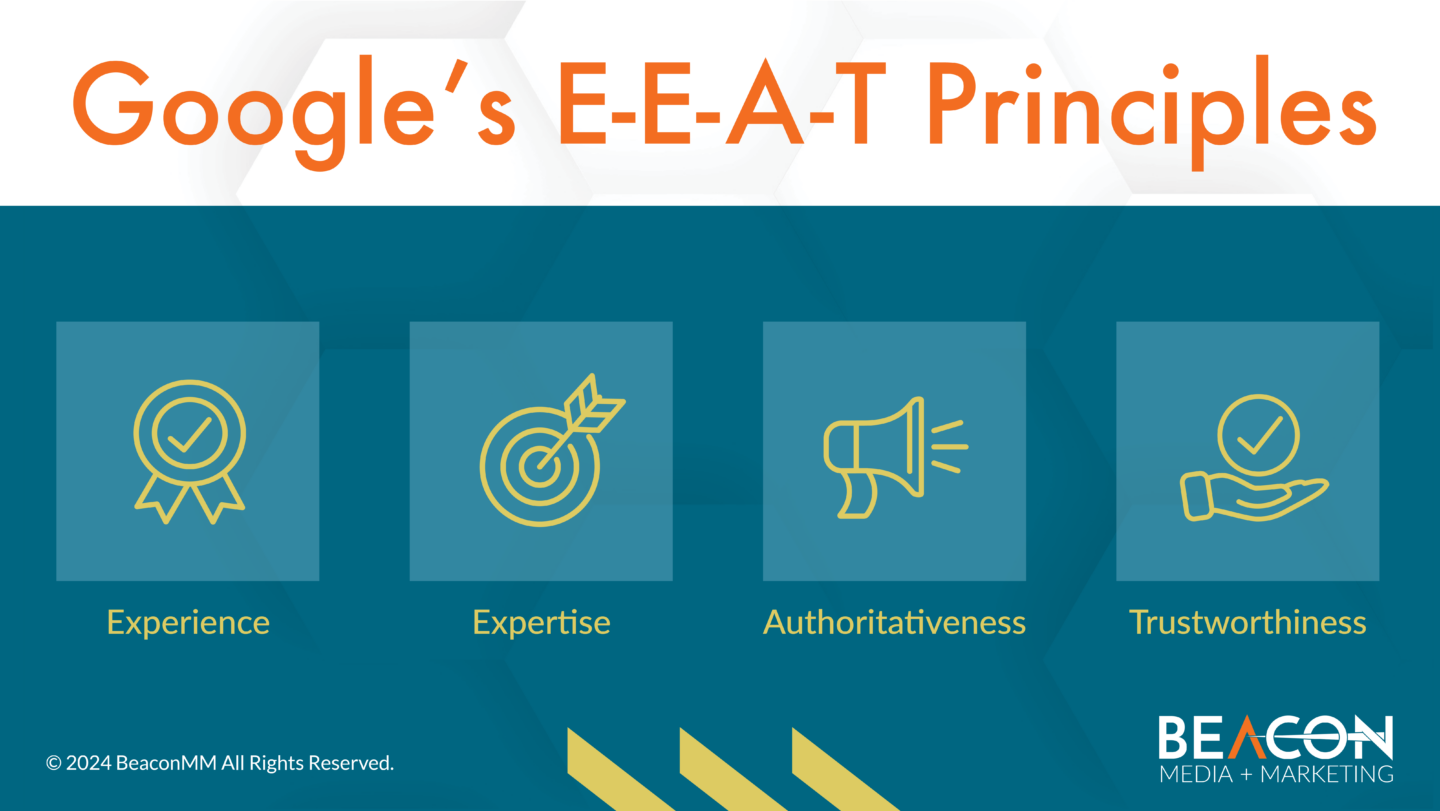
I’m proud to say that Google EEAT principles (experience, expertise, authority, trustworthiness) are actually incorporated into the Beacon Way, and this is part of what we like to consider our “holistic” or integrated marketing practice. Essentially, in our marketing approach, the Beacon Way guides us toward not only adhering to EEAT principles but also in uncovering the root cause of the problem (poor quality marketing) versus simply treating the symptoms (little to no conversions).

For example, one of our most important core values here at Beacon is that we strive to always go deep and make an impact. When we go deep with our clients, we truly understand who they are and their specific needs. We realize it’s our own expertise and experience that allows us to do this. Once we’ve built the foundation for that personal relationship, we can then structure all our clients’ messaging holistically โ€” allowing other people to connect with them on a more personal level.

When we think of Google EEAT, for the quality raters to be appeased, we always want to demonstrate experience, expertise, authoritativeness, and trustworthiness, right? This is why these are also the pillars of the Beacon Way, and why they should be an integral part of your marketing approach.

The Problem With Content Overload

If you look at the content that’s living online today, we’re living in an era of content overload โ€” and much of it is a regurgitation of a regurgitation. Content quality in today’s digital landscape, in one simple word, sucks. This alone is causing people to continue scrolling past content because it’s not offering any value. And frankly, what reason does a person have to land on your content and actually read it if it’s the exact same thing they can find on 100 other websites?

Answer: No reason at all.

At Beacon, both with our own content marketing and for our clients, we’re trying to cut through the noise of content overload, mindless content, duplicate content, etc. And the only way to cut through the noise is to have a very specific niche message that connects to people โ€” one that comes from an authoritative or trustworthy source. Basically, you can’t expect a potential client to connect with a social media post, blog, or newsletter that’s been generalized or repurposed 100 times with little to no strategy, personalization, or dedication behind it.

Really, who would want to?

Information overload and baseline educational content marketing are no longer leading the way. Thus, we’ve moved into developing a more personalized niche connection. This aligns with Google EEAT principles because people are not just searching for specific answers, they’re searching to fulfill a very specific need. And we get it โ€” people today are frustrated when they get generalized “answers” and their needs go unmet.

When it comes to audience engagement, we have to remember, we’re living in the age of intelligence. People are seeking not only authenticity but genuine intellect as well. What we’re doing with our marketing approach not only meets Google’s standards, it makes people think and it meets our clients’ needs, and this is the difference between true intelligence and a bucket of generic information.

Do Google’s Quality Rater Guidelines Ever Require a Nuanced Approach?

In a nutshell, yes. We know that Google’s search quality rater EEAT principles are tiered. For example, trustworthiness is sometimes considered to be at the top, with authority, experience, and expertise acting as its supporting tripod โ€” or the three pillars that lead to trust. But, in certain industries, trust may be more important than authority, and vice-versa for others. It’s our job to know the difference.

For example, in the mental health field, as a potential client, trusting your therapist is likely going to be much more important than the therapist’s educational background for most people.

So the question then becomes, will I pick the therapist with a PhD that I can’t trust, or do I pick the person with lesser experience who’s giving me all the right signals of trust? Personally, I’ll always choose the person I trust.

Just for an illustration, let’s pretend a therapist who has just started a practice has 50 great reviews, their website immediately makes you feel welcome and safe, and you can even see a video of them that shows how much they actually care about people. I’m going to choose the person with a high trust factor, even if they haven’t been practicing as long over the person in business for 20 years with minimal customer service information on their website, or no personal signals of trust.

In that scenario, trust holds more weight over authority in order for a conversion to happen. But this can also depend on the niche focus. For example, if I have a family member who needs help with an advanced form of psychosis, authority and expertise are likely going to weigh more heavily over trust โ€” because I really need to know that you know what you’re doing.

At the end of the day, trust can sometimes be established without much authority. However, a lot of authority can also establish trust. Depending on the particular industry nuance, as marketers, we simply have to know when to adjust our focus in order to promote new business growth.

How Can We Establish Authoritativeness in the Eyes of Google and Our Audience?

On authority, my philosophy has always been that it’s always better to have someone else say something good about you instead of you saying something good about yourself. If authority is citing how well you’re regarded in the market and your industry, you saying it about yourself is never going to give you as much bang for your buck as other people saying it about you.

When it comes to authority, potential clients are looking for social proof. This can be reviews, awards, nominations from well-known and respected colleagues in the industry, being cited in different articles, length of time in business, etc. In addition, content is an excellent way to build authority โ€” but only when you’re expressing your own original thoughts. It’s an easy thing to fake, but in 2024, with Google’s recent core update, the simple fact is that it’s all about quality, not quantity.

Why We’re NOT Writing for Search Engines

Googleโ€™s latest core update is quite significant, and we anticipate potential impacts on content rankings and results, depending of course on how you create content.

What does that mean for website and content creators, marketers, the SEO community, and business owners?

Google has provided us with a 2-month window to ensure we’re all creating human content that is trustworthy, authoritative, and truly helpful for your audience. The E-E-A-T guidelines (experience, expertise, authoritativeness, and trustworthiness) are now more important than ever before. And this is what it means for us:

  • In Googleโ€™s own words, โ€œavoid creating search engine-first content.โ€
  • Create a customized and personalized content plan that includes your data and relevant information to share.
  • Ensure we include bylines โ€” and utilize writers knowledgeable about the content and who can write to a target audience, not to Google.
  • Utilize caution with the overuse of AI-generated content or AI tools.

For any business owner or content creator, when you adhere to Google’s EEAT principles, if your messaging is authentic and powerful enough, and you’re making real connections through your messaging and content, you’ll develop powerful allies โ€” and many of them will organically come into your world.

Our job is to harness what our client already has and then amplify it for their audience, not for Google.

The Evolution of Google’s EEAT

Concerning Google’s approach, I think Google is going to continue in its current direction โ€” but we may also see a “tightening of the reigns.” Basically, we’ll see Google looking for (or requiring) more ways to validate the authenticity of content or a specific company.

Correspondingly, we’ve already seen subtle shifts where brand identity is making a more noticeable appearance in search results, as Google has been adding brand logos and images to search results listings. And brand identity has always been very important for search, not only for clients but for Google as well.

If Google aims to remain competitive with the new surge of AI tools that also offer search capabilities, it must have access to the best information. This is where EEAT principles come in โ€” because this will ensure that content ranked highly on Google is the best content a user can find.

Let’s face it, in the current AI landscape, when you’re searching with AI for “good information,” you have to go back and check where it originates from โ€” otherwise, you could be generating false content, half-truths, or citing sources that simply don’t even exist.

As far as the future of Google EEAT is concerned, I believe the bottom line remains true, it’s going to be about quality over quantity. AI-generated content will continue to be penalized. And those who utilize 100% AI-generated content are ultimately operating in the opposite direction of all Google EEAT signals.

What we need now is real information. In our increasingly automated world, people have become desperate for authentic connections. This is going to include ghostwritten content, quotes from authoritative sources, real interviews, real videos, and most importantly, original human thought โ€” because without our own element of experience, expertise, authority, and trustworthiness, what do we really have to offer?

Ready to learn more about how we’re creating content that really matters? Contact us today for a free discovery call.

We’ve all heard it before: “New Year, New Me!” Maybe it’s even part of your latest social campaign. But while many of us focus on eating healthy, going to the gym, or spending less time online, what often goes overlooked is attending to our mental and behavioral health.

As we step into a new year, the significance of mental health and well-being is more apparent than ever. For those in the behavioral health industry, a powerful marketing campaign can make a significant impact on reaching those who need support. The fact is, in the dynamic of healthcare marketing, the importance of effective marketing strategies cannot be overstated. Behavioral health, in particular, relies on targeted efforts to reach those in need, break down stigma, and connect individuals with the support they require โ€” and sometimes this support is needed the same day.

Not only is next month the first month of the new year, but January is also National Mental Wellness Month โ€” a perfect time to begin new behavioral health marketing campaigns.

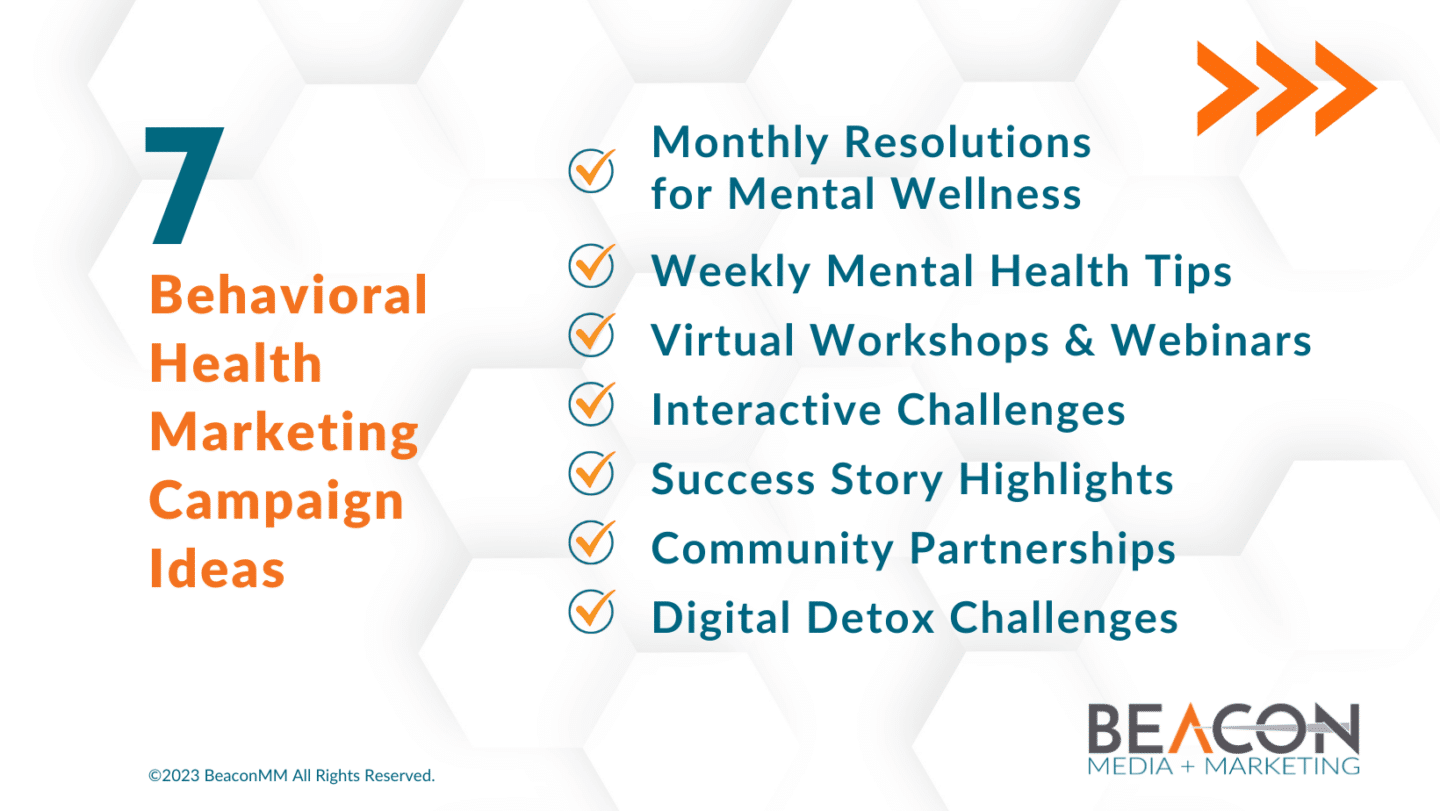
In the following, we’ll explore what behavioral health marketing is, how it works, and detail seven marketing campaigns that behavioral health centers can implement for new patient growth.

Are you looking for a great behavioral health marketing campaign to help promote mental health awareness? Reach out to Beacon Media + Marketing today and find out how we can help.

Behavioral Health Marketing the Beacon Way

Like marketing for most mental health services, behavioral health marketing is a specialized approach that focuses on promoting mental health and well-being services regarding how the mind affects behavior. This can include creating campaigns, content, and strategies tailored around potential clients suffering from substance use disorder, obsessive-compulsive disorder (OCD), social anxiety, and other behavioral issues that resonate with the target audience โ€” whether it’s individuals seeking help, their families, or even other healthcare professionals.

The ultimate goal is to raise awareness, reduce stigma, and encourage individuals to take positive actions for their mental health.

Key Components of Behavioral Health Marketing:

Education and Awareness

  • Developing informative content that educates the audience about behavioral and mental health issues.
  • Dispelling myths and misconceptions surrounding behavioral health through targeted campaigns.
  • Utilizing various platforms, such as social media, blogs, and community events, to disseminate educational materials.

Stigma Reduction

  • Crafting messages that challenge stereotypes and promote a more inclusive understanding of behavioral health.
  • Sharing personal stories and testimonials to humanize the experiences of those dealing with behavioral health challenges.
  • Encouraging open conversations about behavioral health to normalize seeking help.

Targeted Outreach

  • Identifying and understanding the specific demographics and psychographics of the target audience.
  • Tailoring marketing messages to resonate with the unique needs and concerns of different segments of the population.
  • Utilizing data-driven insights to refine and optimize marketing strategies.

Digital Presence

  • Establishing a strong online presence through a user-friendly and informative website.
  • Leveraging social media platforms to engage with the audience, share valuable content, and participate in relevant conversations.
  • Utilizing digital advertising to reach a wider audience and promote behavioral health services.

Collaborations and Partnerships

  • Forming partnerships with other healthcare providers, community organizations, and influencers.
  • Collaborating on events, campaigns, or initiatives that promote mental health awareness and support.
  • Enhancing credibility and expanding reach through strategic alliances.

How Behavioral Health Marketing Works

All mental health marketing strategies need to be targeted properly to be effective. And this requires understanding the nuanced nature of behavioral health.

By combining targeted strategies, educational initiatives, and community engagement, behavioral health marketing works to create a positive impact on both individual well-being and the broader landscape of mental health awareness. And as we continue to prioritize mental health in our society, counseling and effective marketing become essential tools in driving positive change in behavioral health.

Needs Assessment

  • Identifying the unique needs and challenges within the target community or population.
  • Conducting surveys, interviews, or focus groups to gather insights that inform marketing strategies.

Message Development

  • Crafting messages that resonate with the emotions and concerns of the target audience.
  • Ensuring messaging aligns with cultural sensitivities and addresses specific barriers to seeking behavioral health support.

Multi-Channel Distribution

  • Utilizing a mix of channels, including digital platforms, print materials, and community events, to maximize reach.
  • Implementing a consistent and cohesive message across all channels for brand recognition.

Data Analysis and Optimization

  • Monitoring the performance of marketing campaigns through analytics.
  • Using data to refine and optimize strategies based on what resonates most effectively with the audience.

7 Uplifting Behavioral Health Marketing Campaign Ideas

For any mental health practice, marketing is key. At Beacon, we believe that behavioral health centers can optimize their strategies through marketing campaigns. With a little creativity and an in-depth knowledge of behavioral health issues, we can bring many aspects of behavioral health into focus.

Here, weโ€™ll outline 7 marketing campaign ideas that behavioral health centers can implement to help drive new patients.

1. New Year, New Mindset: Monthly Resolutions for Mental Wellness

Taking the idea of a New Year’s resolution one step further, you can encourage individuals to prioritize their mental and behavioral health by incorporating it into monthly resolutions. Here, you can develop a monthly campaign that promotes positive affirmations, mindfulness practices, and the importance of seeking professional help when needed.

For example, you may choose to create engaging content such as a monthly newsletter, blog posts, social media posts, and videos to inspire and educate your audience each month.

2. #MindfulMondays: Weekly Mental Health Tips

Launch a weekly social media campaign focused on behavioral health tips every Monday. Share bite-sized advice, coping strategies, and inspirational quotes to keep your audience engaged and motivated throughout the year.

The idea here is to encourage followers to share their own tips and experiences โ€” fostering a sense of community and support.

3. Virtual Workshops and Webinars: Empowering Minds Online

Host virtual workshops or webinars that cover a variety of behavioral health topics. Collaborate with experts, counselors, or influencers in the field to provide valuable insights and guidance. You can also promote these events through email newsletters, social media, and your website to attract a broader audience seeking valuable information.

4. Interactive Challenges: Building Healthy Habits Together

Create interactive challenges that promote behavioral health practices and encourage participation. Keep in mind that many patients suffering a behavioral disorders may not be too keen on being in the spotlight. As such, you can develop challenges that focus on personal or private activities such as meditation, journaling, or gratitude exercises.

Gradually, you’ll be able to leverage social media platforms to foster a sense of community, with participants sharing their experiences using a designated hashtag.

5. Success Stories: Sharing Hope and Resilience

Highlight success stories from individuals who have overcome behavioral health challenges with the help of your services. Use these stories across various marketing channels, including your website, social media, and email campaigns. Personal narratives can inspire others to seek assistance and reduce the stigma surrounding mental health.

6. Community Partnerships: Strengthening Ties for Collective Well-Being

Behavioral and mental health concerns not only affect your patients, they are concerns shared by many groups in your community. As such, you can forge partnerships with local businesses, schools, or community organizations to expand your reach. Collaborate on joint events, workshops, or awareness campaigns that emphasize the importance of positive behavioral health within the community.

This collaborative approach can enhance your credibility and connect you with a broader audience.

7. Digital Detox Challenge: Balancing Screen Time and Mental Well-Being

A huge part of mental health treatment is reducing our dependency on online tools and activities. This is why, with the increasing prevalence of digital devices, launching a campaign encouraging a “Digital Detox Challenge” is a great idea. Here, you can advocate for a healthy balance between online and offline activities, emphasizing the impact of excessive screen time on behavioral health.

For example, you could offer resources and tips for managing screen use, and challenge your audience to take a break for improved well-being.

Behavioral Health Marketing Campaigns With Beacon Media + Marketing

Whether you’re operating addiction treatment centers, a counseling practice, or specializing in behavioral health inpatient care, as a digital marketing company operating in the mental health space, we know the importance of spreading awareness about mental health. With our expert team, we have the passion, ability, and know-how to build solid behavioral health awareness campaigns to meet your specific needs.

For mental health providers, we understand that mental health marketing may be a gray area that you may need assistance navigating. Whether it’s search engine optimization or developing a behavioral health marketing strategy, at Beacon, we have the tools and expertise that can make you successful โ€” and propel your behavioral health center out of your competitor’s reach.

At Beacon, we believe that mental health awareness campaigns are an integral component of your overall success. And by partnering with us, weโ€™ll use all of our resources to help you lead the way in spreading awareness so more people in your community can get the help they need.

Are you ready to develop a great marketing campaign to promote your behavioral health center? Contact Beacon Media + Marketing today and letโ€™s talk about options!

By Jennifer Christensen CMO

“Gratitude can transform common days into thanksgivings, turn routine jobs into joy, and change ordinary opportunities into blessings” ~ William Arthur Ward

We hear a lot about gratitude these days. But what exactly is the power of gratitude? How can practicing gratitude not only transform your entire perspective on life but also the direction of your business?

Gratitude presents us with a pathway to embrace the entirety of our lives, encompassing all that shapes our existence. It goes beyond mere contentment with the aspects of our lives that are currently favorable; it embodies a readiness to broaden our awareness and embrace all qualitiesโ€” the good and the bad. This expansion allows us to recognize and appreciate more of the constant stream of goodness that we continuously receive.

In the ever-evolving landscape of recruitment, success is not dependent on compelling job descriptions. Besides, companies are continuously seeking innovative approaches to attract top talent. While strategies often focus on competitive salaries, attractive perks, and impressive company cultures, one often underestimated yet powerful tool remains: gratitude.

Remember, gratitude is but a small particle in an atmosphere of love. It has the power to transform your life. And the act of practicing thankfulness not only enhances your life, it contributes to a positive workplace culture โ€” and can significantly elevate your recruitment strategy.

Are you curious about how you can improve recruitment by highlighting gratitude? Contact Beacon Media + Marketing today to find out how today!

Hereโ€™s How Embracing Gratitude Can Enhance Your Recruitment Strategy

Gratitude as a foundational aspect of corporate culture is a transformative force that extends beyond internal operations and the interview process. And when integrated into the recruitment process, it becomes a compelling magnet for potential candidates.

  • Cultivating a Positive Employer Brand: Expressing gratitude and showcasing appreciation for current employees sends a powerful message to prospective candidates. In addition, a workplace where gratitude is evident becomes an attractive destination for job seekers. Positive reviews and testimonials from current employees regarding their experiences with gratitude within the company can significantly impact the employer brand.
  • Authentic Connection Building: Gratitude fosters genuine connections between potential hires and the company. When candidates feel appreciated during the recruitment process, it creates a sense of belonging and establishes an emotional connection. This connection can lead to a higher acceptance rate of job offers and increased loyalty among employees.
  • Enhanced Candidate Experience: The recruitment process can be stressful and daunting for candidates. Incorporating gratitude into every interactionโ€”be it through personalized thank-you notes, acknowledging their time and effort, or providing constructive feedbackโ€”enhances the overall candidate experience. Basically, it leaves a lasting impression, regardless of the outcome, and reinforces a positive perception of your company.
  • Boosting Employee Referrals: Grateful employees are more likely to become brand advocates and refer top talent to their workplaces. When individuals feel appreciated and valued, they naturally want to share their positive experiences. This can lead to a steady influx of high-quality referrals, streamlining the recruitment process and ensuring a higher caliber of candidates!
  • Differentiation in a Competitive Market: In a competitive job market where multiple companies vie for the same talent pool, gratitude becomes a distinguishing factor. Highlighting your companyโ€™s culture of appreciation sets it apart โ€” making it more appealing to prospective candidates who seek not just a job but an inclusive and appreciative work environment.
  • Continuous Improvement and Growth: Practicing gratitude is not a one-time action but an ongoing commitment. It’s truly a lifestyle all its own. Additionally, regularly soliciting feedback from both successful hires and past applicants who chose another path offers invaluable insights. And this feedback loop fuels continuous improvement in recruitment strategies โ€” leading to growth and refinement in attracting top talent.

Incorporating gratitude into your recruitment strategy isnโ€™t just a trend; itโ€™s a fundamental shift toward a more genuine and effective approach. Embracing a culture of appreciation not only attracts the right talent but also fosters a work environment conducive to productivity, innovation, and employee satisfaction.

How Exactly Does Gratitude Enhance Work Culture?

Gratitude is not only the “high-octane fuel” of relationships, it’s the “ultimate performance-enhancing substance at work” according to renowned Psychology Professor and Gratitude Researcher Robert Emmons.

From sending personalized thank-you emails to implementing employee recognition programs, there are numerous ways to infuse gratitude into your recruitment efforts. But by making thankfulness an integral part of your companyโ€™s ethos, you’ll be setting your company culture on a path toward success and paving the way for sustainable growth and success in the competitive world of talent acquisition.

Remember, the power of gratitude isnโ€™t just in what it offers your employees today but in how it shapes the future of your organization, one appreciative interaction at a time.

Consider the following ways that gratitude is a force to be reckoned with in the workplace:

  • Positive Atmosphere: Expressing gratitude fosters a positive and appreciative atmosphere within the workplace. When employees feel acknowledged and valued for their contributions, it creates a sense of belonging and positivity.
  • Increased Motivation and Engagement: Gratefulness acknowledges effort and achievements, motivating employees to continue their good work. It boosts morale and encourages higher levels of engagement as employees feel their efforts are recognized and appreciated.
  • Improved Relationships: Gratitude encourages stronger relationships among team members and between employees and management. It cultivates a culture of respect and appreciation, leading to better collaboration and teamwork.
  • Enhanced Mental Well-being: Gratefulness is linked to improved mental health. Encouraging gratitude practices in the workplace can reduce stress levels and increase overall well-being among employees, leading to a more productive workforce.
  • Higher Retention Rates: A culture of gratitude increases employee satisfaction and loyalty. Employees are more likely to stay with a company where they feel appreciated, leading to reduced turnover rates.
  • Increased Innovation and Creativity: When employees feel valued, they are more likely to contribute innovative ideas and solutions. Gratitude fosters an environment where individuals feel comfortable sharing and exploring new concepts.
  • Better Customer Relations: Employees who feel appreciated are more likely to extend that same appreciation to customers. Gratitude in the workplace can positively impact customer service and relationships, enhancing the overall reputation of the company.
  • Cultural Impact: A workplace culture centered around gratitude sets a powerful example for incoming employees. It becomes a foundational aspect of the company’s identity, aiding hiring managers in attracting like-minded individuals who value appreciation and recognition.

Are ready to improve recruitment by highlighting gratitude? Contact Beacon Media + Marketing today for a free discovery call today!

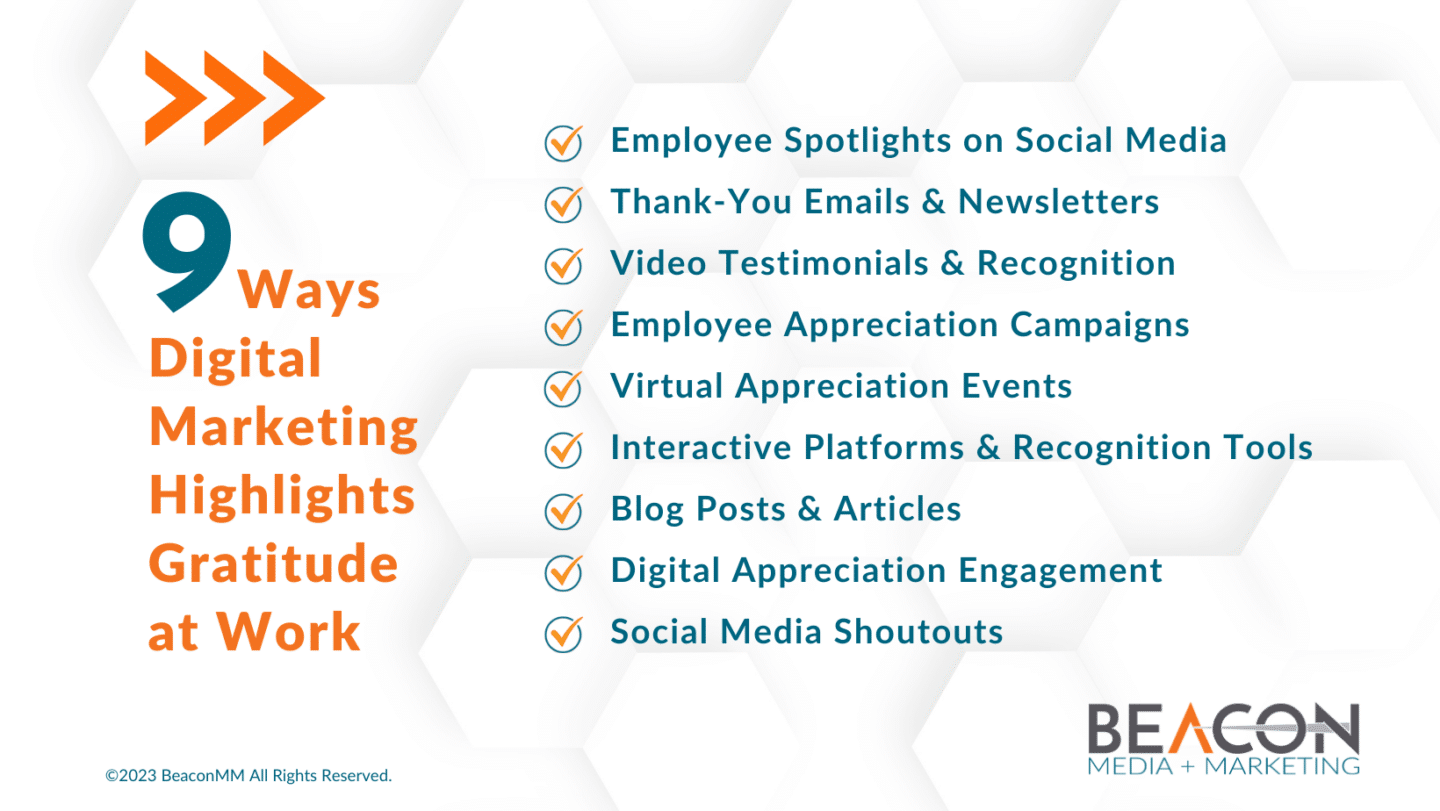
9 Ways Digital Marketing Highlights Gratitude at the Workplace

It should go without saying that it’s been a tough few years since the pandemic changed the entire dynamic of work culture in 2020 โ€” especially in the healthcare industry. We were forced to change quickly, and this caused anxiety, stress, and several challenges that nobody saw coming. But this also gave us even more of a reason to be grateful.

Showcasing gratitude in digital marketing is a beautiful thing. Honestly, it’s what makes marketing shine. And in turn, it has the potential to generate a “virtuous cycle” that not only enhances your employees’ attitudes at work but your overall recruitment efforts as well.

At the end of the day, showcasing gratitude in the workplace through digital marketing involves leveraging a few common online platforms and strategies to express appreciation. Here are some effective ways to do so:

  1. Employee Spotlights on Social Media: Highlight team members’ achievements, milestones, or contributions through dedicated posts on social media platforms. Use engaging content formats like employee interviews, success stories, or behind-the-scenes glimpses to showcase their efforts and express gratitude publicly.
  2. Thank-You Emails or Newsletters: Send personalized thank-you emails or newsletters to employees, acknowledging their hard work, dedication, and specific contributions. Include messages from leadership, success stories, or quotes from team members to make it more impactful.
  3. Video Testimonials and Recognition: Create videos featuring testimonials from leaders or colleagues expressing gratitude towards individuals or teams. Share these videos on the company website, social media channels, or internal communication platforms to show appreciation and inspire others.
  4. Employee Appreciation Campaigns: Launch digital campaigns during special occasions like Employee Appreciation Day or work anniversaries. Utilize hashtags, interactive polls, or user-generated content contests to engage employees and celebrate their value within the organization.
  5. Virtual Appreciation Events: Organize virtual events such as webinars, live Q&A sessions, or virtual town halls where leadership can express gratitude, share success stories, and recognize outstanding performances. Stream these events live on platforms like YouTube or LinkedIn.
  6. Interactive Platforms and Recognition Tools: Implement digital recognition platforms or tools within the company’s intranet or employee portal. Encourage peer-to-peer recognition by allowing employees to send digital badges, stickers, or personalized messages to colleagues.
  7. Blog Posts or Articles: Create blog posts or articles that highlight the positive impact of employees’ efforts on the company’s success. Share stories of collaboration, innovation, or dedication, showcasing how individual contributions drive the organization forward.
  8. Engage Employees in Digital Appreciation: Encourage employees to participate in digital gratitude initiatives by sharing their appreciation for peers or team accomplishments on social media platforms, using specific hashtags or dedicated channels.
  9. Personalized Social Media Shoutouts: Use the company’s social media channels to publicly recognize employees’ achievements or exceptional performances. Share photos, quotes, or anecdotes that highlight their contributions.

What’s Beacon Doing to Show Gratitude at Work?

As a hybrid company, with employees working remotely and in the office on occasion, our work cadence is dynamic โ€” but it’s so much fun. One thing that we’ve learned as we’ve grown: our employees are an intrinsic part of our brand. And this should be true for any company operating in any vertical.

Basically, it’s all connected. The people you work alongside affect your mood, your work performance, and ultimately, the product or service you provide. But when you highlight your employees and build them up, you’re ultimately fortifying the foundation of your entire business.

Consider a few things we do on a daily and weekly basis when it comes to fostering a vibrant, positive, work culture:

  • Wellness Wednesdays: Every other Wednesday, we get together on Zoom and talk about what’s going on in our lives, whether work-related or personal. We each highlight a bud (something promising), a rose (something that has blossomed), and a thorn (whatever might be bothering us) present in our lives and open the floor to discussion in a positive, accepting, environment.
  • Teambuilding: We come together every other Wednesday and forget about work for an hour. We play games, learn about one another, tell stories, show our appreciation on work anniversaries and birthdays, and really get to know who our team is on an intimate level.
  • Slack: If you take a peek into our Slack channels, you’ll see a team brimming with activity and good vibes. Our communication channels might be business-related, but they’re definitely not lacking a true personal touch and appreciation for each one of our team members. We regularly give thanks and shoutouts to team members who are crushing their jobs โ€” even if it’s just a quick thank you.
  • What’s On Your Wall Wednesday: Our newest addition, each week we’re highlighting one of our clients and how they are elevating themselves in their niche. Not only is this a great way to show appreciation for our clients, but it’s a bit of free marketing for them as well!

Employees don’t only impact your brand โ€” they are your brand. Correspondingly, acts of celebration also become part of your brand. And once you begin to highlight this, you’ll see your recruitment strategy and hiring process reach an entirely new level.

Elevate Your Brand Through Highlighting Gratitude with Beacon Media + Marketing

“A grateful mind is a great mind which eventually attracts to itself great things” ~ Plato

At Beacon, we know that the recruiting process can be tough. Let’s face it, it’s just hard to find qualified candidates who you knowโ€”for sureโ€”will fit your company. And it doesn’t matter if you’re advertising on niche job boards, running an employee referral program, or regularly changing the verbiage on your job postings; when it comes to effective recruitment strategies, highlighting the achievements of your existing employees can be your greatest asset.

You have to remember that recruitment goals should extend well beyond an ad or job posting. And recruiting strategies without an element of thankfulness, showcasing what it’s like to work for your team, is going to be relatively lackluster. Essentially, you’re going to be missing a key ingredient in your recruiting strategy. And you’ll be leaving prospective employees wondering if the juice is really worth the squeeze.

If you want to attract great employees and talented candidates, attract them by how you operate. In every action, in every meeting, and while working on every task, it’s through gratitude that we all become successful.

Are you ready to improve company culture and recruitment by highlighting gratitude? Contact Beacon Media + Marketing today and speak with an expert today!

As autumn transitions into the colder months, November emerges not only as a time of falling leaves and cooler temperatures but also as a pivotal period for raising awareness about men’s mental health. Often recognized as “Movember,” this month serves as a platform to spotlight and address the critical issue of men’s mental well-being.

If you’re a mental health provider, campaigning this month by highlighting men’s mental health through digital marketing is a great way to not only help support a great cause, but you can also help bring attention to the silent suffering of men across the nation.

At Beacon, we work with numerous clients in the mental health space. And we know firsthand how the ingrained stigma of mental illness and societal beliefs often prevent many men from seeking help. This is why the significance of November in championing men’s mental health cannot be overstated, and understanding the reasons behind this focus sheds light on the importance of this initiative.

Here, we’ll discuss Movember, and how you can help spread awareness about mental health problems through the power of digital marketing.

Are you ready to enhance your digital marketing and promote mental health awareness? Reach out to Beacon Media + Marketing today and schedule a free discovery call today.

The November Focus on Men’s Mental Health Treatment

Movember serves as a reminder of the unique challenges men face concerning mental health. Historically, societal stigmas have deterred men from seeking help or discussing their mental well-being openly. Thankfully, November symbolizes a concerted effort to break these barriers and foster open conversations about men’s mental health struggles.

By dedicating a month specifically to this cause, Movember aims to emphasize the importance of addressing mental health issues prevalent among men and encouraging them to prioritize their well-being.

As such, men often face various mental health struggles โ€” many of which may go unrecognized or unaddressed due to societal expectations or stigma surrounding male mental health. Some common mental health challenges that men may experience include:

  1. Depression: Men may manifest symptoms of depression differently than women, leading to misdiagnosis or misinterpretation. Male depression may exhibit signs such as irritability, anger, substance abuse, or engaging in risky behaviors rather than openly expressing sadness or hopelessness.
  2. Anxiety: While both men and women experience anxiety, men may be less likely to seek help due to the expectation to appear strong and in control. They might suppress their anxiety or exhibit physical symptoms such as headaches, digestive issues, or aggression instead of verbalizing their worries.
  3. Substance Abuse: Men are more prone to substance use disorders, often using alcohol or drugs to cope with stress, anxiety, or depression. This can further exacerbate mental health issues and lead to a cycle of dependency.
  4. Suicide: Men are more likely to die by suicide than women, partly due to societal pressures that discourage open discussions about emotions or seeking help. For example, in 2021, men committed suicide 3.9 times more than women. Men might be less likely to talk about their suicidal thoughts or seek assistance when experiencing mental health crises.
  5. Work-related Stress: Pressures related to career success, financial stability, and providing for their families can significantly impact men’s mental health. The struggle to balance work and personal life might lead to stress, burnout, or feelings of inadequacy.
  6. Post-Traumatic Stress Disorder (PTSD): Men, particularly those who serve in the military or law enforcement, are at a higher risk of experiencing traumatic events leading to PTSD. The stigma associated with seeking mental health support might prevent them from seeking treatment.
  7. Relationship Challenges: Difficulties in relationships, marital problems, or the breakdown of significant relationships can have a profound impact on men’s mental health. Societal expectations to appear strong or self-reliant might hinder them from seeking help during relationship turmoil.
  8. Loneliness and Social Isolation: Men might struggle to build or maintain social connections due to cultural expectations surrounding masculinity. This isolation can lead to feelings of loneliness, impacting mental health adversely.

Recognizing these challenges is crucial in encouraging men to seek help and support when facing mental health struggles. It’s essential to foster an environment where men feel comfortable seeking assistance without fear of judgment or stigma.

The Role of “Movember” in Men’s Health Advocacy

Movember is more than just a month; it’s a movement that strives to promote mental health advocacy for men globally. So, how does it work? It encourages men to grow mustaches as a visible emblem, sparking conversations that might otherwise remain unspoken.

Though women can have the same mental disorders as men, Movember focuses on health issues that specifically affect men. In addition to mental health awareness, Movember also seeks to raise awareness for men’s suicide prevention, bipolar disorder, and other men’s health issues โ€” specifically for testicular cancer and prostate cancer.

Like seeking help for mental health, many men simply stay away from the doctor. Unfortunately, testicular cancer and prostate cancer can manifest without warning signs. Thus, the sooner you can get treatment for these conditions, the better.

Beyond the mustache, this initiative aims to educate, raise funds, and promote resources for men’s health support. It also serves as a platform for awareness campaigns, community engagement, and initiatives that support mental health programs tailored to the specific needs of men โ€” and partnering with a digital marketing agency can help spread this message in your community and beyond.

Addressing Mental Health Challenges Head-On

November’s focus on men’s mental health serves as a catalyst for change. And this is what we love about it. From a marketing perspective, highlighting the importance of early intervention, encouraging the destigmatization of mental health conversations, and urging men to seek support without fear or shame is great messaging that can be applied to blog content, social profiles, and targeted ads โ€” all with the ability to bring more men into your clinic and raise awareness.

By providing accessible resources, and guidance, and fostering supportive environments, Movember empowers men to acknowledge their mental health concerns and take proactive steps toward well-being.

Improving mental health involves various strategies and actions that men can adopt to support their well-being. Here are several steps men can take to enhance their mental health:

  1. Seek Professional Help: Seeking support from mental health professionals, such as therapists, psychologists, or counselors, can provide valuable guidance and tools to manage mental health challenges effectively. Talking to a professional offers a safe space to express feelings and learn coping strategies.
  2. Prioritize Self-Care: Engage in self-care practices that promote mental wellness, such as regular exercise, adequate sleep, maintaining a balanced diet, and practicing relaxation techniques like meditation or mindfulness. Taking care of physical health positively impacts mental well-being.
  3. Cultivate Supportive Relationships: Build and nurture a support network by connecting with friends, family, or support groups. Having trusted individuals to confide in and share experiences with can alleviate feelings of isolation and provide emotional support.
  4. Communicate Openly: Break free from societal expectations of suppressing emotions and communicate openly about feelings, stressors, and mental health concerns. Expressing emotions and seeking support from trusted individuals can help alleviate distress.
  5. Manage Stress: Practice stress management techniques such as time management, setting realistic goals, delegating tasks, and learning to say no when feeling overwhelmed. Engaging in activities that bring joy and relaxation helps in managing stress effectively.
  6. Limit Substance Use: Be mindful of alcohol or drug consumption as they can exacerbate mental health issues. Limiting or avoiding substance use can positively impact mental well-being.
  7. Stay Active and Engaged: Engage in hobbies, physical activities, or volunteer work that brings joy and a sense of fulfillment. Staying active and involved in activities fosters a positive outlook and reduces feelings of isolation.
  8. Set Boundaries and Practice Self-Compassion: Establish healthy boundaries in personal and professional relationships, prioritize self-care, and practice self-compassion. Being kind to oneself and recognizing personal limitations is essential for mental well-being.
  9. Educate Yourself: Educate yourself about mental health issues, symptoms, and available resources. Having knowledge about mental health fosters understanding and helps in recognizing when to seek help.
  10. Seek Help Early: Recognize the signs of mental health issues and seek professional help early. Early intervention can prevent issues from escalating and promote faster recovery.

It’s crucial to understand that taking care of mental health is a continuous process. Men can empower themselves by proactively taking steps to prioritize mental wellness and seeking help when needed.

Are you ready to develop a marketing campaign to break stigma and foster mental health awareness? Contact Beacon Media + Marketing today and letโ€™s talk about options!

How Can Digital Marketing Help?

At Beacon, we know that digital marketing offers a wide range of powerful tools and strategies that can help mental health providers effectively spread awareness about mental health. These methods can be used to educate the public, combat stigma, and encourage individuals to seek help when needed.

Here are a few ways digital marketing can be utilized for this purpose:

Creating Educational Content

  • Blog posts: You can share informative and engaging articles on various mental health topics, providing in-depth knowledge and addressing common misconceptions.
  • Infographics: Visualizing data and statistics about mental health in compelling and easy-to-understand formats helps users retain information.
  • Videos: Creating educational and inspiring videos that can reach a wider audience and personalize the message offers a great way to connect with your audience in a fast-paced world.
  • Podcasts: Consider hosting discussions and interviews with mental health professionals and individuals who have lived experience to broaden perspectives and spark meaningful conversations. Remember, a personal touch goes a long way!

Utilizing Social Media Platforms

  • Share engaging posts: Relevant hashtags and imagery can create social media content that raises awareness about mental health issues, resources, and support networks.
  • Host Q&A sessions: Live videos or social media polls help answer questions and address concerns about mental health in real-time.
  • Partner with influencers: You can also collaborate with social media personalities recognized for spreading mental health awareness to reach a broader audience and amplify your message.

Running Targeted Ads

  • Reach specific demographics: Utilize online advertising platforms to target individuals who may be struggling with mental health concerns, directing them to resources and information.
  • Promote events and initiatives: You can increase awareness about mental health events, campaigns, and resources through strategically placed online advertisements.
  • Tailor messaging: Compelling ad copy and visuals will resonate with your target audience and help to drive action towards seeking support.

Building a Strong Online Community

  • Develop a dedicated website: Creating a user-friendly platform with educational resources, testimonials, and information on accessing mental health services can be a huge asset when it comes to attracting new patients.
  • Engage in online forums and communities: Consider participating in relevant online discussions to provide helpful information and create a supportive online environment.
  • Offer online support groups: Facilitate online communities for individuals to connect with others experiencing similar challenges and build a sense of belonging.

Utilizing Email Marketing

  • Send regular newsletters: Share updates on mental health news, research findings, and available resources.
  • Targeted email campaigns: You can also send relevant information and “support resources” to specific individuals based on their interests and needs.
  • Share success stories: Showcase testimonials and inspiring accounts of individuals who have overcome mental health challenges. This is a powerful tool that can create connections and encourage those seeking help to reach out.

By strategically utilizing these digital marketing tools and strategies, you can reach a wider audience, effectively educate the public about mental health, and ultimately contribute to a more informed and supportive community.

Joining the Movember Movement with Beacon Media + Marketing

As a digital marketing company operating in the mental health space, we know firsthand the importance of spreading awareness about mental health. With our team of talented creatives, we have the passion it takes to build a solid mental health awareness campaign tailored to meet your specific needs, whether in November or any other month.

At the end of the day, mental health awareness is something that should be promoted every month โ€“ and every day, for both men and women alike. By partnering with Beacon, you’ll have access to all of our resources to help you spread awareness so more men in your community can get the help that they so desperately need and deserve.

This November, let us stand together in support of men’s mental health. Engage in conversations, raise awareness, and encourage men to prioritize their mental well-being. Whether it’s growing a mustache, participating in fundraising events, or simply initiating dialogues about mental health, every action contributes to breaking down barriers and fostering a culture of mental health acceptance and support.

As November unfolds, we can partner together to remember Movember’s significanceโ€”serving as a rallying point for men’s mental health advocacy. Together, let’s pave the way for healthier, happier, and more supported lives for men everywhere.

Do you need a digital marketing partner to help further mental health awareness? Contact Beacon Media + Marketing today and letโ€™s talk!

In the ever-evolving landscape of healthcare, the way healthcare providers communicate and engage with patients has undergone a profound transformation, largely fueled by the rise of digital marketing. And the shift from a traditional patient-centric approach to a collaborative partnership model is reshaping healthcare industry communication.

We have to remember that we can’t stand alone in an interconnected world, because in a dynamic of change, patient partnerships will become the key to successful marketing campaigns.

The fact is, current developments in industries and shifting patient demands are prompting numerous healthcare practices to reconsider their marketing strategies from patient-centric to partner-centric. For example, healthcare organizations witnessed a notable surge in their marketing budgets by 15% during 2022, with companies dedicating billions of dollars toward reaching out to fresh patient pools and bringing them into a more intimate healthcare experience.

At Beacon, we understand that the power of partnership is where the true strength in marketing lives. In the following, we’ll explore how healthcare organizations are embracing a new era where patients are not just recipients of care โ€” but active partners in their health journeys.

Are you ready to learn how healthcare digital marketing can elevate your brand? Reach out to Beacon Media + Marketing today to schedule a free discovery call.

A Brief History of Mental & Behavioral Health Marketing

While billboards, radio, and the occasional television spot drove healthcare marketing efforts throughout the 20th century, during the 1980s, a noticeable decline in physician influence led hospitals to redefine their offerings as “marketable products” directly aimed at consumers. This strategic shift aimed to influence patient outcomes positively, bolster profits, and augment market presence.

Around the same time, doctors, practices, and private healthcare providers experienced intensified competition for patient attention โ€” urging them to delve into unprecedented levels of marketing investment. For example, a comprehensive analysis highlights a staggering surge in healthcare marketing expenditure, soaring from $50 million to $500 million throughout the 1980s, marking a significant milestone in the evolution of healthcare marketing strategies.

The Patient-Centric Era

Historically, healthcare marketing has been centered around a patient-centric model. Information was disseminated to patients through traditional channels such as brochures, billboards, and television advertisements. The focus was on promoting services, highlighting expertise, and building trust in the healthcare provider. However, this model had its limitations; it was a one-way communication street, with patients often left as passive recipients of information.

The Rise of Digital Engagement

Enter the digital age, where the internet has become a powerhouse of information, and social media platforms provide a space for conversations. Healthcare organizations quickly realized the need to adapt their communication strategies to meet the evolving expectations of an increasingly digital-savvy audience. Websites, social media, and online forums became pivotal tools for disseminating information and, more importantly, for engaging patients in a two-way conversation.

7 Effective Powers of a Healthcare Digital Marketing Strategy

As mentioned, in an era dominated by digital advancements and social media marketing, industries across the board are harnessing the power of technology to revolutionize their approach, and healthcare is no exception. Digital marketing strategies have emerged as a formidable force, reshaping how healthcare organizations connect with patients and improving the overall patient experience.

1. Precision Targeting: Reaching the Right Audience

Digital marketing allows you to reach specific demographics with precision. Whether it’s promoting preventive care services, specialized treatments, or wellness programs, digital strategies enable tailored messaging. Social media platforms, search engine optimization (SEO), and targeted online advertising empower healthcare organizations to connect with the right audience at the right time.

2. Patient Education in the Digital Age

Empowering patients with knowledge is a cornerstone of effective healthcare. Digital marketing provides a platform for you to disseminate accurate and accessible information โ€” and this can help make your patients feel like partners. Educational content, webinars, and interactive tools contribute to informed decision-making, enabling patients to actively participate in their health journeys.

3. Building Trust Through Content Marketing

Trust is the foundation of any successful healthcare relationship. Content marketing, through blogs, articles, and videos, allows you to showcase your expertise, share success stories, and establish credibility. By creating valuable and relevant content, organizations can foster trust among patients and position themselves as reliable sources of healthcare information.

4. Enhancing Patient Engagement

Digital marketing strategies facilitate meaningful and continuous patient engagement. Social media platforms serve as communication channels where healthcare providers can share updates, answer queries, and maintain an ongoing dialogue with their audience. Email campaigns and newsletters keep patients informed about new services, upcoming events, and relevant health tips.

5. Harnessing the Power of Reviews and Testimonials

Online reviews and testimonials wield considerable influence in shaping public perception. Digital marketing provides an avenue for healthcare organizations to actively manage and leverage positive reviews. By showcasing patient testimonials, organizations can build trust and credibility, influencing potential patients in their decision-making process.

6. Telehealth and Digital Accessibility

The rise of telehealth has been accelerated by digital marketing strategies. Seamless online scheduling, virtual consultations, and user-friendly interfaces contribute to improved accessibility. Digital marketing plays a pivotal role in promoting these services, ensuring that patients are aware of and comfortable with the digital healthcare options available to them.

7. Data-Driven Decision Making

One of the most powerful aspects of digital marketing in healthcare is the ability to gather and analyze data. Healthcare organizations can track the performance of their campaigns, understand patient behavior, and make data-driven decisions to refine their strategies continually. This iterative process ensures that marketing efforts are not only effective but also adaptive to the evolving needs of patients.

Are you ready to learn more about the power of a patient-partner approach? Reach out to Beacon Media + Marketing today to schedule a free discovery call.

Shifting to a Partnership Model

The current era marks a significant departure from the traditional patient-centric approach. Healthcare organizations are recognizing the value of turning patients into active partners in their care. This shift is not merely a change in terminology but a fundamental transformation in the way healthcare is delivered and communicated.

Engaging Patients as Partners

  • Educational Empowerment: Healthcare organizations are leveraging digital platforms to educate patients about their conditions, treatment options, and preventative measures. Remember, informed patients are empowered patients โ€” and digital marketing is a potent tool for disseminating accurate, easily accessible information.
  • Personalized Communication: The era of generic healthcare messages is waning, and nobody is listening to a squawking parrot anymore. Digital marketing allows for targeted and personalized communication based on patient demographics, preferences, and health needs. This ensures that patients receive information relevant to their unique situations.
  • Feedback Loops: Digital marketing facilitates real-time feedback and engagement. And this is the type of engagement that we all want, right? Healthcare providers are leveraging online surveys, social media, and interactive websites to gather insights directly from patients. This feedback loop enables continuous improvement and tailoring of services to meet patient expectations.
  • Virtual Health Communities: Online platforms and social media have given rise to virtual health communities where patients can share experiences, ask questions, and provide support to one another. This is where you become part of the conversation. And healthcare organizations are actively participating in and fostering these communities, starting meaningful conversations, and recognizing the importance of peer-to-peer support along the healthcare journey.

The Future of Healthcare & Digital Marketing Platforms

As we move forward, the evolution of healthcare digital marketing will likely continue. And we believe the focus will be on leveraging emerging technologies such as AI and telehealth to enhance patient engagement and outcomes. The goal here is to create a seamless, patient-partnered digital experience that extends beyond traditional care settings.

Embracing Personalization and Patient-Partnerships

The future of healthcare marketing pivots on personalization. Patients are seeking tailored experiences that resonate with their unique needs, and they want to become part of the conversation.

Advanced data analytics and AI are poised to revolutionize how healthcare providers deliver personalized content, treatment recommendations, and engagement strategies. By harnessing patient data ethically and securely, healthcare marketers can craft individualized messages, enhance patient education, and streamline the overall patient experience.

Rise of Telehealth and Virtual Engagement

The COVID-19 pandemic accelerated the adoption of telehealth and virtual care, marking a monumental shift in healthcare delivery. The future of digital marketing in healthcare rests on leveraging these platforms to extend patient outreach. Marketers must harness the potential of social media, mobile apps, and virtual consultations to engage patients remotely, providing vital information, support, and access to care, thereby reshaping patient-provider relationships.

Content Marketing and Thought Leadership

Educational content and thought leadership will remain cornerstone strategies in healthcare marketing. As consumers increasingly seek reliable health information online, the demand for credible, informative content will soar. Healthcare marketers need to cultivate authoritative content that educates and guides patients while establishing their organizations as trusted sources of information. Engaging blogs, podcasts, videos, and interactive resources will be instrumental in fostering connections and building brand authority.

Ethical Use of Data and Privacy

With the proliferation of data collection, maintaining patient privacy and adhering to ethical standards will be paramount. Healthcare marketers must navigate stringent privacy regulations and prioritize data security while harnessing the potential of patient information. Building trust by safeguarding patient data integrity will be essential in order to sustain long-term relationships and uphold ethical practices.

The future of healthcare digital marketing is a convergence of technology, empathy, and innovation. By embracing personalization, leveraging telehealth, curating valuable content, and upholding ethical standards, healthcare marketers can navigate this transformative landscape. As we embrace these advancements, the ultimate goal remains unwaveringโ€”to empower patients, enhance their healthcare journeys, and ultimately improve outcomes for all.

Turn Patients into Partners With Beacon Media + Marketing

Our baseline philosophy in marketing rests on one keystone that we believe makes every one of our clients successful โ€” prioritizing people over profit. As marketers, we understand that you want to attract new patients. But we also fully realize the power of partnerships. And once you develop a patient-partnership model through strategic digital marketing, you’ll become partners with your greatest assets; your patients.

Ultimately, people are what keep you in business. So, it only makes sense to bring your patients into the conversation โ€” and to make them feel accompanied by a partner on their healthcare journeys. In turn, this creates a genuine rapport that can be leveraged as you develop your business and reach new patients.

At Beacon Media + Marketing, we know that creating intimate relationships with your patients is how youโ€™ll establish your brand and grow. We trust this model, we stand by it, and we know the most effective ways to reach your goal.

Our team is well-versed in marketing for the healthcare space. From creating engaging content, and paid ads, leveraging local listings, and reviving your social profiles to designing your website for a perfect user experience, you can trust Beacon Media + Marketing for all of your healthcare marketing needs.

Are you ready to reach more patients and enhance your marketing strategy? Reach out to Beacon Media + Marketing today to learn how we can take your healthcare practice to the next level.

By Jennifer Christensen CMO

We’ve all had that nightmare healthcare experience of waiting for hours to be seen, and then waiting even longer before your doctor shows up. Then, 15 minutes later, you’re being shuffled right out the door. It should go without saying that this is simply unacceptable โ€” but it only illustrates a problem that has pervaded the healthcare industry for decades: a lack of effective communication.

In today’s interconnected healthcare landscape, patients are now realizing that they have the power to choose which healthcare provider they prefer to wait on โ€” and which one they prefer to pay. For a provider, capitalizing on this simply entails leveraging personable and effective communication skills. Fortunately, this is also where digital marketing comes in.

The thing about digital marketing that’s so exciting is not the advanced tech that we get to use every day. Though the latest technological advances are brilliant and make our jobs easier, it’s how these tools transform communication and offer our clients a stronger bridge to building patient relationships in a genuine, transparent way that makes digital marketing such a great investment for healthcare professionals.

Communication is key in any relationship. So, how has digital marketing transformed healthcare communication? Well, without it, we’d still be passing out flyers and hoping someone heard our latest radio blast.

Are you ready to provide your patients with an enhanced healthcare experience and transform patient communication? Connect with Beacon Media + Marketing today for a free discovery call!

Effective Communication Creates Accessibility

Just like any consumer, patients want results. Today, we live in a world where instant access to whatever we need is almost considered a given. And that’s exactly what your patients want from you โ€” accessibility.

Through digital marketing, your patients can get exactly what they’re looking for without having to “hurry up and wait.” Just consider what real-time accessibility and information through digital marketing can offer your patients:

  • Company Culture: Patients can research you and your clinic, decide if you’re a good fit, and take a peek into what an experience at your location is really like. By leveraging digital marketing, in turn, you can leverage your company culture, reviews, and testimonials, and showcase a patient experience that will draw in more patients.
  • Telemedicine Services: Patients can access virtual appointments and consultations, receiving immediate medical guidance or advice without physical presence, reducing patient anxiety, promoting convenience, patient safety, and timely healthcare delivery.
  • Online Appointment Scheduling: Enables patients to book appointments at their convenience, reducing wait times and providing flexibility in managing their healthcare appointments.
  • Educational Content: Sharing informative content online allows patients to access resources that empower them with knowledge about health education, conditions, treatments, and preventive care, fostering informed decision-making and active engagement in their health.
  • Interactive Patient Portals: Offer patients secure access to their medical records, test results, and treatment plans, promoting transparency, and allowing them to actively participate in their care journey.
  • Social Media Engagement: Utilizing social platforms facilitates direct communication, feedback sharing, and community building, creating a space for patients to ask questions, share experiences, and engage with healthcare providers and peers.

Traditional healthcare communication relied heavily on one-way interactions, often leaving patients powerless. By giving the provider all of the power, this narrowed the potential pool of patients significantly. And while patients remained worried about their health, “care professionals” reaped all of the benefits.

While these methods once served their purpose, they lacked the personalization and real-time engagement that could truly make a difference in patient care. But the advent of digital marketing has ushered in a new era of healthcare communication, one characterized by two-way dialogues, data-driven insights, and a patient-centered approach; one where patients feel more like partners on their care journey.

Fostering Patient-Centric Interactions

Digital marketing enables health professionals to move beyond generic communication and tailor their messages to the specific needs and preferences of individual patients. Through targeted messaging, healthcare organizations can provide relevant and timely information about preventive care, disease management, and treatment options. This personalized approach empowers patients to take an active role in their health decisions, leading to improved adherence to treatment plans and overall better outcomes.

Embracing Real-Time Engagement

Digital marketing tools provide healthcare providers with the ability to engage with patients in real-time, facilitating seamless communication and building stronger relationships. Through secure online portals, patients can access their medical records, schedule appointments, ask questions, and receive updates from their healthcare providers. This real-time engagement fosters trust and transparency, ensuring that patients have access to the information they need, whenever they need it.

Leveraging Data-Driven Insights

Digital marketing platforms also generate a wealth of valuable data about patient preferences, behaviors, and online interactions. For example, healthcare teams can analyze this data to gain deeper insights into their patient population, enabling them to tailor their communication strategies and personalize their outreach efforts. This data-driven approach ensures that healthcare organizations are reaching the right audience with the right message โ€” at the right time.

Harnessing the Power of Digital Tools

The digital marketing landscape offers a wide range of tools and marketing strategies that healthcare providers can leverage to enhance their communication with patients. Here are a few examples:

  • Email Marketing: Personalized email campaigns can provide patients with timely updates, educational resources, and reminders about appointments or preventive care recommendations.
  • Social Media: Healthcare organizations can use social media platforms to engage with patients, share informative content, create targeted ads through social feeds, and build a strong online community where engagement drives results.
  • Patient Portals: Secure online portals offer patients convenient access to their medical records, appointment scheduling, and secure communication with their healthcare providers.
  • Content Marketing: Creating informative and engaging content, such as blog posts, videos, and infographics, can educate patients about health conditions, treatment options, and lifestyle changes.
  • CRM Software: Keeping up with your patient’s health communication is perhaps one of the most important tasks you can engage in. With digital Customer Relationship Management (CRM) tools, you’ll have a robust toolkit that empowers you and your patient to keep in touch.

Remember, effective physician-patient communication is not just about sending out messages; it’s about understanding the impact of those messages on patient behavior and outcomes. As such, healthcare providers can use various metrics to measure the effectiveness of their digital marketing efforts, such as website traffic, email open rates, social media engagement, and patient satisfaction surveys.

Are you ready to improve your messaging and bring in more patients? Reach out to Beacon Media + Marketing today to learn how we can take your practice to the next level.

Patient-Physician Communication: Diversifying Your Messaging

We want to be clear. Digital marketing is a great asset, but you can rely too much on digital marketing. And it’s best not to get caught on this slippery slope. The key is to leverage digital marketing โ€” but never forget your entire outreach plan.

Here, you have to remember that you’re likely not just serving only one demographic. But if you set up your strategy without taking into consideration the diversity of your community, you’ll end up catering to only one patient pool. For example, targeting your ads and content to a specific audience is one way to go. But if you want to edge out your competition, considering language barriers, cultures, and gender, you need to be able to target everyone without offending a specific group. And digital marketing can make this possible through a multi-layered campaign and targeted messaging.

Lastly, when it comes to campaigns and messaging, the data you collect will be extremely critical to your success. After analyzing, you’ll be able to determine if you need to set up channels to deliver messaging or commercials in Spanish, or if you should target women expecting birth, or those suffering from cancer, cognitive decline, or other ailments.

The Future of Effective Health Communication

When we think of the future of digital marketing and healthcare, we’re really excited about a return to the core values in marketing โ€” and focusing on what patients truly care about. And this speaks to our philosophy of prioritizing people over profit, or what we like to call “profit with a purpose.”

We can see this now in how social media engagement is evolving. People aren’t just sending out friend requests at random anymore. The fact is, your prospective patients are looking for providers with lifestyles, hobbies, and interests that they can connect with on a personal level. The best part is, when you showcase these qualities, who you are becomes part of your brand โ€” and everyone will see it as a genuine expression of your practice.

In addition, the future of digital marketing is increasingly heading toward fully utilizing high-functioning technology, such as advanced AI tools that bring SEO and web content together in a robust way. And as consumers engage with video 80 percent more than written content, short-form video is also an expected direction that will become much more personal and targeted as digital marketing tools evolve.

At the end of the day, while you’re going to ultimately rely on a nurturing doctor-patient relationship, interpersonal skills and patient understanding are going to bring it all together. Just keep in mind that other healthcare professionals are likely going after the same pool of potential patients, but with the ability to leverage digital marketing at your side, you’ll be set up for the future of this shifting dynamic.

Take Your Healthcare Business to the Next Level With Beacon Media + Marketing

Whether you practice general internal medicine, you’re partnered with a group of primary care physicians, or even if you’re part of the World Health Organization, any healthcare system needs marketing. And this is what we do best.

At Beacon, we know firsthand the impact that digital marketing can make โ€” not only on your business but on patient communication and their overall health outcomes. When you can find the synergy between enhancing your marketing efforts and improving the lives of your patients, this is exactly where you want to be โ€” and we can help get you there.

At Beacon Media + Marketing, we know that your patients matter most to you. So, naturally, you want to provide them with the most comfortable and seamless healthcare experience possible. And with digital marketing, you can achieve this result.

Our team is well-versed in communication and messaging in the healthcare space, from mental health clinics to functional medicine practices. Whether designing the perfect paid ads or creating the best UX-driven website experience for your clients, weโ€™ll deliver it on a personal level that connects with your specific clients.

Are you ready to improve your patientsโ€™ lives as well as to bring more prospective patients to your door? Reach out to Beacon Media + Marketing today to learn how we can take your practice to the next level.

More people are seeking mental health services than ever before, which means now is the time to revamp your mental health marketing strategy and build your client base. With the COVID-19 pandemic, weโ€™ve seen immense growth in the field of mental health, to the point that some mental health professionals are spending more time on the phone with potential clients than they are in sessions. However, just because your phone is ringing doesnโ€™t mean your practice is seeing substantial growth or bringing in the right clients.

If youโ€™re seeing an influx in unqualified leads reaching out to you (and by unqualified we mean people reaching out who are unfamiliar with your services or generally a poor fit for your practice), it means that your current marketing efforts arenโ€™t targeting the right people. For example, if youโ€™re a therapist located in New York that specializes in treating womenโ€™s mental health concerns but youโ€™re consistently getting calls from men in Delaware asking if youโ€™re accepting new clients, thereโ€™s probably something askew with your marketing.

Creating a mental health marketing strategy that targets your ideal client is the key to experiencing true growth and finding your happy spot as a therapist. In this blog, weโ€™ll discuss how you can identify your ideal client, if you donโ€™t already know who they are, and what you need to do to target them more effectively.

Ready to make your mental health marketing strategy? Tell us how we can help.

Who Is Your Ideal Client? Narrowing Down Your Mental Health Niche

Whether youโ€™re just getting started as a therapist or you have several years of running your own practice under your belt, you likely have a type of client you like to work with best. Your ideal client will be unique to you, your specialties, and your passions.

You may assume being a generalist and accepting anyone who needs mental health services is the best way to build a client base. After all, if youโ€™re struggling to get new clients and are desperate for new leads, itโ€™s hard to rationalize not marketing to anyone and everyone who is looking for therapy. 

However, many therapists experience more growth by narrowing down their services. When you choose a niche and stick with it, you may actually see an increase in clients. Specializing in a specific area allows you to establish yourself as an expert in that subject. This lets you build credibility with your target audience and focus on what youโ€™re most passionate about. And narrowing down your focus means youโ€™re narrowing down your competition.

Questions for Discovering Your Ideal Client

If you donโ€™t already have a clear idea of who your ideal client is, ask yourself these questions:

  1. What fills you with passion and gives you purpose as a therapist?
  2. What subject do you know so much about you could teach on it?
  3. What clients have you had the most success with in the past?
  4. Do you prefer providing one-on-one, couple, or group sessions?
  5. What is the gender, age range, characteristics, and background of your ideal client?
  6. Do you plan to accept insurance or only accept out-of-pocket payments?
  7. What is your service area?
  8. Will you be offering in-person therapy, teletherapy, or both?

These questions will help you narrow down what kind of clients you want to draw to your practice. Youโ€™ll also begin to discern some of the characteristics of your ideal client, which will be useful when you start to market to them.

How Mental Health Marketing Draws in Your Ideal Client

Once you have a clear idea of who your ideal client is, you can get laser-focused in your marketing. Marketing takes a lot of time and money, so the key to success is identifying the exact kind of client you want to draw to your practice and only putting effort into attracting those people. This is a much more productive use of your time and resources as you can spend less time weeding out unqualified leads (or answering phone calls that lead nowhere) and instead focus your energy toward fulfilling your passions and helping people that are a good fit for your practice.

Establishing Your Brand

Now, what goes into a great mental health marketing strategy? At the foundation of your marketing strategy is your brand, which ties in closely with your niche. Your mental health brand is what sets you apart from your competitors and gives clients a reason to visit you. This means developing a strong brand story, creating your missions and value statements, understanding your messaging and purpose, and designing logos, colors, and other visual elements that people can associate with your brand.

Making Your Website Accessible

Once youโ€™ve clearly developed your brand, you need an accessible website that is easy to navigate so your ideal client can quickly identify that your practice is exactly what theyโ€™re searching for. This mental health website should be visually appealing. It should have a clear goal and purpose. And website visitors must be able to quickly find your services and know how to get in touch. The fewer barriers to access the better. Clear, eye-catching call-to-actions should be on every page of your website.

Learn about Google E-A-T and its impact on your SEO strategy

Creating Content That Matters

Next, you need content. Blogs, videos, and social media content serve several essential purposes in your mental health marketing strategy:

  • Create brand awareness
  • Educate your audience
  • Generate new leads
  • Convert leads into new clients

Mental health is a very personal topic. People put a lot more thought into choosing a mental health provider than they do when deciding what they want to eat for lunch. Your ideal client is out there, but they need to know you exist and trust you enough to reach out. Good content helps fulfill both of these needs.

Whatโ€™s the key to putting out content that converts your ideal client into an actual client? Creating content that matters. People can often tell when youโ€™re just trying to sell them something. Instead, aim to make a real connection with the person on the other end of your content. Your goal is to start a conversation with your audience and to offer them something of value.

Getting the Word Out

When you create content, the hope, of course, is that people will see it. With a strong SEO strategy and distribution plan in place, you can push this content into the world where your ideal client can see it. With SEO, your goal is to get your content on the first page of Google when people search specific keywords. A well-optimized blog ensures your ideal audience can find you when to search terms related to your services.

A content distribution strategy is another way to take the same piece of content and maximize its reach. Letโ€™s say youโ€™ve written a high-quality, educational blog. You can distribute this blog by posting a link to it on social media, creating a press release, converting it into a visual slideshow, making a podcast, or repackaging it into a white paper or e-book. Not only does this get as many eyes as possible on your content, it also saves you time by getting the most from every piece of content you produce instead of just focusing your strategy on creating more content that only a few people see.

Start Reaching Your Ideal Client

Concentrating your mental health marketing on your ideal client brings motivation and joy to what you do. You can focus on treating the issues you are most qualified to address and connecting with people that are the perfect fit for your practice. If youโ€™re ready to make every phone call count, we can help you create a mental health marketing strategy that checks all the boxes.

Ready to get laser-focused in your marketing? Schedule your free consultation now.

There is so much more to blogging than just trying to get a piece of content up on your website. Businesses tend to get wrapped up in meetings and are constantly on the go, which makes it difficult to really take the time to sit down, research the topic, and actually put in the effort to writing a successful blog for your website. While you may think that hurrying to get a blog post up will help your business, you are only hurting it and hereโ€™s why. 

Curating a successful blog post takes time, and there are a lot of major details you may be missing out on that we want to make sure you are honing in on โ€“ which is why Beacon Media + Marketing is here to shift your focus and get the website traffic and SEO rankings your business should be receiving. In this blog, we are going to give you a breakdown of the top five principles every blog could use. 

We can help you develop the perfect content strategy. Schedule a free consultation! 

1. Structure and Format  

The number one principle every blog should use is ensuring the content you write is well structured and you have a plan. Blog posts arenโ€™t meant to just live and sit on your website. Instead, we want your audience to engage with the blog, read it, digest it, and have an experience. In order to do this, you must make sure your content has structure to it โ€“ meaning donโ€™t scatter and jot down your thoughts just anywhere throughout the blog. Keeping your thoughts clear and organized will not only help the flow of content, but it will also help keep your brain focused.  

Once you have your thoughts in line and you know exactly how you want your blog to sound, you can then begin shaping the content, making it engaging and compelling for your audience or users to read. Nailing the tone you want to use and understanding your messaging can really help achieve these goals. Do you want your blogs to be more on the professional side, focusing on statistics and reaching a more serious audience? Or do you want your blogs to have a friendly and fun, yet informative, tone? It all depends on the type of business you run or work for. 

2. Relevant Subheadings 

The next big item on the list of things you want to make sure you are including throughout your blog is relevant subheadings. You may be wondering why you would need subheadings โ€“ isn’t the point of a blog to just get information out? Wrong. Subheadings are extremely important and hereโ€™s why. 

When you write a blog without subheadings, what do you see? A lengthy page with just a bunch of words on it. The reason behind subheadings is that they break up the page. When the user only sees a bunch of text with the same font throughout what they are attempting to read, it may be difficult to concentrate, or you may lose your place easily. When you incorporate subheadings, this gives the reader a chance to easily digest and navigate through the content they are reading, which will in turn result in better engagement and user experience. 

Aside from breaking up the content throughout the page, they also allow readers to know what each section covers before reading it. This makes content โ€œscannableโ€ โ€“ so readers are able to scan through the content, while focusing on a part of the blog that has the information theyโ€™re looking for. Not to mention, all types of headings are a huge component for SEO ranking and keyword placement.

3. Calls to Action

This is an absolute MUST for any blog! Calls to action, often known as CTAโ€™s, encourage the user  to make a second click. A call-to-action is extremely powerful and can come in many different forms. You can have a CTA button towards the end of the blog, throughout the blog, at the very beginning of a blog, or wherever you see it fitting best. 

The first step in deciding what call-to-action you want is figuring out what action it is you want your visitors or users to take. Do you want them to contact you? Do you want them to sign up for your mailing list? Monthly newsletters? Do you want them to purchase a specific product? 

Understanding what your users are actively engaging with the most will help you determine what action you want them to take. Always think about the page path for your user and the overall goal. What is it that you want to obtain or achieve? 

4. Internal Linking 

Internal linking is  because it gives you the chance to link to another piece of content to your website. For example, letโ€™s say you are writing a blog about health and wellness, and you are addressing a mental health topic. What you can do is highlight the word โ€œmental healthโ€ and insert a link that will take the user to a service page that has  more information on mental health. 

We recommend using at least three to five internal links on not only blogs but throughout the rest of your website as well. When the user sees something that is hyperlinked, chances are they will click on it and want to browse and engage more with the rest of your content, while also boosting your SEO. 

5. Meta Descriptions 

Meta descriptions are an important key feature that many people overlook. Most times, the platform you are using to create a website or write blog posts, service pages, or subpages, there is a section on the backend of your website where you can write a meta description or enter in a keyword that best reflects the topic you are addressing. Meta descriptions are important because they are the snippet Google displays on the search engine results page. 

Meta descriptions have a big impact on your SEO and SERP rankings . Every time you create a new page or post in the backend of your website, you want to make sure you are inputting into the meta description section. When you do this, you are giving your website a chance to populate all over search engines, making your website or page rank higher than others. To improve click-through-rate, make sure your meta description is easily readable for all audiences, clear, and compelling. 

A well-written meta description that gives readers a clear idea of what the page is about draws in more website visitors. If you do not write a meta description yourself, Google pulls an excerpt from your blog/web page, and it may not give searchers the best idea on what the blog is about.

Tackle Blogging from A Different Perspective 

All in all, blogging can be a very crucial aspect in generating more website traffic, creating better user experiences, and bringing more business straight to your doorstep. At Beacon Media + Marketing we offer a blogging distribution package personalized just for you! 

If you are looking for more than just a couple of blogs posted every month and want to go the extra mile in really boosting your SEO, we have just the solution you need. We will first optimize and produce high-quality blogs for your website and then we will work to repurpose this content and distribute it to other platforms. 

Our content distribution package includes a video that is then published on our Beacon Media News YouTube Channel, a press release that will be reached by tons, and a spotlight feature on our Beacon Media News website. Give your content a purpose and invest in repurposing blog content that can be sought out by many other news outlets and sources to improve visibility. 

Are you ready to take your blogging to the next level? Click here to get started! 

You know that digital marketing is essential to growing your business. Youโ€™ve had a successful digital marketing campaign in place for some time. You sit down to execute the next part of your strategy. The first step is creating content, whether thatโ€™s social media posts, blogs, or video.

Andโ€ฆ nothing comes out. You sit, staring at your computer screen, and you canโ€™t make any words come out. The longer you sit, the more stressed you get, the more paralyzed your mind becomes. Itโ€™s a vicious cycle. Donโ€™t worry, weโ€™ve all been there. Some people call it brain fade. Some people call it writerโ€™s block. Some people call it paralysis by analysis. Either way, youโ€™ve hit a creative brick wall, and you donโ€™t know what to do. Does any of this sound familiar?

Donโ€™t worry, this is something that affects all creatives from time to time. If you want to get those brain cells firing again, here are some techniques that may help generate some ideas.

Looking to delegate? Our full-service digital marketing team can help.

Step One: Digital Marketing Doesnโ€™t Happen Alone

Youโ€™ve been sitting in front of your computer for hours. Your eyeballs are drier than the Mojave Desert and your legs are so restless you canโ€™t sit still. Youโ€™re stubborn โ€“ we get it, this is a common trait amongst business leaders โ€“ so you keep sitting, willing yourself to get it done.

Thereโ€™s no winner here. Itโ€™s you versus you. Allow us to save you some timeโ€ฆ SHUT DOWN YOUR COMPUTER AND BACK AWAY SLOWLY. Think about the place you feel most inspired. Admittedly, we donโ€™t know you, but weโ€™d put money on the fact that it doesnโ€™t involve the four walls of your office and abundant blue light of your monitor. Itโ€™s okay to get out and take a beat.

Walk barefoot in grass. Treat yourself to a slice of pie. Climb a mountain. Scream at the top of your lungs. Call your grandma. Shoot for a PB at the gym. Whatever your process is, allow yourself the time and space to do it. Humans are not machines, so we shouldnโ€™t expect ourselves to fire straight back up like a lawnmower thatโ€™s been collecting dust in a garage for the past six months.

Youโ€™ll be amazed what a little mental reprieve can do for your creativity. This is a great way to produce content when you need to knuckle down and schedule the next batch.

Content marketing got you down? Check out our services.

Step Two: Create a Digital Marketing Brains Trust

Good ideas can come from anywhere. Thatโ€™s something we can say with authority, because one of the unique aspects of our process at Beacon Media + Marketing is to involve our whole team when weโ€™re brainstorming strategies. Many good ideas come from sources like our account managers or creative team. But sometimes other members of our crew โ€“ such as our Google Ads specialist or VP of Finances โ€“ will come up with something truly genius. Creativity knows no bounds.

Two heads are better than one. Four heads are better than two. Eight heads are better than four. You can see where weโ€™re going. Whether youโ€™re running a wealth management firm, a counseling business, an equipment manufacturer, a remote fishing resort, pull in your team and see what they can come up with. Youโ€™ll be amazed what happens once you start spit-balling.

One tip weโ€™d love to give you (because weโ€™ve definitely learnt this the hard way) is to delegate note-taking to someone right at the start. That way, you wonโ€™t whip up a frenzy of excitement with your greatness only to discover that no-one can agree on (or remember) the exact wording.

This is a great way to define your branding, key messaging, and strategic goals.

Brand in need of a refresh? It’s time to bring in the experts.

Step Three: Check Out Other Digital Marketing Strategies

Sometimes, it can also be helpful to identify your three biggest competitors and scope out their marketing strategy. What are they doing? Who are they targeting? What kind of responses are the getting? Are there any things you can learn? And is there anything you could do better?

This can be helpful in a few ways. If youโ€™re struggling to find motivation, this might get you fired up enough to smash out that content thatโ€™s been tying you down. If youโ€™re short on ideas, it might ignite a flash of inspiration that will fill your mind with ideas (again, we canโ€™t tell you how much we recommend writing them all down while theyโ€™re fresh!). If youโ€™re planning a period of aggressive growth, this might help you develop the strategy you need to attract new customers.

The most important thing, when using this technique, is to be strategic. Donโ€™t allow yourself to get overwhelmed, especially if your competitors are still a bit bigger than your business. Choose three businesses, pick three things theyโ€™re doing well, and identify three gaps that you can fill.

Simple. Oh, and also, be sure to avoid copying any of their ideas directly.

Struggling to get excited about Facebook? Here’s what our team can do.

Step Four: Use Your Own Experience To Inspire Marketing

Chances are, if youโ€™re running a business, youโ€™re an expert in the products you sell or the services you offer. Lean on your own experience to come up with ideas for content. It could be pain points that youโ€™re frequently asked about, or that youโ€™ve worked through yourself (confession time: thatโ€™s exactly what inspired this blog post). You might focus on the reasons you got into business โ€“ what is it about your product or service that got you excited right back at the start?

Digital marketing isnโ€™t theoretical. Itโ€™s based on creating genuine human connection. Nothing is more attractive than authenticity, so donโ€™t be afraid to share your story. You have a lot of knowledge and experience you can share with your target audience. So if youโ€™ve hit a creative block, remember you already have all the information you need. You just need to get it out of your head.

This is a great way to fill a content calendar. If youโ€™re planning to post three days a week, allocate a theme for each day. Monday could feature problem-solving tips based on FAQs. Wednesday could be cool product features that youโ€™re genuinely excited about. Friday could feature tips based on your own experience. Once you create a framework, youโ€™ll simply need to color it in.

Ready to turbocharge your engagement? Try our video production service.

Step Five: Call In A Digital Marketing Agency

If youโ€™re utterly, completely, hopelessly stuck, itโ€™s time to call in the big guns. The team at Beacon Media + Marketing specializes in developing strategies and creating the content that will bring your plan to life. Weโ€™re in the business of helping other businesses grow, scale, and thrive. And weโ€™re experts in overcoming creative blocks to ensure every piece of content achieves its potential.

We can help with everything from branding to website development (which includes SEO and hosting), social media marketing, paid ads, and content creation (which includes video and blogs). Our process is pretty straightforward. First, our account managers will arrange a meet and greet so they can learn about your business and find out whatโ€™s holding you back on the digital marketing front. Then theyโ€™ll bring in our full team for the brainstorm we mentioned earlier.

After this, weโ€™ll create a strategy designed to achieve your goals based on the specific services you need. Once thatโ€™s approved, weโ€™ll begin production. Every month, youโ€™ll get a fresh batch of shiny new content. No more dry eyes. No more restless legs. No more hours in front of a screen.

Just lots of digital marketing goodness delivered straight to your customers.

Sound good? Schedule your free consultation today.