Sabrina Martinez

Chart The Waters

Explore insights on SEO, AI, and digital marketing strategies designed to help your business grow, stay visible, and adapt in a constantly evolving online landscape.
Beacon_Icon_resouse

Mental health is a rapidly growing field of health care. As demand increases, it makes sense that mental health marketing increases too. Right now, more Americans are accessing mental health services than ever before – partly because the outbreak of COVID-19 has challenged us in new and different ways and partly because we’ve all become much better educated on the subject.

At the end of the day, mental health marketing is about connecting the right providers with the right clients. We can all benefit from getting this right. Here are two mental health marketing campaigns that demonstrate a mastery of the basics: knowing thyself and knowing thy target audience. Both use video. Both encourage people to ask for help. Both highlight the brand’s values. Both can give you ideas to incorporate into your own marketing strategies moving forward.

Prefer to make your own headlines? Call our team today.

https://www.youtube.com/watch?v=nnkSMOhPBOE

Mental Health Marketing Should Know Thyself

JanSport is a popular backpack brand. At the height of the COVID-19 crisis in 2020, it decided to conduct its own research to find out how its target market – Gen Z – was faring. It commissioned a survey through Pew Research, which revealed that 70% of people were struggling. The company wanted to do something about it, so it created that #LightenTheLoad campaign.

This is great for a few reasons – but let’s focus on the many fine puns that ensued:

  • The mission was to “unpack” the mental health crisis
  • If something is weighing you down, let it out
  • If you’re not sharing it, you’re carrying it
  • Help lighten the load

Remember this is a backpack brand. Its messaging was bold, consistent, and smart. It could have checked the proverbial “do good” box and blithely trotted out some clichéd comments about how much it cared for its consumers – but that wouldn’t have aligned with its values. Let’s be real: a lot of the copywriting that echoes around the internet really is incredibly lazy.

However, JanSport is a company that cares about social issues like fair working environments and modern slavery. As such, it invested the time and effort to create a campaign that brought these values to life with thoughtful messaging that tied the #LightenTheLoad campaign to the broader vision and mission. It knows itself and it has a very clear set of brand guidelines.

The importance of a great brand can’t be overstated, because it reflects the beating heart of your company. The best way to start is by gathering your team and brainstorming three things:

  1. Vision: Why do you do what you do? What are you hoping to achieve?
  2. Mission: How are you going to get there? What action are you going to take?
  3. Values: What principles will guide your decisions? How will you resolve conflicts?

Once these elements are crystal clear, you can move onto aspects like key messaging, visuals, sale funnels, and other marketing collateral. However, it’s important not to rush, because these statements are things you’re going to refer to over and over again as your practice grows and you reach the stage where you can launch mental health marketing campaigns of your own.

This one is the perfect example. The campaign probably didn’t make a lot of commercial sense – at least, not initially. It costs money to produce high-quality videos and create resources hubs. Don’t get us wrong, it’s great from a brand recognition and loyalty perspective, but it will take time for that to trickle down to your bottom line. However, JanSport’s values are such that it seized the opportunity to speak up and try to make a difference. We can’t help by admire that.

Key messaging need a refresh? It’s time for a new brand story.

Mental Health Marketing Should Know Thy Audience

Instagram is home to a community of approximately 1 billion active monthly internet users. This gives the company a front-row seat to people’s lifestyles, relationships, and internal monologues. Back in 2017, founder and CEO Kevin Systrom announced a campaign called #HereForYou. It included a blog (which you can read here) and a one-minute video featuring a number of Instagram users discussing their mental health struggles, including suicide, depression, anxiety. It was designed to show people the importance of finding support within their communities on the platform.

This mental health marketing campaign was great for a number of reasons, but the biggest one is the fact that it nailed its target audience. Instagram is primarily used by younger people, with an estimated two thirds of users aged between 18-34. The video features people in this demographic, talking about the kinds of issues that pop up on the platform all the time, before bringing it home with a frequently used hashtag. It’s presented in a way that makes them feel like your own friends, so nothing is forced or cheesy. It’s the right message, via the right medium, to the right audience.

Now, running a mental health marketing campaign for Instagram is a little different to running one for a suburban mental health practice. It’s a juggernaut of the social media world, with access to an enormous amount of data (and an enormous amount of people to crunch it). It’s unreasonable to plan a campaign at the same scale, but that doesn’t mean we can’t learn a thing or two.

Here are our key takeaways:

  1. Define your target audience. What kinds of people are most likely to come to you for help? How old are they? What gender? Where do they live? What’s their level of education? These questions will help you craft a message that specifically appeals to this group of people.
  2. Listen to your target audience. Once you’ve figured out who you’re talking to, you need to figure out what you’re talking to them about. One of the best things about Instagram’s campaign is the fact that it didn’t manufacture anything – it used words its audience was using, it explored themes they were exploring, and it used a hashtag that was trending.
  3. Meet your target audience on their level. Instagram users love video: first there were post videos, then there were Stories, then there were Reels. That’s why video was so effective for this campaign. Instagram could have created a mental hub, with a brand-new website and social media accounts, but it didn’t. It was restrained, with a simple but powerful approach.

Want to boost your social media marketing? Learn about our services.

Inspired to Create Your Own Mental Health Marketing Campaign?

Mental health marketing can be as simple or sophisticated as you like. However, every successful campaign comes back to two basic questions. First, who are you? Second, who is your target audience? Once those are answered, you can start thinking about the rest of your strategy. What sets you apart from your competitors? Why should consumers care about your practice? How can you optimize delivery of services to give clients the best experience possible?

We can guide you every step of the way, whether you’re looking to change lives in your local area or change the world. We’re a full-service mental health marketing agency, which means our team can cover everything from branding to strategy, web design and development, videography and photography, social media, content marketing, paid advertising, and more.

Let’s put these lessons into practice. Schedule your free consultation now.
Mental health marketing is an exciting space for two reasons.

First, mental health providers make meaningful differences in the lives of their clients every day. That’s a truly awesome thing and, as marketers, we have so much respect for what you do.

Second, therapists are an innovative group of people who are always looking for ways to make things better for clients. The enormous volume of behavioral health research published every year makes this clear. But the actions of individual therapists also make a big difference.

We love helping mental health professionals grow their practices and help increasing numbers of people in their local areas. With that in mind, we want to show a little client appreciation. Here’s an overview of some of our favorite mental health marketing clients (and why we love them).

Want to get your name on this list? Tell us what you need.

Innovating in Mental Health Marketing

Marketing is a rapidly evolving field. Just because something has been working for a while doesn’t mean it’s going to work forever. For example, we know you’ve heard of a little website called Psychology Today. We also know it’s highly likely that you have a profile and that it probably drives huge amounts of referrals through to your front desk. It’s served the industry for a long time.

Our client Nancy Cowden, a licensed marriage and family therapist from San Diego, California, believes it’s time for the next evolution. She’s been working as a therapist for about 20 years, opening her own practice about nine years ago. She gets a whole lot of referrals from Psychology Today, which on paper is a good thing. The truth is, however, that she’s crazily busy.

She has no availability to help. Prospective patients are frustrated because they’ve been trawling through profile after profile, looking for someone with the right skillset, who takes the right insurance, who has the right availability to help. Nancy is frustrated because the calls and emails keep piling up and it means she has to squeeze in time between sessions or stay late at the end of the day just to call them back and tell them how sorry she is that she can’t help.

It’s more than just an inconvenience. It’s dangerous, because the majority of people are at or near a crisis point when they need help. The last thing they need is to be overwhelmed by the process of trying to find a therapist. Nancy knew there had to be a better way, which is why she started Ravel Mental Health, a platform that will revolutionize online bookings for therapists.

It uses an extensive and inclusive set of filters to ensure prospective clients can match with local therapists who are the perfect fit. What’s more, they can check your availability and make an appointment on the spot. That means no more phone calls hanging over your head. No more administration-related stress. And no more turning away people who need help.

It’s a win-win. You can see why we love it, right? And while you’re here, why don’t you go ahead and sign up for the Ravel Mental Health newsletter to stay up-to-date with Nancy’s progress.

Read more: Mental health marketing tools every therapist needs

Finding a Mental Health Marketing Niche

One of the simplest ways you can take your mental health marketing campaign to the next level is to find a niche. This allows you to target specific people with specific problems, which ensures you have the skills and experience to make a real impact in someone’s life. This is another win-win scenario, because helping your clients get their lives back on track increases the chance of a word-of-mouth recommendation. After all, this is – and will always be – the most powerful form of marketing.

Our client, Dr. Christina Zampitella, is a perfect example. She specializes in thanatology, which is the scientific study of grief and loss. Christina became interested in this field after experiencing grief and loss first-hand and realizing there was a need for specialist therapy services for the bereaved. Her practice, the Center for Grief and Trauma Therapy, is the only mental health provider in Delaware that focuses on this field. It helps people recover from unspeakable loss and rebuild their lives.

Her message is incredibly positive: that healing creates hope. Having walked this path herself, her key messaging is warm and inclusive, focusing on things clients frequently say:

  • I feel like I’m grieving wrong…
  • I don’t know where to start…
  • I don’t know how I’m going to get through this…
  • I’m not sure I need therapy…
  • I feel like I’m totally stuck…

Everyone experiences grief and trauma differently. Christina is committed to helping clients understand that whatever they’re feeling, or not feeling, is completely normal. She knows it takes a lot of courage to reach out and ask for help. She also knows she can help them get better.

All the clinicians working at the Center for Grief and Trauma Therapy specializes in a sub-niche. That means whether you’re a grieving couple, a grieving child, a surviving parent or sibling, or someone who has experienced any other type of grief or loss, you can find the support you need. They are ready to help clients process their experiences and find meaning in what happened… but only when they’re ready to do so. Christina ensures no-one has to walk the road to recovery alone.

We wholeheartedly support the Center for Grief and Trauma Therapy, both from a values perspective and a marketing perspective. There is a valuable lesson here for other mental health providers looking to help as many people as possible – choose a niche, and start small to go big.

Read more: Telemedicine is booming, so it’s time to develop your strategy

Making Change with Mental Health Marketing

The final client we’re going to talk about today is Dana Group Associates. It’s a large multi-disciplinary behavioral health service based in Massachusetts, with more than 50 providers. The team includes everyone from psychiatrists to psychiatric mental health nurse practitioners, psychologists, licensed clinical social workers, licensed mental health counselors, and more.

America is facing a mental health crisis. About 23 million adults received mental health services in 2019, according to figures from the National Institute of Mental Health. However, even in states with the greatest access, about 38% of people are not receiving the services they need. Dana Group Associates runs on the premise that behavioral health support should be easy to access. That value is clear the moment you click on the home page, because it’s the first text you see.

This practice is interesting because it has the resources to make significant change in the lives of the communities it serves. At the time of writing, it’s offering a 12-week psychotherapy group to help COVID-19 first responders develop resilience. The program is designed to support doctors, nurses, and EMTs by helping them process what’s happening around them and develop coping skills.

Dana Group Associates doesn’t require clients to reach any thresholds before they can ask for help. They simply accept each person as they come, making it as easy as possible for incoming clients to connect with the right provider and take the first steps on their mental health journey.

Here at Beacon Media + Marketing, we consider ourselves a values-based business. It means the world to us when we partner with a company whose values we share, because it means we’re just as excited about your success as you are. We want to help you create the mental health marketing plan you need to grow, scale, thrive, and help as many people as possible.

Does this resonate with you? Schedule a free consultation to discuss.

Why do we need mental health marketing? Let’s start with mental health services. Mental health services are designed to help people, often through the toughest times in their lives, so they can be happy and healthy and achieve their goals. It’s pretty straightforward – if you’re reading this blog, you’re likely to be a therapist, so we won’t tell you what your job entails.

Marketing comes into the picture when you want to connect with new clients. Maybe you’ve just graduated with your degree. Maybe you’ve just joined a new practice. Maybe you’ve gone out on your own and started a business. Whichever category fits your circumstances, you need to get the word out so that local people know they can turn to you when they need help.

In this blog, we’ll cover the basics of digital mental health marketing.

Want to jump in the fast lane? Call our team for a free consultation.

Digital Media is Critical to Mental Health Marketing Success

This might seem really obvious, but we really can’t emphasize just how important digital media is to success in the mental health marketing space. If you haven’t started yet, get excited about growth! If you’ve already got a strategy in place, stick with it. It’s well worth the effort over the long-term.

The reason is simple: you’re meeting people where they spend the majority of their time. The average American now spends more time looking at screens than they do sleeping – according to data from Nielsen, screen time has now reached approximately 10 hours and 39 minutes per day.

If you’re thinking seriously about mental health marketing, we’ll assume you already have a decent website in place. This means something SEO-friendly, with great information, a professional and modern appearance, fast loading speeds, and a good user experience. (If not, there’s no need to stress! We would be delighted to help – you can read about our web development service here.)

Your website will form the foundation for your entire social media campaign. This includes:

  • Your branding, including colors, fonts, and styling
  • Your key messaging, which will flow from your homepage
  • Your target audience, which will flow from your services page
  • Your calls-to-action, which will direct people toward your contact page

Want to learn more about social media marketing? Check out our service.

Google is a Springboard for Mental Health Marketing

Let’s start with Google. Once your website is set up, you’ll need to create a Google My Business profile. You know the business panel that pops up on the right-hand side of your Google Search Results? That’s Google My Business. Or when you search for a service in your area and a map pops up with pins showing all the locations? Yup, that’s Google My Business again.

It’s not just desirable for local businesses to have a profile. It’s essential. Without a presence on Google My Business, you’re missing the low-hanging fruit. People searching for mental health services WANT to find a provider who can help them. It makes sense that they find you.

Google My Business allows you to list important details such as your location, opening hours, and contact information. You can also answer frequently asked questions, collect and respond to reviews, and post content showcasing your products, services, and wins.

While we’re talking all things Google, let’s turn our attention to Google Ads. You know how, when you search for something via Google, the first three or four results often have the word Ad in bold? That means someone has put some money behind the search term you used to ensure their business ranks. There are two types you should know about: search ads and display ads.

Search ads are connected to keywords – for example, “mental health marketing in Anchorage.” If you’ve created ads targeting this phrase, it will ensure that you pop straight to the list when people type this combination of words into Google’s search bar. Again, it makes sense to go after the easy wins. These people are actively searching for you, so you need to make yourself easy to find.

Short on time? You can outsource your Google marketing.

Mental Health Marketing on Facebook

Facebook is the most widely used social media platform in the world, which makes it perfect for mental health marketing. You can deliver your key messaging straight into the pockets of the people who need yours services in two ways: organic content and paid ads.

Organic content describes all the things you normally publish: inspirational posts, new research, new practice members, informative videos, interesting images, and events such as webinars. There’s no secret to success here (sorry). The key is to be consistent as possible, which means posting regularly and making sure you stick to a theme. Remember how we said your website would form the foundation for your entire campaign? Keep referring back to it to ensure you stay on track.

Consistency is important because it allows members of the public to feel like they are getting to know you. The very last thing any marketer wants to do – especially in the mental health marketing space – is take a client by surprise. Many clients are vulnerable – we don’t have to tell you that people often wait until they’re nearing a crisis point to reach out. We want them to feel safe and secure. We also want to position you as being an expert and your practice as being trustworthy.

And what about paid ads? This refers to the “dark side” of Facebook – the Business Manager. You can log in here to create targeted advertisements educating people about your services. You can be quite specific, using filters such as location, gender, age, and interests to ensure you reach your target audience. Once this is set up, you can also “boost” posts. Say, for example, that you post a video talking about depression, and you notice that it’s getting really great engagement. Boosting this post – putting a little bit of money to boost distribution – means more people will see it.

Feeling overwhelmed? We have a dedicated Facebook team.

YouTube Can Boost Your Mental Health Marketing

The final platform we’re going to discuss today is YouTube. Before we dive into that, however, we’re going to recap three important points we’ve covered to ensure they’re front-of-mind:

  1. Americans spend most of their waking hours on screens
  2. If people are looking for you, you need to be easy to find
  3. Trust is the cornerstone of successful mental health marketing

Add 1 + 2 + 3 and what do you get? Okay, we’re marketers here and not mathematicians, but to us that screams VIDEO. (Apologies if you were going to say SIX.) Video capitalizes on each of these points. Talk to people and meet them where they’re spending their time. Make yourself visible, because this ensures people know they can turn to you for support in times of crisis. And finally, build trust by letting people get to know you. Yes, video can be a little intimidating if you’re new to the medium, but it’s a great way to virtually build a rapport with a wide group of people.

Video has exploded in the last decade. An estimated five billion videos are watched on YouTube every day and the platform is especially popular with people aged 30 and below. This makes it an excellent long-term growth strategy. Starting now will put you ahead of the curve.

Start Your Mental Health Marketing Campaign

Mental health marketing isn’t just about building a business, but helping as many people as possible. That’s why it’s so important to have the right tools in place. Each platform we’ve discussed will help you connect with new people in your area – and more than that, make yourself available to people who are actively searching for someone with your professional expertise and experience.

Ready to get started? Schedule a free consultation today.

There’s a big difference between good copywriting and bad copywriting. A huge difference. A massive difference. A monumental difference. But it’s about more than just choosing the right words for the job, it’s about connecting with your audience and persuading them to act.

In this guide, we tell you everything that you need to know about copywriting – what it is, why it matters, and why you should consider outsourcing it for your company.

Want to talk about copywriting? Schedule a free consultation today.

What is copywriting, anyway?

Copywriting is any words related to your brand: your tagline, website copy, sales brochures, social media content, press releases, and everything else that uses text. It’s very common, when you’re starting out, to write everything yourself. But if you want to make your words work (and by work…we mean sell) then it’s time to think about getting a professional copywriter.

Also, copywriters have nothing to do with copyright law, despite the fact it sounds the same.

What does a copywriter do?

Copywriters write words that promote your business and persuade your customers to buy your products or services. It broadly falls into two different categories:

  1. Developing the creative parts of a brand (like packaging and advertising campaigns).
  2. Creating ‘sales’ related collateral (like emails, website copy, and blog posts).

Copywriters are also very skilled at content marketing, which is integral to helping your brand presence grow online. This includes SEO (Search Engine Optimization) to ensure customers can find you when they need your products or services through platforms like Google.

How can a copywriter help your business?

Wherever there are words, copywriters can help. This includes:

  • Writing the copy for a company’s website
  • Content marketing like blog posts and articles
  • Crafting paid advertising copy
  • Coming up with creative headlines for an advertising campaign that’s going to run on billboards or in magazines
  • Crafting social media content for channels like Facebook, Instagram, Twitter, and more
  • Writing a company’s in-house magazine, newsletter, or intranet content
  • Email marketing (promotional emails to your customers)
  • Packaging copy (if you’re a business with tangible products)
  • Crafting landing pages that convert
  • Video scripts to tell your brand story

Marketing for the first time? Here are the top digital marketing trends for 2021.

Why should I use professional copywriting services?

While anyone can write, not everyone is a writer. Anyone can nail two pieces of wood together, but not everyone can build a house. See what we’re saying? Your brand is just as precious as your house, so it’s important to find someone you can trust to do the job well. Here’s why:

  • Readers only read 20% of the content on the page (which means that 20% better be working hard)
  • Nearly 75% of readers pay attention to spelling and grammar (meaning there’s no room for mistakes)
  • Eight out of 10 people will read a headline, but only two people will go on to read the rest (which means your headlines need to do some serious heavy lifting)

It’s reasons like this that explain why getting a professional copywriter is so important if you want to grow your company. Is your website working hard enough? Are your emails actually persuading anyone to buy anything? Is your social media marketing getting results?

When you use a professional copywriter, you can trust that your brand is not just producing words – it’s producing words that actually work. This is essential to growing your business.

How can copywriting grow your brand?

Companies are as unique as their owners. They all have a different tone and style. Professional copywriters can adapt their writing to fit the personality of your brand and to suit the needs of your audience. By doing this, they create content that persuades your audience to act. That action could be straight to purchase, booking a sales call, or requesting more information.

Not only can copywriters help your brand grow your bottom line, but they can also help you increase your brand awareness and brand equity (how many people recognize your brand). They do this by creating memorable content that is shareable and relatable to your audience.

What are some common copywriting mistakes we see?

  1. Not bothering with audience personas. If you want to connect with your audience you’ve got to know who they are and what they want.
  2. It’s full of spelling and grammar mistakes. Sloppy mistakes like this show your audience that you don’t care. So why should they?
  3. Getting the voice wrong. Every brand has (or should have) its own unique voice and way of writing. Every word needs to match that brand voice (seriously…like, imagine if Red Bull started to sound like an insurance firm!)
  4. You’re being too verbose. Don’t use 50 words if you can say it in 10. One of the hardest things in the world is keeping it simple, but simplicity is often the key when it comes to good copy.
  5. You’re writing for yourself and not your audience. You need to lead with the benefit to your audience at all times, not the benefit to your company.
  6. There’s no clear call to action. What do you actually want your audience to do? Make it clear what people should do to take the next step.
  7. Forgetting SEO. When it comes to getting your business found, you need to make good friends with Google. And that means writing highly searchable content that follows the rules of SEO.
  8. Trying to say too much at once. We get it, your brand is great. But you can’t say everything about it all at once. Write with a singular and explicitly clear purpose.
  9. Not considering readability. Our brains like to scan content quickly to make decisions on whether it’s useful, so it’s essential to avoid huge blocks of text.
  10. Relying on adjectives, not proof. You need to be able to back up what’s said, not just keep throwing in superfluous adjectives about how great your company are.
  11. Not telling your story well enough. We have a functional and emotional side of our brain. When we buy something, both sides are helping us choose where to spend our dollars. Your brand’s story is an important emotional trigger, but are you telling it right?
  12. Not having a clear purpose. Why are you even writing something in the first place? Every piece of content – and every word within it – should have a clear purpose. Don’t just write something for the sake of it. No-one benefits from shouting into the void.
  13. Articulating your special offers wrong. Special offers are a great way to increase sales but they need to be positioned in the right way that don’t devalue your brand.
  14. Missing opportunities. There are opportunities everywhere to use words to sell – your website, your transactional emails, your signage (and plenty more).

Want some examples of copywriting that converts?

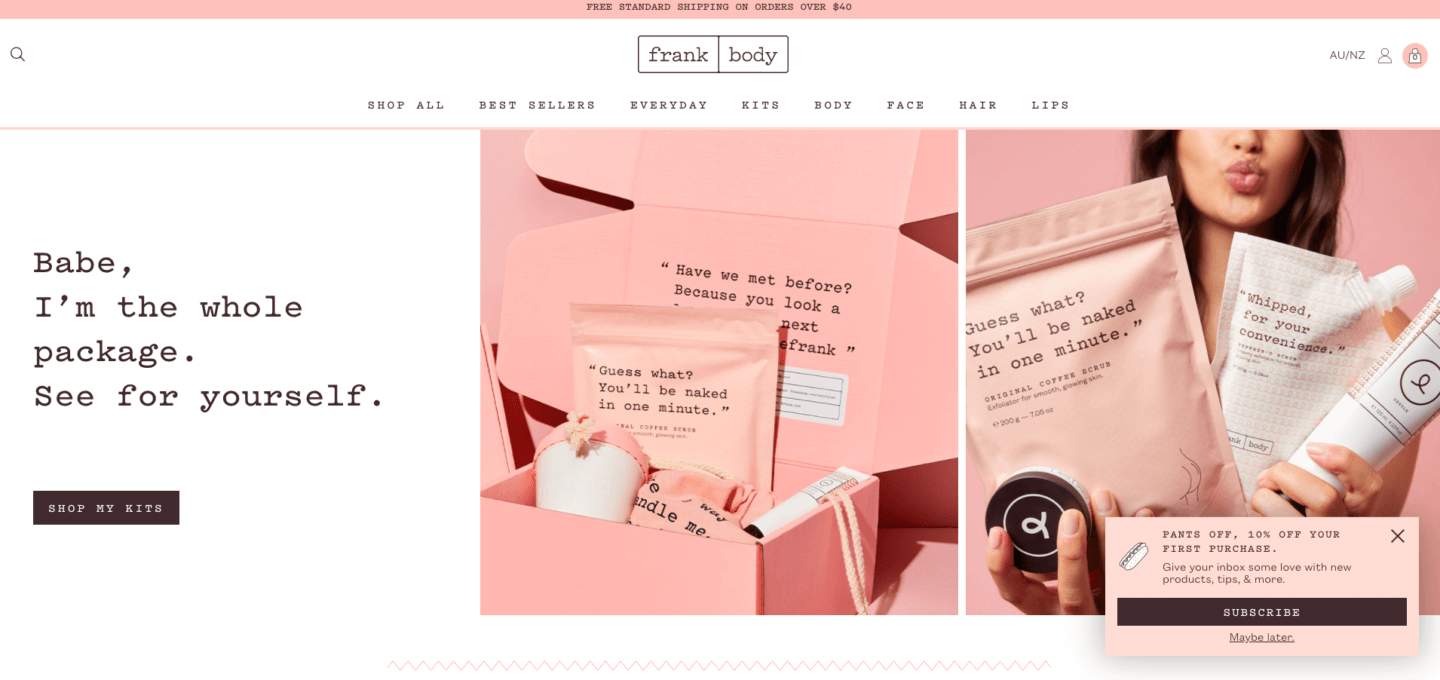
Frank Body

This beauty brand oozes personality. From the packaging to the website and everything in-between, it’s intrinsically Frank every time. But it’s not just quirky – every word drives action.

  • Clearly shows the products and their fun tone of voice and product descriptions.
  • A fun ‘10% off’ call to action encouraging people to sign up for the newsletters.
  • ‘Shop My Kits’ calls to action makes it clear what the reader needs to do next.

Tasters Club

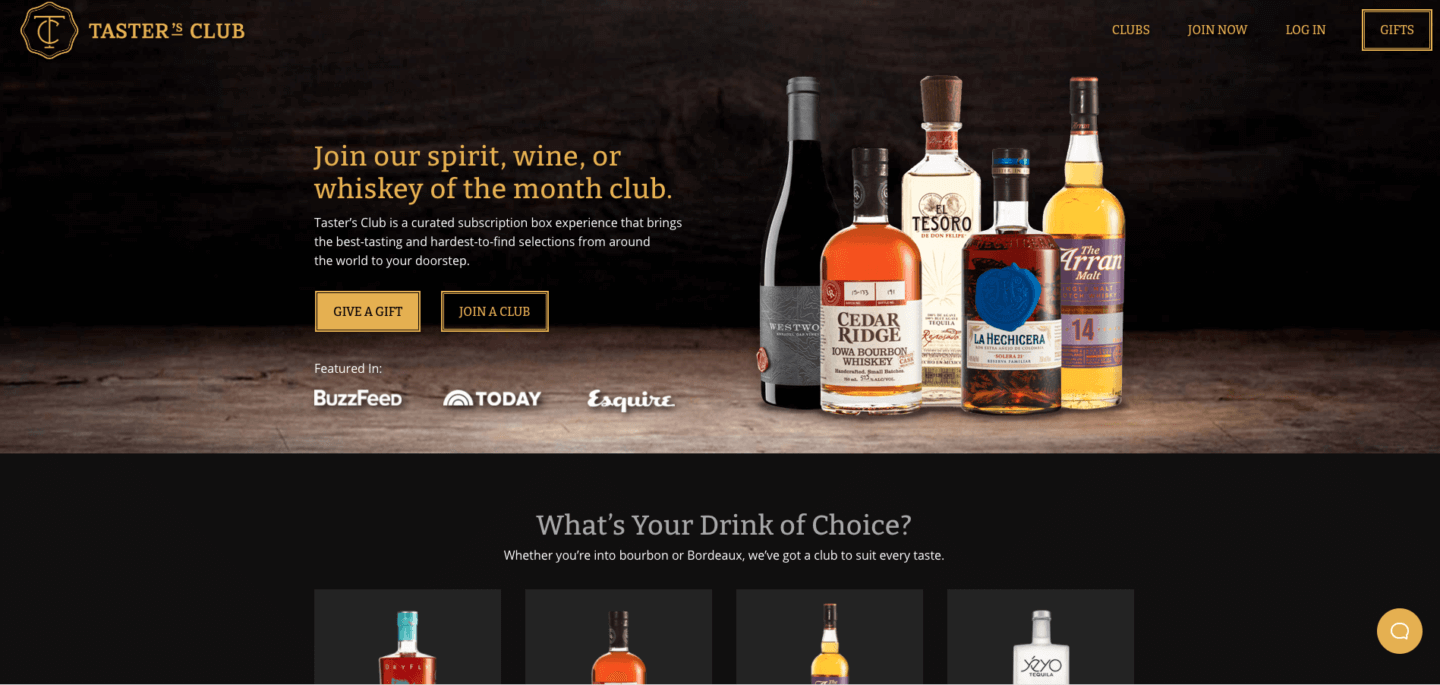
This whisky club has nailed simplicity. Check out this beautiful home page:

  • A single headline says exactly who this company is and what it offers.
  • The two very clear calls to action are worded in a way that’s super inviting – driving people straight to the content they need.

Nike

Okay, okay, we’re putting in the big guns here. Copywriting is more than just content marketing and social media. It can also become intrinsic to your brand. Nike’s tagline ‘Just do it’ is one of the world’s most iconic copywriting examples. It’s globally recognized and is just as powerful as the brand name itself. Want something this good for your brand? Get a copywriter. Just do it.

  • What can we say? It’s a thing of beauty.

Patagonia

If you’re an eCommerce site, your product descriptions are one of the most important things you’ll ever write. They need to rank for Google, provide practical information for your audience, and give shoppers the warm-and-fuzzies that make them want to buy, all at once.

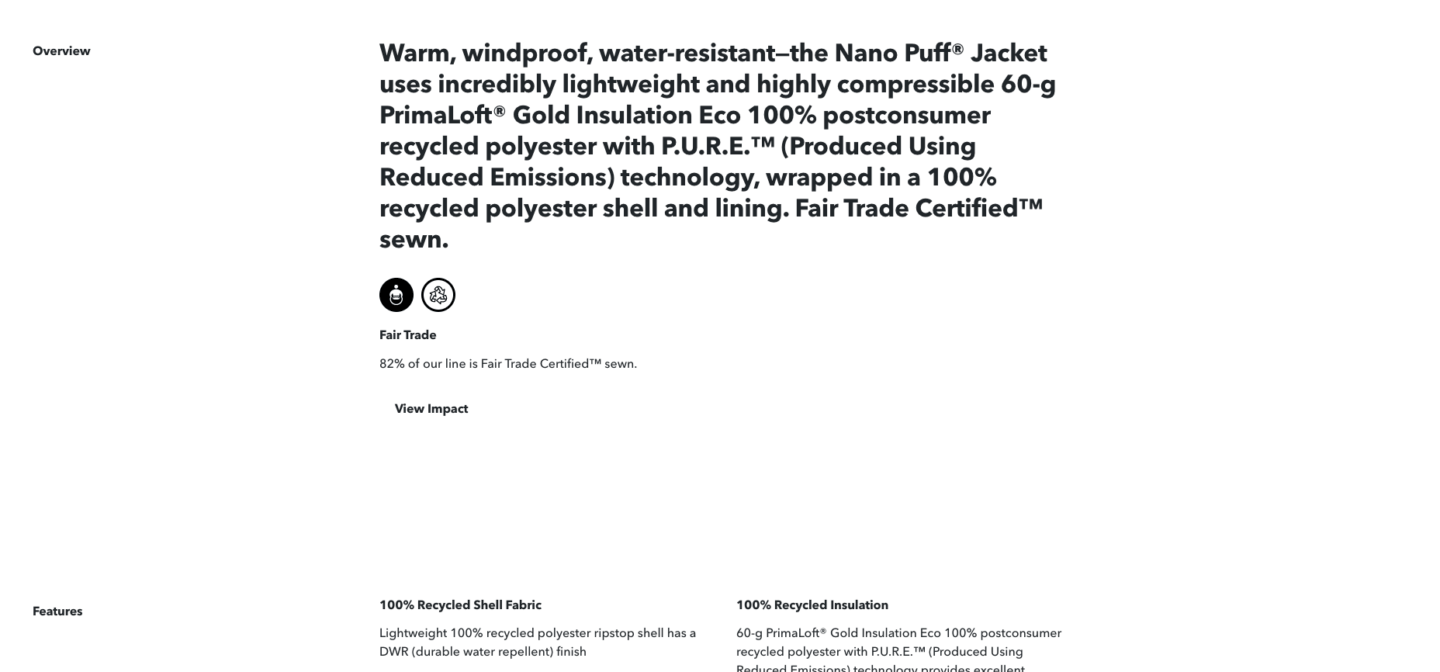
We love how Patagonia has written theirs. Although it’s just a product listing, it manages to reinforce the company’s key messaging around sustainability and make the shopper feel good.

  • Short, concise product descriptions that fuses the functional with the emotional (functional = technical details like what it does and the weight; emotional = environmental information, which pulls on the emotive tendencies of readers).
  • Expandable sections for ‘Features’ allow more functional information and ‘View Impact’ which delves into the environmental impact of the product.

Ready to work with a copywriter?

If you’ve been persuaded by the power of words, we’d love to hear from you. Schedule a free consultation.

Deciding to employ a digital marketing agency instead of DIY-ing your digital efforts can feel like a daunting step. But if you’re serious about growing your business, it’s a step that you need to take. Here’s everything you need to know to ensure your new partnership is seamless.

Prefer chatting to a real person? Schedule a free consultation now.

Questions to ask when choosing a digital marketing partner

First up, you’ve got to choose the right agency. While it might sound easy, there are a few more things to consider than you might think. When you’re choosing your new agency partner we recommend looking at two things; the ‘hard’ facts like track-record, process, results, and costs etc, and then the ‘softer stuff’ like culture, and communication style. 

Track record

Let’s not beat around the bush. You want results. And the best way to see if a potential agency can deliver is to see how they’ve performed in the past.

Ask:  

What track record do you have managing digital marketing for other companies in my sector? What results did you get? Can I see your portfolio?

Agency structure

All agencies are set up differently, and it’s important to know who will be working on your account and who you will have direct contact with. If you’re having an initial meeting with the CEO, that doesn’t mean they’ll be your point of call if you start working together. 

Ask:  

What is your agency structure and who will be working on my account? Who is my day-to-day contact and who is working behind-the-scenes? What experience do they have? 

Process

Just like agency structure, different agencies will also have lots of different ways of working. Do they have a set/rigid structure and protocol? Or do they tailor projects more specifically for each client?

Ask:  

What is your process from start to finish? How will we work together? How do we communicate – email? Project management software? Phone? Video call? In-person meetings?

Services

Digital marketing can mean a million things; social media, paid social media advertising, google ads, blog writing, email automation, landing pages, video creation. If you have a clear understanding already of what you want, make sure they can deliver on all of it. If you’re unsure, delve into their marketing services and see what their recommendations are. 

Ask:

What marketing services do you offer? How do I know what ones are right for my business?

Culture

Your new partner is going to be charged with growing your business and spending (ideally) between 7% to 8% of your revenue on doing so. You’re going to want a great relationship built on trust and transparency. That’s why we reckon it’s pretty important that you like each other! 

Ask: 

What is your agency like? What is your culture/community? How long has your team been working together? How long on average do you work with clients? (length of relationship is a great indicator of what an agency is like). 

Price

When it comes to choosing who to work with, budget is a big part of the decision-making process. But price shouldn’t be your deciding factor if you can avoid it. Of course, the cost is important and you’ll need to make sure that they’re competitively priced.

Ask:

What is your pricing structure? And your payment terms? (You can also find out more about what you can expect to pay a digital marketing agency here)

How to work effectively with a digital marketing agency

Congratulations! You’ve chosen your new digital marketing agency! Now it’s time to get to work on building your brand and elevating your business. For the best results, this has to be a two-way relationship. The agency – and you – need to communicate and deliver every step of the way. 

Set clear, realistic expectations

For this new partnership to succeed, you need to ensure that you’re both on the same page when it comes to expectations. 

Top tip:

Work out together what success looks like (website traffic? Data capture? Direct online sales?) Discuss and set Key Performance Indicators (KPIs) and decide at what intervals you’ll be reviewing them.  

Give them what they need

A digital agency can’t succeed if you don’t give them as much information as possible about who you are, what you do, your customers, and your products. They will also need feedback on performance. 

Top tip:

Try and carve out a set time (maybe a fortnightly call) where you’re there to answer any questions your new agency might have. 

Collate your feedback

One way that businesses can get stung by agencies is by being charged for additional rounds of refinement. It’s so easy to keep wanting to make changes to digital assets and content, but sometimes even small changes can all add up. 

Top tip:

Gather all internal stakeholder’s feedback at once to help minimize rounds of refinement. Chat to your agency too about how they manage refinement and how many rounds are included.  

Stick to deadlines

Agencies often work to strict timelines to make sure that they can deliver the results you need when they need them. If you don’t give feedback at the time expected this can have a big knock-on impact on whether a project can be delivered on time. Agencies also have lots of other clients, so if you’re unexpectedly missing a deadline they might not be able to get to your work straight away when you do finally give feedback. 

Top tip: 

Most agencies understand that missing deadlines is sometimes unavoidable. It’s all about communication though; if you can’t make a deadline let the agency know as soon as you can. That way Plan B can quickly be put into action. 

Trust that they know their stuff

Sometimes your agency might push back on something that you want to do or offer advice that you’re not sure about. If they do, remember that it’s because they want to make sure that you’re spending your marketing budget on things that will get you the highest return on investment.

Top tip:

Ask them to explain why they want to do this/make these changes and see if they have some solid examples from previous clients that show results.

Check-in regularly

Your business can change rapidly; new product offering, targets that adapt each quarter, changes in business priorities. Your digital marketing should support this, which is why it’s important to check in regularly with your agency and adapt the output and results required. 

Top tip:

Add an item to the regular agenda to discuss any business updates from your end that might inspire your agency or give them useful insights. Read the results and reports they provide you with and be sure to ask any questions.

Have realistic expectations

You’re most likely investing in digital marketing because you want to drive sales and/or increase brand awareness. Digital marketing is absolutely the right way to do this, but it doesn’t happen overnight, especially for organic tactics like social media and SEO. Paid advertising and email automation are easier to see a direct correlation but do still take a bit of time.

Top tip: 

Speak to your agency about realistic timeframes for seeing an impact on your business. The KPI settings, regular reports, and check-ins which we’ve discussed above will all help keep this all on track.

Want to learn more about how a digital marketing agency can help? Schedule a free consultation now.

LinkedIn is the dark horse of social media marketing. If’s not as sexy as Facebook. Not as flashy as Instagram. Not as in-your-face as Twitter. For many people, it hums along semi-forgotten in the background – and yet, it can yield amazing results for small and medium-sized businesses.

LinkedIn isn’t like other social media platforms. It’s not designed for the general public, but for business people and thought leaders to connect and build professional networks. It’s also not an online resume, although many people treat it like one. If you’re in a service-related field, you need to optimize your LinkedIn page to sell your expertise and connect with potential new leads.

In this blog, we’re going to talk you through the advantages of a LinkedIn presence, some tips and tricks to develop an effective LinkedIn strategy, and some common mistakes to avoid. You’ll be amazed how quickly your network will grow with the right approach.

Want a professional opinion on yours? Schedule a free consultation today.

Why you need a LinkedIn strategy

LinkedIn currently has more than 660 million registered users. It’s estimated that about 90 million of these are senior-level influencers, while 63 million are in decision-making positions. If you want to connect directly with business owners and managers, this is where you need to be. As your profile rises, you’ll be able to start generating new leads and acquiring new customers.

Just ask our Sales Director, Ken. He jumped into LinkedIn about 12 months ago and now has about a thousand connections. More importantly, he regularly has conversations with business decision-makers all around the United States to find out how our team can help their companies scale. (He also loves sharing his knowledge – just schedule that free consultation to hear his advice.)

LinkedIn isn’t limited to networking, though. You can use it to build credibility for your business, stay on top of industry trends, learn from experts in your industry, and even recruit top talent. The benefits are tremendous, so if you’re not already using it, it’s time to set up a profile.

Maximizing the effectiveness of your strategy

The biggest similarity between LinkedIn and other social media platforms is that consistency is key. We’ve been shouting that from the rooftops since our company began in 2012, and to be honest, we’ll probably still be shouting that when we’re gray and wrinkly and ready to retire.

Just like Facebook, Instagram, and Twitter, it’s important to show up. That means regularly posting fresh content and engaging with other people. Or you could think about it this way: only about 1% of LinkedIn users create content weekly, which means there are more than 9 billion impressions up for grabs on a weekly basis. It would be crazy not to have a slice of that pie. It’s not difficult to do, but it does require research, planning and time. (Naturally, this is something you can outsource.)

Do: Use LinkedIn to tell a story about yourself

To really make a LinkedIn strategy great, however, you need to acknowledge the things that make it unique. Unlike other social media platforms, LinkedIn gives you an opportunity to tell a story about yourself right from the start. People don’t have to scroll through your content and draw their own conclusions. That means starting with an attention-grabbing elevator pitch, highlighting the key items you want people to know about you in the about section, and detailing your skills and experience to create a snappy online portfolio that creates trust and builds confidence.

What does that mean in reality? Don’t just fill in the boxes and move on. Think about what you want people to know about you and ask for feedback so you can keep optimizing it.

Do: Use LinkedIn to keep touching base

Think long-term here. Connecting with people doesn’t have to mean adding random people and sending them messages out of the blue in the hope they bite. It’s the modern-day version of the cold call, and while it’s always going to be a tool in your sales arsenal, it’s not the only one.

Brand awareness is important. When you’re not actively selling your services, you should be regularly touching base with your connections. This could be a reaction to a post, a thoughtful question, or an interesting comment in a thread about your industry. Any of these are good for two reasons. First, they directly make contact with someone and reinforce that connection. Second, they will make their way into the feeds of all your other connections, which reminds them that you exist and that your services might be able to help them solve a problem they’re experiencing.

Remember what we said about showing up? It pays huge dividends over time.

Do: Expand your mind about LinkedIn’s usefulness

Everyone is different. Great, we’ve established that – we’re saying that in anticipation of your next thought. Just because you don’t use LinkedIn regularly doesn’t mean your customers don’t.

Running a business is incredibly time consuming, and since social media is the biggest distraction of the 21st century, it’s probably fair enough if you’re not a regular user. In fact, it might be a contributing factor to the success you’ve achieved so far. After all, we all have the same 24 hours every day, and the fact that you’re using your time wisely is clearly serving you well.

Other people, however, are different. They may be actively searching for business solutions, clocking up the hours online and on LinkedIn to research companies like yours. They might be employees at companies, instead of business owners like you, which means their work-life balance and priorities may be different to yours. And let’s be real: they might just be looking for something to read in the bathroom (try not to think about that too much). The point is they’re on LinkedIn.

We know that there are about 660 million potential connections floating around, ready to learn your name. Even if you don’t love using it yourself, it makes sense to show up and at least say hello.

Common LinkedIn mistakes to avoid

The biggest mistake we see on LinkedIn is something we discussed right at the very start: stop using it as your online resume! This platform can offer you so much more if you take the time to set it up properly. Don’t limit yourself by just listing your education and experience. Create a portfolio that shows people, instead of just telling them, why they should work with your business.

Here are some other things that could be restricting your progress:

  1. Don’t focus so much on adding new connections that you neglect your existing clients
  2. Don’t write meaningless posts full of buzzwords to sound smart – post something real
  3. Don’t assume what your clients want – instead, engage with them and ASK them
  4. Don’t get so caught up in the comments that you forget to post fresh content
  5. Don’t post on the fly – take the time to check your spelling and grammar
  6. Don’t post sporadically – it’s always worth developing a proper strategy
  7. Don’t give up – remember, consistency is key (we’re still shouting it!)

What if you just don’t have the time?

Social media marketing is time-consuming. We know that firsthand – we’re really good at what we do and we currently have three full-time staffers who are up to their elbows in posts, trends, and analytics every day. If it’s not for you, don’t worry. This is definitely something you can outsource.

Our team can take care of everything from optimizing your profile to developing a content strategy, staying on top of the latest marketing trends, and posting high-conversion posts. No modern marketing campaign is complete without a social media strategy. After all, there are about 660 million potential connections out there just waiting to find out what your business can do for them.

If you’d like to learn more about our social media marketing services, you can click this link. Alternatively, if you want to jump straight into the fast lane, get your free consultation now.

If you’re new to the world of digital marketing, it can be hard to know where to start. Sure, there’s a huge amount of information available online – but forget drinking from a fire hydrant. It can feel like you’re face-to-face with a tsunami. Let’s face it: running a company is often just as much about busyness as it is about business. It can be easy to put marketing into the too-hard basket and just focus on the day-to-day tasks. Where do you even start? Don’t worry, we can totally relate to that feeling.

That’s why we’ve decided to write this blog. Google Ads is one of the most powerful marketing tools available. Assuming you’ve already got a website, this is the best place to get started. And it’s nowhere near as scary as you might think. Stay with us, because in this blog we’re going to part that tsunami like the Red Sea so you can clearly see what it does, why you need it, and how to start.

Overwhelmed already? Pick up the phone and get a free consultation.

First of all, what are Google Ads?

If you’ve ever googled anything, you’re probably already familiar with the consumer side of Google Ads. If you’re looking for products, a collection of images and prices will pop up in a panel on the side of your screen. If you’re looking for services, generally the first 1-4 items that pop up in the list of search results. Google Ads launched in 2000 (wow, it’s hard to believe it was that long ago), but they’ve become much more sophisticated as better audience data has become available.

Essentially, it’s an online advertising platform that allows businesses to promote their products and services across the web. It allows you to set a specific goal for your ads, like encouraging people to make phone calls or inviting them to click through to your website and make a purchase.  You can target specific geographical areas and search terms and customise them to hone in on the type of people who are most likely to interact with your business. You can also customize your budget, which means you’re always in control of what you’re spending and you can stop at any time.

“Cool,” we hear you saying. “But are they actually any good?” Good question. Obviously, no-one wants to invest time and money into something they don’t need. Here are some interesting statistics to think about in making your decision (these have been collated by the experts at Digital Third Coast):

  • 62% of all online searches in the U.S. go through Google.
  • Online ads can increase brand awareness by up to 80%.
  • More than 7 million advertisers use Google Ads.
  • Customers are 70% more likely to make a purchase when they are retargeted.
  • About 65% of Google Ads that get clicked have keywords like “buy,” “shop,” or “purchase,” meaning the customer can take action without sifting through entire websites.

In other words, this is a huge opportunity for your business.

Do Google Ads work for marketing your business? Read our blog.

Sure, but how do I start with Google Ads?

If you’ve decided to go ahead with Google Ads (and we strongly recommend you do), don’t be intimidated. It’s designed to be as simple and straightforward as possible. If you’re confident with basic technology skills, like creating posts on Facebook or using emails on your phone, you can definitely set up a Google Ads campaign. It’s not scary, we promise!

First, visit www.ads.google.com. There’s a lot of information available on this page, including a breakdown of exactly how it works, costs, FAQs, and more. To set up your first campaign, simply click “Get Started.” This will take you to the main login page. From here, click the blue “New Campaign” button to start setting up your first advertisement.

From here, you simply have to follow these 10 steps:

  • What’s your advertising goal: getting calls, getting website sales, or getting people to visit your physical location? Select one and click next.
  • Link the campaign to your Google My Business account, which should auto-fill. Don’t have one yet? Simply select “No” and click next. (We strongly recommend you set up a Google My Business account as soon as possible – but that can be a conversation for another day.)
  • Tell Google where you want people to go after clicking on your ad. This can either be your Google My Business page or the shop or services page on your website.
  • Google will pause here to scan your website and learn about your business.

(While Google thinks about that, let’s talk about Google My Business. We strongly recommend you set up an account as soon as possible. We’re not going to dive into it in too much detail – you know, one step at a time – but Google My Business is the little panel that pops up when you search a business in your local area. It’s free to set-up and contains valuable information like your opening hours, reviews, and contact information. It makes it as easy as possible for prospective customers to choose you.)

  • Now it’s time to write your ad. Google Ads is smart, meaning it will pre-fill the boxes with things it’s gleaned from your website. This is okay, but it’s never going to be as good as something you write yourself. There are two types of boxes you need to know about: headings and descriptions. Use headings to list your projects and services. Use descriptions to encourage people to take action. Keep them simple.
  • Select keyword themes. Google will give you a list of topics that you can choose from to match your ads to things people are likely to search. You can pick 10.
  • Select your target area. This could be nation-wide, state-wide, or specific ZIP codes.
  • Set a budget. You can choose from the list or create a custom one.
  • Review your campaign to check that all the details are correct.
  • Congratulations, you’ve just created your first Google Ad! Google will run a policy check over it first, which takes about 24 hours, but it will be live in no time.

Short on time to do this yourself? Read about our Google Ads service.

And what if I still have no idea what to write?

Not everyone is a words person. That’s totally fine. If you’re stuck for ideas, Google Ads provides a handy worksheet designed to help business owners write effective ads (you can view it here). It asks you a few simple questions about your business and your marketing goals. You can then mix-and-match the answers to create high-performing Google Ads on your own.

If you’ve reading this now and you feel like you’re looking into a tsunami again – WAIT! WE HAVE A LIFE RAFT. We know you’re busy and that you’re juggling about 20 other things right now. We also know that your need Google Ads if you want your business to stay competitive. Our goal is to help you find a solution that will maximize results while minimizing the time and money you need to invest.

If you want to save money and do this yourself, follow the steps above. We promise it’s simple and easy once you get going. If you want to save time, however, we would love to help your business grow. We offer a Google Ads service… and we can also take care of your Google My Business page while we’re at it. Give us a call and let’s discuss the next steps.

Ready to chat? Click here to schedule a free consultation.

Facebook made a monumental decision to shut down the news in Australia this week. All content from all news sites, including public and commercial broadcasters, broadsheet and tabloid newspapers, magazines, websites, and even government departments such as the Bureau of Meteorology and Department of Health, evaporated literally overnight. This is a big deal.

As you’d expect, it was politically charged. We’re not going to dive into the details here, but to give you a general overview, a number of local news companies have been demanding Facebook pay for hosting news content, claiming the company profits from their work. The ban was lifted after a few days, following further talks between Mark Zuckerberg and the government.

“Okay, but how does this affect my small or medium-sized American business,” we hear you asking. Good question. The reason we’re bringing this up is because it shows the importance of having a multi-faceted marketing strategy. Facebook is a commercial entity, which means it has the right to host – or not host – any content it chooses. It can change the rules at any time.

If Facebook posts and Facebook Ads are your sole strategy for growing business, it’s time to consider diversifying to ensure your business can continue to grow with or without it.

Worried about what this means for you? Talk to our team.

Will Facebook shut down my business page?

The circumstances that led to this week’s drama are unique to Australia, and unlikely to occur on such a large scale in the United States (although if this week has proven anything, it’s to never say never). On top of that, if you’re a paying customer who uses Facebook Ads to drive leads for your business, it’s unlikely you’ll ever be targeted and shut down. Facebook profits from your business, and it’s unlikely to give up this revenue stream. However, that doesn’t necessarily mean you’re going to be protected from all sweeping rule changes that are rolled out in the future… even just on accident.

This isn’t something you should panic about. However, when Facebook banned news in Australia, it took many micro publishers with it – all of whom run small and medium-sized business. The sweeping changes didn’t worry about any of the little guys that would be taken out as collateral damage. That’s worth keeping in the back of your mind, because you never know that will happen in the future.

This also sets an interesting precedent for future negotiations between Facebook and governments. As a global community, we’ve come to depend on Facebook for lots of things. it’s where we catch up with friends and family, plan high school reunions, organize events, promote businesses, create brands, build audiences, buy and sell items, learn about things that are going on in our communities. If it was taken away tomorrow, we’d all be in a pretty sticky situation. File that thought away in your mental archives as well – just in case.

That brings us to the reason we’re writing this blog. Many small and medium-sized American businesses rely on heavily on Facebook for their marketing. And so they should, because it’s a tremendously powerful platform with excellent targeting and analytics capabilities. It generates great results and can play a key role in helping your business grow, scale, and thrive. That’s what we want!

Our goal in writing this today is to educate you about all the options that are available to diversify your marketing strategy so you can take control, protect yourself from snap decisions, and make sure you never lose touch with your digital client base. Think of it as a great way to broaden your digital horizons,

We offer a range of digital marketing services. You can check them out here.

How can I diversify my marketing strategy?

This is where things get exciting. New marketing tools are popping up all the time, which makes digital marketing a really exciting space to be investing your time and energy.

Here are some of our favorites:

Search Engine Optimization

Search Engine Optimization (SEO) is great for a number of reasons:

  • It’s free.
  • It’s incredibly effective.

Short-Tail Keywords

SEO basically refers to the process of making sure your content can be found on search engines. This means adding digital “signposts” that will tell sites like Google, Bing, and Yahoo what your content is about. There are a few ways you can go about it, but the most important one by far is to optimize your website. For example, if you’re a HVAC contractor, you need to make it clear exactly what it is that you do – these are what we call “short-tail keywords.” This means including every combination of words people are likely to search to find your services: furnace repairs, furnace maintenance, new furnaces, boiler repairs, boiler maintenance, new boilers, etc. If you’re a medical spa, you need to do the same: Botox, lip fillers, face fillers, Juvéderm fillers, and so on. This is key to generating leads.

Long-Tail Keywords

The second thing you should be doing is creating a stream of fresh content. Most businesses do this via blogs, because blogs are another effective way to answer commonly searched questions. For example, “How do I re-light a furnace pilot light?” or “What is the right age to start Botox?” These are called “long-tail keywords” because they use what’s essentially a searchable phrase. The best place to start is with your frequently asked questions. What do customers ask you all the time? Brainstorm a list, and then write details answers that are about 600-800 words long.

Google My Business

Google My Business is another free tool that we highly recommend. You know when you search a business in your area, e.g. “mechanic near me” or “restaurant near me” and they all pop up on Google Maps? That’s because they all have profiles on Google My Business. Or when you search for a specific business, e.g. “HeatSource Mechanical,” and an information panel pops up on the right-hand side of your screen? That happens for the same reason. It makes leads very easy to find. All you have to do is log in and claim your profile. You can do that by clicking on this link, or we’d be very happy to help you our with our Google My Business + Maps service. It’s well worth the effort.

Digital Advertising

If you’re still reading, chances are you’re currently running Facebook Ads and you’d like to think about some alternatives. There are lots of options available, including Google Ads, LinkedIn Ads, and YouTube Ads, just to name a few. Each one has different strengths, which we’ll explain below.

Google Ads

Google Ads is the most diverse, allowing you to target (and retarget) really specific groups of people within the community according to the things they’re actively searching. It’s based on a bidding system, where you set the limit you’re willing to pay per click, and it can be efficient and cost-effective because you’re only targeting interested people instead of the general public.

LinkedIn Ads

LinkedIn is great if you offer a B2B product or service, because it’s a professional networking community focused on work. It’s not something we recommend to everyone, but in this right context, it can be very powerful. LinkedIn is great for increasing brand awareness in business circles which can be a great way to generate inquiries that lead into bigger deals.

YouTube Ads

If your product is so revolutionary it has to be seen to be believed, or if it’s a complex service that’s best explained in person, YouTube is the place to be. Video ads are very compelling because they show, rather than tell, people exactly why they should choose to work with your business. YouTube is popular with many demographics, but especially with young men aged 18-35, so that’s also something to keep in mind. You may be able to use that to your advantage.

Reducing your reliance on Facebook

All of the strategies we’ve set out in this blog are things you can do on your own without too much trouble. However, if you’re short on time or you don’t enjoy researching the different options and weighing up the pros and cons, we’d be happy to help you. We are a full-service digital marketing agency that can take care of everything from developing a strategy to creating a new website, optimizing your paid ads, and managing your social media accounts. Just let us know what you need and we can tailor a digital marketing solution to help your business continue to grow.

Want to talk business? Let’s get started.

In today’s marketing world, your identity as a brand is everything. Nailing who you are is the very first step to creating a successful marketing strategy and, ultimately, a successful business. When you’re first researching marketing trends, it’s easy to get overwhelmed. There are lots of different ideas circulating on the internet, but in our experience, the secret to success is simple. All you have to do is share your passion and your values with your audience.

Want to skip ahead and talk to the experts? Contact us today.

Meet the New Kid in Town: Values-Based Marketing

Values-based marketing is the golden ticket idea for, quite frankly, any business model. Over the last 12 months, consumers have been putting more and more thought into where their money is going, and more importantly, to whom. That’s why identifying your values and beliefs as a company is the first step to a successful values-based marketing strategy.

It’s executed by fostering and cultivating relationships within your target audience based on those values and beliefs. This is an authentic and raw strategy that will help your business stand out among all the old, shallow marketing trends out there in the world. It’s more than just a product, values-based marketing is all about the relationship you build with your consumers from shared beliefs and notions on the world and issues around us.

In the simplest of terms, values-based marketing is all about creating a strategy that aligns with your audience’s beliefs and ethics as people first, customers second. Creating relationships that are based on more than just a mutual need for a product or service means a deeper and more meaningful experience on both ends of the business model.

Focusing on a values-based marketing strategy means that you are reaching an even greater audience that may resonate with your brand first, then your product or service. People are passionate about brands that stand for ethical and social issues as well as stand for values and beliefs that align with their company. Creating a story and strong values-based marketing persona means attracting an audience that quickly becomes loyal customers.

Whether you are a brand that focuses on giving back to a local community, being vocal in social and ethical issues on social media, or fighting for a specific cause through service or donation, it gives you a deeper story that will make it easier for customers to connect.

Values-Based Marketing in Action

What does values-based marketing look like? Well, it starts with a checklist of actionable items that can easily be implemented into an already developed brand or business strategy.

  • Clear and strong messaging of what you value and believe in
  • Examples and content that show your business in action, acting upon those values
  • A developed storyline of what began the passion behind your brand values and beliefs
  • Energetic user-generated content that shows examples of current consumers who align with your beliefs
  • Encouraging messaging that takes stances on current social and ethical issues and urges customers to take action

Implementing this type of strategy will naturally bring in authentic user-generated content from current customers who believe in your brand, all the while attracting a bigger audience with shared values.

For an example of successful values-based marketing, let’s take a look at TOMS, an LA-based company, founded in 2006, that is famous for its cause-based marketing. 

TOMS focuses its values-based marketing by following a “one-for-one” business model which means that for every purchase made, TOMS gives away a free pair of shoes to a child in need. This has been hugely successful for the company because it fosters deep loyalty between customers who are passionate about helping those in need as well. Their mission of giving back to those in need automatically resonates with an audience who have the same social beliefs but also reaches customers who truly enjoy their products and quality of merchandise as well. TOMS has become an example to follow for other large companies because of how positively people have supported them over the years.

Want to learn more about branding? View our services.

Growing Your Business

Modern consumers do not want, but NEED to see original and trustworthy voices from the businesses they spend with. With an influx of empty messaging and hollow promises, the average consumer has become less patient with brands who are not genuine in who they are. It doesn’t take much these days to identify the brands that are not true to who they are. We’re finding that once you break the trust of modern-day consumers, it takes a lot to gain it back.

Practicing and acting on values-based marketing will separate you from the clutter and noise of competition and other brands. Finding your audience that resonates with your brand and messaging will quickly turn into a broader customer base and a bigger return on your thoughtful marketing efforts.

A values-based strategy can not only help you find loyal customers, but also the audience that is right and loyal to your brand alone. They will stand by you for years to come, have a long-term presence, and put in just as much effort into the relationship as you. Be brave, be authentic, and be you. That way, your customers know you are more than just a business but you are a part of their everyday lives.

Pivoting to Values-Based Marketing

Here are real-time steps you can take to making the switch to value-based marketing today. All it takes is a moment to think long and hard about why you started your business and what your purpose and goals are in life, professionally and ethically.

  1. Identify your brand values, beliefs, and goals
  2. Map out your (ideal) target audience. Think about who they are, what they believe in, and how they communicate that.
  3. Research how similar brands are executing this strategy and what you think they are doing right or wrong.
  4. Think about your current strategy and content and find the gaps where your messaging falls flat or hollow. Start plugging in more messaging that reflects values-based marketing.
  5. Eventually, implement this to be the main focus when discussing anything marketing-related.
  6. Always remember that your audience is listening and watching your every move. Anything you like, comment, or say publicly needs to align with who you are and what you truly believe.

In the world of modern digital marketing, customers are almost instantly giving their business to brands that they feel a genuine and authentic connection with. Brands that speak more about what they care about than why their product is “the best”. As confusing as it may seem, sometimes talking about more than what you’re selling can attract a more eager crowd. They begin to see you as a lifestyle, not just a one-stop-shop.

It truly is all about putting your customers at the forefront of your business’s marketing strategies. Focusing on speaking to them and not at them can mean all the difference in how your brand sticks to a target audience. Values-based marketing is a bridge that is going to bring you to your customers in a deeper, more meaningful, and lasting way.

Ready to get started? Schedule a call with us today.

About 5.7 million people turned in to watch the Super Bowl across the United States. The game is great, of course, but we’d be lying if we said we didn’t also tune in to watch the commercials. Marketing and advertising go hand-in-hand, and we love checking them out to see what themes are emerging, what trends are in style, how the best in the business use content can be used to surprise and delight huge audiences… and what ideas we can use as inspiration for all of our own marketing campaigns.

This year didn’t disappoint! We’ve rounded up some of the best examples we saw at Super Bowl LV and we’re going to tell you why they were our favorites. We help all our clients make touchdown-worthy marketing strategies this year, so if you want something that jumps off the screen, call us today.

https://www.youtube.com/watch?v=g6CVKs77X74

Bud Light: “A Lemon Of A Year”

Bud Light used the Super Bowl to present its new lemonade seltzer, inspired by 2020, which as we all know was “a lemon of a year”. The ad shows literal lemons falling from the sky, first as a drizzle, then as a hard pour that begins wreaking havoc on everyone in sight. People are getting knocked over, sporting games are being disrupted, someone’s wedding ends in disaster, a first date goes horribly, and people are running for cover in business buildings.

The story it tells is both hilarious and strangely relatable, because the lemons are a perfect metaphor for the coronavirus pandemic. The main characters of the ad were a group of friends enjoying a barbecue in someone’s backyard discussing when Bud Light came out with the lemonade seltzer. One friend replies, “Probably when 2020 handed us all those lemons”. Cue the memory of lemons terrorizing the town.

Video was the perfect format. The Bud Light team thought outside the box to sell the new lemonade light seltzer during the game. The bubbly beverage is one of many flavors which are now available around the country. This type of video marketing resonates with so many people because it shows a variety of events that are quite frankly, ruined, because of the lemons (aka the pandemic). It’s a shared experience, and everyone watching had a good laugh. We also found it impressive that they delivered a campaign that expressed the bitterness of 2020 without actually saying the word “pandemic” or “coronavirus”.

Conor Mason, senior brand director of Bud Light Seltzer Lemonade, was quoted in Campaign US saying, “We wanted to use some of those relatable moments from 2020, whether it’s a bad haircut, a postponed wedding or canceled travel plans, and take those lemons and turn them into Bud Light Seltzer Lemonade.”

Bud Light also included a live and inclusive call-to-action during the actual Super Bowl game as a part of their marketing strategy. In real-time, fans were able to tweet #LemonsIntoLemonade and #Sweepstakes for a chance to win an entire case of the Bud Light Seltzer Lemonade. Delicious.

UberEats: Wayne’s World Is Back

UberEats graced viewers with a blast from the past, with a commercial featuring the beloved Wayne’s World cast of Mike Myers and Dana Carvey. In the ad, the iconic pair promoted the use of UberEats as a way to support local restaurants (oh hey! As passionate supporters of local businesses, we give kudos for this). They engaged in a hilarious dialogue, going back and forth as they discussed how they would never use marketing trends such as trending dances, cute babies, large text, or celebrity cameos to get people to use the app. Of course, flash forward, and they’re both doing popular TikTok dances, holding baby versions of themselves, flashing bold text across the screen, and suddenly sitting next to rapper Cardi B.

Cardi B goes on to urge people to support local and use UberEats to get their favorite meals delivered to them. “Y’all know I love to eat, and right now we have got to be supporting our local restaurants — like the Griddle Cafe in L.A.,” she says. “So many spots are struggling right now, and it’s up to us to eat local! That’s why I teamed up with Uber Eats and my boys Wayne and Garth to help.”

This type of engaging video content is compelling because of its use of iconic characters that appealed to two very different demographics, Wayne’s World and Cardi B. It’s designed to surprise you and grab your attention – and for us, it worked. Influencer marketing is powerful when used well! The unlikely partnership worked well to emphasized the company’s values (you can read more about values-based marketing here), including its diverse customer base and commitment to supporting small businesses. Add a dash of humor, and you’ve got a perfect campaign for the Super Bowl.

Michael B. Jordan Is Amazon’s Alexa 

Amazon’s ad started with a fictional employee praising the design of the company’s latest smart speaker. Boring, right? It’s shot in a gray office with dull blue light. “I literally couldn’t imagine a more beautiful vessel for Alexa to be… inside,” she says. However, her train of thought drifts off as a bus pulls up outside, plastered with an ad for Michael B. Jordan’s new Prime Video series, Without Remorse.

We then cut to a couple of fantasy scenes, where the employee interacts with Alexa… who has now taken up residence in Jordan’s body. This commercial takes a beat to hit its stride, but it seizes the element of surprise and uses humor to show how the new product can be used in real life. She asks Alexa to turn on the sprinklers, add items to her shopping list, read her audio book, and more. The ad ends with the woman accidentally getting distracted and starting the sprinklers for the second time when her frustrated husband says, “Things are getting way too wet around here!”

Amazon found a creative way to unveil the fourth-generation Echo Dot. What’s interesting about this ad is that, although Alexa has a female voice, the ad shows Jordan as the one voicing the Echo. Historically, most virtual assistants have all been female and results have shown that consumers have been primarily men. According to voicebot.ai, 57.8% of men had access to smart speakers compared to 42.2% of women. This ad might be Amazon’s attempt at targeting women and flipping the script of female-centered virtual assistants. We found this especially compelling because it created a new narrative that was disguised in a humorous and sexy way and led to many discussions after.

Learnings You Can Use in Your Own Marketing

Super Bowl commercials are amazing every year. And while air time during the game is incredibly expensive (a 30-second slot costs about $5.6 million), you can learn from them and roll out some of the strategies in your own marketing efforts. Here are some of our key takeaways:

  1. Relatability is key. Bud Light proved that people respond to shared experiences. As a consumer, you think the brand is on the same page as you, that it understands you, and is therefore creating products for people like you. Don’t be afraid to share stories and feelings about things that are going on in your life, because chances are your client base will be able to relate.
  2. You can have fun with marketing trends. Marketing trends go in and out of fashion all the time, especially when it comes to finding new ways to capture people’s interest online. You don’t have to copy everyone else! The UberEats commercial showed that putting your own spin on things can not only take people by surprise, but make them stick around long enough to listen.
  3. Values should always (ALWAYS) come first. UberEats also showed the importance of clearly defining your brand values and sticking to them. People care about their local communities, so highlighting local businesses has been an integral part of the company’s marketing efforts. In this case, it makes a global company seem approachable. Spend the time to define your values.
  4. Know your key demographics. Amazon knows it’s got a reliable male customer base when it comes to artificial assistants. It’s looking to expand its female customer base, and you can rest assured that nothing in this commercial happened by accident. The team knows exactly who its targeting, what her priorities are, what her lifestyle is like, and what will make her likely to purchase this product. Doing the research will help you maximize ROI on your own campaigns.

Content marketing doesn’t have to include a Super-Bowl-level marketing budget. It can start with a simple content strategy that you can implement tomorrow. Let’s start somewhere together.

Call us to schedule an appointment and get your new marketing strategy into play.

What makes you leap out of bed in the morning with a head full of ideas? What gives you a sense of achievement that makes you satisfied you made the right decision in going into business? How do you improve the lives of people in your community? Why do you do what you do?

Businesses don’t just exist to generate a profit. You know that. We know that. Prospective clients and customers know that. They’re not interested in parting with their hard-earned money just for fun. Instead, clients need to understand exactly what it is that you do (and why) so they know how you can help them solve problems. Customers need to know what it is that you sell (and why) so they know how you can improve their problems. Purpose is critical to success.

The “and why” bit is a very important question. When you’re putting your marketing strategy together, you’ll need to think about your story. Ask yourself the four questions we listed right at the top and note your answers. There are a few reasons we emphasize this so much:

  1. Your back story sets you apart from your competitors.
  2. Your motivation shows that you’re authentic and trustworthy.
  3. Your “why” can drive sales to new heights.

Ready to find out how your purpose can grow your business? Talk to us.

Link between purpose and profit

America has a huge and wildly competitive small business landscape. According to the Small Business Administration, there are 30.7 million small business in the United States, which account for 99.9% of our country’s commercial landscape. These figures count small businesses as any company with 500 employees or less. What makes you different from everyone else?

The answer is simple: stories sell. People are innately emotional beings, which means they feel things in response to stories. This could be hope, excitement, empathy, respect, or many others. Marketing 101 is to use those stories to your advantage. That doesn’t have to mean selling yourself out and rehashing the same old story over and over again. Not at all! Instead, telling your story and talking about your purpose simply gives people an opportunity to get to know you. There’s nothing insincere or salesy about this; you’re simply sharing your values with others.

If prospective clients or customers feel an emotional connection with you, and they understand your “why,” they’re more likely to remember you. If they remember you, they’re more likely to research your products or services when they are in need. If they research your products or services, they’re more likely to convert. That’s why purpose and profit are so intrinsically linked.

Need a little help with your branding? Here’s how we can help.

Using purpose to unlock your brand

Some businesses find that their purpose is immediately clear. In that case, you can go ahead and start working on your branding statements (we’ll get to those in a minute).

Here are some great real-life examples from our clients:

  • Equipment Source, Inc. (ESI): ESI equipment is Built Arctic Tough. It’s an equipment manufacturer based in Fairbanks, Alaska, that got its start reconditioning heaters on North Slope drilling sites in 2000. Fast-forward 20 years, and it’s committed to designing and building equipment that fires up in any temperature to ensure crews working in extreme environments can get the job done, maximizing productivity and minimizing downtime. It works closely with its customers to ensure it’s creating exactly the right product to solve everyday problems they’re facing at work.
  • AK Beautiful You: AK Beautiful You is a medical spa based in Anchorage, Alaska. Formerly known as Plastic Surgeons of Alaska, the team is made up of dedicated professionals who are committed to helping each client achieve the best results possible. The company’s purpose is simple: it’s here to help each person who walks through the door to look as good as they feel. The goal is to empower each person with the confidence they need to live their best lives. The team believes that professional skin care isn’t noticeable, but beautiful.
  • Tri-Cities Functional Medicine: Dr. Joseph Radawi is a functional medicine doctor based in the Tri-Cities area of Tennessee. He’s a board-certified family medicine doctor who spent a decade working in hospital emergency rooms before realizing that, while modern medicine is great at treating acute illnesses and injuries, it doesn’t have the answers to chronic health issues. That’s how he found functional medicine. He and his wife, Tambri, set up their practice to help people take control of their health, find the answers they need to treat long-term conditions that have been troubling them, and to live with vitality again.

Do you see what we mean by purpose? These businesses are all very different, but very clear about what they do and how they help people. This is crucial to standing out from competitors. ESI has a great legacy of innovation. AK Beautiful You has a personalized approach that makes each client feel good. Tri-Cities helps people find answers to things that have been troubling them. This unlocks the brand statement that forms the foundation for the rest of their marketing efforts.

Ready to take the next step? Start developing your digital marketing strategy.

Creating a purpose-led brand statement

Brand statements have three parts: vision, mission, and values. We believe that values-based marketing is the next big thing, so we recommend you take the time to get this right.

  1. Vision: Where is your company going?
  2. Mission: How will you achieve this goal?
  3. Values: How will you behave along the way?

These are simple and difficult at the same time. A vision only needs to be a few words. A mission usually only contains two or three sentences. Values can be listed in bullet points. However, the meaning is important. We recommend keeping them as simple as possible to ensure the meaning is clear both internally, to your team members, and externally, to your clients or customers.

The best way to start is usually a brainstorm with your leadership team. The best question? You guessed it… WHY? Why do you do what you do? Why do provide this particular service or sell this particular product? Why do you serve the demographics you serve? Why do you do business the way you do? Why should people choose to work with you instead of your competitors?

Once the brand statement is in place, you’re ready to take the next steps. That could be a comprehensive new website, a revitalized social media strategy, a sparkling digital advertising campaign, or a captivating video launch. The sky is the limit, but your brand statement will provide the common message you need to flow through it all and tie everything together.

This is the best way to maximize your ROI, because instead of taking a scatter-gun approach and hoping for the best, each post you publish or call you make will work towards your goals.

Lacking the time to put this together? Our friendly team can help.

Key points to take away

Purpose is what makes us excited to be alive. It gives us joy when things are going well, and it gives us motivation when things are tough. Best of all, purpose creates passion, and passion is contagious. If you’re ready to share your passion with your clients or customers, you’re ready to start working on a marketing strategy. If you’re thinking about taking the next step in your business, we can help.

Our passionate (there’s that word again!) team of marketing professionals has been helping small businesses grow since 2012 and we’re excited to help you achieve your purpose.

Ready to get started? Take the first step now.

This year is all about growth. Who’s with us? So much has been written about 2020, and all of the lessons we learned, but I think we can all agree that for the most part, it felt like collectively pushing water uphill. (Hello, by the way! My name is Kirrily and I’m the Content Manager here at Beacon Media + Marketing.) In the words of Taylor Swift, we decided to, “shake it off.” And like every ‘90s teen movie ever, we decided to kick off the new year with… wait for it… a makeover.

That’s right, we’ve just launched a shiny new website! As a digital marketing agency, having a great website is like a hairdresser having great hair or a car salesman driving the latest model. It’s not just a piece of digital real estate where our clients can find out about our services, get to know us, and talk business. We want to make a great first impression and show you what we can do!

If you can’t already tell, we’re extremely proud of our efforts and the changes it symbolizes for our business. In this blog, we’re going to talk you through the process of redesigning a website and explain some key digital marketing strategies we used to stand out and generate leads.

Already convinced? We’re excited to meet you. Contact us today.

How Do You Create a New Website?

The first step in creating a stunning new website is to hire a marketing agency. As you can see, we know what we’re doing! We’re here to make the process as easy and stress-free as possible for you. There are lots of great benefits to choosing us – bear with me while I go ahead and boast about (ahem, list) them:

  • We utilize the full power of our team to brainstorm ideas based on your objectives
  • Our copywriter can help you create memorable messaging and sharp content
  • Our graphic designer can strengthen your brand and make your site a visual standout
  • Our developer can save you hours on coding, making your site incredibly easy to use
  • We offer hosting to ensure your site is always up to date, backed up, and secure

Our process depends on whether you’re starting from scratch or updating an existing website. If you’re starting from scratch, we’ll meet with you to talk about products/services, your company culture, your vision/mission/values, and your current marketing funnel, before getting to work.

We already had a website in place, so we looked through it as a team to decide what could stay, what needed to go, and what we wanted to change. We wanted the website to have a fresh look and feel to represent our optimism for the future, we wanted it to focus on our passion for American small business and highlight our new “Grow, Scale & Thrive” key messaging, and we wanted to reorganize the structure to make it easier for people to use. Importantly, we also wanted it to have very clear calls to action (CTAs) to make it easy for people to take the next step.

Once we agreed on a brief, our leadership team worked closely with our creative “Dream Team” (consisting of our copywriter, graphic designer, and developer) to bring this vision to life.

Click here to learn more about our web design and web development services.

What Strategies Did We Use for Our New Website?

Getting a new website can be stressful, especially if you’re doing it yourself and wading deep into the world of how-to guides and hosting. It’s important to note there’s no “perfect” way to build a new website. Instead, there are really only five things a website needs to be successful:

  1. Clear objective
  2. Helpful content
  3. Beautiful design
  4. Awesome functionality
  5. CTAs, CTAs, CTAs

Let’s unpack each of those individually, using examples from our new website.

Clear Objective

Different websites can achieve different goals. It’s important to be very clear on your goals before work starts on your new website, because you’re essentially building a funnel that is going to guide all visitors toward your goal. Do you want people to purchase a product? Contact you with all of their questions? Attend an event? Be amazed at your beautiful artwork or literary prose?

In our case, we want people to schedule a free consultation, because that’s the first step toward signing a new client. When you look at our site, you’ll notice that every page works toward this goal. The content is exciting and persuasive. The design is eye-catching and deliberate. The functionality is simple and easy. Nothing on this site has happened by accident! Having a clear object from the outset will ensure your website works as hard for you as possible, becoming an active part of your sales process instead of passively letting prospective customers draw their own conclusions.

Helpful Content

Screenshot of Beacon Media + Marketing's Dental Marketing Services page.

The secret to writing great website content is simple: make it helpful. Put yourself in your customer’s or client’s shoes for a minute. What’s the most important thing they’ll need to know in order to make a decision to choose you over your competitors? In most cases, it will boil down to what your products or services are, who you are and why they should care, and how they can contact you.

Once you’ve gathered that information, you’ll need to make sure it’s organized into a logical way that makes it easy for them to follow. Most websites follow a basic template that you’ll notice in the navigation bar at the top: Home, About, Products/Services, and Contact. You can add more – that’s entirely up to you – but make sure these elements are all present.

You’ll also need to give some thought to your subheadings, because this makes sure content is easily scannable so people can quickly find the information they need. Take our Dental Marketing page, for example. First, we use an emotive heading to capture your attention. Then we tell you why we specialize in this area. Then we tell you what you need to succeed. That’s followed by a case study, and a call to action. It’s simple, helpful, and logical. Don’t overthink the content!

Beautiful Design

Screenshot of Beacon Media + Marketing's About page

People are incredibly visual, so design is undoubtedly the best way to make a great first impression. You can think of a website as a functional artwork. It’s beautiful, yes, but it’s also innately practical. Like we said earlier, everything is done deliberately to encourage clients or customers to take action. Brand colors will build brand recognition. Brand fonts will create a visual tone, whether that’s modern and fresh, strong and capable, creative and fun, and so on. Images will capture people’s eyes and hold their attention. Subheadings will tell them what they need to know.

Our About page is a great example of this. The main thing we want you to know is that we’ve been, “Helping Businesses Grow, Scale & Thrive Since 2012.” That’s why it’s the first thing you see. The image creates a collaborative feeling right from the start. We’re not here to tell you what to do; we’re here to partner with you on your journey to success. Immediately below that is a blue content block that lists our key statistics – for example, that we have a 98% client retention rate. Below that, you can see all our smiling faces and learn about our team. And you can always take action by clicking that big orange “Get Your Free Consultation” button in the top right corner.

Awesome Functionality

Screenshot of Beacon Media + Marketing's work portfolio.

This is the part where most people get stuck. There are many, many, many different platforms out there that will allow you to build a website for free, or a very minimal price. Many business owners go down this route only to realize a few things: it takes a long time to build a website if you have no coding experience; it’s incredibly frustrating to try and fix your website when things go wrong; and it’s hard to get hold of people when your security is breached and your website gets hacked. That’s why good developers are worth their weight in gold. They genuinely LOVE this stuff. They’ll make sure your site is always protected, functional, and up to date so you can get back to business.

They can also create really cool functionality that makes your site easy to use. Take the Our Work page on our website. This is where we’ve collected our favorite case studies for prospective clients to check out, so you can get an idea of the type of work we produce. Two interesting things happen as you scroll: the navigation bar at the top is frozen to ensure that big orange button is always accessible, as is the filter option on the left-hand side. This means you can easily filter by service or industry to find out if we’ve done any jobs like yours. The page loads quickly, even though there are a lot of images, and each case study has two well-spaced statistics and the option to learn more by clicking the “View Case Study” button. It makes your user experience as smooth as silk.

Calls to Action

Screenshot of Beacon Media + Marketing's new website.

Did we mention CTAs? Truthfully, none of the rest of the list matters unless your prospective customer or client knows exactly what step to take next. You need to make it as easy for them as possible. If you take a look at our Homepage, you’ll quickly notice that they’re all marked in bright orange. You can tell right away that we want you to “Get Your Free Consultation” and “Get Started Today”. Both links open our live scheduler so you can go ahead and book and appointment. We also have a custom chatbot that will connect you with our sales team in case you have questions.

And that’s before you scroll even once. Simple. Clear. Convenient. Keep that in mind when you’re developing a brief for your own website. As you scroll down our homepage, you’ll see there are clear CTAs after every block of new content. We apply the same strategy to every other page on our site. That way, if a prospective client sees something they like, they can take action straight away. Our goal is to make it as easy as possible for people to connect with us and talk business.

Next Steps in Getting a New Website

Speaking of CTAs, I’m going to switch back to first person and finish this blog with one. I hope you found it to be interesting and informative. Make sure you check out our new website here and remember you can get in touch with us anytime. We’re total marketing nerds and we’d love to help you with your web project, whether it’s brand new or a redesign. There’s no better feeling than creating a site that helps a client’s business “Grow, Scale & Thrive” (see what we did there?).

Ready to get started on your new website? Get your free consultation.