Marketing

See Our Blogs

Explore insights on SEO, AI, and digital marketing strategies designed to help your business grow, stay visible, and adapt in a constantly evolving online landscape.

Beacon_Icon_resouse

Having a strong online presence is crucial for any mental health company in 2024. And if you want to fill every caseload in your practice, you’ll need some form of paid advertising.

That’s where effective Facebook ads come in.

However, ads are only as effective as the amount of clicks and conversions they get.

To that end, it’s important to optimize your ads’ call-to-action buttons. Choosing the right CTA option for your Facebook ads can increase engagement significantly.

CTA buttons play a pivotal role in guiding your audience toward taking specific actions that align with your campaign goals.

Why Facebook Ads are Crucial for Mental Health Companies

Facebook ads provide mental health companies like yours with a powerful tool to connect with individuals seeking support and information.

Here’s why Facebook ads are indispensable:

  • Targeted Reach: Facebook’s advanced targeting options allow mental health companies to reach specific demographics. This ensures that your ads are seen by those who are most likely to benefit from your services.
  • Cost-Effective: This is particularly beneficial for mental health organizations that may have limited marketing budgets. With effective Facebook Advertising, you can acquire new clients for a few hundred dollars. If the average client stays with you for 4+ months, it’s well worth the investment.
  • Engagement and Interaction: Facebook ads are not just about visibility; they also enable interaction. Users can comment, share, and like ads, creating a community around your services and increasing engagement.
  • Measurable Results: Facebook’s analytics tools provide detailed insights into ad performance, allowing your clinic to measure the effectiveness of its campaigns and make data-driven decisions.

The right CTA can significantly enhance these benefits by guiding potential clients through their journey. That’s true whether they’re seeking more information, ready to book a session, or looking to sign up for a newsletter.

Understanding Facebook Call to Action Buttons

Call to Action (CTA) buttons are essential components of Facebook ads. They are designed to prompt users to take specific actions that align with your campaign objectives.

Here’s a closer look at what they are and how they work:

  1. What Are CTA Buttons?
    CTA buttons are interactive elements that encourage users to engage with your ad in a meaningful way. They are prominently displayed and designed to stand out from the rest of the content, making it easy for users to take the next step.
  2. How Do CTA Buttons Work?
    When users click on a CTA button, they are directed to a specific destination, such as a booking page, a contact form, or a video. This direct path helps reduce friction in the user journey, increasing the likelihood of conversion.
  3. Why Are CTA Buttons Important?
    Increased Conversion Rates: By providing a clear and direct action for users to take, CTA buttons help increase conversion rates. Whether it’s booking a session or signing up for a newsletter, a well-placed CTA can significantly boost your campaign’s effectiveness.
    Enhanced User Experience: CTA buttons simplify the decision-making process for users. Instead of leaving them to figure out the next step, the CTA provides a clear path, enhancing their overall experience.
    Measurable Impact: The performance of CTA buttons can be tracked and measured, providing valuable insights into user behavior and the effectiveness of your ads. This data can inform future ad strategies and optimizations.

Understanding the role and functionality of CTA buttons is the first step towards leveraging them effectively.

Now let’s look at some specific options.

Best Facebook Ads CTA Options for Mental Health Clinics

Selecting the appropriate Call to Action (CTA) button can significantly impact the success of your Facebook ads campaign. Here are the best CTA options for mental health companies, tailored to various goals and audience needs:

Book Now

This CTA is perfect for mental health professionals offering appointments. It targets users ready to schedule a session.

  • Ideal for: Therapy sessions and consultations.
  • How to Use: Redirect visitors to a scheduling app, your website’s booking page, or a reservation chatbot.

Contact Us

Use this CTA to encourage inquiries from those who need additional details before committing to your service.

  • Ideal for: Potential clients needing more information.
  • How to Use: Link to contact forms, live chat, or clickable phone numbers.

Sign Up

This CTA helps capture leads through newsletters, webinars, or support groups.

  • Ideal for: Growing your email list or user base.
  • How to Use: Offer incentives like free resources in exchange for sign-ups.

Learn More

This is a great awareness-stage CTA. Use it for prospects who can be nurtured into becoming a paying client for your clinic.

  • Ideal for: Providing detailed information about services and programs.
  • How to Use: Direct to landing pages with comprehensive details about your services.

Watch Video

Engage users with educational videos, client testimonials, or webinars.

  • Ideal for: Sharing informative content about mental health topics.
  • How to Use: Link to videos that offer valuable insights into your services or mental health topics.

Donate Now

This CTA is designed to encourage immediate donations to support your cause.

  • Ideal For: Non-profit mental health organizations or crowdfunding.
  • How to Use: Enable direct donations through the Facebook platform.

Tips for Choosing the Right CTA for Your Facebook Ad

Choosing the right Call to Action (CTA) is crucial for the success of your Facebook ads campaign.

Here are some tips to help you make the best choice for your clinic:

Assess the Stage of the Client’s Journey

We come into contact with potential clients at various times. They may be at the point where they’re knowledgeable about mental health and are ready to start therapy. Or they may be brand new.

Here’s an explanation of each stage, and which CTAs we’d recommend for each.

  • Awareness Stage: If your audience is in the awareness stage, they might not be ready to make an immediate commitment. They are more likely to look for basic information. Use CTAs like “Learn More” or “Watch Video” to provide additional information.
  • Consideration Stage: These are prospects who are considering their options and who are somewhat likely to join therapy soon. For those considering mental health services, use “Contact Us” or “Sign Up” to engage them further and provide more personalized information.
  • Decision Stage: When your audience is ready to take action, “Book Now” or “Donate Now” can prompt immediate responses.

Matching your CTA with the client’s stage of readiness is crucial for creating ads that convert.

Match CTA Options to Your Campaign Goals

Another way to choose the right Facebook ads CTA option is to look at your own goals.

  • Lead Generation: Use “Sign Up” to grow your email list or “Contact Us” for inquiries.
  • Sales and Appointments: “Book Now” is ideal for scheduling therapy sessions.
  • Awareness and Education: “Learn More” and “Watch Video” are great for educating your audience about mental health topics.
  • Fundraising: “Donate Now” works well for non-profit organizations seeking support.

This ties in with the section above about considering your client’s journey stage. You’ve likely done this implicitly (if not explicitly) when choosing your campaign goals.

All that’s left is to pick the right CTA option and make it live, then see the results.

Test Different CTAs

We’d be remiss if we didn’t mention the importance of testing your CTAs. Just like every other part of an ad, from headline to copy to visuals, testing your CTA choice is paramount.

  • A/B Testing: Experiment with different CTAs to see which one resonates best with your audience. Test variations from those that Facebook allows.
  • Monitor Performance: Use Facebook’s analytics tools to track the performance of each CTA. Adjust your strategy based on what works best.

By carefully selecting and testing your CTAs, you can ensure that your Facebook ads effectively guide your audience through their journey, from awareness to action. This will help fill your clinic with great clients.

How to Add a Facebook Ad Call to Action Button

Adding a Call to Action (CTA) button to your Facebook ads can significantly improve engagement and conversions.

Before You Begin

Campaign Objectives: The list of CTA buttons you can select varies based on your campaign objective. Use the Ads guide to learn which buttons are available for each ad format.

Instant Experience: Note that you cannot add a CTA button to ads using Instant Experience, as this format is optimized for mobile and does not support desktop views.

Step-by-Step Guide

  • 1. Open Meta Ads Manager on your browser.
  • 2. Start by clicking the “Create” button to set up a new ad campaign.
  • 3. Select a campaign objective that aligns with your business goals. Click “Continue” to proceed.
  • 4. Define your target audience, choose where your ads will appear, set your budget, and schedule your campaign. Click “Next” to continue.
  • 5. Choose the Facebook Page and optionally the Instagram account that will represent your ad.
  • 6. Select the format for your ad. Note that Collection and Instant Experience formats are not compatible with CTA buttons.
  • 7. Upload your visual content and add the ad copy.
  • 8. Select the CTA that best fits your campaign objective from the “Call to action” dropdown menu. You will see a preview of the CTA button on your ad.

    Additional Requirements:
    If your objective is awareness, click “Add a destination” and select “Website” to reveal the “Call to action” dropdown menu.
    To use the “Donate now” button, ensure your charitable organization is enrolled with Facebook Payments.
  • 9. Once you’ve configured your ad, click “Publish” to finish. Your ad will start running, and people who see the ad can click the CTA button.

Follow these steps to add a CTA button to your Facebook ads.

Now let’s look at some real-world uses of different Facebook ads CTA options.

Successful Facebook CTA Buttons

Examining real-world examples can provide valuable insights into how mental health companies successfully use Facebook ads with various CTAs.

Here are a few case studies that highlight different approaches.

“Learn More”: Tides Mental Health

Tides Mental Health chose the CTA option “learn more.” This makes sense because they are trying to bring in first time therapy clients for their couples therapy service.

“Learn more” aligns with the stage of the potential client’s awareness. And the results have been great – they got 11,895 impressions on their ads.

If you want to attract prospects who are brand new to therapy, consider using “learn more” as your CTA option.

“Contact Us”: Ellie Mental Health

Ellie Mental Health chose the CTA option “Contact Us” for their Facebook ads. This was an effective strategy for a growing mental health franchise aiming to connect with potential clients who needed more information before making a decision.

By using the “Contact Us” CTA, Ellie Mental Health successfully facilitated direct communication with potential clients, addressing their questions and concerns, and guiding them toward scheduling appointments. This CTA option proved effective in building trust and increasing client engagement.

If you want to engage prospects who need more information before making a decision, consider using “Contact Us” as your CTA option in your Facebook ads.

“Donate Now”: NAMI Mental Health

NAMI Mental Health chose the CTA option “Donate Now” to support their fundraising efforts for various mental health initiatives. This CTA was an excellent fit for their campaign as it targeted individuals ready to contribute to a cause they believe in.

The “Donate Now” CTA was utilized in their Facebook ads to directly prompt users to contribute financially. This approach targeted users who were already aware of the importance of mental health support and were ready to make a donation.

If your goal is to raise funds and encourage immediate donations for your mental health initiatives, consider using “Donate Now” as your CTA option in your Facebook ads.

Final Thoughts on Call-to-Action Button Options

Selecting the right CTA for your Facebook ads is crucial for maximizing conversions and achieving your campaign goals.

By understanding your audience’s needs and aligning your CTA with their stage in the decision-making process, you can guide them toward taking meaningful actions.

Whether it’s booking a session, learning more about your services, or making a donation, the right CTA can significantly enhance your ad performance.

If you’re ready to boost your mental health company’s reach and engagement through effective Facebook ads, we’re here to help. Contact us today for a free growth plan and identify the perfect CTA option for your audience.

There’s a big difference between good copywriting and bad copywriting. A huge difference. A massive difference. A monumental difference. But it’s about more than just choosing the right words for the job, it’s about connecting with your audience and persuading them to act.

In this guide, we tell you everything that you need to know about copywriting – what it is, why it matters, and why you should consider outsourcing it for your company.

Want to talk about copywriting? Schedule a free consultation today.

What is copywriting, anyway?

Copywriting is any words related to your brand: your tagline, website copy, sales brochures, social media content, press releases, and everything else that uses text. It’s very common, when you’re starting out, to write everything yourself. But if you want to make your words work (and by work…we mean sell) then it’s time to think about getting a professional copywriter.

Also, copywriters have nothing to do with copyright law, despite the fact it sounds the same.

What does a copywriter do?

Copywriters write words that promote your business and persuade your customers to buy your products or services. It broadly falls into two different categories:

  1. Developing the creative parts of a brand (like packaging and advertising campaigns).
  2. Creating ‘sales’ related collateral (like emails, website copy, and blog posts).

Copywriters are also very skilled at content marketing, which is integral to helping your brand presence grow online. This includes SEO (Search Engine Optimization) to ensure customers can find you when they need your products or services through platforms like Google.

How can a copywriter help your business?

Wherever there are words, copywriters can help. This includes:

  • Writing the copy for a company’s website
  • Content marketing like blog posts and articles
  • Crafting paid advertising copy
  • Coming up with creative headlines for an advertising campaign that’s going to run on billboards or in magazines
  • Crafting social media content for channels like Facebook, Instagram, Twitter, and more
  • Writing a company’s in-house magazine, newsletter, or intranet content
  • Email marketing (promotional emails to your customers)
  • Packaging copy (if you’re a business with tangible products)
  • Crafting landing pages that convert
  • Video scripts to tell your brand story

Marketing for the first time? Here are the top digital marketing trends for 2021.

Why should I use professional copywriting services?

While anyone can write, not everyone is a writer. Anyone can nail two pieces of wood together, but not everyone can build a house. See what we’re saying? Your brand is just as precious as your house, so it’s important to find someone you can trust to do the job well. Here’s why:

  • Readers only read 20% of the content on the page (which means that 20% better be working hard)
  • Nearly 75% of readers pay attention to spelling and grammar (meaning there’s no room for mistakes)
  • Eight out of 10 people will read a headline, but only two people will go on to read the rest (which means your headlines need to do some serious heavy lifting)

It’s reasons like this that explain why getting a professional copywriter is so important if you want to grow your company. Is your website working hard enough? Are your emails actually persuading anyone to buy anything? Is your social media marketing getting results?

When you use a professional copywriter, you can trust that your brand is not just producing words – it’s producing words that actually work. This is essential to growing your business.

How can copywriting grow your brand?

Companies are as unique as their owners. They all have a different tone and style. Professional copywriters can adapt their writing to fit the personality of your brand and to suit the needs of your audience. By doing this, they create content that persuades your audience to act. That action could be straight to purchase, booking a sales call, or requesting more information.

Not only can copywriters help your brand grow your bottom line, but they can also help you increase your brand awareness and brand equity (how many people recognize your brand). They do this by creating memorable content that is shareable and relatable to your audience.

What are some common copywriting mistakes we see?

  1. Not bothering with audience personas. If you want to connect with your audience you’ve got to know who they are and what they want.
  2. It’s full of spelling and grammar mistakes. Sloppy mistakes like this show your audience that you don’t care. So why should they?
  3. Getting the voice wrong. Every brand has (or should have) its own unique voice and way of writing. Every word needs to match that brand voice (seriously…like, imagine if Red Bull started to sound like an insurance firm!)
  4. You’re being too verbose. Don’t use 50 words if you can say it in 10. One of the hardest things in the world is keeping it simple, but simplicity is often the key when it comes to good copy.
  5. You’re writing for yourself and not your audience. You need to lead with the benefit to your audience at all times, not the benefit to your company.
  6. There’s no clear call to action. What do you actually want your audience to do? Make it clear what people should do to take the next step.
  7. Forgetting SEO. When it comes to getting your business found, you need to make good friends with Google. And that means writing highly searchable content that follows the rules of SEO.
  8. Trying to say too much at once. We get it, your brand is great. But you can’t say everything about it all at once. Write with a singular and explicitly clear purpose.
  9. Not considering readability. Our brains like to scan content quickly to make decisions on whether it’s useful, so it’s essential to avoid huge blocks of text.
  10. Relying on adjectives, not proof. You need to be able to back up what’s said, not just keep throwing in superfluous adjectives about how great your company are.
  11. Not telling your story well enough. We have a functional and emotional side of our brain. When we buy something, both sides are helping us choose where to spend our dollars. Your brand’s story is an important emotional trigger, but are you telling it right?
  12. Not having a clear purpose. Why are you even writing something in the first place? Every piece of content – and every word within it – should have a clear purpose. Don’t just write something for the sake of it. No-one benefits from shouting into the void.
  13. Articulating your special offers wrong. Special offers are a great way to increase sales but they need to be positioned in the right way that don’t devalue your brand.
  14. Missing opportunities. There are opportunities everywhere to use words to sell – your website, your transactional emails, your signage (and plenty more).

Want some examples of copywriting that converts?

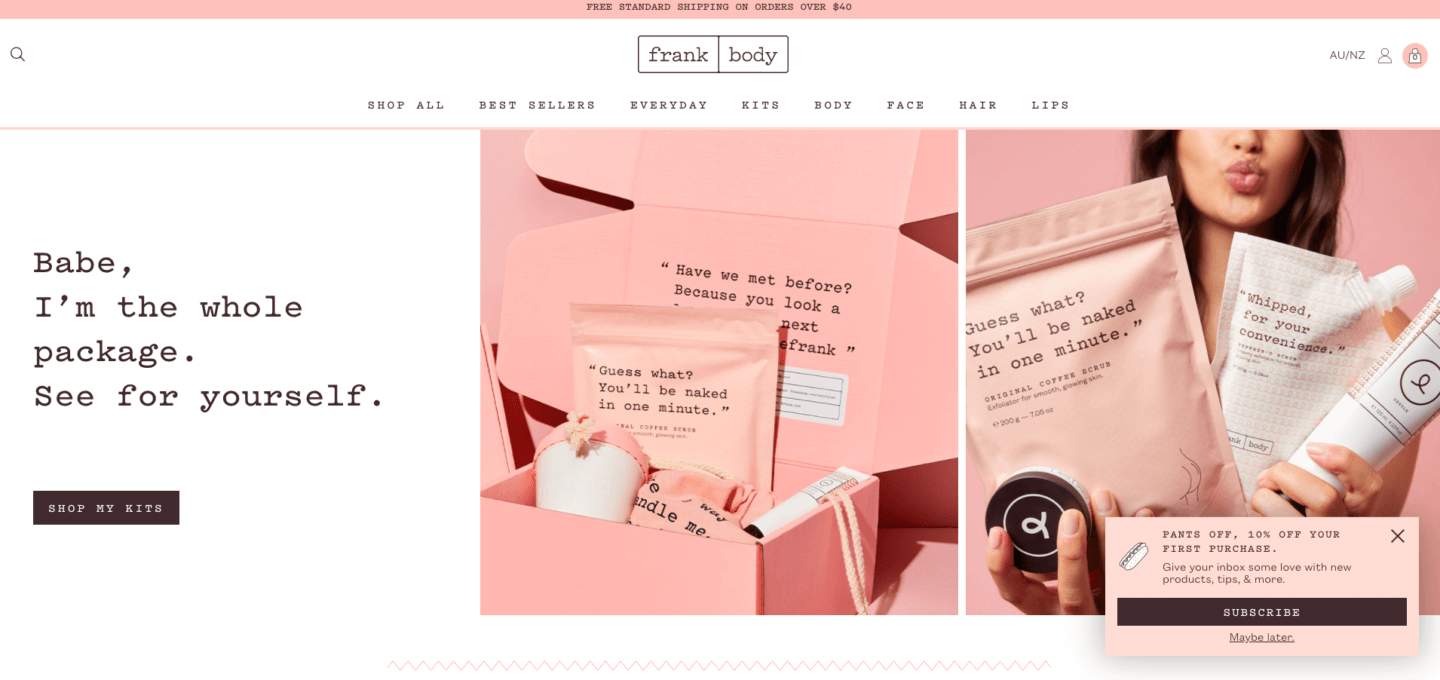
Frank Body

This beauty brand oozes personality. From the packaging to the website and everything in-between, it’s intrinsically Frank every time. But it’s not just quirky – every word drives action.

  • Clearly shows the products and their fun tone of voice and product descriptions.
  • A fun ‘10% off’ call to action encouraging people to sign up for the newsletters.
  • ‘Shop My Kits’ calls to action makes it clear what the reader needs to do next.

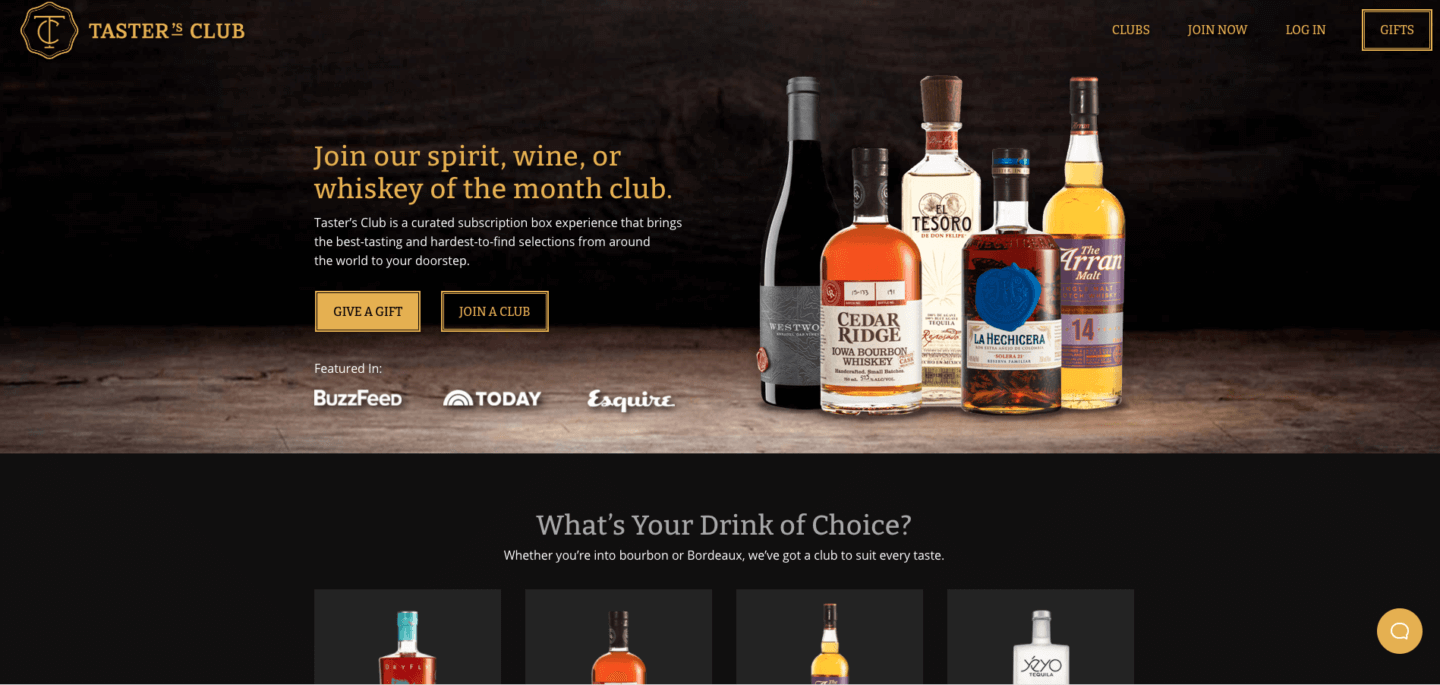
Tasters Club

This whisky club has nailed simplicity. Check out this beautiful home page:

  • A single headline says exactly who this company is and what it offers.
  • The two very clear calls to action are worded in a way that’s super inviting – driving people straight to the content they need.

Nike

Okay, okay, we’re putting in the big guns here. Copywriting is more than just content marketing and social media. It can also become intrinsic to your brand. Nike’s tagline ‘Just do it’ is one of the world’s most iconic copywriting examples. It’s globally recognized and is just as powerful as the brand name itself. Want something this good for your brand? Get a copywriter. Just do it.

  • What can we say? It’s a thing of beauty.

Patagonia

If you’re an eCommerce site, your product descriptions are one of the most important things you’ll ever write. They need to rank for Google, provide practical information for your audience, and give shoppers the warm-and-fuzzies that make them want to buy, all at once.

We love how Patagonia has written theirs. Although it’s just a product listing, it manages to reinforce the company’s key messaging around sustainability and make the shopper feel good.

  • Short, concise product descriptions that fuses the functional with the emotional (functional = technical details like what it does and the weight; emotional = environmental information, which pulls on the emotive tendencies of readers).
  • Expandable sections for ‘Features’ allow more functional information and ‘View Impact’ which delves into the environmental impact of the product.

Ready to work with a copywriter?

If you’ve been persuaded by the power of words, we’d love to hear from you. Schedule a free consultation.

Deciding to employ a digital marketing agency instead of DIY-ing your digital efforts can feel like a daunting step. But if you’re serious about growing your business, it’s a step that you need to take. Here’s everything you need to know to ensure your new partnership is seamless.

Prefer chatting to a real person? Schedule a free consultation now.

Questions to ask when choosing a digital marketing partner

First up, you’ve got to choose the right agency. While it might sound easy, there are a few more things to consider than you might think. When you’re choosing your new agency partner we recommend looking at two things; the ‘hard’ facts like track-record, process, results, and costs etc, and then the ‘softer stuff’ like culture, and communication style. 

Track record

Let’s not beat around the bush. You want results. And the best way to see if a potential agency can deliver is to see how they’ve performed in the past.

Ask:  

What track record do you have managing digital marketing for other companies in my sector? What results did you get? Can I see your portfolio?

Agency structure

All agencies are set up differently, and it’s important to know who will be working on your account and who you will have direct contact with. If you’re having an initial meeting with the CEO, that doesn’t mean they’ll be your point of call if you start working together. 

Ask:  

What is your agency structure and who will be working on my account? Who is my day-to-day contact and who is working behind-the-scenes? What experience do they have? 

Process

Just like agency structure, different agencies will also have lots of different ways of working. Do they have a set/rigid structure and protocol? Or do they tailor projects more specifically for each client?

Ask:  

What is your process from start to finish? How will we work together? How do we communicate – email? Project management software? Phone? Video call? In-person meetings?

Services

Digital marketing can mean a million things; social media, paid social media advertising, google ads, blog writing, email automation, landing pages, video creation. If you have a clear understanding already of what you want, make sure they can deliver on all of it. If you’re unsure, delve into their marketing services and see what their recommendations are. 

Ask:

What marketing services do you offer? How do I know what ones are right for my business?

Culture

Your new partner is going to be charged with growing your business and spending (ideally) between 7% to 8% of your revenue on doing so. You’re going to want a great relationship built on trust and transparency. That’s why we reckon it’s pretty important that you like each other! 

Ask: 

What is your agency like? What is your culture/community? How long has your team been working together? How long on average do you work with clients? (length of relationship is a great indicator of what an agency is like). 

Price

When it comes to choosing who to work with, budget is a big part of the decision-making process. But price shouldn’t be your deciding factor if you can avoid it. Of course, the cost is important and you’ll need to make sure that they’re competitively priced.

Ask:

What is your pricing structure? And your payment terms? (You can also find out more about what you can expect to pay a digital marketing agency here)

How to work effectively with a digital marketing agency

Congratulations! You’ve chosen your new digital marketing agency! Now it’s time to get to work on building your brand and elevating your business. For the best results, this has to be a two-way relationship. The agency – and you – need to communicate and deliver every step of the way. 

Set clear, realistic expectations

For this new partnership to succeed, you need to ensure that you’re both on the same page when it comes to expectations. 

Top tip:

Work out together what success looks like (website traffic? Data capture? Direct online sales?) Discuss and set Key Performance Indicators (KPIs) and decide at what intervals you’ll be reviewing them.  

Give them what they need

A digital agency can’t succeed if you don’t give them as much information as possible about who you are, what you do, your customers, and your products. They will also need feedback on performance. 

Top tip:

Try and carve out a set time (maybe a fortnightly call) where you’re there to answer any questions your new agency might have. 

Collate your feedback

One way that businesses can get stung by agencies is by being charged for additional rounds of refinement. It’s so easy to keep wanting to make changes to digital assets and content, but sometimes even small changes can all add up. 

Top tip:

Gather all internal stakeholder’s feedback at once to help minimize rounds of refinement. Chat to your agency too about how they manage refinement and how many rounds are included.  

Stick to deadlines

Agencies often work to strict timelines to make sure that they can deliver the results you need when they need them. If you don’t give feedback at the time expected this can have a big knock-on impact on whether a project can be delivered on time. Agencies also have lots of other clients, so if you’re unexpectedly missing a deadline they might not be able to get to your work straight away when you do finally give feedback. 

Top tip: 

Most agencies understand that missing deadlines is sometimes unavoidable. It’s all about communication though; if you can’t make a deadline let the agency know as soon as you can. That way Plan B can quickly be put into action. 

Trust that they know their stuff

Sometimes your agency might push back on something that you want to do or offer advice that you’re not sure about. If they do, remember that it’s because they want to make sure that you’re spending your marketing budget on things that will get you the highest return on investment.

Top tip:

Ask them to explain why they want to do this/make these changes and see if they have some solid examples from previous clients that show results.

Check-in regularly

Your business can change rapidly; new product offering, targets that adapt each quarter, changes in business priorities. Your digital marketing should support this, which is why it’s important to check in regularly with your agency and adapt the output and results required. 

Top tip:

Add an item to the regular agenda to discuss any business updates from your end that might inspire your agency or give them useful insights. Read the results and reports they provide you with and be sure to ask any questions.

Have realistic expectations

You’re most likely investing in digital marketing because you want to drive sales and/or increase brand awareness. Digital marketing is absolutely the right way to do this, but it doesn’t happen overnight, especially for organic tactics like social media and SEO. Paid advertising and email automation are easier to see a direct correlation but do still take a bit of time.

Top tip: 

Speak to your agency about realistic timeframes for seeing an impact on your business. The KPI settings, regular reports, and check-ins which we’ve discussed above will all help keep this all on track.

Want to learn more about how a digital marketing agency can help? Schedule a free consultation now.

LinkedIn is the dark horse of social media marketing. If’s not as sexy as Facebook. Not as flashy as Instagram. Not as in-your-face as Twitter. For many people, it hums along semi-forgotten in the background – and yet, it can yield amazing results for small and medium-sized businesses.

LinkedIn isn’t like other social media platforms. It’s not designed for the general public, but for business people and thought leaders to connect and build professional networks. It’s also not an online resume, although many people treat it like one. If you’re in a service-related field, you need to optimize your LinkedIn page to sell your expertise and connect with potential new leads.

In this blog, we’re going to talk you through the advantages of a LinkedIn presence, some tips and tricks to develop an effective LinkedIn strategy, and some common mistakes to avoid. You’ll be amazed how quickly your network will grow with the right approach.

Want a professional opinion on yours? Schedule a free consultation today.

Why you need a LinkedIn strategy

LinkedIn currently has more than 660 million registered users. It’s estimated that about 90 million of these are senior-level influencers, while 63 million are in decision-making positions. If you want to connect directly with business owners and managers, this is where you need to be. As your profile rises, you’ll be able to start generating new leads and acquiring new customers.

Just ask our Sales Director, Ken. He jumped into LinkedIn about 12 months ago and now has about a thousand connections. More importantly, he regularly has conversations with business decision-makers all around the United States to find out how our team can help their companies scale. (He also loves sharing his knowledge – just schedule that free consultation to hear his advice.)

LinkedIn isn’t limited to networking, though. You can use it to build credibility for your business, stay on top of industry trends, learn from experts in your industry, and even recruit top talent. The benefits are tremendous, so if you’re not already using it, it’s time to set up a profile.

Maximizing the effectiveness of your strategy

The biggest similarity between LinkedIn and other social media platforms is that consistency is key. We’ve been shouting that from the rooftops since our company began in 2012, and to be honest, we’ll probably still be shouting that when we’re gray and wrinkly and ready to retire.

Just like Facebook, Instagram, and Twitter, it’s important to show up. That means regularly posting fresh content and engaging with other people. Or you could think about it this way: only about 1% of LinkedIn users create content weekly, which means there are more than 9 billion impressions up for grabs on a weekly basis. It would be crazy not to have a slice of that pie. It’s not difficult to do, but it does require research, planning and time. (Naturally, this is something you can outsource.)

Do: Use LinkedIn to tell a story about yourself

To really make a LinkedIn strategy great, however, you need to acknowledge the things that make it unique. Unlike other social media platforms, LinkedIn gives you an opportunity to tell a story about yourself right from the start. People don’t have to scroll through your content and draw their own conclusions. That means starting with an attention-grabbing elevator pitch, highlighting the key items you want people to know about you in the about section, and detailing your skills and experience to create a snappy online portfolio that creates trust and builds confidence.

What does that mean in reality? Don’t just fill in the boxes and move on. Think about what you want people to know about you and ask for feedback so you can keep optimizing it.

Do: Use LinkedIn to keep touching base

Think long-term here. Connecting with people doesn’t have to mean adding random people and sending them messages out of the blue in the hope they bite. It’s the modern-day version of the cold call, and while it’s always going to be a tool in your sales arsenal, it’s not the only one.

Brand awareness is important. When you’re not actively selling your services, you should be regularly touching base with your connections. This could be a reaction to a post, a thoughtful question, or an interesting comment in a thread about your industry. Any of these are good for two reasons. First, they directly make contact with someone and reinforce that connection. Second, they will make their way into the feeds of all your other connections, which reminds them that you exist and that your services might be able to help them solve a problem they’re experiencing.

Remember what we said about showing up? It pays huge dividends over time.

Do: Expand your mind about LinkedIn’s usefulness

Everyone is different. Great, we’ve established that – we’re saying that in anticipation of your next thought. Just because you don’t use LinkedIn regularly doesn’t mean your customers don’t.

Running a business is incredibly time consuming, and since social media is the biggest distraction of the 21st century, it’s probably fair enough if you’re not a regular user. In fact, it might be a contributing factor to the success you’ve achieved so far. After all, we all have the same 24 hours every day, and the fact that you’re using your time wisely is clearly serving you well.

Other people, however, are different. They may be actively searching for business solutions, clocking up the hours online and on LinkedIn to research companies like yours. They might be employees at companies, instead of business owners like you, which means their work-life balance and priorities may be different to yours. And let’s be real: they might just be looking for something to read in the bathroom (try not to think about that too much). The point is they’re on LinkedIn.

We know that there are about 660 million potential connections floating around, ready to learn your name. Even if you don’t love using it yourself, it makes sense to show up and at least say hello.

Common LinkedIn mistakes to avoid

The biggest mistake we see on LinkedIn is something we discussed right at the very start: stop using it as your online resume! This platform can offer you so much more if you take the time to set it up properly. Don’t limit yourself by just listing your education and experience. Create a portfolio that shows people, instead of just telling them, why they should work with your business.

Here are some other things that could be restricting your progress:

  1. Don’t focus so much on adding new connections that you neglect your existing clients
  2. Don’t write meaningless posts full of buzzwords to sound smart – post something real
  3. Don’t assume what your clients want – instead, engage with them and ASK them
  4. Don’t get so caught up in the comments that you forget to post fresh content
  5. Don’t post on the fly – take the time to check your spelling and grammar
  6. Don’t post sporadically – it’s always worth developing a proper strategy
  7. Don’t give up – remember, consistency is key (we’re still shouting it!)

What if you just don’t have the time?

Social media marketing is time-consuming. We know that firsthand – we’re really good at what we do and we currently have three full-time staffers who are up to their elbows in posts, trends, and analytics every day. If it’s not for you, don’t worry. This is definitely something you can outsource.

Our team can take care of everything from optimizing your profile to developing a content strategy, staying on top of the latest marketing trends, and posting high-conversion posts. No modern marketing campaign is complete without a social media strategy. After all, there are about 660 million potential connections out there just waiting to find out what your business can do for them.

If you’d like to learn more about our social media marketing services, you can click this link. Alternatively, if you want to jump straight into the fast lane, get your free consultation now.

About 5.7 million people turned in to watch the Super Bowl across the United States. The game is great, of course, but we’d be lying if we said we didn’t also tune in to watch the commercials. Marketing and advertising go hand-in-hand, and we love checking them out to see what themes are emerging, what trends are in style, how the best in the business use content can be used to surprise and delight huge audiences… and what ideas we can use as inspiration for all of our own marketing campaigns.

This year didn’t disappoint! We’ve rounded up some of the best examples we saw at Super Bowl LV and we’re going to tell you why they were our favorites. We help all our clients make touchdown-worthy marketing strategies this year, so if you want something that jumps off the screen, call us today.

https://www.youtube.com/watch?v=g6CVKs77X74

Bud Light: “A Lemon Of A Year”

Bud Light used the Super Bowl to present its new lemonade seltzer, inspired by 2020, which as we all know was “a lemon of a year”. The ad shows literal lemons falling from the sky, first as a drizzle, then as a hard pour that begins wreaking havoc on everyone in sight. People are getting knocked over, sporting games are being disrupted, someone’s wedding ends in disaster, a first date goes horribly, and people are running for cover in business buildings.

The story it tells is both hilarious and strangely relatable, because the lemons are a perfect metaphor for the coronavirus pandemic. The main characters of the ad were a group of friends enjoying a barbecue in someone’s backyard discussing when Bud Light came out with the lemonade seltzer. One friend replies, “Probably when 2020 handed us all those lemons”. Cue the memory of lemons terrorizing the town.

Video was the perfect format. The Bud Light team thought outside the box to sell the new lemonade light seltzer during the game. The bubbly beverage is one of many flavors which are now available around the country. This type of video marketing resonates with so many people because it shows a variety of events that are quite frankly, ruined, because of the lemons (aka the pandemic). It’s a shared experience, and everyone watching had a good laugh. We also found it impressive that they delivered a campaign that expressed the bitterness of 2020 without actually saying the word “pandemic” or “coronavirus”.

Conor Mason, senior brand director of Bud Light Seltzer Lemonade, was quoted in Campaign US saying, “We wanted to use some of those relatable moments from 2020, whether it’s a bad haircut, a postponed wedding or canceled travel plans, and take those lemons and turn them into Bud Light Seltzer Lemonade.”

Bud Light also included a live and inclusive call-to-action during the actual Super Bowl game as a part of their marketing strategy. In real-time, fans were able to tweet #LemonsIntoLemonade and #Sweepstakes for a chance to win an entire case of the Bud Light Seltzer Lemonade. Delicious.

UberEats: Wayne’s World Is Back

UberEats graced viewers with a blast from the past, with a commercial featuring the beloved Wayne’s World cast of Mike Myers and Dana Carvey. In the ad, the iconic pair promoted the use of UberEats as a way to support local restaurants (oh hey! As passionate supporters of local businesses, we give kudos for this). They engaged in a hilarious dialogue, going back and forth as they discussed how they would never use marketing trends such as trending dances, cute babies, large text, or celebrity cameos to get people to use the app. Of course, flash forward, and they’re both doing popular TikTok dances, holding baby versions of themselves, flashing bold text across the screen, and suddenly sitting next to rapper Cardi B.

Cardi B goes on to urge people to support local and use UberEats to get their favorite meals delivered to them. “Y’all know I love to eat, and right now we have got to be supporting our local restaurants — like the Griddle Cafe in L.A.,” she says. “So many spots are struggling right now, and it’s up to us to eat local! That’s why I teamed up with Uber Eats and my boys Wayne and Garth to help.”

This type of engaging video content is compelling because of its use of iconic characters that appealed to two very different demographics, Wayne’s World and Cardi B. It’s designed to surprise you and grab your attention – and for us, it worked. Influencer marketing is powerful when used well! The unlikely partnership worked well to emphasized the company’s values (you can read more about values-based marketing here), including its diverse customer base and commitment to supporting small businesses. Add a dash of humor, and you’ve got a perfect campaign for the Super Bowl.

Michael B. Jordan Is Amazon’s Alexa 

Amazon’s ad started with a fictional employee praising the design of the company’s latest smart speaker. Boring, right? It’s shot in a gray office with dull blue light. “I literally couldn’t imagine a more beautiful vessel for Alexa to be… inside,” she says. However, her train of thought drifts off as a bus pulls up outside, plastered with an ad for Michael B. Jordan’s new Prime Video series, Without Remorse.

We then cut to a couple of fantasy scenes, where the employee interacts with Alexa… who has now taken up residence in Jordan’s body. This commercial takes a beat to hit its stride, but it seizes the element of surprise and uses humor to show how the new product can be used in real life. She asks Alexa to turn on the sprinklers, add items to her shopping list, read her audio book, and more. The ad ends with the woman accidentally getting distracted and starting the sprinklers for the second time when her frustrated husband says, “Things are getting way too wet around here!”

Amazon found a creative way to unveil the fourth-generation Echo Dot. What’s interesting about this ad is that, although Alexa has a female voice, the ad shows Jordan as the one voicing the Echo. Historically, most virtual assistants have all been female and results have shown that consumers have been primarily men. According to voicebot.ai, 57.8% of men had access to smart speakers compared to 42.2% of women. This ad might be Amazon’s attempt at targeting women and flipping the script of female-centered virtual assistants. We found this especially compelling because it created a new narrative that was disguised in a humorous and sexy way and led to many discussions after.

Learnings You Can Use in Your Own Marketing

Super Bowl commercials are amazing every year. And while air time during the game is incredibly expensive (a 30-second slot costs about $5.6 million), you can learn from them and roll out some of the strategies in your own marketing efforts. Here are some of our key takeaways:

  1. Relatability is key. Bud Light proved that people respond to shared experiences. As a consumer, you think the brand is on the same page as you, that it understands you, and is therefore creating products for people like you. Don’t be afraid to share stories and feelings about things that are going on in your life, because chances are your client base will be able to relate.
  2. You can have fun with marketing trends. Marketing trends go in and out of fashion all the time, especially when it comes to finding new ways to capture people’s interest online. You don’t have to copy everyone else! The UberEats commercial showed that putting your own spin on things can not only take people by surprise, but make them stick around long enough to listen.
  3. Values should always (ALWAYS) come first. UberEats also showed the importance of clearly defining your brand values and sticking to them. People care about their local communities, so highlighting local businesses has been an integral part of the company’s marketing efforts. In this case, it makes a global company seem approachable. Spend the time to define your values.
  4. Know your key demographics. Amazon knows it’s got a reliable male customer base when it comes to artificial assistants. It’s looking to expand its female customer base, and you can rest assured that nothing in this commercial happened by accident. The team knows exactly who its targeting, what her priorities are, what her lifestyle is like, and what will make her likely to purchase this product. Doing the research will help you maximize ROI on your own campaigns.

Content marketing doesn’t have to include a Super-Bowl-level marketing budget. It can start with a simple content strategy that you can implement tomorrow. Let’s start somewhere together.

Call us to schedule an appointment and get your new marketing strategy into play.

Marketing refers to the methods you use to promote your products and services to your customers. When we talk about digital marketing, we are referring to all the different ways businesses can do this online. And when we refer to financial marketing, we’re talking about the way you specifically can grow your business. Are you ready to start scaling? Read on! In this blog post, we’re going to run you through the basics so you can reach your goals.

We’ve worked with a lot of financial services firms over the years, helping with everything from merchant services, to local banks, and even Alaska’s infamous Permanent Fund Dividend (PFD) program. We’ve worked hard and generated some awesome results:

Want to see numbers like these? You know where to find us.

Step one: Define your voice

Ready for a rapid-fire round? Here we go. Who are you as a company? What do you offer your clients? What makes you different from any other bank, credit union, accountant, financial advisor or stockbroker? What are your values? Why should a client choose you?

These are all really important questions, because from a financial marketing perspective, they lay the foundations for a memorable brand that will encourage client loyalty. Financial services can be confusing for people who aren’t up to their elbows in spreadsheets every day, so you need to make sure you’re accessible and approachable to the kinds of people you want to help. Position yourself as a friend who speaks the same language.

Financial marketing tone example

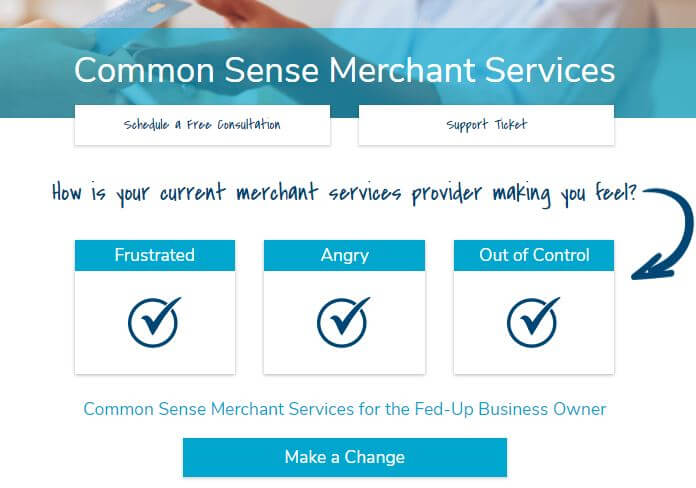
Here’s an example of the kind of thing we mean. Our client, eComm, is committed to re-inventing the merchant services industry. It’s a national brand owned by an Alaskan financial services company called Cornerstone Credit Services, and it launched in 2017. Looking back, the owners say: “We were entering an industry that had a bad reputation, but we were doing it for a reason… We knew that the business community deserves better.”

This attitude defines the client’s brand voice, which sets the foundation for a financial marketing campaign. The message is simple. The tone is straight-talking. The communications are transparent. This company works with small business owners all over the United States, who don’t have time to beat around the bush, which is reflected across all of eComm’s digital assets. This is immediately clear through the use of phrases like:

  • “You probably have first-hand knowledge that the merchant services industry is wildly unethical.”
  • “Some merchant services providers don’t seem to understand the golden rule: don’t lie to people.”
  • “Our aim is to be undeniably up-front with you about everything from mark-up fees to monthly charges.”

This is strong language. It’s not everyone’s cup of tea. However, the up-front style is very effective from a financial marketing point of view, because it connects with this client’s target audience. These are people who need answers now and want to work with someone they feel they can trust. The voice reveals everything you need to know straight away.

Step two: Build trust in your community

The best way to build trust in your community when it comes to financial marketing has always been, and will always be, word of mouth. People are much more likely to trust the recommendation of a friend or family member who has had a great experience than take a risk on an unknown company. The logical conclusion, of course, is that the best way to build trust is simply to give every single customer a great experience. Listen to them. Solve their problems. Save them money. Make them great coffee. Write them thank you notes.

Financial marketing example

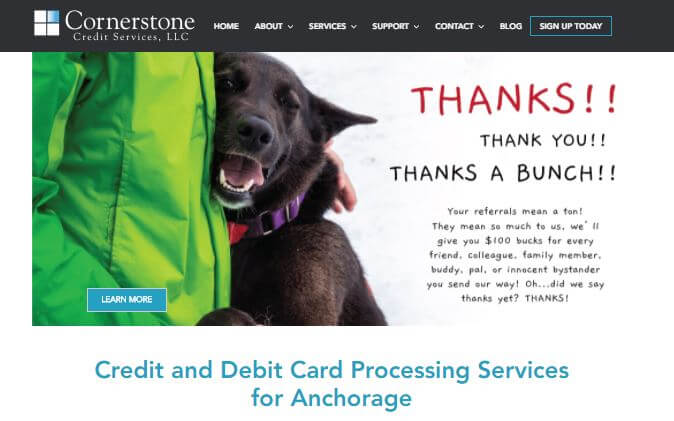
Cornerstone Credit Services has a range of divisions, including payment solutions. The company has an outstanding reputation in Anchorage, Alaska, and it’s the go-to merchant services provider in the region. From a financial marketing perspective, this is gold, but it doesn’t mean no further efforts are required. Cornerstone has actually capitalized on this reputation across their digital assets as well – take this homepage, for example. For one thing, it recognizes the positive impact clients have on the business, and makes them feel special. For another, it encourages them to go ahead and make even more referrals in their personal circles by offering an enticing cash reward.

Ready for another set of quick questions? Here we go. What are your strengths? What are some things you’re already hitting out of the park? How can you use them as part of your financial marketing strategy to grow your business even further? This is important, because it will help you work as efficiently and effectively as possible to reach your goals.

Step three: Nail your value proposition

Once you’ve defined your brand, and you’ve built a strong reputation, you need to work on your value proposition. Catch the attention of your prospective clients and make them an offer they can’t refuse. This is the part where you’ll be encouraging people to click onto your website, guiding them down the path to purchase, and hopefully converting a sale.

Financial marketing example

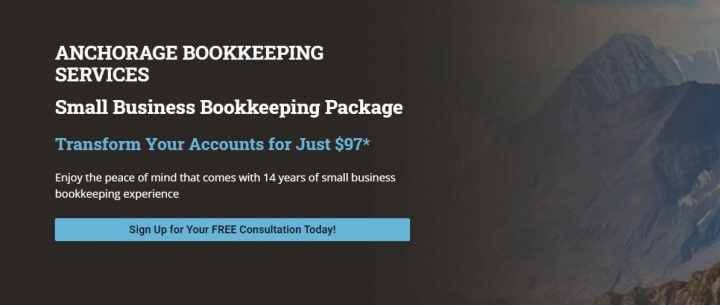
A key part of this is a strong landing page. Our client, Bookkeeping Alaska, is currently in a growth phase. The owner, Tabitha, asked us to create a landing page to encourage more people to sign up to a special offer that will help them organize their accounts for just $97. She’ll help you set up QuickBooks, start reconciling your statements, start reconciling your transactions, generate system reports, and provide email and phone support along the way.

Landing pages can be really simple. In fact, there’s a recipe for success, because there are a few key touch-points every prospective client will consider in making a decision:

  1. Professionalism of your appearance (i.e. design, layout, text, etc.)
  2. An offer that is immediately very clear and easy to understand
  3. An explanation of what exactly the offer includes (i.e. a list)
  4. Some social proof or a testimonial to encourage trust
  5. An explanation of why your business is a great choice
  6. Several very clear calls to action so they can take next steps

Once you’ve addressed all those points, you’re good to go. When it comes to building effective landing pages, we recommend a tool called Leadpages, which has templates tailored to different industries and different types of offers, making them easy to create. It’s a great way to qualify leads and ensure the people who reach out are a good fit.

Why you need financial marketing services

Once a client has clicked through to your website, the only thing left to do is streamline the path to purchase so it’s easy for them go to ahead and do business with you. Make sure that the next steps are clear, with a strong call to action, and ensure your contact details are prominent so they can get in touch with any questions. It’s that simple.

Want it to be this easy in real life? Give our helpful team a call.

Jen Motyka has a unique perspective when it comes to running a business during a crisis. She has two of them, and she says they’ve responded very differently to the lockdown.

She owns Blitz Promotions, an event planning and business consulting service that aims to empower local businesses in Anchorage, Alaska. She’s been running it for about three and a half years and says the transition to an event-free world has been very challenging.

She’s also a founding stylist at Color Street, a beauty brand that specializes in colorful nail art, which she does from home. She says things with this business have been “really easy.”

The difference, she says, comes down to one simple thing.

Marketing 101: Solve problems

“Right now, finding really innovative ways to still connect with your customer base, obviously while following social distancing guidelines and being safe, is the key,” she says.

“My home-based business hasn’t had a glitch. If anything, it’s really taken off because it’s nail polish. A lot of people are having to grow-out their nails, they can’t go to the salon right now so they’ve been [looking for alternatives]. I think with any business, it’s about problem-solving. That’s Marketing 101. You want to provide a solution for your customers, so how are you going to do that?”

She already had a website in place, which means she’s able to continue operating without having to leave her home to do any deliveries or expose herself to any health risks.

Things with the event-planning business, on the other hand, have been “very difficult.”

The lack of physical events means Jen has been looking for ways to pivot and find new ways to connect with people. She says it’s amazing how creative the industry has been, from organizing virtual events to drive-ins, where everyone attends while staying in their cars, a safe distance from one another.

“We’re finding better ways to connect. A positive to come out of this, if we can find them – and I think it’s important that we do – is really nurturing those personal connections. We’re not sending mass texts anymore, it’s ‘How are you doing? How’s your family doing? How can I help you?’ It’s really reinforcing and nurturing those relationships.”

Looking for a way to help your business pivot? Have questions about digital marketing in a crisis? Simply need a sounding board for new ideas? Join our Facebook group.

Nurture connections with others

One of the most interesting things to come out of this period, Jen says, is the stories.

“Stories are such an authentic way to connect with other people and say, ‘Hey, it’s OK to be scared – I’m also scared. It’s OK to be overwhelmed – I’m also overwhelmed. Here’s how I’m helping, here’s what I can do, here’s something to make you feel a little bit better about where you’re at,’” she says.

“Connections keep us safe, keep us healthy, keep us occupied. I think those have been the key, for me, to help me keep moving forward because it’s really easy to just get complacent.”

It’s important to be patient with yourself, and allow yourself a little grace, while you’re figuring out the next step. She notes it’s equally important not to be afraid to ask for help.

“I suggest looking up YouTube Tutorials, reaching out to other businesses – if you have a friend you know does a lot of videos on Facebook, for example, you can ask them for help. Even now, when I see my face on the screen, I’m like “Oh!” even though I’ve done tons of videos. It doesn’t matter how many you do, there’s always that sort of stage fright – I don’t want to say the wrong thing or touch my face! It’s about having a little grace,” she says.

“Mistakes are going to happen and that’s OK. We’re all in this together. You’re not alone in not knowing or being scared.”

Allowing yourself some grace

It would be impossible to count the number of times we’ve heard the word “unprecedented” in recent weeks. None of us have experienced this before, so cut yourself some slack.

Jen says in her experience, the little things have made a big difference – no matter how silly they may seem. She laughs as she cites her conversation with us as an example, explaining she actually really enjoyed the chance to let out her “mom bun” and do her hair.

“Women are trying to figure out how to home school and run our businesses and cook three meals a day and it’s this long laundry list. Our personal self-care goes out the window, because we have all these other things to do. How do we find a little happiness? It might be superficial, but if you look good, you do feel good. Even today, I put on some mascara and I was like, ‘Oh yes, that’s right!’”

With this in mind, she’s currently working on a series called In Between Beauty, which she hopes to release in coming weeks. It will feature a range of different people giving home beauty tips to tide them over until they can resume supporting local business and return to their favorite salons.

“It will be tips to keep you going in that in-between time, because that’s what this really is. It’s an in-between time that we’re stuck in. People need to remember that. There was a time before coronavirus and there will be an after.”

For more stories about businesses finding ways to pivot, as well as crisis communication tips, digital marketing advice and a sounding board for ideas, join our Facebook group.