Skip to content


There’s a big difference between good copywriting and bad copywriting. A huge difference. A massive difference. A monumental difference. But it’s about more than just choosing the right words for the job, it’s about connecting with your audience and persuading them to act.
In this guide, we tell you everything that you need to know about copywriting – what it is, why it matters, and why you should consider outsourcing it for your company.
Want to talk about copywriting? Schedule a free consultation today.
What is copywriting, anyway?
Copywriting is any words related to your brand: your tagline, website copy, sales brochures, social media content, press releases, and everything else that uses text. It’s very common, when you’re starting out, to write everything yourself. But if you want to make your words work (and by work…we mean sell) then it’s time to think about getting a professional copywriter.
Also, copywriters have nothing to do with copyright law, despite the fact it sounds the same.
What does a copywriter do?
Copywriters write words that promote your business and persuade your customers to buy your products or services. It broadly falls into two different categories:
- Developing the creative parts of a brand (like packaging and advertising campaigns).
- Creating ‘sales’ related collateral (like emails, website copy, and blog posts).
Copywriters are also very skilled at content marketing, which is integral to helping your brand presence grow online. This includes SEO (Search Engine Optimization) to ensure customers can find you when they need your products or services through platforms like Google.
How can a copywriter help your business?
Wherever there are words, copywriters can help. This includes:
- Writing the copy for a company’s website
- Content marketing like blog posts and articles
- Crafting paid advertising copy
- Coming up with creative headlines for an advertising campaign that’s going to run on billboards or in magazines
- Crafting social media content for channels like Facebook, Instagram, Twitter, and more
- Writing a company’s in-house magazine, newsletter, or intranet content
- Email marketing (promotional emails to your customers)
- Packaging copy (if you’re a business with tangible products)
- Crafting landing pages that convert
- Video scripts to tell your brand story
Marketing for the first time? Here are the top digital marketing trends for 2021.
Why should I use professional copywriting services?
While anyone can write, not everyone is a writer. Anyone can nail two pieces of wood together, but not everyone can build a house. See what we’re saying? Your brand is just as precious as your house, so it’s important to find someone you can trust to do the job well. Here’s why:
- Readers only read 20% of the content on the page (which means that 20% better be working hard)
- Nearly 75% of readers pay attention to spelling and grammar (meaning there’s no room for mistakes)
- Eight out of 10 people will read a headline, but only two people will go on to read the rest (which means your headlines need to do some serious heavy lifting)
It’s reasons like this that explain why getting a professional copywriter is so important if you want to grow your company. Is your website working hard enough? Are your emails actually persuading anyone to buy anything? Is your social media marketing getting results?
When you use a professional copywriter, you can trust that your brand is not just producing words – it’s producing words that actually work. This is essential to growing your business.
How can copywriting grow your brand?
Companies are as unique as their owners. They all have a different tone and style. Professional copywriters can adapt their writing to fit the personality of your brand and to suit the needs of your audience. By doing this, they create content that persuades your audience to act. That action could be straight to purchase, booking a sales call, or requesting more information.
Not only can copywriters help your brand grow your bottom line, but they can also help you increase your brand awareness and brand equity (how many people recognize your brand). They do this by creating memorable content that is shareable and relatable to your audience.
What are some common copywriting mistakes we see?
- Not bothering with audience personas. If you want to connect with your audience you’ve got to know who they are and what they want.
- It’s full of spelling and grammar mistakes. Sloppy mistakes like this show your audience that you don’t care. So why should they?
- Getting the voice wrong. Every brand has (or should have) its own unique voice and way of writing. Every word needs to match that brand voice (seriously…like, imagine if Red Bull started to sound like an insurance firm!)
- You’re being too verbose. Don’t use 50 words if you can say it in 10. One of the hardest things in the world is keeping it simple, but simplicity is often the key when it comes to good copy.
- You’re writing for yourself and not your audience. You need to lead with the benefit to your audience at all times, not the benefit to your company.
- There’s no clear call to action. What do you actually want your audience to do? Make it clear what people should do to take the next step.
- Forgetting SEO. When it comes to getting your business found, you need to make good friends with Google. And that means writing highly searchable content that follows the rules of SEO.
- Trying to say too much at once. We get it, your brand is great. But you can’t say everything about it all at once. Write with a singular and explicitly clear purpose.
- Not considering readability. Our brains like to scan content quickly to make decisions on whether it’s useful, so it’s essential to avoid huge blocks of text.
- Relying on adjectives, not proof. You need to be able to back up what’s said, not just keep throwing in superfluous adjectives about how great your company are.
- Not telling your story well enough. We have a functional and emotional side of our brain. When we buy something, both sides are helping us choose where to spend our dollars. Your brand’s story is an important emotional trigger, but are you telling it right?
- Not having a clear purpose. Why are you even writing something in the first place? Every piece of content – and every word within it – should have a clear purpose. Don’t just write something for the sake of it. No-one benefits from shouting into the void.
- Articulating your special offers wrong. Special offers are a great way to increase sales but they need to be positioned in the right way that don’t devalue your brand.
- Missing opportunities. There are opportunities everywhere to use words to sell – your website, your transactional emails, your signage (and plenty more).
Want some examples of copywriting that converts?
Frank Body
This beauty brand oozes personality. From the packaging to the website and everything in-between, it’s intrinsically Frank every time. But it’s not just quirky – every word drives action.
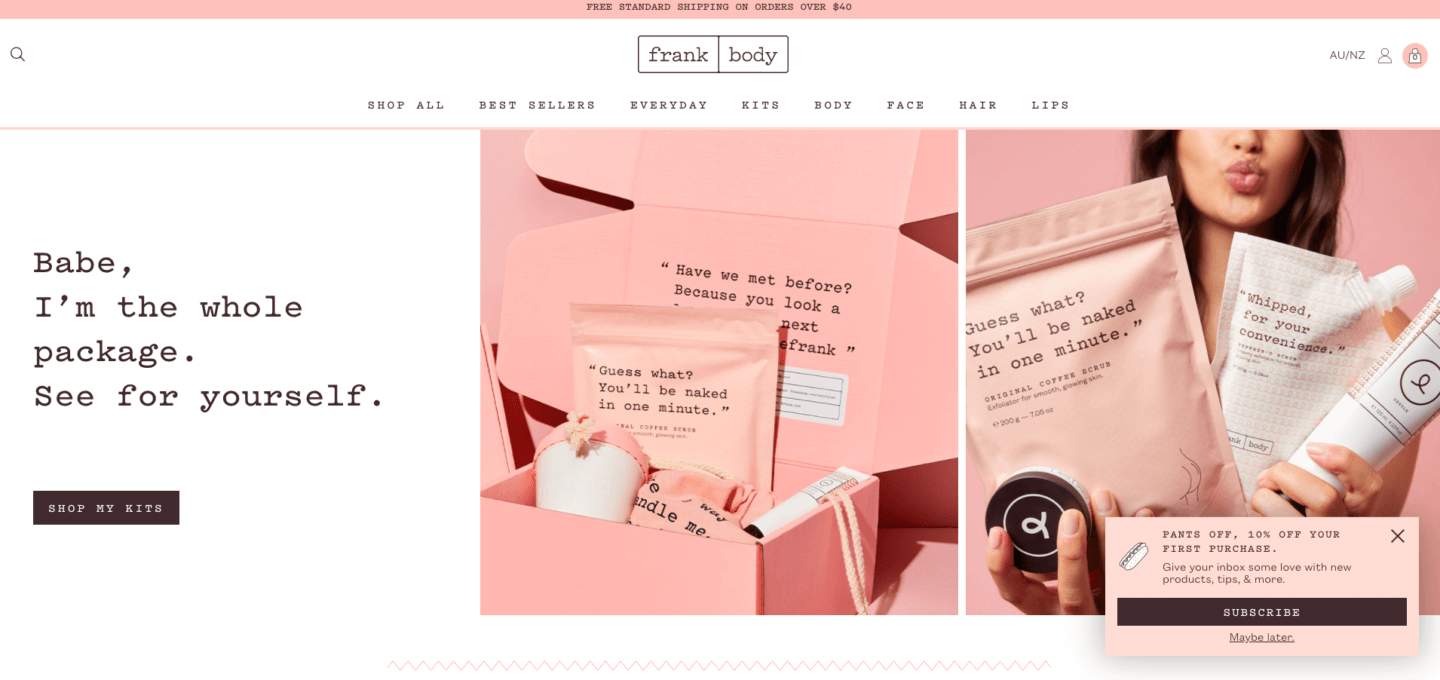
- Clearly shows the products and their fun tone of voice and product descriptions.
- A fun ‘10% off’ call to action encouraging people to sign up for the newsletters.
- ‘Shop My Kits’ calls to action makes it clear what the reader needs to do next.
Tasters Club
This whisky club has nailed simplicity. Check out this beautiful home page:
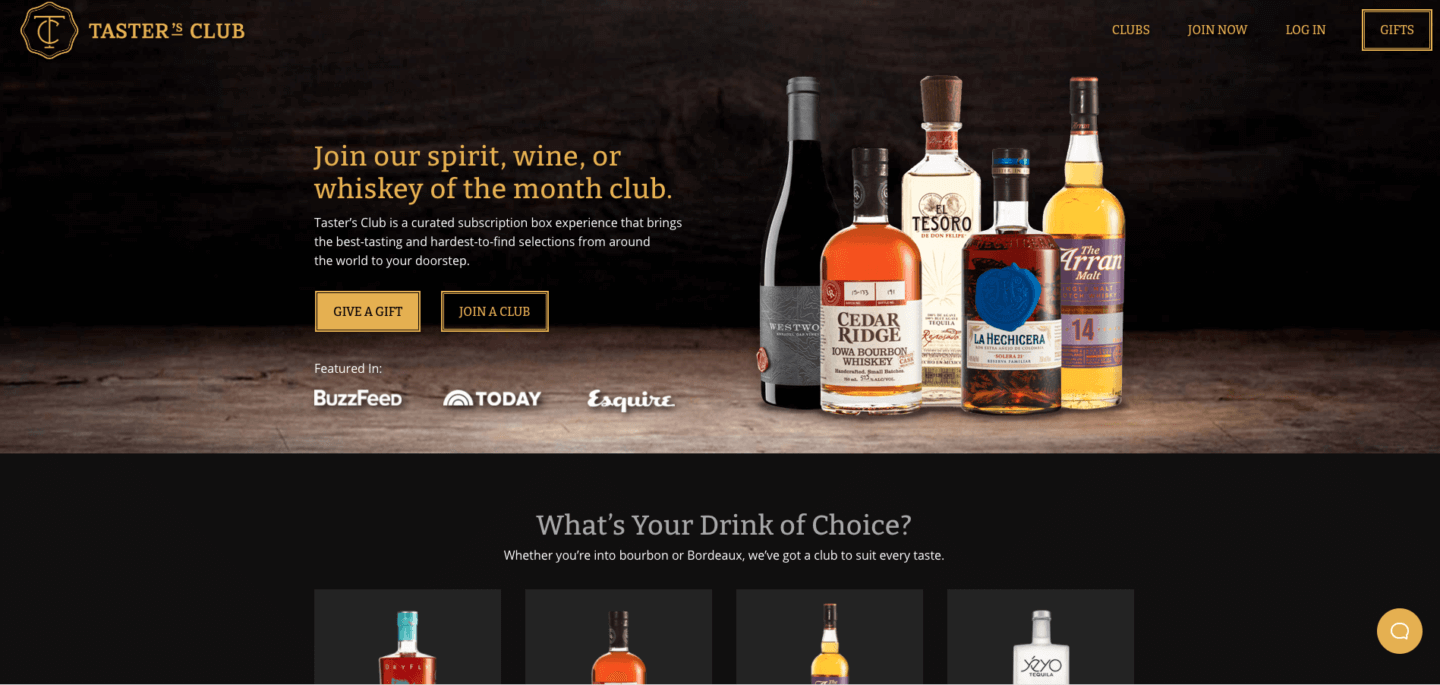
- A single headline says exactly who this company is and what it offers.
- The two very clear calls to action are worded in a way that’s super inviting – driving people straight to the content they need.
Nike
Okay, okay, we’re putting in the big guns here. Copywriting is more than just content marketing and social media. It can also become intrinsic to your brand. Nike’s tagline ‘Just do it’ is one of the world’s most iconic copywriting examples. It’s globally recognized and is just as powerful as the brand name itself. Want something this good for your brand? Get a copywriter. Just do it.
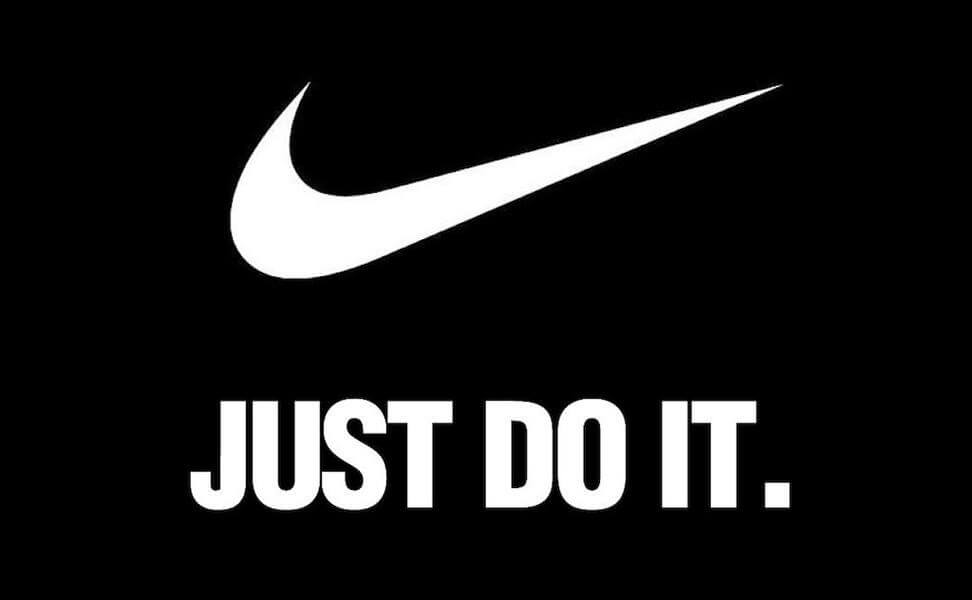
- What can we say? It’s a thing of beauty.
Patagonia
If you’re an eCommerce site, your product descriptions are one of the most important things you’ll ever write. They need to rank for Google, provide practical information for your audience, and give shoppers the warm-and-fuzzies that make them want to buy, all at once.
We love how Patagonia has written theirs. Although it’s just a product listing, it manages to reinforce the company’s key messaging around sustainability and make the shopper feel good.
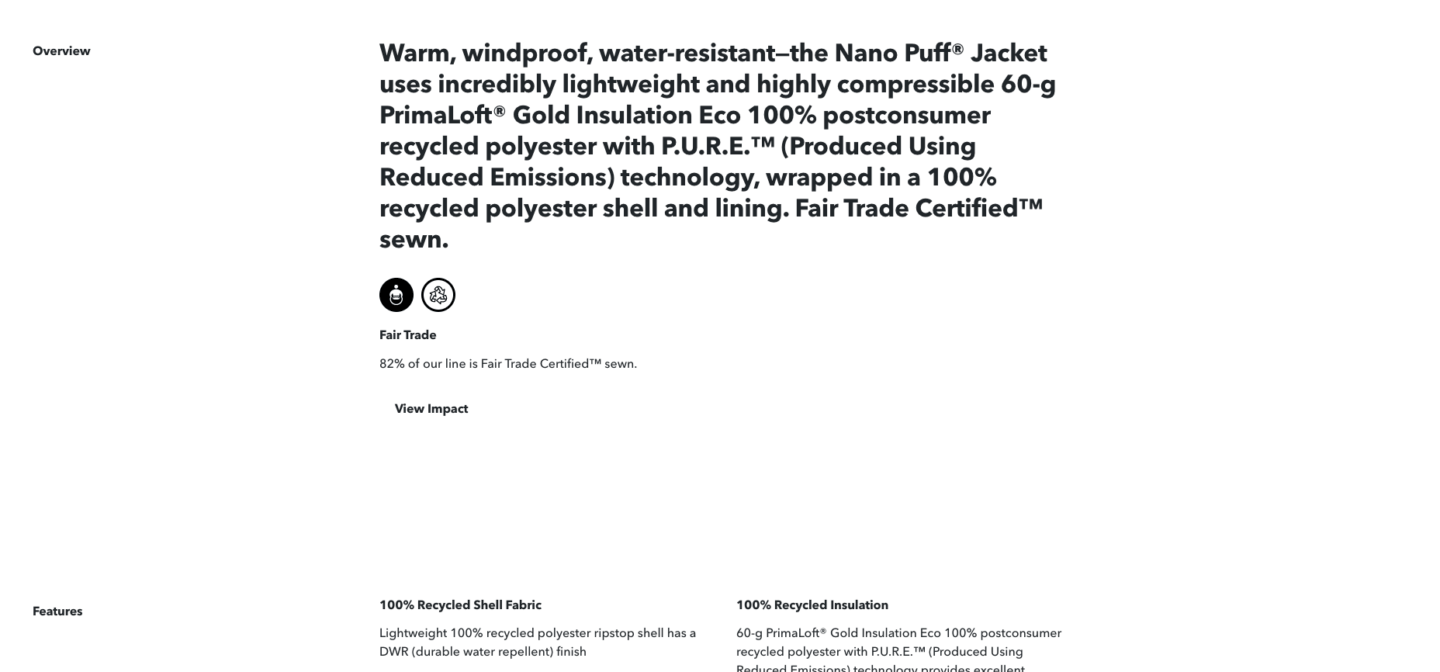
- Short, concise product descriptions that fuses the functional with the emotional (functional = technical details like what it does and the weight; emotional = environmental information, which pulls on the emotive tendencies of readers).
- Expandable sections for ‘Features’ allow more functional information and ‘View Impact’ which delves into the environmental impact of the product.
Ready to work with a copywriter?
If you’ve been persuaded by the power of words, we’d love to hear from you. Schedule a free consultation.