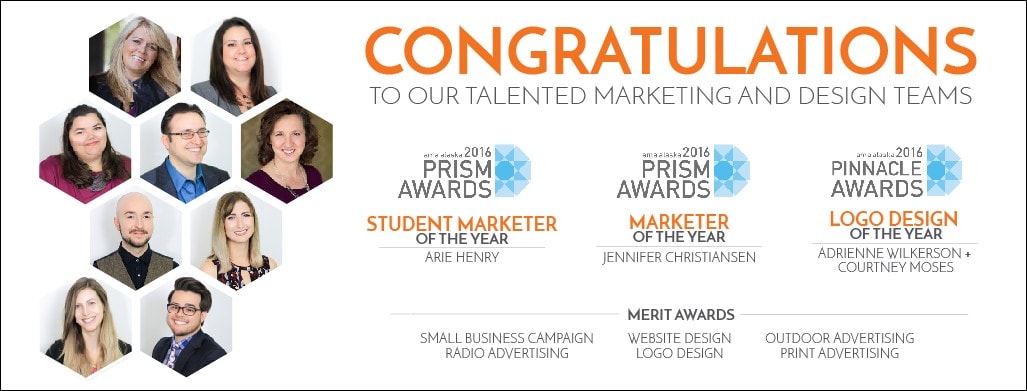
Adrienne Wilkerson

See Our Blogs

Explore insights on SEO, AI, and digital marketing strategies designed to help your business grow, stay visible, and adapt in a constantly evolving online landscape.

Beacon_Icon_resouse

“Your brand is what people say about you when you’re not in the room.” – Jeff Bezos

Reno, Nevada is a competitive market with a myriad of companies moving in to gain from a growing economy. Now is the time to set your business up for success with a strong branding package! This blog is for you if:

  • You have just entered the Reno market and you need a brand that will blow the competition out of the water.
  • You have been a long-standing business in Reno and you are looking to update your brand.

Today, we’re going to walk you through our proven branding process (over 20 years in the making!), from discovery to finding the right logo, colors, and fonts for your business. We hope this helps your team clarify your brand!

What Is a Brand?

Your brand is the visual representation of who you are and what you do. It takes the form of the logo, colors, and fonts you choose for your business. When customers see your brand in Reno, they should be able to immediately recognize that it is your unique company identity. A brand should say something positive about your reputation. We are going to talk about the identity discovery process in a moment, but here is a quick glance at the branding journey ahead and what it entails:

  • Your job is to capture your reputation if it is strong
  • Your job is to discover your reputation if you do not know what it is
  • Your job is to pivot your reputation if it has been negative in the past

How can all of this be accomplished with a logo, colors, and fonts?

Let’s get started and find out!

The Discovery Process

When we onboard new Reno clients at Beacon, we take them through a list of questions to help them capture, discover, or pivot their brand. The first step is to make sure all the decision-makers are in the same room and paying attention to the process. Then we let the discovery begin!

It is important that the decision-makers on your team are won over to the branding process. Changing a company reputation is not easy, and requires the intent focus of everyone involved.

Some of the questions that we cover with our clients include:

  • Give us your elevator pitch in two sentences or less. Who are you and what do you do?
  • Your customers should feel assured by your brand. What can you promise them?
  • Are you aware of any current perceptions about your business? What would you like to be known for?
  • What is your niche in the Reno market? Are you cheap but high-value? Expensive with personalized service? Unique in your service offerings? Well-respected in the community? Intelligent and educational?
  • What is your long-term vision?

Our brand discovery meeting typically covers target audience, competitors, and differentiators as well. Be sure to bring up these questions when you get together with your team.

Naming Yourself

The very first step in branding your business is coming up with a name and a tagline. If you do not have one already or you need to make a tweak to your current name, this is for you! We have compiled a list of tips for the brainstorming process:

  • Consider the names of other businesses in Reno that are in your industry! You certainly do not want to appear to be imitating these companies, but they can give you a good starting place for your own creative ideas.
  • If you are a family business, think about including the family name in your company name, especially if your family has a great reputation in Reno.
  • You may want to include the location of your business (state, region, or city) in your name if you are focusing heavily on Reno.
  • During your discovery meeting, certain nouns or adjectives may have stuck out as resonating with your mission and purpose. If so, use these!

Sometimes the best way to find a name for your business is to pull out a thesaurus, whether online or in-hand. If there were particular words that resonated with you, search these terms in the thesaurus and see which synonyms might make a great name!

The Tagline

If you are struggling to capture your company identity in your name alone and logo alone, a tagline can be a great way to communicate more! We frequently come up with more than one concept with our clients during their discovery meeting, and we use the tagline to incorporate some of the “secondary” concepts we discovered.

It is not crucial to create a tagline for your business, but it is recommended. The process alone will help you clarify your core messaging, carrying over into all your marketing channels, from your website to social media.

Picking Icons, Colors, and Fonts

It can be challenging to capture the identity of a business using icons, colors, and fonts. Fortunately, we have psychology on our side! Forms and colors have a mental and emotional impact on the people who view them, whether they are from Reno or otherwise. Although the way this works is a fascinating discussion, we will try to keep our explanation as high-level as possible today. Your choices here are vastly important and we don’t want to drown you in the details!

Iconography

The icon in the logo is the graphic that accompanies your name, and it is what most people think of when they think of a logo in the first place (think of the McDonald’s arches or the Nike swoosh). Your icon should visually communicate something about who you are or what you do. In the below example, we gave Juneau Youth Services (JYS) a logo with an icon composed of mountains and an eagle. We wanted to communicate the fact that JYS is located in Juneau and that there is freedom in getting the help that you need.

Icons can be extremely versatile. Many icons become assets for the design of promotional products, watermarks on company forms, or a standalone logo for businesses that have achieved enough brand recognition in Reno.

For your logo icon, think back to your discovery meeting and remember some of the concepts you discussed. We often browse Pinterest to get the creative juices flowing and to create a board of ideas. Try searching “logo ideas for Reno” and see what pops up. Another great site for icon ideas is The Noun Project, which contains icon assets created by artists from around the world.

The Color Wheel

The part of your logo that will emotionally connect with your target audience in Reno the most is the colors. It is very important, therefore, to select colors that express exactly what you want! In a recent blog, we discussed the color wheel and which colors correspond to which emotions. Here is a brief summary of some of those concepts:

  • Red – Reds come in a wide variety of shades, communicating a wide variety of things, from temptation, to warning to pay attention, to danger, to celebration, to love, to femininity.
  • Orange – Because orange is a softer version of red, it can communicate softer versions of the emotions associated with red, such as light and life. Oranges are also frequently associated with food, making them appetite stimulating.
  • Yellow – Yellow is a bright color that can create emotions of joy, optimism, and comfort. As a gold, yellow creates associations with wealth, luxury, and rank. Light and warmth are often associated with yellow, and the color catches attention like red.
  • Brown – Organic, all-natural, and outdoorsy Reno businesses would all do well to create a brand using brown. This color reminds viewers of earth and wholesomeness.
  • Blue – Blue creates feelings of tranquility, mystery, depth, and strength. It is frequently used in the tech and health and wellness industries, specifically.
  • Green – More diverse than any other color in the world, the various shades of green can communicate everything from new beginnings to relaxation.
  • Purple – Purple is a fun color because it is a mix of red, blue, and their associations. If a purple is redder, it will communicate energy and intensity. If the purple is on the blue end of the spectrum, it will elicit feelings of calm and loftiness.

Not all colors come in the same quality or hue. For this reason, Adobe has created a free online color wheel that can be used to select colors that go well together. The wheel will automatically adjust according to the colors you choose. Take a look at this tool with your team and play around with it to find a set of colors that you like!

Typography

There are two kinds of people, those who geek out about typography, and those who do not! For those who do not, typography is more important than you may think. Just like with the icon and colors of your logo, your typeface communicates something about who you are. Some fonts fit with the theme you are going for while others will work directly against it.

Google has a fantastic, free online font tool that you can use to take a look at the kinds of fonts available (you can also download their fonts for free). What’s neat about Google Fonts is that it lets you type your desired name and tagline into the font boxes provided to see what they would look like.

In a lot of cases, finding the right font for your logo takes gut instinct. When you are browsing Google Fonts, take a moment to find the feelings each individual font creates within you. It might be challenging, but try to discover why that particular form elicits those feelings.

Some fonts might come across as “editorial” to you simply because you have seen them on a news site in the past. Others might strike you as “creepy” because they were a part of the last horror show you watched on Netflix. It is likely that your fellow residents of Reno feel the same way because they were exposed to the same media associations. Depending on your industry, you may gravitate toward a particular font that is frequently used.

Try to come up with a list of 3-5 fonts that give you the right “feels.” Run them by your team to see if they have the same reaction. This will be a good litmus test for your gut instinct, and maybe help you land on the final font for your logo!

Brand Management

After you have created your brand, you must protect it. Especially at the beginning when your team is excited to use your new logo, colors, and fonts, it is important to set a standard for how they should be used. This will reap dividends for the future integrity of your brand in Reno.

Some teams create large corporate policies while others simply use a single-sheet style guide. We find that the latter is just as effective as the former, but we provide both upon request to our Reno clients. Please do not skip this step if you want to preserve your new brand!

Our goal today was to assist you in your branding journey. We hope you have learned a lot of helpful information about the tools available that you can take back to your team! If you have any questions about the process outlined here, our President, Adrienne Wilkerson is available to talk with you. She has been branding small to mid-size businesses for over 20 years and she would love to work with you! We offer a free consultation to everyone who is interested in our services.


Reno is growing.

Since top tech companies like Apple, Microsoft, Amazon, and Tesla have moved into the area, businesses in supporting industries have flooded Reno to provide necessary goods and services to employees and their families.

If you are one of these businesses or a business affected by the influx of competition, you have probably boosted your marketing efforts to get your voice heard above the crowd!

We’ve put together this handy, digital marketing strategy to help you do just that.

Digital marketing is the most effective form of marketing for reaching the biggest number of the most qualified leads for your business.

After 20 years in the marketing industry, we have developed a digital marketing funnel that delivers some pretty amazing results.

Learn more about our digital marketing funnel and how it can help you bring in new business in Reno!

How to Use Digital Marketing to Bring in New Business in Reno

Digital marketing only works if your strategy is geared toward the people you are trying to reach, so we will be using their thought process to guide our strategy.

No matter where you are from, Reno or otherwise, customers go through a thought process when they are making purchase decisions.

In marketing, we call this process the “four stages of the buying cycle.”

The stages of the buying cycle are Attract, Engage, Convert, and Close. There is also a fifth stage that should come before all of the rest in a successful digital marketing strategy. We call it, “Prepare.”

In each stage of the customer thought process, we use a different digital marketing tactic to address the specific state of mind our customer is in. We do this to bring them one step closer to becoming new business for us!

1. Prepare for Digital Marketing

It is important to have a strong brand and website before you begin digital marketing, especially in a competitive market like Reno.

Both your brand and your website contribute to helping your customers understand who you are and what you do.

The “Prepare” stage is all about getting your digital presence ready to put it in front of as much of your target audience as possible, to drive leads.

Branding

The logo of your Reno business is your first impression to customers.

Your brand should visually communicate who you are and what you do in a split second.

Businesses with weak brands confuse their customers with mismatched fonts, a mix of colors, and nonsensical logo variations to boot!

If you do not already have a strong brand in your digital marketing arsenal, invest in getting your logo, colors, and fonts redone.

Make sure the agency you work through provides you with a style guide which helps your staff know how to preserve the integrity of your brand.

Website Design

Your website serves two purposes.

First, it is where customers can learn about who you are and what you do.

Second, your website is what Google uses to determine where you should rank online for searches in Reno.

The structure and content on your website should be optimized for both of these “users.”

For customers, your website should load quickly, navigate intuitively, and read easily.

For Google, your website should also function seamlessly, make structural sense, and contain “keyword-optimized” content.

To “keyword-optimize” your content is to make sure all of your pages have a specific focus keyword that you incorporate naturally throughout the text, headlines, and metadata.

This tells Google what you are talking about in its own, algorithmic language!

If your website is not in a good spot–loading slowly, difficult to navigate, or unoptimized for Google–get it up to speed before you commence your digital marketing strategy!

2. Attract Reno Customers

After you have prepared your brand and your website for digital marketing, it is time to “Attract” new customers!

The first step here is to identify who your customers are.

Obviously, they are from Reno–But what are their other demographics?

Once you have identified the ages and interests of your target audience, think about their behaviors.

When your target audience is thinking about buying something, what do they do?

Likely, they have a heightened awareness about a need they are trying to meet, or maybe they are directly searching for a solution to a problem they are trying to solve.

If you can tie their need to your product on social media or provide answers to the questions they are asking on Google, you will attract these prospective customers to your business!

Social Media

It is probable that you already know the power of social media for reaching large numbers of target customers, but just in case, here is a statistic to confirm your suspicions:

In the United States alone, Facebook has 214 million users, that’s almost 66% of the population!

If you want to reach the people of Reno, social media is the way to go.

Social media platforms like Facebook and Instagram allow you to target people by location (such as Reno!), demographics, the groups they follow, their interests, and more.

With targeting, eye-catching imagery, and engaging content, you can capture the attention of the people who could use your product or service the most.

If you do not have social media as a part of your digital marketing strategy, set up business accounts with the platforms that your target audiences use the most and get publishing!

Google Advertising

To reach the people who are searching on Google, you have to get on Google.

Google ads sit at the very top of the results page for the specific keywords and searches you choose to target.

You can also set location targets, such as Reno.

Google advertising that performs best (gets the most clicks) has strong titles and content.

If you are not already using Google advertising to attract new business in Reno, now is the time!

Blogging

Whereas Google ads are paid and sit at the top of the results page, blogs are organic (unpaid) and sit just below, in the content section.

You might think, “If blogs are not on the top of the results page, why blog?”

The reason is twofold.

For one, not everyone trusts Google ads (clicks on them).

For two, blogs can go much further for pulling in customers who research their options.

With blogs, you can answer specific, long-form questions in a thorough way that creates trust and brand preference in potential customers.

We use a tool called Answer the Public to help us know what people are asking online.

For example, when you search “digital marketing,” you get a plethora of questions people are searching, such as “What does digital marketing do?” and, “What is digital marketing all about?”

If you use this tool, soon enough, you will have a list of blog topics to write on.

If you blog consistently (2-3 times per week at 1,600-2,000 words if possible) and learn how to target your blogging well (location: Reno), it will substantially increase your website traffic and the number of leads you have coming in online.

If you are just getting started with your blog, 1-2 blogs per month at 400-600 words each can also work with strategic targeting.

3. Digital Marketing That Engages

Once you have attracted Reno customers, you want to get them coming back for more.

Certain forms of content are more naturally engaging than others.

We often use the following digital marketing tools to engage target audiences.

Video Marketing

The most easily digestible form of media, video is a quick way to earn engagement!

Create short (30-60 second) video productions with your team that are relevant to Reno customers, perhaps presenting the benefits of your product or service or answering questions in a fun or silly way.

These videos should be published on your social media.

Social Media Quizzes

Social media quizzes have become a popular way to produce engagement online.

You have probably participated in one yourself without knowing it!

When was the last time you answered questions to find out something like, “Which Parks and Recreation character are you?”

Develop a quiz that is relevant to Reno residents and publish it to your social media.

Take free reign to be (appropriately) fun and silly with your quiz!

The goal of the quiz is to collect leads, names and email addresses.

Also include a “call to action” at the end of your quiz to relate the content to your product or service and encourage people to reach out to your business!

4. Convert Using Lead Generation

Do not wait long after your customers are attracted and engaged to “Convert.”

There is a small window where customers are ready to commit something to their newfound interest in your business.

Make it as easy as possible for them to give you their information, asking for an email address.

Always, always, always provide something valuable in exchange.

You can use a few, key digital marketing tools to generate leads for your business.

Landing Pages

Landing pages are specific pages on your website that you design with customer conversion in mind!

In general, a landing page provides a brief description of the offer you are making, requests contact information, and provides something valuable in return for that information.

Point customers to your landing page from your social media or Google advertising, then offer them something like an eBook or a free consultation (see below).

eBooks

Seeing the word “book” probably overwhelms you just a little bit.

“Do I really need to write a book to generate leads for my business,” you may be asking.

An eBook is actually very easy to make if you have been blogging diligently.

Gather all of the blogs you have written–the questions you have answered for Reno customers–and compile them into and organized PDF with a table of contents.

Viola! You have a valuable eBook that you can give to customers in exchange for their contact information.

Other Forms of Lead Generation

Your website is where you should be pointing your target audience to capture leads.

You can set up multiple places on your website that capture contact information besides your landing page.

Most websites have an intuitive contact form in their menu.

You can also add a chatbot to your website that follows customers across the pages, asking for the same information as the contact form before they commence a chat session.

Additionally, you can add a form for customers to sign-up for a free subscription to your newsletter or email updates.

5. Close New Reno Customers!

In the last stage of the buying cycle–“Close”–customers make the decision to purchase your product or service.

Make this as easy for them as possible.

One of our favorite tools for this is the free consultation.

Free Consultations

Free consultations are non-commital.

They allow the customer to dip his or her toes in the water before taking the dive to start business with you.

This might sound like it benefits them more than you, but there is nothing farther from the truth!

Once customers have put their foot in the door, they have made a step toward commitment that creates preference toward your business in their mind.

On your website, create a form for customers to register for free consultations and experience the benefits for yourself!

We hope you feel confident taking your target audience through the buying cycle now that you have all of the digital marketing tools to Attract, Engage, Convert, and Close!

If you would like to hire a local digital marketing agency to help you navigate the competitive waters of Reno, we would be happy to talk with you.

Our team enjoys the opportunity to partner with local businesses and help them achieve their goals for growth.

You can schedule a free consultation with President Adrienne Wilkerson, here.

Cheers!

“The best place to hide a dead body is on the second page of Google.” – Anonymous

A lot of the practice managers we meet have a gut instinct that they need to be advertising on Google, but few know exactly what Google advertising is, how it works, and whether or not it can truly help them grow their practice. They’ve heard the terms–Google AdWords, PPC, even search engine optimization–but they don’t know what it all means. We’re here to shed some light on these subjects and to tell you that yes, Google advertising can help you grow your orthodontics practice, but there are some important factors that you need to know. You’ll learn about the Google advertising algorithm, how much Google advertising costs, and much, much more! Enjoy!

Bonus: We threw in some of our agency best practices at the end. Check it out!

What is Google Advertising?

Have you ever performed a search on Google and wondered why the top several results have a little green box that says “Ad” next to them? Or have you ever visited a website only to have their advertisements follow you to the next site you visit? If so, you have encountered Google advertising.

When you perform a search on Google, you are taken to something we marketers call a SERP (search engine results page). This is simply the page on which Google displays all of the results of your query. The SERP will be formatted differently depending on your search, but in general, Google Ads are the results displayed at the top of the page:


How Can Google Advertising Grow My Orthodontics Practice?


Google Ads are called “paid” results because the advertiser must pay whenever an internet user clicks on them. That is why in the marketing world we call Google advertising “pay-per-click” or “PPC” advertising. The results below this area of the SERP are called “organic” results because they are chosen by Google strictly according to their relevance to the search, as in, there is no additional paid incentive.

It can be tough for an orthodontics practice to show up in the top of the organic results. That is why Google Ads are so appealing to many practices. At Beacon, we recommend a strategy that incorporates both Google Ads and techniques to rank organically.

Google Ads are created using Google AdWords, and they are typically comprised of three components, a headline, URL, and description. The advertisements that you see on the websites you visit are a little bit different, however. These are called Display Ads, and they can come in sixteen different formats combining logos, graphics, headlines, and descriptions. Here are some examples of Display Ads being run by Listerine on WebMD:


How Can Google Advertising Grow My Orthodontics Practice?


As you can see, Display Ads look very different from the ads shown in the SERP, and allow for a lot more visual, creative freedom. When you see Display Ads that seem to “follow” you from other sites you have been visiting, this is because the advertisers are trying to reach you through something called “remarketing.” Remarketing is a kind of advertising enabled by Display Ads that allows advertisers to show ads to you if you have already visited their website, enticing you to come back. It is very effective!

How Does Google Advertising Work?

Both the Google Ads that are displayed in the SERP and the Display Ads that are shown on websites are created using Google Adwords. To create a Google AdWords account for your orthodontics practice, follow their sign-up guide.

Registering for an account is one thing, but creating advertisements is another. Getting those advertisements to show up when other orthodontics practices are competing for the same advertising space proves to be an even greater challenge! Let’s talk about the Google advertising algorithm and how it works, then we’ll dive into how you can use Google advertising to grow your orthodontics practice.

The Google Advertising Algorithm

A lot happens in the split second it takes to perform a search on Google.

Whenever someone performs a search, Google takes a look at all of the AdWords accounts it has on record, checking for advertisers who are trying to rank for relevant keywords. For example,  an advertiser who wants to rank for searches like, “Can I get braces as an adult?” might be trying to rank for the keyword, “adult braces.” Advertisers tell Google that they want their ads to rank for certain keywords by bidding a monetary value on them. This makes every Google search an auction of sorts for advertisers.

How does Google choose who wins? The algorithm looks at two factors:

  • The maximum bid you have set for your keyword
  • The quality score of your advertisement

Your maximum bid is how much you are telling Google you are willing to pay if an interested party clicks on your ad. It can also be called your cost-per-click (CPC) bid. The quality score is comprised of additional factors:

  • Past performance of the ad, ad group, and your account
  • The relevance of your selected keyword, ad, and landing page

Ad groups are the groups of keywords that you are trying to rank your ad for. Landing pages are the page you send interested parties who click on the URL in your ad to. All of this comes together in one simple equation that selects winners:

CPC Bid x Quality Score = Ad Rank

Display Ads work very similarly to Google Ads with only a few key differences. In the case of Display Ads, CPC bids are set on an ad group level, not for individual keywords. In addition, you can bid based on impressions–the number of times your ad was delivered–instead of clicks if you like. These are called CPM bids.

Why does Google rank ads based on relevance? The more relevant results they return to their users, the more their search engine is used and loved, the more money they make! It is in Google’s best interest to connect you with the right customers.

How Much Google Advertising Costs

As the name pay-per-click implies, your orthodontics practice will be charged every time an interested party clicks on your ad. This rate is determined on a case-by-case basis according to the following equation:

Next Highest Ad Rank / Quality Score + $0.01 = CPC*

Take a look at this equation for a second. Notice anything interesting? The higher your quality score is, the less you will have to pay per click. Google rewards advertisers for relevance. How cool is that?

Advertisers are rewarded for the relevance of their ads in how much they are required to pay! The more relevant the ad, the higher your quality score will be, and the lower your cost-per-click will be.

*The cost-per-click will never go above your maximum set CPC.

Can Google Advertising Grow My Orthodontics Practice?

There is not a simple “yes” or “no” answer to this question. As we have seen, Google advertising can make your practice show up first in search results, but this is dependent on a lot of factors such as bid, relevance, and especially the number of other orthodontics practices you are competing against.

Certain industries and certain locations are more competitive than others. At our location in Anchorage, the legal industry sees cost-per-click of up to $50! For credit card processing clients, we are looking at between $25-$53 CPC. Here is a breakdown of the top three keywords in orthodontics for Alaska:

Keyword Average Monthly Searches Competition Page Bid (Low Range) Page Bid (High Range)
orthodontist 320 Low $6.68 $19.90
braces 170 Low $3.86 $11.31
invisalign 380 Medium $6.00 $15.35

Source: Google Adwords Keyword Planner (at the date of this blog post)

On the low end, those are reasonable bids. According to industry benchmarks, the average cost-per-click for the health and medical industry (the closest to orthodontics recorded) is closer to $2.62:

How Can Google Advertising Grow My Orthodontics Practice?

Source: WordStream (at the date of this blog post)

That said, relevancy in advertising can do a great deal for bringing down cost-per-click prices. At Beacon, we typically run Google Ads that have CPC below industry benchmarks.

Over the years, we have developed best practices for our own Google AdWords team to grow their accounts. Here are a few key pointers that we recommend to new clients:

  • Do not attempt to run Google Ads on a budget less than $300 per service advertised. This amounts to 1-3 ad groups and minimum cost-per-click budget on each keyword.
  • Choose a niche that differentiates your orthodontics practice from everyone else. For example, we run Google Ads for a holistic dentist–These keywords are easier to target than general dentistry.
  • Write strong ads, but also optimize your landing pages for the keywords you are using in your ads. Doing so will boost your quality score.

In summary, if you do your research on the competitiveness of relevant keywords in your area, find a niche, spend the right amount, and create high quality score ads, you can grow your orthodontics practice using Google advertising. As we mentioned earlier, however, we typically recommend a strategy that incorporates more marketing channels than simply Google AdWords. For one client, we were able to deliver over 180 leads in one month (that’s over five leads a day) using an integrated Facebook and Google AdWords strategy.

If all of this is a little overwhelming, we completely understand–the pay-per-click advertising industry uses a lot of terms and technology! We have spent many years sorting through the ins and outs of Google Ads and Display Ads as an agency. Our team has earned the Google Partner certificate and we would love to help you grow your orthodontics practice using Google advertising. Please reach out to our VP of Marketing Jennifer Christensen to schedule a free consultation if you are interested.

Calling all teacher grammar nazis and office managers who care! Spelling errors can wreak havoc for private school reputations, especially when they are put on the pedestal of the school’s social media account or website. Many parents and students alike care a lot about spelling. For some, hard-line grammar principals drive enrollment decisions. Making a childish spelling mistake could mean the difference between enrolling a new student in your school and competing against them in the next local spelling bee, so get wise and learn about some of the most common spelling error pet peeves!

Your/You’re

Contrary to popular belief, “your” and “you’re” are two different words! They are called “homophones,” words that sound the same but have different spellings and meanings. Even long-time writers who know the difference between homophones sometimes make simple mistakes using them, so watch out!

The word “your” is a possessive (indicating ownership) and means “belonging to you,” for example, “You should eat your watermelon.”

The word “you’re” is not only one word, but it’s also two! “You’re” is a combination of the words “you” and “are” separated by an apostrophe. Words like “you’re” are called “contractions.” Use “you’re” in a sentence like, “You’re eating watermelon”

Their/They’re/There

The words “their,” “there,” and “they’re” are also homophones, and mixed-up just as often as “your”/”you’re!”

Just like “your,” “their” is a possessive. It means “belonging to them,” for example, “They should eat their watermelon.”

The word “they’re” is just like “you’re,” a contraction. It’s a combination of the words “they” and “are.” Use “they’re in a sentence like, “They’re eating watermelon.”

“There” on the other hand indicates a place, such as “They should eat watermelon over there.”

Its/It’s

Ah, apostrophes. They can really trip us up! If you don’t know the difference between “its” and “it’s,” it’s time to learn!

Without an apostrophe, “its” is a possessive like “your” and “their.” “Its” means “belonging to it.” For example, you could say, “The robot should eat its watermelon.”

With an apostrophe, “it’s” is another contraction. “It’s” combines the words “it” and “is.” For example, you could say, “The robot, it’s eating watermelon.”

Write Better, Enroll More: 5 Spelling Errors That Matter for Private Schools

To/Too

The words “to” and “too” are small and easy to miss, but no less important to get correct!

Think of “to” as your default option–it can be used in most contexts. “To” indicates direction, such as in the sentence, “We should go to the store to get some watermelon.” Before you use “to,” however, check to see if the word “too” is applicable.

The word “too” can be directly substituted with the word “also”–they mean the same thing. For example, “I, too, would like some watermelon.” This word can also be used to indicate intensity, such as, “One can never have too much watermelon.”

Than/Then

There is nothing worse than using the wrong form of “than/then.”

If you want to compare things, use “than.” For example, “I’d rather have watermelon than cantaloupe.”

If you want to indicate an order of events, use “then” For example, “We are going to the store then we will eat watermelon.”

As an institution of learning, private schools are expected to maintain a certain level of accuracy in subjects of writing, grammar, and spelling. Spelling errors could communicate to parents and students that your school does not take its job of professional education seriously! Flawless spelling is especially important for digital marketing, where school messages are broadcasted to potential students. If you would like someone with a keen eye for spelling errors to manage your social media or blog marketing, reach out! Here at Beacon, we can not only monitor your online reputation, but increase enrollments!

If you have been researching digital marketing strategies for your business, you have probably heard of Search Engine Optimization or SEO. SEO is the practice of using keywords and phrases to boost a company website in a search engine such as Google. But what about optimization for your social media profiles? There is a lot you can do to make sure your business’s Instagram profile comes up first and encourages visitors to become followers. Hop onto the app! These quick and easy edits will take only a matter of minutes.

The Anatomy of an Instagram Profile

In order to best discuss opportunities for optimizing your business’s Instagram profile, it is important that we get our terms straight. Throughout this article, we will use the following terms to refer to their respective profile components. We use NASA as an example:

Your “username” or “handle” as it is referred to on Instagram is your business’s call sign, it is what your followers use to tag you in their posts, if you are so lucky to have followers who talk about your business!

Your “name” is simply that, your business name, but as we will discuss later in this article, it can be so much more than that!

Your “bio” is the place where you can give visitors a quick description of who you are and what kind of content they can expect by following your page.

Your “website” is your company website, or it can be the latest offer you are promoting, as we will discuss shortly.

Finally, your “content” is the images and graphics you publish to your Instagram page, organized and displayed in a grid layout.

Opportunities for Optimization

#1 Switch to Instagram for Business

If your Instagram profile is not a business profile, the very first thing you can do to optimize is switch! Instagram for Business allows you to do many things that a standard Instagram profile does not, such as:

  1. Display your business category, such as “Health and Wellness”
  2. List your contact info, such as your phone number, email, and address
  3. Display a “Contact” button that allows followers to send direct messages to your business via Instagram
  4. Add an “action button” such as “Book Now!” to direct followers for conversions
  5. Boost your posts in your followers’ feeds so that they come up first
  6. View data analytics on the performance of your page and posts to inform your decisions
Profile Picture
#2 Update Your Profile Picture

If your business Instagram profile picture is not, A) High-quality, or, B) Branded, you should probably consider updating. Your profile picture should either be your logo for easy identification, or if you are a personal brand, a photo of you doing what you do best in your topic space! If you are using a photo, make sure the colors in the photo match the colors of your brand. This is something that we do all the time at Beacon–matching photos with brand colors–and it looks very professional, pulling everything together nicely and taking our clients’ content to a whole new level.

#3 Change Your Profile Picture Regularly

Your business profile picture does not have to be static. Play with it by updating whenever you are running a new campaign or there is a particular day, week, month, season, or year that you would like to celebrate! Changing your profile picture regularly keeps your page dynamic and creates curiosity that drives followers back to your profile to learn about what is causing the changes. Alternative logos are perfect for this, such as logos for company anniversaries, where just a few elements have been altered to fit the occasion but the brand stays consistent. You can also update your profile picture whenever something is trending. Once again, just make sure it still communicates your brand.

Username
#4 Make Your Username Your Company Name

If your username is not your company name already, it should be for search purposes. This can be difficult for some businesses. Instagram has been around since 2010, so many of the most popular names have already been taken. If the name of your business has been taken, be sure to include your company name somewhere in the mix. Create more options for yourself by adding something to the end of your business name such as the location of your business (i.e. “Alaska”).

Name
#5 Make Your Name Your Company Name

Just as with your username, your “name” should be your company name. When potential followers search for you specifically, they will search using your company name, so they should be able to find you this way. This should be intuitive for most business owners, but it is worth mentioning.

#6 Add Keywords to Your Name

Although your “name” should be your company name, it doesn’t have to stop there. Some of the most influential brands on Instagram have “gotten away with” incorporating relevant keywords into their name after their company name to boost search results! This is most often done by separating the two with a dividing line (“|”) or an emoji. If you choose to do this, just make sure to use keywords that your potential followers are actually searching in your topic space. For example, a marketing agency might do well to put “marketing strategy” after their name.

Bio
#7 Use a Smattering of Keywords

Even more than with your name, your business bio should incorporate keywords and phrases. Once again, be sure to use keywords that your potential followers are actually searching, such as “inspirational quotes” or a popular hashtag like “#metoo” or a location like “Anchorage.” Hashtags have become a great way to drive search traffic since Instagram made them searchable. Create a branded hashtag to include in your bio or use one that is already popular and trending! Search for hashtags to follow yourself to find what works. An Instagram account that provides a great example of excellent keyword use is Benjamin Jaworskyj, a “German Travel Photographer:”

#8 Have Fun with the Formatting

Although many stick with the standard paragraph format for their business bio, you don’t have to. Use the return key between points to add variety and make your bio simultaneously more interesting and easier to read!

#9 Create Emphasis with Emojis

Use emojis to make your business bio stand out! Emojis can be used to break up a bio like bullet points or as visual aids to the keywords you are using. At Beacon, we have found Emojipedia to be a great tool for discovering the latest and greatest emojis on the internet. Simply visit Emojipedia, use your keyword to search for an emoji, and copy-paste that emoji into your bio using their copy tool. As important as emojis are for engaging readers, do not go too crazy and overuse them. Just use the emojis that are relevant to what you are saying.

#10 Bring the Personality

Your Instagram bio is a place where you can let your business’s personality shine! Get creative with your turns of phrase and consider including a relevant quote or joke that fits with your brand. Just make sure to be clear and concise. The Instagram bio is limited by a 150 character count. Aim to inform and delight in as few words as possible. If you are stuck trying to achieve perfection, take a peek at your competitors’ accounts and see what they do to stand out then find your own niche.

#11 Link It Up!

In addition to the link businesses are allowed in the website section of their Instagram profile, links can now be placed in the bio! Link your social media profiles such as Facebook or another Instagram account by putting these links in your Instagram bio. In order to keep your character count low, you may want to use a URL shortener such as Google’s URL shortener.

Website
#12 Include Your Latest Offer

The website portion of your Instagram business profile does not have to be a link to your website! It can be a page on your website that you would like to drive traffic to or the landing page for your latest offer. Update this URL on your profile regularly if you are regularly putting out new promotions or campaigns. A tip for getting users to click on your website is to put a call-to-action or CTA in the last line of your bio above the link, such as “Get our latest offer now using the link below!”

Content
#13 Publish Quality Photos

Use high-quality photos that are well-composed and have an interesting subject matter that resonates with your target audience! Edit your photos to improve the contrast of their subject matter. Contrast catches attention, especially on Instagram, and it is one of the easiest ways to get engagement with your content. If you need inspiration, one of the best examples of top-performance photo content on Instagram is Instagram’s company account! Follow successful accounts in your industry for ideas that fit within your topic space.

#14 Always Be Consistent (ABC)

As it has always been with marketing of all kinds, consistency is KEY. Employ an editorial calendar of 3-5 content categories for your business and post regularly 3-5 times per week. Be consistent with your brand colors, fonts, and filters if you choose to use them. Some brands are so consistent with their content that their profile grid is just three columns of the same three content categories all the way down. We tried this earlier this year with Beacon’s account and it looked very professional. Check it out below!

Another great example is Rolls-Royce, who got creative with the Instagram grid layout, communicating one message using 15 separate posts on August 8th! Something you will notice if you visit their account is the size of the graphics and the text. To optimize your Instagram content for mobile, it is very important that you use large lettering.

Get started optimizing your Instagram profile today! These 14 tips are easy entry for any business looking to increase engagement with their brand. If you would like to dive deeper into best practices for your Instagram business account, we would be happy to talk to you! Our team has experience boosting social media engagement in a variety of industries.

“Creating the product is half the challenge, capturing the customer’s attention is the other.”

You’ve just launched your dream business. New office space, a fresh batch of employees, your favorite pen sitting on your desk… Everything is in place. There’s only one problem: You don’t have any customers. No big deal! You’ve spent the past nine months refining your service offering to the point of irresistible. People will come flocking to your doors just to get a taste of what you have given your life savings and a few grey hairs to so carefully craft.

Right? Wrong. Nobody thinks this way.

Small and large business owners alike understand that we must sell. Traditionally, we could set up a sales division to go out and conquer our neighboring communities, but today we live in the digital world. Here, headlines are our sales hooks and blog articles are our proposals. We know that if our headlines aren’t grabbing attention, our proverbial salesmen aren’t closing the deal and our beautiful, new service offering will never be appreciated.

We also know that our target audience is drowning in an ocean of information, and we only have a brief moment to catch their eyes. Every nano-second another internet user is answering the question “Is this worth my time?” and making the snap decision to either “read on” or scroll past one title among thousands. Many expert digital marketers are telling us to spend as much time writing a headline as writing the article itself. If we want to win business online, this is the approach we must take. Fortunately, we humans are somewhat predictable. Writing headlines to get our attention is not as difficult as it may sound with the right tools.

Made You Look

BuzzSumo is a tool used by many digital marketers to determine which content gets the most attention among their target audiences. The tool analyzes millions of headlines to report on which titles perform best on platforms from Facebook to Reddit. Last summer, they published a study on their findings after an analysis of 100 million headlines for phrases and length of headlines that receive the most engagement. The results are enlightening. Below is a list of the three-word phrases that received the most engagement on Facebook:

If you read through this list, you probably started to notice some trends. The list is loaded with phrases like “are freaking out,” “make you cry,” and “give you goosebumps,” indicating that emotions play a significant role in headline engagement. Some of the top phrases are also “this is why” and “the reason is,” indicating that headlines which promise education to the reader are also among the most popular. When it comes to content marketing in general, we typically take one of two directions in our approach–Emotional or Educational–because we know that these are the two types of content that consistently perform the best.

Emotional

According to the BuzzSumo study, “will make you” is the #1 phrase that drives engagement. Why? There are a couple reasons. For one, the phrase very directly links the content to the impact it will have on the reader, for example, “These adorable cat photos will make you wish you had a kitten of your own.” But as you will notice, the impact that follows is often emotional. If you want internet users to interact with your content, give them an emotional appeal and they will love you…at least for the split second it takes to click. The second thing this phrase does is answer the “Why?” “Why should I care about what you’re going to say enough to click and spend time reading it?” The answer? A promise for emotional impact.

Although using emotional words in headlines is highly effective for driving engagement, it is important not to overuse them. Sensational language that makes too big a deal out of content gets flagged by Facebook, and users can smell a fish. Instead of saying, “This is the most awesome bestest article on teeth whitening ever and reading it will make you feel amazing!” be sure to take a measured approach toward your emotional appeals, saying something like, “This article on teeth whitening will make you question traditional methods.”

Educational

The second biggest phrase for engagement is “this is why,” promising an educational moment to the reader. They are about to find out why something in the world is the way it is. Readers who appreciate educational content are always looking for that “nugget of gold,” something they can take away from the article they read to prove that it was worth their time. Articles like these typically begin with “how to” (kind of like the blog you are currently reading), answer a question, or are a numbered list of important facts. If you want clicks, offer up a piece of wisdom from your personal or professional experience that your target audience will remember.

Some Useful Tools

If you read the entirety of BuzzSumo’s study, you will find that headline performance depends on more than just popular words and phrases, but the audience, context, and platform they are on as well. For example, the study found that the ideal number of words for a headline on Facebook is 12-18, but on LinkedIn it’s less, at 5-10. This makes sense considering the audience of LinkedIn is almost entirely business professionals who tend to prefer efficiency in their communication. Another example is the difference in popular words and phrases on Facebook versus Twitter. The study found that although Facebook users prefer headlines that promise emotional impact, Twitter users prefer headlines that announce something new. This also makes a lot of sense considering Twitter was designed to be a platform for quick updates.

Whenever we sit down to write a blog article at Beacon, we start by performing searches in the general topic area in Google Adwords’ Keyword Tool. This tool will take your search and show you which variations of it are actually being used by internet users in that topic area. These searches help us narrow our big ideas into practical words and phrases that will resonate with our specific target audience.

After we have determined the correct words and phrases to use when communicating our ideas, we run a search using AnswerthePublic. This tool will show you exactly which searches are being performed most around a particular word or phrase. Many times, we use these results as our headlines directly. Typically they require some adjustment to make them more user-friendly.

If you feel stuck writing a headline, you can always run your ideas by your current clientele or make a habit of checking them using some of the free, helpful headline checkers available. One of the tools we use most frequently is CoSchedule’s Headline Analyzer, which scores headlines based on metrics like emotion, relatability, novelty, and strength. The goal is to achieve a score above 70, the best scores reaching upwards of 100.

From the Trenches

After years of writing headlines at Beacon, we have found a few “nuggets of gold” ourselves that can be helpful for getting in the right mindset to grab attention. Hopefully, these will help you too!

#1 Be direct and okay with telling the reader what to do. Use the word “you.” If you are a kind and gentle person, this can be difficult. Just realize that people are just wading through oceans of content looking for direction. If you truly believe in what you are doing, be confident in that and grab their attention. You can even demand it!

#2 Use your biggest offer and speak to the reader’s motivation for taking it. No sense in beating around the bush. You are a business and people are going to expect you to be pushing your product or service. Show them the best that you have and tell them exactly why you think they might want it.

#3 Don’t get stuck in a headline rut, always writing in the same format. Be fluid. Write multiple headlines for the same piece, throwing around your most random thoughts and the craziest superlatives you can think of. You never know what might break the mold and drive the traffic. Creativity, innovation, and success are funny animals.

Headlines are a part of everything we do at Beacon, from Facebook advertising to Google AdWords to blogging and email marketing. They are like currency in the online sphere. In fact, many people simply share headlines, failing to read the very content they title (congratulations for being among a very select few to not only click, but read all the way through this blog). If you want to drive engagement online, it is very important that you nail down the headline, how to write them and what the best practices are for getting attention. If you are looking to increase your online marketing efforts and would like to learn more about using headlines to boost traffic, give us a call! We would be happy to discuss our experience putting this powerful marketing tool into practice with you.

Meeting the challenge of integrating digital and traditional marketing…the struggle is real!

We can pretty much all agree that digital marketing is here to stay. Websites, SEO, social media marketing, blogging, pay-per-click, email marketing, digital ads, video content; it all comes together to form digital marketing. And many businesses are struggling to integrate their traditional marketing with their digital. So if you are overwhelmed, you are not alone.

How well integrated are your digital and traditional marketing activities?
Infographic courtesy of Smart Insights

The digital world and all of its rapid changes have disrupted the way we communicate and therefore market in a momentous way. This means we have to adapt or our marketing lags, which affects business and none of us what that. But should you jump 100% into digital marketing leaving traditional marketing methods goodbye? We say not really and not yet. Thought that leads us to the next question, what challenges do we face in pulling the two together? Here’s what companies polled by Smart Insights had to say…

What single factor most limits integration of digital marketing channels?
Infographic courtesy of Smart Insights

As you can see, for the most part, companies struggle to have a plan for bringing the two sides together followed closely by the silo conundrum. So let’s have a look at these two problem areas.

First, Lack of Integrated Strategy and Plans:

We see this most in companies trying to do it all on their own. Often whoever has had the responsibility for placing ads (i.e., print, radio, TV, etc.) gets tasked with figuring out this whole digital thing and throwing some time and money at it. There are several inherent issues with this.

  1. Time may seem like a silly problem to start with, but it is often the one we see the most. While digital marketing is not rocket science, it takes much more of an investment of time that traditional marketing. In traditional marketing, an ad gets created and sent to the magazine or radio station to run its course. In digital marketing, fresh content has to be created every day, often multiple times a day to see a return. This is a total shift in the allocation of time and thought process.
  2. Research is also a big time sucker since digital marketing is evolving as rapidly as technology, so pretty much beyond the speed of light. Seriously, you’ll get whiplash trying to keep up with every new social media channel out there.
  3. Original content is the name of the game when it comes to digital marketing but where do you come up with all of that original content? It can be a real challenge to keep coming up with fresh, engaging content for your target audience.

The solution is to make sure enough time is devoted to creating quality content; which is true regardless of whether it is an in-house person or a marketing company who is doing the work. And enough time must include research into new trends as well as in the production of content. We recommend at least an hour per day just for research, which is what we build into our content creators’ and strategists’ daily schedules. Also having a team to brainstorm content ideas makes a huge difference in the quality of the content.

Second, Teams Structured in Silos

Now let’s say you decided to hire a separate person to tackle this whole digital marketing thing. While that often can sound like a good idea, in theory, most companies find that it creates more challenges that it solves. Here’s our take on it. Digital marketing is often intimidating because of how closely tied it is to technology and therefore how often it radically changes. Having two marketing specialists can create a disjointed marketing presence if each specialist is just focusing on their channels. Instead, it is more critical than ever before to make sure that your company’s marketing, it’s messaging is consistent across all channels, digital and traditional. Marketing is marketing, regardless of the channel used.

The solution here is to look at marketing as a whole. While different techniques must be used to implement the message depending on the channel, it is key to keep a special focus on the consistency of the story across the board. Often it takes a great deal of creativity to figure out how to best represent the message between the different mediums.

So it is vital to make sure your marketing staff or your marketing company can look at the whole picture of your marketing. They need to understand that it is critical to integrate your traditional and digital marketing to ensure efficient and effective marketing.

If you are interested in how we pulled the whole picture together at Beacon, we would love to have a chance to chat with you about how powerful integrated marketing can be. Give us a call at 907-563-6008 or shoot us an email at [email protected].

Video marketing in Anchorage and beyond must be a vital part of your online or digital marketing campaign in 2017. It has become a staple of digital marketing, and if you’re not on board with it, you need to be right away.

  • In 2017, online video accounts for 74% of all online traffic.
  • 85% of Facebook video is watched without sound.
  • Online shoppers who view demo videos report they are almost 2% more likely to purchase the product.
  • Marketers using video report that their revenues revenue grows 49% faster.
  • 45% of people are reported as watching more than an hour of Facebook or YouTube videos per week.
  • On Facebook, videos under 60 seconds are popular with almost 2/3 of consumers.

What is video marketing?

Video marketing is using videos as part of the content in your marketing mix. We are visual creatures, and we consume photos and now videos at an ever increasing rate. The more engaging, the better. Videos offer a more interactive experience for the user. The subject matter of video marketing varies greatly from client testimonials, to live video of an event, to product how to’s, to staff highlights, and much more. You get to use your imagination!

What you do you need to get started?

The good news about video marketing in Anchorage and across the globe is that it is scalable. You don’t need an expensive studio with a green screen and fancy lighting anymore. Don’t get me wrong, if you have those resources at your disposal, great! But if you don’t, that doesn’t bar you from being very successful at video marketing. Here are the basics to get into video marketing.

  • The Camera: Gone are the days when you need a large, clunky camera. Smartphones, especially the new ones, come with high-quality cameras. Leverage them. Honestly, many people prefer the slightly more raw and transparent feel that comes from a smartphone video recording. This is not a license for bad videography, however. If you can’t hold it still, you need a tripod.
  • The Tripod: No one wants to watch your video if it gives them motion sickness. There are tripods out there that fit your smartphone. Invest in one. Click here for a great resource that can help you compare.
  • The Microphone: Even though your smartphone can record great video, the microphone still sucks for video marketing. It is worth investing in a good mic. It will give your videos an edge.
  • The Lighting: Not every video needs additional lighting, but it is really obvious when it is missing. There are some entry level kits out there that won’t break the bank, as well as some great tutorials on how to set it up. Both are worth the investment of money and time.
  • The Editing: Yes, you will want to edit your video unless you are doing live video. That might sound intimidating, but there are so many great options out there now that make it fun and easy. You can even edit video on your phone with several apps. Check out this blog by HootSuite for a great list.

Have a Plan

So you have the equipment, now what? Now you need to make sure you have a plan for recording and rolling out your video marketing. Trust me, you or someone in your office is probably just dying to get out there and grab some video. I’m not saying that’s a bad thing, in fact, more video footage is usually better than less considering how much you’ll probably edit out. But I’m talking more about having a plan for the bigger picture. You want to make sure the videos you are putting out actually have a positive return on investment for you. It’s easy for video creation to eat up a lot of man hours and it you don’t have a plan it’s easy to end up throwing away a lot of time and not see a return.

Your plan needs to cover your goals, how the videos reflect your brand, as well as your editorial calendar on each channel.

Define your Goals

It’s important to set some goals for the video part of your marketing strategy. Why are you doing it? Is it just because it’s the cool thing to do? That’s great, but it’s not enough. You need a more specific goal so you can track metrics and know if your video marketing is effective or just a drain. Some questions to answer could be:

  • Do we want to use video to increase brand awareness?
  • Do we want to educate consumers and prospects?
  • Is the focus of our videos to promote our products or services?
  • Are you going to focus on newsworthy messaging?

The next thing is what metrics are you going to track? Which ones are meaningful for your business and your marketing?

  • Do you want to drive traffic to your website? Track site traffic that comes from the videos.
  • Are you looking to increase brand awareness? Track video plays and shares.
  • Is educational content your focus? Track video completion.
  • Is lead generation your goal? Track site visits or calls/purchases after watching the video.

Be Consistent with Your Branding and Messaging

Once you know what your goals are then the next step is to develop the messaging of the videos. This gets into the themes of the various videos. Think about building a story or an experience. Everyone is looking for an experience; you can give them that with a series of videos.

As you plan out your theme, keep your overall company brand in mind. Make sure the images you pick support your business’s brand in color, theme, and values. You do not want videos that are disconnected from the company’s personality.

Set up an Editorial Calendar

Know what you are going to post when. Your videos should enhance and flow with your other digital marketing. Make a plan, so you know what footage you need to shoot when and there is less last minute scrambling. An editorial calendar helps keep everyone on track to support and follow the theme and campaign that was established. Without an editorial calendar, it is too easy for the message, the story, to get fractured and even lost.

Know Your Market. Know Your Channel

Finally, know your target market and where they spend their time. Do some research. Is your target spending most of their time on Facebook, Instagram, Snapchat or YouTube? It is smart to pick two to focus on.

Facebook Video

Facebook is the social media giant, and it will most likely be one of your two even just because of the sheer numbers of people who use it regularly. One report says that people on Facebook watch about 100 million hours of video each day. That is a daunting number!

Facebook users prefer videos 60 seconds or shorter so keep that in mind while you are making your content. Additionally, Facebook home to Facebook Live video, which is watched three times as often as regular video. Be sure to work live video into your plan.

Instagram Video

Instagram offers two different ways to post a video. First is Instagram Stories for live video or a 10-second video clip. These videos only stay on your “story” for 24 hours. Second is videos you can post to your Instagram feed. These videos can be up to 60 seconds long.

Instagram’s focus is on short pieces of videos, so what you post here must be direct and captivate your audience immediately. Keep in mind you have a great resource in the captions you can put up with your videos. Make sure they have a clear call to action and that they support what is going on in your video content.

Sked Social recently put together a comprehensive guide to Instagram live video that is a great resource if you would like to dive deeper.

Snapchat

Snapchat is still the wild, wild west when it comes to video marketing. They have yet to develop analytics or a method for managing your pressence. This makes it more challenging and time-consuming to maintain a consistent marketing space on Snapchat.

Snapchat users consume content at a rate that is hard for most smaller companies to keep up with. Similar to Twitter, it is about putting up multiple posts a day. Like Instagram Stories, your content will disapear after 24 hours. Snapchat has the youngest audience so if that is where you need to be; then you’ll find a way to make it work.

YouTube

YouTube has been overshadowed by Facebook in the number of videos published and viewed. However, the format of YouTube is different. People who are there expect longer format videos and will actually sit through several minutes of video, unlike every other social media platform. So YouTube is a great platform for your longer format promotional videos or even how to videos when you want to go into more depth.

Video marketing has moved from the cutting edge trend in 2016 to a mainstay of digital marketing in 2017, and if you aren’t considering it yet, you are missing out. As with any inbound marketing strategy, you have to have a plan, and you have to be consistent in your implementation. That being said, it is now more feasible financially and from a time commitment standpoint to be successful in video marketing. It is worth giving it a try yourself or contacting professionals to enact it for you.

Originally published on July 10, 2018. Updated on April 22, 2020.

Almost every business owner has the same goal, whether they’re a small business or a national organization: sales. Numbers don’t lie, and increased sales are almost always the bottom line. But here is where things can get sticky.

Consumers are changing, they have changed dramatically over the last 5-10 years. Traditional sales methods are becoming less effective. Cold calling, for instance, has been seeing diminishing returns for quite a long while.

The question then is: what should a company do when they need more sales, but the methods they all know well aren’t working anymore?

Evolution of the sales funnel

Einstein is often credited with saying the definition of insanity is doing what you have always done while expecting a different outcome. We’re not sure if he actually said that, apparently there’s some debate on the matter. But we do agree with the concept. If you want a different result, you have to try something new! For many traditional sales teams, that something new is going to look a lot like marketing.

Let’s take a step back for a moment and explain what we mean (we’re looking at all the sales people who are frowning right now). Historically, there has been a rift between sales and marketing departments because sales funnels have been split into two parts. Marketing teams have focused on branding, target markets, etc. They create sparkly campaigns, and if they do their jobs well enough, leads come to the door. As soon as a consumer becomes a lead, they are handed over to the sales team, who walk them through the door. The marketing team really only has responsibility for the very top of the sales funnel; the rest is the jurisdiction of the sales team.

Traditional marketing methods worked well for a long time.

Then came the Internet, which forced the sales funnel to evolve. Today’s consumer has access to a tremendous amount of information instantly available on their smartphones. Instead of relying heavily on the word of a 60-second commercial and the great smile of the sales person, they are doing their research.

Have questions about digital sales funnels? Schedule a free consultation.

Marriage of sales and marketing

Modern customers, your sales, are looking up reviews, asking friends online, looking to industry thought-leaders, and going to make 75% of their buying decision before they even talk to you. Clients love it, but every business knows just how challenging it can be to meet your customer for the first time at the end of the funnel.

Don’t fret, there is a solution! It’s called smarketing!

No, we didn’t make it up, HubSpot did years ago. The answer for today’s sales and marketing teams is not necessarily a simple one, but it is powerful. It requires both teams to come together and work collaboratively toward the common goal of new sales and high customer retention. The key to sales in our current marketplace is relational, not transactional. Marketing and sales must now work together to come up with who is going to be reached (customers) and how they can be reached (marketing methods & messaging). It’s a marriage.

This is important, because marketing has become (and will continue to be) increasingly focused on technology as the tools available to deliver messages straight to consumers continue to get more advanced. At the same time, in a media-saturated world, the personal touch of a sales team has never been more important.

Thus, the process has changed. Once a consumer becomes a lead, they may very well bounce around the middle of the sales funnel as they keep researching and delving into the product or service in which they’re interested.

Read more: The evolution of marketing

The digital sales funnel

Digital sales funnels can be constructed in lots of different ways, but they all have four basic elements: awareness, education, engagement and conversion. Here is an example of what that might look like in real life:

  1. Awareness: Digital marketing is designed to bring people to you. The idea is to make yourself easy to find so that prospectives will reach out when they need your product or services. Targeted advertising through Facebook and Google can be very effective methods to reach new customers during the awareness phase.
  2. Education: Once people are interested in your product or service, you may need to educate them to convince them to continue down the funnel. A landing page is a key part of this, because it provides a location to send web traffic generated in the awareness phase and essentially provides the first opportunity to deliver a sales pitch. Why do prospectives need to come to you instead of your competitors?
  3. Engagement: Reaching the engagement stage of the funnel means you just got a lead. Congratulations! Engagement is a two-way street, so once a prospective client or customer reaches out to you, make sure you respond quickly to keep them warm. This could involve scheduling a free consultation, creating an auto-generated email reply promising a call within 24 hours, answering a question on social media, etc.
  4. Conversion: Congratulations! You’ve received the final stage of the funnel. The most important thing is to follow through. This is where the real human connection becomes critical. Sales people, do your thing.

As you can see, elements of marketing and sales blend seamlessly throughout the entire process.

Read more: Sales expert’s advice for maintaining relationships

New sales opportunities

There is a great opportunity here for the sales person willing to embrace their new role as a relational educator. It’s a big shift, because a key part of the role now is explaining to customers why they need you.

A prospect can appreciate the personal touch of being able to ask a real person questions about the product or service without the pressure of the sale. It becomes the tricky process of educating without selling, even as the sales person, you are marketing to the consumer. The marketing team manages the top of the funnel primarily; both teams share the middle, and the bottom is the domain of the sales team turned educator.

If you want to be successful in bringing in new sales; the only long-term answer is that sales and marketing must come together as a collaborative team to educate, engage, delight, and serve the customer. The time for silos has come and gone. Is marketing the new sales? Truthfully, one does not replace the other. Instead, they come together to form smarketing, something new that is better together than it was apart.

Ready to get started? Schedule a free consultation today.

In our recent blog, Inbound Marketing is a Perfect Fit for Functional Medicine, I talked about the similarities between two seemingly random things: inbound marketing and functional medicine. Today we’re going to go deeper and talk about specifics. Your website is the foundation of your inbound marketing, it is the hub. Most of what you do from an inbound standpoint should be with the focus of driving traffic to your website.

Your website has a few specific roles to play. First, it is vital in establishing trust and credibility with those new to your business. Second, it is a powerful way to connect with the audience on a deeper level than social media affords you. Third, it provides a powerful platform to continue to educate your prospects and current clients. Finally, it helps you get found and generates new leads with the goal of converting those leads to new business.

Establish Trust & Credibility

There are several avenues people use to get to your website.

  • They could have your website address, your URL, directly off a business card or as a referral from a friend.
  • When you have an active and engaged social media presence, people will find you there and follow through to your website.
  • Google AdWords and Facebook ads can drive traffic to your website (among other things, more on this in a later blog).
  • Blogs with quality content show up in search engines when people are searching for specific issues and lead people to your website.

According to Sirius Decisions, a leading marketing research firm, “67% of the buyers’ journey is now done digitally.” What this means for you is that no matter how they heard about you and your practice, people will go to your website looking for more information, they are doing their research. For example, we recently had a new client come to us for a website redesign. He was frustrated with his current site because a long-time client of his had given his name out as a referral for a large contract. The person who received his name went directly to our client’s website (before we redesigned it) and wasn’t really impressed with what he saw. He didn’t end up going with our client because the website didn’t establish trust or credibility. Some of the issues that turned this prospect away from our client’s website were:

  • The website was dated and loaded slowly.
  • The information, the content, was not engaging or relatable.
  • The website was not mobile friendly.
  • The content didn’t speak well enough to our client’s experience or his credentials.

So sadly, though our client is very well qualified and even had a referral from a very reputable source, he didn’t get the contract because the website didn’t accurately reflect his professionalism and depth of knowledge. We are working on redesigning the website now and we’re looking forward to bringing back some great stories about what a difference having a website that is in true alignment makes.

We strongly recommend taking a look at your own site and even asking for some feedback from your patients. Here are some important items to consider:

  • Does my website accurately reflect my practice? Are the colors and images consistent? Is the messaging consistent?
  • Are the services offered up to date?
  • Do people get a similar feeling when they visit the website as they would when they walk into my waiting area?
  • Is my website mobile friendly?
  • Does my website answer questions I commonly get asked by new and long-time patients?
  • Does my website accurately communicate the experience and vision of our practitioners?

Connect with Your Audience

As much as people want to get accurate information on your website, they also want to connect with YOU! They are looking for transparency and honesty. They want the chance to get a feel for who you are before they call to make an appointment. One of our dental clients really has a passion for holistic and natural dentistry. For a long time she was concerned that if she really focused her attention on and called out that she was a holistic dentist, it would pigeonhole her too much. Her concern is one we hear pretty often among business owners. The truth was that she was already practicing holistic dentistry, but taking the step to embrace it on her website felt like a big one. Her website had solid traffic and the look and feel were consistent, but we knew the content was falling short by not fully communicating her true passion.We revamped whole sections of her content to include verbiage that called out what holistic dentistry was, why she practiced it, and how it could help people. The month following those edits, her organic traffic increased 133.4% The results continue to be dramatic!

Your website has the power to educate! Remember that statistic about how much of the buying process happens online? This is where much of it comes in. People have access to so much information now and they use it! Your potential patients are out there researching functional medicine and alternatives to what they have always been told. When you leverage your website’s blog, you can publish articles that address people’s concerns. Think about all of those questions you answer each and every day. What if you wrote down your answers and published them on your website? You would be offering a valuable resource to the community at large. You would be establishing yourself as the expert. You would be educating, connecting, and establishing trust and credibility.

The articles you write don’t have to be novels, they can be short and sweet. We know they can be intimidating, but they don’t have to be. You can even hire a marketing company to do the writing for you (like us). We commonly interview our clients and write the blogs they don’t have time for.

Get Found and Generate Leads

Your website should be a tool that gets your practice found when people search Google and helps increase how often new patients schedule with you. This does not mean you have to have a fancy website with all the bells and whistles, but your website does need to have a few specific items to be effective. 

  • Your website should be SEO (Search Engine Optimized). This means that in the content of your site (i.e. the About Us and Services pages as well as the Blogs) needs to include keywords that people are searching and the keywords that reflect who you are, remember our Holistic Dentist?
  • You need to have quality backlinks to your website. This is one of the most important and difficult things to do well. The goal is to get reputable websites in your industry to link back to your site. You can achieve this through quality blogs that another website quotes and links back to you as well as even asking another site if they are willing to link back to you. Another technique is to make sure your site is backlinked from industry recognized directories of providers or services. Press releases that are distributed through quality channels and link back to your site are also very valuable.
  • Make sure your website is mobile friendly. Google will now penalize your website if it isn’t optimized for mobile devices.
  • It should be easy for people to navigate to find what they are looking for on your site including your phone number!
  • Your other marketing efforts (email marketing, social media marketing etc) should drive traffic to your website

Your website is the hub, like the center of a tire that all of the spokes connect to. Our next blog will go into more detail on the other pieces of your marketing that will drive traffic to your website. But the truth of the matter is that you need to get your website on point first or all of your other marketing will fall flat. That isn’t to say your other marketing can’t be effective if your website is blah. But the difference in results is astounding when the website is strong. Your marketing dollar will go so much further when a stellar website is an effective part of your overall strategy!


Whether you decided to create your own logo or you have a custom company logo professionally designed, you will have to face the decision of color. As humans, we are hardwired to respond emotionally to colors, so it’s worth putting some careful consideration into what you want to communicate with the colors in your logo and brand. Wondering what difference between a brand and a logo is? You’re not alone, check out my blog on corporate branding for more on that topic. And for the sake of this article, a logo is the actual icon part of your brand. For example, Nike’s swish is their logo. The brand is the overall identity of a company and encompasses elements like the photos used, the fonts, the colors, the messaging, the slogan, etc. Today, take a look at the following questions and take some time to put some thought into answering them for your company or organization.

What Emotions Do You Want Your Business Logo Design to Evoke?

The first step in knowing which logo color combination to choose is knowing your audience and what you want them to feel or think when they see your logo and brand. Start by defining who you want to reach. Give them a name, describe them, get to know them. You may be the target audience, or you may not be. Describe them so well that you feel like you can see them standing right in front of you! Write down what they like to eat for breakfast, lunch, dinner. Do they eat at home or do they prefer to eat out with their friends and co-workers at the cafe down the street? Do they live in the heart of the city? Are they more comfortable in suburbia? How do they get to work? Do they drive, ride the subway or bus, do they walk, do they ride their bike or their motorcycle? For that matter, what kind of motorcycle do they have, is it a cruiser or a crotch-rocket? Which generation are they from, are they the Silent Generation, Baby Boomers, Generation X, Xennials, Generation Y, Millenials, or iGen (Generation Z)? Do they have kids? Pets? Both? What do they do on their off time? Do they work, hike, play video games, take selfies, travel, teach, write, play with kids, golf, run, kayak, shop, eat, cook, bake, paint, draw, read, refurbish furniture, code video games, or travel? These are just some of the many questions you can answer to paint the picture of your future customer.

I’ll grant you that when you are first starting out with this endeavor of defining your target market, and you are creating this persona of your perfect client, there will be a lot of guesswork and that’s ok. Do the best you can. If a friend, a family member, the babysitter, or the waiter at your favorite restaurant seems like your ideal client, then ask them some of these questions. Focus in on your sublime customer and don’t worry about the other types of people who will also be interested in your company but aren’t your ideal. They will come anyway.

Once you know who your ideal client is, then take that next step to define how you would want them to feel about your company, your logo, your organization’s brand. Again, do some market research if you have access to people who are your target audience. Ask them what they feel about other brands that might be competitors, what do they think when they see that logo? What you want them to feel largely depends on how you want them to respond to your product or service or organization. For example, do you have a tech product that you want them to feel is exclusive, and they have to have it now to be hip and accepted by their peers (think the brand loyalty Apple has built)? Do you want them to donate to your animal rescue organization, or maybe be a foster pet parent, or adopt rescued animals? Do you have a business that offers home cleaning and errand running for busy and overworked moms? You want to make sure you tie in the emotional response to the colors with the desired action you want your target audience to take. McDonald’s and other fast-food chains are masters at this. They commonly use red, yellow, orange and other high energy colors that not only appeal to their target audience, but they evoke emotions of energy, excitement, and action. Think: “Stop now! Come in and eat our food! Move in and out fast, so there is room for our next customer!” Contrast this with Starbucks who uses earthy browns, greens, and mellow blues. They encourage people to come, sit, meet friends, talk, enjoy the coffee and the experience.

Understand how you want people to interact with your brand, and you will know which emotions you want to evoke with the colors in your logo.

What Do the Logo Colors Say to Your Target Audience?

Now let’s look at the messages and meanings behind different colors you could use in your organization’s logo.

RED: The red family takes us from light pink all the way through deep reds. The red side of the spectrum brings to mind temptation, they titillate our senses and provoke us to take action. The bright reds demand we stop and pay attention, they steal the show and scream the loudest. They can express danger, celebration, or love. Bright pink is a shocking, more playful version of the attention-getting red family while the lighter pinks are softer, more feminine and even childlike.

ORANGE: Orange was once a color (and a fruit) reserved for gods, emperors, and royalty though once the fast food industry embraced it in mid 20th century, it lost popularity in the high fashion and art crowds. However, the internet and tech boom has breathed new life into this vibrant color. Various shades of this color represent and share their names with food pumpkin, carrot, tangerine, etc. They are all inherently appetite stimulating. The shades of orange that move closer to red bring to mind many similar emotions as the red colors, but often less intimidating. The yellow shades of orange regularly communicate light and life. The deeper oranges bring to mind the earth and clay and evoke those wholesome and unassuming emotions.

YELLOW: From our earliest years, yellow is a sign of light and warmth and is one of the most natural colors for our eyes to see. It grabs our attention and will either welcome us in or warns us of danger when combined with black. The brighter side of the yellow spectrum communicates warmth, life-giving light, joy, and optimism. We associate the warmer, golden tones in yellow with warm and comforting food. And finally, the metallic of this color, gold, has always communicated wealth, luxury, and rank in religious arenas.

BROWN: Browns are of the earth, and they bring to mind all of the wholesomeness that we often associate with the rustic outdoors and nature. A staple of woodsy and outdoor activities like camping, fishing, hunting, and hiking, it has become trendy for those who want to embrace or feel like they are embracing that lifestyle. The ties to the earth also make this a staple color for the organic and all-natural industries.

BLUE: Historically, blue has always reminded us of the tranquil sky reflected in calm oceans, and the lighter blues continue to communicate this today. Deep blues tend to be more mysterious, think deep and potentially turbulent seas. There is a strength but also a sternness to the darker blues. Blue is the most used color in corporate branding, and it is a struggle now to find shades that are not already in use. Even though it is also one of the most common colors online, statistics show it is the least responded to color in social media postings.

GREEN: In the world around us there are more shades of green than any other color so it follows that there are a lot of moods and emotions that green can evoke. New beginnings are the most common but depending on the shade green can also bring relaxation and detoxification. Green is the balance of blue and yellow and so it can communicate harmony. The turquoise shades are the blend of blue and green and in many cultures they carry religious importance. Most commonly the shades of turquoise and teal bring to mind compassion, healing, and the cleansing properties of water and life.


PURPLE: This color is a complex and intriguing combination of blue and red. Tip the purple more to the red side of the spectrum, and it will bring out more of the energy and intensity. Similarly, when shaded with more blue tones the purple will now seem more pensive, calming, and lofty.

Neutrals: In the color spectrum, gray is precisely between black and white, so it is the perfect neutral. However, rarely will you ever find a “perfect” gray, most often grays will have complex undertones of blue, green, or even pink. In corporate branding, gray is a balanced and neutral background for brighter, more vibrant colors like orange, blue, red, or purple. Gray can also evoke mystery and sophistication in the right context and together with the ivory shades is often found in natural, upscale products. Silver is the most exciting of the spectrum in that it inherently has a sense of movement to it and calls to mind the light from the moon.

WHITE & BLACK: Hilary Mandleberg said it well “white is gently romantic or starkly modern, depending on how you use it,” Our eyes are sensitive to white and perceive it to have the same vibrancy as brilliant colors, so it should never be used as a “neutral” in your branding package or logo design. While white is the abundance of light, black is the total absence of color. Black is always “in” and is as polarizing as white. It can bring to mind villains, harshness, evil, darkness, gloom and doom. Or we can see black as sophisticated, glamorous, powerful, rich, and classic.


While there are many constants in the perception of colors, as you can see from the illustrations above, there are just as many variations. Our interpretation of color is subjective, so it is essential to use these color guides and get feedback from your target audience. I have to say that again; it’s that important….get feedback from your TARGET AUDIENCE. What emotions your aunt or next door neighbor feels when they see your logo colors may be unusual, but if they aren’t your target marketing, then it really doesn’t matter. They aren’t the ones you are trying to reach with those colors. You need to get feedback from the ones who will be interacting with and buying your products or services. It may sound harsh, but these are the ones that matter. A professional agency that specializes in branding will have a sense of what colors are going to appeal to which audiences and age groups. Understanding something about the psychology of color is vital whether you’re designing your own logo and working with professionals because, at the end of the day, it’s your logo and your logo colors. Who knows, you may even be wearing that color at work all day. It helps to understand why! If you’re interested in talking about how color can change your branding and messaging, I would love to chat. Shoot me an email at [email protected], and we can connect!

The medical industry can be saturated with competition, making it difficult to stand out. Facebook is an effective marketing platform however, your company’s page may get lost in all of its clutter. Cut through all of the noise and reach your audience by creating Targeted Facebook ads.

We can narrow down what type of patient the ad will target by focusing on the following four categories.

1. Location Targeting: A patient can be reached by the geographic area in which they live in or are just physically located. This can include the country, city, state or zip code. Using their location, the ad would drive them to your nearby office by offering coupons or discounts.

2. Demographic Targeting: This category can be narrowed down into criteria such as; education, career, financial, relationship status, ethnic background, political affiliations, life events and more.

3. Interest Targeting: You can select and audience based on which pages the Facebook user likes, pages they are interacting with, the events they attend, and their Facebook apps.

4. Behavior Targeting: This is determined by the user’s online and offline habits. Useful information such as: where they travel, their purchasing behaviors, and their digital activity, can help to pinpoint a particular prospective customer.

All of these different categories can be found within Facebook’s Audience Insights. Importing your customer’s email address and phone numbers will help to create your custom audience. The tool can create your company’s ideal target audience. The Audience Insight can also be used to produce insight reports on your competitors and top performers; this information can help to create different effective target audiences.

They key is to create a buyer persona for your ideal customer. A buyer persona could include: their career, where they live, if they own a home, relationship status, and if they are a parent.

Buyer persona (1)

Create multiple targeting ads using a few personas and monitor its progress. You are sure to see positive results for your Medical Practice, along with standing out among the competition, with the use of these ads.