content marketing

See Our Blogs

Explore insights on SEO, AI, and digital marketing strategies designed to help your business grow, stay visible, and adapt in a constantly evolving online landscape.

Beacon_Icon_resouse

No-one could have foreseen the closure of the tourism industry, but restrictions are lifting and consumers are eager for a change of scenery. Many businesses in this sector have experienced significant challenges, but it comes with an unprecedented opportunity to grow market share.

The industry has changed, big time, and every tourism business is starting from zero. Customers will be looking to travel differently than they did before. Local trips will be popular as the public emerges from isolation, as will experiences that provide genuine human connections.

Itโ€™s important to start working on your marketing plan now.

Yes, itโ€™s still quiet, but tourism will rebound. You can bet your bottom dollar that as soon as each state gets an all-clear, every tourism office and every brand will be competing for guests. Marketing is the key to staking your claim in the โ€œnew normalโ€ of tourism and protecting the future of your business.

Here, weโ€™ll run you through the essentials youโ€™ll need to be ready.

Want to skip ahead and ask the experts? Contact us and schedule a free consultation.

Embracing the new normal

Has anyone else found themselves strangely craving the airport? Just us?

Standing in long lines, removing your shoes for the TSA, drinking questionable airport coffee and racing to make the gate change on the other end of the terminal used to be annoying. Theyโ€™re still annoying, but now they come with a dose of nostalgia. How easy it is to take things for granted!

Jet-setting is temporarily on hold, and it will continue to be that way for a while yet. That means there has never been a better opportunity for small businesses to market to their local communities. People will ease out of isolation gently, which means theyโ€™ll be looking to start with short, regional trips โ€“ for example, road trips, outdoor adventures, local lunches, that sort of thing.

If you live in a state that typically sees a high volume of international travelers, like Alaska or Nevada, it means you will have to adjust your strategy to appeal to a different target audience.

Who are your ideal customers in this new normal? What are their names? Where are they from? How old are they? What are their interests? Do they travel solo or as a couple or family?

It might sound strange, but creating a buyer persona will help you customize your marketing to ensure youโ€™re sending exactly the right message to the right people. Thatโ€™s the best thing about digital marketing โ€“ we can use customized bait instead of casting a wide net and hoping for a bite like traditional marketing methods.

Here’s an example. The way you market to Bill and Jean, a retired couple from Milwaukee aged in their 60s, will be very different to the way you market to Ben and Jessica, a professional couple from Los Angeles who will be traveling with their two young kids. Knowing the difference will help optimize your strategy.

Want to learn more? Click to read about best practice in digital marketing.

Tourism Marketing

Trading on genuine connections

Isolation is tricky, and while some people have thrived, most of us have found it to be incredibly challenging. You know itโ€™s getting bad when shopping for groceries is the highlight of your week.

Once the tourism industry re-opens, people will be looking for genuine human connections. The days of racing from landmark to landmark, snapping a quick selfie at each site, are behind us โ€“ at least, for a little while. That means your strategy needs to have emotion at its core.

The best way to do this is through StoryBrand marketing. The driving thought is this: your customers donโ€™t really care about your business (sorry!), but they do care about themselves. They want your business to solve a problem and make them feel better about something.

In this case, most is feeling lonely and unmotivated. They want to get to know new people and find inspiration. Inspiration is a powerful motivator. Rather than focusing on the features of each of your products or services, focus on the benefits. How will it make them feel if they choose you?

It doesnโ€™t matter exactly what your business is. Stand-up paddle-boarding on Lake Tahoe? Inspiring. Fishing on the Kenai River? Inspiring. Shopping in Reno? Inspiring. Eating handmade chocolates in Homer, Alaska? Inspiring. The key is to find an inspiring angle to share with your customers.

Donโ€™t be afraid to show your face. People like doing business with people, and if they feel like they know you, theyโ€™ll be more likely to work with you. If youโ€™re passionate about what you do, whether thatโ€™s guided backcountry hikes or action-packed ATV tours, share it. Itโ€™s part of your story.

Once youโ€™ve found the right angle to appeal to your target audience (remember Bill and Jean, and Ben and Jessica?), itโ€™s time to develop a content marketing strategy. At a basic level, this includes three arms: SEO, social media and blogging. However, we strongly recommend adding video. If a picture tells a thousand words, a video shows a whole chapter. Adding this to your tool box will help people get to know you quickly, while creating an impression that will influence their purchase.

Now is not the tame to take a conservative approach. If you want to claim your part of the market share, you need to be strong, clear and consistent. This means posting regularly, developing a clear process by which customers will find you and engage with your business, and creating a consistent messaging theme and style that you will share across your website and social channels.

Want to ignite your content marketing strategy? Hereโ€™s how storytelling can help.

Tourism Marketing

Making the most of the news

The past few months have hammered home the fact that we need good information. Rules and restrictions are changing all the time, thereโ€™s been a lot of confusion about what is and isnโ€™t allowed, and the status quo is constantly being updated. Keep this in mind when things re-open.

This is important for a few reasons, which weโ€™ll break down below.

Stay up-to-date

Make sure the information on your website and social channels is up to date, such as your opening hours and your special offers. This will ensure you start your relationship with each customer on the right foot and saves you from having to make any awkward clarifications or cancellations.

An important aspect of this is your Google My Business profile. Every business has a listing, based on publicly available information, which means your profile already exists. Itโ€™s up to you to claim it and manage it. This is a really powerful tool, because it makes it easy for people to find you. Todayโ€™s customer is well-educated and tech-savvy, and theyโ€™ve probably spent a lot of time daydreaming about all the fun things theyโ€™ll do when isolation is over. Keeping this updated means youโ€™ll spring to the top of the list when people search for business types like yours. Your website will win them over.

Address customer needs

Hygiene and cleanliness will continue to be hugely important once this blows over, because customers will want to know theyโ€™re in safe hands.

The best way to address this is to be transparent and proactive. Add a section to your website or share a message on social media giving a quick overview of your new protocols and assuring customers youโ€™re complying with CDC recommendations.

The same goes for any other topical concerns that pop up. Address each issue quickly and calmly, remembering that all customers are going to be a little skittish to start with. The main thing is to be reassuring while reminding them of the benefits we discussed above.

Share whatโ€™s new

Finally, keep customers posted with the latest things going on in your area. The experience of the whole trip is just as important as the experience you provide. Itโ€™s symbiotic, because every local business will benefit when tourists have a good time in your area. Lift each other up and donโ€™t be afraid to collaborate or cross-promote. The rush is coming and weโ€™re all stronger together.

Feeling inspired? Schedule a consultation and letโ€™s talk about sharing that with your customers.

Consistency.ย 

If there is one word that encapsulates the secret to education marketing, itโ€™s consistency.ย 

We at Beacon Media + Marketing recommend that a weekly blogging strategy is best, but many of our clients have seen success with a minimal schedule of one blog per month!ย Although you can see results with this more minimal strategy, it will probably take longer for you to start ranking on Google, which, as weโ€™ll explain, is one of the main goals of blogging. Here, we’ll explain some of the education marketing strategies we use to drive traffic to our clients’ website and ensure their blogs rank on Google.

Prefer to chat to a real person? Give us a call today.

What education marketing strategies will help my blogs rank on Google?

When we talk about ranking on Google, what we mean is the position of your website or post in peopleโ€™s search results.ย There is extensive research that shows that most people donโ€™t ever click on the second page of Google, and many wonโ€™t even scroll down the first page.ย One study found that only 0.78% of searchers clicked on something on the second page of Google. Clearly, it’s necessary to get on that first page, and ideally at the top of it. But how?

The answer is simple: a comprehensive, and well-researched, education marketing plan. Here are some of the methods our expert marketers use to get our clients on the top of the Google search rankings.ย 

Case study: Beacon blogs

Let us take the time to discuss a couple of case studies that show our success with this strategy. Obviously, we’re a digital marketing agency, but these principles are universal, and they’ll definitely work for education marketing.

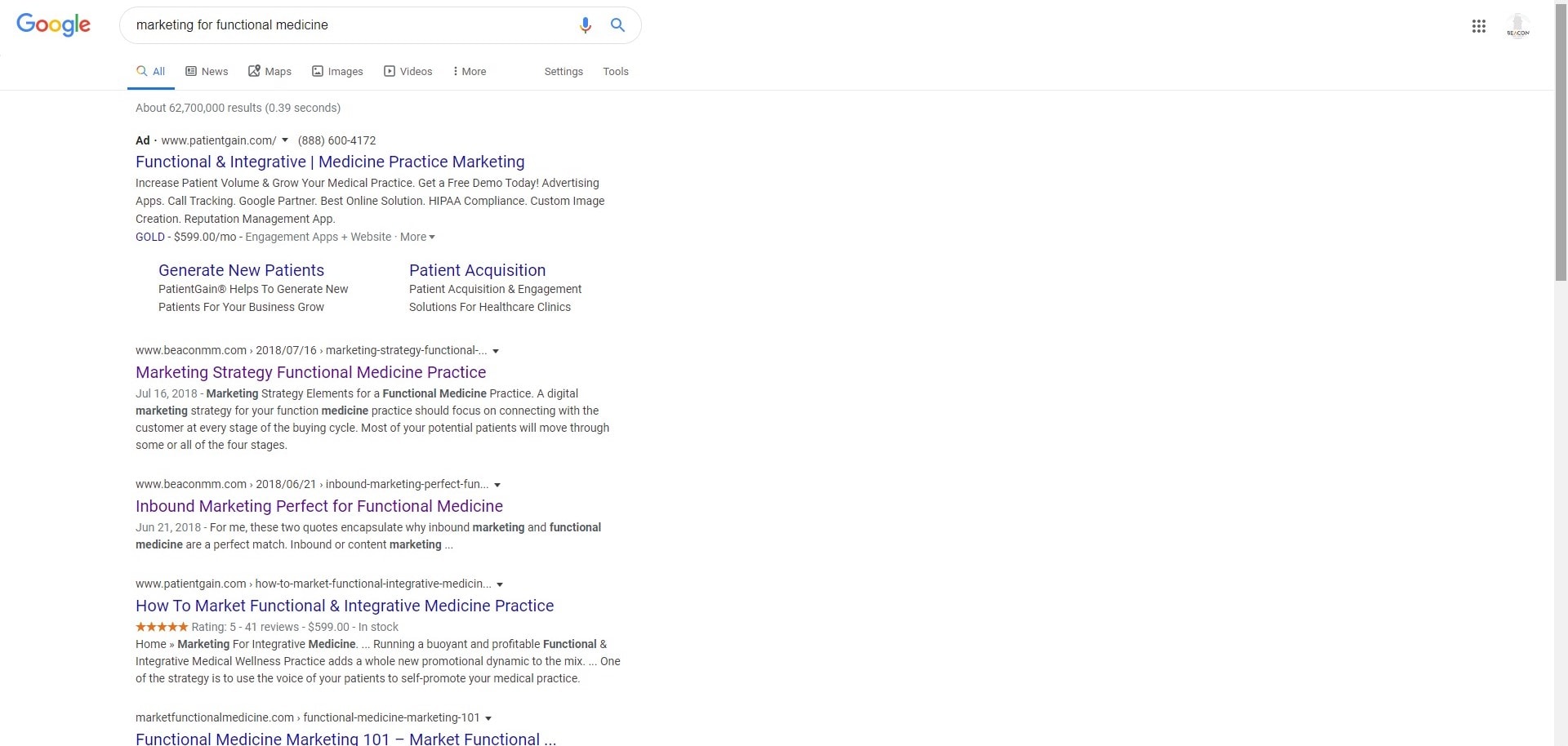
Two years ago, we decided we wanted to move into the functional medicine sector. Our first steps in this direction were to start blogging about it. We wrote blogs about each of the services we offer, targeting the keyword โ€œfunctional medicineโ€. Within a few months, we had our blog posts ranking at both #1 and #2 on Google for the search โ€œmarketing for functional medicineโ€, and weโ€™re still there today.

Education Marketing

So, how did we do it?ย 

We used a few simple tricks of the trade that you can also use for education marketing.

  1. First, we ensured that the blogs we wrote were of the specific length that works best for Search Engine Optimization (SEO). This changes every so often, depending on updates to Google’s algorithm, so make sure you research it now and then so you’re up-to-date.
  2. Second, we had a focused keyword strategy. This involves writing certain keywords that you want to target in your text and headings. For the functional medicine blogs, these included โ€œfunctional medicine,โ€ โ€œmarketing,โ€ and โ€œinbound marketing.โ€ย ย 
  3. Finally, we ensured our posts are well optimized, work on mobile, are fast-loading, and have correctly set metadata. Metadata just means the information you provide Google about the contents of your blog, so they can determine how relevant it is to searchers.ย 

Although we ranked these two blog posts at the top of Google, that was only part of our goal. The main objective of this was to generate leads. By having these blogs at the top of Google, we generate more leads to our website which converts into more sales. These two blogs now constitute a key part of our sales funnel!ย As you can see, these strategies are super simple and effective, so make sure you include them in your education marketing plan.

Case study: Mandanas Dental blogs

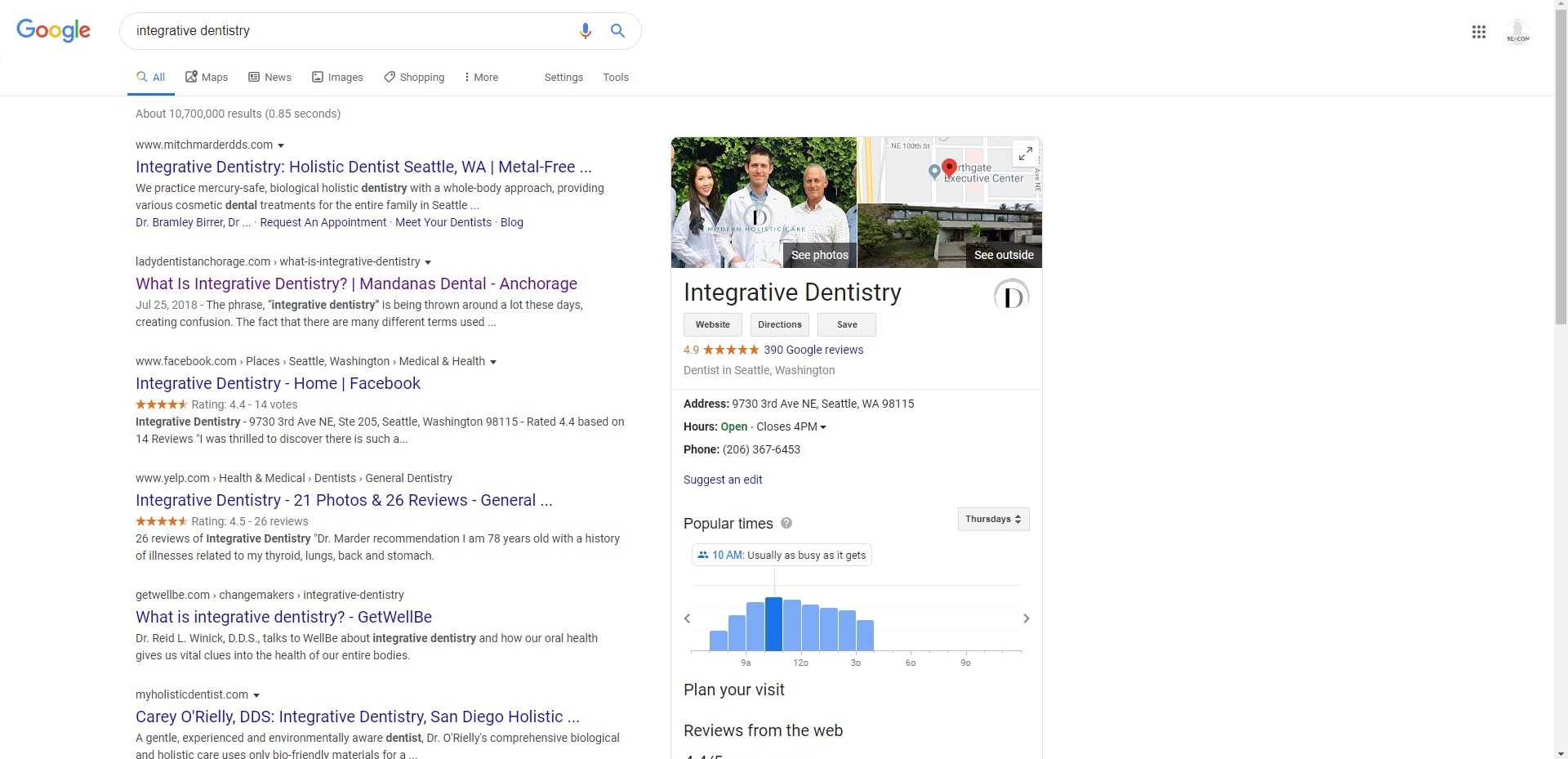
We donโ€™t just keep our secrets to ourselves, either! Weโ€™ve also used these strategies to help our clients find success. One of our longest-standing clients, Dr. Owen Mandanas, decided a few years ago that she wanted to shift her focus to include integrative dentistry. Naturally, we started blogging on the subject!

Using the same techniques as for Beacon, we managed to rank Dr. Mandanas on the first page of Google. We’re so happy to have been able to achieve this for such a valued client. This approach to blog writing uses the inbound marketing philosophy, which will form the backbone of your education marketing strategy.

Weโ€™ll discuss in the next section.ย 

Education Marketing


Have we persuaded you? Let’s talk strategy.

Proven methods of education marketing

Okay, by now you’ve got a sense of the power of blogs and the impact they can make on your education marketing strategy. Next, we’re going to discuss some proven methods for writing successful blogs, including the inbound philosophy, question answering, and the waterfall method. These are all techniques you can use when writing your own blogs – whether you’re marketing a private school, a home school, or a specialty program.

Inbound philosophy of education marketing

The inbound marketing philosophy is a simple concept. People are online all day, every day, which means putting quality content in front of them is easier than ever. The core of the inbound education marketing philosophy is that if you consistently provide useful content to people, they will remember you and seek you out when they need your services. Imagine your customers are a cat. If you chase the cat it will run away from you, but if you have what the cat wants, it will come to you!ย So, how do you go about enticing the cat?

The first step to developing your education marketing plan is to researching what your customers are interested in. There are tools available to help you find out what searches people are making on Google (we use one called keywordtool.io). Once youโ€™ve identified what people are researching, you can write blogs on it. People typically ask questions on Google, so answering these can be an effective way to provide quality content.ย 

Use education marketing to answer questions

Weโ€™ve established that people use Google to ask questions, and that answering them is a highly effective method of providing quality content through your education marketing plan. If your blog is what people are relying on when they want to know something, theyโ€™ll remember you when they want to buy something.ย ย 

Remember: Be there for them when they want to know something, and theyโ€™ll be there for you when they want to enrol in something.

Hereโ€™s a quick rundown of our process for blog writing:ย 

  • Keyword planning โ€“ We use Googleโ€™s keyword planner to find out what the most searched topics are, and what kind of competition there is for answering those questions.ย 
  • Finding questions โ€“ Next, we use Keywordtool.io to identify what questions people are asking about those topics.ย 
  • Writing โ€“ The next step is the most obvious, write a blog answering that question! When doing this it is important to include your keywords frequently, while flowing naturally.ย 
  • Setting the metadata โ€“ Weโ€™ve mentioned this before; basically, it’s the process of setting the title, description, and keywords in a format that Google can use to populate your result.ย 
  • Schedule โ€“ Itโ€™s important to be consistent if you want the best results. We recommend to our clients that they blog at least 1-2 times per week, but even with a minimal strategy, you can expect to see results in 6-9 months.ย 

Want to apply this to your marketing plan? Our team can help.

Waterfall blogging is perfect for education marketing

The waterfall method of blogging is a highly successful method of getting your posts to rank on Google. One important thing to factor into your strategy is the inclusion of backlinks.ย Backlinks are links to your website from other credible websites. Google highly rates backlinks, so we can set up links to other posts in our own blog posts. This is a great way to organize posts, which you can use successfully for your education marketing strategy.

Hereโ€™s an example of a waterfall we created for some recent mental health blogs:ย 

As you can see, this looks a bit like a descending waterfall, with multiple layers all linked to one another (and to this blog too!). You can use this to discuss your programs, teaching style, student services, and more.

Link between SEO and education marketing

Search Engine Optimization (SEO) is the practice of using tools to help blogs your produce as part of your education marketing strategy rank on Google.ย This involves setting the keywords that we have chosen to target, and which we have used throughout the blog. We make sure to use them in the text, in the headers, and in the URL. We also set a featured image, as this boosts Google ranking, and write a custom excerpt which is displayed on the results page, this ensures that the text is displayed fully, and doesnโ€™t end with an ellipsis.ย 

In addition, we chose a title of the length that is shown to be most effective in catching peopleโ€™s attention and using certain power words that have been shown to gain clicks.ย We hope that this has been a useful insight into some of the tips and tricks that we use to drive engagement with our blogs. If youโ€™d like to learn more you can check out other posts weโ€™ve published on digital marketing.ย 

Ready to talk to the experts? Schedule a free consultation today.

Originally published on July 20, 2015. Updated on March 4, 2020.

Back in the 1960s, marketing was relatively straightforward. Let’s be real, you’re probably picturing the orange tones and box pleats of the advertising world featured in the TV show Mad Men,ย complete with boardroom discussions, concept presentations and an expensive media buy.

The industry was turned on its head with the emergence of the Internet in the 1990s. The past 20 years have seen drastic changes, with advancements in technology and the development of social media.ย Let’s quickly compare traditional marketing and digital marketing.

From bricks and mortar to online

THEN: Most businesses only had physical locations. This meant it was much more difficult for new customers to find businesses they had never heard of, that is, unless they saw an advertisement somewhere. They couldnโ€™t look up anyone for reviews. And what were you supposed to do when you needed to contact a business? Remember their phone number? Or use a PHONEBOOK? Word of mouth was king and reputation was everything when it came to owning a local market.

NOW: Many modern businesses no longer require physical locations, operating completely online. Many have both. Some have physical locations only. As time passes, it’s becoming increasingly difficult to do business the old-fashioned way, because having on online presence means missing out on a huge potential expansion of customers. Customers want convenience and trust. By that, we mean they want to be able to find you easily when they need you, and they want to be able to look you up in advance to make sure you offer exactly what they’re looking for and that you’re reputable.

Having an online presence is critical in 2020. Schedule a free consultation today to talk about your website needs.

From monologue to dialogue

THEN: Marketing was a one-way street, informed by gut-feel and educated guesses. Companies would give snippets of information to potential customers, trying to persuade them to buy or use their products or services. To a large extent, customers were unaware that other options existed. If someone bought a car from Ford, for example, they were likely to continue buying from Ford because that’s what they had used in the past and they knew it to be trustworthy and reliable.

NOW: Engagement is crucial to success in a digital world. Customers feel like they can trust a company that engages with their customers, because that reminds them that they’re dealing with real people. It’s a two-way street, because businesses can utilize the feedback given via the Internet to come up with new ideas and solve problems. Furthermore, positive reviews go a long way to encouraging other potential customers to take the plunge. These are marketing gold.

Read more: 10 tips for optimizing your social media presence.ย 

From outbound to inbound

THEN: Traditional marketing focused on the idea of taking your business to your customers. Huge amounts of money and time were invested in buying advertising space on billboards, newspapers and magazines, as well as commercial slots on television and radio. Sales people would cold-call people and go door-knocking to find new business. Essentially, information was forced upon the public, casting a very wide net in the hope of getting a few bites from the right buyers.

NOW: Digital marketing focuses on the idea that customers will find you when they want you. As such, the idea is to make yourself as easy to find as possible. This means an active digital presence, quality content on your website and social media channels and a strong focus on search engine optimization (SEO). Rather than shouting, “buy this!” you can think of it as saying “enjoy this information we’ve provided.” Your content needs to be educational, helpful or funny to build trust with potential customers. A stellar website is key to helping your company reach its potential.

Ready to get started? We are a digital marketing agency based in Anchorage, AK, and Reno, NV. We work with clients all over the United States. Schedule a free consultation!

Next-level digital marketing

Every successful digital marketing strategy requires three basics: a website, a social media presence, and quality content. You can spend as much or as little as you like when it comes to establishing your digital presence and getting started. The most important thing is simply that your business exists online so that potential customers can find you easily.

Here’s how to take your digital marketing strategy to the next level:

Website

Your website sets the foundation for your entire strategy. Good design can lead to stronger connections, more sales leads and a better conversion rate. If you’re transferring to digital from a traditional marketing strategy, it might help to think of it as an online brochure that showcases your products and services and gives customers an idea of what your business is about.

Here are the most important things to keep in mind:

  • Lead generation: Didn’t think you could get a measurable ROI from a website? Yes, you can.
  • Automation: Your website will act as a virtual sales rep, qualifying leads while you sleep.
  • User experience: Guide your prospects on a journey that leads to doing business with you.
  • SEO optimization: Gain more customers because they can find you online when they need you.
  • Mobile optimization: Most web visitors use mobile devices. Use that to your advantage.
  • Multimedia optimization: Videos and graphics create human interactions with customers.
  • Professional appearance: Bring in the right customers by creating the right first impression.

Sign me up! Click to learn more about our website and development service.

Social Media

Social media is the best way to connect with the people who want to do business with you. The key is to prioritize genuine customer engagement. There are lots of different theories about how to do this best, but we think it’s simple: remember you’re talking to HUMANS. Lots of companies fall into the “sell, sell, sell” trap, but the truth is that prospective customers are real people with real problems.

Here are some things to consider in developing your strategy:

  • Team brainstorming: Good ideas can come from anywhere, so utilize your full team.
  • Campaign objective: Define a clear and measurable goal for every campaign to stay consistent.
  • Campaign budget: Run your ads at the budget that will receive optimal ROI and save.
  • Target audience: Delivering your message to the right people will make sure they take action.
  • Editorial calendar: Know what’s coming up next in your social media content and promotions.
  • A/B testing: Test your ads and audiences to learn what works and optimize messaging.
  • Creative media: Show people interesting content that encourages them to engage.
  • Reporting: Daily monitoring and regular reporting is critical to success.

Not sure where to start? Learn more about our social media marketing service.

Quality Content

Imagine a world where you’re at the top of every Google search. Sounds good, right? It all comes down to content marketing. Quality content generally comes into two forms: articles and videos. The idea is to create content that is wonderful to consume while being full of keywords that will help you rank on search engines, working hard to flood your business with qualified leads.

Here are the basic concepts you’ll need to get started:

  • Editorial calendar: Make sure you cover your bases and stay inspired for the future.
  • Best practices: Trends and algorithms change, so stay up-to-date with the latest advice.
  • Headlines: Get clicks with headlines that have been approved by a title optimization algorithm.
  • Subject matter experts: Interviews with experts will position you as a thought-leader.
  • Research: Make sure you share good information that is accurate and interesting.
  • SEO: Use keywords, metadata and backlinks to make sure your content ranks in search.
  • Multimedia: Good images and videos go a long way to increasing engagement and trust.
  • Calls to action: Your content needs to create results, so include a strong call to action.

We get it, this is a lot to take in.ย Learn more about content marketing and video marketing.

To go ahead and get started, book your free consultation today!

Meeting the challenge of integrating digital and traditional marketing…the struggle is real!

We can pretty much all agree that digital marketing is here to stay. Websites, SEO, social media marketing, blogging, pay-per-click, email marketing, digital ads, video content; it all comes together to form digital marketing. And many businesses are struggling to integrate their traditional marketing with their digital. So if you are overwhelmed, you are not alone.

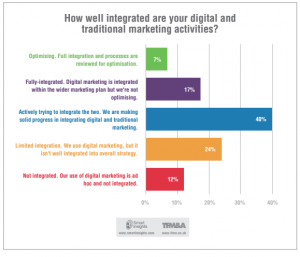
How well integrated are your digital and traditional marketing activities?
Infographic courtesy of Smart Insights

The digital world and all of its rapid changes have disrupted the way we communicate and therefore market in a momentous way. This means we have to adapt or our marketing lags, which affects business and none of us what that. But should you jump 100% into digital marketing leaving traditional marketing methods goodbye? We say not really and not yet. Thought that leads us to the next question, what challenges do we face in pulling the two together? Here’s what companies polled by Smart Insights had to say…

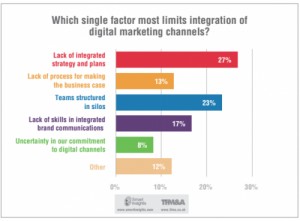
What single factor most limits integration of digital marketing channels?
Infographic courtesy of Smart Insights

As you can see, for the most part, companies struggle to have a plan for bringing the two sides together followed closely by the silo conundrum. So let’s have a look at these two problem areas.

First, Lack of Integrated Strategy and Plans:

We see this most in companies trying to do it all on their own. Often whoever has had the responsibility for placing ads (i.e., print, radio, TV, etc.) gets tasked with figuring out this whole digital thing and throwing some time and money at it. There are several inherent issues with this.

  1. Time may seem like a silly problem to start with, but it is often the one we see the most. While digital marketing is not rocket science, it takes much more of an investment of time that traditional marketing. In traditional marketing, an ad gets created and sent to the magazine or radio station to run its course. In digital marketing, fresh content has to be created every day, often multiple times a day to see a return. This is a total shift in theย allocation of time and thought process.
  2. Research is also a big time sucker since digital marketing is evolving as rapidly as technology, so pretty much beyond the speed of light. Seriously, you’ll get whiplash trying to keep up with every new social media channel out there.
  3. Original content is the name of the game when it comes to digital marketing but where do you come up with all of that original content? It can be a real challenge to keep coming up with fresh, engaging content for your target audience.

The solution is to make sureย enough time is devoted to creatingย quality content; which is true regardless of whether it is an in-house person or a marketing company who is doing the work. And enough time must include research into new trends as well as in the production of content. We recommend at least an hour per day just for research, which is what we build into our content creators’ and strategists’ daily schedules. Also having a team to brainstorm content ideas makes a huge difference in the quality of the content.

Second, Teams Structured in Silos

Now let’s say you decidedย to hireย a separate person to tackle this whole digital marketing thing. While that often can sound like a good idea, in theory, most companies find that it creates more challenges that it solves. Here’s our take on it.ย Digital marketing is often intimidating because of how closely tied it is to technology and therefore how often it radically changes. Having two marketing specialists can create a disjointed marketing presence if each specialist is just focusing on their channels. Instead, it is more critical than ever before to make sure that your company’s marketing, it’s messaging is consistent across all channels, digital and traditional. Marketing is marketing, regardless of the channel used.

The solution here is to look at marketing as a whole. While different techniques must be used to implement the message depending on the channel, it is key to keep aย special focus on the consistency of the story across the board. Often it takes a great deal of creativity to figure out how to best represent the message between the different mediums.

So it is vital to make sure your marketing staff or your marketing company can look at the whole picture of your marketing. They need to understand that it is critical to integrate your traditional and digital marketing to ensure efficient and effective marketing.

If you are interested in how we pulled the whole picture together at Beacon, we would love to have a chance to chat with you about how powerful integrated marketing can be. Give us a call at 907-563-6008 or shoot us an email at [email protected].

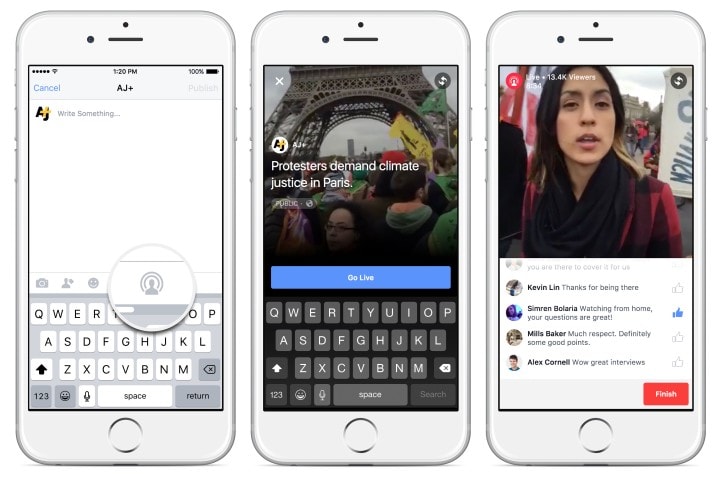
Facebook has been rolling out it’s live streaming video feature in waves for the last four months. Live let’s youย connect with real-time videoย to your friends, fans, and followers on Facebook. It is currently available to people with an iPhone and has been available to celebrities, athletes and other verified public figures via the Mentions app since August. Live is consistent with Facebook’s increasing dedication to video as a medium.

“Video is one of the most engaging and immersive ways to tell your story. Whether capturing breaking news, a babyโ€™s first steps, or rising to a friendโ€™s challenge for charity, it is a remarkable storytelling medium. Video uploaded directly to Facebook is an increasingly important part of News Feed, and more people than ever before are sharing, discovering, and engaging with videos that they care about.”Byย Fidji Simo, Product Management Director, Video, Facebook

Though Facebook is late to the live-streaming scene behind companies like Blab, Periscope, and Meerkat the sheer volume of their user base gives them a leg up on the competition. For businesses, it means that the time invested in producing and distributing streaming video could have a much larger reach and a better ROI.

Facebook is currently testing live video with selected, verified, business pages and is suggesting that a roll out to all pages could come soon via their Pages app. We recommend companies start brainstorming now on creative ways to integrate this powerful new tool into their social media marketing strategy so they are ready to roll out as soon as it’s available.

Facebook Live

Here are a few suggestions for how to be effective using Live for your marketing.

  1. Use effective headlines: When your followers are making the decision to follow your live video stream, all they will have to go off of it the title. Make it interesting and catch their eye.
  2. Have a plan: Know what you are going to talk about before hand. This doesn’t mean script every second of the broadcast, in fact casual and “real” is more effective. But have a topic and a goal in mind before you start.
  3. Do a Q&A: Invite people who are following to ask you questions and answer them live. Or get a list of questions before hand and answer them live.
  4. Behind the Scenes: Show live video from “behind the curtain.” Do a quick snap shot of a day in the life, or how your team brainstorms creative solutions.
  5. Show and Tell: Show your expertise by walking through how to do a technique or make a product in simple, easy to follow steps.

If you are interested in Facebook Live and want to talk about how it could be a creative solution to marketing your business, we would love to talk with you. Give us a call at 907-563-6008 or email me at [email protected].

We spend a significant portion of our prospect meetings going over what exactly the Inbound Marketing plans should include. It’s usually a rather lengthy discussion dependingย on the particular client’s needs. Though there is a list that we recommend for most clients (a foundation if you will), it is important to customize each package to the client and their goals. A lot of the conversation seems to circle around how each of the different pieces of the plan willย help that particular business.

Comprehensive Inbound Marketing Package

The way we see it, there are about 10 pieces in a full program. Not every agency will include all of these elements, but for clients willing to invest in the whole Inbound Marketing experience this is the way to go!

  1. Ongoing Strategy & Analysis.ย An effective strategy is built on an understanding of the client’s goals and their target audience’s persona. We invest a lot of time in understanding whatย exactlyย motivatesย those you are trying to reach and how we want them to respond. Making sure we consistently hit that moving target requires ongoing analysis of the data from our efforts. We continuously adapt our strategy according to the data to ensure your ROI is as high as possible. Part of what makes this possible is your account manager.They are your advocate within our company, and they keep an eye on the analytics. Your account manager makes sure your Inbound Marketing strategy is running smoothly and handles any challenges that may come up.
  2. Social Media Publishing & Monitoring. We create custom content, publish it and monitor the responses coming into your social media channel. In the creation of content, we will incorporate royalty-free photographs, custom videos, etc. We act as our first responders, so you don’t have to worry about the response time. In most circumstances, we will respond within an hour. The most effective social media channel for your business will depend in part on where your company is in the US and where your target market is currently interacting. For a robust strategy, we recommend 2-3 channels. For example Facebook, Instagram, and Pinterest or Facebook, Twitter, and SnapChat. For some clients, we focus on just one.
  3. Blogging. Quality, relevant content keeps your website current and increases your leads by two-thirds (according to a recent HubSpot survey). The best way to keep your website updated is to blog regularly. For smaller blogging packages we post twice a month, but ideally, we postย once or twice a week. Our dynamite content creators write custom blogs based on questions your target audience is asking. By answering these questions, your website rankings increase as do your leads and conversions.
  4. Content Creation. Putting out quality content is critical to a successful Inbound Marketing strategy. Content varies from webinars, YouTube videos, to whitepapers, infographics, and more. Our content creation process typically involves idea creation and research, copywriting (if needed), artwork/photography/videography, SEO optimization, web design and coding (if necessary), and publishing.
  5. Landing Pages. When people are looking for a particular service or product, they often do not want to dig through your entire website and will bounce off your site before “converting” to a lead. The solution to this is to provide a “landing page” that focuses in on a specific service, offer, product, or piece of information that is of particular interest to the end user. When an interested party clicks on a PPC (Pay Per Click) ad of Google, a Facebook ad or a sponsored or promoted post it will take them to a landing page on your site. The user must then provide some basic contact information to access or receive what they are looking for. It is a “win-win” for both parties. The end users get the information they need, and our clients receive contact information for future marketing.
  6. Pay Per Click (PPC). Is also called cost per click,ย is most often referring to Google AdWords, but Facebook has increased their ad system. In both cases, we leverage Google or Facebook’s targeting systems toย ensure the ad shows up to the right target market. Our clients only pay when someone clicks or in some way interacts with the ad. We employ PPC to direct traffic to our client’s websites and their landing pages.
  7. Google SEO and Web Maintenance. Search Engine Optimization (SEO) can be a confusing term to grasp and this is in part because it is another moving target. Google is constantly changing their search algorithm, that thing that determines which website ranks where in attempts to improve the user experience. Blackhat marketers are always trying to figure out ways to fool the system. So there is never a clear target for long. We make marked efforts to stay on top of the newest Google requirements to ensure your website is organically ranking in a way Google approves of. This, in turn, keeps your site on good terms with Google, so it doesn’t get blacklisted. We spend time each month updating keywords, manually managing link-building, etc. Additionally, we maintain content on your website as needed for staff changes, new services, and more.
  8. Email Marketing. It is not enough to just collect lead information; you must have a system to follow up with those leads. Email marketing through newsletters sent out at regular intervals is a powerful way to foster and develop leads into converting to regular customers.
  9. Video Content.ย Facebook now has more videos being uploaded every day than even YouTube. Videos are becoming the most widely viewed content on the internet. On social media, 15-30 second videos are the most effective. We work with clients to create the strategy, record and post the videos on various social media channels.
  10. Campaigns & Special Projects. Finally, campaigns can span multiple marketing methods and greater periods of time. They are a concerted and coordinated effort to push out a specific message or to tell a story. The size of the campaign will vary depending on the budget, the goals, and the impact required. We bring the full weight of our diverse creative team to bear for our clients to put together effective, innovative strategies that achieve their goals.

We love sitting down and brainstorming with our clients to come up with the best plans with the most value. If you are interested in what Inbound Marketing can do for your business, please click on the link at the bottom of the page for a free consultation or drop me a line at [email protected]. I look forward to hearing from you!

This blog was originally published in November 2015, but was updated for content and accuracy.ย 

“67% of the buyers journey is now done digitally.” -Sirus Decisions

The value of Inbound Marketing is unequivocal, and there is no denying the preponderance of evidence the data shows us (channeling my inner Law & Order here). When done correctly, inbound marketing is far and away the ROI champion in the marketing arena.

There are several reasons no one can even come close to competing for the ROI crown. One big reason is that consistently doing inbound marketing creates company assets that grow even without any additional investments. Each and every piece of published content ย (i.e. blog, landing page, white paper, video, etc.) continues to build value even over time.

Blogs deliver compounding returns over time
Graph courtesy of Tomasz Tunguz at Redpoint

One great example is this blog by Tomasz Tunguz on “The Compounding Returns of Content Marketing”. His data shows a steady and consistent growth rate of 8% per month from core readers and 10%
per month from spikes (when a post becomes intriguing to a larger group). That is 18% per month with no additional investment of resources over a 12 month period!

In another example from HubSpot, we can see that over 90% of the leads fromย their blogs come from old posts and 56% of the leads they generate come from marketing they are no longer actively participating in.

But let’s get down to the stats you really came to this blog for.

  1. Last year, 67% of surveyed B2B companies said Inbound Marketing was a top three or very high priority in their marketing strategy.
  2. 67% of B2B marketers see a 10% or more increase in sales opportunities throughout the sales funnel when lead nurturing is used. (DemandGen)
  3. 32% of surveyed brands have decided to reallocate marketing budget from outbound to Inbound Marketing.
  4. Of the surveyed marketers, 23% of their overall marketing budgets was earmarked for outbound marketing and 34% for Inbound Marketing practices. (Gannett Local)
  5. Businesses who focus primarily Inbound Marketing save more than $14 per each new customer. (State of Inbound Marketing)
  6. When compared to paid search, mid-sized businesses save on average 31% on Inbound Marketing costs. (Eloqua)
  7. B2B buyers seek out to the following top 3 sources while researching a purchase decision: Whitepapers (78%), Case Studies (73%), and Webinars (67%). (DemandGen)
  8. Inbound leads cost 61% lessย on average than outbound leads. (HubSpot)
  9. B2B companies that blog at least 1 or 2 times per month generate 70% more leads than the companies who donโ€™t blog. (HubSpot)
  10. After five months of consistent inbound marketing, the average cost per lead drops 80%. (Eloqua)
  11. Inbound Marketing yields 3 times more leads per dollar than traditional methods. (Kapost)
  12. Nurtured leads will most often make 47% larger purchases than non-nurtured leads. (The Annuitas Group)
  13. Companies that excel at lead nurturing generate 50% more sales ready leads at 33% lower cost. (Forrester Research)

If any of these stats catches your eye and you would like to know how if Inbound Marketing could work for your company, I would love to chat with you. You can even see some of the results we have gotten for our current clients on our portfolio page. You can reach me at 907-563-6008 or via email. I look forward to hearing from you.

This blog was originally published in August 2016 and has been updated and republished.

This app is gaining popularity daily and has an incredible subscribing rate for users. Welcome to Snapchat. Maybe youโ€™ve heard of the simple picture sending messaging app and its main audience of mainly millennials? Whether youโ€™ve discovered this selfie centered app, or seem stuck using just one social media platform; youโ€™ll soon see this app isnโ€™t going away anytime soon. With over three hundred million users this app has quite the potential to help some businesses grow! However, before we get ahead of ourselves, how does Snapchat work?

There are two basic parts to the app interface. First is the friends list. best_friends_new-591789648This tab categorizes your followers into a simple list so that you can keep in organized contact with them. Second is the Snapchat story.
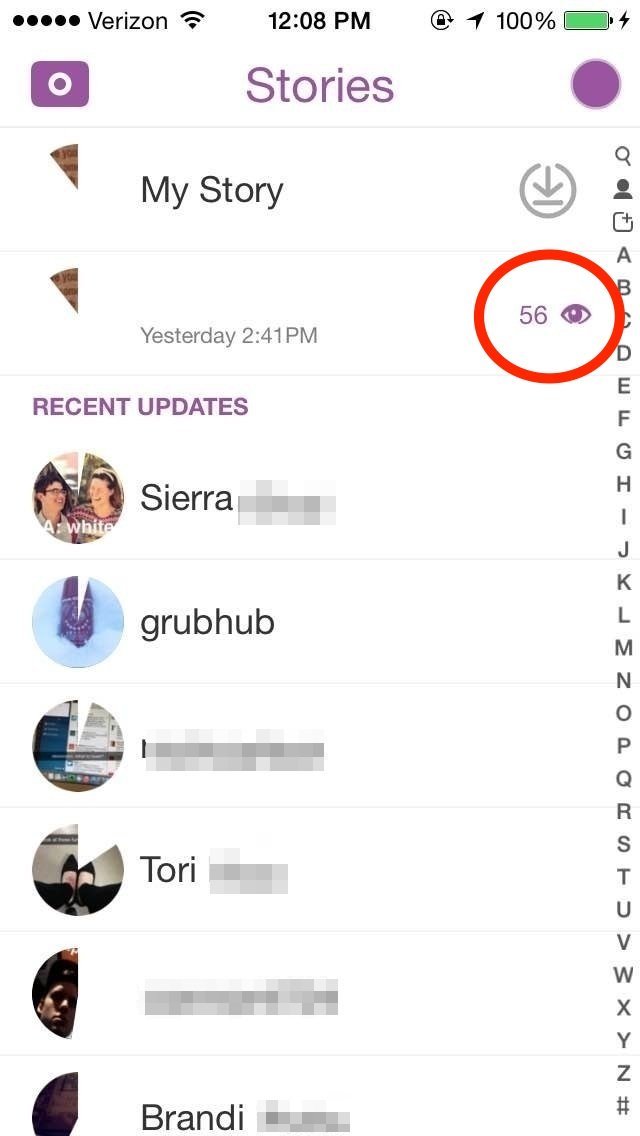

The Snapchat story tab is the unique feature that your business will focus on. Here you can post pictures or snaps to your story, which is a picture img_3675-6for all of your followers to view. However, this post only lasts for 24 hours; so constant maintenance of your businessโ€™ story is recommended. The story allows you to advertise a product to your customers. Hereโ€™s an example: If a cafรฉ owner is running a business, they might take a picture of their latte of the day to draw in customers. Depending on the amount of followers your business has, you gain more views for the snap of your latte, which promotes your business.

To recap, Snapchat is new, fast moving social media channel targeting the millennial generation. Its ability for easy responding and free advertising options make it a very usable and powerful marketing tool. The downside is that it will take a significant time commitment to learn and leverage the tool and while it is growing rapidly, it is still has limited audience reach in terms of age demogaphics. However, with very few businesses taking advantage of the technology, it is a chance to be a marketing leader and try it out? If you are interested in talking about if Snapchat is right for your business, give us a call or drop us an email. We would love to sit down and chat with you.


How is Pinterest Changing the Online Shopping Game?


You may be aware that earlier this year Pinterest went from being a dangerous time warp, to an addictive online shopping experience, with the addition of buyable pins. The page has just added a new feature that will affect the wallets of Pinners all over the world. If you are someone who cannot passย up a good deal, be warned, Pinterest now can send you app notificationsย and emails when the price drops on your pinned items. Retailers are able to add this โ€œbuyโ€ button to their pins which enables the users to purchase straight through Pinterest.

Pinterest is continually evolving their website’s usability, creating a new kind of shopping experience. The โ€œbuyโ€ button feature is targeted toward a customer that may not make impulse buys, but would rather monitor the product and wait for a killer sale. However, the impulse shoppers are not forgotten; if a Pinner enters in their credit card information and address, they are able to make instant purchases anywhere on the app. Turning online shopping into a quick, affordable, and fun experience.ย 

This buyer friendly feature also entices the customer to return to their pins over and over, which increases the site visits for Pinterest. The shopping experience is a changed game and Pinterest is on the forefront of it. Companies and retailers should take advantage of this creative site and its 70 million users. This can be done by creating profiles and boards to advertise their products and services.

The more creative you make your posts, the more pins and shares they will likely get. Before you know it your product could be posted on thousands of usersโ€™ boards, with a strong likelihood of high conversionsย due to the addition of the new โ€œbuyโ€ button.