Industries

See Our Blogs

Explore insights on SEO, AI, and digital marketing strategies designed to help your business grow, stay visible, and adapt in a constantly evolving online landscape.

Beacon_Icon_resouse

In the digital age, where we’re so accustomed to information being a short click away, a well-designed website becomes a crucial gateway to generating new client growth — especially in the world of behavioral health. As such, the art of behavioral health website design goes beyond aesthetics; it involves creating a user-friendly and empathetic virtual space that fosters connection, provides valuable resources, and supports individuals on their wellness journey.

Let’s face it, it’s a reality that the majority of individuals initiate their search for a therapist through sites like Google. When exploring potential behavioral health providers, people commonly turn to a clinic’s website as their initial point of reference. Similar to other mental health websites or business platforms, the significance of having a well-designed website cannot be overstated. With this in mind, relying on listing your practice in a therapist directory is grossly insufficient for mental health marketing — especially when it comes to meeting the comprehensive needs of online visibility and user engagement.

In the following, we’ll explore the nuances of website design and highlight key elements and considerations that make behavioral health website design an art form in itself.

Need help reaching Behavioral health clients in your area? Check out our full suite of Behavioral health marketing services.

What Do Behavioral Health Clients Want?
This is a question that you must know the answer to. More importantly, you should also understand the nuanced needs of your target audience.

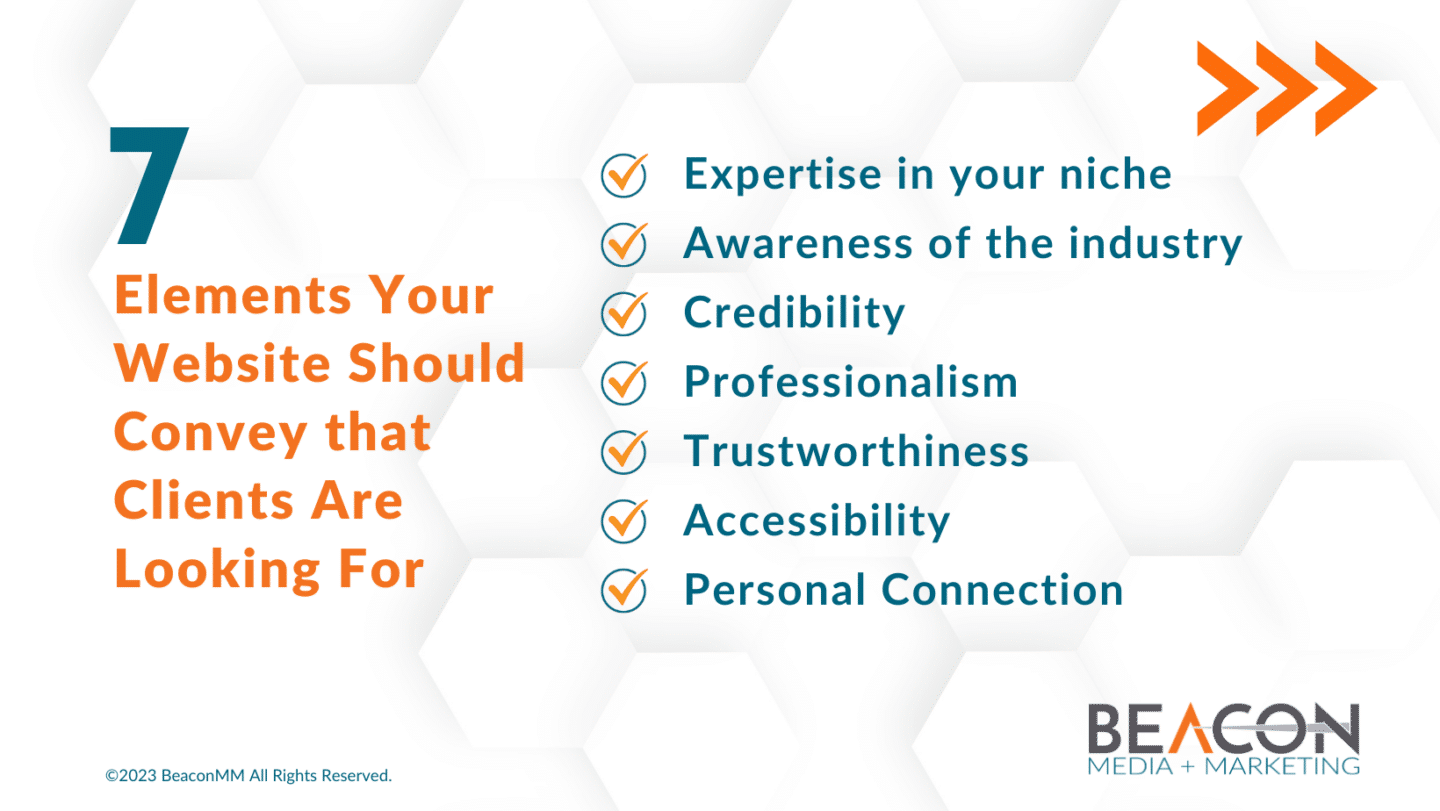
Your potential clients likely care about the following:

  • Your expertise qualifies you to address their behavioral health concerns and mental health issues effectively.
  • Your practice is characterized by mental health awareness, credibility, trustworthiness, and professionalism.
  • Your clinic is both accessible and relatable to individuals seeking support.
  • Establishing a personal connection is achievable, fostering a deeper level of engagement with your audience.

Your Behavioral Health website should:

  • Serve as the final destination for prospective clients before scheduling an appointment with you.
  • Provide a comprehensive repository of information, including details about your services, specialties, operating hours, location, testimonials, and therapist staff.

Keeping Your Behavioral Health Web Design Up To Date

At Beacon, a common inquiry we pose to our clients is, “When did you last update your behavioral health clinic’s website?”

Given the continuous evolution of web technologies, it is widely recommended to refresh your mental health website design every two to three years. If your last website redesign dates back five years or more, it is likely advisable to initiate plans for a comprehensive overhaul.

Perform a Key Features Audit

Cultivating the practice of regularly reviewing your website is an excellent habit. In addition to evaluating your site based on the items outlined in our Behavioral Health Website Design Checklist below, it’s essential to consider the following:

  • Is my website aligned with current website design trends?
  • Are there any changes in my behavioral health center that are not currently reflected on the site?
  • Is my copywriting easily readable, addressing user questions, and free of errors?
  • Should I consider hiring or parting ways with a digital marketing agency to efficiently manage this aspect of the business?

At Beacon Media + Marketing, our dedicated website design services are tailored to not only enhance the representation of your practice but also to foster significant growth for your behavioral health center. Our team is committed to creating an online presence that effectively communicates your center’s values, engages your target audience, and ultimately contributes to the expansion of your impact within the mental health community.

Engage in a Reflective Session to Define Your Behavioral Health Website Objectives

Prior to embarking on the creative journey, take a moment to reassess the goals you want your website to meet. Analyze the strengths and weaknesses of your current website design. Most importantly, define your ideal client and critically assess whether your existing website resonates with and appeals to them effectively.

What Does Your Team Think?

Believe it or not, collaborating with other mental health professionals on your team is essential when it comes to defining goals and prioritizing objectives.

For example, you can initiate the brainstorming process by engaging your behavioral health team — setting aside dedicated time to collectively review the website and aiming to gather insights from the entire team regarding what works and what doesn’t.

Conversations with team members offer a valuable advantage, as each individual brings a unique perspective to the table. For example, your front desk team may identify client scheduling issues or highlight challenges in locating new client paperwork. Therapists can contribute by pinpointing missing services, identifying broken links, or flagging outdated and irrelevant informational content.

For a comprehensive approach, you might even consider inviting a selection of patients to provide feedback on what they appreciate about your website and suggestions for improvement.

Define Your Strategies and Articulate Your Brand Message

At Beacon, as we embark on a new web design project, we guide our clients through the following inquiries:

  • What are your growth aspirations, and where do you envision your Behavioral Health clinic in 5, 10, or 20 years?
  • How does the goal for this website design align with your broader growth plan?
  • When visitors land on your site, what specific issue or challenge are they seeking to address?
  • Are there particular websites that resonate with you? If so, what aspects do you appreciate about them?
  • Do you already possess a branding package, including elements like a logo, colors, fonts, and visual assets, that we can incorporate into this design?

The objective behind addressing these questions is to develop a roadmap outlining essential features and objectives for your upcoming website design. This comprehensive roadmap serves as a valuable guide, ensuring that your new website aligns seamlessly with your vision and goals.

Are you ready to make an impact with a new behavioral health website? Reach out to Beacon Media + Marketing today and schedule a free discovery call.

Define Your Website Design Structure

Following collaborative discussions with your team and the establishment of your overarching roadmap, it’s now crucial to delve into the specifics.

To effectively steer the web design process, the creation of two fundamental documents is essential: a site map and a wireframe.

What is a site map?

A site map is a visual representation, often presented as a flowchart or a bullet-point list, outlining the pages you intend to include on your website. Additionally, it indicates the placement of these pages within your navigation menu, providing a structured blueprint for your website’s architecture.

A site map for a standard five-page website can look like this:

  • Home Page
  • About Us
  • Services
  • Service A
  • Service B
  • Service C
  • Blog
  • Contact Us

You’ll notice that the example above encompasses a home page, an about us page, three primary service pages, a blog, and a contact page. Utilizing the information from the site map, you can then generate a wireframe to delineate the structure and content layout for each page on your website.
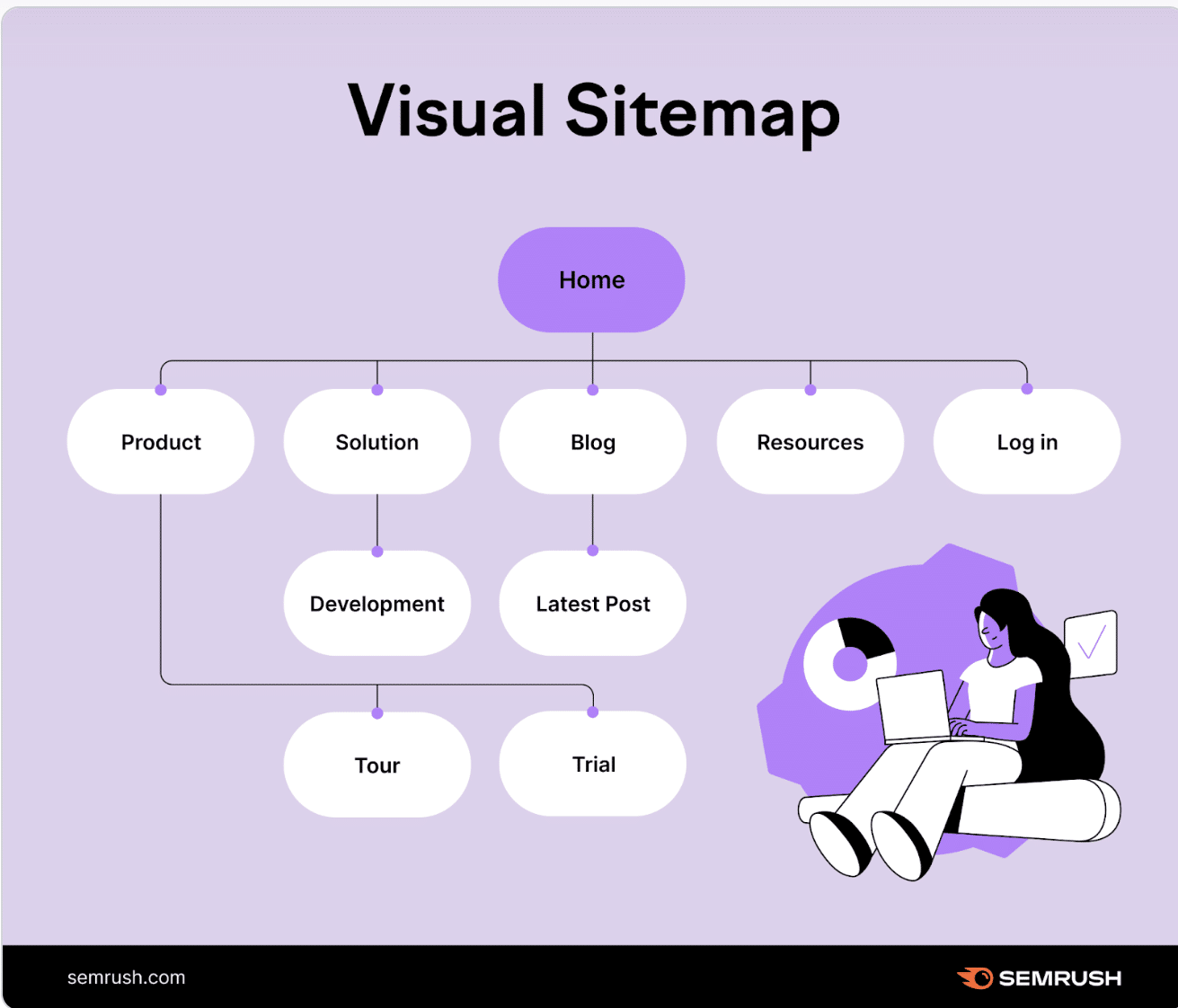
Image Credit: Semrush.com

What’s a wireframe?

As per Google’s definition, a wireframe constitutes a “set of images illustrating the functional elements of a website or page, commonly employed for planning the site’s structure and functionality.”

In essence, a wireframe serves as a detailed draft sketch outlining how you intend to organize your web content, defining its functionality and visual appearance.

Navigating Your Project Through the Use of a Wireframe

To effectively steer your web project, ensure your wireframe encompasses designated spaces for:

  • Headers
  • Images
  • Content boxes
  • Buttons
  • Form fields

If you are new to wireframing, a helpful approach is to practice wireframing an existing website. To facilitate this process, there are numerous online wireframing tools accessible. A few examples are Figma, Miro, and MockFlow, which provide a user-friendly experience with drag-and-drop functionality and pre-designed elements.

Craft Your Behavioral Health Content

Regardless of mental health services, you’re going to need precise, informative, and engaging content. This is the phase where you develop the content for your Behavioral Health website. In your wireframe, pinpoint all the headers and content boxes, as they serve as guides for where you intend to incorporate text on each of your web pages.

To create compelling and captivating content for your website design, consider the following processes:

Using SEO Keywords

The visibility of your new web design hinges on its ranking on Google. Consequently, an integral aspect of crafting web content is the meticulous research and optimization of SEO keywords.

For every web page, pinpoint one or two keywords that encapsulate the primary theme of that page and align with the key search terms potential clients use.

Take, for instance, our client, the Center for Grief and Trauma Therapy, which provides grief and trauma therapy services in Delaware. On their home page, we strategically targeted the keyword phrase “grief and trauma therapy.” Additionally, we incorporated the service location “Delaware” in a header to enhance their local SEO presence.

Keep in mind that one element of using keywords is including them in the title of the page and several of the headers. Ideally, your keywords will be dispersed evenly throughout the content.

Using SEO Effectively

Navigating the intricacies of SEO involves in-depth research and careful selection of optimal keywords for each page of your Behavioral Health website.

As a rule of thumb, we utilize various online tools at Beacon to identify the keywords employed by individuals in their web searches — especially when exploring specific topics relevant to our clients’ industries.

Some of these tools include:

·       Google Ads Keyword Planner

·       Google Trends

·       SEM Rush

·       Keyword Tool

·       AnswerThePublic

·       SpyFu

Effectively incorporating SEO keywords into your content has the potential to elevate your website’s visibility, allowing it to secure a prominent position on the first page of Google for relevant search terms in your specific geographical area. This increased visibility not only enhances your online presence but also significantly boosts the likelihood of attracting local users searching for services or information within the behavioral health niche.

Crafting Compelling Headlines

Online reading habits differ significantly, with most users engaging in quick skimming for essential information. As such, headlines play a pivotal role in providing an overview and guiding users to their desired destinations. Hence, getting headlines right is crucial for an optimal website user experience.

As a best practice, you’ll want to incorporate your keywords strategically to compose captivating headlines that not only capture attention but also succinctly convey your intended message.

In the context of Behavioral health websites, the primary objectives should include leveraging headers to connect with potential clients, eliminating barriers, and encouraging them to seek assistance.

Creating Engaging Content

Consider the type of website content that captivates your interest — likely, it’s easy to read, relatable, and genuinely helpful. In this phase, you aim to initiate a meaningful conversation with potential clients, providing them with a clear understanding of the services you offer.

Drawing on our experience at Beacon, we’ve gleaned valuable insights from developing successful behavioral health website designs.

Consider the following elements when creating your content:

  • Compelling content is concise and direct, getting straight to the point.
  • Engaging content employs the second person, directly addressing the reader as “you.”
  • Empathetic and heart-to-heart communication characterizes engaging content.
  • Recognizing the reader’s needs, engaging content provides effective solutions.
  • Prioritizing essential information and ensuring easy navigation defines engaging content.
  • Including a clear next step or call-to-action enhances the effectiveness of engaging content.

Highlighting Services

The primary pages on your website should offer in-depth details about your behavioral health services, emphasizing a service-oriented approach rather than an overly educational one.

For instance, visitors to your website will likely seek information on how your Behavioral health services can assist with issues like depression and anxiety. However, they are probably less interested in delving into an extensive description of the intricacies of what depression entails.

What should you incorporate in your blog?

Your behavioral health blog serves as an ideal platform to deliver valuable and educational content to your audience. On the other hand, the primary pages of your website should center on showcasing your practice, elucidating your approach to assistance, and guiding individuals on scheduling appointments.

Where should you position a call-to-action (CTA)?

Embed a call-to-action (CTA) on every page of your business website. This strategic placement assists readers in progressing towards becoming patients at your clinic. Prominently designed buttons serve as effective attention-grabbers, encouraging individuals to take the crucial step of scheduling an appointment.

Craft Your Website Design

Once you’ve assembled all the essential elements consistent with your mental health practice — your site map, wireframe, and website content — you’re well-equipped to smoothly execute your website design!

Consider the following process:

  • Commence by choosing the website software that aligns with your preferences. At Beacon, we favor WordPress, widely acknowledged as a premier content management system with widespread popularity. While we utilize an advanced version of WordPress, tailored to those familiar with coding and web development nuances, there are simplified packages tailored for beginners.
  • Select the package that best suits your requirements. Throughout this phase, your wireframe serves as a valuable reference for envisioning the final outcome and determining the features you wish to incorporate.
  • Customize your design. Once you’ve chosen and initiated your selected package, the customization journey kicks off, involving the selection of a website theme and the incorporation of your brand details. The chosen theme essentially shapes the design of your website. Take care to meticulously compare available themes with the wireframe you’ve meticulously crafted.
  • Navigate through the entire process of personalizing your chosen theme by infusing it with colors, images, and written website content.

If you encounter any challenges during this process, don’t hesitate to visit WPBeginner for comprehensive answers to your queries!

Launch Your New Behavioral Health Website!

When you’re satisfied with the visual appeal, it’s time to set your launch date.

Before hitting the final “go” button and making your site public, perform a thorough check on these crucial aspects:

  • Ensure all links are functional. Visit each page, click on every link, and test their performance.
  • Verify the proper functionality of your “Contact Us” form. Submit a test entry to ensure it works seamlessly, as overlooking inbound messages is crucial.
  • Confirm the site’s display across popular browsers (Chrome, Firefox, and Safari) to guarantee a visually pleasing experience on the internet.
  • Evaluate how it appears on mobile devices. Load your website on your smartphone and tablet (if applicable) to ensure mobile optimization and proper display.

To make your new Behavioral Health website live, log in to your hosting account and direct your domain name to its new location.

Once your new website is successfully populating at the designated address, you’re all set to go!

Enhance New Patient Growth with a Revamped Behavioral Health Website

If you’ve overlooked the maintenance of your behavioral health website, now is an opportune moment for its rejuvenation. As an increasing number of individuals turn to the internet in search of Behavioral Health services, having a professionally designed and visually appealing website is essential for making a lasting impression in the mental health field.

At Beacon Media + Marketing, we offer an impressive portfolio in the mental health industry that includes behavioral Health and mental wellness websites that not only garnered admiration from our clients but also delivered measurable results and conversions.

If your behavioral health website requires an update, at Beacon Media + Marketing we’re more than happy to assist you in achieving a fresh and captivating look for your business.

Ready to refresh your Behavioral health website design? Schedule your free consultation today!

By Jennifer Christensen CMO

“Gratitude can transform common days into thanksgivings, turn routine jobs into joy, and change ordinary opportunities into blessings” ~ William Arthur Ward

We hear a lot about gratitude these days. But what exactly is the power of gratitude? How can practicing gratitude not only transform your entire perspective on life but also the direction of your business?

Gratitude presents us with a pathway to embrace the entirety of our lives, encompassing all that shapes our existence. It goes beyond mere contentment with the aspects of our lives that are currently favorable; it embodies a readiness to broaden our awareness and embrace all qualities— the good and the bad. This expansion allows us to recognize and appreciate more of the constant stream of goodness that we continuously receive.

In the ever-evolving landscape of recruitment, success is not dependent on compelling job descriptions. Besides, companies are continuously seeking innovative approaches to attract top talent. While strategies often focus on competitive salaries, attractive perks, and impressive company cultures, one often underestimated yet powerful tool remains: gratitude.

Remember, gratitude is but a small particle in an atmosphere of love. It has the power to transform your life. And the act of practicing thankfulness not only enhances your life, it contributes to a positive workplace culture — and can significantly elevate your recruitment strategy.

Are you curious about how you can improve recruitment by highlighting gratitude? Contact Beacon Media + Marketing today to find out how today!

Here’s How Embracing Gratitude Can Enhance Your Recruitment Strategy

Gratitude as a foundational aspect of corporate culture is a transformative force that extends beyond internal operations and the interview process. And when integrated into the recruitment process, it becomes a compelling magnet for potential candidates.

  • Cultivating a Positive Employer Brand: Expressing gratitude and showcasing appreciation for current employees sends a powerful message to prospective candidates. In addition, a workplace where gratitude is evident becomes an attractive destination for job seekers. Positive reviews and testimonials from current employees regarding their experiences with gratitude within the company can significantly impact the employer brand.
  • Authentic Connection Building: Gratitude fosters genuine connections between potential hires and the company. When candidates feel appreciated during the recruitment process, it creates a sense of belonging and establishes an emotional connection. This connection can lead to a higher acceptance rate of job offers and increased loyalty among employees.
  • Enhanced Candidate Experience: The recruitment process can be stressful and daunting for candidates. Incorporating gratitude into every interaction—be it through personalized thank-you notes, acknowledging their time and effort, or providing constructive feedback—enhances the overall candidate experience. Basically, it leaves a lasting impression, regardless of the outcome, and reinforces a positive perception of your company.
  • Boosting Employee Referrals: Grateful employees are more likely to become brand advocates and refer top talent to their workplaces. When individuals feel appreciated and valued, they naturally want to share their positive experiences. This can lead to a steady influx of high-quality referrals, streamlining the recruitment process and ensuring a higher caliber of candidates!
  • Differentiation in a Competitive Market: In a competitive job market where multiple companies vie for the same talent pool, gratitude becomes a distinguishing factor. Highlighting your company’s culture of appreciation sets it apart — making it more appealing to prospective candidates who seek not just a job but an inclusive and appreciative work environment.
  • Continuous Improvement and Growth: Practicing gratitude is not a one-time action but an ongoing commitment. It’s truly a lifestyle all its own. Additionally, regularly soliciting feedback from both successful hires and past applicants who chose another path offers invaluable insights. And this feedback loop fuels continuous improvement in recruitment strategies — leading to growth and refinement in attracting top talent.

Incorporating gratitude into your recruitment strategy isn’t just a trend; it’s a fundamental shift toward a more genuine and effective approach. Embracing a culture of appreciation not only attracts the right talent but also fosters a work environment conducive to productivity, innovation, and employee satisfaction.

How Exactly Does Gratitude Enhance Work Culture?

Gratitude is not only the “high-octane fuel” of relationships, it’s the “ultimate performance-enhancing substance at work” according to renowned Psychology Professor and Gratitude Researcher Robert Emmons.

From sending personalized thank-you emails to implementing employee recognition programs, there are numerous ways to infuse gratitude into your recruitment efforts. But by making thankfulness an integral part of your company’s ethos, you’ll be setting your company culture on a path toward success and paving the way for sustainable growth and success in the competitive world of talent acquisition.

Remember, the power of gratitude isn’t just in what it offers your employees today but in how it shapes the future of your organization, one appreciative interaction at a time.

Consider the following ways that gratitude is a force to be reckoned with in the workplace:

  • Positive Atmosphere: Expressing gratitude fosters a positive and appreciative atmosphere within the workplace. When employees feel acknowledged and valued for their contributions, it creates a sense of belonging and positivity.
  • Increased Motivation and Engagement: Gratefulness acknowledges effort and achievements, motivating employees to continue their good work. It boosts morale and encourages higher levels of engagement as employees feel their efforts are recognized and appreciated.
  • Improved Relationships: Gratitude encourages stronger relationships among team members and between employees and management. It cultivates a culture of respect and appreciation, leading to better collaboration and teamwork.
  • Enhanced Mental Well-being: Gratefulness is linked to improved mental health. Encouraging gratitude practices in the workplace can reduce stress levels and increase overall well-being among employees, leading to a more productive workforce.
  • Higher Retention Rates: A culture of gratitude increases employee satisfaction and loyalty. Employees are more likely to stay with a company where they feel appreciated, leading to reduced turnover rates.
  • Increased Innovation and Creativity: When employees feel valued, they are more likely to contribute innovative ideas and solutions. Gratitude fosters an environment where individuals feel comfortable sharing and exploring new concepts.
  • Better Customer Relations: Employees who feel appreciated are more likely to extend that same appreciation to customers. Gratitude in the workplace can positively impact customer service and relationships, enhancing the overall reputation of the company.
  • Cultural Impact: A workplace culture centered around gratitude sets a powerful example for incoming employees. It becomes a foundational aspect of the company’s identity, aiding hiring managers in attracting like-minded individuals who value appreciation and recognition.

Are ready to improve recruitment by highlighting gratitude? Contact Beacon Media + Marketing today for a free discovery call today!

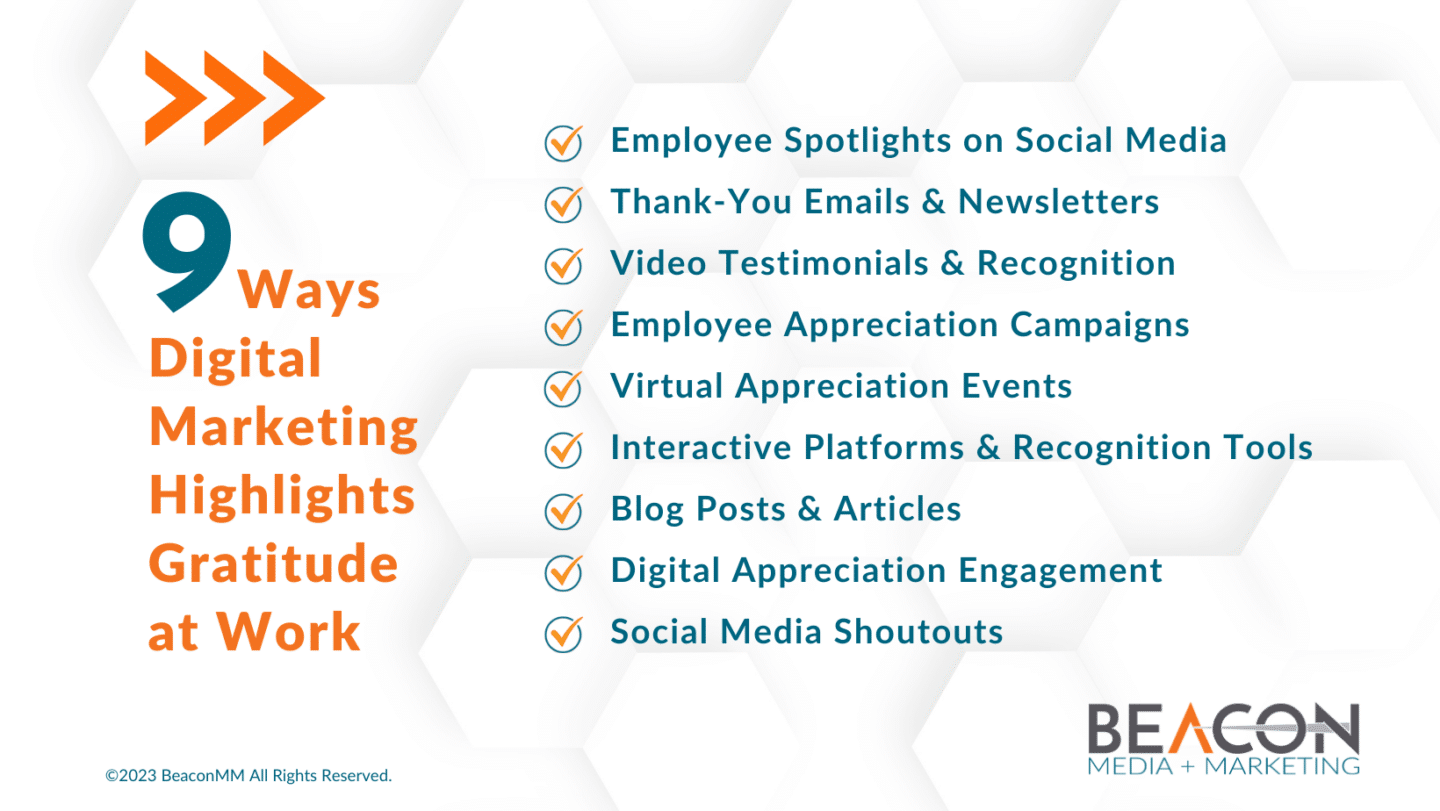
9 Ways Digital Marketing Highlights Gratitude at the Workplace

It should go without saying that it’s been a tough few years since the pandemic changed the entire dynamic of work culture in 2020 — especially in the healthcare industry. We were forced to change quickly, and this caused anxiety, stress, and several challenges that nobody saw coming. But this also gave us even more of a reason to be grateful.

Showcasing gratitude in digital marketing is a beautiful thing. Honestly, it’s what makes marketing shine. And in turn, it has the potential to generate a “virtuous cycle” that not only enhances your employees’ attitudes at work but your overall recruitment efforts as well.

At the end of the day, showcasing gratitude in the workplace through digital marketing involves leveraging a few common online platforms and strategies to express appreciation. Here are some effective ways to do so:

  1. Employee Spotlights on Social Media: Highlight team members’ achievements, milestones, or contributions through dedicated posts on social media platforms. Use engaging content formats like employee interviews, success stories, or behind-the-scenes glimpses to showcase their efforts and express gratitude publicly.
  2. Thank-You Emails or Newsletters: Send personalized thank-you emails or newsletters to employees, acknowledging their hard work, dedication, and specific contributions. Include messages from leadership, success stories, or quotes from team members to make it more impactful.
  3. Video Testimonials and Recognition: Create videos featuring testimonials from leaders or colleagues expressing gratitude towards individuals or teams. Share these videos on the company website, social media channels, or internal communication platforms to show appreciation and inspire others.
  4. Employee Appreciation Campaigns: Launch digital campaigns during special occasions like Employee Appreciation Day or work anniversaries. Utilize hashtags, interactive polls, or user-generated content contests to engage employees and celebrate their value within the organization.
  5. Virtual Appreciation Events: Organize virtual events such as webinars, live Q&A sessions, or virtual town halls where leadership can express gratitude, share success stories, and recognize outstanding performances. Stream these events live on platforms like YouTube or LinkedIn.
  6. Interactive Platforms and Recognition Tools: Implement digital recognition platforms or tools within the company’s intranet or employee portal. Encourage peer-to-peer recognition by allowing employees to send digital badges, stickers, or personalized messages to colleagues.
  7. Blog Posts or Articles: Create blog posts or articles that highlight the positive impact of employees’ efforts on the company’s success. Share stories of collaboration, innovation, or dedication, showcasing how individual contributions drive the organization forward.
  8. Engage Employees in Digital Appreciation: Encourage employees to participate in digital gratitude initiatives by sharing their appreciation for peers or team accomplishments on social media platforms, using specific hashtags or dedicated channels.
  9. Personalized Social Media Shoutouts: Use the company’s social media channels to publicly recognize employees’ achievements or exceptional performances. Share photos, quotes, or anecdotes that highlight their contributions.

What’s Beacon Doing to Show Gratitude at Work?

As a hybrid company, with employees working remotely and in the office on occasion, our work cadence is dynamic — but it’s so much fun. One thing that we’ve learned as we’ve grown: our employees are an intrinsic part of our brand. And this should be true for any company operating in any vertical.

Basically, it’s all connected. The people you work alongside affect your mood, your work performance, and ultimately, the product or service you provide. But when you highlight your employees and build them up, you’re ultimately fortifying the foundation of your entire business.

Consider a few things we do on a daily and weekly basis when it comes to fostering a vibrant, positive, work culture:

  • Wellness Wednesdays: Every other Wednesday, we get together on Zoom and talk about what’s going on in our lives, whether work-related or personal. We each highlight a bud (something promising), a rose (something that has blossomed), and a thorn (whatever might be bothering us) present in our lives and open the floor to discussion in a positive, accepting, environment.
  • Teambuilding: We come together every other Wednesday and forget about work for an hour. We play games, learn about one another, tell stories, show our appreciation on work anniversaries and birthdays, and really get to know who our team is on an intimate level.
  • Slack: If you take a peek into our Slack channels, you’ll see a team brimming with activity and good vibes. Our communication channels might be business-related, but they’re definitely not lacking a true personal touch and appreciation for each one of our team members. We regularly give thanks and shoutouts to team members who are crushing their jobs — even if it’s just a quick thank you.
  • What’s On Your Wall Wednesday: Our newest addition, each week we’re highlighting one of our clients and how they are elevating themselves in their niche. Not only is this a great way to show appreciation for our clients, but it’s a bit of free marketing for them as well!

Employees don’t only impact your brand — they are your brand. Correspondingly, acts of celebration also become part of your brand. And once you begin to highlight this, you’ll see your recruitment strategy and hiring process reach an entirely new level.

Elevate Your Brand Through Highlighting Gratitude with Beacon Media + Marketing

“A grateful mind is a great mind which eventually attracts to itself great things” ~ Plato

At Beacon, we know that the recruiting process can be tough. Let’s face it, it’s just hard to find qualified candidates who you know—for sure—will fit your company. And it doesn’t matter if you’re advertising on niche job boards, running an employee referral program, or regularly changing the verbiage on your job postings; when it comes to effective recruitment strategies, highlighting the achievements of your existing employees can be your greatest asset.

You have to remember that recruitment goals should extend well beyond an ad or job posting. And recruiting strategies without an element of thankfulness, showcasing what it’s like to work for your team, is going to be relatively lackluster. Essentially, you’re going to be missing a key ingredient in your recruiting strategy. And you’ll be leaving prospective employees wondering if the juice is really worth the squeeze.

If you want to attract great employees and talented candidates, attract them by how you operate. In every action, in every meeting, and while working on every task, it’s through gratitude that we all become successful.

Are you ready to improve company culture and recruitment by highlighting gratitude? Contact Beacon Media + Marketing today and speak with an expert today!

As autumn transitions into the colder months, November emerges not only as a time of falling leaves and cooler temperatures but also as a pivotal period for raising awareness about men’s mental health. Often recognized as “Movember,” this month serves as a platform to spotlight and address the critical issue of men’s mental well-being.

If you’re a mental health provider, campaigning this month by highlighting men’s mental health through digital marketing is a great way to not only help support a great cause, but you can also help bring attention to the silent suffering of men across the nation.

At Beacon, we work with numerous clients in the mental health space. And we know firsthand how the ingrained stigma of mental illness and societal beliefs often prevent many men from seeking help. This is why the significance of November in championing men’s mental health cannot be overstated, and understanding the reasons behind this focus sheds light on the importance of this initiative.

Here, we’ll discuss Movember, and how you can help spread awareness about mental health problems through the power of digital marketing.

Are you ready to enhance your digital marketing and promote mental health awareness? Reach out to Beacon Media + Marketing today and schedule a free discovery call today.

The November Focus on Men’s Mental Health Treatment

Movember serves as a reminder of the unique challenges men face concerning mental health. Historically, societal stigmas have deterred men from seeking help or discussing their mental well-being openly. Thankfully, November symbolizes a concerted effort to break these barriers and foster open conversations about men’s mental health struggles.

By dedicating a month specifically to this cause, Movember aims to emphasize the importance of addressing mental health issues prevalent among men and encouraging them to prioritize their well-being.

As such, men often face various mental health struggles — many of which may go unrecognized or unaddressed due to societal expectations or stigma surrounding male mental health. Some common mental health challenges that men may experience include:

  1. Depression: Men may manifest symptoms of depression differently than women, leading to misdiagnosis or misinterpretation. Male depression may exhibit signs such as irritability, anger, substance abuse, or engaging in risky behaviors rather than openly expressing sadness or hopelessness.
  2. Anxiety: While both men and women experience anxiety, men may be less likely to seek help due to the expectation to appear strong and in control. They might suppress their anxiety or exhibit physical symptoms such as headaches, digestive issues, or aggression instead of verbalizing their worries.
  3. Substance Abuse: Men are more prone to substance use disorders, often using alcohol or drugs to cope with stress, anxiety, or depression. This can further exacerbate mental health issues and lead to a cycle of dependency.
  4. Suicide: Men are more likely to die by suicide than women, partly due to societal pressures that discourage open discussions about emotions or seeking help. For example, in 2021, men committed suicide 3.9 times more than women. Men might be less likely to talk about their suicidal thoughts or seek assistance when experiencing mental health crises.
  5. Work-related Stress: Pressures related to career success, financial stability, and providing for their families can significantly impact men’s mental health. The struggle to balance work and personal life might lead to stress, burnout, or feelings of inadequacy.
  6. Post-Traumatic Stress Disorder (PTSD): Men, particularly those who serve in the military or law enforcement, are at a higher risk of experiencing traumatic events leading to PTSD. The stigma associated with seeking mental health support might prevent them from seeking treatment.
  7. Relationship Challenges: Difficulties in relationships, marital problems, or the breakdown of significant relationships can have a profound impact on men’s mental health. Societal expectations to appear strong or self-reliant might hinder them from seeking help during relationship turmoil.
  8. Loneliness and Social Isolation: Men might struggle to build or maintain social connections due to cultural expectations surrounding masculinity. This isolation can lead to feelings of loneliness, impacting mental health adversely.

Recognizing these challenges is crucial in encouraging men to seek help and support when facing mental health struggles. It’s essential to foster an environment where men feel comfortable seeking assistance without fear of judgment or stigma.

The Role of “Movember” in Men’s Health Advocacy

Movember is more than just a month; it’s a movement that strives to promote mental health advocacy for men globally. So, how does it work? It encourages men to grow mustaches as a visible emblem, sparking conversations that might otherwise remain unspoken.

Though women can have the same mental disorders as men, Movember focuses on health issues that specifically affect men. In addition to mental health awareness, Movember also seeks to raise awareness for men’s suicide prevention, bipolar disorder, and other men’s health issues — specifically for testicular cancer and prostate cancer.

Like seeking help for mental health, many men simply stay away from the doctor. Unfortunately, testicular cancer and prostate cancer can manifest without warning signs. Thus, the sooner you can get treatment for these conditions, the better.

Beyond the mustache, this initiative aims to educate, raise funds, and promote resources for men’s health support. It also serves as a platform for awareness campaigns, community engagement, and initiatives that support mental health programs tailored to the specific needs of men — and partnering with a digital marketing agency can help spread this message in your community and beyond.

Addressing Mental Health Challenges Head-On

November’s focus on men’s mental health serves as a catalyst for change. And this is what we love about it. From a marketing perspective, highlighting the importance of early intervention, encouraging the destigmatization of mental health conversations, and urging men to seek support without fear or shame is great messaging that can be applied to blog content, social profiles, and targeted ads — all with the ability to bring more men into your clinic and raise awareness.

By providing accessible resources, and guidance, and fostering supportive environments, Movember empowers men to acknowledge their mental health concerns and take proactive steps toward well-being.

Improving mental health involves various strategies and actions that men can adopt to support their well-being. Here are several steps men can take to enhance their mental health:

  1. Seek Professional Help: Seeking support from mental health professionals, such as therapists, psychologists, or counselors, can provide valuable guidance and tools to manage mental health challenges effectively. Talking to a professional offers a safe space to express feelings and learn coping strategies.
  2. Prioritize Self-Care: Engage in self-care practices that promote mental wellness, such as regular exercise, adequate sleep, maintaining a balanced diet, and practicing relaxation techniques like meditation or mindfulness. Taking care of physical health positively impacts mental well-being.
  3. Cultivate Supportive Relationships: Build and nurture a support network by connecting with friends, family, or support groups. Having trusted individuals to confide in and share experiences with can alleviate feelings of isolation and provide emotional support.
  4. Communicate Openly: Break free from societal expectations of suppressing emotions and communicate openly about feelings, stressors, and mental health concerns. Expressing emotions and seeking support from trusted individuals can help alleviate distress.
  5. Manage Stress: Practice stress management techniques such as time management, setting realistic goals, delegating tasks, and learning to say no when feeling overwhelmed. Engaging in activities that bring joy and relaxation helps in managing stress effectively.
  6. Limit Substance Use: Be mindful of alcohol or drug consumption as they can exacerbate mental health issues. Limiting or avoiding substance use can positively impact mental well-being.
  7. Stay Active and Engaged: Engage in hobbies, physical activities, or volunteer work that brings joy and a sense of fulfillment. Staying active and involved in activities fosters a positive outlook and reduces feelings of isolation.
  8. Set Boundaries and Practice Self-Compassion: Establish healthy boundaries in personal and professional relationships, prioritize self-care, and practice self-compassion. Being kind to oneself and recognizing personal limitations is essential for mental well-being.
  9. Educate Yourself: Educate yourself about mental health issues, symptoms, and available resources. Having knowledge about mental health fosters understanding and helps in recognizing when to seek help.
  10. Seek Help Early: Recognize the signs of mental health issues and seek professional help early. Early intervention can prevent issues from escalating and promote faster recovery.

It’s crucial to understand that taking care of mental health is a continuous process. Men can empower themselves by proactively taking steps to prioritize mental wellness and seeking help when needed.

Are you ready to develop a marketing campaign to break stigma and foster mental health awareness? Contact Beacon Media + Marketing today and let’s talk about options!

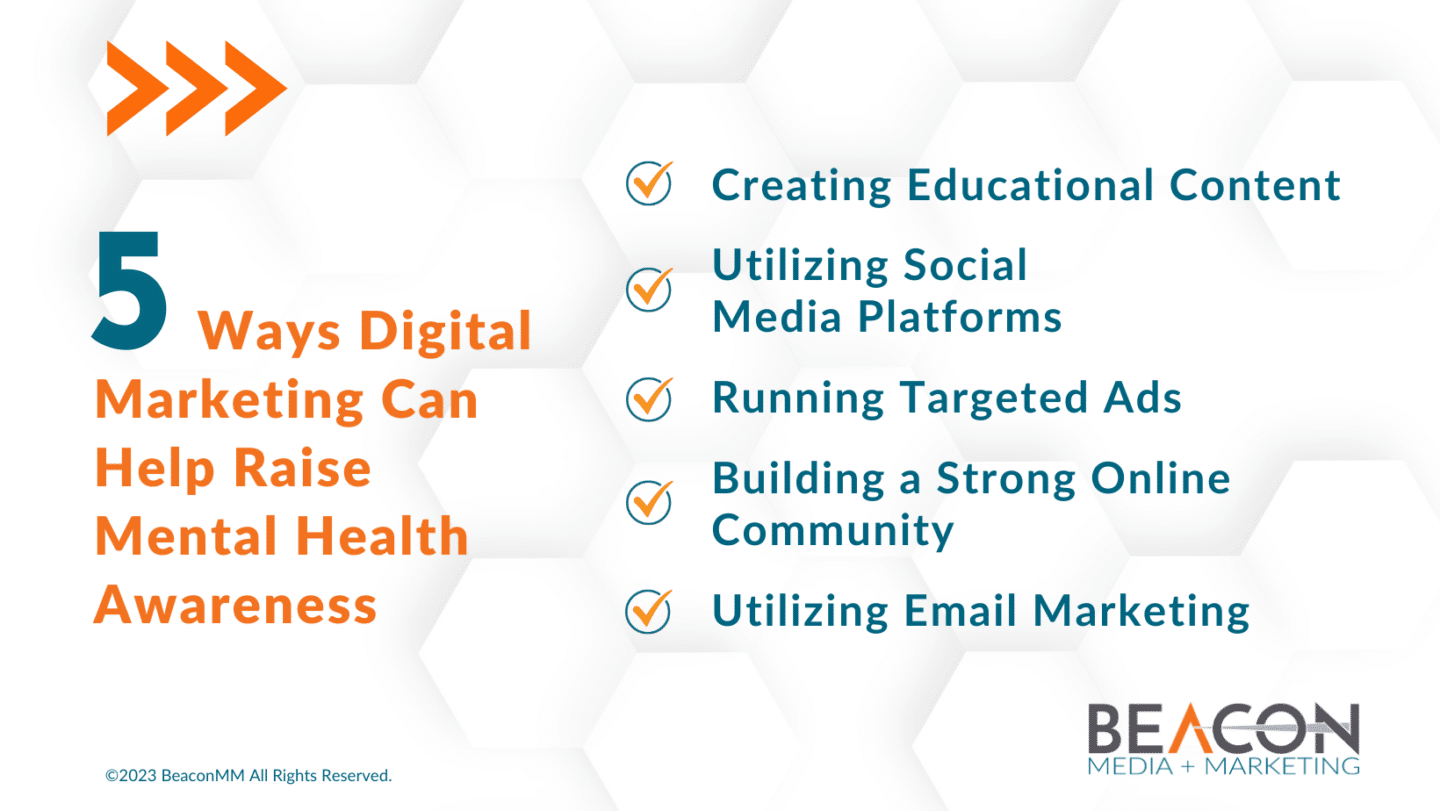
How Can Digital Marketing Help?

At Beacon, we know that digital marketing offers a wide range of powerful tools and strategies that can help mental health providers effectively spread awareness about mental health. These methods can be used to educate the public, combat stigma, and encourage individuals to seek help when needed.

Here are a few ways digital marketing can be utilized for this purpose:

Creating Educational Content

  • Blog posts: You can share informative and engaging articles on various mental health topics, providing in-depth knowledge and addressing common misconceptions.
  • Infographics: Visualizing data and statistics about mental health in compelling and easy-to-understand formats helps users retain information.
  • Videos: Creating educational and inspiring videos that can reach a wider audience and personalize the message offers a great way to connect with your audience in a fast-paced world.
  • Podcasts: Consider hosting discussions and interviews with mental health professionals and individuals who have lived experience to broaden perspectives and spark meaningful conversations. Remember, a personal touch goes a long way!

Utilizing Social Media Platforms

  • Share engaging posts: Relevant hashtags and imagery can create social media content that raises awareness about mental health issues, resources, and support networks.
  • Host Q&A sessions: Live videos or social media polls help answer questions and address concerns about mental health in real-time.
  • Partner with influencers: You can also collaborate with social media personalities recognized for spreading mental health awareness to reach a broader audience and amplify your message.

Running Targeted Ads

  • Reach specific demographics: Utilize online advertising platforms to target individuals who may be struggling with mental health concerns, directing them to resources and information.
  • Promote events and initiatives: You can increase awareness about mental health events, campaigns, and resources through strategically placed online advertisements.
  • Tailor messaging: Compelling ad copy and visuals will resonate with your target audience and help to drive action towards seeking support.

Building a Strong Online Community

  • Develop a dedicated website: Creating a user-friendly platform with educational resources, testimonials, and information on accessing mental health services can be a huge asset when it comes to attracting new patients.
  • Engage in online forums and communities: Consider participating in relevant online discussions to provide helpful information and create a supportive online environment.
  • Offer online support groups: Facilitate online communities for individuals to connect with others experiencing similar challenges and build a sense of belonging.

Utilizing Email Marketing

  • Send regular newsletters: Share updates on mental health news, research findings, and available resources.
  • Targeted email campaigns: You can also send relevant information and “support resources” to specific individuals based on their interests and needs.
  • Share success stories: Showcase testimonials and inspiring accounts of individuals who have overcome mental health challenges. This is a powerful tool that can create connections and encourage those seeking help to reach out.

By strategically utilizing these digital marketing tools and strategies, you can reach a wider audience, effectively educate the public about mental health, and ultimately contribute to a more informed and supportive community.

Joining the Movember Movement with Beacon Media + Marketing

As a digital marketing company operating in the mental health space, we know firsthand the importance of spreading awareness about mental health. With our team of talented creatives, we have the passion it takes to build a solid mental health awareness campaign tailored to meet your specific needs, whether in November or any other month.

At the end of the day, mental health awareness is something that should be promoted every month – and every day, for both men and women alike. By partnering with Beacon, you’ll have access to all of our resources to help you spread awareness so more men in your community can get the help that they so desperately need and deserve.

This November, let us stand together in support of men’s mental health. Engage in conversations, raise awareness, and encourage men to prioritize their mental well-being. Whether it’s growing a mustache, participating in fundraising events, or simply initiating dialogues about mental health, every action contributes to breaking down barriers and fostering a culture of mental health acceptance and support.

As November unfolds, we can partner together to remember Movember’s significance—serving as a rallying point for men’s mental health advocacy. Together, let’s pave the way for healthier, happier, and more supported lives for men everywhere.

Do you need a digital marketing partner to help further mental health awareness? Contact Beacon Media + Marketing today and let’s talk!

In the ever-evolving landscape of healthcare, the way healthcare providers communicate and engage with patients has undergone a profound transformation, largely fueled by the rise of digital marketing. And the shift from a traditional patient-centric approach to a collaborative partnership model is reshaping healthcare industry communication.

We have to remember that we can’t stand alone in an interconnected world, because in a dynamic of change, patient partnerships will become the key to successful marketing campaigns.

The fact is, current developments in industries and shifting patient demands are prompting numerous healthcare practices to reconsider their marketing strategies from patient-centric to partner-centric. For example, healthcare organizations witnessed a notable surge in their marketing budgets by 15% during 2022, with companies dedicating billions of dollars toward reaching out to fresh patient pools and bringing them into a more intimate healthcare experience.

At Beacon, we understand that the power of partnership is where the true strength in marketing lives. In the following, we’ll explore how healthcare organizations are embracing a new era where patients are not just recipients of care — but active partners in their health journeys.

Are you ready to learn how healthcare digital marketing can elevate your brand? Reach out to Beacon Media + Marketing today to schedule a free discovery call.

A Brief History of Mental & Behavioral Health Marketing

While billboards, radio, and the occasional television spot drove healthcare marketing efforts throughout the 20th century, during the 1980s, a noticeable decline in physician influence led hospitals to redefine their offerings as “marketable products” directly aimed at consumers. This strategic shift aimed to influence patient outcomes positively, bolster profits, and augment market presence.

Around the same time, doctors, practices, and private healthcare providers experienced intensified competition for patient attention — urging them to delve into unprecedented levels of marketing investment. For example, a comprehensive analysis highlights a staggering surge in healthcare marketing expenditure, soaring from $50 million to $500 million throughout the 1980s, marking a significant milestone in the evolution of healthcare marketing strategies.

The Patient-Centric Era

Historically, healthcare marketing has been centered around a patient-centric model. Information was disseminated to patients through traditional channels such as brochures, billboards, and television advertisements. The focus was on promoting services, highlighting expertise, and building trust in the healthcare provider. However, this model had its limitations; it was a one-way communication street, with patients often left as passive recipients of information.

The Rise of Digital Engagement

Enter the digital age, where the internet has become a powerhouse of information, and social media platforms provide a space for conversations. Healthcare organizations quickly realized the need to adapt their communication strategies to meet the evolving expectations of an increasingly digital-savvy audience. Websites, social media, and online forums became pivotal tools for disseminating information and, more importantly, for engaging patients in a two-way conversation.

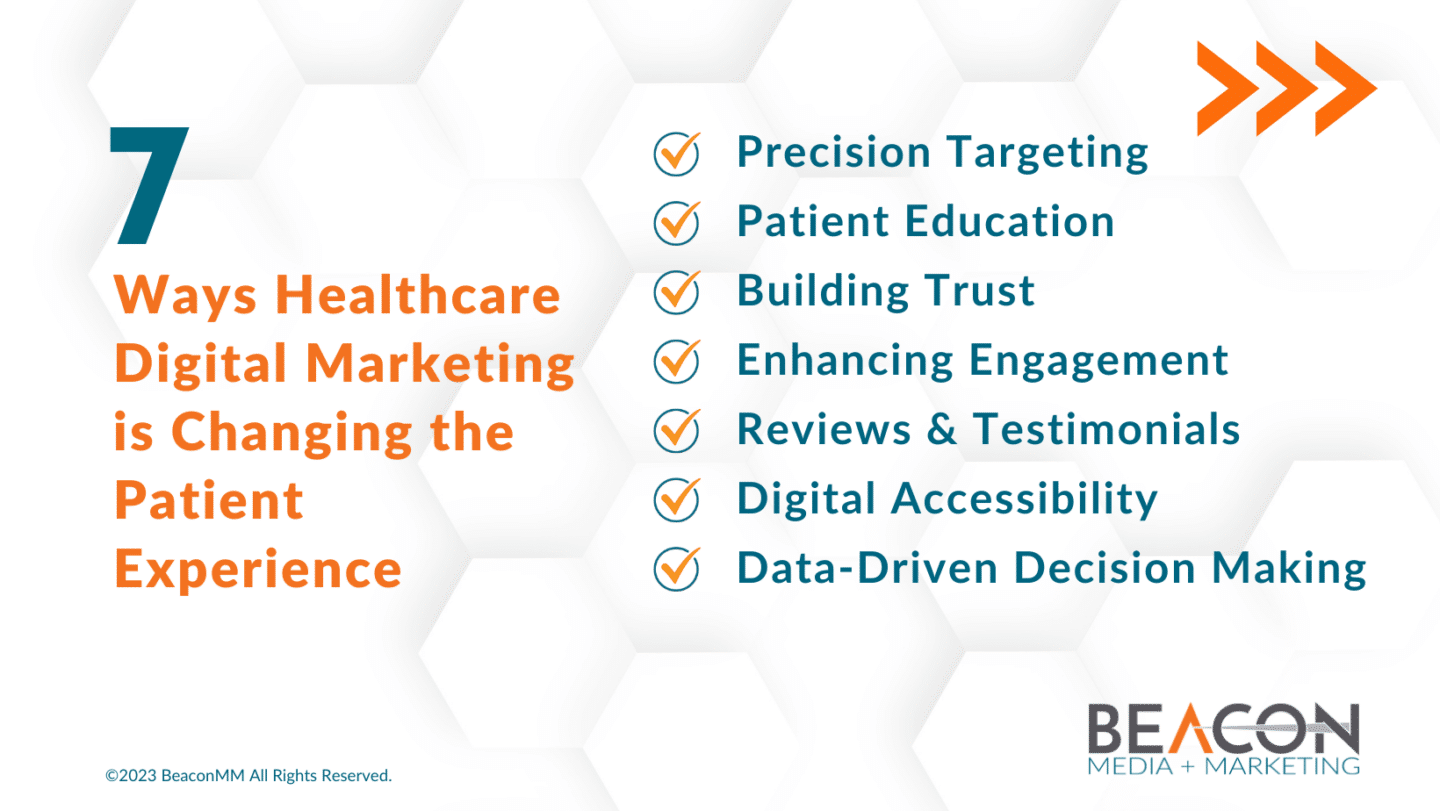
7 Effective Powers of a Healthcare Digital Marketing Strategy

As mentioned, in an era dominated by digital advancements and social media marketing, industries across the board are harnessing the power of technology to revolutionize their approach, and healthcare is no exception. Digital marketing strategies have emerged as a formidable force, reshaping how healthcare organizations connect with patients and improving the overall patient experience.

1. Precision Targeting: Reaching the Right Audience

Digital marketing allows you to reach specific demographics with precision. Whether it’s promoting preventive care services, specialized treatments, or wellness programs, digital strategies enable tailored messaging. Social media platforms, search engine optimization (SEO), and targeted online advertising empower healthcare organizations to connect with the right audience at the right time.

2. Patient Education in the Digital Age

Empowering patients with knowledge is a cornerstone of effective healthcare. Digital marketing provides a platform for you to disseminate accurate and accessible information — and this can help make your patients feel like partners. Educational content, webinars, and interactive tools contribute to informed decision-making, enabling patients to actively participate in their health journeys.

3. Building Trust Through Content Marketing

Trust is the foundation of any successful healthcare relationship. Content marketing, through blogs, articles, and videos, allows you to showcase your expertise, share success stories, and establish credibility. By creating valuable and relevant content, organizations can foster trust among patients and position themselves as reliable sources of healthcare information.

4. Enhancing Patient Engagement

Digital marketing strategies facilitate meaningful and continuous patient engagement. Social media platforms serve as communication channels where healthcare providers can share updates, answer queries, and maintain an ongoing dialogue with their audience. Email campaigns and newsletters keep patients informed about new services, upcoming events, and relevant health tips.

5. Harnessing the Power of Reviews and Testimonials

Online reviews and testimonials wield considerable influence in shaping public perception. Digital marketing provides an avenue for healthcare organizations to actively manage and leverage positive reviews. By showcasing patient testimonials, organizations can build trust and credibility, influencing potential patients in their decision-making process.

6. Telehealth and Digital Accessibility

The rise of telehealth has been accelerated by digital marketing strategies. Seamless online scheduling, virtual consultations, and user-friendly interfaces contribute to improved accessibility. Digital marketing plays a pivotal role in promoting these services, ensuring that patients are aware of and comfortable with the digital healthcare options available to them.

7. Data-Driven Decision Making

One of the most powerful aspects of digital marketing in healthcare is the ability to gather and analyze data. Healthcare organizations can track the performance of their campaigns, understand patient behavior, and make data-driven decisions to refine their strategies continually. This iterative process ensures that marketing efforts are not only effective but also adaptive to the evolving needs of patients.

Are you ready to learn more about the power of a patient-partner approach? Reach out to Beacon Media + Marketing today to schedule a free discovery call.

Shifting to a Partnership Model

The current era marks a significant departure from the traditional patient-centric approach. Healthcare organizations are recognizing the value of turning patients into active partners in their care. This shift is not merely a change in terminology but a fundamental transformation in the way healthcare is delivered and communicated.

Engaging Patients as Partners

  • Educational Empowerment: Healthcare organizations are leveraging digital platforms to educate patients about their conditions, treatment options, and preventative measures. Remember, informed patients are empowered patients — and digital marketing is a potent tool for disseminating accurate, easily accessible information.
  • Personalized Communication: The era of generic healthcare messages is waning, and nobody is listening to a squawking parrot anymore. Digital marketing allows for targeted and personalized communication based on patient demographics, preferences, and health needs. This ensures that patients receive information relevant to their unique situations.
  • Feedback Loops: Digital marketing facilitates real-time feedback and engagement. And this is the type of engagement that we all want, right? Healthcare providers are leveraging online surveys, social media, and interactive websites to gather insights directly from patients. This feedback loop enables continuous improvement and tailoring of services to meet patient expectations.
  • Virtual Health Communities: Online platforms and social media have given rise to virtual health communities where patients can share experiences, ask questions, and provide support to one another. This is where you become part of the conversation. And healthcare organizations are actively participating in and fostering these communities, starting meaningful conversations, and recognizing the importance of peer-to-peer support along the healthcare journey.

The Future of Healthcare & Digital Marketing Platforms

As we move forward, the evolution of healthcare digital marketing will likely continue. And we believe the focus will be on leveraging emerging technologies such as AI and telehealth to enhance patient engagement and outcomes. The goal here is to create a seamless, patient-partnered digital experience that extends beyond traditional care settings.

Embracing Personalization and Patient-Partnerships

The future of healthcare marketing pivots on personalization. Patients are seeking tailored experiences that resonate with their unique needs, and they want to become part of the conversation.

Advanced data analytics and AI are poised to revolutionize how healthcare providers deliver personalized content, treatment recommendations, and engagement strategies. By harnessing patient data ethically and securely, healthcare marketers can craft individualized messages, enhance patient education, and streamline the overall patient experience.

Rise of Telehealth and Virtual Engagement

The COVID-19 pandemic accelerated the adoption of telehealth and virtual care, marking a monumental shift in healthcare delivery. The future of digital marketing in healthcare rests on leveraging these platforms to extend patient outreach. Marketers must harness the potential of social media, mobile apps, and virtual consultations to engage patients remotely, providing vital information, support, and access to care, thereby reshaping patient-provider relationships.

Content Marketing and Thought Leadership

Educational content and thought leadership will remain cornerstone strategies in healthcare marketing. As consumers increasingly seek reliable health information online, the demand for credible, informative content will soar. Healthcare marketers need to cultivate authoritative content that educates and guides patients while establishing their organizations as trusted sources of information. Engaging blogs, podcasts, videos, and interactive resources will be instrumental in fostering connections and building brand authority.

Ethical Use of Data and Privacy

With the proliferation of data collection, maintaining patient privacy and adhering to ethical standards will be paramount. Healthcare marketers must navigate stringent privacy regulations and prioritize data security while harnessing the potential of patient information. Building trust by safeguarding patient data integrity will be essential in order to sustain long-term relationships and uphold ethical practices.

The future of healthcare digital marketing is a convergence of technology, empathy, and innovation. By embracing personalization, leveraging telehealth, curating valuable content, and upholding ethical standards, healthcare marketers can navigate this transformative landscape. As we embrace these advancements, the ultimate goal remains unwavering—to empower patients, enhance their healthcare journeys, and ultimately improve outcomes for all.

Turn Patients into Partners With Beacon Media + Marketing

Our baseline philosophy in marketing rests on one keystone that we believe makes every one of our clients successful — prioritizing people over profit. As marketers, we understand that you want to attract new patients. But we also fully realize the power of partnerships. And once you develop a patient-partnership model through strategic digital marketing, you’ll become partners with your greatest assets; your patients.

Ultimately, people are what keep you in business. So, it only makes sense to bring your patients into the conversation — and to make them feel accompanied by a partner on their healthcare journeys. In turn, this creates a genuine rapport that can be leveraged as you develop your business and reach new patients.

At Beacon Media + Marketing, we know that creating intimate relationships with your patients is how you’ll establish your brand and grow. We trust this model, we stand by it, and we know the most effective ways to reach your goal.

Our team is well-versed in marketing for the healthcare space. From creating engaging content, and paid ads, leveraging local listings, and reviving your social profiles to designing your website for a perfect user experience, you can trust Beacon Media + Marketing for all of your healthcare marketing needs.

Are you ready to reach more patients and enhance your marketing strategy? Reach out to Beacon Media + Marketing today to learn how we can take your healthcare practice to the next level.

By Jennifer Christensen CMO

We’ve all had that nightmare healthcare experience of waiting for hours to be seen, and then waiting even longer before your doctor shows up. Then, 15 minutes later, you’re being shuffled right out the door. It should go without saying that this is simply unacceptable — but it only illustrates a problem that has pervaded the healthcare industry for decades: a lack of effective communication.

In today’s interconnected healthcare landscape, patients are now realizing that they have the power to choose which healthcare provider they prefer to wait on — and which one they prefer to pay. For a provider, capitalizing on this simply entails leveraging personable and effective communication skills. Fortunately, this is also where digital marketing comes in.

The thing about digital marketing that’s so exciting is not the advanced tech that we get to use every day. Though the latest technological advances are brilliant and make our jobs easier, it’s how these tools transform communication and offer our clients a stronger bridge to building patient relationships in a genuine, transparent way that makes digital marketing such a great investment for healthcare professionals.

Communication is key in any relationship. So, how has digital marketing transformed healthcare communication? Well, without it, we’d still be passing out flyers and hoping someone heard our latest radio blast.

Are you ready to provide your patients with an enhanced healthcare experience and transform patient communication? Connect with Beacon Media + Marketing today for a free discovery call!

Effective Communication Creates Accessibility

Just like any consumer, patients want results. Today, we live in a world where instant access to whatever we need is almost considered a given. And that’s exactly what your patients want from you — accessibility.

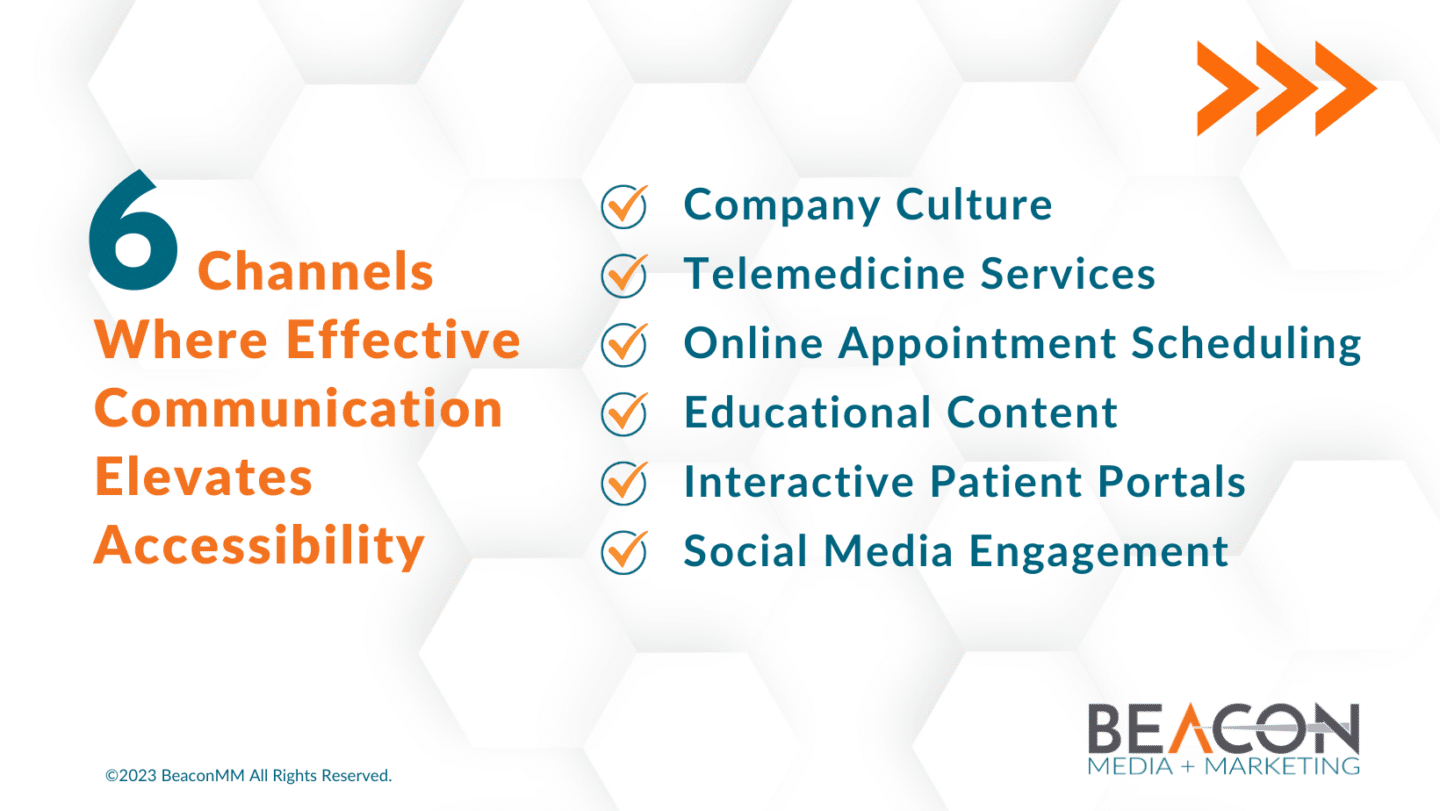
Through digital marketing, your patients can get exactly what they’re looking for without having to “hurry up and wait.” Just consider what real-time accessibility and information through digital marketing can offer your patients:

  • Company Culture: Patients can research you and your clinic, decide if you’re a good fit, and take a peek into what an experience at your location is really like. By leveraging digital marketing, in turn, you can leverage your company culture, reviews, and testimonials, and showcase a patient experience that will draw in more patients.
  • Telemedicine Services: Patients can access virtual appointments and consultations, receiving immediate medical guidance or advice without physical presence, reducing patient anxiety, promoting convenience, patient safety, and timely healthcare delivery.
  • Online Appointment Scheduling: Enables patients to book appointments at their convenience, reducing wait times and providing flexibility in managing their healthcare appointments.
  • Educational Content: Sharing informative content online allows patients to access resources that empower them with knowledge about health education, conditions, treatments, and preventive care, fostering informed decision-making and active engagement in their health.
  • Interactive Patient Portals: Offer patients secure access to their medical records, test results, and treatment plans, promoting transparency, and allowing them to actively participate in their care journey.
  • Social Media Engagement: Utilizing social platforms facilitates direct communication, feedback sharing, and community building, creating a space for patients to ask questions, share experiences, and engage with healthcare providers and peers.

Traditional healthcare communication relied heavily on one-way interactions, often leaving patients powerless. By giving the provider all of the power, this narrowed the potential pool of patients significantly. And while patients remained worried about their health, “care professionals” reaped all of the benefits.

While these methods once served their purpose, they lacked the personalization and real-time engagement that could truly make a difference in patient care. But the advent of digital marketing has ushered in a new era of healthcare communication, one characterized by two-way dialogues, data-driven insights, and a patient-centered approach; one where patients feel more like partners on their care journey.

Fostering Patient-Centric Interactions

Digital marketing enables health professionals to move beyond generic communication and tailor their messages to the specific needs and preferences of individual patients. Through targeted messaging, healthcare organizations can provide relevant and timely information about preventive care, disease management, and treatment options. This personalized approach empowers patients to take an active role in their health decisions, leading to improved adherence to treatment plans and overall better outcomes.

Embracing Real-Time Engagement

Digital marketing tools provide healthcare providers with the ability to engage with patients in real-time, facilitating seamless communication and building stronger relationships. Through secure online portals, patients can access their medical records, schedule appointments, ask questions, and receive updates from their healthcare providers. This real-time engagement fosters trust and transparency, ensuring that patients have access to the information they need, whenever they need it.

Leveraging Data-Driven Insights

Digital marketing platforms also generate a wealth of valuable data about patient preferences, behaviors, and online interactions. For example, healthcare teams can analyze this data to gain deeper insights into their patient population, enabling them to tailor their communication strategies and personalize their outreach efforts. This data-driven approach ensures that healthcare organizations are reaching the right audience with the right message — at the right time.

Harnessing the Power of Digital Tools

The digital marketing landscape offers a wide range of tools and marketing strategies that healthcare providers can leverage to enhance their communication with patients. Here are a few examples:

  • Email Marketing: Personalized email campaigns can provide patients with timely updates, educational resources, and reminders about appointments or preventive care recommendations.
  • Social Media: Healthcare organizations can use social media platforms to engage with patients, share informative content, create targeted ads through social feeds, and build a strong online community where engagement drives results.
  • Patient Portals: Secure online portals offer patients convenient access to their medical records, appointment scheduling, and secure communication with their healthcare providers.
  • Content Marketing: Creating informative and engaging content, such as blog posts, videos, and infographics, can educate patients about health conditions, treatment options, and lifestyle changes.
  • CRM Software: Keeping up with your patient’s health communication is perhaps one of the most important tasks you can engage in. With digital Customer Relationship Management (CRM) tools, you’ll have a robust toolkit that empowers you and your patient to keep in touch.

Remember, effective physician-patient communication is not just about sending out messages; it’s about understanding the impact of those messages on patient behavior and outcomes. As such, healthcare providers can use various metrics to measure the effectiveness of their digital marketing efforts, such as website traffic, email open rates, social media engagement, and patient satisfaction surveys.

Are you ready to improve your messaging and bring in more patients? Reach out to Beacon Media + Marketing today to learn how we can take your practice to the next level.

Patient-Physician Communication: Diversifying Your Messaging

We want to be clear. Digital marketing is a great asset, but you can rely too much on digital marketing. And it’s best not to get caught on this slippery slope. The key is to leverage digital marketing — but never forget your entire outreach plan.

Here, you have to remember that you’re likely not just serving only one demographic. But if you set up your strategy without taking into consideration the diversity of your community, you’ll end up catering to only one patient pool. For example, targeting your ads and content to a specific audience is one way to go. But if you want to edge out your competition, considering language barriers, cultures, and gender, you need to be able to target everyone without offending a specific group. And digital marketing can make this possible through a multi-layered campaign and targeted messaging.

Lastly, when it comes to campaigns and messaging, the data you collect will be extremely critical to your success. After analyzing, you’ll be able to determine if you need to set up channels to deliver messaging or commercials in Spanish, or if you should target women expecting birth, or those suffering from cancer, cognitive decline, or other ailments.

The Future of Effective Health Communication

When we think of the future of digital marketing and healthcare, we’re really excited about a return to the core values in marketing — and focusing on what patients truly care about. And this speaks to our philosophy of prioritizing people over profit, or what we like to call “profit with a purpose.”

We can see this now in how social media engagement is evolving. People aren’t just sending out friend requests at random anymore. The fact is, your prospective patients are looking for providers with lifestyles, hobbies, and interests that they can connect with on a personal level. The best part is, when you showcase these qualities, who you are becomes part of your brand — and everyone will see it as a genuine expression of your practice.

In addition, the future of digital marketing is increasingly heading toward fully utilizing high-functioning technology, such as advanced AI tools that bring SEO and web content together in a robust way. And as consumers engage with video 80 percent more than written content, short-form video is also an expected direction that will become much more personal and targeted as digital marketing tools evolve.

At the end of the day, while you’re going to ultimately rely on a nurturing doctor-patient relationship, interpersonal skills and patient understanding are going to bring it all together. Just keep in mind that other healthcare professionals are likely going after the same pool of potential patients, but with the ability to leverage digital marketing at your side, you’ll be set up for the future of this shifting dynamic.

Take Your Healthcare Business to the Next Level With Beacon Media + Marketing

Whether you practice general internal medicine, you’re partnered with a group of primary care physicians, or even if you’re part of the World Health Organization, any healthcare system needs marketing. And this is what we do best.

At Beacon, we know firsthand the impact that digital marketing can make — not only on your business but on patient communication and their overall health outcomes. When you can find the synergy between enhancing your marketing efforts and improving the lives of your patients, this is exactly where you want to be — and we can help get you there.

At Beacon Media + Marketing, we know that your patients matter most to you. So, naturally, you want to provide them with the most comfortable and seamless healthcare experience possible. And with digital marketing, you can achieve this result.

Our team is well-versed in communication and messaging in the healthcare space, from mental health clinics to functional medicine practices. Whether designing the perfect paid ads or creating the best UX-driven website experience for your clients, we’ll deliver it on a personal level that connects with your specific clients.

Are you ready to improve your patients’ lives as well as to bring more prospective patients to your door? Reach out to Beacon Media + Marketing today to learn how we can take your practice to the next level.

What exactly do healthcare marketers do? In today’s complex healthcare landscape, patients are not just passive recipients of medical care; they are active participants in their own health journeys. And this shift toward patient-centered care has given rise to a crucial figure in the healthcare industry — the healthcare marketer.

At Beacon Media + Marketing, as healthcare marketing professionals, we intimately understand how we can play a pivotal role in empowering patients to make informed decisions about their health and well-being — and in encouraging them to choose your clinic over that of your competitors.

Believe it or not, healthcare marketers are a driving force behind the communication, education, and engagement strategies that bridge the gap between medical providers and patients. For example, did you know that 94 percent of patients will switch to a new practice if they offer online appointment scheduling?

Here, we’ll explore the multifaceted responsibilities of healthcare marketers and shed light on our significant contributions to the medical industry.

Are you ready to learn more about how healthcare marketing can build your brand? Reach out to Beacon Media + Marketing today to schedule a free discovery call.

Understanding the Healthcare Marketer’s Role

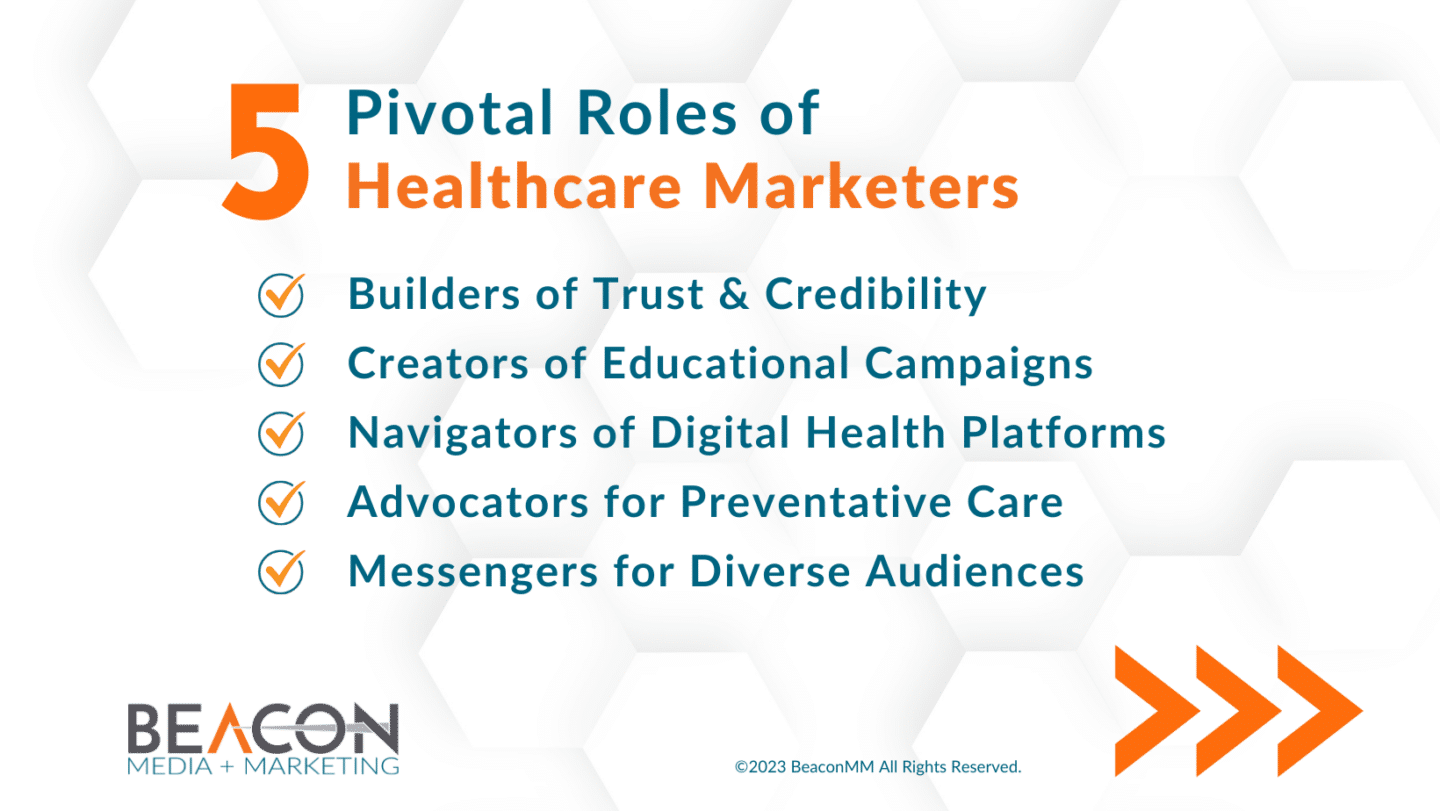
5 pivotal roles of healthcare marketers infographic

Healthcare marketers are responsible for creating and executing strategies that bridge the gap between medical services and patient needs. Essentially, our role extends beyond traditional advertising as we are also strategists, communicators, and educators who work diligently to disseminate accurate and comprehensible information to the public.

Through various channels, marketing teams also facilitate meaningful connections between healthcare providers and patients — with the ultimate goal of enhancing health outcomes that result in satisfied patients. This is because the healthcare field is ever-evolving; therefore, we have to keep up with the latest trends and technologies in order to remain competitive as well as stay abreast of changes in regulatory requirements, and adapt to these changes.

Through collaboration and creativity, healthcare marketing teams are uniquely positioned to shape your narrative and educate the public.

As the healthcare industry is one of the most important fields in society, and healthcare marketers play an integral role in improving patient outcomes, our strategic decisions have a direct impact on how effectively medical services are communicated to potential patients, making a marketer’s role invaluable.

Let’s take a look at the roles we play in the healthcare space.

We Build Trust and Credibility for Healthcare Providers

One of the primary tasks of a healthcare marketer is to establish and maintain trust. In an era of information overload, patients often struggle to discern credible sources from misinformation — whether this is in the form of social media, a blog post, or source information that may be outdated. At the end of the day, we curate content that is evidence-based, clear, and relevant to the needs of your target audience.

By disseminating accurate information, we not only educate patients but also build trust in medical institutions, healthcare providers, and professionals. For example, if a prospective patient came to your clinic to begin their healthcare journey and found that the information on your website was inaccurate, they’re likely to turn around and walk right out the door.

It’s our job to ensure all information about you as a healthcare provider — including your brand, your services, and your educational content — is succinct, accurate, and credible.

We Create Educational Campaigns for Informed Choices

Healthcare decisions can be overwhelming — especially for healthcare consumers facing unfamiliar medical terms and treatment options. Because, if you think about it, going to the doctor can cause a great deal of anxiety before you ever step into the waiting room.

Healthcare marketers create educational campaigns that break down complex medical concepts into understandable language. These campaigns may include brochures, online resources, videos, and interactive content that can empower your patients to assess their conditions and treatment alternatives.

Armed with this knowledge, patients can actively engage in discussions with a healthcare provider, and make choices aligned with their values and preferences.

We’re Experts at Navigating Digital Health

In today’s digital age, healthcare marketers leverage technology to reach patients where they are most comfortable — online. Social media, online reviews, websites, blogs, and mobile apps are platforms through which we deliver relevant information and foster engagement. And these digital avenues provide opportunities for patients to ask questions, share experiences, and connect with others facing similar health challenges.

Healthcare marketers also facilitate these virtual communities, creating supportive environments that encourage proactive health management.

If you just look at what happened within the healthcare industry during 2020 with the COVID-19 pandemic, the need for digital healthcare options has increased tremendously. For example, in a 2020 study, over 75 percent of patients said they were “willing to switch medical practices” due to a lack of virtual service options. This fact only highlights the importance of the digital age and the tools we, as marketers, use to engage prospective patients.

We’re Proud Advocates for Preventive Care

Prevention is a cornerstone of modern healthcare, and we, as healthcare marketers, champion this message. By promoting regular check-ups, screenings, vaccinations, and healthy lifestyle choices, healthcare marketers can contribute to a culture of proactive health management.

Many healthcare providers are aware of the high cost of healthcare in today’s age. And early detection can prevent a surge in costs later down the road. Basically, our strategic campaigns need to emphasize the importance of early detection and intervention — which can ultimately lead to better health outcomes, greater patient loyalty, and reduced healthcare costs.

We Tailor Messages for Diverse Audiences

Healthcare marketers recognize that all healthcare consumers come from diverse backgrounds with varying health needs and cultural sensitivities. As such, we need to be careful as we craft messaging for digital marketing campaigns.

Our messaging needs to resonate with different demographic groups — ensuring that healthcare information is accessible and relatable to everyone. This personalized approach acknowledges the uniqueness of each patient and encourages them to take charge of their health, and should be an integral part of any healthcare marketing strategy.

In addition to targeting new patients, it’s also critical to consider current patients in our marketing plan, ensuring they feel valued and continuing to build patient loyalty.

Learn more about how a healthcare marketing agency can place you ahead of your competitors. Contact Beacon Media + Marketing and schedule a free discovery call today.

Key Benefits of Hiring Healthcare Marketers

Hiring a healthcare marketing agency can offer you a plethora of benefits if you’re looking to enhance your outreach and impact. As healthcare is a complex and highly regulated industry, a specialized marketing agency possesses the expertise to navigate these intricacies effectively — such as compliance with regulatory agencies like HIPAA — ensuring that all marketing strategies, content, and campaigns are in line with legal and ethical standards.

Moreover, healthcare marketing also requires a nuanced approach as it involves communicating sensitive medical information to diverse audiences. A dedicated agency can tailor messaging to resonate with patients, medical professionals, and other key stakeholders — fostering better engagement and understanding.

The following highlights the many benefits of working with a healthcare marketing agency in today’s competitive healthcare space:

  • Expertise in the Healthcare Niche: Healthcare marketing agencies specialize in the unique challenges and regulations of the healthcare industry, ensuring that marketing strategies are compliant, effective, and resonate with the target audience.
  • Strategic Planning: These agencies bring strategic planning and industry insights to the table, helping healthcare organizations identify their target market, analyze competitors, and devise tailored marketing campaigns that align with business goals.
  • Multi-Channel Approach: Healthcare marketing agencies are skilled in utilizing a variety of marketing channels, such as digital marketing, content creation, social media, online reviews, SEO, and more, to reach a wider and relevant audience.
  • Brand Development: Agencies help healthcare providers establish a strong brand identity, ensuring consistent messaging and a cohesive brand image across various platforms.
  • Enhanced Online Presence: With the increasing importance of online presence, healthcare marketing agencies can boost your digital visibility on search engines and social platforms, improve website traffic, and enhance patient engagement through well-executed online strategies.
  • Patient Education and Engagement: Effective healthcare marketing agencies create content that educates patients about various health topics, treatments, and services, fostering patient trust and engagement.
  • Measurable Results: Digital marketing agencies employ data-driven strategies, enabling them to measure the effectiveness of marketing campaigns and make informed adjustments to optimize outcomes.
  • Compliance and Regulations: Healthcare marketing agencies are well-versed in navigating complex industry regulations and ensuring that marketing materials adhere to legal and ethical standards.
  • Time and Resource Efficiency: Outsourcing marketing efforts to professionals allows healthcare providers to focus on patient care and core operations while leaving the marketing intricacies to experts.
  • Innovation: Healthcare marketing agencies keep up with the latest industry trends and technological advancements — incorporating innovative approaches and new technology to stay ahead in a competitive market.
  • Cost-Effective: Collaborating with an agency can often be more cost-effective than hiring an in-house marketing team, as agencies bring a collective skill set and experience without the need for full-time salaries and benefits.
  • Flexibility: Healthcare marketing agencies offer scalable services that can be adjusted based on the organization’s needs, allowing for greater flexibility in marketing strategies.
  • Access to Tools and Resources: Marketing agencies have access to specialized tools and resources that can optimize marketing efforts, track analytics, and manage campaigns efficiently.
  • Long-Term Growth: A healthcare marketing agency can contribute to the long-term growth and success of a healthcare organization by consistently improving brand visibility, patient acquisition, and engagement.

What Tactics and Tools Do Healthcare Marketers Utilize?

The tools and tactics of a healthcare marketing agency will vary. While some utilize conventional methods, others may rely more heavily on the strategic advantage of digital marketing tools, and some may use an amalgam of both.

A few tools and tactics that may be considered “universal” in the marketing world include:

  • Paid search
  • Google Ads
  • Search Engine Optimization (SEO)
  • Social Media Marketing
  • Video Marketing Tools
  • Data Analytics
  • Traditional Media
  • Content Marketing
  • Brand Building Efforts
  • Local Targeting
  • Patient testimonials
  • Case studies
  • Highlighting Positive Reviews
  • Email marketing

When we talk about effective strategy, as marketers, our sole objective in healthcare marketing is to reach prospective patients and enhance the patient experience in such a way that they’ll choose you over any other competitor. As such, the tools and strategies we use need to be flexible so that we can analyze your goals and adjust our approach as needed.

Engage New Patients With Beacon Media + Marketing as Your Mental & Behavioral Health Marketing Partner

We know you want to attract patients. We also understand that you also want to keep your current patients happy and engaged. And this is exactly what our job is.

As healthcare marketers, we know firsthand how all marketing tactics vary. From adjusting patient interaction and handling negative reviews to laying out the perfect patient journey, we want you to concentrate on delivering personalized care to your patients and leave the technical work up to us.

At Beacon Media + Marketing, we know that creating positive long-term relationships with your patients is how you’ll establish your brand and gain credibility and trust. And we know the most effective ways to reach this goal.

Our team is well-versed in the healthcare space. From creating paid ads or optimizing your social profiles to designing your website and crafting valuable content for the perfect healthcare experience, you can trust Beacon Media + Marketing for all of your healthcare marketing needs.

Are you ready to reach more patients as well as enhance your marketing efforts? Reach out to Beacon Media + Marketing today to learn how we can take your healthcare practice to the next level.

In the modern world, a marketing strategy has become an essential component of almost every industry, including healthcare. However, healthcare marketing is unique — distinct from marketing in other industries due to the complex nature of the healthcare sector.

For example, did you know that approximately 90 percent of Americans search for health information via social media?

Beyond tone of voice, healthcare organizations must prioritize accuracy and clarity when communicating with patients, especially when utilizing social channels. This is because misleading information or vague messaging can damage the credibility of your brand and make it difficult for patients to trust you.

Additionally, marketers must be sure to follow all relevant healthcare regulations when disseminating medical information to ensure compliance with industry best practices.

With the fast pace of healthcare innovation, it’s also essential to stay abreast of new technologies, policies, and regulations so that your brand messaging remains relevant and timely.

Are you ready to take your healthcare marketing to the next level and get your brand noticed? Connect with Beacon Media + Marketing today for a free consultation!

What is Mental & Behavioral Health Marketing?

Healthcare marketing is a specialized branch of marketing that focuses on promoting medical services, products, and healthcare organizations. It also involves the strategic planning and execution of promotional activities to connect healthcare providers, facilities, pharmaceutical companies, and medical device manufacturers with their target audiences. As such, healthcare marketing encompasses a wide range of activities — from advertising medical services and treatments to building a positive reputation for healthcare organizations.

Why Mental & Behavioral Health Marketing Matters

In the fast-paced world of healthcare, where innovations and advancements are continually shaping the industry, effective communication and strategic promotion play a pivotal role. And this is where healthcare marketing comes into play.

  1. Patient Awareness: Healthcare marketing raises awareness about medical conditions, available treatments, and preventive measures. It also educates the public about health concerns, empowering them to make informed decisions about their well-being.
  2. Patient Engagement: Effective healthcare marketing engages patients by providing them with valuable information, resources, and support throughout their healthcare journey.
  3. Healthcare Provider Promotion: Healthcare professionals and organizations need to establish credibility and trust. And marketing helps them build a strong online presence, showcase their expertise, and connect with patients seeking reliable medical care.
  4. Medical Product Promotion: From pharmaceuticals to medical devices, marketing helps introduce and explain the benefits of innovative medical products to both healthcare professionals and consumers.

How is Mental & Behavioral Health Marketing Different From Marketing in Other Industries?

7 elements that set healthcare marketing apart infographic

It should go without saying that strong and strategic marketing efforts are integral for growing your brand. Through the use of digital marketing and traditional channels, marketing in healthcare should be no different than marketing for any other industry. But when we take a deeper look, it’s a different story altogether.

When creating marketing strategies for your healthcare facility, you need to take special care in consideration of the following elements.

Ethical Considerations

One of the most significant distinctions in healthcare marketing is the strict ethical guidelines that organizations must adhere to. The healthcare industry deals with sensitive matters related to people’s health and well-being. As a result, we as marketers must exercise caution to avoid making false claims, sensationalizing medical conditions, or using fear tactics. Unlike other industries, healthcare marketing demands a higher level of transparency and truthfulness to ensure patient safety and trust.

In addition, the subject matter in your written and visual content needs to be structured in a sensitive manner. This is because many prospective patients may be viewing marketing materials such as blogs or advertisements. As such, many of these individuals may be going through a particularly difficult time dealing with an illness while trying to seek care for themselves — or for loved ones. The priority then becomes structuring your content accordingly to keep potential patients engaged while not making them feel singled out or overly anxious about their health.

Regulatory Compliance

Healthcare is heavily regulated by government agencies to protect patients and maintain industry integrity. Marketing materials must comply with regulations such as the Health Insurance Portability and Accountability Act (HIPAA) in the United States. This means that healthcare marketers have limited flexibility in terms of data usage, patient privacy, and information sharing compared to marketers in other sectors.

For example, HIPAA strictly protects patient information. And this can be extended to how you’re able to acquire or publish testimonials or reviews. Keep in mind that significant fines can be levied if patient information is compromised, whether patients write this in a review themselves or if you respond in such a way as to compromise their personal information.

Complexity of Information

Healthcare products and services often involve intricate medical terminology and complex treatment options. Effective healthcare marketing requires the ability to translate technical information into easily understandable content for patients and their families. Unlike other industries where marketing might focus on features and benefits, healthcare marketing often needs to educate and empower patients to make informed decisions about their health.

For example, using overly complex words and industry jargon in your marketing materials is going to be off-putting for most patients who don’t have a medical degree. Readers want you to get to the point quickly; otherwise, they’ll likely leave your site and look elsewhere for what they’re trying to find. And since nobody wants to look up every other word in a dictionary, using language that a wide audience can understand is essential. A few ways you can do this is by breaking down terms to be easily understood, providing basic and relatable definitions, or linking to other sources with a more in-depth explanation of complex terms.

Patient-Centric Approach

In healthcare marketing, the focus is squarely on the patient. While other industries might target a broader consumer base, healthcare marketing tailors its messages to address specific patient needs and concerns. This patient-centric approach requires marketers to have a deep understanding of patients’ emotions, fears, and aspirations, as well as the ability to build strong relationships based on empathy and trust.

Basically, patients don’t want to feel like they’re just another face in the waiting room or “patient number 23” who’s been waiting for two hours after their scheduled appointment time. Your patients need to know you — and you need to know them. And this is how healthcare marketing agencies can significantly impact and elevate your brand: by showing your vulnerable side and helping you to genuinely connect with your target audience.

Trust and Credibility

In any healthcare organization, the decisions made on a daily basis can be deeply personal and often life-altering. Consequently, establishing trust and credibility is paramount for any healthcare marketing campaign — and this needs to come from being genuine and transparent. This is because patients are more likely to trust recommendations from medical professionals and reputable institutions. Healthcare marketers must also collaborate closely with healthcare professionals to develop campaigns that not only resonate with patients but also align with medical best practices.

Keep in mind that regardless of the marketing techniques used, trust and credibility are ultimately up to the healthcare providers’ own due diligence to ensure that they’re meeting the mark. Marketing can be right on point and deliver a message of trustworthiness. But just remember, a patient’s direct experience with you will be the final deciding factor for establishing trust and credibility

Long Decision Cycles

Healthcare decisions are typically not impulsive; they involve careful consideration and consultation with healthcare providers. This elongated decision-making process sets healthcare marketing strategies apart from other industries where purchases can be made quickly. This is why we as healthcare marketers create strategies that engage patients throughout their journey — providing valuable information and support at every stage.

Though this process is not unlike the buyer’s journey through a typical marketing funnel, the dynamics involved must be agile enough to go with the ebb and flow of such things as medical breakthroughs — and personal complications that may make one’s healthcare journey longer, or more difficult. And having messaging that keeps patients engaged is critical in these situations.

Emphasis on Education

Educational content also plays a crucial role when marketing healthcare services. Patients often seek information to understand their conditions, treatment options, and prevention strategies. And healthcare marketers must create informative content that empowers patients to take control of their health. This educational aspect is more prominent in healthcare marketing compared to other industries.

While certain healthcare marketing efforts focus on relating with the patient as a person, educational content is often one of the best means for drawing in a prospective patient who is dealing with a health issue for the first time and doesn’t know where to turn. For example, you’ve probably had a few patients who have Googled their symptoms prior to their visit and immediately begun to think the worst. Thus, having educational content that can be both informative and comforting can set them on their health journey with the best foot forward — instead of being filled with worry or apprehension.

How Does Mental & Behavioral Health Marketing Work?

Traditional marketing methods are used in the healthcare industry. But healthcare marketing is different because, at the end of the day, we’re not only selling the idea of better health — we’re selling the idea of a better life.

Once you are able to interest and attract patients, you can help guide them along their health journey by data-driven marketing, all while keeping them engaged with the services provided by your clinic.

In today’s interconnected world, a strong healthcare marketer understands that conventional marketing philosophies in healthcare are most effective when both digital and traditional channels are leveraged. This specialized marketing method is perfect for targeting your ideal clients, all while featuring similar marketing goals that marketing for other industries typically includes, such as:

  • Building brand awareness locally
  • Generating organic leads
  • Creating a platform for thought leadership
  • Building customer relationships
  • Building social proof

As stated, using conventional marketing approaches is part of medical marketing. But the key to marketing for a healthcare business lives in connecting (and staying connected) with your patients. Because your livelihood relies on being able to maintain your patients’ health.

Experience Mental & Behavioral Health Marketing Success With Beacon Media + Marketing

At Beacon Media + Marketing, we know that healthcare companies vary both in scope and the services provided. And while many traditional marketers insist on doing things the same way for all industries — we know this is simply not a viable approach when it comes to marketing for healthcare clients.

Healthcare consumers deserve a personalized approach. And it’s this approach that will make you stand out from traditional marketing strategies.

As marketing professionals, we know that your patients matter the most to you. So, naturally, you want to provide them with the most comfortable and seamless healthcare experience possible. And with a healthcare marketing agency, you can achieve this result.

Our marketing team is well-versed in medical education and advertising in the healthcare space — from mental health clinics and functional medicine practices to primary health facilities and beyond. No matter if we’re designing your website or crafting valuable content for your ideal client, we know the importance of marketing for a healthcare practice — and we’ve got you covered for all of your healthcare marketing needs.

Are you ready to improve your patients’ lives and enhance your marketing efforts? Reach out to Beacon Media + Marketing today for a free discovery call.

Originally published by Jeremiah Blanchard, updated and revised by Sara Jokela 7/11/2024.

Marketing for the healthcare industry takes a great deal of planning and internal knowledge. And while most marketers don’t hold medical degrees, nor could they perform a complex medical procedure, what we do understand at the most complex level is how to strategically market for healthcare providers.

In the dynamic realm of healthcare marketing, including mental health marketing, the right strategies can make all the difference in reaching and engaging patients effectively. One framework that has stood the test of time and proven to be a guiding light for healthcare marketers is the concept of the 5 P’s. These fundamental principles — Product, Price, Place, Promotion, and People — form the bedrock of crafting successful healthcare marketing strategies.

In this guide, we’ll unpack how digital marketing in the healthcare industry operates, the 5 P’s of healthcare marketing, and the nuances contained within each.

Are you ready to take your healthcare marketing to the next level? Reach out to Beacon Media + Marketing today and schedule a free discovery call.

Digital Marketing for the Healthcare Industry

In today’s digital age, industries of all types are leveraging the power of online platforms to connect with their target audiences, and the healthcare sector is no exception. For example, the healthcare industry was once considered traditional in its approach. However, as leaders in businesses across all industries have learned, you have to embrace and utilize digital marketing if you want to be successful.

Digital marketing is particularly relevant for mental health care, as it helps raise awareness, promote services and treatments, and reach the target audience effectively. Mental health clinics can benefit from various advertising methods such as Google pay-per-click ads, social media advertising, and wellness boards to meet the growing need for services.

Essentially, digital marketing is an effective way to reach patients, enhance your brand awareness, and provide valuable information for prospective patients. And you’ll also help to improve the patient experience in the process.

The Digital Shift in Mental Health Marketing

Gone are the days when patients solely relied on recommendations from family and friends to choose healthcare providers. With the advent of digital marketing, the healthcare industry has witnessed a significant shift in how patients access information and make healthcare decisions.

Here’s how digital marketing is reshaping the landscape:

  • Online Presence is Key: Patients now turn to the internet to search for healthcare information, doctors, and medical facilities. A strong online presence is crucial for healthcare providers to be discovered by potential patients.
  • Social Media Engagement: Social media platforms are not just for sharing personal updates; they’re also platforms for healthcare professionals to share credible health tips, tell their success stories, and establish thought leadership.
  • Educational Content: Healthcare organizations are creating informative content through blogs, videos, and infographics. This content not only educates patients but also builds trust and positions the organization as an authority in the field.
  • Marketing for Mental Health Providers: Digital marketing is essential for mental health providers to promote their services, attract new clients, differentiate their practice, and establish credibility. Effective marketing strategies for mental health professionals help increase visibility, address the stigma surrounding mental health, and connect with potential patients through content creation and social media engagement.

The Future of Digital Marketing in Healthcare

As technology continues to advance, the healthcare industry’s digital transformation is likely to accelerate. The integration of telemedicine, wearable health devices, and AI-driven solutions will create new avenues for patient engagement and personalized care. The mental health industry is also experiencing a significant digital transformation, with an increasing focus on high-quality content, backlinks, and online engagement to attract and retain patients. And by leveraging data analytics, marketers will be able to help healthcare organizations refine their marketing strategies, ensuring they resonate with patients’ evolving needs.

5 p's of healthcare marketing

The digital age has made it easier than ever for patients to pick and choose which clinics get their business. Correspondingly, digital transformation has also leveled the playing field for smaller clinics or newer healthcare franchisees to take on older, more established clinics in a local area. Basically, you can think of it as being a patient’s market — and your potential patients are now expecting you to go the extra mile in terms of providing reliable, comfortable, and customized patient experiences.

Effective mental health marketing strategies are crucial for mental health providers to attract more clients, grow their practice, and connect with patients online. Utilizing SEO and creating targeted landing pages as part of the marketing plan can generate leads for mental healthcare professionals. Additionally, addressing the stigma around mental illness through these marketing efforts can promote awareness and encourage more individuals to seek mental health services.

In the realm of traditional marketing, there was originally the classic concept known as the 4 P’s which includes product, price, place, and promotion. This was also known as the “marketing mix,” as these primary elements comprise the “recipe” for any marketing team to implement a (hopefully) successful and strategic marketing plan.

However, in today’s interconnected digital world of increasingly high consumer expectations (and hyper-individualization), it’s necessary to add a fifth “P” if you want to cater to the most important element of your healthcare services — people.

1. Product: Meeting Patient Needs

The first P, Product, centers on what your healthcare service offers to patients, including mental health services. This could include medical treatments, procedures, wellness programs, or even specialized care.

It’s essential to understand not only the features of your offerings but also how they fulfill patients’ needs and aspirations. This is because effective healthcare marketing highlights the unique benefits of your services and communicates how they can improve patients’ lives.

For example, adding a personal experience to your messaging can create an emotional connection and entice potential customers to choose your clinic over others in their local area.

2. Price: Value and Affordability

The Price P involves determining the cost of your healthcare services. This goes beyond mere financial figures within a healthcare market—it’s about demonstrating the value patients will receive in exchange for their investment in your health system.

Transparency is key; patients appreciate a clear understanding of what they’re paying for. Moreover, showcasing the value of your services through quality, expertise, and positive patient outcomes can justify the price point. And a promotional story is a great way to demonstrate the value of your services while also increasing engagement and trust with prospective patients.

For a mental health practice, it is crucial to highlight the affordability and value of mental health services, ensuring that potential patients understand the benefits they will receive.

Consider these questions: Are you an energetic practice focused on innovation? Or are you a family-oriented practice that places an emphasis on the patient experience? Whichever type of voice you choose, make sure your story reflects it.

3. Place: Accessibility and Convenience

Place refers to the location and accessibility of your healthcare services, including mental health clinics. In the modern era, this extends beyond the healthcare organization and its physical locations to also encompass virtual appointments and telemedicine.

Ensuring that your services are conveniently accessible to patients is crucial. And your marketing efforts should emphasize how patients can access care easily, whether it’s through various physical locations, online platforms, or partnerships with local clinics.

For example, you can explain in your promotional materials how a patient could access care through their local clinic or online. When crafting stories to promote your services, make sure that the language and tone you use are consistent with your brand voice — and ensure that the language you use is clear and easy to understand. Patients won’t want to read content packed with 10-dollar words that they have to look up in a dictionary, so avoid jargon or unfamiliar words and phrases that might make it difficult for patients to grasp your message.

4. Promotion: Reaching and Engaging Patients for Mental Health Services

Healthcare organizations are notorious for being overly clinical and not forming a direct emotional connection with their patients. Promotion involves the strategies you employ to communicate your healthcare services to your target audience. This encompasses advertising, content marketing, social media, and more.

Incorporating a mental health marketing campaign is crucial to provide accurate information, reach potential patients, break down stigmas, and promote the availability of mental health services to target audiences. It also plays a significant role in addressing social change and boosting public interest and support for mental health initiatives.

Effective promotion should focus on highlighting the unique benefits of your services, addressing patient pain points, and showcasing your expertise. This is because storytelling can play a significant role in connecting emotionally with patients and building trust.

Keep in mind that when planning a promotional strategy, be sure to use language and ideas that are unique to your healthcare brand. This involves developing key phrases and concepts that showcase the values, mission, and goals of your organization. Use words that describe who you are and what you offer in a way that resonates with potential patients.

Additionally, developing customer personas can also help you reach the right people and create stories that resonate. By understanding the wants, needs, interests, age range, and backgrounds of your target audience, you will be able to craft content specifically for them.

5. People: Building Relationships and Trust

The People P emphasizes the importance of building strong relationships and establishing trust. For mental health providers, patient-provider relationships are paramount for successful outcomes and patient satisfaction. Positive and negative reviews for mental health providers, impactful messaging in marketing copy, and having a blog for mental health professionals are crucial elements in this regard.

Marketing efforts should also reflect your clinic’s commitment to patient well-being and emphasize the expertise and compassion of your healthcare professionals. As such, reviews and patient testimonials, case studies, and showcasing your team’s credentials can contribute to building patient trust — and they’ll likely be more inclined to choose your medical services.

Remember to prioritize your brand voice and maintain a consistent tone across the patient’s journey. That means ensuring any content you produce, whether for blog posts or advertising campaigns, conveys the right message in a consistent manner. It includes everything from using friendly language on social media to engaging visuals and even promotional videos that highlight the quality of your services.

Are you ready to improve your overall marketing approach and attract more patients? Reach out to Beacon Media + Marketing today and schedule a free discovery call.

The Nuts and Bolts of a Mental & Behavioral Health Marketing Strategy

Your marketing strategy is a comprehensive plan that outlines how your healthcare business will achieve its marketing objectives — and how to connect with your target audience to promote your services. The process of putting together a marketing strategy typically involves several key steps.

A well-crafted mental health marketing strategy is crucial for creating effective marketing campaigns for mental healthcare. It utilizes proven strategies to attract new patients, communicate with potential clients, and generate conversions.

First, it’s essential to conduct a thorough analysis of the market and the competitive landscape. This involves researching industry trends, understanding patient behaviors and preferences, and evaluating the strengths and weaknesses of your local competitors. This analysis helps identify opportunities and challenges, which serves as a foundation for the strategy.

At the end of the day, creating a marketing strategy involves a structured process that integrates the following components to achieve desired goals effectively.

Market Analysis and Research

  • Conduct thorough market research to understand industry trends, customer preferences, and competitive landscape.
  • Identify target audience segments and their needs, behaviors, and demographics.
  • Analyze competitors to uncover strengths, weaknesses, opportunities, and threats (SWOT analysis).
  • Determine the target market size, growth potential, and key market influencers.
  • Regularly update blog content to cover general mental health topics, which can attract and educate prospective clients, improve SEO, and nurture leads for mental health practices.

Setting Clear Objectives

  • Define specific, measurable, achievable, relevant, and time-bound (SMART) marketing objectives.
  • Align objectives with overall business goals, such as brand awareness, lead generation, or sales growth.
  • Prioritize objectives based on their significance and potential impact on the business.
  • Address mental health issues by creating awareness campaigns, reducing stigma, and providing resources for individuals seeking help.

Developing Mental Health Marketing Strategy and Tactics

  • Design strategies tailored to each objective, outlining high-level approaches to achieve them.
  • Choose appropriate marketing channels, such as digital platforms, traditional media, events, or public relations.
  • Allocate resources, budget, and personnel for each strategy and tactic.
  • Create a detailed action plan with timelines, milestones, and responsibilities.
  • Incorporate flexibility to adapt strategies based on market changes and performance metrics.
  • Address mental health concerns by emphasizing the importance of seeking professional help, destigmatizing mental health issues, and supporting the development of local resources.

All elements considered — a successful marketing strategy is adaptable and responsive to changes in the healthcare market, consumer behavior, and your business goals in order to ensure a cohesive and effective approach to engaging and satisfying your ideal target audience.

Let Beacon Media + Marketing Handle All the P’s of Mental & Behavioral Health Marketing

In the healthcare industry, where trust, care quality, and patient satisfaction are paramount, the 5 P’s serve as a comprehensive framework that enables your healthcare clinic to align itself with patients’ needs, market dynamics, and business objectives — ultimately fostering long-term success and patient well-being.

At Beacon Media + Marketing, we know firsthand how a healthcare marketing plan can be a complex amalgam of strategy and ideas. Our job is to see through this jumbled mix of ideas and place it all in an ordered framework. From the variety of digital content to images and paid ads, online marketing for health systems is our specialty.

In today’s changing landscape of marketing tactics, our team is well-versed in advertising methods in the healthcare space, from nationwide to locally owned medical practices. We understand the unique needs of mental healthcare providers and emphasize the importance of marketing to increase visibility, establish credibility, and connect with potential clients. Just remember, from Product to People, we’ve got your 5 P’s covered — and all of your healthcare digital marketing needs.

Are you ready to improve your patients’ lives and take your marketing to the next level? Reach out to Beacon Media + Marketing today to learn more.

Why Your Psychology Today Profile Matters

Written by Jennifer Christensen, updated by Sara Jokela 7/09/24

Creating an engaging Psychology Today profile is more than just filling out information; it’s about crafting a personal connection with potential clients from the first click. In this guide, we’ll dive into the nuances of a standout profile that not only looks professional but also resonates emotionally with those seeking therapy.

Top Takeaways:

  1. First Impressions Count: Learn how to make your profile photo speak volumes about your professionalism and warmth.
  2. Video Introductions: Break down barriers before they even arise with a personal greeting.
  3. Crafting Your Narrative: How to write a personal statement that attracts the right clients.

Did you know clients are more likely to choose a therapist whose profile picture exudes warmth and confidence?

  • Posture: Whether standing or sitting, ensure you face the camera directly. This positioning invites openness and trust.
  • Facial Expression: A genuine smile that shows your teeth conveys confidence and approachability.
  • Attire: Choose colors that reflect your professional style. Bright colors can make you appear more approachable, while neutral tones with a pop of color maintain professionalism with personality.
  • Background and Lighting: A simple, unobtrusive background and proper lighting are crucial. The light should always be behind the camera, illuminating your face without harsh shadows.
  • Cropping: A professional headshot typically cropped from the middle of the torso to just above the top of your head ensures a focused and professional appearance.

Engage with a Personal Video for Psychological Well Being

Imagine breaking down the initial consultation barriers before even meeting your client. Psychology Today allows a 19-second video, which is a perfect opportunity to:

  • Greet potential clients warmly.
  • Express gratitude for their visit.
  • Briefly introduce your specialties and therapeutic approach, including mental health.
  • Identify the client types you work best with, enhancing relatability and focusing on psychological well being.
  • End with a clear call to action, inviting them to reach out.

(Intro Video Example)

“Hi and thank you so much for stopping by my profile, my name is Omar Ruiz. I’m a marriage and family therapist and I specialize in couples’ therapy. I help couples repair trust, resolve communication issues, and rebuild intimacy. If your relationship needs help, please submit a request here on Psychology Today or visit my website to book a consultation call. I hope to hear from you soon.”

 Credit: https://www.youtube.com/watch?v=KoJElu_QR3A Online Private Practice, Omar Ruiz

Writing a Compelling Personal Statement for Life Satisfaction

Your personal statement is your chance to speak directly to your potential client’s heart.

  • Evoke Emotions: Start with addressing the emotional pains and needs of your ideal client. This connection is often what pulls them deeper into your profile by highlighting the importance of psychological health.
  • Give Value: Clearly articulate what sets you apart from other therapists without resorting to jargon about qualifications and methodologies. Emphasize how your approach can enhance life satisfaction and overall well-being.
  • Call to Action: Conclude with a direct invitation to contact you, making the next steps easy and clear, and showing how you can help them achieve a balanced and fulfilling life.

Specialties: Stand Out with Your Expertise in Psychological Aspects

Psychology Today lists 84 specialties. Selecting and prominently displaying a few where you have deep expertise can significantly impact the relevance of your profile to potential clients.

Understanding the biological factors that link psychological health to physical health can enhance your profile. Highlighting the increased risk of psychological problems and the lifetime prevalence of mental health disorders can also attract clients seeking specialized care. Emphasizing the importance of managing stress and maintaining a positive outlook can resonate with clients looking for holistic approaches.

Additionally, considering marketing efforts in choosing your specialties can help target your ideal client base. Addressing both physical and mental health, and the interconnectedness of psychological aspects, is crucial for comprehensive care. Promoting overall well-being and referencing the World Health Organization’s definition of mental health can further establish your expertise.

  • Primary Specialties: Choose specialties that align closely with your most successful therapeutic outcomes.
    • Bipolar disorder
    • Major depression
  • Secondary Specialties: Consider including areas that complement your primary specialties, such as related disorders or client demographics.
    • Substance abuse

A Profile That Works for You

Your Psychology Today profile is a dynamic tool in attracting the right clients. By strategically choosing images, crafting personal videos, and writing a resonant personal statement, you set the stage for a thriving practice. Remember, the goal is to make potential clients feel they’ve found the right therapist before they even meet you.

Ready to enhance your professional presence? Start refining your Psychology Today profile today and watch as your practice grows—not just in numbers, but in successful therapeutic relationships.

In today’s digitally connected world, the success of any healthcare practice relies heavily on its local online visibility. For example, did you know that over 46 percent of Google searches are local? Given these statistics, it’s evident that you have significant potential to connect with potential customers by investing in local SEO efforts.

Local listing campaigns are a dynamic strategy for healthcare practices to amplify their online visibility and reach — and this can be accomplished in several ways. By ensuring accurate information, leveraging local SEO, and fostering trust through reviews, your practice can stand out in a competitive digital landscape.

As patients increasingly turn to the internet to find medical services, harnessing the power of local listings campaigns has become essential for healthcare practitioners aiming to expand their reach and attract new patients.

Here, we’ll explore how you can embrace the power of local listings to connect with local patients and make a lasting impact on your community’s healthcare journey.

Are you ready to see how leveraging local listings can improve your brand visibility online? Reach out to Beacon Media + Marketing today and schedule a free discovery call!

Leveraging Local SEO to Drive New Patient Inquiries

7 factors that help improve local seo infographic

If we think about the nuts and bolts of how a business operates at a very basic level, all businesses are part of a community. And the community is what supports the business. To put it another way, without community support, your business simply won’t get off the ground. As such, local SEO is what gives you the ability to reach more prospective patients in your local community.

Simply put, local SEO involves optimizing your website’s search engine rankings at the local level. This means that means your business listing and location will appear in a local search on Google and other search engines. It also includes online ratings and reviews, local social media posts, and other online platforms that you utilize.

Keep in mind that with mobile searches being the most popular method used today, Google will see a user’s location and IP address whenever they enter search terms. This means that local search results depend on your business location when a person performs a search.

Factors That Improve Local SEO

Local listings, also known as online directories, are platforms that provide information about local businesses, including contact details, location, operating hours, and more. For healthcare practices, being listed accurately and consistently across these directories is a pivotal part of your online presence. Why? Because local listings act as digital signposts that guide potential patients to your practice’s doorstep.

Below are several factors that need to be considered for improving your local SEO for healthcare services:

  • NAP Consistency: Ensuring your Name, Address, and Phone number (NAP) are consistent across all online platforms and directories
  • Local Keywords: Using relevant local keywords in your website content, meta tags, and descriptions to help search engines understand your location-specific relevance
  • Online Reviews: Encouraging and managing positive reviews on platforms like Google, Yelp, and Facebook, as they can impact your local search rankings
  • Citations: Building consistent citations (mentions of your business NAP) on authoritative local directories and websites
  • Localized Content: Creating high-quality, location-specific content that addresses local interests, events, and issues
  • Schema Markup: Implementing schema markup to provide search engines with more detailed information about your business, such as hours of operation and reviews
  • Social Signals: Engaging on social media platforms and generating shares, likes, and comments
  • Voice Search Optimization: As voice search grows, optimizing for long-tail and conversational local search queries becomes important
  • Local Link Building: Acquiring backlinks from local news outlets, community organizations, and other relevant health-related websites
  • Google Maps Integration: Embedding Google Maps on your website can help users find your business easily
  • Regular Updates: Keeping your website and GBP listing updated with current information, such as business hours and contact details
  • Location-Specific Landing Pages: If you have multiple physical locations, creating unique landing pages for each location can enhance local SEO

Are you looking to enhance your local SEO and gain greater visibility? Schedule a free discovery call with Beacon Media + Marketing today and see how a partnership could improve your reach.

Your Google Business Profile (GBP)

To have your business show up in local results, you’ll need to set up a Google Business Profile (formerly known as Google My Business) and ensure that you’ve selected the specific healthcare niche you belong to.

Your Google Business Profile (GBP) holds immense significance for you as a healthcare provider in your local community. As a comprehensive platform offered by Google, GBP serves as a virtual front door to your practice — enabling you to showcase essential information to potential patients. GBP listings display vital details such as your clinic’s name, address, phone number (NAP), business hours, and location on Google Maps — ensuring that local patients can easily find and connect with your practice.

This localized visibility is crucial, as patients often turn to Google over other search engines when searching for nearby healthcare services. This makes GBP a potent tool for attracting and engaging with a local audience.

Additionally, GBP plays a pivotal role in boosting your clinic’s online credibility and trustworthiness. Patient reviews and ratings prominently feature on GBP listings — offering insights into the quality of care and experiences at your practice. Positive reviews can significantly influence potential patients’ decision-making. Correspondingly, responding thoughtfully to reviews, whether positive or negative, will serve to demonstrate your commitment to patient satisfaction and care.

GBP also directly contributes to improved search engine visibility. Optimizing your GBP listing by including relevant keywords, services offered, and high-quality images enhances your chances of appearing in local search results. This is because Google’s algorithm considers accurate and consistent NAP information across GBP and other online directories as a positive ranking factor. By harnessing GBP’s capabilities, as a healthcare provider, you can establish a robust online presence, effectively connect with local patients, and solidify your position as a reputable and accessible healthcare option in your local community.

Healthcare Search Engine Optimization (SEO)

We’ve talked a good bit about local SEO tactics. But what about your overall SEO strategy? The fact is, being fully optimized for search engines to consistently rank you above your healthcare industry competitors is a full-time job in itself — and it requires a great deal of planning. This is where partnering with a healthcare digital marketing agency can be a huge asset.

At the end of the day, the role of search engine optimization (SEO) has become one of the most critical factors in the success of medical practices. To ensure that your clinic reaches its target audience effectively and stands out among the local competition, mastering the art of SEO is essential.

Keyword Research and Optimization

Keywords are the foundation of SEO. Basically, we start by identifying the keywords and phrases that your potential patients are likely to use when searching for healthcare services. And these keywords should be strategically integrated into your website’s content — including headings, page titles, meta descriptions, and body text. This optimization signals to search engines that your website is relevant to users’ queries.

Quality Content Creation

Engaging and informative content is a cornerstone of successful SEO for healthcare clinics. And the content you create can also enhance your online reputation. As a digital marketing agency for healthcare businesses, we create blog posts, articles, and resources that address common medical concerns, offer valuable health advice, and showcase your clinic’s expertise. This not only establishes your authority in the field but also attracts organic traffic to your website.

User-Friendly Website Experience

A well-designed and user-friendly website is essential for both SEO and user experience. In fact, a healthy and well-designed website is perhaps the most important part of your marketing strategy. As such, you should always ensure that your website UX is user-tested and that your website is responsive, loads quickly, and is easy to navigate. This is because a seamless browsing experience encourages visitors to stay on your site longer — decreasing bounce rates and improving your search engine rankings.

Mobile Optimization

Just think about the devices you use the most. Chances are, they’re mostly mobile devices. Given the prevalence of mobile device usage, optimizing your website for mobile users is critical. A mobile-friendly website not only improves user experience but is also favored by search engines, leading to higher rankings in mobile search results. Additionally, nearly 80 percent of all social media accounts are accessed from a mobile device. This means that mobile optimization is a huge part of your overall SEO strategy.

Earn Quality Backlinks

Backlinks, or inbound links from other reputable websites to your clinic’s website, are a significant factor in SEO. High-quality backlinks signal authority and credibility to search engines. As such, engaging in guest posting, partnerships, and networking within the healthcare industry earns valuable backlinks.

Regular Monitoring and Adaptation

SEO is an ongoing process. Regularly monitor your website’s performance, track keyword rankings, and analyze user behavior using tools such as Google Analytics. Adapt your strategies based on the data you gather to stay ahead of evolving search engine algorithms.

Leveraging Local, Mobile, and Social

In the digital age, a healthcare website is more than just an online presence — it’s a platform to connect with patients, provide valuable information, and establish credibility. To make the most of your healthcare website, it’s essential to leverage key aspects: local optimization, mobile responsiveness, and social engagement.

In order to leverage local, mobile, and social, you have to look at this as an open conversation with your potential patients. For example, most people simply don’t want to be sold to; the key is to engage with your followers and potential patients and genuinely ask their opinions. This will open the door and give them a way to get to know you.

Mobile Responsiveness: Catering to On-the-Go Patients

As mentioned, mobile searching is the go-to method for just about every user. This is why catering to mobile patients who are more likely to search for a medical practice online is essential for all healthcare providers’ marketing strategies.

  • Mobile-Friendly Design: A responsive website design adapts seamlessly to different devices, ensuring that patients have a positive experience whether they’re browsing on a desktop, tablet, or smartphone.
  • Page Load Speed: Optimize your website’s load speed for mobile devices. Slow-loading websites can deter users and negatively impact your search engine rankings.
  • Click-to-Call and Map Integration: Make it easy for mobile users to contact your clinic by including prominent “click-to-call” buttons and integrating maps for directions.

Social Engagement: Connecting and Building Trust

We humans are social creatures. And the prevalence of information being shared on social media only reinforces this fact. Further, healthcare professionals who don’t engage on social media are less likely to build a local following. This makes leveraging social media and maintaining your social profiles a critical component of your local SEO strategy.

  • Active Social Profiles: Maintain active social media profiles that align with your brand. Share informative content at the local level, engage with patients’ questions, and showcase your clinic’s personality.
  • Patient Testimonials: Feature patient testimonials and success stories on your website and social media platforms. Positive experiences shared by real patients build trust and credibility.
  • Educational Content: Share healthcare tips, advice, and educational content on social media. This positions your clinic as an authority and encourages patient engagement.

Cross-Promotion: Integrating Your Strategies

While it should go without saying, integrating your strategies only serves to enhance all of your marketing efforts. And as a healthcare professional, you’re likely to see more patients walk through your door when you use one channel to bolster another.

  • Local + Mobile: Combine local optimization and mobile responsiveness to ensure that patients searching for healthcare services on their mobile devices find your medical website easily.
  • Social + Local: Promote local events or health campaigns on your social media platforms, showcasing your clinic’s involvement in the community.
  • Social + Mobile: Share bite-sized health tips or quick updates via mobile-friendly social media posts, driving engagement and providing value to your audience.

Leverage Your Local Listings With Beacon Media + Marketing

We know that your business is much more than search engine results. And while the world of medical SEO might be like attempting to learn a foreign language, at Beacon Media + Marketing, we have the tools to take your healthcare business to the next level by managing your local listings.

At Beacon Media + Marketing, we understand that local SEO for the medical industry is a huge part of your overall success. We also have a staff of highly skilled professionals who know how to design healthcare websites, craft and optimize high-quality content, and create paid advertising that will get you more local traffic.

As a healthcare provider, the last thing you need to worry about is Google search results, search intent, or how many organic search results you’re getting from your local listings. When you partner with Beacon, you’re entering into a relationship with digital marketing professionals who specialize in local SEO and marketing for healthcare organizations. So if you’re ready to get more local patient inquiries and leverage every facet of your strategy, let Beacon Media + Marketing light the way.

Are you ready to enhance your local SEO and gain greater reach and visibility? Schedule a free discovery call with Beacon Media + Marketing today and see how we can help.

In today’s fast-paced world, with an ever-increasing appetite for content, potential consumers’ attention spans are getting shorter and shorter. This means that leaders in all industries are scrambling to find the best ways to grab customers and keep them interested in their brands. But how is this done in a constantly changing digital landscape?

Digital marketing is king when it comes to reaching an audience and converting customers. And the proof is in the pile of statistics that keep us as marketing professionals dazzled by what we can accomplish for businesses in 2023 — and beyond. For example, did you know that video content is shared twice as much as social media posts? Or, that the average consumer’s online attention span is only 8 seconds? This makes healthcare video marketers invaluable assets, and the latter is all the more reason to act quickly before a potential client leaves your site — for good.

But what about the healthcare industry? What are the benefits of digital marketing for both patients and providers?

In this guide, we’ll explore the intricacies of how digital marketing not only provides amazing results for you as a healthcare provider — but also how your patients can benefit from your marketing efforts as well.

Are you ready to provide your patients with an enhanced healthcare experience and get your brand noticed? Connect with Beacon Media + Marketing today for a free consultation!

Digital Mental & Behavioral Health Marketing: Benefits for Healthcare Providers

The healthcare industry, like many others, has witnessed a significant transformation in recent years due to the rapid growth of digital technologies. Whether you operate a local clinic or a nationwide medical spa franchise, digital marketing has emerged as a powerful tool for healthcare providers to connect with patients, enhance their services, and build meaningful relationships — all while improving overall patient outcomes.

As healthcare marketers, we use a variety of digital tools in order to get our clients the results they’re looking for. And these digital tools themselves are invaluable to the healthcare industry as a whole. In fact, digital technologies have the capacity to offer huge economic value to the healthcare industry as stated in a report by The McKinsey Global Institute which estimates the costs saved could “lie anywhere between $1.5 trillion and $3 trillion a year by 2030, thanks to a range of interventions such as remote monitoring, artificial intelligence, and automation.”

At the end of the day, having a digital marketing strategy that gets results is one thing. But as a whole, the benefits of using digital marketing agencies for healthcare organizations are quite diverse.

Consider the following elements:

  • Increased Online Visibility: Digital marketing strategies incorporate elements such as search engine optimization (SEO) and content marketing in order to enhance your online visibility — making it easier for potential patients to find and connect with you.
  • Patient Acquisition and Lead Generation: Digital marketing also generates valuable leads, attracting potential patients through targeted online campaigns and converting them into actual patients.
  • Cost-Effectiveness: Compared to traditional advertising methods, digital marketing is often more cost-effective — allowing you to allocate your marketing budget more efficiently for maximum results.
  • Data-Driven Insights: Digital marketing tools provide valuable data and insights about patient behavior, preferences, and demographics. And these insights help you refine your marketing strategies — and tailor your services to meet patient needs effectively.
  • Enhanced Patient Engagement: Interactive content, social media interactions, and personalized communication can help you engage with patients on a deeper level — fostering trust and loyalty.
  • Appointment Scheduling and Reminders: Digital marketing platforms facilitate seamless appointment scheduling and reminders. And as a provider, this helps by reducing no-shows and optimizing your schedule.
  • Online Reputation Management: You can monitor and manage your online reputation, responding to patient reviews and feedback promptly, which positively impacts your credibility and patient trust.
  • Targeted Marketing Campaigns: Digital marketing allows you to target specific patient demographics and segments with personalized marketing campaigns, reaching the right audience with the right message.
  • Brand Building and Thought Leadership: Through content marketing, blogs, and social media, you can establish yourself as a thought leader in your field — positioning your brand as authoritative and reliable.
  • Efficient Communication: Digital marketing tools such as email newsletters and social media messaging enable quick and efficient communication with patients — ensuring they stay informed about services, updates, and health-related news.
  • Improved Patient Experience: Digital marketing efforts can enhance the patient experience by providing easy access to information, educational content, and resources — making their healthcare journey smoother and more enjoyable.
  • Competitive Advantage: Utilizing digital marketing strategies effectively gives you a competitive edge — distinguishing you from competitors and attracting more patients to your practice.

How Can Healthcare Digital Marketing Benefit Patients?

A trip to the clinic typically makes most of us nervous — even before we walk through the door. And this is just one of the pain points that enhanced digital healthcare marketing efforts can address. After all, we want to ease the healthcare experience for your patients and make them feel as comfortable as possible. And many digital tools can make this possible.

Correspondingly, digital marketing in the healthcare industry offers numerous benefits for patients, enhancing their overall experience and access to healthcare services.

Check out some of the key advantages:

  • Enhanced Accessibility: Digital marketing enables patients to access healthcare information, resources, and services conveniently from their devices, eliminating geographical barriers and saving time and effort. And because of the Health Insurance Portability and Accountability Act of 1996 (HIPAA), all digital marketing efforts must abide by these standards to offer patients the privacy they deserve.
  • Informed Decision-Making: Patients can access a wealth of medical information online, allowing them to research their conditions, treatment options, and healthcare providers. This empowers patients to make well-informed decisions about their health.
  • Telemedicine and Virtual Care: Digital marketing promotes telemedicine and virtual care services, enabling patients to consult with healthcare professionals remotely, and making healthcare more accessible, especially for those in remote or rural areas.
  • Engaging Educational Content: Through digital marketing platforms like websites, blogs, and social media, healthcare providers can share informative and engaging content that educates patients about various health topics, preventive measures, and lifestyle changes.
  • Appointment Scheduling and Reminders: Patients can easily schedule appointments online and receive reminders through digital platforms — reducing the chances of missing appointments and improving overall patient compliance.
  • Online Reviews and Testimonials: Patients can read online reviews and testimonials from other patients, which can influence their choice of healthcare provider and instill confidence in their decision.
  • Patient Support Communities: Digital marketing facilitates the creation of patient support communities and forums where individuals with similar health conditions can connect, share experiences, and offer mutual support.
  • Personalized Communication: Digital marketing enables personalized communication between healthcare providers and patients — fostering a sense of trust and a stronger patient-provider relationship.
  • Online Access to Medical Records: Some healthcare providers offer online portals where patients can access their medical records and test results, promoting transparency and patient engagement.
  • Health Education and Prevention: Digital marketing campaigns can raise awareness about health issues, promote preventive measures, and encourage patients to adopt healthy lifestyles.

Which Digital Channels Offer the Most Benefits for Patients and Providers?

5 digital channels that offer the most benefits for patients and providers infographic

In today’s digital age, a sound digital marketing platform is essential for success in such a competitive market — especially because the patient experience is largely shaped by online interactions. With the evolution of digital healthcare technology, this has made the virtual landscape paramount in patient interactions. Consequently, patients now demand seamless digital experiences across all aspects of healthcare.

Digital channels have also become integral to patients’ decision-making processes when assessing if a clinic is able to enhance their mental and physical health. And in competitive healthcare markets, enhancing patient experience can be a key differentiator — contributing to a strong brand reputation and increased referrals.

Websites

A well-designed and informative website serves as the digital front door of a healthcare provider — and it’s considered a digital marketing essential. We can’t stress enough, without a functional and user-friendly website, your marketing efforts are basically dead in the water.

It should also go without saying that a website is essential for all digital marketing efforts. But a website also provides patients with essential information about services, locations, and contact details. And as a provider, you can also use your websites to share educational content, blog posts, and patient testimonials, fostering patient engagement and trust.

Social Media

Social media platforms allow providers to interact with patients in real-time, share health tips, answer queries, provide updates about services or events, and engage consumers. And social media channels also enable patient engagement and support communities and forums — creating spaces for patients to connect and share experiences.

A few key points that make social media marketing such a powerful tool include:

  • Increased Reach and Visibility
  • Share wellness Tips
  • Real-Time Communication
  • Patient Education and Empowerment
  • Building Trust and Credibility
  • Health Promotion and Awareness Campaigns
  • Patient Support Communities
  • Brand Loyalty and Advocacy
  • Crisis Communication and Updates
  • Competitive Advantage
  • Analytics and Insights

In sum, social media is a powerful tool for you as a healthcare provider to connect with your patients, build trust, and enhance the patient experience. And at the end of the day, embracing social media as part of your digital marketing strategy allows you to leverage its benefits and create a patient-centric approach that fosters engagement and loyalty.

Telemedicine Platforms

Telemedicine platforms became quite popular during the COVID-19 pandemic shutdown of 2020. And what better way to facilitate consultations between patients and healthcare providers? This is a great channel to leverage that offers both convenience and accessibility — especially for your patients in remote areas or those with mobility challenges. But these benefits merely scratch the surface.

At the end of the day, telemedicine serves as a vital tool for health systems with existing patients because it allows for a much greater degree of convenience — especially if an existing patient develops a condition that doesn’t allow them to travel far from home.

Mobile Applications

Health and fitness apps have become increasingly popular in recent years. At the same time, with healthcare digital marketing, you can offer mobile applications that provide your patients with tools for health monitoring, appointment scheduling, medication reminders, and access to medical records, enhancing patient engagement and self-management.

Additionally, out of all digital marketing techniques, mobile marketing is a great tool to leverage when you’re living in an era where just about everyone is searching for information and services on their mobile devices.

Online Patient Portals

Patient portals allow patients to access their medical records, and their test results — and communicate with you or their healthcare providers securely. It enhances patient engagement and enables better communication between patients and providers.

But that’s not all! In addition to the previously mentioned channels, the following are also instrumental to marketing for medical practices in 2023:

  • Email Marketing: Email marketing is an effective way to communicate with patients regarding appointment reminders, health-related updates, and educational newsletters. It allows personalized communication and helps you to stay connected with your patient base.
  • Online Reviews and Testimonials: Patient reviews and testimonials on websites and review platforms play a crucial role in building trust and credibility for healthcare providers. Positive reviews can attract new patients and contribute to your online reputation.
  • Healthcare Content Marketing: Sharing valuable and educational health-related information through blogs, articles, and videos positions healthcare providers as thought leaders in their fields. Content marketing helps educate patients, establish trust, and can drive traffic to your website.
  • Search Engine Optimization (SEO): Optimizing your website and content for search engines increases its visibility in search results, making it easier for patients to find your services when they search for specific health-related topics — and to craft content for a specific target audience.
  • Digital Advertising: Digital advertising, such as pay-per-click (PPC ads) campaigns, can target specific patient demographics and geographic locations, driving relevant traffic to your website and generating leads.

Take Your Healthcare Business to the Next Level With Beacon Media + Marketing

We know firsthand how digital marketing tactics vary considerably. And all healthcare advertisers have a few tricks up their sleeves — from the variety of digital communications used to mobile image ads, and even traditional marketing strategies. But when you can find the synergy between enhancing your own marketing efforts and improving the lives of your patients, this is the sweet spot that you want to land in.

At Beacon Media + Marketing, we know that your patients matter most to you. So, naturally, you want to provide them with the most comfortable and seamless healthcare experience possible. And with digital marketing, you can achieve this result.

Our team is well-versed in advertising methods in the healthcare space, from mental health clinics to medical spas. From designing the perfect website to crafting the valuable content your clients are looking for online, we’ve got you covered for all of your healthcare digital marketing needs.

Are you ready to improve your patients’ lives as well as to bring more prospective patients to your door? Reach out to Beacon Media + Marketing today to learn how we can take your practice to the next level.

Healthcare SEO matters more than you might think. Sure, SEO strategy is vitally important for every web development and content marketing endeavor — no matter the industry you’re operating in. But in healthcare businesses in today’s digital age — where the internet has become the primary source of information — search engines play a vital role in shaping consumer decisions, including healthcare choices. This makes SEO a huge part of your overall healthcare marketing efforts. For example, did you know that 89 percent of businesses rely on organic search as their most effective distribution channel?

In addition, studies have also shown that approximately 94 percent of online content gets no external links. As such, making adjustments to your website and cultivating positive online mentions from other websites can significantly boost your website’s search engine ranking.

Consequently, implementing a well-designed medical SEO strategy can also attract a steady stream of relevant leads for various healthcare practices. And as healthcare providers continue their pursuit of connecting with their target audience and strengthening their online visibility, Search Engine Optimization (SEO) will consistently prove to be an invaluable tool in the realm of healthcare marketing.

Here, we will explore the crucial role of SEO in healthcare marketing, its benefits for you as a healthcare provider, and how it impacts patient engagement and overall success.

Could you use help with search engine optimization for your healthcare business? Reach out to Beacon Media + Marketing today to learn what actions you can take.

Why Exactly Do Healthcare Websites Need SEO?

SEO for medical practices is critically important — especially if you want your clinic to rise above the competition and stand out online. After all, your online visitors could convert to clients, but just by visiting your site, they will ultimately contribute to your overall website health.

Nowadays, SEO plays a crucial role in how patients discover healthcare professionals and seek medical information online. And neglecting optimization would mean losing out on vast opportunities to attract patients actively searching for your services. Correspondingly, referrals still hold value and can attract clients— but online resources have become twice as popular among patients.

For example, when searching online for services, how often have you chosen the first result that caught your attention? It’s probably happened more than a few times. And this is why SEO is so important — because an optimized page will show up first.

To better illustrate this point, and to effectively reach your potential patients, achieving a high SERP (Search Engine Results Pages) ranking is essential. And the reason is simple — most search engine users tend to focus solely on the initial organic results provided by Google. In fact, approximately 68% of all clicks are captured by the first five organic listings. Hence, securing top rankings becomes imperative for your practice’s online visibility in the healthcare industry — and for patient acquisition.

5 Key Benefits of Healthcare SEO

5 key benefits of healthcare SEO infographic

Healthcare SEO encompasses an extensive array of innovative, technical, and adaptable strategies, including keyword research and understanding the dynamics of search terms, content marketing, and on- and off-page optimization, among others. While it requires continuous effort and dedication, the benefits of a well-executed healthcare SEO campaign — such as stimulating growth and attracting new patients — make the endeavor highly rewarding.

Outlined below are 5 top-notch practices to harness healthcare SEO, bolster your practice, and foster a steady stream of patient leads.

  1. Gain Top-Notch Leads

SEO yields top-notch leads by allowing you to focus on a specific segment of patients genuinely interested in your healthcare offerings. For instance, when a user searches for “healthcare clinics near me” on Google, your well-optimized business pages will surface on the SERP. As a result, the majority of individuals encountering your medical practice on the search results page are likely in need of your medical services. This significantly boosts the likelihood of these potential clients engaging with your clinic’s website and eventually converting into valuable patients.

  1. Enhance Local Targeting

Local SEO tactics allow you to target patients in specific geographic locations, making it easier for potential patients in your area to find your medical practice. When optimizing for local SEO, it’s important to include your city and state in titles and body content. It’s also beneficial to include phrases that reflect the specific services you offer or other geographic areas you serve.

Additionally, make sure to list your practice on popular local directories such as Yelp and Google Business Profile. These platforms help potential patients conduct a local search to find more information about your practice, like address and hours. Doing so will help increase visibility for local searches and help you rank higher in search engine result pages. Finally, creating content that is specific to the area you serve can also be beneficial. For example, writing blogs about common ailments or topics related to the local community can help establish your practice as an authority on medical care in your local area.

  1. Enlist a Long-Term Cost-Effective Solution

Although medical practitioners have the option of paid advertising, SEO proves to be a more economical choice in the long term. While there might be some initial expenses to generate meaningful organic traffic, once you have well-optimized content in place, it becomes a reliable source of continuous organic traffic and an ongoing stream of new patients. Unlike paid advertising, where you pay for every click, SEO’s investment continues to be worthwhile, even when accounting for periodic updates to your medical content.

  1. Build Brand Authority

SEO plays a pivotal role in establishing brand authority — a crucial element for the success of healthcare businesses. This is primarily because Google and other search engines prioritize user experiences, taking note of increased patient visits to your site through relevant search results. And as your web pages witness high levels of patient engagement, Google recognizes your domain as an expert in delivering meaningful healthcare products or services to online visitors. By leveraging SEO to foster these interactions, you gradually build brand authority and gain the trust of potential patients.

  1. Adapt to Changing Trends

SEO is an ever-changing landscape, and to stay competitive in the digital realm it’s essential to stay informed about the latest trends. Regularly monitoring search engine algorithm updates, popular keywords, and key phrases used by your target audience is crucial. And you’ll want to keep an eye on your competitors’ strategies, too — to identify any new tools or approaches being implemented.

Continuously tracking and adjusting SEO strategies over time will help ensure that your healthcare business maximizes the opportunities for SEO success. Remember, SEO is a dynamic process, and as Google search trends evolve and search engines develop, your strategy should adapt accordingly. By being attentive to the evolving digital landscape and making necessary adjustments to your SEO practices, you can maintain your healthcare business’s success in the rapidly changing online environment.

How is Search Engine Optimization Used in Mental & Behavioral Health Marketing?

At the end of the day, digital marketing strategies that involve using search engine optimization are typically called “Search Engine Optimization Marketing” or simply “SEO Marketing.”

SEO marketing is a digital marketing strategy focused on optimizing a website’s content, structure, and overall online presence to improve its visibility and ranking in search engine results pages. The goal is to increase organic (non-paid) traffic from search engines by targeting specific keywords and phrases that potential customers may use to find products, services, or information related to a business.

Additionally, digital SEO marketing for healthcare companies also involves various on-page and off-page optimization techniques, such as keyword research, content optimization, link building, technical optimizations, and user experience enhancements — with the aim to drive more qualified and targeted traffic to a website, leading to higher engagement, conversions, and business growth.

Some Top SEO marketing tactics include:

  • Keyword Research and Optimization: Conducting thorough keyword research is the foundation of SEM. Identify relevant primary and secondary keywords and phrases that your target audience uses to search for products or services related to your healthcare services. You can then incorporate these keywords strategically into your website’s content, meta tags, headings, and URLs to improve search engine rankings.
  • Pay-Per-Click (PPC) Advertising: PPC advertising allows you to display targeted healthcare ads on search engine results pages. Advertisers bid on specific keywords, and when users search for those keywords, the ads appear. You only pay when a user clicks on your ad, directing them to your website. And a few popular platforms for PPC include Google Ads (formerly Google AdWords) and Bing Ads.
  • Quality Content Creation: Producing high-quality and relevant content is essential for SEO efforts. Well-optimized content not only improves search engine rankings but also engages visitors and encourages them to stay on your site. And your content can include healthcare-related blog posts, articles, videos, infographics, and more.
  • Link Building: Building a strong and authoritative backlink profile is crucial for search engine visibility. And acquiring high-quality backlinks from reputable healthcare organizations and other relevant sources indicates to search engines that your site is trustworthy and valuable. This is where a digital marketing agency can help you focus on earning natural links through valuable content and networking within your industry.
  • Local SEO: If your business serves a specific geographic area, local SEO tactics are essential. A marketing agency specializing in healthcare SEO services can help optimize your website for local keywords, create and optimize a Google Business Profile listing, and ensure your business information is consistent across online directories. This helps improve your visibility in local searches and attracts nearby customers.
  • Mobile Optimization: With the increasing use of mobile devices, optimizing your website for mobile users is crucial for SEM. And a healthcare marketing agency can help to ensure your website is responsive and mobile-friendly, providing an excellent user experience for visitors accessing your site on smartphones and tablets.
  • A/B Testing and Conversion Optimization: Continuously test and optimize different elements of your healthcare website, such as headlines, calls-to-action, and landing pages. Essentially, A/B testing helps you identify which variations perform better, leading to increased conversion rates and improved overall performance.
  • Voice Search Optimization: With the rise of voice-activated digital assistants like Siri, Alexa, and Google Assistant, voice search optimization is becoming increasingly important. A great practice is to tailor your healthcare content to include conversational language and long-tail keywords that people use when conducting voice searches.
  • Social Media Marketing: While not directly part of search engine optimization, social media pages play a significant role in SEM. You can promote your healthcare content and engage with your audience on social media platforms to increase brand visibility and drive traffic to your website.
  • SEO Audits and Analytics: Regularly conduct SEO audits to assess the performance of your healthcare website and identify areas for improvement. Use web analytics tools like Google Analytics to track key metrics, understand user behavior, and make data-driven decisions for your SEM strategy.

Let Beacon Media + Marketing Streamline Your Healthcare SEO Strategy

Search engine traffic has been studied by SEO experts for decades. Even before Google was considered the top contender of all search engines, marketers and data scientists were busy at work trying to get their clients’ websites to show up first. And that’s what we do. While a solid SEO strategy is essential for success in today’s busy digital landscape, you also have to know a handful of SEO best practices in order to fully scale a website and boost your SEO rankings.

At Beacon Media + Marketing, we understand that the medical industry is highly competitive. We also have a staff of seasoned professionals who know how to design healthcare websites, develop high-quality content, and create targeted ads that will get you more traffic.

As a healthcare provider, the last thing you need to worry about is search traffic, search intent, or how many organic search results you’re getting for your health services. That’s our job. And when you partner with digital marketing professionals who specialize in SEO and marketing for healthcare organizations, you’ll be able to concentrate on taking care of your current patients — and greeting the new faces that will soon be walking through your door.

Are you ready to enhance your healthcare SEO and gain greater visibility? Schedule a free consultation with Beacon Media + Marketing today and see what a difference we can make together.