Sabrina Martinez

Chart The Waters

Explore insights on SEO, AI, and digital marketing strategies designed to help your business grow, stay visible, and adapt in a constantly evolving online landscape.
Beacon_Icon_resouse

“Why isn’t my marketing plan working?”

One of the interesting things about working in marketing is that your friends often ask for advice. The scenarios range widely. Recently I’ve been asked about where to start with marketing for an agricultural contracting company in a small country town, how a tutoring business could connect with the right people through Facebook, and the steps a start-up business consultancy should take to establish an online presence.

It’s prompted some interesting conversations, because they’re working hard but not seeing the results they want. They’re really asking: “How do I connect with my target audience?”

You probably already have a good idea about who your target audience is. You’ll know just by looking who walks into your store, stops by your restaurant, or engages your services. If you have any kind of consumer analytics (for example, through Facebook or Google), then you’ll have a deep understanding of who they are, where they’re from, and their interests.

If this is a question you’ve been asking a lot lately, stay tuned, because I’m about to explain exactly how to find and connect with those people using a digital marketing strategy.

Prefer to chat instead? Sounds great, give us a call!

Give your audience a persona

The first step to connecting with your target audience is to create a persona. This means a short description, like a profile, of a person that sums up the key characteristics you need to know. It may sound a little strange – how can creating a description of a fake person possibly help your business?

There are two main reasons. First, it prompts you to think critically about who exactly you’re targeting. We’re not talking broadly about people who have a passing interest, who will visit your website and then disappear into the void of the internet forever. We’re talking about people who have a genuine interest in your products or services, who are most likely to become leads. This is your sweet spot, and targeting these people will ensure you get maximum ROI on your efforts.

Second, your persona will keep you laser-focused. This means everything you do, and every piece of content you create, will have the best possible chance of capturing this person’s interest. You can tailor your messaging, and your digital appearance, to appeal directly to them. For example, farmers wanting agricultural contracting services may respond to earthy greens and yellows with great testimonials and a special offer. Mothers looking for tutoring services may respond better to blues and reds with pictures of happy children and clear results. They help you deliver the right message, to the right person, in the right way.

Making personas work for you

Digital marketing covers a lot of ground. It includes everything from optimizing your website, to creating a strong social media presence, to managing your reputation. It can feel overwhelming when you’re first starting out, because each new element takes time to learn.

Everyone needs a website, because this functions as a type of digital shopfront. It gives your business legitimacy, because people can see who you are and what you can do for them at a glance. When it comes to social media and reputation management, however, different platforms appeal to different audiences. They all have pros and cons, so rather than investing a little bit of effort into all of them, we recommend focusing your efforts on the things most likely to generate results.

That’s where audience personas come in. They can be as detailed or brief as you like. The important thing is that it captures who your target audience is and what’s motivating them to choose your business. Think about your typical customers, then check your analytics to confirm you’re on the right track, before you get writing. Here are some examples:

  • Agricultural contracting: Joe, 55, is a beef producer from just outside Laramie, Wyoming. He manages a large ranch with his 30-year-old son, Jason. He’s lived in the area his entire life, and knows everyone in his tight-knit community. He’s had a good year, so he’s looking to upgrade about 20 miles of fencing, and he wants to hire someone local. His cell phone is always in his hand. He spends a huge amount of time on the phone every day, talking to suppliers and other farmers, and he listens to the radio while he’s driving to town.
  • K-12 tutoring: Michelle, 37, is a nurse from Sparks, Nevada. Her 11-year-old daughter, Jessica, is struggling with math and needs tutoring to ensure she doesn’t fall behind at school. Michelle is married with two other kids. She works shifts at the local hospital, and takes on the majority of childcare and homemaking responsibilities at home, and she’s often stressed. She spends a lot of time on Facebook, particularly in local community groups and mothers’ groups, and she wants to be certain she’s making the right decision for Jessica.
  • Business consulting: Jack, 49, and Kate, 42, are the operations director and operations manager at a manufacturer in Boise, Idaho. They’ve been told that they need to increase efficiency on the floor by 9% this quarter. However, they’re both extremely busy managing large teams and desperately need additional support, so they’re bringing in a consultant. It’s the first time they’ve used this kind of service, so they’ve both been asking their business networks for recommendations. They need someone professional, who can work within a corporate environment and who they can trust to get the job done within budget.

How personas increase ROI

As you can see, the personas give lots of interesting insights. In all cases, the strongest form of marketing will be word of mouth. People trust people they knew, and they’ll all want to ask for recommendations. However, it shows there is a lot you can do to connect with them:

  • Joe is looking for someone local, so once you create a website, you should set up a Google My Business profile. This is a great way to help people connect with local businesses, because it will ensure you appear on Google Maps, and makes it very easy for people to contact you and see reviews of your business. His cell phone is always in his hand, which means email marketing and digital advertising (through Google Search Ads and Google Display Ads) are likely to capture his attention – especially since he’s actively searching for contracting services. Since he spends a lot of time driving, you could also invest in traditional marketing methods such as radio advertising and signage along the main roads into town.
  • Michelle has a lot on her plate, so she needs to find a solution quickly. That means reviews and value statements will be key, so she can see that your business can help her get what she needs. The three best ways to get reviews are to set up a Facebook business page, a Google My Business page, and a great website with a testimonials section. We know she’s very active on Facebook, so Facebook Ads are going to be an effective way to capture her attention. They key is going to be making the value clear, so all ads should include a statement summarizing how much students have improved since they started tutoring.
  • Jack and Kate are looking for B2B marketing, which makes LinkedIn the best choice. Set up a business page, actively post helpful content – such as interesting industry news and top tips, and ensure you ask all your clients to write reviews on completion of service. They’re going to go through your website with a fine-toothed comb, before they recommend your services to the executive leadership team, so make sure it’s sparkling. You’re going to need an attention-grabbing home page, an informative about page, a very clear services page, a compelling testimonials page, and a straightforward contact page.

You don’t have to become an expert in every aspect of digital marketing to start generating strong leads. All you have to do is figure out exactly who you want to connect with, tailor your messaging to appeal to their needs, and focus your efforts on the platforms that count. That’s the secret to efficient and effective digital marketing.

And remember, you can always outsource! Talk to our team today.
“I hate marketing.”

I was recently talking to the owner of a tutoring business, and she was shaking her head in despair. She offers lessons in person and online for K-12 students, and she’s been trying to get more students registered. Every time she signs up a few more, a few others move on. It happens over and over again. It’s one step forward, one step back, over and over.

Since I work with a marketing agency (hello, by the way! I’m Kirrily, a copywriter), I asked about her marketing strategy. She groaned and put her head in her hands.

“I’m just not a sales person,” she said. “I’m no good at it. I don’t like it at all.”

It got me thinking. Marketing can be intimidating when you’re first getting started, but it’s nowhere near as scary as you think. On top of that, it’s essential for every small business! I’m going to tell you exactly what I told this business owner, because there are some really common marketing myths floating around that we can bust wide open.

Want to get your marketing back on track? Call our team today.

Myth 1: Marketing is sales

First things first, marketing is not the same things as sales! Marketing for your business doesn’t have to mean dressing in a suit, shining your shoes, and putting on your best travelling-door-salesman smile. You don’t even have to offer a free set of steak knives (although, of course, you can if you’d like). Marketing is essentially opening the door. Then, when the customer walks in, sales is there to seal the deal.

Marketing is all about education. In order to choose your products or services, people need to know they exist. Further to that, in order to choose your products or services over a competitor, they need to know why you’re the best choice. And when they do go ahead and choose you, they need to have a great customer experience, so they go ahead and tell their friends (word or mouth is, after all, the oldest and most effective form of marketing there is). As you can see, information is the key.

There are lots of ways you can do this. The most obvious way is to create a great website that has all this information readily available, presented in a clear and engaging way. It’s really important that your website follows a logical structure and that all the information is well-organized, because it’s essentially your digital shopfront. You wouldn’t leave a pile of packing boxes, old milk bottles, and empty flour packets at the front of your café, would you? Keep your website clutter-free.

The next thing we recommend to all our clients is to set up a Facebook page for your business. This is a friendly and casual way to deliver your messaging right into the pockets of your community, whether that’s existing customers, people living in your area, or demographics you’d like to target. Start by inviting your family and friends to like your page, then encourage all your current customers to like your page, and make sure you share content they’ll find interesting and relevant.

Myth 2: Marketing is pushy

Good marketing won’t feel like marketing at all. Yes, that statement sounds a bit silly, but let us explain. Put simply, “marketing” really just means making information available in a way that people find interesting and helpful. It doesn’t mean you’re shouting for their attention.

Here’s an example. Say your furnace breaks down on the coldest night of the year. What’s the first thing you’re going to do? Modern consumers are most likely to whip out their phone, and Google something like “emergency furnace repair” or “furnace repair near me.”

Google is then going to generate a map showing you all the businesses in your area that have the words “furnace” and “repair” on their websites, which will mean you can quickly see all your local HVAC companies, check out their location and service hours, scan through their reviews, and start making phone calls. Have they shouted at you? No. Have they given helpful information? Yes.

This, dear friends, is modern marketing at its finest.

When we explain this concept to our clients, we like to use an analogy of a cat. If you try to make a cat eat, it’s most likely going to stick its nose in the air, run away, and hide under your bed for a few hours. If you leave some food out, however, the cat will come and find it when it’s ready.

There are a couple of really simple techniques you can use to put this into practice:

  • Google My Business is an easy-to-find profile that helps people quickly identify who you are and how you can help them. It will make sure you pop up on local Google Maps searches.
  • Google Search Ads are the ads that appear at the very top of the Google Results page. These are targeted to specific combinations of keywords and function on a pay-per-click model.
  • Google Display Ads are visual ads that appear on websites all over the internet. These are targeted, so you can optimize them for a specific demographic, and also

Myth 3: Marketing is really hard

It’s true, there are a lot of facets to modern marketing, and learning them all is a considerable investment of time. However, it doesn’t have to be hard work. In fact, you can have a lot of fun along the way (okay yes, we’re total marketing nerds).

However, if you’re slaving away in front of the computer for hours, and you’re finding the content you’re creating to be boring and uninteresting, there’s a fair chance your audience will find it boring and uninteresting too. That means it’s time to think outside the box.

One way to do this is video! Video has exploded in recent years. It can be as cheap and cheerful, or as polished and proper, as you like. Either way, people find it super engaging! All you have to do decide what you want to talk about, plan out maybe three key points you’d like to discuss, and go for it. This can be livestreamed or pre-recorded, it’s totally up to you. People like people, so this can be a great way to work smarter, not harder.

Another great idea, which we use ourselves, is to create content calendars. Planning things like social media or blogs in advance means you’re never stuck for ideas. You can wait until inspiration strikes and then knock out a whole bunch of posts in one go, keeping your brand fresh and your messaging consistent. That’s the most important thing, after all: consistency.

To be honest with you, that’s where we see most businesses come unstuck. They tackle digital marketing with tremendous enthusiasm for a few weeks, and then lose their mojo before they start converting leads. Don’t start too hard and burn out. Figure out what’s reasonable, and stick to it for the long-term. Ultimately, this will create much better brand recognition, consumer loyalty, and growth.

Remember, you can also outsource! Contact our team today.

Marketing and sales go together like peanut butter and jelly. Sure, each one is great on its own, but when you put them together, you get something even better. It may sound a little strange, but it’s a helpful analogy to help you conceptualize your new digital marketing strategy.

Great websites are key to great customer experience. It lets a prospective customer know immediately who you are, what you’re about, and how you can help them. They’ll figure out a glance if you’re fun and fresh, professional and experienced, helpful and informative… or if you’re just a little shady. It’s not just about the design, or the copy, but the overall impression you make on each new visitor. In that sense, we like to think of websites as a digital storefront. It lets people know straight away if they want to walk through the door and learn more, or walk away and go somewhere else.

However, new websites can be expensive. We get it. Website design and development is a huge process that requires a considerable investment of time and money to be done well. The good news is there are lots of different ways you can create a great digital customer experience. In fact, we’re going to let you in on a secret that marketers have been using for years to boost sales without creating an all-new website. Okay, are you ready? We do it by using something called a landing page.

Time-poor and looking for a quick solution? Call our team today.

What is a landing page?

A “landing page” is just a marketing term for the first page a prospective customer visits (or “lands on”) when they click through to your website. Once you have a digital marketing strategy in place, there are a few different ways people can find you – and it might surprise you how:

  • A blog post. This typically occurs if they’ve done a Google search and your post contains lots of search-friendly keywords that has made it rank on the results page. Alternatively, this can occur if you’ve shared the post to social media and people have clicked to read it in full.
  • A product or service page. Again, this can occur as the result of a Google search, but it’s more likely that people will enter your site this way via Google Ads or Facebook Ads.
  • The home page. This is actually not the most common way people will visit you. Generally, this occurs through a direct search or through a referral mechanism like Google My Business.

It’s easy to find out the most common port of entry for new people visiting your website. All you have to do is install Google Analytics on your site. There will be a menu on the left-hand side, so click on Behavior, and then Behavior Flow, which will generate a flow-chart illustrating the way people move through your website. The first column will show you the top landing pages, the next few columns will show you what people typically click on next, and the final column will show you where they left.

A great website should walk them through the process as quickly as possible, until they either go ahead and buy something from your digital store, or schedule a service. The goal is to give customers what they want straight away, so they don’t have to choose their own adventure on your site.

Make it easy for them to find what they need so they have a great experience.

Landing pages can qualify your leads. Find out how.

Key elements of a landing page

Here’s where it gets interesting. A landing page can be a pre-existing page, like a product or services page. It can be a blog that addresses a specific topic, such as a common pain point your customers experience or a frequently-asked question. It can be a custom page, like a special offer.

However, there’s one thing every landing page needs: a call to action.

A “call to action” is another marketing term you’ll hear a lot. It’s used to describe the next step you want a customer to take when they land on your website. This blog post is actually a great example. Right at the start, we asked you to call us. Since we like you, here’s a heads up that we’ll ask you to call us again at the end. (And hey, we’ll do it again now just for good measure – if you want to talk landing page strategy, give us a call. We genuinely love helping people with this stuff.)

Yes, content is important. You need to tell people how you can help them. Yes, design is important. Your page needs to be eye-catching and easy to navigate. However, unless you have a strong call to action that invites a prospective customer to engage with you and take the next step on the path to purchase (we’ll come back to this in a second), the page won’t serve you as well as it could.

Again, make it easy for people! Tell your customers what you need them to do next.

Learn how to create a high-converting landing page.

Landing pages are key to sales

Remember how we said that marketing and sales go together like peanut butter and jelly? The eCommerce boom closed the gap between marketing and sales together, because now it’s possible for customers to float along the journey from hearing about a brand for the first time to buying an item, or scheduling a service, all on their own. This process can happen in as little as five minutes!

In marketing terms, this is called the “path to purchase.” It goes something like this:

  1. Exposure: This occurs when a prospective customer becomes aware of your products or services for the first time. Maybe they saw an online advertisement; maybe they’re actively searching for businesses like yours. Either way, they found you.
  2. Discovery: This phase starts when the customer decides they want to learn more about you. Hello, landing page! They will click on a link and end up on your website. Put your best foot forward and make sure they land on the page that’s going to be most helpful to them. This means promoting products and services pages, or a custom page with a special deal.
  3. Consideration: If they’re still here, it means they’re now a “qualified lead,” which means they’re the type of person who is likely to go ahead and complete a sale. This is where content comes into play, because you need to anticipate any issues that may arise and address them proactively. Answer frequently-asked questions. Remind customers how your product or service will help them. Add video to build trust, so they can see that you’re a real person doing real business. Anything that provides useful information in a digestible way is good.
  4. Conversion: They complete a sale and officially become a customer! Whether they stepped straight through the path to purchase in one go, or they came to your website, left to think about it, and came back again, this is what it’s all about. Congratulations on the sale!
  5. Retention: They have a good experience and either come back again or refer you to others. All you have to do now is rinse and repeat.

If you were going to divide this into marketing and sales, you could say that steps 1-3 fall into the former category, while steps 4-5 fall into the latter. However, as you can see, the digital sales funnel blurs them both into one smooth funnel and gives customers exactly what they need at each step.

Best of all, by focusing on landing pages and the path each customer will take through your website, you can make targeted upgrades without shelling out for an entirely new website. It’s an efficient, effective, and economical way to improve customer experience and boost your bottom line.

It’s time to start making some sandwiches.

Remember how we said we’d ask you to call again? Yup, we’re doing it! Talk to our team about a landing page strategy.

Partnering with a digital marketing agency is an exciting step in every company’s journey. Based on our experience, there are a few different reasons clients look for a marketing partner:

  • They’re beginning a strong growth phase and need to generate more leads.
  • They’re changing their image or going in a new direction and need awareness.
  • They’re chasing big new business goals and need to bring their communities along.

Marketing is a vital part of every business strategy. The U.S. Small Business Administration recommends spending 7-8% of your gross revenue on marketing, with a 50/50 split between digital and traditional methods. This is simply because businesses don’t exist without customers. Marketing is just as essential as the design of your products, delivery of your services, and excellence of your customer experience. If things are going well, it’s a great way to carry your momentum and level-up. If things are going badly, it’s a great way to refresh your image, reset, and move into a new phase.

In this blog, we’re going to run you through the basics of working with a marketing partner. What is a digital marketing agency? How do you choose a digital marketing agency? Most importantly, what can you do to maximize ROI and get the most bang for your buck?

Want to talk to a real person? We get that. Give our friendly team of digital marketing experts a call today.

What is a digital marketing agency?

A digital marketing agency is essentially a business growth partner. They will talk to you about your business, find out about your business goals, learn about your mission and values, and then develop a strategy to help build awareness of your brand and generate as many new leads as possible.

It’s really important to note that this isn’t about sending money into an internet black hole and simply hoping for the best. It’s about using a range of digital tools, and proven strategies, to directly impact your bottom line. You should see direct results within about 90 days of coming on board.

As a quick overview, this includes:

Getting your business to rank on Google

This can be done a few different ways, but usually we combine a great new website optimized with strong keywords, an active Google My Business profile, targeted Google Search Ads, and a comprehensive blogging strategy that keeps your website active.

Building a network of engaged followers on social media

If you already have social media accounts, you’ll know it takes a surprising amount of time to create content and engage with your followers. A digital marketing will help you create a content strategy that captures your tone of voice and directly works toward your business goals, as well as a content calendar that means you never run out of things to post, and they’ll engage with your followers on your behalf. This can be done on Facebook, Instagram, LinkedIn, Twitter, and more.

Sending targeted ads to the right kinds of people

The best thing about digital advertising is that you don’t have to send them to everyone (although you can if you wish!). Instead, you can target the kinds of people who are most likely to actually want or need your products and services to address a pain point, which maximizes your ROI. This increases the chance that every ad impression will lead to a conversion (this is marketing jargon that simply refers to a sale). Agencies can do this through Google Display Ads, Facebook Ads, and more.

Educating your customers about how you can help them

The best way to do this is through content marketing. This includes a logical and well-organized website, an active blog page, polished video marketing, and active social media accounts.

Creating a streamlined sales funnel to capture the right people

A sales funnel refers to the journey people take from first becoming aware of your brand to completing a sale. There are a few common steps they all share, and your marketing partner will be able to streamline the process to help you attract the right people and give them a great experience:

    1. Exposure: A prospective customer first becomes aware of your products or services.
    2. Discovery: They are interested in learning more and become an online follower.
    3. Consideration: They are now a “qualified lead” and educate themselves about you.
    4. Conversion: They complete a sale and officially become a customer.
    5. Retention: They have a good experience and either come back again or refer you to others.

This is where all the pieces of the puzzle tie together. First, people will learn about your businesses through targeted digital advertising, or social media, or a direct Google search. Second, they’ll click through to your Google My Business profile, social media page, or website. Third, they’ll look around to find out if you’re the right fit for them. Fourth, they’ll buy a product or schedule a service. Fifth, you can give your marketing partner a high-five, because you’ll know the strategy worked.

Want to find out more about digital marketing services? Get noticed with the right mix of creativity and technology.

How do you choose a digital marketing agency?

There are a few different factors that you should consider in choosing a digital marketing partner.

The most important is obviously track record. You need to know that your investment is going to pay dividends, in the form of new leads, because marketing should be an investment, and not a risk. The best way to assess this is by looking for case studies and testimonials on their website, and by checking out their reviews on Google My Business. You’ll be able to get a pretty good overview of the quality of work they deliver, the types of clients they work with, and their success rate.

The next most important thing is culture. A digital marketing agency isn’t just a robot at the end of an email, and honestly, it would be a waste to treat them as such. You should think of them as a business partner, who is just as committed to helping your business grow as you are, so it’s really important that you’re a good fit for each other. Their website will give you a good overview of this, but you could also check out their social media accounts to get an idea about their brand personality. If all goes to plan, you may end up working with them for a long time, so it’s important to choose well.

After that, you need to look at things details like capability, budget, and business goals.

As a general rule, it’s probably best to start by looking at partnering with a digital marketing agency about the same size as your business. If you’re a start-up, consider a start-up, because they’ll be just as hungry and agile as you are. If you’re medium-sized, consider a medium-sized agency, because they will have solid strategies in place, with a consistent client base, and they’ll be looking to level-up too. If you’re on the cusp of big business, consider a top-tier agency, because they’ll have the resources and processes to support your business goals. That way, you’ll be able to work well together.

Want to talk numbers? Find out how much it costs to hire a digital marketing agency.

How can you maximize ROI?

Good marketing needs good communication. It’s as simple as that. To create a great partnership with a digital marketing agency, and maximize the impact of your campaigns, you need to be very clear about what you want to achieve. This will help your marketing partner design the strongest possible strategy, and deliver the best possible campaign, to ensure you grow in the right direction. Then, once you’ve set your campaign goals, you’ll need to provide prompt and honest feedback.

As we said right at the start, you should aim to allocate at least 7-8% of your revenue toward your marketing budget, and you should aim to make every dollar of this work as hard for you as it possibly can. Help your marketing partner help you by letting them know exactly what you want. That way, they can make all the necessary adjustments to ensure you always put your best digital foot forward. At the end of the day, it’s about helping your business grow, scale, and thrive.

Ready to get started? Schedule a free consultation!

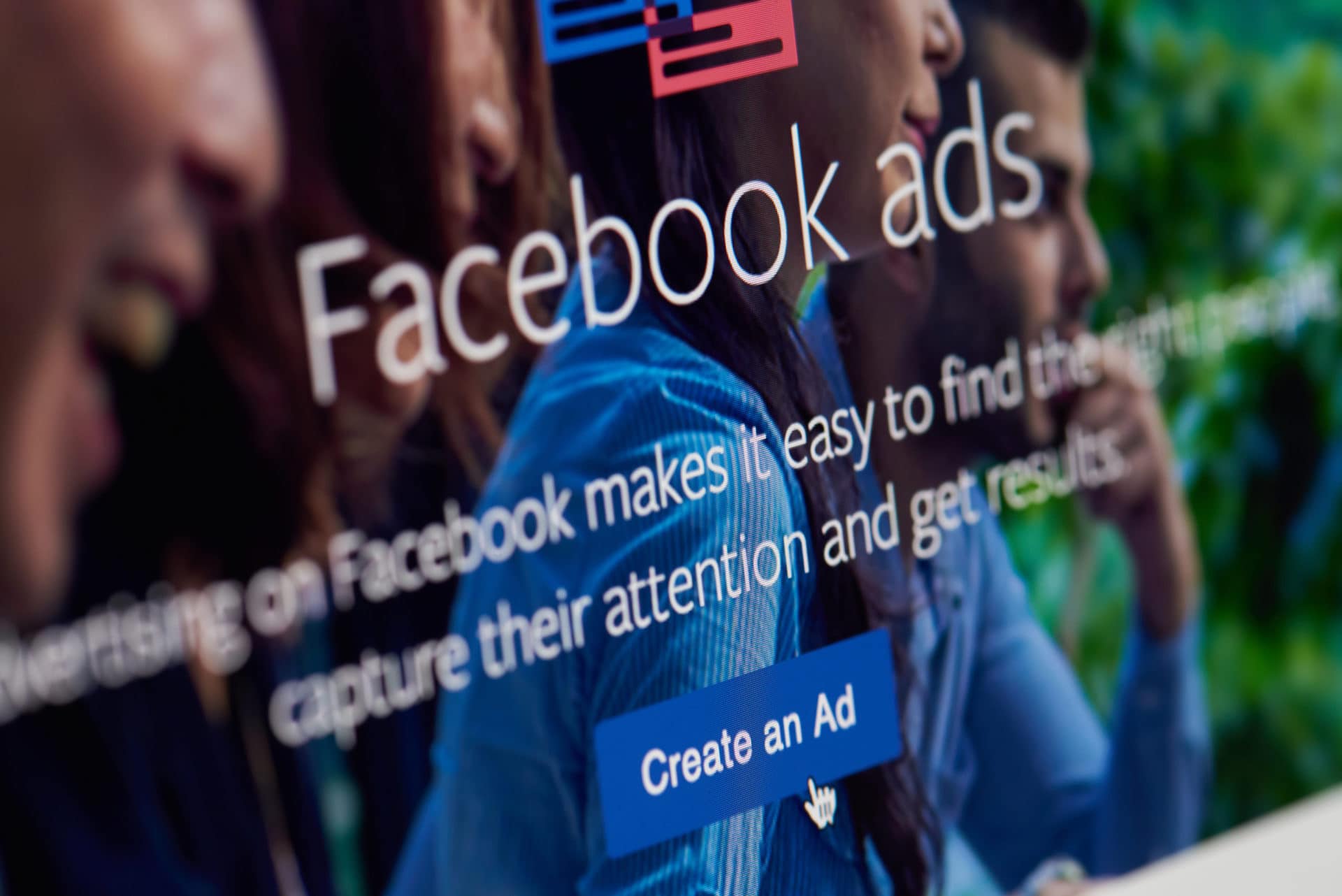
Facebook Ads can be a time-consuming to set up, and confusing to use, but the pay-off can be truly tremendous. As technology continues to develop and the world progressively grows remote, one thing is becoming clear: the marketing tactics you were using before aren’t going to work the same today.

This is true whether you’re an experienced digital marketer or you just created your company’s Facebook page. Things have changed! And with the average Facebook user spending 38 minutes on the platform every day, it’s no wonder why 92% of marketers use it to their advantage.

The competition’s steep. Over 1.5 million businesses advertise on Facebook. How can you ensure you get seen by the right people? You essentially have two options: you can either learn how to advertise on Facebook, or you can hire someone who knows what they’re doing.

If you’d rather take a shot at it yourself, that’s what we’re covering today, but unconventionally. Today, we’ll be walking you through the top seven things to avoid while advertising on Facebook.

Want to outsource? Talk to our social media experts.

How do Facebook Ads work?

We’ve covered this topic before, so we’ll keep this section short. Way back in 2007, Facebook Ads were known as “dark posts.” Why? Because they weren’t directly associated with your Facebook Page or Group. Therefore, Facebook saw them as “undercover” posts meant to convert your customers without the direct brand association. As you can imagine, they’ve grown significantly from the days of small display ads on Facebook’s sidebar.

Today, Facebook Ads are a laser-targeted tool to get you in front of your customers no matter where they’re at. You can use them to promote your Facebook Page, posts, Facebook Group, or even your website. For example, you run an HVAC business and have your Page set up to drive appointments. You could use Facebook Ads to encourage users to your Facebook Page, Group, or website. That’s the power of Facebook advertising.

Who should use Facebook Ads?

There’s much debate about who should advertise on Facebook (and why), but we’re firm believers that anybody can – and everyone should! eCommerce businesses no longer dominate the internet; the perfect time to get into Facebook advertising is today. It can make a big difference to you bottom line.

Read more: What are Facebook Ads and how do we use them?

What are the most common mistakes we see?

We won’t sugar coat it: Social media marketing is tricky. Every platform has its algorithm to be aware of, and every algorithm caters to a different audience. It can be exhausting trying to stay on top of everything while also running your business. And while Facebook Ads can – and do – make a big difference in business, they can be confusing. Sometimes it’s helpful to hear everything you’re doing right in your marketing, but sometimes the best way to truly level-up your strategy is to understand which parts to improve. With that in mind, are you ready for some hard truths?

Here are the seven most common mistakes we see while making Facebook Ads.

#1: Not knowing your Facebook Ads target audience

As we mentioned earlier, Facebook’s advertising strength comes from its incredible targeting power. You can target people by their location, age, gender, relationship status, connections, interests, languages, education, and even workplace. You can get so hyper-targeted that your pool of users becomes too small. The trick behind a well-targeted audience is knowing their interests.

Most marketers try to either target the largest groups possible or the smallest, but both are mistakes. Instead, they key is to understand their precise interests. For example, suppose your target audience is yoga enthusiasts. In that case, chances are they follow local yoga studios, yoga magazines and blogs, and like workout apps. Add those to your interest lists while creating an ad, and suddenly, your pool becomes much more specific and unbiased.

Advanced Tip: Download Facebook Pixel onto your website. When someone visits your site via your Facebook Ad, Pixel will monitor any action they take and report it to you. Not only will you be able to see your ads working, you’ll be able to retarget to them later on.

Read more: What analytics should I track on Facebook Ads?

#2: Not running strong enough creative on Facebook Ads

What’s the first thing you see on any piece of content, paid or organic? The image, of course! Your creative is the most crucial part of your ad, hands down. Many things can make a creative flop, but the most notable mistakes we see are the image’s relevance.

Is your image reflective of your target audience? Are they good quality photos that aren’t stock images? Are they branded, engaging, and eye-catching? If you’re not sure, get some feedback from your boss or team! If they don’t find them engaging, your target audience won’t either.

Advanced Tip: Use images with people facing to the right. We’re more likely to follow another person’s gaze—leading readers right to your headline.

#3: Using Facebook Ads to run only one ad at a time

Not everyone has the marketing budget for multiple offers running simultaneously, but you should still be running multiple ads at once. This is called A/B testing, and it’s absolutely the best way to know if your ad is operating at the highest capacity. Your team can offer their opinions to get the ad running, but ultimately, the market will show you what it’s interested in – with clicks!

Unfortunately, most small businesses will only run one ad at any given time, slowing this feedback loop and losing out on opportunities to improve their results, decreasing your ROI.

Advanced Tip: Run at least three ads with the same offer. The only difference between all three? The creative! After about six weeks of A/B testing with controlling what’s changed, you’ll have a fire ad, ready to be deployed whenever you need it. Here’s how we recommend you get started:

  • Change the image (or video or carousel) on all three Facebook ads.
  • Find which performs the best after about 10 days.
  • Then, run three more Facebook ads. This time, keep the same creative and change the headlines. Repeat the vetting process.
  • Then change the copy of your advertisement.

Read more: Quick guide to Facebook Ads for contractors

#4: Running Facebook Ads with an incomplete funnel

Here’s the thing: your ad is only ONE piece to a much larger sales or marketing funnel. A “funnel” is the path your customers take from their personal Facebook or Instagram feed to whatever end goal you’d like them to take. For example, say you run a coffee shop, and you want to get more sign-ups for your email newsletter. Your funnel would include your Facebook ad, the landing page with your offer the ad takes them to, the newsletter sign-up form, and the thank you page.

For most ads, the funnel is the same: Your ad, your landing page, and your thank you page. If any of these are outdated, it could affect your conversions (and therefore your results.)

Advanced Tip: Use the same image that’s on your ad on your landing page. This way, people know they’re still in the same funnel—and are on their way to getting the offer your advertised.

#5: Paying attention to the wrong analytics

We’ve already mentioned tracking tools like Facebook Pixel. Still, we recommend using the analytics tool that makes the most sense to you. If you’re already using Google Analytics to track your website, you should continue using it. However, the most important metric when it comes to your Facebook Ads is your click-through rate (CTR). Your CTR lets you see how many people are clicking on your ads – it shows how much you’re paying per click – which lets you know your investment is paying off.

Low CTR could mean one of two things: your ad is losing interest—known as “ad fatigue”—or your pool has run out, and you’ll start paying more per click.

Advanced Tip: To avoid ad fatigue, replace your creatives every two weeks with fresh but similar images or videos. Testing new photos is the best way to develop your advertising expertise!

Read more: Ignite your HVAC marketing plan with Facebook Ads

#6: Running Facebook Ads without a set budget

Or worse, not sticking to a budget. This is the easiest way to get into an advertising hole, and unfortunately, we see it all the time. Here’s the secret to advertising: set a budget, stick to it, and learn to work within it. This is why A/B testing is so important, and why great creative is the key: you should maximize the value of every dollar, and make it work as hard for you as possible.

Advanced Tip: Even if you’re ready to increase your budget, see if you can increase your conversion rates within your existing budget. When you optimize your ad even further, adding the extra allocated budget will triple or even quadruple your results!

#7: Expecting immediate results

By far, the biggest misconception we encounter is that paid marketing will get you instant results. As we’ve already covered, perfecting advertising takes time, especially with Facebook Ads. Even if you have a solid understanding of your target audience and your brand, Facebook’s algorithm doesn’t just shoot ads to your entire pool of targets.

Instead, think of it as a trickle. Every time one ad gets more clicks, Facebook sends it to more users. Your best bet is to let the ad run its course, for roughly ten days or so, and do your analysis of the results afterward. And remember: pay attention to the metrics that matter. If you don’t get the results you wanted, you’re one step closer to understanding the cause. Optimize, test, and try again.

Most of our clients don’t get results within the first month. This isn’t because they’ve got bad ads, it’s because Facebook takes its time to ensure it’s providing you with the best results.

Want to call in the experts? Hi! We’re here to help.

The digital revolution has done so much to democratize marketing in the last few years. Now small, local HVAC businesses can compete with bigger companies on a much more equal footing.

Here, we’ll look at three low-cost, and in some cases, free, methods to get huge reach and effective targeting as part of your HVAC marketing strategy.

Prefer to chat to a person? We get it. Give us a call.

Building sales funnels in HVAC marketing

Sales funnels are a widely used marketing technique that you can use to draw in new customers for your business. The basic premise in HVAC marketing is that you start by making people aware of your business and gradually draw them down the levels of the funnel, giving them the information they need, until they decide to become new customers. It’s called a funnel because it starts broadly – i.e. who are you? Then the information gets more specific as they go further along. What’s your full range of services? Then what’s a special offer specific to their needs? Then how do they contact you? The focus narrows until you’ve given them precisely what they need to address the issue they’re having. It’s important to keep this in mind as you design your website and build your strategy from there.

Read more: Capture more qualified leads with landing pages

Awareness is key to good HVAC marketing

Awareness is the first stage in a HVAC marketing funnel. At this point, your main concern is with getting as many people to see your content as possible. You’re trying to convert people from general consumers to prospective leads. These people will remember you next time they need HVAC services. At this stage quantity is as good as quality, you want good coverage, but you also need to make sure that when people read your content or see your ads, they aren’t put off by low quality.

A big part of HVAC marketing is education

Next, you want to be putting out content that answers people’s questions. This shows them the problems they are having, even ones they don’t know they are having, and how you can fix those problems. We like to recommend that you include helpful advice on how people to fix these problems themselves. This breeds goodwill and helps make people trust you so that they remember you as a helpful, trustworthy business next time their A/C unit or furnace needs its annual service.

Read more: Is marketing the new sales?

HVAC marketing relies on engagement

The third stage of the funnel, when it comes to a good HVAC marketing strategy, is engagement. This really requires quality production. Every time someone clicks on one of your ads, or a link in one of your blogs, they will be taken to what we call a “landing page.” It is important that this is just as high quality as the ad or the blog. The purpose of all these ads, blogs, landing pages, and so on, is to get people to reach out to them, to walk into your metaphorical showroom.

The best part of HVAC marketing is conversion

Finally, we come to the thin end of the funnel, conversion. At this point, people are actively coming to you. They know who you are, they know what services you provide, and they have a good impression of your business. Now that, you’ve got them coming to you, you need to sell to them. Let’s continue our showroom metaphor. They want to buy a product that you sell or use a service that you provide. What you have to do is prove to them that they want to buy from your business, not your competitor. At this point, you’re no longer really doing digital marketing, but rather you’ve transitioned into sales.

Ready to get started? Schedule a free consultation.

Social media is key to HVAC marketing

Social media is another incredibly powerful HVAC marketing tool that has made the job of small companies easier than ever before. Because platforms like Facebook have such huge reach, with more than 2/3 Americans using it, you can market directly to your most likely buyers. It’s an essential element of every strategy, because unlike the broad funnel of your website, waiting to catch interested customers, you can use social media more like the nozzle of a vacuum cleaner.

The advantage of social media, and advertising platforms like Google, is targeting. Social media platforms gather huge amounts of data about their users which allow them to model those people really accurately. This means that you can target ads to people and be confident that they are more likely to succeed than traditional ads. The real advantage with social media is that you can do this, while still advertising to huge numbers of people, which makes your sales funnel very effective.

Social media is useful in other respects as well. It allows you to create a community following around your brand, with real person-to-person interaction and gives your customers a direct line to your business for reviews. Some may see this as a benefit only for the customer, but your business can benefit as well, as long as this is done right. When you post content on your Facebook page, you open yourself up to the whole world, and anyone can say anything. This means that any negative reviews you receive can be responded to directly. When doing this, it’s important to do it well though! You have an opportunity to turn a negative review into a positive with a well-reasoned, polite response. We often find that these actually give a better impression of a business than great reviews alone.

Read more: Is your social media producing results?

Blogging can boost HVAC marketing efforts

We briefly mentioned blogging in our sales funnel walkthrough, and here we’ll discuss how to make sure your blogs have maximum effect. Blogging may not be an obvious HVAC marketing strategy, but it’s essentially a method to game Google’s search algorithms, known as Search Engine Optimization.

Whenever someone searches for something on Google, the search engine searches through everything on the internet to bring you the most relevant results. It works out what is relevant based on various criteria some of which we’ll list here, along with the way you can meet those criteria:

  • Relevance: Google calculates relevance based on the amount of time users spend on the search results provided for a given search term. If someone searches “HVAC near me” and they click the first result and realise it isn’t what they’re looking for, they click the back button quickly and Google interprets this as the page having low relevance. You, therefore, need to make sure that your blogs are relevant to the title and keywords you’re using.
  • Questions: You’re probably aware that Google searches are often used to answer questions. A great strategy for blog writing is to find out what questions are being asked, using services like Answer The Public, which allows you to find out what the most common questions are for certain keywords. Just type in the name of service or product you want to sell, find out what people want to know about it, and answer that question. Make sure you link to a page where people can either buy the product online or a contact form so they can get in touch.
  • Backlinks: Google uses links on webpages as a sort of review system. If someone links to your site, it means they think it is good. However, getting other websites to link to yours can be challenging, so we use the practice known as backlinking. This involves linking between pages on your own website, to accrue multiple “recommendations” of your own content.

Ready to develop your strategy? Call our friendly team.

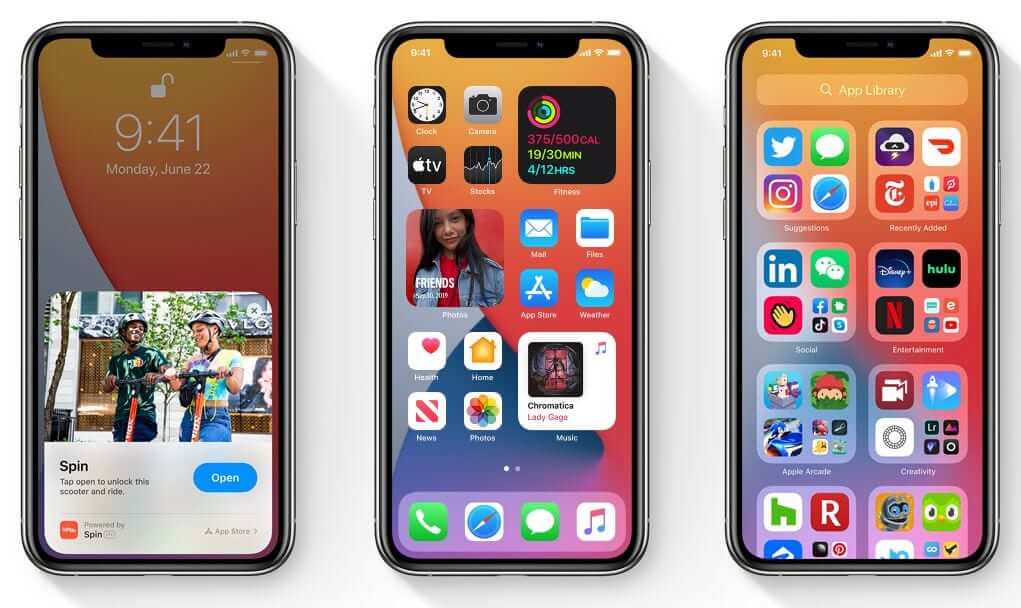
Apple is officially one step closer to taking over the world. In 1984, the Macintosh computer convinced the public they needed personal computers. In 2007, the release of the iPhone made Apple technology essential to life and business in the 21st century. Now, the new Apple iOS 14 upgrade is directly challenging tech juggernauts Facebook and Google in a battle to rule the internet.

The upgrade, announced in August, promises fresh new features designed to make sure people’s private lives are actually private. Apple’s product page declares, “privacy is a fundamental human right and at the core of everything we do,” promising users more control over the data they share and more transparency into how it’s used.

When iOS 14 rolls out, a new feature in the App Store will help people understand the privacy practices of every app before it’s downloaded, and a new privacy report button allows them to better understand how websites treat your privacy. Most importantly, users will have the option to stop sharing personal information with advertisers.

Want to talk about how this will affect your business? Talk to us today.

How will the Apple iOS 14 upgrade affect Facebook?

The effects of the Apple iOS 14 upgrade are likely to be significant for Facebook advertising.

Facebook announced that it could lead to a more than 50% drop in its Audience Network advertising business. It’s complicated, but bear with us a second. The drop could occur because iOS 14 will not collect a type of data known as an Identifier for Advertisers (IDFA) number. This is a unique device identification code which allows advertisers to target potential customers based on Facebook data.

The Facebook Audience network is a nebula of internet real estate that allows advertisers to boost Facebook and Instagram campaigns onto thousands of high-quality apps on the internet. It’s designed to help advertisers reach more of the people they care about in the places they spend most of their time online. In a new blog post, Facebook says more than 1 billion people see at least one Audience Network Ad every month. It’s a powerful tool to boost brand awareness and engagement.

It’s important businesses take note, because according to Statista, there are currently more than 100 million iPhone users in the United States, which accounts for about 45% of all smartphone users. If all users block their data, an enormous amount of the Facebook advertising market will disappear.

Make the most of Audience Network while you can. Get started.

How will the Apple iOS 14 upgrade affect Google?

And what about Google? Well, experts such as the team at Coywolf say a significant update to the Applebot support page, and an increase in crawling from Applebot, may signify that apple is planning to launch a search engine of its own. Google is currently the default search engine on Safari, which ensures that iPhone, iPad and Mac users search with Google. Google pays a handsome amount for this privilege, but rumors are rampant that this deal may be about to end.

Considering Apple is incredible well-resourced, it’s in a really good position to develop its own search engine, keeping all that incredibly valuable data in-house. This would enable it to develop its own advertising proposition and challenge Google’s monopoly on the search and display market.

Again, this takes out a huge proportion of the market, so it’s important to watch for updates.

Google is currently unchanged. Let’s develop a strategy.

Is the Apple iOS 14 upgrade the end of digital advertising?

One really thing to point out here is that at this point is that people using the Apple iOS 14 upgrade will still see ads on Facebook, but they’ll have to deliberately opt-in to see them on the Audience Network. Audience Network typically accounts for anywhere from 50-75% of campaign results, so while it’s significant, it doesn’t mark the end of the digital advertising world.

Further, Android will be unaffected, and it’s unclear if it will follow suit. These users will see the ads displayed as banner ads, video ads, and interstitial ads on third-party websites right around the internet. That means you’ll still theoretically be able to target 55% of the smartphone advertising market through Facebook and Google advertising. Phew. Breathe a sigh of relief.

Digital advertising isn’t going anywhere. Need some help?

How can I work around the Apple iOS 14 upgrade?

When the update goes through, there’s no doubt it will significantly affect online advertising. That means it’s important business owners get ahead of the curve in terms of looking for alternative forms of digital advertising and investing in organic engagement on Facebook and Instagram.

It’s still early days, so we don’t fully know how it will roll out and what the effect will be, but to make sure our clients are as prepared as possible, we’re recommending five strategies to consider:

  1. SEO-targeted blogs

The first and most obvious solution is to invest in content that will bump up your website’s rank on Google. At this point, Google’s services will be unchanged, so seize the opportunity to double-down on your search engine optimization strategy and reap the rewards of a ranking at the top of the list.

Use a tool like Google Trends or Keyword Tool to find out what your customers are searching, then create content around it. You might find it helpful to answer frequently asked questions, create step-by-step guides to problems you commonly solve, or comment on the latest news in your industry. Just make sure you capitalize on any potential opportunities to insert those keywords so Google can find your blog when people are searching for it. This includes the heading, subheadings, and text.

Read more: How to write a blog post to grow your business

  1. Google Ads

Google Ads are a wonderful way to make sure people can find you when they need you most. There are two main types, Search and Display, which can be used to target people in different ways. Search ads are linked to keywords, popping up at the top of the results page when people search like terms. Display ads, meanwhile, are designed to put your brand in front of customers who are likely to need your products and services and build brand awareness through exposure. Both run on a pay-per-click model, which means they can be a very cost-effective way to attract interest and generate leads.

Read more: Make Google Ads work for your business

  1. Google My Business

Google My Business is the information panel that appears at the right of the screen when you search for businesses in your area. It’s essentially the modern version of a phone book listing, allowing people to find out all the essentials at a glance: address, opening hours, phone number, reviews, and much more. They’re free to set up, all you need to do is claim your listing and fill in the details.

According to BrightLocal, 64% of consumers have used a Google My Business listing to find the address or phone number of a local business, so an active profile can put your business right at the fingertips of potential customers. It’s basically a digital sign post pointing people to your store.

Read more: Google My Business is the perfect tool for marketing

  1. YouTube ads

YouTube is one of Google’s most successful products. It’s an advertising giant and is comparable to Facebook, Instagram and Google in terms of reach and effectiveness. It’s very effective if you’re targeting young men, because an estimated 62% of YouTube users are males and the largest percentage of them are aged 25-34. However, it’s so big that you can target any demographic.

This can be a really cost-effective option, because you only pay for impressions when ads are actually viewed, not skipped. You can also dial in on specific interest areas, maximizing the chance your ad will be seen by the right people, and it offers real-time insights that tie in with Google.

Read more: Why is corporate branding important?

  1. LinkedIn ads

LinkedIn is an amazing resource for B2B marketing (we don’t recommend it for B2C marketing, so definitely opt for Google Ads if this is your goal). An estimated 57% of users access LinkedIn through mobile, meaning you can deliver your messaging straight to the pockets of your consumers. It has a high trust value and it’s a fantastic way to target professionals in a very detailed way.

The best way to run LinkedIn ads is to target people aged 30-49 and be prepared to spend more than you typically would on Facebook and Google. It’s definitely more expensive to run, but it can pay big dividends once you connect to the right communities and start generating high-quality leads.

Want to develop a marketing strategy? Give us a call.

Social media is the perfect tool for mental health marketing. The wide variety of platforms means that you can target your preferred audience, use the whole range of digital media, and build brand loyalty. Even better, you can do most of this for free! In this post, we’ll explain our five top tips for making sure your social media presence is as good as it can be.

Already know what you need? Give us a call.

1. Choose your social media platform(s)

There are so many social media platforms these days that choosing which one to use for your mental health marketing strategy can seem like a daunting task. They are all different, and the demographics that use them mean the differences are important. Ultimately, the platform you choose will inform the audience you are able to reach.

For example, Facebook is still the biggest platform around, and it has loads of useful features for businesses, but its user base is getting older. If you want to target a millennial audience for your mental health practice, you might do better on Instagram. If you want to target even younger audiences, you’ll want to be looking at platforms like TikTok.  The challenge with the youngest social users is keeping up with whatever platform is fashionable right now!

The audience is not the only factor to consider, however. Different platforms also lend themselves better to certain types of content. In some cases this is obvious – for example, YouTube is for videos – but in others, it might be less clear. Instagram is for photos, right? Well, it can also be a really good platform for short video. Meanwhile, LinkedIn, with its focus on B2B, tends to be used more for text than other platforms. This is important to consider when trying to place your marketing efforts.

Read more: Telemedicine is booming in mental health

2. Mental health marketing needs consistency

This is something that sounds obvious, but which many people overlook. If you want your mental health practice to have a successful social media presence, you need content. Just creating an account won’t do anything. You need to be posting at least weekly, and we’d suggest more regularly if you can. The real advantage of digital marketing has over traditional marketing is that it’s so easy to put out large amounts of content to lots of people. Unfortunately for you, everyone else is doing this too. The more they put out, the more you have to put out in order to just be noticed. Social media may have democratized mental health marketing, but it’s also increased the work you have to do to keep up.

So, if treating social media like a billboard or newspaper won’t do, then what will? Well, as we said above, post content! Post it as often as you can, post every time you write a blog on your website, post every time you offer a new service, post every time you change something about the way you practice, post every time you attend a mental health conference, or a new study comes out that changes the way you work. You need to be putting content out there if you want this to be worthwhile.

Read more: 3 things to know about Google Ads.

3. Community building on social media

We’ve got quantity out of the way, now for the quality. What we call “community building” in mental health marketing is really just a different way of saying building brand loyalty. The great advantage of social media is that you can build brand loyalty in people who haven’t even visited your mental health practice. This means that if in the future those people do find themselves in need of mental health services, they’ll already have a preferred provider in mind, you!

There are many ways of building a community online, and each successful business has its own. Here, we’ll just give a few tips that go a long way. Obviously, the first is in what you post. Your content should be friendly, human, and show people that your team is made of real people, not just a corporate account run by some faceless person in an office block. Just as important is that way you interact with people who comment on your posts. Social media posts aren’t just “fire and forget” marketing; they’re two-way. If you reply, you can build rapport with the comments, and everyone else who stops to read.

The way you reply is possibly even more important. Having a good in-person reputation is hard when your social media is badly managed. If people are posting criticisms on your platforms, you need to be able to respond politely. It may sound obvious, but it’s not uncommon to see businesses respond to negative comments badly, and it can be more off-putting than the original comment.

Remember the golden rule of social media: everyone can read what you write!

Looking to maximize your impact? We can help.

4. Branding is key to mental health marketing

This is related to our previous section but goes a little further. Not only is it important to remain courteous, but also to keep the tone of your posts consistent with the mental health service you’re trying to sell. There is a certain tone of voice that is appropriate when posting about children’s services, but a very different tone might be needed when talking about crisis prevention services.

It all comes back to your brand. Who are you? Why are you in business? What matters to you and why? What is your purpose? Figuring this out right at the beginning means your messaging will be consistent across all of your social platforms, as well as the way you treat your patients in real life. Consistency is essential in mental health marketing because it helps people get to know you, so they know what to expect when they engage your services, and they can feel confident working with you.

Read more: What makes a good mission statement?

5. Mental health marketing needs visuals

Visual marketing has become really important in mental health marketing. This isn’t really news, because images have been used in marketing for as long as marketing has existed, but we’ve never before had the ability to include video quite so easily. Previously, you’d have to pay big bucks to produce television commercials, but now you can just pull out your phone and do a Facebook live. This is a great way to let people meet you, see your practice, and invited them to come and visit.

Video is a great way to convey information. Humans absorb and retain data best when they are able to hear and see someone telling them, so this is the best way to get your message across – second only to talking to someone face-to-face. Video is also much more friendly, and less intimidating, than a wall of text. If you’re interested, you can learn more about video marketing here.

Ready for a marketing partner? Schedule a free consultation.

You’ve probably seen the term “sales funnel” quite a lot as you’ve been researching digital marketing online. They can be extremely powerful when you’re trying to convert leads, but how can you apply a sales funnel to your dental marketing strategy? That’s a really good question.

Sales funnels works as you’d expect, by collecting as many people as possible at the wide end, and gradually drawing them down the levels of your funnel until they become paying patients at the bottom. The number of people at each stage will reduce as they progress through the funnel, until you only have qualified leads. The way you set up your funnel is important, so here’s a step-by-step guide.

Ready to talk sales? Ask our experts today.

Dental marketing starts with awareness

Awareness is the first stage of every digital sales funnel. This is where people become prospective patients, transitioning from never having heard of your dental practice, to becoming aware of it. This is also the stage at which the person starts to learn how you can help with problems they’re having.

The best dental marketing strategy here is to generate awareness is through content. At this stage, you want lots of people to see what you’re putting out. This maximizes the number of people in the funnel and increases the number of people making it all the way through. This is a case of quantity AND quality – obviously, the content has to be good enough that people actually read or watch it, but you need to make sure you don’t spend too much time making it, and too little working on the next piece.

So, what kind of content you be putting out to raise awareness of your dental practice?

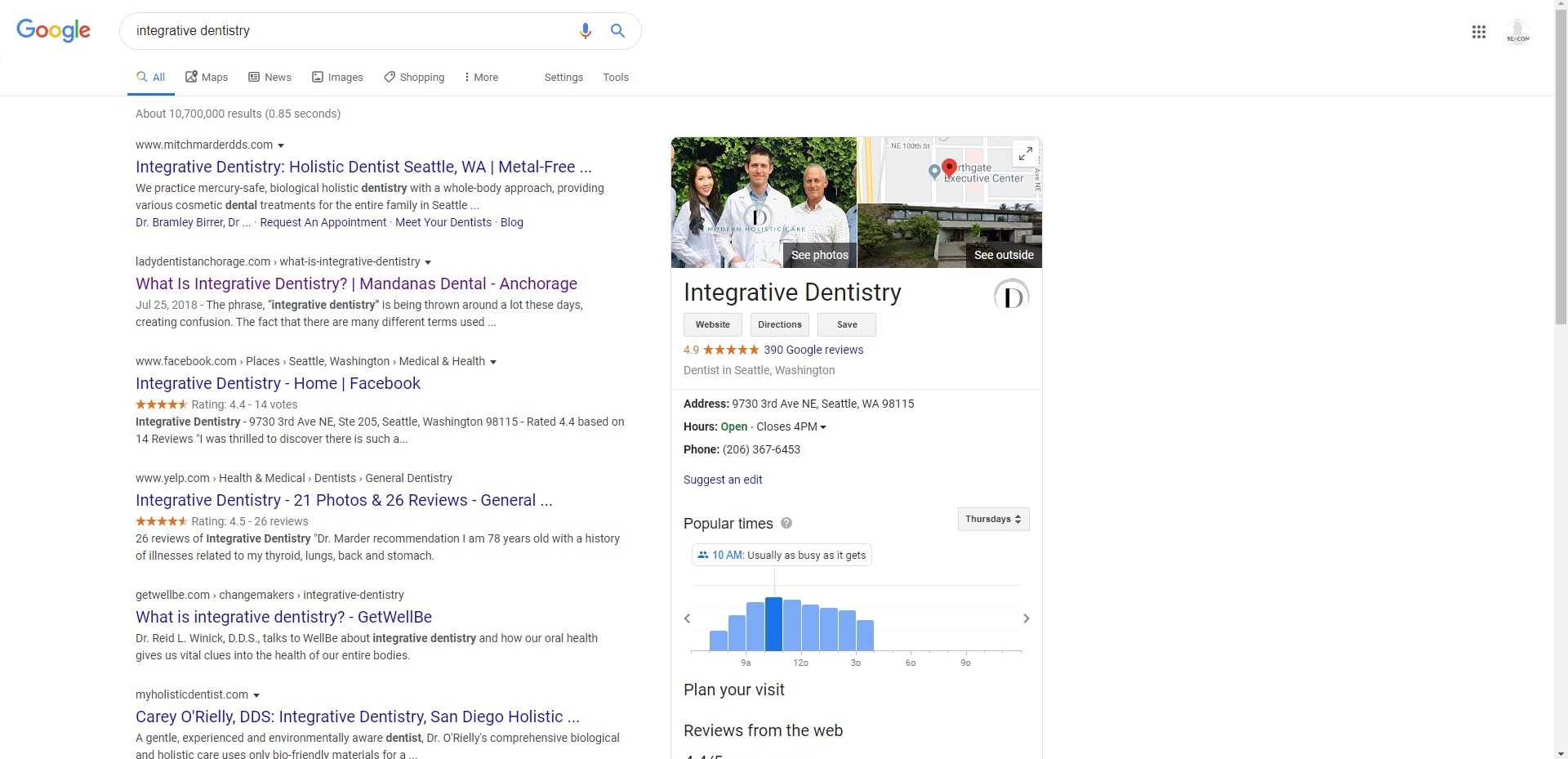
The truth is just a 400-600 word piece about a topic people are searching can increase the chances of people finding your business. Take our client, Dr. Mandanas, whose integrative dental practice is based in Anchorage, Alaska. We write blogs for her dental practice every month and now we have our blog on the top of the Google results page for the search term “integrative dentistry.”

Dental Marketing

You can increase your chances of reaching the top-ranked spots on Google search by practicing Search Engine Optimization, which we explain in detail here. It’s a really neat way to take your dental marketing strategy to the next level. You should also note that in addition to publishing on your website, you can boost the reach of your blogs through Google Ads, Facebook ads, and social media.

Want to phone a friend? We’re here to help.

Education is the key to dental marketing

The next level of the funnel is education. This is for those people who clicked on one of your ads, navigated more of your website after reading your blog, or clicked on a link in a Facebook post. The people who click on a link on social media or an ad need to be sent to dedicated “landing pages,” which are essentially sales pages that give people all the information they need to sign on.

For example, if you’re advertising children’s braces, your ad and landing page should focus on the topic. The landing page should give some more information about the braces you offer, the problems you can fix with them, and how to get in touch with you so that they can learn more. It should be fact-based and persuasive – getting this right is essential to your dental marketing strategy.

Alternatively, if you wrote a blog post about regular cleanings and their importance in staving off periodontal disease, you could then include a link to the page of your website where people can schedule an appointment to have a check-up and cleaning.

Read more: 5 genius ideas to grow your dental practice

Dental marketing leads to engagement

The third level of the sales funnel is where prospects become leads. People in your community are aware of your dental practice, they know they services you provide, they’ve clicked through to your website, and now they need to be converted into leads. The best way to convert these people is by having them reach out to you and schedule a consultation, or to ask about your services and costs.

The question, then, is how to get these people to get in touch?

Your landing pages really need to be on point. You need to be active on social media. You need to run Google Ads for key terms people will search when they have an issue you can address. That way, you’re staying front of mind and making it as easy as possible for them to choose your practice. That way, when they’re interested enough to pick up the phone or fill out a contact form on your website, it will be an easy decision and you’ll be waiting to welcome them into your office.

Although this is a very exciting stage, we’re not done yet.

This is where you cross from dental marketing to sales. The prospective patient is now interested enough in your dental practice that they have actively got in touch with you, but if you can’t close the deal all that work will have been wasted. We call this process “conversion”, as you are converting a person from a prospective patient into an actual patient.

Need help refining your landing pages? Contact us.

Converting patients with dental marketing

Conversion may be more of an art than a science. It’s important to remember that people probably aren’t just looking at your practice. If they’re actively looking for a dentist it’s likely they’re dissatisfied with their current provider, or they have a problem. If it’s the latter case, they are likely to be looking with a sense of urgency and will be looking for a solution ASAP. Whichever of the practices they are researching is able to provide that information first is likely to convert that prospect into a patient.

According to revenue acceleration company Xant, half of prospective patients choose the company that reaches out first. Among the reasons for this are a perception that your practice is well organized, professional, eager to help, and easy to find. Those who do it well are likely to convert.

Read more: Step-by-step orthodontics marketing plan

Dental marketing needs a target

We talked at the start about the way sales funnels grab as many people as possible with a wide opening, and gradually draw people down to become patients as they pass each level of your dental marketing strategy. However, there are tools available that make this even more efficient.

The rise of targeted advertising on platforms such as Facebook, and across the entire web thanks to Google, means that you can use your funnel a bit more like the nozzle of a vacuum cleaner. By targeting your ads based on Facebook or Google’s prediction models, you can make sure that your ads are only seen by people who are likely to make their way all the way through the process. This may seem as though your numbers will be reduced, but due to the vast reach of platforms like Google and Facebook, you can still reach large numbers of people. More importantly, you’ll reach the right ones.

We hope you find this guide helpful in creating your own sales funnel. This is a great time to re-evaluate your dental marketing strategy as many people look to start returning to regular life, although now with a heightened sense of hygiene and cleanliness. Not only is this a time to welcome your regular patients back, but you can also seize the opportunity to increase your market share.

Ready to get started? Schedule a free consultation.

It’s time for people to come back to the dentist after lockdown, which means now is a great time to be marketing your dental practice. This is a great opportunity to start gaining market share, as well as welcoming back your own regular patients. If you want to make the most of this period, you’re going to need a killer marketing strategy that makes use of all the tools available to you. Keep reading for our top four dental marketing tips.

Prefer to talk it through in person? Give us a call.

1. Dental marketing starts with a website

No matter what your dental marketing plan entails, sooner or later patients will be looking at your website. A few years ago, an amateur could put together a website and it didn’t matter that much what it looked like. Nowadays, however, so many people have well-designed sites that anything less can reflect badly on your dental practice. It’s easy to see why. If you’re looking for a dentist to take care of your teeth, you want someone who gives a sense of competence and professionalism in every aspect of their business. A well-designed website, with a clear list of services and costs, is a necessity if you want potential patients to feel as though they can trust you to take care of their oral health.

Your website can also show the human side to your dental practice. Many people are wary of visiting a dentist, and humanizing the process can alleviate some of their fears. Short biographies of your staff members, lots of pictures of the practice, and testimonies from current patients are all dental marketing essentials. They can all help to make the dentist seem much less daunting.

A great website will be the anchor for your entire dental marketing strategy.  All of your social media presence, advertisements, and physical marketing will point people to your website. It should be easy for visitors to find your location, your contact details, and your services and costs. This allows them to decide that you’re the dental practice they want to visit and make the necessary appointments.

Read more: Managing online reviews in dental marketing

2. Community building in dental marketing

Social media is the next most important dental marketing tool. It has such a huge reach that not using it is a significant lost opportunity. Social media allows you to produce ads which can be targeted to specific audiences. This targeting can be incredibly specific due to the amount of data people willingly give and the inferences that these companies are able to draw from users’ activity. We’ve written before about how Facebook advertising yields results (you can read that here).

Here, we want to focus on the organic side of social media. When we talk about “organic” on social media, we’re referring to the posts you make on your own profile, rather than paid ads. These posts are visible to people who follow your page, as well people tagged in the comments. This kind of post may not have the same kind of reach as an ad, but it has a different relationship with the people who see it, because it feels more genuine – it’s a modern form of word-of-mouth advertising. It’s easy to present the culture of your dental practice, perhaps with slightly less “polished” visuals, but they let people interact with your practice on a personal level, which builds a community. Dental marketing in this way builds a form a form of brand loyalty, where patients feel that they actually know you.

We’ll develop a step-by-step guide for you. Contact us now.

3. Dental marketing with Google My Business

Google My Business is a tool that we are recommending to our clients more and more as we see really impressive results. You’ve probably come across it before. When you search for a restaurant or store, you’ll see a box on the right-hand side of your Google Search results page. It can include images, a link to the website, and interactive phone links for mobile users.

We recommend it for the same reason we recommend a professional website: it’s becoming standard, which means not having one can make your dental practice seem less reputable.  If all the big-name businesses have Google My Business then not having one makes you seem like a small, slightly unofficial business, and no-one wants to visit an unofficial dentist.

The good news is that it’s is really easy to set up. In fact, we’ve written a detailed guide on setting up your listing here – it’s as simple as finding your listing on Google and claiming it. You’ll want to do this as soon as you can, because the process is so simple that anyone can claim a listing. At this stage, there’s actually nothing that can stop someone else from claiming yours, which isn’t ideal.

Case studies: Grow your practice with these bold strategies

4. Online reviews in dental marketing

Google My Business allows us to slide neatly into our next tip, online reviews. Reviews are integrated into your listing, so anyone who searches for your dental practice can see what others think of you. This is really important. If your practice is well-rated, this will obviously inspire confidence in prospective patients. On the other hand, dentistry is a field where people are already nervous, and the perceived potential for harm is large. In practice, this means that your reviews are going to have a much more significant impact than other types of businesses, such as stores or coffee shops.

The best way to make sure you get good reviews is to give good service, but there are other tricks to maximize your score. You may have heard of a concept called “volunteer bias.” This is what happens when people are voluntarily able to review products. Those who had an average experience don’t put in the time to review, so the aggregate score represents only those who had either a bad experience or a very good experience. As a result, negative reviews can have a disproportionate effect. You can get around this by actively asking people to review your business. This is a fine line to tread, because being too pushy can lead to people be put off and giving a worse review, however, when it’s done well, it can fill in some of that space between the very good and the bad, which improves your score. It also increases the numbers of reviews, so any single bad review is much less noticeable.

Another good strategy for reducing the impact of bad reviews is to reply to them. A well-reasoned, polite response can often turn a bad review into a positive – read this post to learn more.

Worried about your reviews? We can help!

Bonus tip: Using video in dental marketing

Okay, okay, we promised four tips – but here’s one extra. We’ve been writing a lot about video lately. It’s dramatically increased in popularity with the increased performance of mobile devices, and it’s a great way to connect with customers online. For example, it’s an excellent way to cram a lot of information into a format that takes little effort to absorb, and it’s easy to maintain attention.

Not only is video great for information transfer, but it’s also really great for building rapport as it allows you to present a human face to potential patients. As we mentioned before, this is especially important for dental practices as it helps remove some of the apprehension that people may feel. It also gives you a great opportunity to let people see your practice and to talk about offers.

We hope you’ve found this list of our top tips helpful, if you’re interested in learning more about the digital marketing strategies we use, check out our other blog posts on marketing for orthodontics.

Need a marketing partner? We’d love to help.

The world is very different right now than it was six months ago. The events of this year have caused a lot of change in the way people live and do business. Businesses that rely on face-to-face interaction, such as dental practices, have been hit particularly hard. Even now, as the market is starting to open up again, there will be lasting changes. It makes sense, then, that your dental marketing strategy changes accordingly.

Need personalized advice? Schedule a free consultation.

Social strategy is now king in dental marketing

One of the most important lessons learned from the lockdown period is that dental practices who interact with their customers on a real, human level do best. That means social media should be at the core of your dental marketing strategy, because it allows direct contact for reviews, criticism, and complements. This lets your patients feel like they’re really talking to a person and that their comments and concerns are being heard.

Posting on social media falls into two categories: ads and organics.

Ads are exactly what you think: images or short videos that grab attention and hopefully draw people to your social profile or website. Social media advertising is incredibly powerful. Platforms such as Facebook collect lots of data about their users which allows them to build detailed profiles about those people’s personalities, likes, and dislikes. Also, you are able to target your ads, rather than just scattering them out and hoping that potential leads see them, as you might with traditional media such as newspaper or radio ads.

Because of all the data social media companies collect, you can be really specific about the people you want to target. This type of advertising is called “targeted advertising” and it is almost the sole source of revenue for Facebook, Google, and other large tech companies that offer free services.

Organic posts are posted directly to your account feed, and while there is no cost attached to these, people won’t see them unless they visit your account or follow you. The advantage of organic posting is that it has a way more personal feel. People who see these posts are more likely to feel like they are seeing something personal.

This is where our next point comes in.

Read more: Step-by-step orthodontics marketing plan

Dental marketing needs constant communication

Because so many people have been exposed to reduced, and often uncomfortably low, levels of social interaction over the last few months, it is more important than ever to show a friendly, welcoming face in your dental marketing plan. Social media provides an amazing way to do this by allowing you to communicate directly with potential new patients. However, just posting once or twice won’t be enough to maintain this image.

The more you communicate with your followers, and the friends they share your posts with, the more this impression of personability comes through. If you’re able to post daily, both existing and potential patients will feel as if they’ve got to know you. Not only does this give them cause to trust you when they are looking to return to the dentist, but also keeps you in the back of their minds, so that they think of you when they do decide it’s time for their next appointment. This is key to your dental marketing success.

Applying the methods you use for your organic posts to your ads is another great way to give the impression of interacting with a real person. When people see a clean-cut, professional ad, with all the perfect imagery and color, it may feel just a little distant and corporate. To someone who hasn’t seen their family for four months, or who hasn’t left their apartment in a week, a simple video of your staff warmly expressing how much they’re looking forward to welcoming patients back to your practice can go a long way.

Case studies: Grow your practice with a bold plan

Video is perfect for dental marketing right now

Speaking of video… video is one of the best tools in your dental marketing toolbox when it comes to making things personal. Someone who really understands the power of this strategy is Gary Vaynerchuk. He has mastered the use of his smartphone camera to give the impression that he is talking directly to the viewer, almost like a personal video call. This works especially well on social media because of how scalable it is. He can have a “1-to-1” conversation with millions of people at once. (We’ve discussed Gary and how he creates such successful content before – if you want to learn more about video production, check out this blog). This style may not suit you or your dental marketing plan, but using video of your staff, and even customers if they are happy to help, gives a sense of honesty when you make claims about how great your business is. A short text post saying that you’re offering a discount for new clients is nowhere near as impactful as a short video of a patient who had a great experience.

The sense of personal service that you can give with visual media is complemented by the brain’s ability to digest imagery better than text, and to remember it for longer. In fact, this article from 2012 found that users are more than 27 times as likely to click on a video ad than a standard banner ad! From presenting information faster than text, to allowing people to take in non-verbal communication, there’s a reason why the most popular social media platforms are those that include a large amount of video, including Facebook, YouTube, and Instagram.

Read more: Managing online reviews in dental marketing

Dental marketing needs reassurance first

As people start heading back to the dentist after lockdown, many may be concerned about the continuing risk of infection. Your marketing is an excellent way to reassure your existing and potential new patients that you are exercising the highest standards of safety and infection control. This is something that won’t disappear just because the lockdown ends either. It’s highly likely that the impact of this period will be felt for at least the next year and that people’s awareness of infectious disease will remain at a heightened level for a long time.

Again, video will prove an important tool in showing how seriously you’re taking the safety of your dental patients. Showing the preparations you’ve made and precautions you’ve taken, while also reassuring people that they can still expect a warm, personal service behind the mask, will make sure that people feel confident to pay you a visit.

Need some help? Ask our dental marketing experts today.

Once you establish a strong functional medicine marketing funnel, you’ll start to see a steady stream of leads arriving in your inbox. It’s the first step to helping your practice grow to the next level.

Most often, people will find your practice through search and social, where you’ll have an active presence thanks to Google Ads, Facebook Ads, and an active content marketing strategy. They’ll click through to a polished landing page on your website, where you’ll educate them about what functional medicine is, and all the different ways you can help. They’ll reach out to you and either schedule a free consultation or request a free download. Just like that, you’ve got a lead.

That means you’re going to have tons of business, right?

Maybe! Abundant leads are a very exciting part of the growth process, but truthfully, it all depends on whether or not you can close them. After all, numbers are only meaningful if they follow through to a sale. You can develop the best website traffic, the highest social engagement, and the longest list of leads, but they’re not going to help you unless you can drive conversions.

So how can we close the gap and ensure functional medicine marketing leads to sales?

Prefer to chat to a real person? Schedule a free consultation.

Converting functional medicine marketing leads

One of the most important things to remember in health marketing is that your business might not be the only business that prospective patients are considering. They’re looking to solve a problem related to their health, which means they’re experiencing a certain level of discomfort, which in turn leads to a sense of urgency. They’re looking for answers, and they’re looking for them now. The first functional medicine practice to give them the information they need is likely to convert.

You can’t expect your leads to sit still, so you need to make time a priority. As internet entrepreneur Neil Patel says, “first to call is first to close.” According to Xant, a revenue acceleration company based in Utah, 50% of leads end up choosing the company that reaches out first. There are a few reasons for this: the fact that your practice comes across as being organized and professional, the perception that you have answers and are eager to help, and the fact that you make it easy.

In this respect, automation can be your friend. Once someone hits “submit” on a request for a consultation or phone call, send an automated email thanking them for their request, providing a link where they can get more information, and letting them know a realistic timeframe.

Time really is of the essence. Five minutes is better than 30 minutes, which is better than an hour, which is better than a day. The earlier your respond, the better your chance of converting a new lead you’ve received through your functional medicine marketing strategy.

Read more: Is marketing the new sales?

Try, and try again, to close functional medicine sales

The internet is theoretically endless, and every page is fighting for attention. That means there are distractions are every turn. People have short attention spans, which means they move on quickly. Chances are, they’re not sitting by the phone and waiting for your sales call.

We assume you’ve heard the famous quote: “If at first you don’t succeed, try, try again.” It’s believed to have originated in 1840, but it’s as relevant today as it was then. Don’t stop after just one or two emails or calls. Be polite, and don’t hound your prospective patients, but remember a little bit of persistence at this stage shows that you’re willing to go to the extra mile for them.

Need help refining your strategy? Schedule a free consultation.

Making sure functional medicine marketing and sales match

Digital functional medicine marketing requires a constant flow of feedback, not just from between your practice and its patients, but between your marketing and sales strategies. If something isn’t working, ask why! Are you attracting the right type of leads? Are your messages getting mixed? Do you need to bolster the educational part of your process to help people understand what you offer? Is your price point too high? Is there a weakness in the funnel, like a broken link?

Effective functional medicine marketing strategies aren’t “set and forget.” You need to check in constantly to adapt and modify things as best practices change, you should run A/B tests to see what’s going to be most effective in your area for your desired clientele, and you should think critically about how things are working and why to ensure your process is optimized.

If you can’t figure it out, go right back to basics. Who is your ideal client? What do they need? Who are your leads? Do they match your ideal client profile? If not, why did they reach out? Once you have answers to these questions, you’ll be able to ensure both your functional medicine marketing strategy and your sales process address the right pain points to convert the right leads. It’s important to be consistent across all your patient interactions so you can start building trust.

Read more: Anatomy of a high-converting landing page.

Finding your functional medicine marketing niche

Every functional medicine business has a unique value proposition. It comes with the territory: by nature, you’re an out-of-the-box thinker. That means some aspects of your business might be better suited to driving sales through a functional medicine marketing strategy than others.

For example, you might have an integrative cardiology program you can use to deliver results for people with heart problems, which allows you to focus your efforts on a really narrow niche. You might have a 12-week anxiety program, designed to help people reset their mental health through functional medicine practices, which allows you to hone in on a highly-targeted market. Perhaps you specialize in helping people with autoimmune conditions, or migraines, or obesity. Great! Use that to your advantage and make it the focus of your functional medicine marketing and sales process.

The best thing about finding a niche is that it allows you to research your competitors, find out what they’re doing, and think of ways you can do it differently or better. It reduces the competition, which means you’re likely to see a return on investment much sooner than you would otherwise.

Finding a niche is a great way to streamline your funnel, align your messaging, and fine-tune your process. Once you’ve nailed it on one aspect of your business, you can build up to your other programs and speciality areas, to ensure you’re doing it in the most effective way possible.

Read more: Why having a mission statement matters.

Helping your functional medicine practice grow

If you’re new to the world of sales funnels, you’re rebranding, or you’re serious about wanting to grow your business, you may benefit from hiring a digital marketing agency. They’ll be able to conduct research on your behalf, advise you about the best way forward, and build all the pages you’ll need to refine your funnel. They’ll also be able to provide training to ensure you’re ready to receive sales calls and you know exactly what to say to get convert new patients for your practice.

Ready to get started? Schedule a free consultation.