Jennifer Christensen

Chart The Waters

Explore insights on SEO, AI, and digital marketing strategies designed to help your business grow, stay visible, and adapt in a constantly evolving online landscape.
Beacon_Icon_resouse

Your friendly (or not so friendly) competing orthodontics practice recently launched a video commercial on social media and everybody’s talking about it.

You’ve been watching as, week after week, they share more video and get more likes, comments, reactions…and business.

You know that the use of video media is skyrocketing and marketers are recommending increased video production to keep up, but you don’t know how to make that happen.

Is this you?

If so, we’re glad you’re here, because this blog was written for you.

Our goal today is to give you some practical tips for ramping up video production at your orthodontics practice.

We’ll talk about a tool called content repurposing, how to make video a part of your practice culture, and we’ll even give you some video formats you can use right now!

Enjoy!

1. Use Content Repurposing for Massive Video Production

Okay, so what is content repurposing and how will it help you ramp up video production at your orthodontics practice?

Content repurposing is a method of starting with one piece of video content and editing it to create many videos to use throughout your marketing.

Content repurposing is a method of starting with one piece of video content and editing it to create many videos to use throughout your marketing.

It is a very effective way to increase your video production without the added expense.

For example, say you filmed a commercial for your orthodontics practice.

Maybe your commercial focused on a couple of different aspects of your orthodontics practice, such as the advanced technology you use and your family-friendly atmosphere.

You can take the fundamental pieces of that video–the audio, A-roll (primary footage), and B-roll (secondary footage)–and take them apart to make several shorter videos with different focuses, for instance, one video each on technology and atmosphere.

Content repurposing makes your video production stretch as far as it can!

Learn From the Best at Video Production and Content Repurposing

Someone who excels at video production and content repurposing is Gary Vee.

If you’ve never heard of him before, he’s a famous entrepreneur and marketing professional who has practically built some of his businesses using content repurposing.

What Gary Vee does is he has his staff film him as often as they can and then he turns around and multiplies those videos by 10.

It’s called the “Gary Vee Content Model” and it takes one long video and repurposes it into 30 different content formats including videos, gifs, podcasts, blogs, social media posts, and more.

Take a look at his content model on SlideShare.

The example Gary Vee gives in his SlideShare is of a keynote he repurposed to generate over 35 million views.

For a video production that cost him very little (he was probably paid to speak), Gary Vee created thousands of dollars in marketing value through content repurposing.

Content Repurposing Saves Your Orthodontics Practice Money

By this point, you have probably picked up on a theme.

Ramping up video production at your orthodontics practice doesn’t have to be a costly ordeal.

Content repurposing is one of the scrappiest ways to produce lots of video and it is great for small orthodontics practices or for those who have small marketing budgets.

In fact, all the ideas we are sharing today carry this theme.

Let’s talk about other ways to increase your video production without spending a dime!

2. Make Video Production Part of Your Orthodontics Practice Culture

Have you ever considered the video talent you have working at your orthodontics practice?

Your staff could be the #1 source of video content for your marketing! Especially those who have customer service skills and experience.

And no, they don’t need fancy videography equipment to make it happen.

The iPhone is becoming more and more advanced. At this point, many photographers and videographers consider iPhone photos and videos passable for marketing material. In fact, iPhone video often comes across as more authentic because it is more casual.

Encourage your staff to start filming and see what happens.

Just Pick Up the Camera at Your Orthodontics Practice

Another example of someone who excels at video production is Allen Gannet.

Like Gary Vee, Allen is an entrepreneur and marketing professional, albeit not as famous. He is, however, a reasonably popular LinkedIn influencer, in part because of his skill with iPhone video.

Through a fun video series called #AllenAsks, Allen just picks up his iPhone video camera and asks famous business people questions that everybody would like to ask them.

It’s just about the easiest thing a person could do, but it’s wildly successful, and it’s something you could do at your orthodontics practice (although you should probably choose different people to interview).

Allen regularly gets thousands to tens of thousands of views on his videos. Imagine getting that much attention with a 30-second video recorded by one of your orthodontics staff on a Tuesday afternoon!

You may not get the level of viewership Allen receives right away, but he is an excellent example of what’s possible with iPhone video.

Make Video Production As Easy As Possible for Your Staff

Now you’re probably thinking to yourself, “There’s no way I can get my orthodontics team to do this…”

It can be challenging to get buy-in from your staff, especially for something as talent-driven as video production.

One of the ways you can tackle this is by writing scripts for your team in advance and by providing them with everything they need for their first filming, including equipment and instructions.

This makes video production as easy as possible for them and empowers them to be the best they can be on the camera.

If they have a good experience the first time they try, chances are they’ll want to do it again!

Show Your Orthodontics Staff What You Want Them to Do

To make sure your orthodontics team is producing the style of video you’re looking for, you may want to set the tone by filming yourself first.

Showing is always more powerful than telling! Not only will this show your staff what you want, it will also show them that you are not afraid of video and they shouldn’t be either.

3. Try Some New Video Production Formats

Okay, we’ve talked about how content repurposing stretches your video content, we’ve shared just how easy video production can be with the advent of the iPhone, and we’ve discussed ways to make video part of your orthodontics practice culture.

One thing we haven’t covered yet is what kinds of videos you could actually be producing!

Take a look at some of these ideas and see what might click for you and your orthodontics team.

Try Every Video Production Format You Can Think Of

Something our team (Beacon!) has been doing is creating video for just about every kind of marketing we use.

That means video for our website, our blogs, our social media, and more. And we’ve been getting everyone on our staff involved!

Here’s an example of a recent video our Social Media Specialist Luke Pahlau filmed as an introduction for one of our social media blogs (on iPhone no less).

We encourage you to think broadly about how you could be using video at your orthodontics practice.

The blog we filmed this video for currently ranks #1 on Google for the search “social media for med spas” and it regularly brings us new web traffic and leads.

Video production works!

Pull Patients Aside at Your Orthodontics Practice and Film

Remember Allen Gannet from before?

He found great success by simply pulling people aside and asking them one question only.

You can imitate this video format at your orthodontics practice!

Instead of business professionals, plan to interview your orthodontics patients (with their permission of course), your vendors, your staff, people from non-profits you support in your local community, or simply everyday people from around town.

Come up with a relevant, open-ended question to ask them that you think other people would be interested in hearing the answer to, such as, “Why do you love living in our city?”

You have a great opportunity to position your orthodontics clinic as one that provides value to the people you serve beyond orthodontics!

In the case of your staff, you may ask an educational question about your services that you think people are asking, like, “What alternatives are there to traditional wire-and-bracket braces?”

Work with the Video Content You Already Have

After reading this headline, you might be thinking, “But I don’t have any video content. That’s why I’m reading this blog!”

You may have more to work with than you realize.

Whenever you instruct a patient on how to care for their orthodontic appliance, that’s something you could be filming for others to benefit from.

If your orthodontics practice participates in local, community events, turn the video camera on! This is something you could be filming too.

Finally, if you are already writing blogs for your patients, you could film your staff repeating the information shared in the blog.

Look for the value you are already providing to the people you serve and find ways to create video content from it.

That video content can then be broken down and repurposed!

At Beacon, we have lots of awesome conversations with our clients and other people in the local business and non-profit community.

We recently turned those conversations into a video series on YouTube called “LIVE Conversations.”

https://youtu.be/YI7BnYYWrjg

Besides being just fun these videos have seriously improved our YouTube presence!

Just Turn on the Video Camera

Ultimately, our best advice for increased video production is to just turn on the camera!

What the best video producers excel at is finding ordinary moments that other people could benefit from.

An easy start to a video like this is, “Hey guys, I was just talking with so-and-so and I feel like this is something you could benefit from too.”

Wouldn’t that hook you into listening, at least for the first couple seconds?

We hope this blog has helped you think broader about video production for your orthodontics practice.

We also hope it has inspired some “right now” practical ideas!

Video production does not have to be as big and scary as some marketers make it out to be.

You can ramp up video production at your orthodontics practice no matter your budget, skills, and technology.

If you are interested in working with a marketing agency to brainstorm some ideas and get you started with some high-quality video production, we would love to talk.

You can schedule a free consultation with us now based on your availability.

We look forward to hearing from you!

Happy filming!
Looking for the digital marketing tools that will knock your next campaign out of the park?

As a digital marketing agency, we have a lot of experience with the tools that help (and some lessons learned with the ones that hinder).

Today, we only use the best.

Want to know what our top 5 digital marketing tools are?

Well, today you’re in for a treat.

What Is a Digital Marketing Tool?

Before we begin, let’s get an important definition straight.

What is a digital marketing tool?

A digital marketing tool is any web-based technology that can be used to advance your digital marketing efforts.

“A digital marketing tool is any web-based technology that can be used to advance your digital marketing efforts.”

There are digital marketing tools for email marketing, for customer relationship management, for marketing automation…just about anything you can think of!

Today, we’re going to talk about digital marketing tools that fall into three categories:

  1. Website marketing tools
  2. Search marketing tools
  3. Social media marketing tools

Let’s begin.

Your Foundation: Website Marketing Tools

To start, we’re talking about website marketing tools, because your website is the foundation of your entire digital marketing campaign.

When we say, “website marketing tools,” we mean the system you choose to build your website on, better known as the “content management system.”

“A content management system is a system you choose to build your website on.”

In the world of digital marketing tools, there are many content management systems to choose from.

You have probably heard of many of them before: WordPress, Wix, Shopify, Squarespace, etc.

The #1 content management system on the internet is WordPress.

WordPress, the #1 website marketing tool.

Top Digital Marketing Tools #1: WordPress

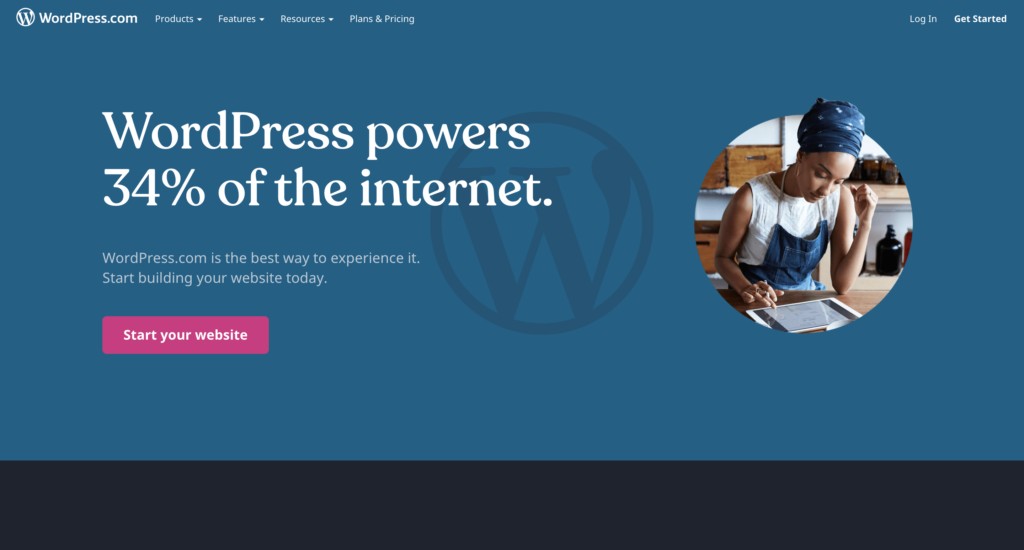
WordPress powers 34% of the internet according to W3Techs, a technology survey firm.

WordPress powers 34% of the internet according to W3Techs.

Let that statistic settle in for a second.

Thirty-four percent of all websites across the globe run on WordPress.

This makes WordPress the top website marketing tool.

It’s the one that we use for all our client websites (including the website you are reading now!).

Why do you think 34% of us digital marketers are using WordPress?

We recently wrote a blog on why WordPress is so popular for new websites.

Here is a brief summary of the benefits of WordPress:

  1. WordPress is free and open to everyone
  2. You can build any kind of website you want on WordPress
  3. WordPress is easy to use
  4. You don’t have to learn to code to use WordPress
  5. You can get WordPress support just about anywhere
  6. WordPress is scalable and can handle business growth
  7. WordPress integrates with most business software
  8. With WordPress, you own your business website – not so with the “other guys!”
  9. WordPress is the best blogging platform in the world
  10. WordPress is SEO-friendly
  11. You can upload photos, videos, and documents
  12. WordPress is mobile-friendly
  13. WordPress is safe and secure
  14. It’s just plain popular!

And that’s just the abbreviated version!

If you would like to learn more, read the blog.

For now, suffice it to say that you should be using WordPress over anything else if you want the best of the best among website marketing tools.

Next Steps: Search Marketing Tools

Once you’ve chosen the best digital marketing tool for your website (that’s WordPress), you’ll want to promote it on the top channels.

Naturally, the first channel you’ll be promoting your website on is the search engine.

The #1 search engine in the world is Google.

Google offers a couple different search marketing tools for you to take advantage of.


Top Digital Marketing Tools #2: Google

Google boasts an 88% market share according to Statista, another survey firm.

Google boasts an 88% market share according to Statista.”

If you’ve been in business for any significant amount of time, then you’ll understand the value of market share.

You’ll also understand that an 88% market share is unheard of.

What this means is that all other search engines in the world–be it Bing, Yahoo!, or something as obscure as DuckDuckGo–capture only 12% of all search traffic combined.

This makes Google the top search engine.

A. The Google Algorithm (Search Engine Optimization)

The first Google search marketing tool we’re talking about here isn’t so much a tool as it is a way to approach a tool we can’t access.

What we’re referring to is the Google algorithm and search engine optimization (SEO).

The Google algorithm is not public knowledge.

However, it is the tool Google uses to determine which websites rank on the first page (and which get buried on anything lower).

Google does not publish their algorithm in order to keep things fair.

Nonetheless, digital marketers like us are always seeking strategies for ranking on Google.

This discipline is called search engine optimization (SEO).

Search engine optimization (SEO) is making your website as Google-friendly as possible to achieve a high ranking among the search results.

Search engine optimization (SEO) is making your website as Google-friendly as possible to achieve a high ranking among the search results.”

Although the Google algorithm is not available for public eyes, there is a lot we digital marketers have learned through testing, experimentation, and leaks over the years.

These SEO strategies are very valuable, making them an important aspect of Google search marketing.

B. Google Ads

A secondary search marketing tool is Google’s own advertising platform, Google AdWords.

Google AdWords is used to pay for search results, often in combination with unpaid SEO strategies.

Google AdWords is used to pay for search results, often in combination with unpaid SEO strategies.”

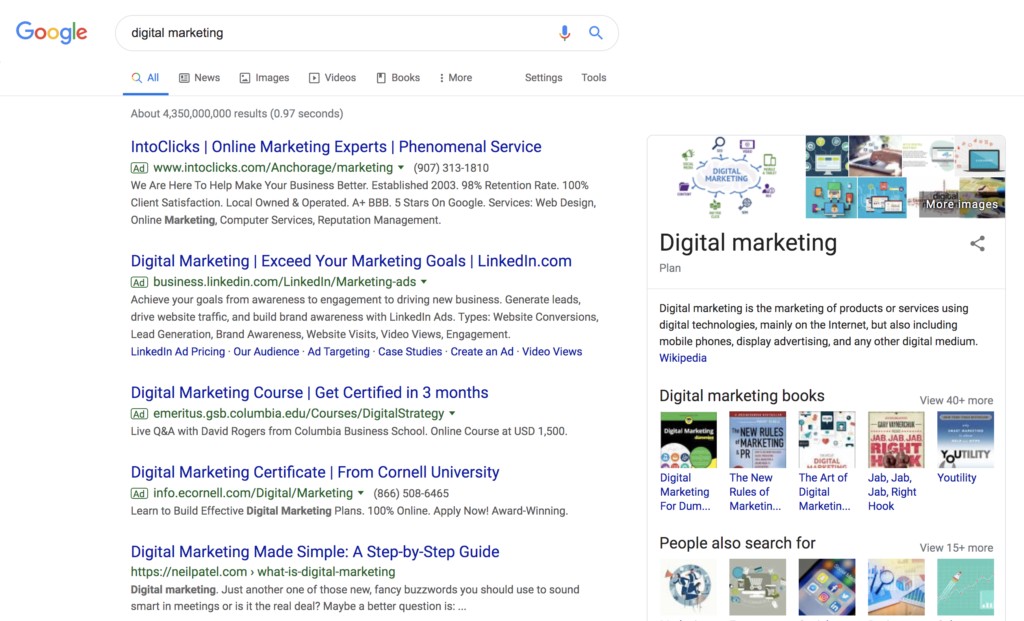
You’ve probably seen Google ads before, they’re the first couple results on most search pages, indicated by a little, green “ad” box:

The Top 5 Digital Marketing Tools and Why They’re the Best

If you’re struggling to rank among the Google search results, Google ads are a great way to get some traction on the first page.

They’re also a great way to get on the top of the results page.

For these reasons, Google ads are another important aspect of Google search marketing.

The Gold: Social Media Marketing Tools

Let’s just say your website is on WordPress, it’s achieving first-page ranking on Google, and you’ve made good use of Google Ads…

What other digital marketing tools could you be using to get your campaign message in front of as many people in your target audience as possible?

There’s a large part of digital marketing that we haven’t addressed yet: social media.

People spend 2 hours and 24 minutes on social media each day, that’s 71% of the 3 hours and 22 minutes they spend on the internet over that same span of time.

“People spend 2 hours and 24 minutes on social media each day, that’s 71% of the 3 hours and 22 minutes they spend on the internet over that same span of time.”

Our top three social media marketing tools are Facebook, Instagram, and YouTube.

The Top 5 Digital Marketing Tools and Why They're the Best

Top Digital Marketing Tools #3: Facebook

Facebook has 2.41 billion monthly active users, making it the #1 social media platform in the world.

Facebook has 2.41 billion monthly active users.”

It is seconded only by YouTube (technically a video marketing platform) (also owned by Google, *wink wink*) and Instagram, it’s own subsidiary.

What makes Facebook so popular?

Only you, the user, can tell us.

The success of Facebook is largely due to how big it became in a short amount of time, squashing all competition.

Being first to market is as good as gold.

But that success is reinforced by its value to the end-user.

Facebook was created for humans interested in other humans, which is all of us.

It allows us to take a sneak peek into one another’s lives, answering questions that had gone unanswered before at the rapid speed of the internet.

And so it became the best social media marketing tool available.

The Top 5 Digital Marketing Tools and Why They're the Best

Top Digital Marketing Tools #4: Instagram

Instagram is Facebook’s subsidiary that has over 1 billion monthly active users.

Instagram has over 1 billion monthly active users.”

For this reason, Instagram is the #2 social media marketing tool in the world, unless you count YouTube (which is a slightly different animal, but we will talk about it next).

What is the value of Instagram?

Two primary points here.

1. Instagram was created to be a visuals-oriented platform.

Instagram is pictures-first, then text.

It lends itself well to artistic and engaging images.

In this way, it cuts out all the clutter that Facebook has become littered with–long, text-based posts, articles, funny photos, kitschy graphics, and memes.

(There is a place for those things but it’s Facebook, not Instagram.)

People who want a streamlined, clean, and simple social media experience love Instagram.

That’s a big reason why it has become so popular.

2. Instagram caught on with the millennial audience.

Another reason for the rise of Instagram is that the millennial audience has taken this social media platform by storm.

64% of 18-29-year-olds use Instagram according to SproutSocial.

64% of 18-29-year-olds use Instagram.”

Just like Facebook entered the social media market loud and fast, making it the best, millennials took over Instagram so it became the place to be.


The Top 5 Digital Marketing Tools and Why They’re the Best

Top Digital Marketing Tools #5: YouTube

Earlier this Spring, YouTube crossed over into the 2 billion monthly active user camp.

Already the #1 video publishing platform in the world, this news only reinforced YouTube’s popularity.

Why is YouTube the top video marketing tool across the globe?

According to Social Media Explorer, there are five reasons:

  1. YouTube creators are compensated
  2. YouTube creates community
  3. YouTube mobilizes underrepresented talent
  4. YouTube is gamified and offers recognition
  5. YouTube welcomes competition

YouTube is generally a creators-first platform, making it very easy and valuable for creators to publish the educational and entertaining content that a good video sharing site is known for.

Are you ready to hit a home run on your next campaign with the best of the best among digital marketing tools?

We hope that you make good use of WordPress, Google, Facebook, Instagram, and YouTube.

These are the top by far because of the number of people who use them and the incredible experience they deliver.

If you are interested in partnering with an agency who uses these tools on a regular basis and understands their nuances, we would be happy to talk.

Please schedule a free consultation with us using our live scheduler.

To everyone else, best wishes as you tackle this next marketing push with the #1 tools on the market.

Happy marketing!

“The biggest mistake I see, is that people tend to give up…SEO (blogging) is a lifestyle, it’s a practice, it’s not a transaction…You just gotta keep going, you’re building your castle, you’re building your moat, it’s going to take time.”

– Sarah Bird, CEO of Moz

Have you ever considered publishing a blog for your mental health clinic?

Maybe you thought about using a blog to provide helpful resources to your patients such as mindfulness exercises or relaxation techniques.

Or maybe you wanted to update your patients on uplifting and positive events happening around town.

Whatever the case may be, a blog is a powerful marketing tool and something you should absolutely consider investing in if you are looking to grow your mental health practice…

…but there is a particular way to go about doing it.

We have seen incredible results from blog marketing in terms of new business both for us and for our clients.

But our success stems from a particular philosophy of blog marketing that we use, as well as a few, key tactics.

Without this approach, our blogs would be just that…blogs…sitting out there in the abyss of the internet with no one to read them.

In order to keep you from publishing your mental health blogs to the internet abyss, we are going to share our approach with you today!

It’s the approach that gets the results from blog marketing that all clinic managers crave.

So let’s hop to it and get you started on strategically blog marketing for your mental health clinic–to get results!

Why Blog Marketing in the First Place?

Remember those incredible results we were talking about?

Let’s cover just a few of them, shall we?

Here are some recent case studies of effective blog marketing for great results.

Case Study #1: The Beacon Blog

Beacon (that’s us!) recently decided that we want to be working with functional medicine as an industry.

So we did what we do best: We blogged!

We started writing blogs on all kinds of topics related to our services using “functional medicine” as a keyword (we’ll talk about keyword-optimization in a moment).

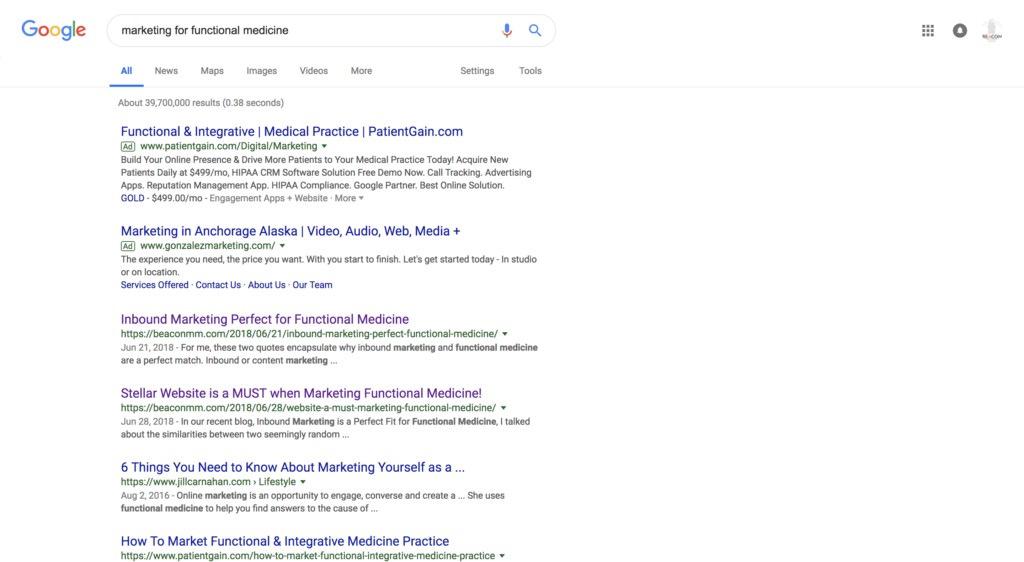
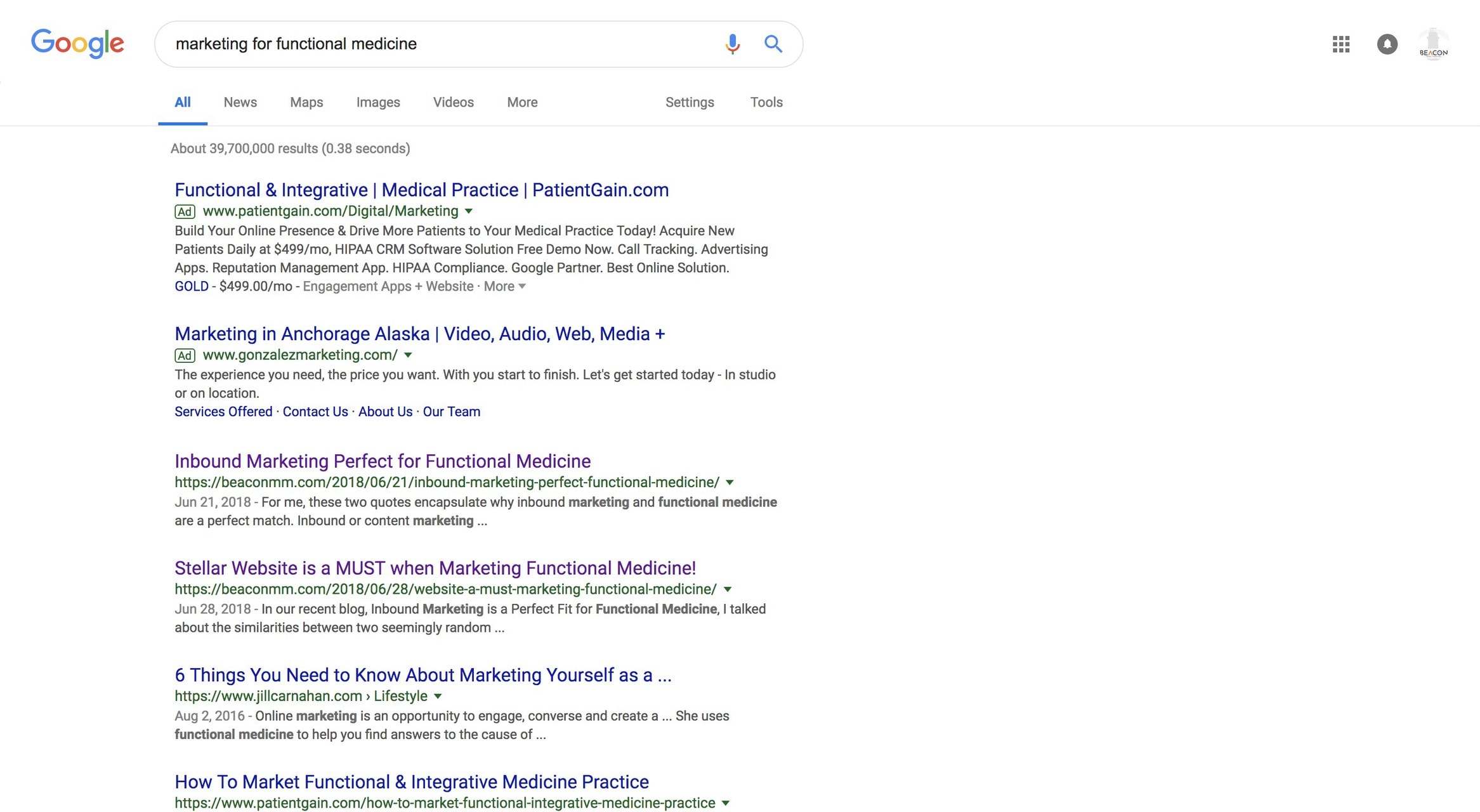
Lo and behold, within a few months, we were in the #1 and #2 slots on Google for the search, “marketing for functional medicine!”

Should I Blog for My Orthodontics Practice?

Now you could attribute something like this to fate OR you could look at the facts:

  1. We were writing blogs at the recommended length according to search engine optimization (SEO) best practices (we’ll talk about SEO in a moment too).
  2. We were strategically targeting keywords like “functional medicine,” “marketing,” and “inbound marketing.”
  3. We were making sure all the technical optimizations were in place on our website (such as mobile-friendliness, fast-loading pages, and metadata).

All of these factors contributed to the fantastic ranking we achieved.

But that wasn’t even the result that mattered!

Because of the ranking, we began to receive qualified leads for our services from functional medicine practices through our website.

These two blogs published just two weeks apart in June of 2018 are now a significant part of our sales funnel for functional medicine.

Let’s take a look at another example of effective blog marketing.

Case Study #2: The Mandanas Dental Blog

A few years back, one of our longest-standing clients, Dr. Mandanas, decided that she wanted to pivot her dental practice to focus on integrative dentistry.

So we made quick work of it and started blog marketing on the topic!

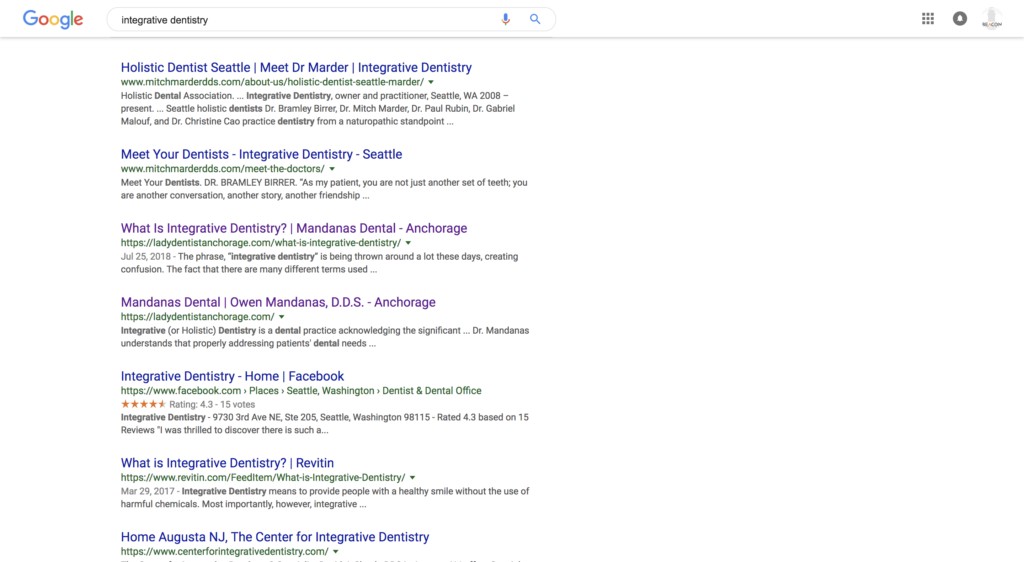
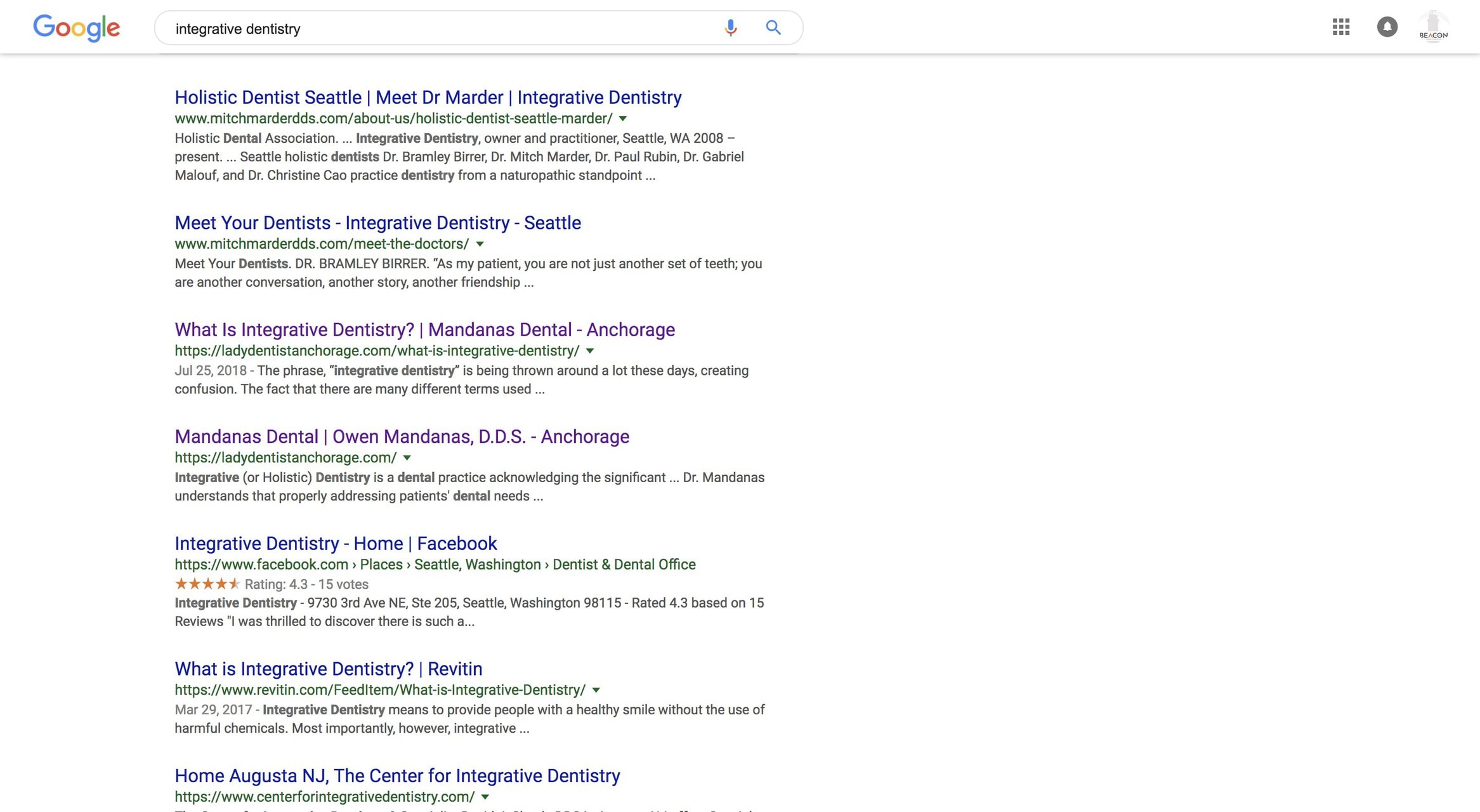
Once again, we used the appropriate keywords and once again, we were ranking on the first page of Google for the search:

Should I Blog for My Orthodontics Practice?

Using the same practices we used for Beacon, we were able to achieve incredible results for this client in a short timeframe.

Dr. Mandanas never runs out of work at her practice.

We were very happy to accomplish something like this for her using a little philosophy called inbound blog marketing.

How to Make Blog Marketing Work for Your Mental Health Clinic

How do you make blog marketing work for your mental health clinic?

By taking the inbound philosophy of blog marketing to heart.

It is this philosophy that will not only encourage potential mental health patients to click on your blog, but also to read it all the way through.

The Inbound Philosophy of Blog Marketing

The inbound philosophy of blog marketing is simple.

It’s the idea that people are searching the internet for something of value and if we consistently provide relevant value to them, they are going to think of us as the experts and prefer us over others when they’re ready to take action on their searches.

“People are searching the internet for something of value and if we consistently provide relevant value to them, they are going to think of us as the experts and prefer us over others when they’re ready to take action on their searches.”

What that means for you, a mental health practice, is that they register as a new patient at your clinic instead of your competitor’s when they’re ready to start services.

Patient preference is as good as gold but it’s so easy to earn through inbound blog marketing!

Here’s how you do it.

Research and find exactly what value your potential new patients are searching for…

…then write blogs on those topics.

Patient searches for value typically come in the form of a question.

Answering Mental Health Questions

We have a few tools up our sleeve for researching patient questions.

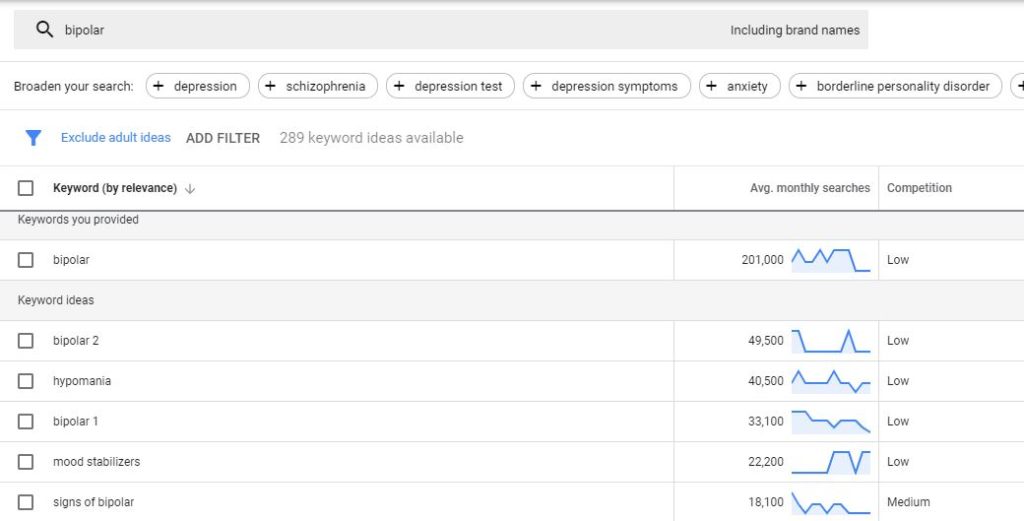
The first is the king of search’s (that’s Google) own tool for discovering popular searches, Google AdWords Keyword Planner!

Start by choosing a mental health topic that relates to your services AND you may want to blog about such as “bipolar,” then enter that topic into the tool.

What you will find is that there are many different ways people search about bipolar.

Pick one that meets four criteria:

  1. Has a high number of average monthly searches (all of the examples provided above are high).
  2. Has a low to medium competition level.
  3. Is something that relates to your services.
  4. Is something that you may want to blog about.

For this example, we’ll pick “hypomania.”

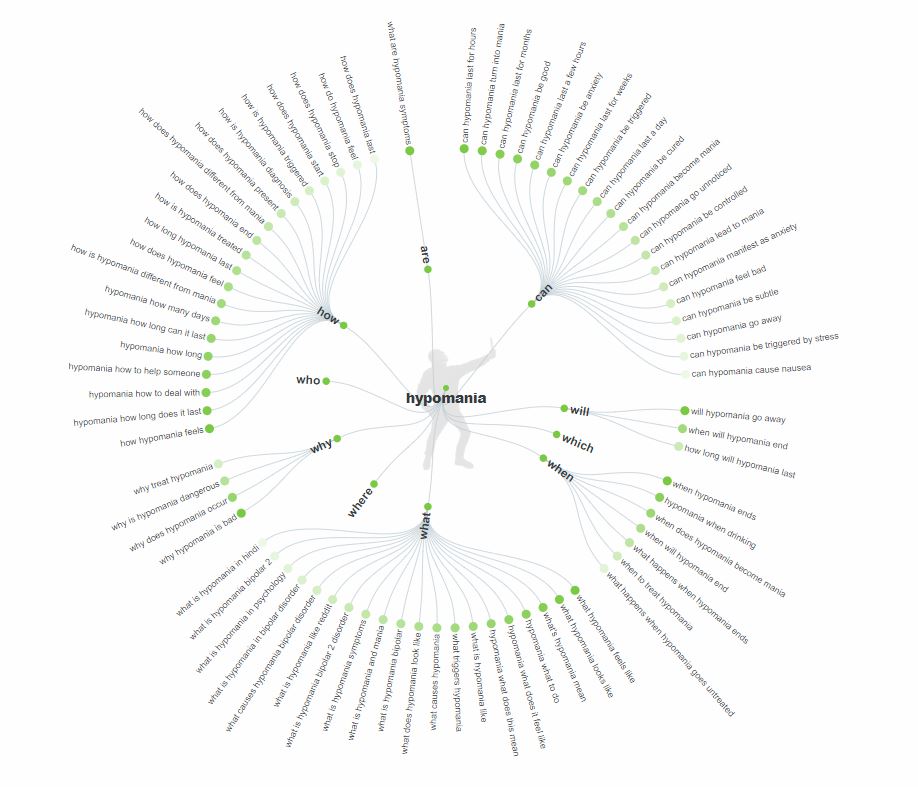
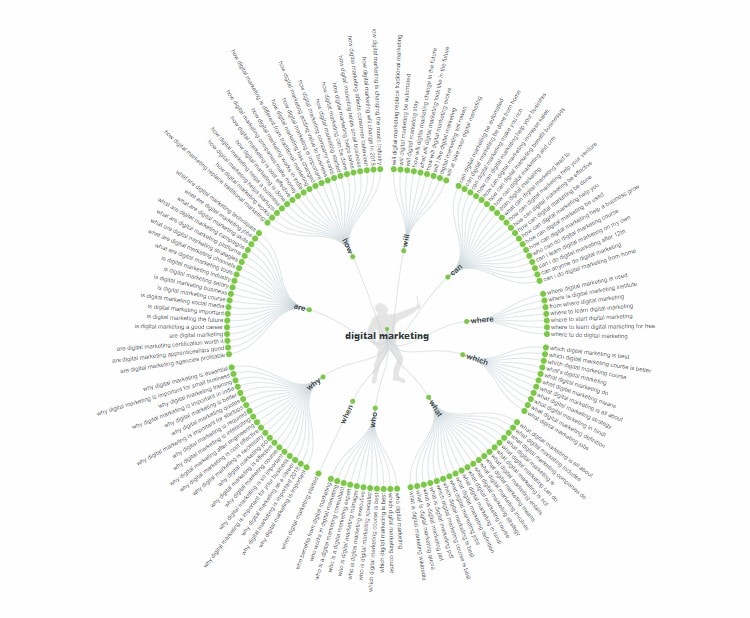
The next thing you’ll do is enter this popularly searched phrase (better known as a keyword) into a second tool called AnswerthePublic.

What this tool gives you is commonly searched questions that use your keyword:

If you can read up, down, and sideways (sorry, we didn’t create this tool), then you’ll be able to pick a commonly searched patient question that you could write something about.

Perhaps you’ll choose something like:

  • How long does hypomania last?
  • Can hypomania turn into mania?
  • What is hypomania?

By writing a blog that answers one of these questions, you are going to capture potential patients who think they may be experiencing hypomania and are asking questions through Google searches.

Chances are, these people could use the services you provide and may elect to register with your clinic when they’re ready to get help.

One important thing to note, however, is that they’re not going to see your blogs unless they rank on Google within the first several slots.

That’s where a few, key tactics come in.

The approach that we’re sharing with you today sits at the intersection of the inbound philosophy of blog marketing and these tactics.

Key Tactics for Blog Marketing in the Mental Health Industry

How do you get a blog to rank, anyway?

We do three things that have contributed to our success in blog marketing.

These tactics work for all industries including mental health.

1. Make Your Mental Health Topic Less Competitive

The first thing we do is make our topic less competitive.

Here’s what we mean by that.

There are approximately 40,000 searches about “hypomania” conducted per month.

Your competition–and even organizations who are not competing with you, such as national mental health sites–are probably trying to capture some of this traffic.

For example, there are currently (as of the date of this blog post) 619,000 results for “What is hypomania?”

The trick is to make that number as low as possible so you stand a chance of ranking.

You can make the competition for your topic low by modifying it to target a particular niche.

Maybe you specialize in working with adolescents.

The search, “What is hypomania in teens?” has just 85,600 results.

That may still feel like a high number, but it is significantly low as far as search results for popularly searched phrases are concerned.

You actually have a very good chance of ranking for a search like this; the results currently all have to do with “bipolar” and not “hypomania” specifically.

We ranked our “marketing for functional medicine” against 62,300,000 results.

How about that?!

2. Use Blog Marketing Best Practices

The second thing we do is make sure we are following the latest best practices for blog marketing.

Many of these have to do with keyword optimization and search engine optimization (SEO).

Search engine optimization (SEO) is making your blog as Google-friendly as possible so that it again, stands the chance of ranking.

Much of this is accomplished through keyword optimization of your blog.

Keyword optimization is taking your identified keyword (in our case, “hypomania”) and including it throughout the blog so Google knows what you’re talking about and again, knows what you want to rank for.

Here is our internal blog marketing checklist:

  • Word count should be at least 400-600 for some markets and 1,200-1,600 for extra competitive markets
  • Blog should include an intro, body, and conclusion
  • Keyword should be in the first sentence and approximately 3% of the blog
  • Keyword should be in as many headers as possible without keyword stuffing
  • There should be 1-3 relevant links throughout, whether outbound links or links to other pages/posts on the company website
  • There should be a call-to-action (CTA) in the last paragraph linking to another page on the website, such as Contact Us
  • Spelling and grammar should be checked with Grammarly

In addition to these things, you should check the quality of your blog title with a title scoring tool such as CoSchedule’s Headline Analyzer.

A score of 70 or above is preferable.

Finally, your website, in general, should be SEO-friendly, meaning, mobile-friendly and fast-loading without broken links and pages.

That’s a topic for another blog, but suffice it to say, an SEO-friendly website will have a place for you to set your blog’s metadata.

This is the title, URL, description, and keyword for your blog as they will display on the Google results page.

It is very important that you have these items completed with your keyword and also that your keyword is in the alt tag of all images in your blog.

Pro Tip: WordPress is the most SEO-friendly website platform available and it integrates with easy-to-use SEO plugins such as SEOPress.

3. Try the Waterfall Method of Blogging

If you have any background or knowledge of SEO, you will also understand the importance of links.

The best thing for a new blog trying to rank is what’s called an “inbound link,” or, another blog linking to your blog from a credible and authoritative website.

Quality inbound links can be extremely hard to come by, so we go about showing Google authority in another way (in addition to inbound links, if we can get them).

We create an authority structure within our own website!

We call it a “waterfall structure” because it looks like a descending waterfall.

Before we try to explain, here is the waterfall blog structure you are currently in for your frame of reference. 😉

The idea here is to address the topics from the blogs at the bottom of the waterfall in the blogs at the top of the waterfall.

Then, once the blogs at the bottom of the waterfall have been written and published, you go back to the blogs at the top of the waterfall, and link the sections discussing the topics from the bottom of the waterfall to those newly published blogs!

It’s a little confusing at first, but once you get the hang of it, it’s a killer blog marketing strategy.

What you’re doing is linking one blog to another using the keyword the second blog is targeting as hyperlinked text.

This shows Google exactly how your blogs relate to each other and which ones have the most authority.

Alright, friend!

That’s all we have for you today.

We hope this outline of our unique (and effective) blog marketing approach helps you get the results for your mental health clinic you’ve been looking for.

On the other hand, if you are interested in hiring our team to accomplish this for you, we would love to talk.

We’ve been blog marketing for results in a wide variety of industries for many years and we seriously enjoy helping our clients make it happen.

You can schedule a free consultation with us easily and painlessly using our live scheduler.

Schedule now!

For those DIY mental health clinic managers, we wish you the best as you begin your blog marketing journey!

Happy marketing to all!


Influencer marketing is on fire right now.

According to the Digital Marketing Institute, 49% of consumers depend on influencer recommendations.

“49% of consumers depend on influencer recommendations.” – Digital Marketing Institute

That’s crazy!

Influencer marketing is both extremely approachable to the influencer who gets paid for it and highly valuable for the business who gets to tap into their network of followers.

We’re going to be talking a little bit about this today.

In addition, we’re going to discuss where influencer marketing came from.

Here’s a hint: We’ve been doing it long before social media came into existence!

But first, let’s define what “influencer marketing” actually is (so we’re on the same page).

What Is Influencer Marketing?

When someone uses the term, “influencer,” what comes to mind?

Most of us think of a young, hip 20-something who regularly shares her latest lifestyle choices on Instagram–everything from food to clothing to travel to friends.

Influencer marketing does traditionally take place on social media and an influencer is, in fact, someone who stays on top of popular trends.

However, there are many common misconceptions about what influencer marketing is and how it works.

A person can be influential in many, different aspects of life:

For just about any topic a person can be interested in, you can find someone who specializes in that sphere of influence and they come from a variety of ages and stages of life.

“For just about any topic a person can be interested in, you can find someone who specializes in that sphere of influence and they come from a variety of ages and stages of life.”

Because of this, influencer marketing can work for just about any business in just about any industry, though there are some industries for which influencer marketing works better than others.

One of the best ways to understand influencer marketing is to go back to where it all began.

Influencer Marketing Over the Decades

In 1941, the world’s first TV commercial aired in the U.S.

It was for Bulova Watch Co., a Swiss watch company that captivated the American mind with their marketing.

The commercial featured a voiceover, the very first example of a TV spokesperson for a brand.

It cost a total of just $9.


Almost 20 years prior, the world’s first radio advertisement had broadcast in the U.S. for an apartment development in New York.

It also featured a voice actor. This was the first example of a radio spokesperson.

The advertisement cost a total of $50.

Today, top TV actors, including the likes of Flo from Progressive, make millions of dollars for their efforts, a far cry from the wages some of the first TV and radio spokespeople collected.

But influencer marketing is much older than radio and TV.

In the Middle Ages, everyone wanted to have their swords made by the blacksmith of the king.

In the late 1800s, brand ambassadors began to appear.

In the 1900s, brands began to experiment with fictional, animated characters and everyday people to promote their products and services.

Over time, influencers have come by a variety of names:

  • Spokespeople
  • Ambassadors
  • Celebrities

But all of them perform the same function: To put an influential face, name, or voice behind a brand.

The Benefits of Influencer Marketing

Why is influencer marketing so popular?

Because it works.

As a wise man once said, “The basis of every relationship is trust.”

It can be hard to trust someone you don’t know when they tell you they are going to do something for you in exchange for your money.

Reviews help, but most people prefer to find out about a business by a word-of-mouth recommendation from a family member or friend.

It’s safer.

However, this is an extremely slow way to grow a customer base.

The internet has made the transfer of information so much faster.

So how do you tap into this speed without neglecting to establish a trusting relationship with your customers?

Influencer marketing.

An influencer already has a relationship with their followers, so when they recommend your brand, that recommendation works just like word-of-mouth.

Influencer marketing is highly effective because it allows you, the business owner, to tap a particular person’s entire network of devoted fans–and not just any person, but the most popular person in your topic space.

Influencers are also particularly popular among Millenials and Generation Z, making influencer marketing especially beneficial for brands trying to reach this demographic.

What It Takes to Become an Influencer Today

What makes a modern influencer, an influencer?

It really just comes down to how many followers they have.

An influencer is measured by the size of their sphere of influence relative to the industry they are influential in.

For example, in one industry you may find that the most popular influencer has over 500,000 followers.

You may also find that in this industry there are many micro-influencers who average around 50,000 followers each.

In another industry, however, you may be lucky to find one influencer with 2,000 followers.

Is this person still considered an influencer?

They can be.

It may be the case that this industry has a high-profit margin and capturing even just 1% of that follower base would be highly valuable.

With the dawn of the internet age, the everyday person can reach more of their fellow human beings than ever before.

The barrier to entry on influencer marketing is surprisingly low.

Digital marketing thought leader HubSpot recently published an article on 12 steps to becoming an influencer.

The thought process is that just about anyone can become an influencer in their industry if they make the right moves.

What are those moves? According to HubSpot (rephrased):

  1. Find a niche to focus on, including:
    • Which topic you want to be influential in
    • Who you want to influence in that topic space
  2. Think originally and don’t just copy current influencers in your arena
  3. Pick which social media platform you want to use to spread your influence
    • Based on which platform your target audience uses the most
    • Based on the format of content that best expresses your personality
  4. Create a content strategy that provides high-quality, valuable information
  5. Begin publishing your content based on when the platform is most active
  6. Experiment with posting tutorials for brands and products
  7. Try writing on LinkedIn or Medium if your target is business-to-business
  8. Grow your network of followers through blogging and boosting posts
  9. Interact with your followers via comments
  10. Track your progress as you grow your follower base
  11. Monitor social media algorithm updates and trends to stay current
  12. ABC – Always Be Consistent! With your content, that is

Becoming an influencer in the 21st century requires more diligent work and less elusive talent than ever before.

“Becoming an influencer in the 21st century requires more diligent work and less elusive talent than ever before.”

Truly anyone can become an influencer if they put their mind to it.

Thinking about becoming an influencer or using influencer marketing for your business?

As mentioned before, the data is in your favor.

Influencer marketing has long been a mainstay of an effective marketing mix.

It is also a fairly easy service to provide for the influencer and a beneficial relationship for the brand they promote.

If you are on the business side and you would like help connecting with an influencer in your industry, talk to us!

We have been working with influencers for years and we would love to get you in for a free consultation.

Happy marketing!

So your agency is telling you that you need to do a photoshoot before they start marketing your business.

“Why?” You ask, a little bit annoyed.

“Isn’t this what stock photography was made for?” you say, “Saving me the hassle of coordinating staff and services?”

“I mean, come on, can’t you just find something that works among the 300 million photos available on Shutterstock?”

Well yes, we can, but it isn’t ideal.

Here are some of the reasons why you should ditch stock for something original.

1. Stock Photography Is…Vague

That photo you choose from Shutterstock was not created specifically for your business or your customers.

Instead, it was made to appeal to as many Shutterstock users as possible.

For this reason, it’s going to be a little vague.

Take vision/search/quest man for example:

Hey there, vision…search…quest…man.

“Why is there a businessman in the wilderness?” you may ask.

“Is he looking for his long-lost padfolio or is he just a mega-stalker?”

We don’t know, and your customers won’t either.

2. It Really Isn’t Yours

Yes, you may now own the rights to use that photo you just licensed from Shutterstock, but it isn’t yours.

The staff and customers aren’t yours.

Neither is the business nor are the products featured in it.

The concepts communicated in the photo were not concepts that you came up with.

Why are you advertising someone else’s ideas?

Here’s an example of a business that uses photography they own:

Source: clearandloud.com.

When you own the photography you’re using, you own the message it is sending your customers.

3. Stock Photography Creates Brand Confusion

Everybody has access to stock photography…and we mean everybody.

So where you might use the photo below to advertise ice cream, another business owner in your area with a Shutterstock account might use it to advertise sunscreen.

You can guess how that might get a little confusing for the residents of your local community.

Unless you are planning on creating a new, “Coppertone-flavored” dessert, you may want to avoid using stock photography that will mix you up with other businesses.

4. It’s Not Natural

Stock photography is often super staged.

The people, places, and things involved are not acting naturally.

Take for example the perfect, suburban family on display below:

Kudos to that momma for coordinating her entire family’s teeth-whitening for this candid moment.

But seriously…we all know this isn’t real.

Your customers will be able to smell the lie from a mile away.

5. Stock Photography Says Something About You…You Won’t Like It

Are you in the business of giving your customers generic, “stock” experiences that can be found anywhere else?

We’re hoping here that your answer is, “no.”

Then why are you using stock photography?

Stock photography doesn’t say anything about the unique way in which you help solve your customers’ problems.

Instead, it may say something that you don’t want it to, like, “We provide the same customer service as everybody else.”

6. You’ll Look Like a “Try Hard”

Stock photography sites like Shutterstock do their best to be inclusive when it comes to gender and race.

This is awesome, however, sometimes it comes across a little too heavy-handed.

Take the photo below for example:

Isn’t it so convenient that this friend group has exactly three guys, three girls, and nobody of the exact same mix of races?

7. Stock Photography Is a Little…Off

Because stock photography is not taken by a photographer directed by your unique, creative vision, it’s never going to be exactly what you’re looking for.

You may find a photo that “will work for now” but you’re not going to find something that’s “perfect.”

You may even end up going with a “plan A” or “plan B” concept because there simply aren’t photos of what you want.

Trying to force an idea into a mold that doesn’t fit may turn out a little odd.

8. It Looks Cheap

At this point, everybody knows that anybody can use stock photography.

So when your customers can tell that you are using it, they can also tell that you aren’t going the extra mile.

This can devalue your business.

9. Original Photos Build Trust

So what about original photography?

We’ve been talking a lot about stock and why it isn’t great.

What is the value of using original photography in your marketing?

For starters, original photography creates trust because it shows customers exactly who they will be doing business with, what the product or service experience looks like, or where it all happens.

This allows customers to essentially “test drive” doing business with you.

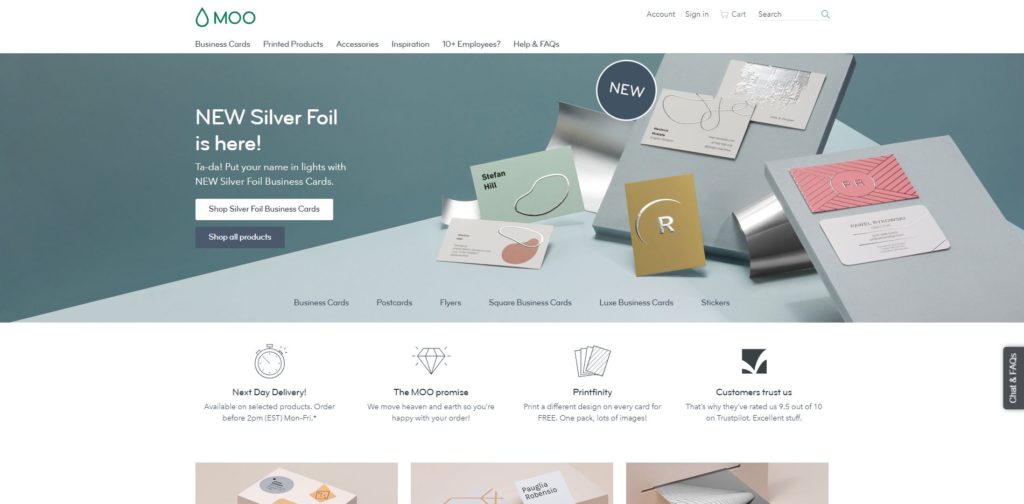
Here is an example of a company that uses original photography to demonstrate their products:

Source: moo.com.

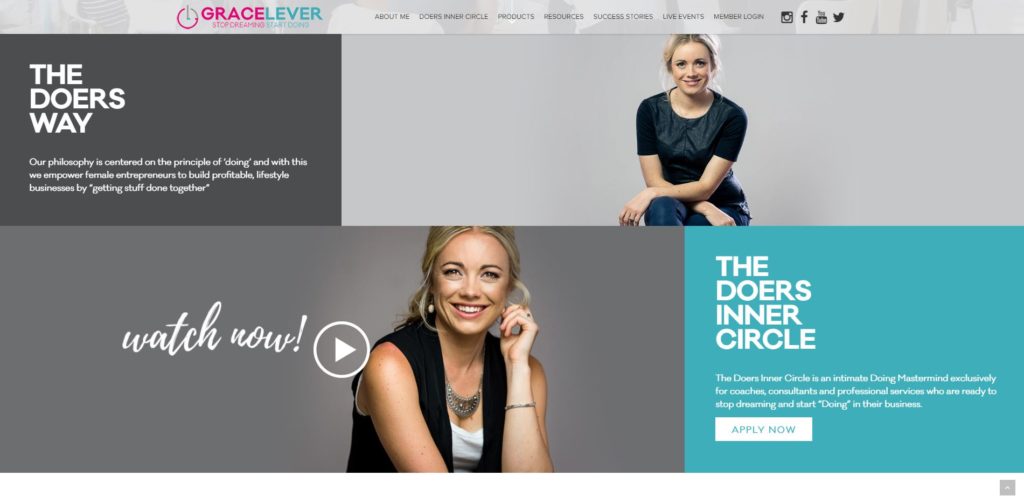
10. They Are Original & Exciting

Everyone has seen stock photography before.

When you take original photos, you are showing the world something they have not yet seen.

This can make your business look new and exciting!

Source: gracelever.com.

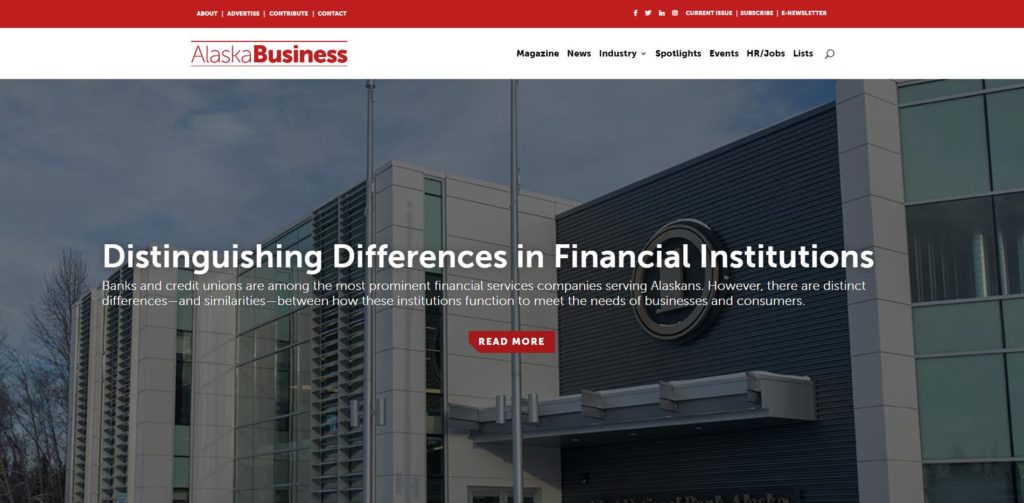
11. Original Photos Can Be Local-Relevant

Original photos can include the right climate and landscape in the background, the right landmarks, and the right demographics because they are taken in the location of the business.

This reinforces to customers that they are witnessing exactly what their customer experience is going to be like.

It also promotes local business, something we are all trying to do more of.

Source: akbizmag.com.

12. They Create Brand Consistency

You may already understand the importance of using your logo consistently, but have you ever thought about the importance of using consistent imagery?

Some brands can be recognized by their photos just as much as their logos.

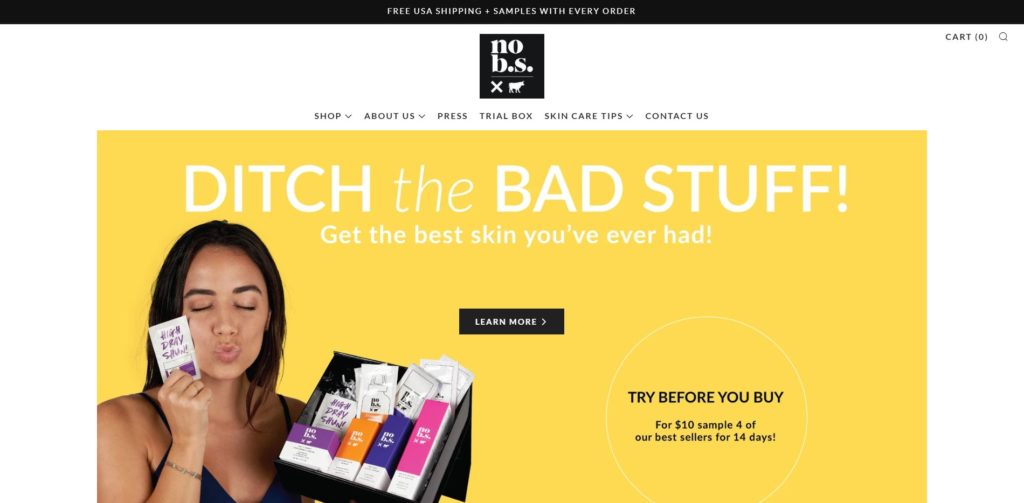
No B.S. is an excellent example of this:

Source: livenobs.com.

This company has used branded photography so well that, whenever you see one of their photos on social media, you know exactly who they are without looking at their name.

That’s a lot of power coming from a photo, especially considering that your customers will connect with a photo before anything else in the graphics you produce.

13. Original Photos Are a Long-Term Investment

Once you “bite the bullet” and get a photoshoot done for your business, you now have visual assets that you can use for years to come.

Not only will you experience the benefits of original photography and its impact on your brand, but your initial investment may come out less than the cost of purchasing stock photography year over year.

Original photography is an investment in the future of your business.

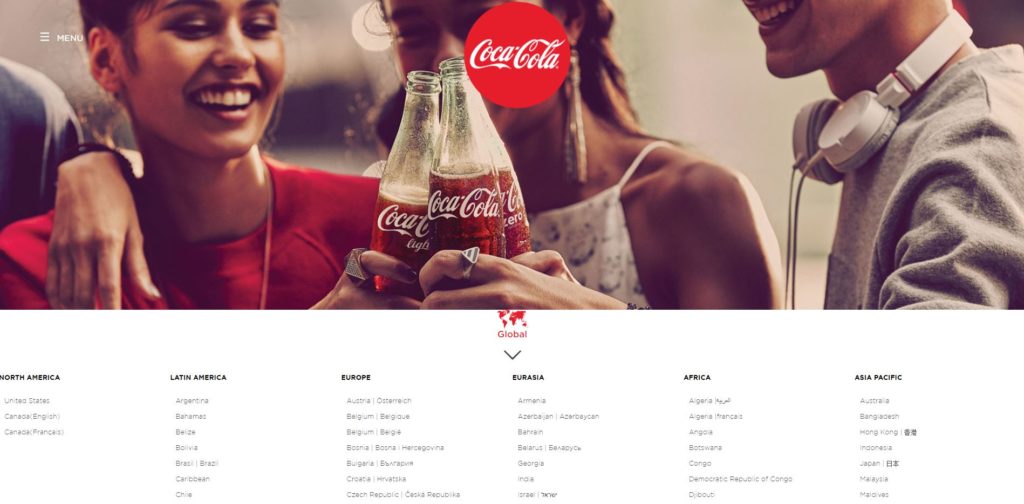
Source: coca-cola.com.

Are you ready to schedule that photoshoot?

Original photography is definitely the way to go if you want to follow best practices and do everything you can to reinforce your brand.

This doesn’t mean that stock photography won’t work “for now” or for some specific use cases.

But original photography communicates exactly what you want to who you want in the way that you want.

If you are interested in scheduling a photoshoot for your business, we would love to chat.

Schedule a free consultation with us using our live scheduler!

But if you would like to continue using stock photography for your business, we wish you the best as well.

We also offer marketing services that can make use of stock photography or original assets–whichever you have available to help your business grow!

Happy marketing!

“The biggest mistake I see, is that people tend to give up…SEO (blogging) is a lifestyle, it’s a practice, it’s not a transaction…You just gotta keep going, you’re building your castle, you’re building your moat, it’s going to take time.”

– Sarah Bird, CEO of Moz

Ready to start blogging for your medical spa but not sure how to do it right?

Producing “content for content’s sake” is never a good idea.

It is better to start off on the right foot and blog well than to blog at all.

We have put together a comprehensive list of our best 1) reasons to blog, 2) philosophies of blogging, and 3) practices for blogging right.

So buckle up and enjoy the journey that is great blogging with us!

“The Why” Behind Blogging for Your Medical Spa

Why should you be blogging for your medical spa in the first place?

To state it simply: good blogging works.

Take a look at these case studies to see what we mean.

Case Study: Beacon Blog

In 2018, we (Beacon) decided that we enjoyed working with clients in the functional medicine industry, and that we would like to work with more.

What did we do to bring in more functional medicine clients?

We started blogging!

We addressed topics like social media marketing, website design, and other services from the perspective of a functional medicine practice.

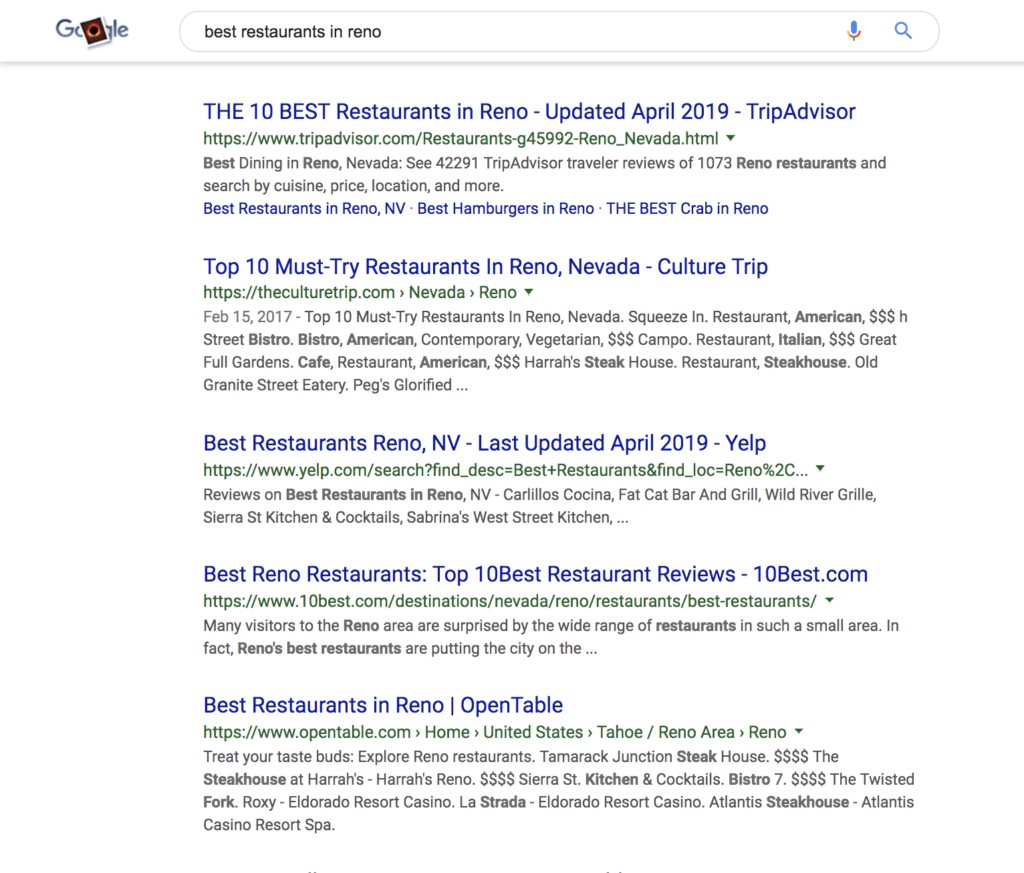
In a matter of months, our blogs were ranking in the first two spots on the Google results page for the search, “marketing for functional medicine:”

Should I Blog for My Orthodontics Practice?

These blogs translate to many functional medicine sales leads for us!

Using tracking software, we are able to see how internet users come in through our blogs then make a step toward working with us by either filling out one of our contact forms or chatting with us through our chatbot.

Blogging can help you achieve very specific goals for your medical spa.

Case Study: Mandanas Dental Blog

In 2017, our client Mandanas Dental decided that she wanted to pursue integrative dentistry.

We were ecstatic!

Although general dentistry is a very competitive market in her location, integrative dentistry had yet to take much root in the area or online.

We got to work, blogging on popular topics and questions surrounding the integrative dentistry industry.

Once again, we were able to see results (first page of Google) within a matter of months:

Should I Blog for My Orthodontics Practice?

In two years, we have 100x-ed her traffic, from just under 60 visitors per month to well over 6,000.

Dr. Mandanas’s schedule is booked at maximum capacity pretty much all year long.

Blogging can help you take your medical spa in a new direction or solidify your presence in a particular market.

3 Proven Blogging Philosophies for Your Medical Spa

How do you make this blogging magic work for your medical spa?

There are a few things you should understand about why great blogging works the way it does before we dive into best practices.

Take a look at some of the top, time-tested blogging philosophies below.

1. The Inbound Blogging Method

Blogging is just one facet of a comprehensive marketing philosophy called “inbound marketing.”

The principle behind inbound marketing sounds something like this:

If you put yourself where people spend their time and provide value to them on their own terms, they will start coming to you (inbound).

Let’s break down this working definition for better understanding.

“…where people spend their time…”

Where do people spend most of their time today?

Easy answer: the internet.

Google is the most popular search engine in the world, accounting for 3.5 billion of our internet searches every day.

We spend our time online, and we do it on Google.

Let’s take a look at the next major point in our working definition.

“…provide value to them on their own terms…”

What is valuable to the people who are on Google?

Finding the online resources they are looking for.

Many Google searches come in the form of a question.

Although there are many ways to do great inbound marketing, of the best is to answer popular questions with helpful, comprehensive blogs.

In fact, this is another one of our best blogging philosophies!

2. Answer Questions for Medical Spa Prospects

How do you know what your medical spa prospects are asking?

You do your research.

A great tool for finding popular searcher questions is Answer the Public.

Using this tool, you can enter a topic like, “Botox” and receive a list of all the top questions searched by internet users.

Take a look:

What Is the Best Way to Blog for My Medical Spa?

This list may be a little hard to read, zoomed out as far as it is so you can see the whole thing, but it includes questions like:

  • Where can Botox be injected?
  • What does Botox do to your skin?
  • Can Botox be reversed?

Do you have answers to these questions? Great! You have the content you need for a great blog for your medical spa.

Let’s discuss one, final, important blogging philosophy before we get into more technical best practices.

3. Waterfall Blogging for Medical Spas

This is probably the most important piece of advice we can give you in this entire blog today…

Waterfall your blog.

What on earth does that mean?

It means create a structure with your blogs that makes it easy for internet users and Google to “flow” through them and understand what they are all about.

It is the practice of writing blogs for each of your services and linking them together as they relate to one another.

Waterfall blogging also goes by another name, “content clustering.”

Let’s consider an example.

Here is what the waterfall blog/content cluster that YOU ARE CURRENTLY IN looks like:

In a good waterfall blogging strategy, we take all of these sub-blogs that talk about the various aspects of digital marketing and we link them back to the main, digital marketing blog in the text where they are discussed.

If you visit the main “digital marketing for medical spas” blog and look for headers/hyperlinks that pertain to the sub-topics listed, you will see what we are talking about.

We may also link some of the sub-blogs to each other if the topics cross over.

This tells Google that these blogs are related, boosting their authority and rank.

It gives users an easy navigation path for more reading.

But enough with blogging philosophies–lets dig into the practical steps you can take to make this work for your medical spa.

Best Practices for Medical Spa Blogging

At first, you might think that great blogging boils down to “finding your voice” and writing in an engaging style.

You would be sorely mistaken.

Although style is important, arguably more important is making sure you have all of your technical blogging ducks in a row.

Getting the technical aspects of blogging right is what will get your blogs to rank.

If your blogs do not rank, no one will get to read your writing in the first place, no matter how eloquent.

Practice I: Choose Niche Blog Topics in the Medical Spa Industry

What was the common thread between the two case studies we mentioned at the beginning of this blog?

A niche.

For Beacon, we did not write about “digital marketing,” but “digital marketing for functional medicine.”

For Mandanas, we did not write about “dentistry,” but “integrative dentistry.”

There is a big difference.

The first terms are very general–in searches, they pull up results for these services across the nation and around the world.

You do not want to be competing with the nation, much less the world. You will not succeed.

By narrowing our topics down to a particular niche–like an industry, a location, or an approach–we have a better chance of making the first page of Google.

Find the niche that is most relevant to your medical spa and use it!

Practice II: Make Use of Blog Header Technology

In most content management systems (CMS), which is the software system you use to publish blogs to your website, you have the option to classify headers as “H1,” “H2,” “H3,” etc.

For example, “Practice II: Make Use of Blog Header Technology” is classified as a “Heading 3” tag.

These tags help Google know what your blog is about and how it is organized, boosting your rank–so use them!

Your title is automatically classified as “H1,” so make use of “H2” and “H3” tags as you write.

Another technology you should be using when writing your title and headers is CoSchedule’s Headline Analyzer.

This tool will tell you how your headline’s score against successful headlines across the internet.

When writing your title, aim for a score at or above 70 in this helpful software.

Practice III: Write Keyword Optimized Blog Content

We haven’t talked about it directly yet, but many of these best practices are important for the search engine optimization (SEO) of your blogs.

Search engine optimization (SEO) is formatting your blog in the best possible way for Google to crawl, assess the authority of, and rank.

A big, big part of optimizing your blog is selecting the keyword or keywords for which you want to rank.

For instance, if you were answering the question, “Where can Botox be injected?” your keywords would be “Botox” and possibly “injections.”

These keywords should be in your title, headers, metadata (which we will talk about next), and of course, the blog content.

If you are good about staying on-topic, the keywords you have chosen should flow naturally throughout your text.

If they do not, consider inserting them in places where they would make sense.

Having your keywords in all of these places reinforces what your blog is about to Google as well as to your readers.

Practice IV: Set Custom Blog Metadata

“Metadata” may look like a scary word but most content management systems make it very approachable.

Your system should have a form containing fields for you to set your blog title, URL, and description.

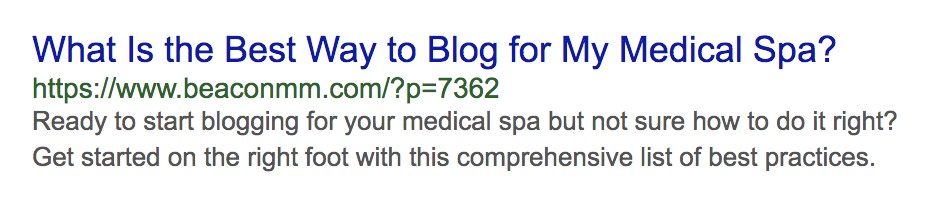
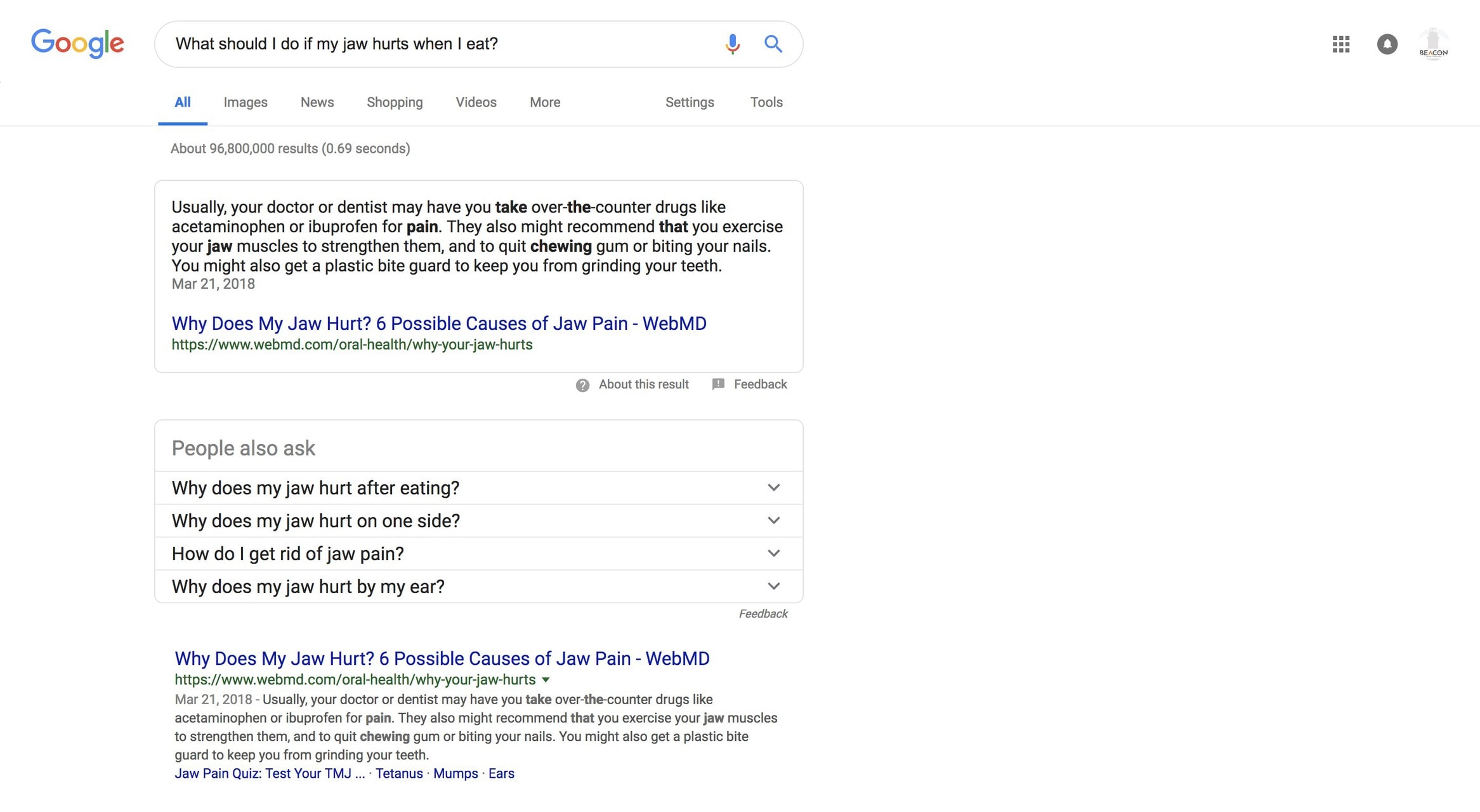
This is the information that populates on the Google results page:

What Is the Best Way to Blog for My Medical Spa?

There should also be a place to set a feature image for your blog and a location to enter your target keywords if you have SEO tools installed.

Do not leave this information up to the content management system to decide.

Set this data yourself to make sure it is accurate and looks great!

Practice V:  Develop a Consistent Blog Schedule

Last but not least, make a plan to blog regularly!

When you blog on a regular basis–once per month, twice per month, or once per week–you tell Google that you are relevant and happening, committed to writing content about your “cluster,” consistently.

You should plan on writing 400-600 words for a non-competitive topic space, 600-1,000 words for a moderately competitive topic space, and 1,500-2,000 for a very competitive topic space.

If you are following all of these best practices, you should see results in 6-9 months!

Many clients have seen results in as few as three.

Note: Don’t forget to include a call-to-action (CTA) at the end of your every blog! This is a statement that gives your visitors their next move, such as, “Are you interested in our services? Call us now at (123) 456-7890!” CTAs make working with you as easy and approachable as possible.

How do you feel?

That was a lot of information to cover in a short time!

We hope you feel equipped to launch the best blog in the medical spa industry.

If you do not have the time to put in the work or you would like more expert advice on blogging for the medical spa industry, you can schedule a consultation with us at no charge to you!

We would love to help you start seeing the results that great blogging can bring.

Originally published on November 7, 2017. Updated on May 30, 2019.

About 10 days ago, I heard a respected industry person put forward the premise that marketers are really just paid to be good bullsh** artists. Of course, there was a lot more to the conversation than that. In fact, after asking about it later, it turned out that’s not really what they were saying at all.

It’s certainly not the first time or even 20th time I’ve heard someone make that claim of marketers in general. For some reason, the statement really got under my skin this time. I’ve heard it enough that it really made me question things. Is that a true statement? Am I just fooling myself in this field?

Marketing Needs Shared Values

I decided to examine myself and be willing to answer the question honestly whatever the outcome. Taking the deep dive into personal and professional motives has been challenging, but rewarding too. There are certain things I discovered about myself, and choices I’ve made, that sometimes do describe bullshi**ing. Yuck… that feels terrible to put into words.

Specifically, past clients that I questioned whether we were the best fit for them. Often we weren’t. Obviously, we didn’t produce stellar results. I’ve also worked with folks where I knew there was a disconnect between vision, ideas and values, but I was too intimidated to call it out.

The willingness to ignore my best self in those situations haunts me today.

Clearly, the first issue I had to look at is whether we are putting our client’s interests first and using our expertise to produce the best work possible on behalf of their goals and vision. At first, we sometimes failed at this, but as we grew into our shoes, so to speak, and our expertise started to take hold, we achieved this more and more.  To put it simply, we became industry experts not by working for our own success, but for our clients’ success.

I think that is the standard we can agree on for all professionals.

Authentic Marketing Works Best

The second issue is where the situation gets tricky. How can we really represent a client if we don’t wholeheartedly believe in their product, service or their values? The truth is we can’t.

That’s the key for us at Beacon Media + Marketing, and for myself personally. There has to be buy-in. There has to be a belief that the person and company we work with and represent is one that we stand behind. Anything less than that and some B.S. is going to be involved.

Part of the advantage of being 46 and gathering the self-awareness that I have so painfully acquired over these past many years is that I know and accept myself for who I am. When my heart is not aligned with a situation my stomach hurts, literally. A headache generally follows next.

In the past, I might have tried to stuff my feelings with food to numb the situation, but since I’m not doing that anymore (yay, to mindful eating and exercise!) I just feel terrible instead.

This does not in any way lead to great creative work or representing my client well. You see the problem. Even when I did go the B.S. route – it always turned out badly.

Return of Idealistic Marketing

Here’s what I know that I know now. I am an Idealist Marketer, and when I act against my beliefs, I am miserable, my work is uninspired and our company just doesn’t thrive.

On the other hand, when we believe in the company, people, and values for whom we are marketing we will put our heart and soul into the project. Creativity flows in a beautiful way and great results follow. Here are a few examples of the incredible businesses we’ve helped, who not only align with our idealism, but inspire it:

  • The HVAC company that employs more than 50 people in Anchorage, whose owners rode out the recession in the ’80s with less than 5 people remaining. It took 10 years to personally repay the debts and stand strong again so they could honor their commitments to our community and rehire staff. Their clients trust them so much that they often give them the keys to their house when they are vacationing in the winter. We’ve helped lower this client’s monthly marketing budget and substantially increase new leads over the past few years. It’s an honor to work with them because they represent the best of businesses in our city.
  • The property management company that has grown from 1 employee to more than 40 in the past 5 years. They started with the mission to educate our community and raise the standards for property management services in Anchorage. They have done just that. They offer free classes monthly, at their own expense, to DIY Landlords and they constantly educate their staff and provide best practices in their profession. They have not only raised the standards in Anchorage but provided new jobs. We’ve provided their marketing throughout their growth over the past 5 years and it has always been an honest reflection of who they are.
  • The non-profit online homeschool program that was losing students to their competition and on the verge of laying off teachers. They have an incredible service and were struggling with the proper messaging to reach the specific parents and students most in need of their services. We were able to help raise their new student attendance and raise revenue by 15%. No teachers were laid off; in fact, extra teachers had to be hired to cater for new enrollments.

I could go on and on about the amazing clients that we get to work with every day. The folks we truly align with – the holistic dentist, the midwife who owns a freestanding birthing center – are making our communities better places. I realize that being an idealist marketer may not be for everyone, but it is absolutely where I feel we belong… this is where we’re going to stay.

Jennifer Christensen, Vice President of Marketing.

Want to connect with a marketing agency that understands your values? Schedule a free consultation today.

Originally published on May 9, 2019. Updated May 26th, 2022.

If you are the owner of a medical spa and you are looking for a comprehensive guide to your social media marketing, this is for you. Our team has been marketing for medical spas for years, and we have learned a few things along the way. From choosing the right social platforms your target audience is using to creating aesthetically appealing posts that stand out, we’re here to help. This guide is a compilation of our social media expertise and best practices – with medical spas in mind. Here’s how to successfully make the biggest splash with your social media medical spa marketing. 

Start Your Social Media Strategy on Facebook First

Many marketers and medical spa owners alike have begun to move away from Facebook as an effective form of social media marketing. They see bright and shiny platforms like TikTok and Snapchat and silo their strategies to demographics that may not even be their target audience.

Although it is true that TikTok is a promising platform for a younger audience, Facebook still has the lion’s share of active users across all ages. According to the Pew Research Center, almost 75% of online American adults use Facebook. At the end of 2018, monthly active usership for Facebook was 2.32 billion, approximately one-third of the world’s population.

In addition to having a wide user base, Facebook allows for powerful, highly-specific targeting, so you don’t have to worry about painting with a broad brushy – you will reach the primary audience for your medical spa only. You can learn more about Facebook targeting under the boosting and advertising section at the bottom of this guide.

Recommended Posting Schedule

The goal with a posting schedule is to publish consistently enough that your content is familiar to your target audience, but spaced out by intervals so that it stays fresh and original, not dull and repetitive.

We recommend three to five times per week, either once every Monday, Wednesday, and Friday or once per day.

Refer to the editorial calendar section of this guide for content ideas.

For a brief summary of the information shared in this blog, watch Social Media Manager Sarah Testen discuss social media marketing on Beacon’s Digital U!

How to Use Instagram for Your Medical Spa

Instagram caters to a younger audience. According to Hootsuite, the most active users on Instagram are between 18 and 29 years old, and the Pew Research Center reports that 72% of teenagers say that they use Instagram.

If your medical spa is serving women in their 20s and 30s, you will want to be on Instagram. If your target demographic is much older than that (as many medical spa clients are), you may be able to get away with a smaller presence on Instagram.

Instagram is a highly visual platform. So, how do you know what looks good on Instagram and what does not? Here at Beacon, we have a rule of thumb: “Everything that goes on Instagram can be shared on Facebook, but not everything that is shared on Facebook should go on Instagram.”

Think of Instagram as an art gallery. The content that performs best on Instagram usually has a few, key defining characteristics:

  • It contains interesting subject matter.
  • The photo is shot from an artistic perspective.
  • It follows a filter or color scheme that fits with the brand.

If you have a young, blossoming photographer on your medical spa team, you may want to consider tasking her with creating content for your Instagram account. Have her capture photos of your location, before and after pictures of your clients, or shots of any products you may carry set in front of beautiful backdrops like the outdoors.

Recommended Posting Schedule

It is more important to be conservative with your posting frequency on Instagram than it is on Facebook. As there are fewer users on Instagram, the posts have a greater tendency to sit in a user’s feed and stay.

Additionally, because you want to limit your Instagram posts to exclusively artistic images, keep your posting down to one to two genuinely strong photos per week.

If you want to learn more best practices for Instagram, read our blog, 14 Ways Businesses Can Optimize Their Instagram Profile Right Now!

Don’t Forget LinkedIn in Your Social Media Toolkit

LinkedIn is the comeback kid of the social media community at the moment. Out of what felt like nowhere, usership began slowly ramping up, the primary demographic being senior-level staff and company decision-makers.

At present, LinkedIn has 154 million users. If you would like to target business men and women who are concerned about maintaining their appearance, LinkedIn could be a strong social media platform for your medical spa. Your content should succeed if you share personal coaching/life advice as well as industry news, as these formats are favored by LinkedIn users.

Recommended Posting Schedule

For LinkedIn, we recommend a posting schedule of three to five times per week, either once every Monday, Wednesday, and Friday or once every day.

Use an Editorial Calendar for Your Medical Spa to Publish Consistently

The greatest challenge to succeeding with social media–something we have witnessed with many of our medical spa clients–is publishing consistently. Even so-called “creative geniuses” struggle to come up with brilliant content from time to time. That’s why we have created a tool to keep us and our clients on track, the editorial calendar!

With an editorial calendar in hand, you will have post concepts planned in advance that you can pull from on the good days as well as the bad. The calendar will not only help you publish regularly, but it will also keep the type of content you publish consistent from week to week, something that is very important for your target audience if they are going to understand and engage with what you are doing.

Here is an example page from one of our past editorial calendars (blurred for anonymity), describing a post type to be used once per week:

Get Your Orthodontics Social Media Strategy Off the Ground!

Depending on the goals of our client’s social media marketing, we may include five to ten recommended post types in their editorial calendar. These post types are the result of extensive, team-wide brainstorming and planning at the beginning of each social media marketing strategy.

Below are some post types that you may want to consider using for your medical spa.

Education About the Medical Spa Industry

Are there some negative perceptions about the medical spa industry or your business that you need to tackle for your target audience? Or some knowledge your target audience could gain about your medical spa to create trust and break down barriers to them coming in?

Then educational posts are a great type to have in your editorial calendar. Not only do these posts tackle negative perceptions and create trust, but they can also establish your medical spa as an authoritative source of information for your community.

Blog/Article Shares

Blogging is great for boosting your website rank, but it is also a fantastic source of content for your social media. Be sure to post the medical spa blogs you write to your Facebook and LinkedIn accounts. This kind of linking is good for the blog and it will drive your social media followers to your website to convert.

Human Interest Stories

Everybody loves a good story, and sharing the stories of staff or clients who have faced challenges with their appearance and overcome will generate buckets of positive engagement on social media.

With these posts, we typically share an engaging photo of the person being highlighted along with a quote from them and their story. For a great example of successful human interest content, visit the Humans of New York Facebook page.

Behind-the-Scenes at the Medical Spa

Giving your target audience a sneak peek into what goes on behind the scenes at your medical spa shows transparency and can give your clients a feeling of being “in the know” that creates trust and loyalty.

Take pictures of your team bonding or preparing for a client before they come in. Focus on something that your target audience might not know about your medical spa, but they should, because it’s really cool!

Before and After of Medical Spa Clients

This post type would be especially valuable for your target audience, to see the concrete results of getting work done at your medical spa. Consider sharing before and after photos of your clients, provided they have completed a media release form.

The Medical Spa Lifestyle

If you have not already identified the personas of your target audience–who they are, what they think, and how they live–the best time to do so is now. Your services should directly tie into certain lifestyles that you can use in your social media marketing. For this post type, include happy, smiling photos of your target demographic and illustrate how using your services can create or enhance their ideal lifestyle.

Video Marketing

If you are doing video marketing for your medical spa, the best place to promote it is on social media. Video is the most easily-digestible format of media–if your target audience had not been engaging with your social media content previously, they may be willing to watch a short video. Share any videos you and your medical spa team create to any and all platforms you are using.

Event Shares

Does your medical spa host or sponsor many events in your area? Showcase your community involvement on social media by creating an event page and promoting it there.

Promotions

If you are running any deals or specials at your medical spa, you should be sharing and promoting these on social media as well.

Social Media Contests

We all want to be winners. To earn engagement on social media, consider running a contest for your followers. Our favorite format is a photo contest, where followers must post a photo to your page (relevant to your medical spa or a holiday) with the contest hashtag to enter to win some of your services.

For example, followers could submit “their favorite springtime activity,” tagging the photo with the hashtag #SpringattheSpa to win a free consultation and injection based on the doctor’s recommendations. You could also use flowers, chocolates, gift cards, or other prizes too, but we recommend that at least one of the prizes ties back to your services.

Social Media Quizzes

Social media quizzes are not only a great way to earn engagement with your medical spa, they can also give you contact information for qualified leads if you require an email address to play.

If you have ever visited a website to learn, “Which character from The Office are you?” then you have participated in a social media quiz. An excellent tool for creating social media quizzes is Lead Quizzes, something we use at Beacon for our clients.

Social Media Campaigns

Social media campaigns should be used whenever you would like to push a specific message for your medical spa. For this post type, you will want to prepare in advance a specific branding package including imagery and a branded message.

In addition to an editorial calendar, another great way to ensure you publish consistently to your social media is to schedule posts in advance using Facebook Business Manager or a third-party service, like Loomly.

Try Social Media Boosting and Advertising on for Size

If you have been marketing for your medical spa on Facebook already, you have probably seen the little, blue, “Boost Post” button on some of your posts.

Boosting and paid advertising allow you to target your content to specific audiences that you may have not been reaching before.

This kind of social media marketing can be managed by either clicking the blue button and setting your audience, budget, and timeline, or by using Facebook Ads Manager. Facebook Ads Manager allows you to do more complicated advertising, including A/B testing.

Wow Your Followers With Beacon Media + Marketing

If you would like to launch a comprehensive social media strategy for your medical spa, but you don’t have the time, we would love to talk with you! Beacon Media + Marketing can take care of every part of your medical spa marketing strategy. From building you a beautiful medspa website to taking care of your regular paid advertising, blogging, and social media posting, our cohesive strategy connects you with the perfect clients for your business. 

Looking for a digital marketing agency that specializes in medspa marketing? Talk with us!

“The biggest mistake I see, is that people tend to give up…SEO (blogging) is a lifestyle, it’s a practice, it’s not a transaction…You just gotta keep going, you’re building your castle, you’re building your moat, it’s going to take time.”

– Sarah Bird, CEO of Moz


Publishing a blog may be the biggest thing you do for your Reno business this year.

No, really.

Blogs are cash cows when done right.

A lot of our clients go for the “quick fix”–the “easy money” and fast results achieved by paid advertising.

There is nothing wrong with that. In fact, we encourage it!

But a well-crafted blog–one that has “made it” on the first page of Google–is there to stay.

We’re talking no additional ad spend, just results–Reno internet users pouring into your website through a top-ranking blog and converting to leads.

At least, that is what we have seen in our marketing for our clients and ourselves!

Find out more about what we are seeing in the blogosphere, how we make it work, and the proven blogging strategy behind the curtains.

Warning: It may take some time and intentionality to get this down.

Why Publish a Blog for Your Reno Business?

Great question. Let’s start where we always do at Beacon: the results.

Case Study: Beacon Blog

Last year, our team came up with a plan to work with more functional medicine clients in the future.

We started a blog on digital marketing for the functional medicine industry.

Our writers began covering topics like social media, website design, and more, using “functional medicine” as a keyword in all of our blogs.

Just months later, we were ranking in the first two spots on Google for the phrase, “marketing for functional medicine:”

Should I Blog for My Orthodontics Practice?

This was not a mere coincidence.

In all of our blogs, we were intentionally placing the keywords “functional medicine” and “marketing” (or “web design,” etc.) in key places for search engine optimization (SEO), such as the title, H tags, and metadata.

We will talk about SEO in a moment.

The point is, these blogs bring in many of our functional medicine sales leads.

Through tracking software, we are able to see the exact blog URLs that internet users clicked before they reached out to us.

I cannot tell you the number of times we have had clients work with us after first discovering us through one of our blogs.

These blogs are a key part of our sales funnel.

Case Study: Mandanas Dental Blog

Two years ago, a local dental client of ours pivoted her practice to focus on integrative dentistry.

It had been challenging to rank for general dentistry terms in a competitive market up to that point.

With the new niche, we were able to rank her practice on the first page of Google for her industry:

Should I Blog for My Orthodontics Practice?

Whenever we get the opportunity to implement blogging strategies like these for our Reno clients, we are all for it.

We have seen the success of blog marketing and we want to share it with you!

How to Make Blogging for Your Reno Business Work

Let’s peel back the curtain on this proven process.

The Inbound Strategy of Blogging

Another popular term for digital marketing is “inbound marketing.”

The core tenant of inbound marketing is this concept:

If you go where people are and provide value to them on their terms, they will come to you.

Take a few moments to think about where you and most of your friends spend your time.

We’re not talking about work, home, or school.

It’s the digital age, and most of us spend more time absent on Facebook, Google, and other online services than present in any particular building.

Pretty much every moment of every day we are either acting on our last Google search or thinking about the next time we can check Facebook.

What does that mean for Reno businesses looking to enter the blogosphere?

It means that if we want to get in front of new customers, we have to be where our customers are.

And it isn’t enough to simply “be there,” we also need to provide value in those places.

The Power of Answering Reno Residents

How do we provide value?

Google is a search engine, so we answer searches–questions!

What kind of questions are your Reno customers asking?

If you are in the restaurant industry, maybe it is something like, “What are the best restaurants in Reno?”

How awesome would it be to rank a blog among these first several organic results?

At Beacon, we use a fantastic tool called Answer the Public to discover what people are asking about a particular topic.

The way people phrase a given question in search is often the exact title we give our blog.

Key Tactics for Blogging in Reno

Now that we have the inbound philosophy down, let’s give you the technical requirements for ranking a blog on the first page of Google in Reno.

Blog Topic – Must be Reno Relevant!

Remember the case studies we mentioned at the beginning of this blog, how they each required a niche to be successful?

In order to rank a Reno blog on Google, you are going to need to write on something more specific than just “x services.”

Instead, consider “x services in Reno” or “x services done x way,” like “integrative dentistry.”

Why does this matter? Competition.

General terms and phrases are more competitive than specific ones, because there is a broader range of businesses publishing content about those topics.

Niching your blog topic can mean the difference between competing with 100 million other blogs and 1 million.

Specificity matters.

Blog Headlines

There are three kinds of headlines that you need to worry about in a search engine optimized blog, the title (H1), subtitles (H2), and those subtitles, subtitles (H3).

H tags (H1, H2, H3) may come across as confusing, but really they are just designations you can set in any blogging software worth its weight.

For example, “Blog Headlines” at the top of this section was set as an H3 tag in our WordPress editor.

All three of these headlines should include your keywords throughout your blog for SEO.

It is especially important that your Reno blog title contains all of the keywords you are using.

That said, it shouldn’t read clunky.

At Beacon, we use CoSchedule’s Headline Analyzer to score our headlines, taking advantage of their algorithm of successful headlines across the internet.

You will want to shoot for a score at or above 70.

Blog Content

When most people start thinking about blogging, they get an idealized picture in their mind of perfecting their brand’s voice and writing show-stopping content.

Style is only a small part of the equation.

It is true that your content should be free of common spelling errors and grammatical mistakes–It also should be engaging enough to draw your customer in for the sale after the click.

That in mind, one of the most important parts of blogging for business in Reno is keyword optimization.

This means that whatever your keywords are, they are incorporated naturally throughout the text in a way that tells Google you are staying on topic.

Keyword optimization is an important part of getting your Reno blogs in front of people (on the first page of Google) in the first place.

Write clearly, with authority and authenticity to keep people engaged…

…use keywords to impress Google.

Note: Every blog you write should have one important ingredient at the end–a call-to-action (CTA). A CTA is a request for a client to make a particular step forward based on the information they have just read. You want to convert from your blogs, don’t you? Then include a gentle call-to-action like, “If you are in Reno and interested in partnering with us on (x services), give us a call at (775) 123-4567.”

Blog Metadata

What is “metadata?”

No, you did not just step into a sci-fi novel.

Metadata is the information you provide Google alongside your blog, to let the search engine know what you are trying to rank for, and how your Reno blog should appear on the results page.

This information includes a title, description, URL, feature image, and the keywords you are targeting.

Many blog software solutions auto-populate some of this information, including WordPress, but good Reno bloggers are intentional about customizing their metadata.

At Beacon, we install an intuitive WordPress plugin called SEOPress that allows us to set our blog metadata with easy-to-use form fields.

Here is what the title and description look like on the Google results page:

The feature image is important for when you are sharing the blog on social media, and the keywords are for Google’s use in ranking your blog.

Blog Schedule

An important part of achieving rank for your Reno blog is publishing consistently.

This lets Google know you are an authoritative site in your topic area, and that you mean business.

The current recommendation in the industry is 1-2 times per week, however, this can be too overwhelming for some of our Reno clients.

At a strategy of as little as 1-2 times per month, you can see some growth over time.

Word count depends on how competitive your topic area is.

On the low end, you should be writing 400-600 words each time. On the high end, 1,600-2,000 words.

With a decent strategy, you should see results within 6-9 months’ time.

The Waterfall Method of Blogging in Reno

We’ve saved the best for last.

One of the most important parts of turning your Reno blog into a cash cow is backlinking.

Backlinking involves associating affiliated content for Google using hyperlinked keywords.

Let me explain.

We are currently writing an entire series of blogs on digital marketing in Reno that looks something like this:

Do you see how these blogs cascade into one another, much like a waterfall?

Do you also see how they are all in the same topic space, e.g., “our services in Reno?”

We tell Google that these blogs are related by linking to them using relevant keywords in the text.

So the blog “Digital Marketing” has links to “Branding,” “Website Design,” “Social Media,” and “Google Advertising” currently.

The trick is that these hyperlinks in the first blog land on the very keywords we are trying to target in the second blog!

A backlink is like a referral, it tells Google that the blog it is linking to does indeed know what it’s talking about, boosting the blog’s rank.

That is, so long as all of the blogs in the waterfall system are related!

~

If you want to see the kind of traffic we are achieving for some of our clients, it’s time to start blogging.

This blog should get you started on the right foot as you begin to dominate your topic area in Reno!

Interested in hiring Beacon to get your Reno blog going?

We would love to chat!

You can schedule a free consultation with our President Adrienne Wilkerson directly using our Acuity scheduler.

“The biggest mistake I see, is that people tend to give up…SEO (blogging) is a lifestyle, it’s a practice, it’s not a transaction…You just gotta keep going, you’re building your castle, you’re building your moat, it’s going to take time.”

Sarah Bird, CEO of Moz

Should you be blogging for your orthodontics practice? Absolutely.

Is it as easy as publishing a short article from time-to-time? Not exactly.

You should only be blogging for your orthodontics practice if you are willing to apply best practices and take your time doing so.

Otherwise, you are wasting valuable resources, writing to no benefit.

Blogging done right over a period of time has taken many of our clients to new heights, ourselves included! A large number of our leads come directly from our blogs as we climb higher and higher in ranking on Google for our topics. But getting to this place requires a little bit of technical knowledge and a whole lot of patience.

Find out why you should be blogging for your orthodontics practice and learn the key tactics that will get you closer to that coveted #1 spot on Google!

Why Blog for My Orthodontics Practice?

Why should you blog? Well, let’s take a look at some of the results.

Case Study: Beacon

In 2018, we (Beacon) decided that we wanted to bring in more clients in the functional medicine industry. We started blogging on various marketing topics for the industry, social media, web design, etc. Months later, we had the #1 and #2 spots on Google for the search, “marketing for functional medicine” (beneath the paid ads):

Should I Blog for My Orthodontics Practice?


Many of our sales leads come from our blogs. We can see this on our various tracking software–I cannot tell you the number of times that we have seen potential clients come through our webchat directly from the blog, “How Much Does It Cost to Hire an Agency?” Many of our blogs have become key parts of our sales funnel.

Case Study: Mandanas Dental

Dr. Owen Manadanas has been a client of ours for many years. In 2017, she decided that she wanted to focus her marketing on integrative dentistry. We immediately implemented the change in our blogging strategy. Within months, she was on the 1st page of Google for her home page and one of her top blogs for the search “integrative dentistry:”

Should I Blog for My Orthodontics Practice?


We are constantly recommending blogging strategies like these to our clients. Not only do they deliver results such as clicks and website traffic, but they convert into real, new patient registrations, coming right through your door!

How to Make Blogging for Orthodontics Work

At this point you are probably wondering, what magical strategy is achieving these results?

It may not be magic, but it is certainly very strategic.

The Inbound Strategy

Digital marketing (blogging, SEO, social media) frequently goes by another name, “inbound marketing.” The key principle of inbound is this…

Go where people are, provide value that is relevant to them, and they will come to you.

For just a few minutes, think critically about where people spend most of their time–It’s not reading the newspaper, it’s not listening to the radio, it’s not watching TV (streaming services such as Netflix are becoming significantly more popular)… They’re spending their time scrolling through social media and browsing the internet. Every moment. Of every day. In the coffee line, on little breaks at work, in the evening at home–We have become a culture that consumes digital media.

So what does that have to do with blogging for orthodontics?

It means that if we want to get new patient registrations, we need to be putting our information where they spend their time. By “information” I do not mean advertisements, but “value that is relevant to them,” namely, answers.

The Power of Answers

Now that we have taken a look at where people spend their time, it is time to think about what they do with it.

As an orthodontics practice, you exist to meet the needs of your patients, such as teeth straightening or jaw alignment. What does a potential patient do just as soon as they discover that they have one of these needs? More often than not, they go to the internet.

Maybe they have discovered that they have jaw pain. The search may go something like this:

Should I Blog for My Orthodontics Practice?


As you can see, WebMD has done a great job at answering this question for the potential patient. They or one of the other top-ranking blogs on this page will likely get the click.

Key Tactics for Orthodontics Blogging

By answering questions, you are one step closer to ranking your orthodontics blogs on the 1st page of Google. Here is just about everything else that you need to do:

Topic

It is harder to rank for general topics than specific ones, because more people are competing for the topic overall. For example, it would be extremely difficult to get on the 1st page of Google for “orthodontics” (~67M competitors), however, you may have a shot at “orthodontics for teens” (~2-3M competitors). At Beacon, we qualify our topics by the industries we are targeting. For example, instead of writing an article about “blogging,” we wrote an article about “blogging for orthodontics.” Choose a topic that is specific enough to stand a chance at achieving rank on the search engine.

Headlines

Once you have chosen a topic, it is time to come up with a title for your blog. At Beacon, we use a tool called Answer the Public to find common questions asked by internet searchers in our topic area. The tool is simple, all you must do is enter your topic, and it will show you the kinds of questions people are asking. Honestly, the best way to rank is to simply use the question as your title, but you can get a little creative if that title is already taken for the search. Just be sure to check your headline against a tool like CoSchedule’s Headline Analyzer or our blog on headlines that get attention.

In addition to the main headline, you should be able to set headlines throughout your blog using what are called “H tags”–H1, H2, H3, etc. Be sure to put your topic keyword–“orthodontics for teens”–in H tags throughout your article to achieve ranking.

Content

A lot of people think that it is engaging and persuasive content that ranks blogs and gets people to read them. That is only half true. Content that is free of common spelling errors and grammatical mistakes is important, but arguably more important is the keyword optimization of your blog. This means that your keyword, make it “orthodontics for teens,” is spaced naturally throughout the article. Keyword optimizing your blog will tell the search engine what your blog is about so that it achieves rank. Write with authority and authenticity to show readers that you know what you’re talking about.

Note: Although it is important to answer questions thoroughly, the goal of ranking blogs is to get potential patients in the door! After you have answered their question, put a gentle “call-to-action” at the end of your blog telling them about your services and requesting that they schedule an appointment with a link.

Metadata

“Metadata” may sound like a big and scary word, but it is really rather simple. Setting the metadata for your post is adding the title, description, and keywords in a format that Google can grab and populate on their page. At Beacon, we use WordPress for our blogs, which allows us to add intuitive plugins such as SEOPress with form fields to set our metadata. This is a very important part of the keyword optimization of your blog, so do not forget it! You should also remember to set a featured image for your blog, as this is what will show up whenever you share it to social media.

Schedule

How often should you be blogging to achieve rank? Good question. At Beacon, we recommend 1-2 times per week. That said, a lot of our clients find this too time-consuming or cost prohibitive and opt for a strategy of 1-2 times per month instead. Depending on the strategy that you choose and how competitive your market is, each blog should be between 400-600 words or between 1,600-2,000 words. With a minimum strategy, you can typically see results within 6-9 months.

The Waterfall Method of Blogging for Orthodontics

Another important tactic that we have yet to address is called “backlinking.” This is the practice of acquiring links to your blogs from other websites, thereby boosting their rank in Google. You can think of a backlink like a referral–the more credible the website referring your business to Google, the more likely they are to help you rank higher on the search engine.

Backlinks can be difficult to come by, and the traditional method of prospecting for backlinks is becoming less and less advised as we learn more about best practices for search engine optimization (SEO).

Something that you can do to create a strong link structure, however, is apply the waterfall method.

The waterfall method involves writing one, primary overview blog about your services, then writing blogs about your services individually, then going back and linking the sections of the first blog to blogs about those topics. If that was a bit confusing, we understand. Here is an example/potential waterfall that we are currently working on for Beacon:

  • Digital Marketing for Orthodontics
    • Branding for Orthodontics
      • Logos for ” “
      • Taglines for ” “
    • Web Design for Orthodontics
    • Social Media for Orthodontics
      • Video Marketing for ” “
      • Lead Quizzes for ” “
    • Google Advertising for Orthodontics
    • Blogging for Orthodontics – THIS BLOG!

As you can see, one blog cascades into a subset of blogs that cascades into another subset of blogs, much like a waterfall.

If you use the waterfall method in your blogging, you are showing Google how all of your information relates! Google loves this, and will reward you richly with a strong rank.

This blog is essentially our handbook for blogging, both for our clients and for us! We hope that it helps you understand why blogging is important–even for orthodontics practices–and how you can make it all happen. If you are interested in hiring Beacon for our blogging services, we would be happy to chat with you! You can reach out to us via our Contact Form or even schedule a free consultation with our VP of Marketing Jennifer Christensen directly using our scheduler. We look forward to helping you achieve your goals for blog marketing!

Looking for tips on an SEO strategy that will knock the socks off your competition and leave your customers at a loss for words? We offer some of our best next-level research and advice. Read more.

Do Your Research

If you want to create a knock-out SEO strategy, you need to stay current and on top of the latest trends. Google is a fast-paced tech giant, and they are in charge of the algorithm you are trying to “please.” Read up daily on the latest and greatest changes Google has made to their algorithm to better optimize the Search Engine Results Page (SERP) for their users. Keep pace with Google by learning from SEO thought leaders like Rand Fishkin and others. Take a look at some of the latest trends below.

Quality Above All Else

Google is always striving for relevance, continually changing its algorithm to better meet the wants and needs of its users. One of the tech giant’s current focuses is user intent rather than keywords. Don’t get us wrong, keywords are still the glue that holds an effective SEO strategy together, but now, just as important as having the right keywords in a blog is having the right content to meet the user’s search intention. This comes down to answering the right questions being asked by the user at the right time. Google has also been focusing on comprehensive content, content that answers all of the right questions. Today, content that performs best is usually in the 1,800-2,000 word category, answering all of the right questions when a search is performed.

In 2015, Google launched a machine learning artificial intelligence system called RankBrain. RankBrain helps Google deliver the right content to the right person at the right time. It works by serving results to Google’s users and changing those results based on their responses. If the user engages with the content they are served, measured by the time they spend on the page, Google will serve those results to them again. If the user does not engage, Google will push those results further down the SERP. With RankBrain in place, keywords are good enough to get you in front of people, but if you are not engaging them with quality content, your overall rank will go down and you will not have a second chance to get in front of them again.

User Experience

Google has been increasing the appearance of “Quick Answers” in the SERP, those little boxes at the top of the page that (if they get it right) answer your inquiry quickly and directly. Results like these are great for user experience, providing the user with exactly what they are looking for right away. Take a look at the example below to see what we mean. With and more and more users searching on mobile and using voice search to answer quick questions, changes like these make a lot of sense for a search engine looking to stay on the cutting-edge. Keeping up with Google today means producing content that answers questions as they would be worded vocally to get onto the top of the page and into Google’s “Quick Answers” box.

Another factor currently affecting rank on Google is load time, both on desktops/laptops and mobile devices. If you think about it, users who are experiencing terrible load times on your website may attribute that to Google and jump search engines. It is in Google’s best interest to push sites like these down the SERP. Developing a fast and functional site is imperative to an effective SEO strategy.

Make It Presentable

If you are reading this blog, you are likely a business owner, a marketing professional working for a business, or a contractor asked to “create a strategy for SEO.” Whatever the case may be, you are working for a business, so you need to be able to show measurable results tied to business goals in your SEO strategy.

Identify Business Goals

Sit down and think about why you are creating a winning SEO strategy in the first place. What are your current business goals? New customers? Upsells to existing clientele? Nail down the exact results you would see if your SEO strategy were effective and be able to explain exactly how the SEO work you are about to do can meet those goals. For example, “Writing comprehensive, engaging blogs that answer real questions on the topic of SEO will bring new SEO clients to Beacon through the SERP as they begin to rank.”

Home in on Your Target Audience

Make sure you understand who your target audience is and what they want, not who you think they are and what you think they want. This is the key difference between a successful SEO strategy and one that falls flat. You can target keywords and build links for days, but if this work is not relevant to the people who might actually use your product or service, it is a lost cause.

Research your ideas about the age, gender, and location demographics of your target audience. Focus on their unique needs and pain points to determine which keywords will be most effective. Take a look at what your successful competitors are doing to reach your target audience and come up with a way to position your product that is both different and superior to the competitors in your niche.

If you do not have a lot of experience in your business or industry, get in front of the people who do. Ask them the right questions to draw out who they think your target audience should be. At Beacon, we work hard to gain a deep understanding of who our clients are and who they serve using a set of questions we call the “Beacon Deep Dive.”

Report on Results

If you are looking for a great SEO reporting tool, SEMRush is something we use at Beacon to get a quick snapshot of how our potential clients and their competitors are ranking. It is one of the most popular SEO reporting tools on the market. No matter what you are doing in your marketing, for SEO or for something else, get a handle on your reporting. Reporting will show you what is working and what is not as well as opportunities for improvement. It is a very important part of a presentable and effective SEO strategy.

Execute

Once you have the big-picture SEO trends in mind and your business goals and target audience within grasp, it is time to get to work on your show-stopping SEO strategy.

Plan Your Content

Start with Services

Make a list of the 5-10 primary products or services you are offering. Use Google Adwords’s Keyword Tool to fine-tune your terminology, as in, discover exactly what words your target audience is using to search for your products or services. For example, as a marketing agency, we might use services like, “Digital Marketing,” “Graphic Design,” and “Web Development.”

Create an Editorial Calendar

Using your list of services, create an editorial calendar of 5-10 blogs to write for each one. HubSpot calls these “topic clusters.” These blog topics should be based on long-tail keywords, meaning long-form questions that your target audience types into the search bar rather than short keywords. The reason you should be writing blogs for long-tail keywords rather than short keywords is because short keywords have a lot of competition. Every one of our competitors is writing about “Digital Marketing,” but not everyone is writing about how “Can Traditional Marketing & Digital Marketing Integrate?” You can find long-tail keywords for your services using AnswerthePublic. For example, searching “Digital Marketing” in AnswerthePublic returns the following results.

You can get even more specific with your blog topics by choosing something that speaks very directly to your target audience. For example, at Beacon, we recently wrote an article specifically for functional medicine practices titled “Inbound Marketing Is a Perfect Fit for Functional Medicine!” Articles like these are great for reaching your niche, which is already thinking, “How can X product or service work for me in X situation?”

If you answer all of the questions your target audience has over the course of your blogging, you will begin to grab the same person over and over as they are researching in your topic space. Rarely if ever do users convert on their first visit, rather, they follow the buyer journey…After reading the first blog article, they become aware of who you are, after the second they consider your product, and on their last visit they make their decision to purchase. Multi-visits are something to aim for in an effective SEO strategy.

Prospect for Links

Links to websites are like “recommendations” for people, the more authority the website linking to your blog has, the more credibility Google gives to that recommendation.

Links are just as valuable as ever, but now, quality matters more than quantity, a consistent theme with the Google algorithm as it continues to progress. Incorporate a “sales funnel” for links into your weekly schedule to get inbound links, communicating with clients, partners, vendors, other local businesses and industry thought leaders, asking them to link to your blogs. You may also consider offering to guest blog on other websites, linking back to your blogs, or blogging on current events or news to get noticed. That said, one of the best ways to get links is to write genuinely valuable content that others will link to naturally.

Blog Weekly

Put your plan into practice. Start blogging. Blogging on a weekly basis does wonders for your SEO. To start, prioritize the business goals, services, and topics that are most important to your company. In each blog, incorporate variations of your long-tail keyword naturally throughout the text 3-5 times for best results. Once you run out of long-tail keywords, begin to think about out-of-the-box ideas, maybe a topic that occurred to you while you were writing, an issue one of your customers recently ran into, a question they commonly ask, or a hot-button topic in your industry. Write with SEO trends in mind, writing long, relevant, comprehensive blogs that engage your readers.

At the End of the Day

The key to winning at SEO is this: Focus on your target audience, where the trends are indicating they search (mobile), what they want, and write good content that gets in front of them in those places. Listening and providing quality are goals that we all should focus on if we are in business to serve our customers. Google does an excellent job at fostering this and they are always trying to do it better. We are in a unique position to raise the bar of the world’s e-commerce experience together. Let’s take full advantage of this.

If you are looking for a partner to help you stay afloat in Google’s algorithm by creating and implementing a show-stopping SEO strategy, we would love to work with you! We have been seeing some incredible results for our blogging clients and we want to share the love. Contact us for a free marketing assessment!

“Show, don’t tell” is an idiom commonly used by writers of all stripes. The idea itself is simple: don’t tell your readers what to think, feel, or expect about your topic. Instead, you want to “show” them the data, facts, and evidence as concisely and as powerfully as possible. When done well, you are far more likely to instill whatever you were trying to communicate in a way that’s lasting and powerful.

Infographics are an incredibly effective way of distilling sometimes complicated data into something succinct and visually impactful. They take data that may be difficult for our brains to process through words and allow the significance of the data to shine through. It’s no surprise, then, that an infographic is up to 30 times more likely to be read than an article.*

That being said, not all infographics are created equal. Here are 5 tips to ensure yours are as effective as possible.

Tip 1: Start With the Data

Not all information is best communicated visually. If the message you’re trying to communicate can be effectively stated and easily digested in one or two sentences, it probably ought to be.

It may be tempting to add fun graphics and visual elements to every part of your blog, whitepaper, or website content, but there are reasons to keep information as text. Text has a huge impact on SEO, or Search Engine Optimization, while images will have very little. Don’t just take text content and turn it into an image.

Instead, use infographics for data that tells a story. Infographics can be much more effective as communicating statistics than paragraphs of text. Moreover, a simple, visual representation of data can leave a very strong and very obvious impression.

Image from Infogr.am

This infographic is extremely simple, but it immediately conveys the narrative of the data: that fresh water is scarce. It takes information that’s well-suited to an infographic and employs it in an impactful way.

Tip 2: Less Information is More Impactful

Have you ever seen a graphic that looked stylish but was difficult to interpret?

Image from MRE Media

This wonderfully ironic infographic tries to answer the question of whether your content should be visual or not. Unfortunately, this incredibly busy flowchart would be much easier to read as five separate infographics, not one. Don’t get bogged down in details. Boil your information down to what’s most important – anything else will obscure, not clarify.

Tip 3: Respect the Data

Once you’ve chosen what to make into an infographic, let the demands of the data dictate what that infographic looks like. It may be tempting to format your graphic with flashy visuals or unusual graphs, but you should only do so when it benefits the digestibility of the data. Infographics should always make data easier to understand, not more difficult. And it should always represent that data as accurately as possible.

Image from The Guardian

This unfortunate pie chart is mysteriously not 76% shaded. Not that your graphics must be accurate down to the last pixel, but make sure it actually represents the information with integrity.

Tip 4: Not Too Big, Not Too Small

If an infographic is too large, it will require excessive amounts of scrolling and may be almost entirely un-viewable on a mobile device. If it’s too small, it may not be legible.

Make sure text is large enough to be legible even when viewed at 50% magnification. Generally speaking, a good width for an infographic is 600 – 800 pixels.

Some infographics are long and meant to be scrolled through. To meet best practices, we advise not usually going over 8000px long.

Tip 5: Share It!

Infographics can be a really impactful marketing tool, but only if you actually use them.

  • The same graphic can be used across blogs, websites, and whitepapers. Get the full value out of your design!
  • Make sure your infographic is easily shareable on social media – consider using plugins to add a Facebook share button or a “Pin It!” Pinterest button.
  • Share it, ask users to share it, and ask reputable partners in your niche to share it. Promote it the same way you would promote any of your valuable content.

Conclusion

As primarily visual creatures, infographics have the ability to immediately captivate and communicate in a way that words can’t. However, a little goes a long way! Remember to focus on the story that the infographic tells – the significance of the data it’s representing –  in order to make the most interesting and shareable graphic possible.

*Source: Why Are Infographics So Darn Effective?