Explore insights on SEO, AI, and digital marketing strategies designed to help your business grow, stay visible, and adapt in a constantly evolving online landscape.
Mental Healthcare, while considered a niche market, covers a vast range of areas and services, making it incredibly diverse. Each niche has its unique characteristics, nuances, and challenges.
Why Does a Digital Marketing Benchmark Matter for the Mental Health Industry?
Each industry’s goals and personas vary substantially. As our Strategy Director, Kande Hein, likes to say:
“Identifying your ideal client is crucial to your marketing efforts and to do that you must know where that client is searching for you.”
For this reason, digital marketing benchmarks are critical in every industry. Knowing how you compare to your competitors in the current market opens opportunities for strategic analysis and the ability to pivot your digital marketing strategy. This helps to ensure your efforts are focused in the correct areas and assists you in hitting your business goals.
Additionally, niche markets like mental healthcare often struggle to find relevant benchmarking data from existing industry reports to compare apples to apples. They can’t rely on digital marketing standards from unrelated industries such as retail sales.
Contributing factors like regulatory matters also differ across the Healthcare market — causing the data presented to be largely irrelevant for mental healthcare providers.
The bottom line is, that misalignment of benchmarks can set your marketing strategy up for failure. For example, you may never be able to reach the click-through or conversion rates you’re looking to achieve based on unattainable trends from a different industry.
Beacon Media + Marketing Partners with Databox
At Beacon M+M, we believe in creating successful digital marketing strategies for our clients by coupling our industry expertise with an array of key performance data points to make data-emphasized decisions.
As part of our strategy, we’ve partnered with Databox for our client reporting needs across the board for several reasons, including our mutual operations and expertise in niche markets such as healthcare, mental healthcare, and overall wellness. Utilizing the power of Databox across multiple digital channels, we’re able to identify areas where our clients excel in their industry — and the areas where strategy refinement may be required.
According to Emily Miles, Beacon’s Databox Specialist, “Databox’s ability to pull data directly from platforms we use in our digital advertising efforts like Google Ads, META Ads, search engine marketing and other social media marketing platforms and then benchmark our marketing activities against other relevant companies in real-time has only increased our ability to create, implement, and manage a successful digital marketing strategy custom to each of our client’s market needs,” she says.
This approach to digital benchmarking empowers our team to review, track, and monitor key performance indicators for each client within their specific industry and make data-informed suggestions for pivots in their digital strategy.
Key Performance Indicators: Which Metrics Are Actually Important?
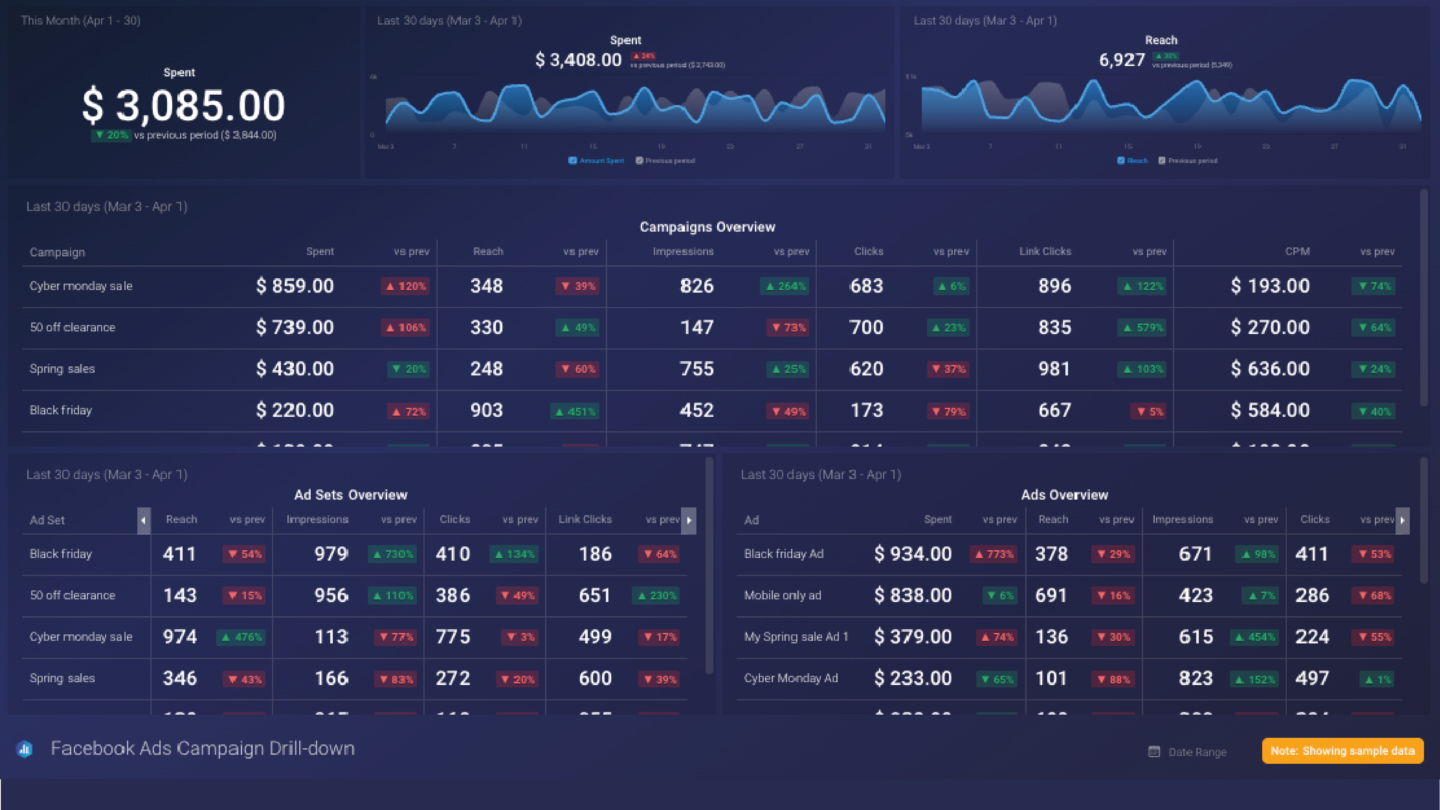
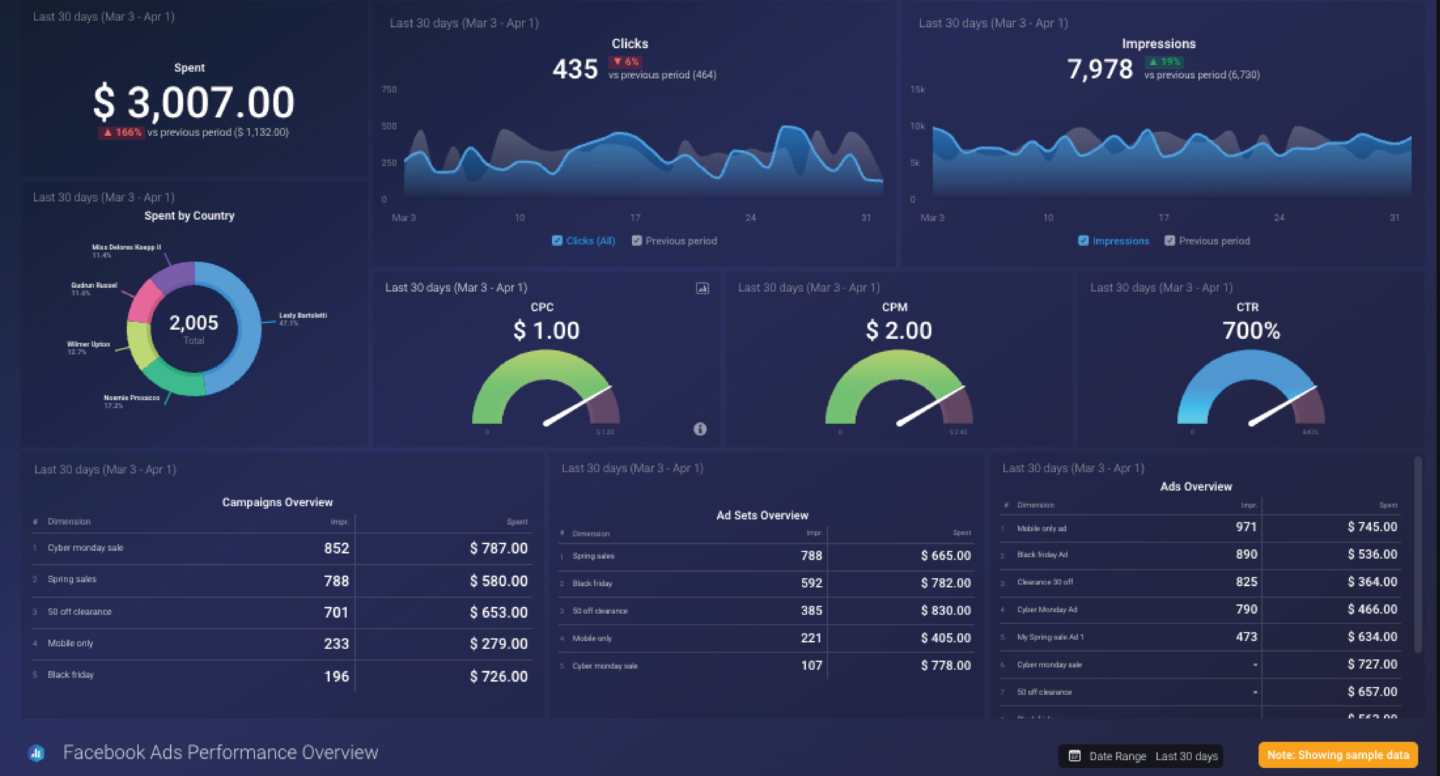
KPIs are variable, based on your marketing strategy, business goals, and industry. In this example, we will look at social media advertising performance, using a template from Databox for a hypothetical business.
The example report above shows the results of a social media campaign over 30 days. It provides valuable insight into how the results of the digital platform increased or decreased based on each campaign they ran.
In this example, the business can see how cost-per-click has been performing and how effective its marketing campaigns are.
Key Performance Indicators for digital marketing campaigns can include, but are not limited to:
CPL (cost per lead)
CPC (cost per click)
Ad spend
Impressions
Engaged Web Sessions
Bounce Rate
All of these data points and more can be tracked and used to refine your marketing strategy to ensure your performance is as cost-effective as possible.
How Does Benchmark Data Differ?
Benchmarking data is taking the previously mentioned KPIs and reviewing them all in one place while also comparing your performance against your industry as a whole. Benchmarking data allows for a strategic analysis of your marketing performance, which leads to understanding what is attainable and reasonable for your industry.
Ideally, benchmarking against your direct competitors would yield the greatest return, but it isn’t likely that you’ll be able to access their data. Instead, consider looking at the brand’s online visibility, such as LinkedIn or other social media platforms they’re using to promote their business. Because when it comes down to the brass tacks, viewing data from a competitor’s digital landscape offers valuable insights that can influence your own marketing strategy.
Databox makes benchmarking your data simple: It helps you set meaningful goals that maximize your digital marketing budgets. Additionally, Databox’s benchmark tool allows comparison of your performance anonymously — and with data collected from companies identified as similar to your own monthly — making the data you’re benchmarking against fresh and relevant to your current market and business objectives.
Benchmark Data in Action
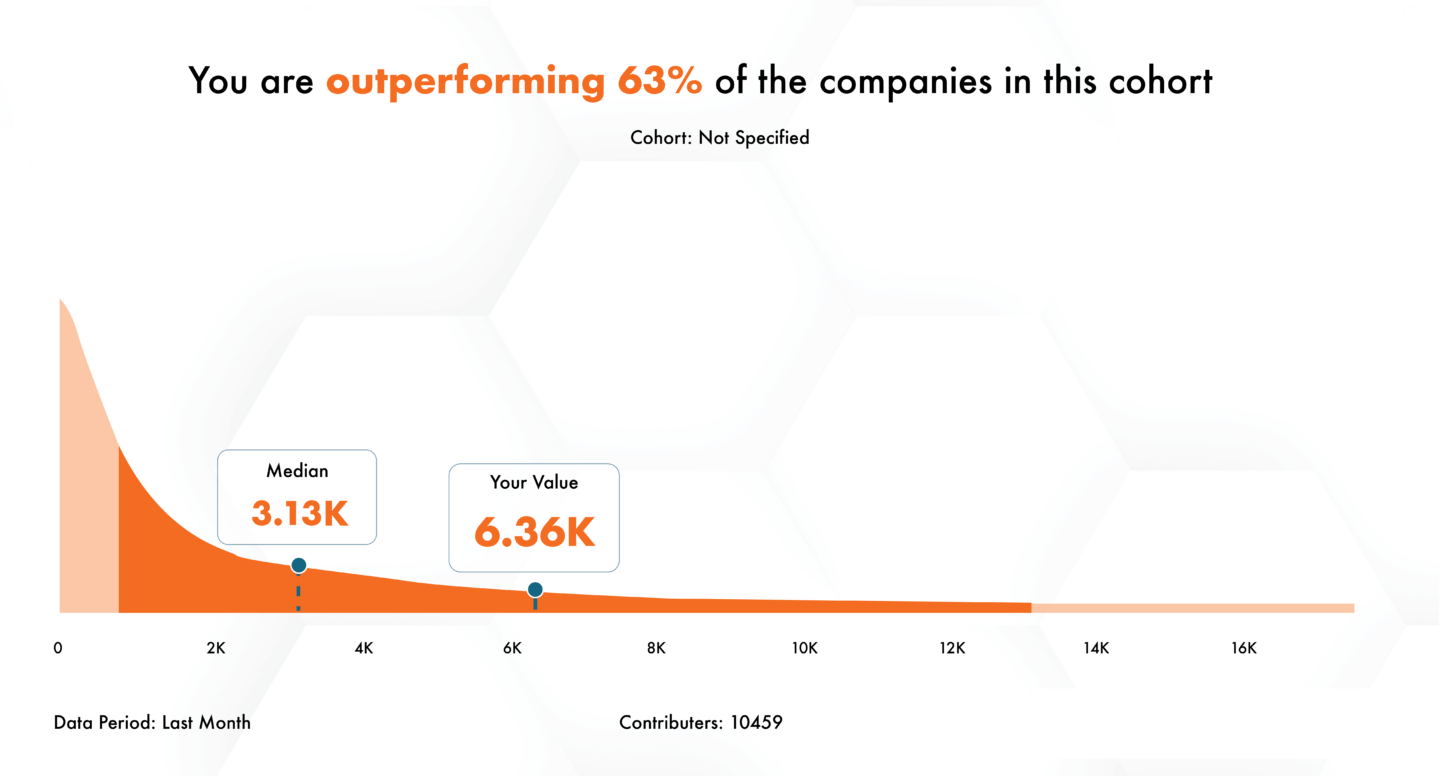
Get ready for a sneak peek! Shown below is Beacon’s benchmark performance regarding active users on our website. The median value for our industry group, shown with a gray line, is compared to our performance value in blue. The orange graph shows the data curve of gathered values from over 10,000 contributors participating in this benchmark group.
This snapshot clearly and quickly defines how Beacon performs against similar companies in our industry. This is invaluable for our continued efforts to offer value to our audience by improving our digital landscape through our blogs, The Beacon Way Podcast, and The State of Mental Health Marketing Report, to name a few.
Databox’s tool also allows us to review and adjust our digital marketing strategy by tracking our performance over time. Historical tracking of website performance data is a powerful tool when considering the implementation of or changes to search engine optimization.
Is Competitive Benchmarking For Me?
Well, it definitely should be! Implementing Databox’s Benchmark groups is a true game-changer for any industry. At Beacon, we’re excited to be early adopters of new technology as it will ultimately ensure that we are in front of the learning curve for our clients.
We all know that tech is constantly evolving — and our goal is to be the expert so you don’t have to!
What’s next? We invite you to join our Benchmark group today and we’ll then provide a FREE consultation based on your results!
Authors Adrienne Wilkerson and Jennifer Christensen, adapted to blog by Sara Jokela
Recruitment + Culture + Marketing
What do recruitment marketing and culture have in common and how can they play a vital role in building a thriving business? Recruitment marketing for company culture is about meeting people where they are, informing them, and educating them.
Historically, company departments like HR, Marketing, and company culture were siloed and disconnected with the marketing strategies being employed to bring in only new business, but not any longer.
With the shift from interruption marketing to the transparency of social media and digital marketing, your company is on display more than ever before. This doesn’t just mean your services, it means your Leadership, your Owners, and your Employees in addition to the services you offer.
Looking to ramp up your recruitment efforts? Reach out to Beacon Media + Marketing to learn how we can help, and check out our podcast, The Beacon Way, for more expert marketing advice.
The Digital Age Information Gathering
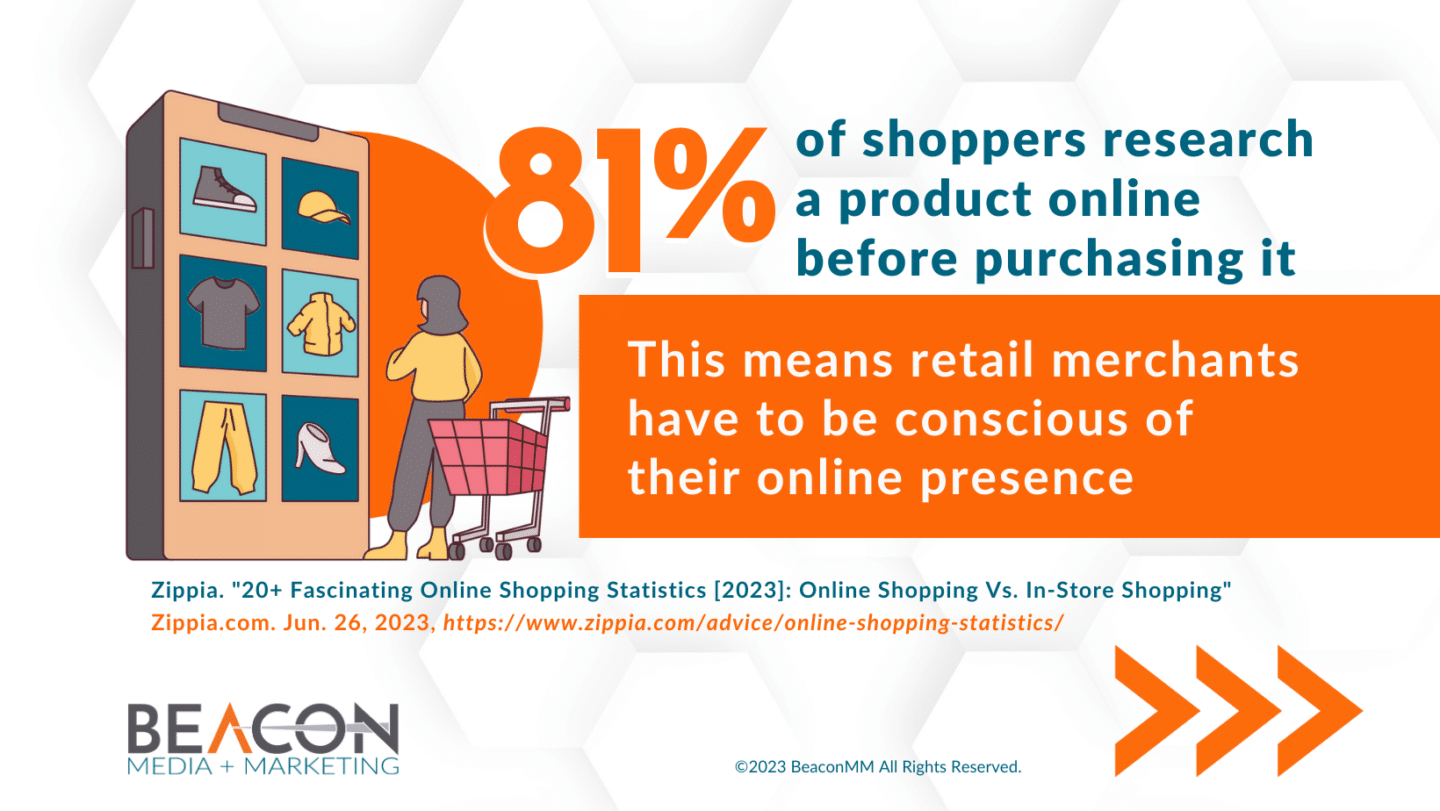
Technology moves so fast and brings new challenges to developing a successful recruitment marketing strategy as well as to the hiring process. The first contact your company receives is likely online. This is because more and more consumers and job applicants are looking into companies online before purchasing or applying.
Statistics show that 57% of job seekers use social media in their job search and 54% of companies have eliminated an applicant based on their social media feed.
As you can see, social media plays a powerful role in both employee referrals and employer branding when it comes to recruitment marketing goals. In fact, 92% of employees (or passive job candidates) would consider changing jobs for an employer with an excellent brand and reputation.
Potential Candidates Want The Feeling Of Control
Culture, like technology, has shifted quite a bit since the early 2000s. Emphasis used to be on the phone call, but now with more and more potential candidates and customers researching you before a first contact, the focus must be on your online presence.
Whether your online presence is for sales or hiring, candidates want to feel in control. They want to know who they are applying to work for and they want the maximum return from their search efforts.
Employers are responding well to this shift and meeting potential talent where they are. With the rise of social media, both employers and employees have the option to research each other before they decide to make or continue contact — which saves time and money in the hiring process.
Attract Top Talent, Save Money, and Resources
Attraction-based recruitment marketing generates value for prospective employees ahead of their initial contact with you for job openings.
Utilizing attraction-based marketing strategies in your recruitment marketing channels, studies have shown that there is a 28% decrease in turnover. As a business owner or manager, that’s exciting news because that means that you’re attracting top talent that wants to work for you and knows your culture, making them less likely to leave.
When your talent is not looking to leave, you save on recruitment fees, ads, and salaries which shifts the profitability of your business.
Another major benefit is a quicker hiring turnaround time, which saves resources as well. Attracting the right qualified people for your culture makes sense and allows the process to move at a much faster pace.
Don’t Reinvent the Wheel When Using Recruitment Marketing
If you’re already leveraging digital marketing, and watching your sales funnel, that strategy can seamlessly translate to recruitment marketing efforts and culture. The inbound marketing funnel has been established since around 2010 and works really well to attract new clients. This same method works for attracting new job seekers. Basically, think of it as a recruitment marketing funnel.
As a culture, information has never been more accessible than it is right now and that will only continue to grow. Research, social media, and website vetting are standard practices for any purchase or job shift consumers are looking to make.
Working toward brand transparency, removing barriers to doing business with you, and over-sharing information online establishes your company as not only a thought leader in your industry but also as a business that will attract your ideal candidate.
Same Funnel, Different Personas
Understanding your customer personas is integral to reaching your target audience and the same can be said about recruitment marketing. It’s the same funnel but from a different angle.
Looking at the recruitment side from the view of prospective candidates will allow you to tailor your strategy to not only those career opportunities but also to the ideal candidate to fill your vacant positions.
Recruitment marketing strategies should be included in your lead generation marketing strategy and should flow seamlessly. This means you have to not only be thoughtful about where a potential customer will find you but also about prospective employees. Where is the talent pool researching your employer brand?
Using Social Media Marketing Strategies for Recruitment
Getting right to it, Instagram is huge when it comes to looking internally at company culture. Highlighting photos and videos, sharing your staff’s events, and quoting them are all part of the experience of working for your company. This is because outreach through insightful posts provides value — and it offers a glimpse into the internal culture of your community for the potential talent you’re trying to reach.
Both Instagram and Facebook can be used to highlight internal culture as well as ads for your sales funnel. Additionally, LinkedIn is a social media platform that is more defined as a place to establish leadership. Thus, LinkedIn is where the talent community will be meeting the leadership of your company and making judgment calls on whether or not they want to work with you.
Some of Beacon Media + Marketing’s best staff have told us that they listened to The Beacon Way and that our podcast was a determining factor as to whether or not they wanted to work for our company. We’ve even had staff reach out specifically because they liked what they heard on our podcast.
Keep social media top of mind in regard to the channels that you are already operating in and understand that you will be attracting talent, not just new leads.
Recruitment Marketing That Enhances Culture
One of Beacon’s clients, Ellie Mental Health, has really understood that marketing strategies are used to showcase their culture, help with recruitment, and attract top talent that is right for them.
Right on their homepage they have a featured staff member in their hero image, which is pretty bold and it works for them because that’s who Ellie is. Ellie believes in transparency and sharing their team culture. Ellie also includes various quotes from their team throughout their site.
Both of these things help remove the barrier between the target audience and who they will eventually be talking to. Both of these things clearly communicate the personality of Ellie Mental Health across the board.
Determining What is Right for You
Bold statements, like staff pictures and quotes, are not right for every business. Staff turnover can cause edits to a website and headaches that you don’t need. Before deciding to add your staff to your website, refer back to your “True North” goals and plan we discussed in Effectiveness in Marketing Strategies.
If your goals and strategies don’t point you to a bold culture statement, then don’t pursue that angle. If you’d like to visually represent your culture in a more secure and stable way, consider featuring the ownership team in a casual setting to create that connection point that job seekers are looking for.
Keep in mind that your website is a living, breathing thing that will need to be tended to. You cannot simply set it and forget it. In tending to your website, edits and updates will have to be made. So, factoring in the staff shift is wise, but it shouldn’t be overwhelming. A simple edit like that is nominal compared to not being transparent or connecting with top talent.
Step Out of Your Comfort Zone and Grow
The landscape of technology is one that should be a little stretching. Growth is not possible without pushing the boundaries of your norm. Basically, it can’t just be about playing it safe.
Wherever your comfort zone is, pick one level up and go with it. Embrace the change and push past your boundaries to see where it will take you.
Moving Past Recruitment to Retention
The marketing efforts you made to find your ideal candidate have paid off as you recruited top talent — but don’t stop there. Social media channels can be leveraged to enhance retention and turn the new hires into your biggest fans.
Engage your clients and staff by embracing transparency in your marketing strategies. Celebrate your staff and recognize not only their accomplishments but also their hobbies, families, and personal lives.
Let the lines between personal and professional become blurred. Show your audience that your staff means more to you than just a person doing a job every day — and communicate your staff’s value by being invested in what they are invested in.
Gen Z and Millennials, in particular, will connect with this type of recognition that communicates value. Everyone loves it when you celebrate what’s important to them.
Practical Applications of the Cultural Value of Celebration
Within Beacon Media + Marketing, one fun way we communicate and celebrate is a weekly call-out on Monday morning for pictures and information on what the staff did over the weekend. It’s a goofy and wonderful time for our staff to connect and share their personal lives with each other.
Celebrating the fun things they’ve done may seem inconsequential, but it is integral to our internal culture and it serves as a way to get good content for social media channels.
Internally, the staff connects with each other and they all love to see what others have been up to while they are off. It is a fabulous team-building activity and it drives home that we value each and every one of them as well as the things that matter to them.
We also like to focus on things like “Thankful Thursday” where the staff gets the opportunity to share what they are thankful for. This is not just us talking about how great we are as a company, but again, giving our staff a platform to talk about what is valuable to them.
Removing Barriers and De-siloing Your Staff
Company departments can become siloed. By building a culture that brings them together, we are growing a culture of value and connection internally as well. Celebration and communicating value to and for your team will increase retention.
Using Data and Experience for Recruitment Marketing
If your company is growing, you’ll always be in the recruitment phase and utilizing recruitment marketing. Tracking cookies on your website is a great strategy to gain insight and understanding of where most of your potential staff are learning about you.
At Beacon, we have discovered that most of the time prospective employees spend on our website is on our About Us page. They’re looking through the information on the leadership team and the individuals who already work on our team.
Prospective employees want to know what you are saying about your employees and what they are saying about themselves. Many are listening to our podcasts and hitting our social media platforms to get a feel for who we are as a company.
Taking the data from your website and translating it to content specifically for recruitment marketing is a strategy that will pay off for tapping into the talent community.
Leveraging Reviews for Job Openings
In Episode 12 of The Beacon Way, we discussed the importance of reviews and responding to reviews, positive or negative. The same applies to employment reviews.
Glassdoor and Indeed reviews are another opportunity for prospective employees to learn about your company. Employment reviews need your attention, they are a huge part of whether your business is going to be successful long-term or not.
Managing and responding to reviews should be part of your marketing strategies. Negative reviews can be disheartening, but your response to them can change the course of a prospective employee who may have been turned off otherwise.
A perfect score is not the goal, perfection does not typically communicate that your business is trustworthy. It has quite the opposite effect, it becomes suspicious.
Handling conflict and difficult situations with grace and professionalism shows the character of your company and speaks volumes to prospective employees and clients.
Tips for Managing A Remote and Hybrid Environment
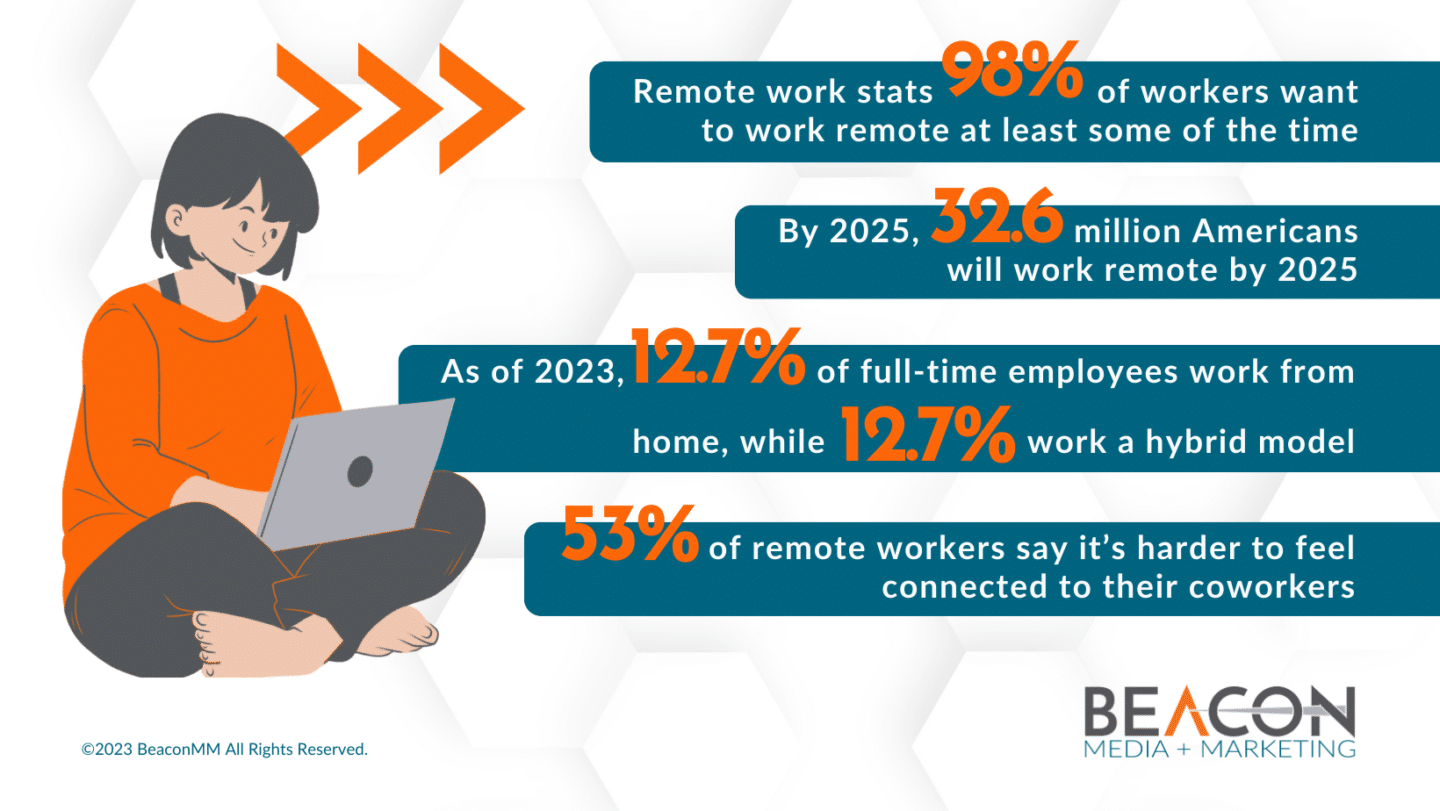
Integrate a digital communication tool.In more recent years, remote and hybrid work environments have grown exponentially. According to this article from Forbes, 98% of workers want to work remotely at least some of the time, As of 2023, 12.7% of full-time employees work from home, while 28.2% work a hybrid model, and by 2025, 32.6 million Americans will work remotely.Employing an internal digital communication tool is pivotal to keeping your remote workers connected and working as a team.
Be inspiring!Leverage the internal communication tool to be an inspiration to your team. Connect the leadership with staff by communicating in an encouraging way like posting quotes or sharing inspiring content on a consistent basis.
Celebrate your staff on social media sites and internally.According to the same article by Forbes, 53% of remote workers state that it’s hard for them to feel connected to their coworkers. Establishing a workplace culture of connection will help drive retention.Connect and communicate value with your staff by celebrating their success, their family’s achievements, or other interesting and fun differences that make them stronger as a team. Celebrating each other brings your staff closer, provides opportunities to celebrate each other’s wins, and drives culture.
Whether your marketing strategies are driving recruiting campaigns or new lead generations, integration of culture into them will bring synergy to what you are doing and ultimately serve to engage candidates in your job openings.
Reach out to Beacon Media + Marketing to learn how we can help with your recruitment marketing campaigns and check out our podcast, The Beacon Way, for more expert marketing advice.
Authors Adrienne Wilkerson and Jennifer Christensen, adapted to blog by Sara Jokela
In this series, we have been discussing best practices for websites, and what website pages you should include. This installment will discuss the blog page, the FAQ page, and the contact page.
To Blog or Not To Blog: Is It an Effective Use of Your Time?
Blogs have evolved significantly over the years and they absolutely can be effective and important to your website.
Providing dense, relevant content to your website pages along with search engine optimization helps your website rank higher with Google which is why blogs can now be seen featuring 2,000 words instead of the previous 1,000-1,200 words.
Clients and your target audience want to learn about your company and the services you offer prior to engaging you in further conversation. This is also where page titles can be a huge asset in initial engagement — as creating a blog page is a valuable tool to providing in-depth information on your website.
Blog subjects can range from how-to guides, pricing strategies, your origin story, and even a highlight of your vendors. Above all, the blog page should be a resource center for those you’re trying to reach.
At Beacon Media + Marketing, we prioritize the categorization and organization of our blog page based on the subject. We want to remove any barrier to a client or potential client finding the information they are looking for.
As mentioned above, this is also advantageous for SEO! Google loves blogs, and Google loves to favorably rank blogs that specifically address the search terms your client and potential client are using.
By providing information on a blog page, you are answering what we call “top of funnel” questions. These are questions that are at the beginning of the research phase of the buyer’s journey and lend to the credibility of your business.
No, not in our opinion and experience. Utilizing web pages such as a blog page that is set up for providing information will be a more authentic user experience that develops the trust of potential customers.
Having a lot of articles available that are answering the questions of your target audience is a great pathway to moving them further down your sales funnel. Some potential customers will take a while to contact you — but if even a fraction of those who visit your blog book an appointment, that is still something we consider a win.
Why Make the Time Investment in Blogs?
Blogs not only provide answers to potential customers and clients, but they offer the flexibility to be adapted into social media assets as well. Blog posts are a great marketing tool to pull quotes for posting and linking back to your small business website.
Blogs also offer a low-pressure approach to your sales process that introduces people to your company and your services without the pushy hard sell of “BUY NOW”.
Just the FAQs For an Effective FAQ Page
Our best advice is to not allow the FAQ page to be an excuse for not answering client questions. Nothing can be more frustrating to website visitors who would like to use a chatbot, make a phone call, or send an email to get more information, only to be sent back repeatedly to the FAQ page.
Just like a testimonials page, FAQ pages can be very effective if used correctly. However, they can also create the impression of your business that it is cold, unapproachable, and seem as if you have no desire to answer more complex or nuanced questions.
Tips and Tricks to Effectively Build Your FAQ Page
Prioritize user-friendliness: Users won’t stay in your FAQ section or on your website if they have to hunt for the answer they’re looking for.
Optimize visual appeal and accessibility: The font and styling of the FAQ should draw the eye and be easy to read.
Utilize video links: Many services can be complex, or they may be new, and a video to explain your product or service process may be the best way to answer potential questions your clients may have.
Organize FAQs by category: Questions about billing should be separate from questions about shipping. It just makes sense!
Reinforce your brand by leveraging your FAQ page: Your website pages need to feel consistent so that no matter which of the sections the visitor encounters, it feels authentic to your brand messaging.
Use the FAQs as a starting point for further engagement: CTAs, chat forms, videos, and blogs are all good options to redirect to or help enhance the information that is being addressed in the FAQ.
Level up by including a personal touch: Some answers may be just too complex or nuanced to answer in a FAQ so add a personal touch by owning that and providing an avenue for contact that will allow that question to be answered properly and thoroughly.
Understand and strategize FAQs as a customer service tool: Here at Beacon, we are all for using technology to enhance your client and potential customer experience. We advise that when using a FAQ list, do your best to ensure that it is a benefit and not a deterrent.
Contact Us! How to Leverage the Contact Page as an Effective Marketing Tool
We’ve seen it time and time again, the contact page looks empty and neglected. Your contact page is one of your most important pages and should contain more than just your phone number. In fact, there is a huge opportunity to leverage this page to help meet your marketing goals.
What Should You Consider When Writing Your Contact Page?
Contact pages will have less content than other pages on your website, but they also offer a tremendous opportunity to add relevant information — and incorporate search engine optimization (SEO).
When you are strategizing your contact page, some things to consider adding are the various ways to contact you, the most effective way to contact you, and whether you are going to send them to a form.
Many businesses have several forms of communication but some are more easily accessible than others. For instance, if you are sending them to a contact us form and your typical turnaround is 24-48 hours, that should be specified at the time they are sent to the form. Communicating return contact expectations build trust.
Site visitors often may want a quicker way to contact you without a wait time, so there should be several options available and detailed information on how that contact will be handled.
Extending the Investment in Building Trust Past Your Service Page and into the Contact Us Page
All of these considerations should focus on keeping the trust that you have built up until this point. Your contact details are just as important to search engines as your home landing page, blog, services page, and product page.
Each of those pages was strategically built to bring in leads but if those leads aren’t converting because the contact experience isn’t meeting expectations, you’ve lost trust.
The Contact Us Page: A Most Important Portfolio Page
Moving beyond research into conversion is all in the details for many reasons across your site. Visitors want to options so we recommend that you give as many options for contacting you as possible and explain how those options can be used best.
The contact us page is a critical web page — and a continuation of the customer experience. Customer feedback can be vital when reviewing and setting up your page.
Many customers use the contact us page to get a hold of you when something goes wrong and you certainly don’t want to leave them hanging when they need you.
Maintaining the client relationship is just as vital as gaining a new client relationship. Happy clients tend to send referrals and they won’t send a referral if they have difficulty contacting you.
Chatbots: Potential Annoyance or Asset?
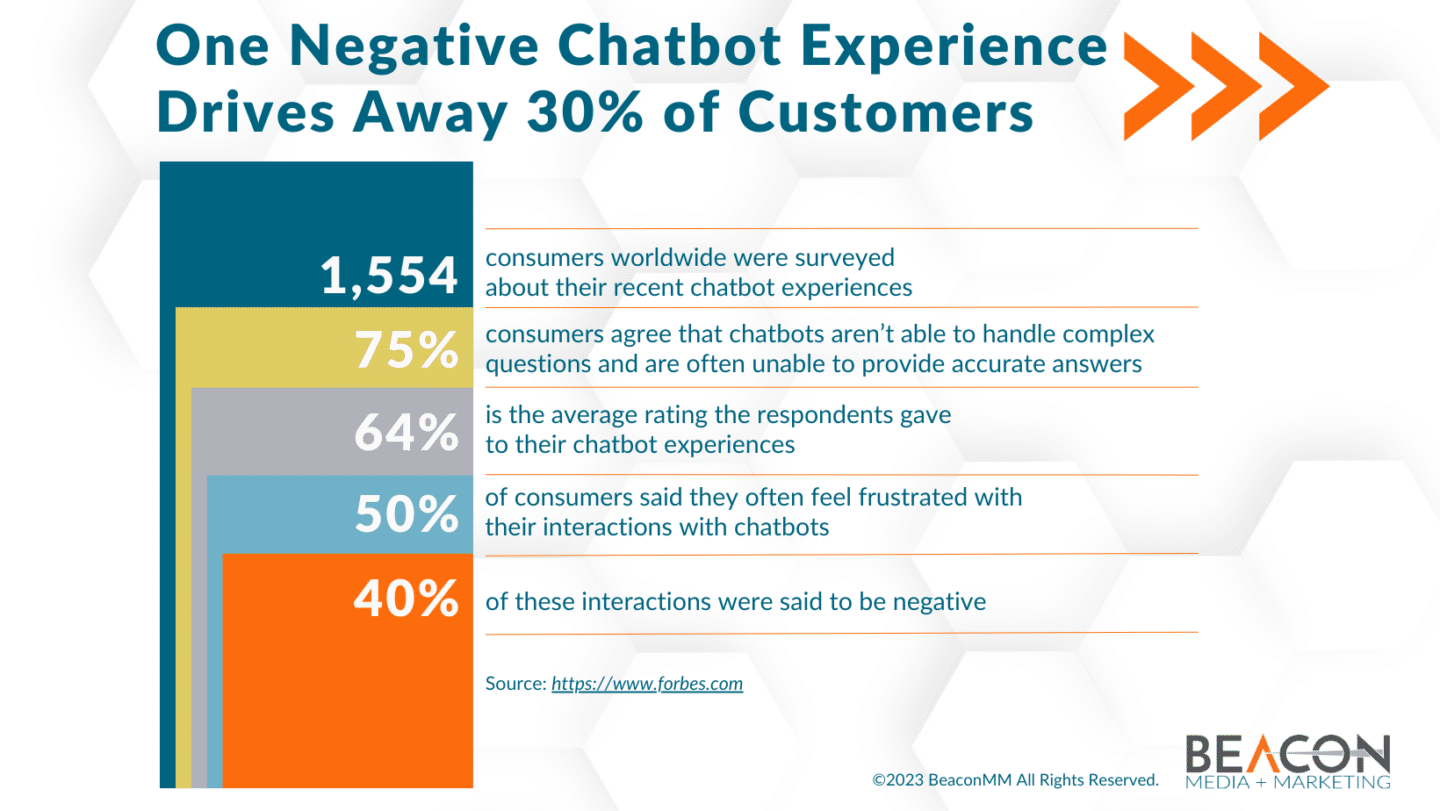
Chatbots can be both a potential annoyance and an asset. We’ve all had the experience of a chatbot that isn’t working properly and that is incredibly frustrating.
In the era we are living in, AI chatbots pop up automatically on most sites your visit. When the chatbot is aggressive and it’s not easy to navigate away from it, that can be highly annoying for the user.
Ultimately, it is another option for a form of communication and people like options. We have seen that the more we call out the chatbot for what it is, the better customer responds to it and we like to communicate the expectation of when to expect the return reach out.
Best Practices for Chatbots
Make sure to communicate clearly whether or not a human is attached to the chatbot: Customers who expect to be connected to a customer service agent but are funneled to a form instead are likely to lose trust in your business.
Clearly communicate all the details of the return reach out: Removing barriers to contact are important when strategizing how your customers can contact you. Clearly communicating when you are and are not available builds trust in your business.
Allow the user to be able to close the chatbot and return to it if they want to: Chatbots that obstruct the user, particularly on mobile, from navigating your site to retrieve the information they are looking for will be more likely to bounce off your site.
Transparency Matters in the Digital Customer-Facing Landscape
No matter your industry, being transparent in your customer-facing digital landscape is crucial to building the trust with clients that we so often talk about.
The answer could be that you won’t be able to answer them for a week because you are out of the office, and that is ok as long as you clearly communicate that upfront to the customer.
Don’t shy away from being honest and transparent with your digital marketing efforts. It will really serve you well in the long run.
The Beacon Way is a Podcast and blog series with the mission to help others understand and navigate the digital marketing world. Listen to The Beacon Way on our website or wherever podcasts can be found.
Authors Adrienne Wilkerson and Jennifer Christensen, adapted for blog by Sara Jokela
Building Out Your Marketing Strategy for Effectiveness
Pulling together a cohesive plan and then implementing it can be a daunting subject for any business. There are many tools, tips, and tricks to use in your marketing efforts that will help as you’re looking at your plan’s foundation.
In addition, digital marketing channels have different strategies for presentation and we recommend that when deciding which way to approach each channel — ask yourself a few of the following questions:
Who are you?
What is your brand?
What do you care about?
What differentiates you from the crowd?
What are you trying to express?
What service are you providing?
What solution are you sharing?
Digital Marketing Effectiveness Is Measured in Feedback
No matter the market you’re approaching, the effectiveness of marketing is measured by how a particular market responds to what you’re putting out there. Essentially, marketing strategy is a job in itself and it has to be constantly reviewed and adjusted to ensure a higher customer retention rate.
Marketing metrics are also a feedback tool to understand how effective your marketing efforts are. As such, you should consider metrics such as your marketing budget, cost per lead generation, cost per click, and conversion rates just to name a few.
It can be really easy to get sucked down into the weeds of metric analysis for all the different marketing campaigns. Thus, ensuring your foundational questions are considered during the analysis process is key. Remember, always go back to the basics.
Filtering Feedback Correctly
Focusing on the “True North” of your business foundation also acts as a filter for what feedback to engage with — and what to disregard.
When reviewing feedback, it’s important to know who your target audience is and who they are not. Keep in mind that there will always be trolls who want to throw you off your game. And you must be able to differentiate the trolls from the valuable feedback.
No Feedback Is Good Feedback
Should lack of feedback be considered a good thing? Yes! If you’re not getting feedback from your target market, something is missing.
When your target market is not communicating with you, your marketing effectiveness is off. Essentially, this means you’re missing the mark and not connecting with your audience.
At the end of the day, bouncing all these key metrics and marketing activities off your true north allows you to evaluate and reevaluate what feedback to implement and what to disregard.
Know Your Goals and Your Target Market
Feedback will come from anywhere and everywhere, including friends and family. Taking feedback from important people in your life can become complicated and it’s important to consider how much weight it will hold for your business.
As a result, implementing invaluable feedback just because it originated from valuable people can take you off course. And as with all feedback, it should be measured against your true north business goals.
Brand Awareness | Don’t Alienate Your Staff
At Beacon Media + Marketing, we had an experience with a small business client who was looking to refresh their brand after 20+ years of operation. The challenge with this particular client was that not all owners wanted to be involved in the process — which led to a mismatch of preference and brand awareness.
The husband and wife client are in the construction industry, he runs the field, and she runs the office and he prefers to leave the details of the brand refresh to her. We had to walk her through the brand awareness process for a male-dominant population to conclude that they would probably not want to wear the feminine colors that spoke to her.
Brand awareness has to complement the market served, the employees serving it, and the style of the owners, while also connecting with your target audience. It’s a careful balance of personal style and communication of your business personality. Again, referring to your goals and foundational identity will help you measure marketing effectiveness.
Effective Marketing Campaigns May Not Appeal to You
Generational considerations for your content marketing add another layer to measuring marketing effectiveness. Part of your audience consideration is the age-range demographic and how best to reach them.
For example, we had an incident where a staff member came up with a cute and quippy hiring post for LinkedIn that did not resonate with us at all, as owners. This staff member had a solid thought process and solid reasoning behind how they thought it would be effective to reach our target demographic so we approved it.
That particular ad got so many positive responses but didn’t necessarily translate into applications. Was it an effective marketing strategy? We believe it was because it piqued people’s interest while staying true to our company.
Context Is King When Measuring Marketing Effectiveness
When you consider content marketing that doesn’t resonate with you and may come from staff from another generation, ask them to give you context. Ask them to explain why they think they have an effective strategy and how it will reach the target market.
If they have a solid plan and the content aligns with your company’s values, take a chance on it! Track marketing effectiveness by the feedback you receive.
Consider Your Calendar When Planning Your Marketing Strategy
Once your strategy, foundational questions, and audience are identified, the next step is to decide how many hours you have to devote to marketing.
Necessary time and available time will most likely not match. This is why the Beacon Way approach looks at the growth goal of your company and your strengths and weaknesses.
More Time Than Money?
Analyzing desired growth versus your strengths is the approach we take to formulating a marketing plan. For example, if your strength is in sales and you can write compelling copy to persuade people, that may be a good place for you to make a marketing investment.
Writing great content, focusing on your website and social posts to engage new customers, getting qualified leads, and inbound marketing rolling will all be effective uses of your time.
A common business mantra is, as soon as you can, outsource your weaknesses. The encouragement here is to understand that marketing management won’t have to fall squarely on your shoulders forever. Marketing professionals, like Beacon Media + Marketing, are here to help you Grow + Scale + Thrive.
Choose the Path to Your Marketing Team
There are many available tools to assist with marketing campaigns for anyone willing to use initiative to leverage them. However, we do caution against entering a realm too far outside your strengths, like graphic design for instance — because this can really eat into the time you need to manage your business. Instead, focus your time and energy on what you’re good at and on getting your business up and running.
Freelancers, agencies, and in-house staff to run your marketing efforts are all great options for growing your marketing activities and there are advantages and disadvantages to both.
Knowing your goals, your strengths, and your weaknesses will help you analyze which path to take depending on what you’re trying to accomplish. You may even find yourself going in several of these directions at once to achieve the results you’re looking for in your marketing plan.
What To Consider When Outsourcing Your Marketing
When designing your marketing plan, consider the pipeline growth you want to see, the paid channels you’ll utilize, and determine the effectiveness of click-through rates needed to satisfy your marketing goals.
Once you have a solid plan laid out, who would be the best fit to deliver on your business results and greater marketing ROI from your efforts?
A full marketing plan that is omnichannel and multi-platform may be best suited to an agency with the staff to handle the volume of content that needs to be managed. Picking the right expert in this field, who uses best practices in these areas, will increase your results and likely save you money.
A smaller, more conservative approach, like video and content, may be better suited to an in-house partnership or a freelancer who is equipped to produce and manage this type of plan.
The bottom line here is that you must know how you operate within your company, your goals, and yourself in order to determine how best to serve the marketing needs of your business for customer acquisition — and to bring more revenue through the door.
Niche Marketing Skills | Does One Person Have It All?
The marketing industry has become highly specialized with the addition of all the channels and marketing methods available. The skillsets needed to analyze data are very different from the ones needed to write effective blogs or create engaging social media content.
If your goal is to hit all the specialty areas available for your marketing plan, it’s important that you outsource to an agency group or several freelancers who specialize in each area. Typically, it won’t be possible to hire one person in-house who has all the specialized skills it will take to manage the multiple platforms effectively.
Creative + Analytical Thinking, the New Approach to Sales
Sales and marketing go hand in hand, but you can’t expect your marketer to be your sales team. That is yet another skill set that is highly specialized in the current marketing landscape.
For this reason, it is imperative that your marketing campaign not only has the creative direction to capture the eye of potential customers — but also an analytical expert to analyze the back-end data for measuring marketing effectiveness. With these two pieces in place, you’ll be able to pivot your marketing strategy to impact your ability to increase lead generation and new sales.
Tips and Tricks to Investing Your Time for Marketing Effectiveness
We understand that time is limited in a lot of cases when starting a company. Here at Beacon Media + Marketing, our goal is to help companies Grow + Scale + Thrive. Here are some tips on how to increase your marketing effectiveness on a time constraint of five hours per week.
Don’t try to do too much: When time is limited, be very specific and intentional about where you invest your marketing efforts.
Focus on video and content: For B2B marketing, LinkedIn is a valuable resource. This platform has the ability to foster connections in the industry or industries you serve — and it’s easy to make a large impact with very little time by producing quality, relevant content.
Service-based or consumer-based businesses, keep it simple: We recommend you pick one or two social media channels to find and target your desired customer. Spend the time to go deeper on those platforms to produce quality results.
Leverage the content scheduling platforms: It is possible to create a lot of great content quickly, especially when utilizing video, but posting it can be time-consuming and consistency is key. By leveraging a scheduling platform, you can add quite a bit of content at one time, which leads us to our next tip. Consistency.
Develop a consistent cadence of posting: It is much better to have less content on a consistent basis, than overwhelming content inconsistently. Schedule time blocking into your week so that you can develop consistent posting of content.
Don’t quit when things are going well: Marketing campaign effectiveness is important so don’t be tempted to stop when things start to go well. Remember, it’s much easier to keep momentum than it is to restart it.
Results Will Come When Your Marketing Efforts are Consistent
No matter the message, consistency is key. For years, fitness experts have tried to get us to focus on nutrition to reach results, but we want to go to the gym and not change our nutrition. The saying “Abs are made in the kitchen” became popular for a reason and it’s the same with marketing. Consistent, step-by-step, non-sexy approaches to putting your information out there will yield results — but it takes time.
Make your plan, measure its effectiveness, leverage skill sets, and available tools — and never stop!
Check out our podcast, The Beacon Way, for more expert marketing advice.
Build a Website That Cultivates Connections With Clients
Digital marketing is an ever-moving entity but does contain some constants. For example, cultivating connections with clients over a digital marketing platform is more relevant than ever in our digital age.
For more information, check out Episode 12 and Episode 13 of The Beacon Way, where we discuss how a website is the cornerstone of digital marketing campaigns and how building a home and about page that people want to read will benefit your business.
Transparency in Price Listing on Your Website: A Recommended Do or a DON’T?
Prices on your web pages are a controversial subject among business owners and digital marketers. The Beacon Way highlights transparency as one of our values — so we believe this is a marketing strategy that should be considered.
Potential customers are looking for information when they visit your website; it’s part of the customer journey.
We believe that an effective digital marketing strategy should include allowing your website to prescreen visitors to funnel in your target audience and we’ll discuss that more in depth a little later in the blog.
Dig Deep: Sharing Guidelines for Service Pages
Standard logic in website design for service and product pages is, “This is what we offer and this is what we do ~ Click this widget and you’re in!” This is only the surface of what your website should offer, but have you considered going deeper?
Potential customers have already used digital channels and are visiting your site. They’re spending time on the Home page and the About page — getting to know you. We want to emphasize that you cannot overshare information on your service pages.
Digital marketing using Google Analytics and search engine optimization allows your pages to rank well and we recommend focusing those marketing efforts into content marketing on your service pages.
Your target audience has found you! Now it’s time to answer their questions about the services you provide. Establishing your authority on a subject is not just a marketing strategy — it’s a way to earn the trust of your reader and increase conversions.
Style Matters: Visual Appeal in a Virtual World
Content marketing strategy is an important component of your service and product pages. Certain industries need to consider more education for their services that they know won’t convert as easily as others.
Botox, for example, has done a great job in marketing itself. They have used multiple channels to educate the consumer on who they are and what their product does. This type of service won’t need as much education as a lesser-known service.
By focusing your digital marketing efforts on developing a content-rich service page, you’ll create an environment where your higher-end, lesser-known services will convert more easily by providing your visitor with a really good education.
Social proof, visuals, links, and blogs are a great way to keep the conversation going. Potential customers want to have plenty of research under their belt and see the experience of others who have used your services. The bottom line: They need reassurance before making a big purchase from you.
How to Communicate What You Know: Developing a Content Marketing Strategy
When considering your content marketing strategy, how will you get the information out there for new and current prospective customers?
You already know the knowledge base your clients are coming to you with, consider what other services may they be interested in and searching for on social media channels or anywhere online.
The Beacon Way recommends that a service page should contain about 2000 words to be successful in the search engine optimization arena.
That’s a lot of content! So, part of your digital marketing strategy should be how you will visually arrange that to keep the attention of the reader and keep them on your page.
Linking blogs and other information keeps your reader on your page — which pleases the search engines ranking algorithms and serves to educate your website visitor.
They may want to read more information from those blogs that originate from your site or they will hit your Call-To-Action button. Either way, it’s a win for you!
Digital Marketing Channels: Be Prepared to Shift Strategies
Digital marketing strategies change in the digital marketing channels and you need to be prepared to make shifts as they make these changes.
In the past, Google ads used to consider it acceptable to send the user to your general services page when pay-per-click advertising was used. That is not the case any longer, now it’s important for Google ads to have the specific information match up to the specific service on your page.
Circling back to the Botox example, PPC campaigns for an application of facial Botox, as opposed to other application places, should lead website traffic to facial Botox.
So social media advertising has become a lot more specific and picky about how it is applied as opposed to the traditional search engine marketing methods that were used in years past.
Breaking out your services can seem a little repetitive but potential customers want to learn about Botox and they are sent to the homepage, which can be very annoying. A digital marketing strategy should always consider the User’s experience.
UX and Multiple Service Pages: Why it Matters
In Episode 12 of The Beacon Way, we discussed the Homepage of your website and why that matters— it’s a digital introduction to your business. The service page act as a digital marketer (and sales agent) for those who are interested in learning more about what you do.
Using a digital marketing strategy with multiple service pages serves to break up the content and allow the user to spend more time on your site — and increase the odds of them continuing to explore what you offer.
If your site is full of pop-ups or doesn’t direct them to the subject the ad promised, the bounce rate skyrockets. Google Analytics has figured this out and they will de-rank your digital advertising and charge you more to run those ads.
In addition to a skyrocketing bounce rate and ad spend, it’s counterintuitive to what the digital marketing strategy was created for.
Other sources of social media marketing campaigns, like Facebook, may not apply these changes but instead will be initiated by the user because they want to be redirected to the subject they’re looking for, so the bounce rate will still be high in this circumstance as well.
Listing Your Pricing Online: Why The Beacon Way Encourages It
As we stated previously, this controversial subject has been a point of contention among digital marketers for a very long time. Here at Beacon, we decided the risk is worth it.
Understandably, the reasoning against this online marketing strategy is valid. It can feel like you’re giving away your secret sauce and all your competitors are going to go on the offensive to drive pricing down.
This blog gets so much website traffic because current and prospective customers are searching for a range of costs that they can expect for the services they want to contract.
This not only helps them plan, but it also serves a few other purposes as well.
It can pre-qualify or disqualify leads, saving Sales time and unproductive appointments.
It helps keep sticker shock at bay by outlining expense expectations for your future clients.
Potential customers will know if their budget supports more investigation into hiring us as their digital marketing partner.
At the time of the sales call, they come in prepared for the costs expected from the list of services you offer — which helps them decide on services that are the most important to them.
Staying Competitive: Offer a Range instead of Hard and Fast Numbers
Digital marketing techniques employed in your strategy are unique to you and what you want to present to the world. It’s ok to not reveal all the ingredients in your secret sauce!
Beacon Media + Marketing has a variety of packages we offer for our digital marketing services. Not all websites we design cost the same and therefore our pricing has to be different for each project.
Our web design services start at $3500 and can range to $50,000 depending on the client’s needs.
We offer a range based on the work that needs to be done and the client’s approach to services. No matter where the price point starts, be transparent and explain the why behind the pricing.
Check out our ever-evolving Web Design page here for inspiration and reach out to our top-notch sales team to discuss our web packages!
Highlight Your Values in Your Marketing Strategy
Your services may range higher than a competitor, and that’s ok! Consider what makes you different and why you charge more, using that to your advantage. We talk so much about how transparency breeds trust and this area is no different.
Wendy’s Burger King, and McDonald’s would generally be considered apples-to-apples competitors until Wendy’s decided to highlight the value that they have for serving menu items it deems as fresher than the competition.
Wendy’s digital marketing tactics were to come right out and say this is who we are, why we do what we do, and why are prices are different from our competitors.
Make your case and stand behind it, let your digital marketing work to grab the attention of those target customers.
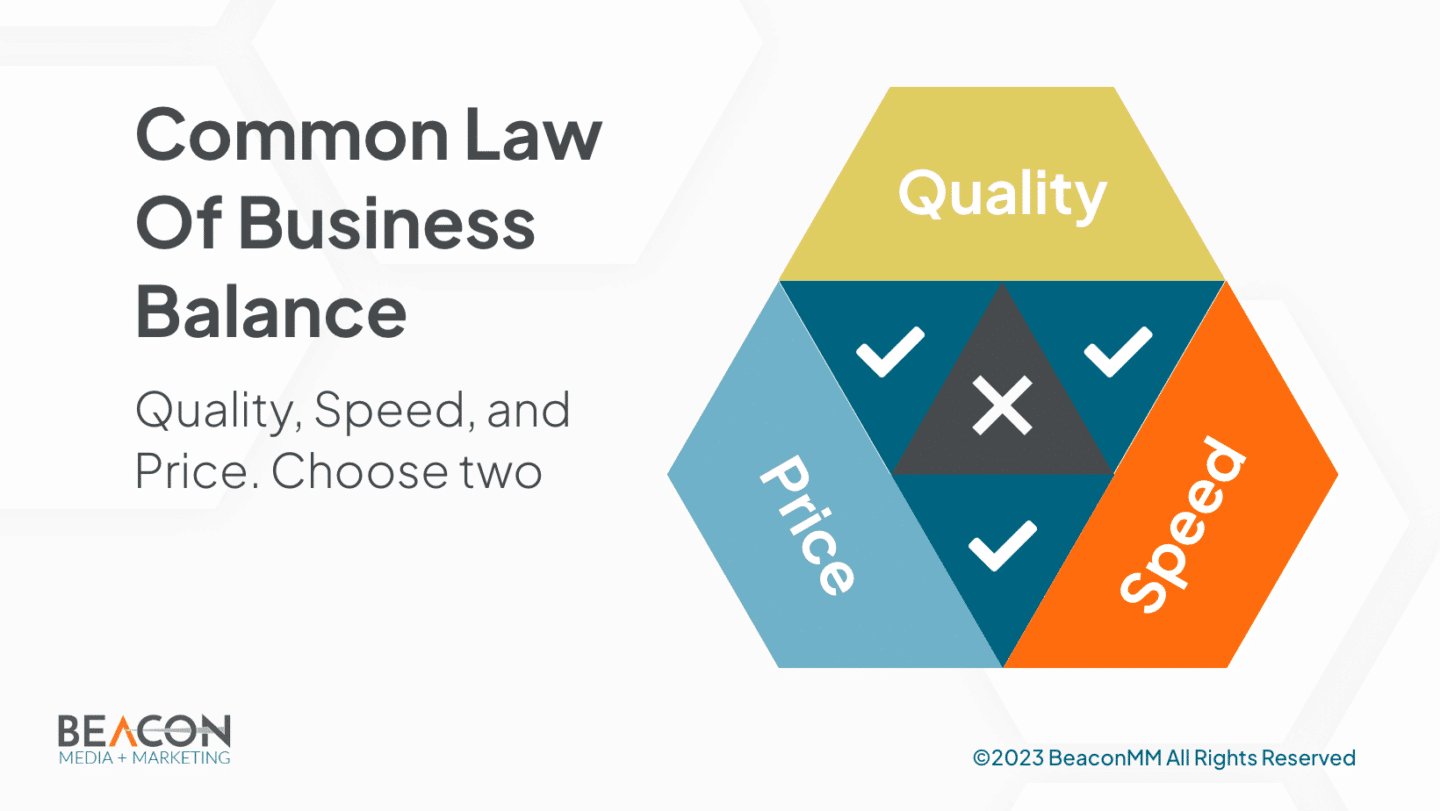
In Episode 10, we talked about the pricing triangle: speed, price, and quality. One will always suffer, so make that part of your why.
Perhaps your business charges more for services because you have an expert in that field and your client will be receiving higher-quality services from that provider. This will either matter to the client or it won’t. But in either case, it will help vet the client before they come into your sales funnel.
If price matters over quality for that client and they pass you by, consider that a gift. It more than likely would have led to a difficult client relationship in regard to price.
Talking Money Shouldn’t Be a Taboo
One of the best examples we’ve seen of this is a digital marketing agency that said their minimum buy-in was $5000 a month.
They wrote a great blog story on their values, how they treat their staff, how long the staff retention is, how long client retention is, and how all of those things go together.
Yes, $5000 a month can be a bit much for some to start with, but the results will speak for themselves and the transparency of this agency that was laid before potential clients was evidence of that.
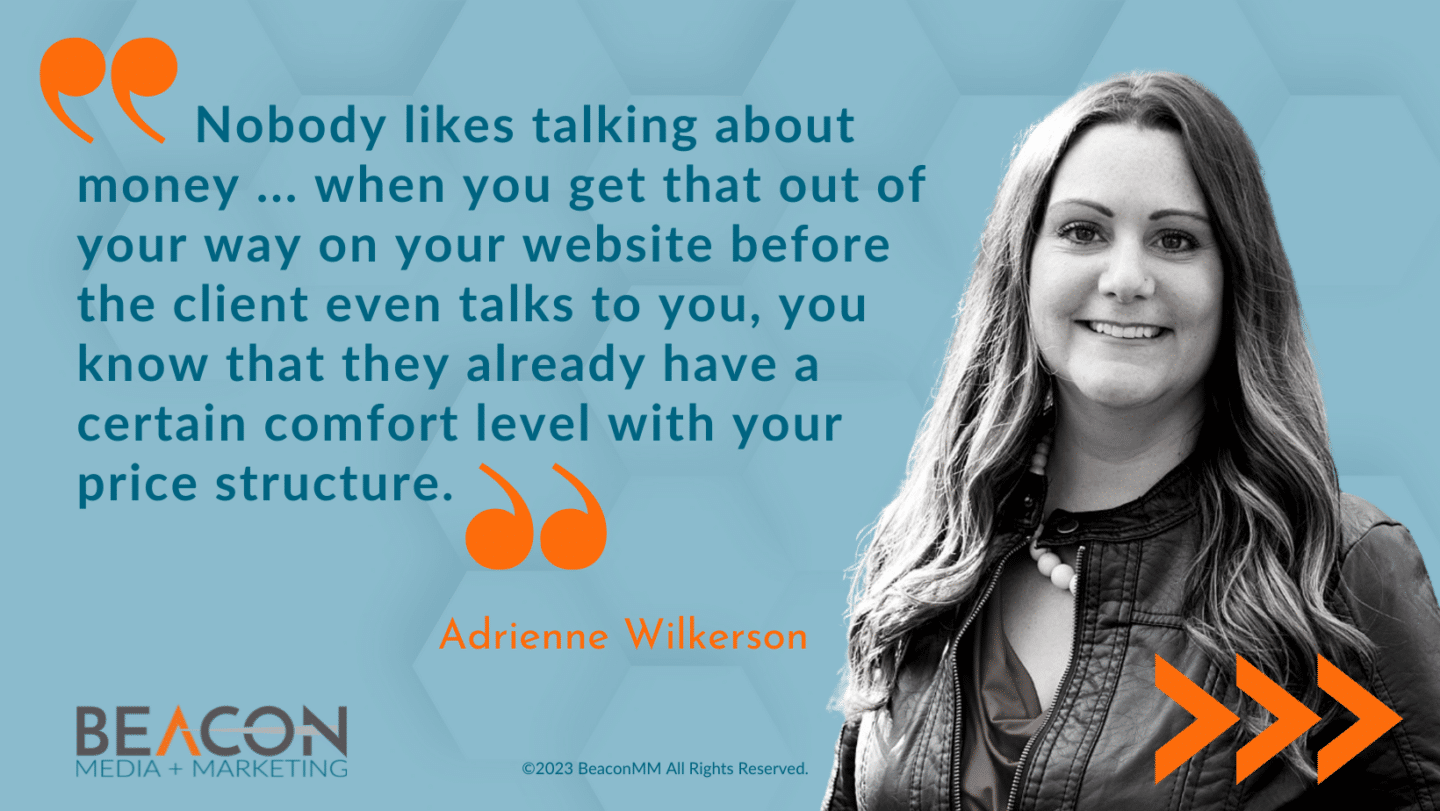
Oftentimes, pricing conversations are the most awkward part of the sales process. No one really likes to talk about money, so taking that guesswork out of the sales conversation provides a certain comfort level with both parties and removes a huge barrier to conversion.
You can assume that nine times out of ten, they’ve already been to your website, looked at your prices, and decided they are comfortable continuing the conversation with you.
The fewer barriers you have to overcome in the sales process, the better the experience will be for all involved.
Use a Measure of Caution: Don’t Bait and Switch
The fastest way to lose a client with internet marketing is to claim one thing on your website and tell them something different when you meet with them. People want to buy from others they know, like, and trust.
Using the bait-and-switch method is not only counterproductive but unethical as well. It may serve to get some quick business in the door — but it is not a good way to create long-term business relationships.
We’ve done it both ways at Beacon. We’ve published our prices and removed them — so we truly understand the risk in what we’re advising you to do with your pricing.
Overall, we believe that the risk is worth it because we’ve seen it pay off for business owners time and time again.
Not only will you gain a different position in the market, but you’ll also see more traffic, and people will trust you more because you’re willing to be transparent.
Don’t be afraid to tell your story and go deeper into the “why” behind your pricing structure. Believe it or not, you’re not just competing on price.
The Parable of the Dryer Ball
Have you ever looked for something silly and thought, “Oh! I’ll just pop on Amazon real quick and pick this item up.” One day as Adrienne was shopping for some plastic dryer balls, she got sucked in by the word “organic” and the story of a company selling dryer balls made of wool.
The story went on about how wool was sourced from a specific organic farm in New Zealand that detailed how they cared for the sheep and she was hooked!
Price didn’t matter at that point because of the investment and connection she felt with the farm that was being supported by this company — and the beautiful lives of the sheep they took the wool from.
When people connect to your story and align themselves with the values you communicate in that story, suddenly the investment isn’t as shocking or jarring as it could have been for them because they believe in who you are and what you’re doing.
Go Deep and Leverage the Power of Your Story
Whether you’re in digital marketing, traditional marketing, or another industry, your story has power.
Human connection in digital channels can be one of your greatest assets. Our digital society has opened a world of connectivity for your story and your business — much greater than in direct mail or offline marketing.
Ask probing questions, be transparent, live your values in your business and you’ll authentically connect to those who share those same values. We guarantee it’s worth the risk.
Join us for more episodes of The Beacon Way as we continue to talk about how to leverage your website to Grow, Scale, and Thrive!
Communications have changed so much over the years, in more recent history, newspapers and magazines were the option for printed marketing and advertising. Advertisers wanted their business name to be on the front page or above the fold because passers-by could see it at a glance without purchasing a paper. The same is true for any media site.
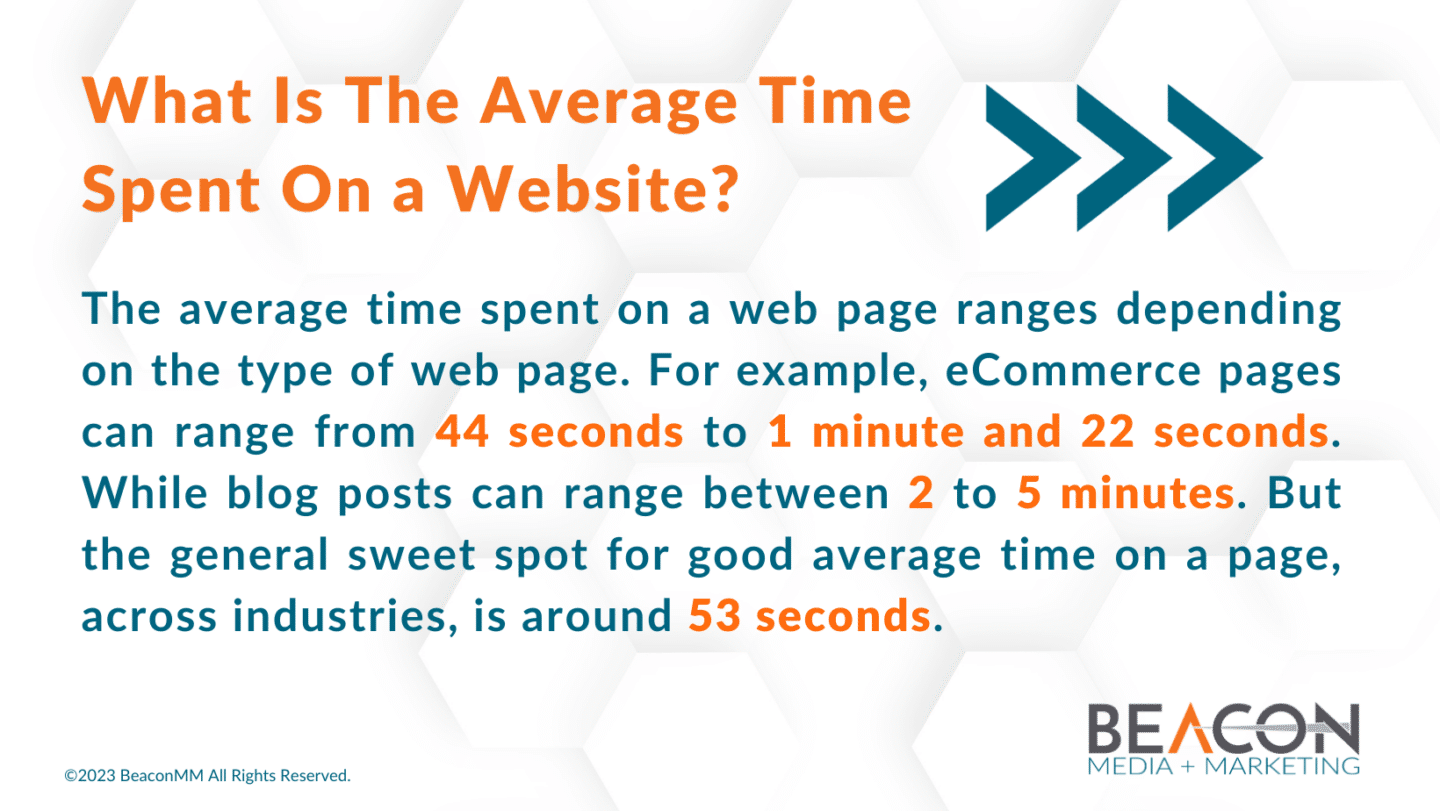
According to websitebuilderexpert.com, the average time spent on a web page across multiple industries is 53 seconds. Your website’s homepage has less than one minute to grab the attention of the viewer. This is why the impression on your web page above the fold is so vital.
Your Homepage is Prime Real Estate
Considering the above statistic, misunderstanding the value of your homepage is a mistake you can’t afford to make. Your goal should be for users to become engaged with you and there is a limited amount of time to make that happen before they navigate to other sites.
Statistically, about 50% of traffic will be directed to your home page from a search engine. The Beacon Way suggests three things you should focus on for a successful web page visit.
3 Tried and True Tips for Homepage Success!
Clear and Effective Communication of Your Unique Selling Position
Your welcome page is your main page. As such, this needs to say what you do and what services you offer. Beyond that, what makes you good at what you do, or what makes you unique at it?
Pretty pictures, sleek designs, and even your logo might draw in site visitors, but adding specific website content that tells your story is a fabulous opportunity to keep them from bouncing off your page. The story should be succinct, clear, and quickly communicated.
Additionally, pulling out what is unique to you can take some thought and it’s a worthy investment. Consider enlisting the help of friends, family, and trusted clients when crafting your home page story.
Establish Credibility
Secondly, The Beacon Way advises that you establish credibility. In prior episodes, we have talked a lot about how your target audience wants to know, like, and trust you. Social proof is the gateway to that trust relationship that means so much to your business.
Social proof is the content that grabs the attention of visitors when they are asking, “Do they really do what they say they do?”. Case studies, testimonials, videos, and even reviews help establish trust just by the visit to your webpage.
Remove Barriers
Third, we at Beacon advise that you remove any barriers, tell people what you do, and what they can expect from you when they engage you for services. Don’t make the experience complicated for your visitors.
As we talked about in Episode 12 of The Beacon Way, what your website’s homepage communicates to your audience is their first impression of you. If it’s difficult to navigate, you’ve most likely lost them and if they proceed then they must really want to buy from you.
The more you guide a potential client on your homepage, the happier they will be because they won’t have to think about where to click next, you’ve already done that for them.
For example, Apple is a prime company that thinks intuitively when it comes to the navigation of its web pages. This is because they’ve thought through where site visitors want to go and what they want to do on their site.
Again, The Beacon Way recommends that you think through a site visitor’s experience and remove as many barriers as possible from not only your main homepage but from your service pages — and from any landing page on your website.
Providing a clear navigation bar, an arrow, a CTA (Call To Action), or another pathway that shows examples of where to go next from the home screen may seem like a basic concept. But it’s extremely effective.
SEO Content: It’s Not Just About a Blog Post
Below the fold of your homepage can be a little more challenging. This is where the consideration of UX (user experience) continues. Your site visitors will vary in demographic and personality — but it is possible to appeal to these varied differences.
Visual stop points are also important for your homepage. These stopping points provide an opportunity for the next steps and CTAs but also, continue to grab and hold the attention of your visitors.
At Beacon, we use a lot of visual blocks when we are adding content. Visual blocks allow for those all-important visual stopping points that fulfill the SEO requirements of Google for your page to rank well, regardless of how many visitors scroll down to that point on your page.
Icons, videos, and infographics are all great items to display on your homepage because of their visual appeal with the added bonus of breaking up the SEO content — leading to a more pleasing user experience.
CTA | The Call-To-Action Advantage
One consistent and effective technique we believe every website should have are clear calls to action. A CTA is a prompt for your visitors to take immediate action. The CTA should be concise and appealing, spurring a connection. Whatever the next step is that you want them to take intuitively to connect with you.
CTA’s can come into play on your website in a variety of ways, such as providing links to the blog page of a website containing full articles, connecting via phone, form, or even a download. Different personalities will be prompted to use different CTAs so having many may seem repetitive. However, the goal of your website is to connect the visitors to your sales funnel, and without clear CTAs, they are more likely to bounce off than connect.
Consider CTAs like your website’s sales assistant, always available to make the process easy for your visitors and ready to capture their information so you can continue to grow your relationship with them.
You Don’t Know What You Don’t Know! CTAs Are Here to Help
Visual pathways help establish credibility with your visitors and they are more likely to contact you if they know, like, and trust you. We love the statement, “You don’t know what you don’t know.”
Don’t assume that your visitors know the information that you have to present to them or that they know how to contact you when they’re ready to learn more. Your default web page has done its job effectively when they want to reach out to you for the service you offer, make it easy on them, help them by facilitating giving them the answers to questions they came to ask, and helping them contact you.
You want to be that person who is meeting their needs so they don’t bounce to another site that will.
The About Page | Web-Based Relationship Building
The About page is a good example of a page that can be confusing to many people. How personal should you get, should your staff be featured, and how to effectively tell your story in a captivating and more in-depth way, are all questions we address with The Beacon Way.
The About page will vary from industry to industry. No matter your industry, the About page is your relationship-building page.
Often, this is the second stop by your website visitors, because they want to know who they’re doing business with. In this day and age where electronic introductions happen all day long, the About page is your virtual handshake. It’s another opportunity to show your visitor what type of relationship you will have outside of the services you provide.
Your About page opens the conversation to who you are and how you’ll conduct yourself with potential clients. Whether consciously or subconsciously, we make a lot of decisions based on if we feel comfortable with someone or not. That decision drives whether we’ll let them in or walk away.
In many industries, comfortability and trust are all you have to open the door for services, like therapy, for example. Your site visitor may have had a friend or current client refer them to you and if you don’t strike them as someone they can let in, they will find someone else who does.
Transactional About pages will go through the history of the company and staff and stop there. The Beacon Way encourages you to be ultra-transparent with the people who are interacting with you on your website.
For Beacon, we chose to share our backstory and even talk on our other pages about why we’ve chosen certain industries to niche into. Being transparent is more than a buzzword to us, it’s one of our values and we strive to live it authentically.
The mental health industry is also one of our favorite niche markets and we are very proud to work within it. We love to communicate why this industry matters to us on top of who we are as a company in an endeavor to create a more transparent relationship with our clients.
This goes back to your brand, who you are, and what you want to represent to the world. For more information on brand messaging, check out episodes 8 -11 of The Beacon Way podcast on Brand Messaging.
Your Story Has Value and Makes Connections
One of the joys of The Beacon Way is to encourage our clients to share information on who they are with their target market. In our sales meetings, they share with us who they are and they tell us their story, it connects us to them and provides tremendous insight into how we can best serve them.
Hearing our clients tell us about how proud they are and of their accomplishments, helps us craft, not only a solid marketing strategy but share who they are as a brand and what they want to represent to the world.
Leadership, Staff, and Transparency: It’s All Connected
The Beacon Way also encourages clients to showcase the founders and owners as well as their staff. By keeping your staff shrouded or in the dark, it can unconsciously communicate that you aren’t comfortable with them.
We recommend that you showcase your staff, within reason, through pictures and testimonials on your website pages to support your company culture. Positive experiences by your staff with you as an owner really go a long way to client trust. Remember, as we keep quoting BNI’s Ivan Misner, your clients want to know, like, and trust you.
The more you put out there, the more you’re going to attract the right people.
Introducing your staff to your visitors on your About page can help ease anxiety and nervousness that some may have when approaching your industry. Dentistry, for example, is an industry that causes a lot of anxiety for people. If they can connect on a personal level with some members of the staff, the anxiety starts to fade and they are more likely to connect with you.
In addition, the virtual introduction to your staff serves to connect visitors with a familiar face. Thus, they’ve connected with their story, and recognize who to look for when they come into the office, which begins instant trust. And trust can be the trigger to picking you over another business just by creating an avenue of connection through transparency.
Communicate Confidence: Advantages to Staff on Your Web Pages
Do you believe in your staff and do you want to inspire confidence in them with your clients? We, at Beacon, believe that by introducing them on your site, you will do just that. This personalizes them on a whole new level. Visitors will not only learn who they are but you can use it as a pathway to their client journey.
The new Beacon Media + Marketing site not only shows who are staff are, but it also helps our clients know who will be helping them along the way. From the Sales team to Account Management, even all the way to Accounting — if there is a possible client touchpoint within Beacon, we want you to know who you are interacting with.
Breaking barriers to conflict can be a benefit as well. We cannot deny that collections and billing disputes are a part of every industry. And believe it or not, humanizing your bookkeeper can go a long way in both client relations and getting paid on time.
The following four podcasts in our series will center around building your brand through website pages and strategy. Your marketing goals should cultivate connections with your clients and remove barriers. Website strategy should be a foundational piece of your business and an extensive consideration for building your brand messaging.
Creating a Powerful Marketing Hub through Website Development
Marketing happens through many channels but no matter where it happens, if your visitors aren’t being funneled back to a website that is effective, you’ve already lost money.
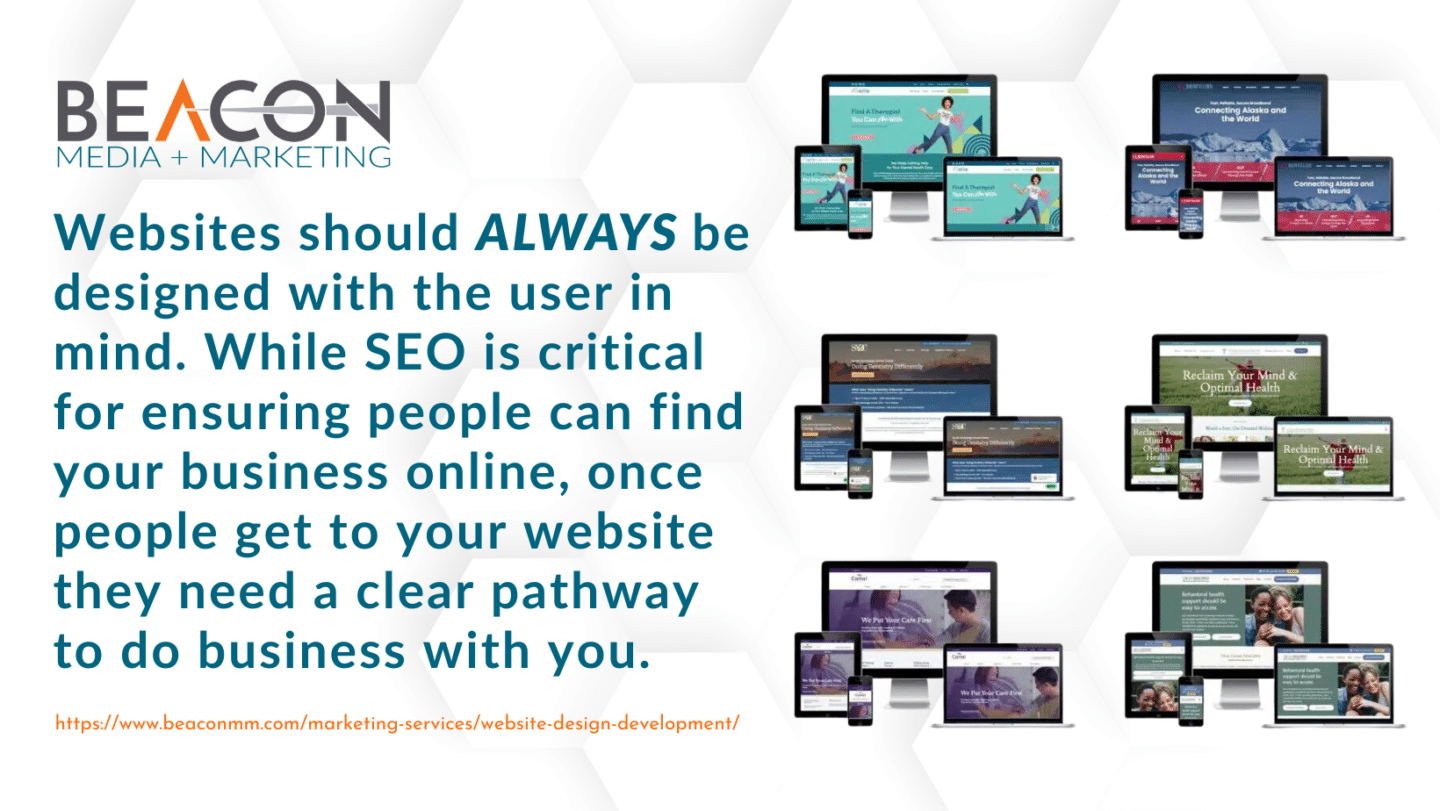
It is essential to build a website that represents your brand’s personality and begins to help you develop authority with your target audience who wants to know, like, and trust you. It’s most common in this time we live in, that people are using search engines as their starting place to begin researching their needs and begin planning on who and what they need. Removing barriers to connection and creating an easy user experience should be at the top of the list of your marketing goals.
Statistics show that 93% of people are heading to Google or Bing to determine first what they need and where to find it, showing that data-driven decisions are more prevalent now than ever before.
Check out our blog on Episode 4 to find more information on how The Beacon Way helps companies navigate the landscape of this digital world.
Representation of Your Brand Image Through Visuals
Consumers who dive into research and identification of their needs online have decided that they could be your target audience because the information you presented online built interest and trust. Once they decide to then visit your website, that site acts as your digital salesperson ahead of you. It is important to have a solid visual experience and a clear call to action to increase leads.
The look and feel of your brand image online is just as critical as the technical side of your website. The experience that visitors to your website have will influence how they experience your brand. If your website is cold and unfeeling, the perception of your brand will also be cold and unfeeling. If your website is warm and inviting, your brand will be perceived in the same light.
The visual elements you choose, such as colors, fonts, and imagery you use, just to name a few, play a crucial role in user experience and should also be on top of your list when considering branding strategy.
One of the first things we suggest you start analyzing is, “How will new leads experience your brand’s personality on the first visit to your website?” Have you taken the time to determine who your brand is and what you want to portray to your target audience?
To read more about branding strategy, check out our blog series on Brand Messaging, Episode 8, Episode 9, Episode 10, and Episode 11.
Unlocking the Power of Content: Creating Content Tailored for Your Target Audience
When building your website strategy, another priority should be a content strategy. Content strategy is the development and publication of content that your users want to know. What service do you market and can your users find solid information on your website that answers their questions?
A great example of tailoring content is dental veneers. A dentist may create an ad from keyword research showing that people are searching for dental veneers and add those keywords for dental veneers to his website to drive more traffic. Website visitors are going to click that site expecting to learn more about dental veneers.
The content strategy could be: Let’s grab that search attention to drive traffic. But, without any content to back up the ad, the bounce rate skyrockets. You may have increased your views but the trust of that visitor is not gained and they have no reason to stay on your site or convert.
Google Analytics for SEO: Web Crawlers at the Ready
Your website may be on point technically, but if your content is lacking in depth based on Google’s analytics of it, your score will be in danger of being lowered.
Google uses web crawlers to analyze hundreds of billions of web pages looking for a multitude of points. Google wants to see that your content is relevant to what your customers are searching for, and does it have authority and usefulness.
If the search engines see that your pages aren’t relevant, your SEO will decline and they may actually penalize you. If you’re doing ads like the dentist is with the veneers but the page the ad sends the client to is about general dentistry, Google Analytics will decide that isn’t relevant and your ranking will drop. They will continue to take your money and allow the ads, but the SEO effect of that ad will significantly decrease and the price for that ad will significantly increase.
Understanding Your Target Audience: Answer Their Key Questions.
Where good website strategy comes into play, is determining your target audience and then brainstorming their specific questions based on their needs. Buyer personas can help with this tremendously. Utilizing buyer personas helps you narrow down the exact needs of the demographic you are desiring to serve and can help to bring clarity to what they are searching for and why, out of your service.
Your target audience will have specific questions and concerns and there will be specific keywords that they will search for, you want your content pages to be there to answer those questions and concerns for them.
We, at Beacon, want to assure you that even though this seems extremely overwhelming, there are many tools out there to assist you in the discovery of those buyer personas and a good marketing partner can help you reach them, turning them into measurable conversions!
Shifting Focus from Content to Conversion
Once your website strategy has you on the path to clear and relevant content, you can shift your efforts to ensure your website is effectively functioning as your digital salesperson.
If your website is set up properly, meaning your website has all the keyword research, search engine optimization, and critical pages for good ranking it will begin driving more traffic your way.
If this is the case, conversions should come easily. Industries like mental health, dentistry, med spa, and others have clients converting online all the time. The website has done its job, the barriers to booking are removed, and new clients can easily set an appointment at their convenience without ever making a phone call.
What Exactly is a Conversion?
Conversions mean different things to different industries and sometimes even vary depending on your goals. The success of conversion is based on defined goals that you have for your business and what your visitors accomplish on your website.
Considering the mental health space, for these clients, conversion is considered for someone who has potentially gone all the way through the online process to book an appointment. Perhaps the time isn’t booked yet but they have given you their information, shared with you their availability, what service they are looking for from your business, or possibly become a phone call, booking an appointment time.
This is a prime example of a target audience who was just interested but now decided that they are interested in becoming a client of your business. This is the cleanest example of conversion.
Functional medicine, as another example, has a little more depth to create a successful conversion. Ads can send hundreds of interested visitors to them but what the functional medicine space can offer them may not be what they are looking for.
Conversions, again, vary depending on the industry and defined goals. In this particular case, it may be necessary to determine what new leads actually qualify as conversions. It has been necessary for us in the past, to change that definition in order to measure the data accurately to measure the success of the campaign.
For one of our functional medicine clients, we changed the definition of conversion for them and then created a funnel on their website that took people searching for services through a step-by-step process to determine if this business was a good fit for them.
This website strategy was well received by the business because they are no longer being inundated with unqualified leads and they have been able to save so much time and develop good relationships with the ones who are good potential clients. The volume of conversion came down, however, those that remain have a higher rate of conversion by becoming actual closing clients.
Start Creating Success by Defining It for Your Business
At Beacon Media + Marketing, we call conversions leads, and from those conversions about half are good potential clients. You decide what you will call a conversion for your business, we advise that you be thoughtful and strategic about that decision. Only you will know what works best for your business and inflated data isn’t helpful to your success.
The bottom line here is that our websites can do a lot of the pre-qualification for us saving our businesses time, money, and staff power to focus on the things that will make your business a success.
Evolution of the Website and the Need for Strategy
Websites are a fun thing and they really have evolved since they became a thing. In the early 2000s, websites were still very awkward and clunky. Internet sites were secondary to brick and mortar, which still signified you were a legitimate established business.
In the beginning, when websites were first being utilized, no one really thought past the first page because that simply was not the consumer’s first stop. As the consumer landscape changed and evolved, the website changed and evolved with it. Website pages became prettier brochures, then some content started showing up and became useful to the audience.
Web pages for services started becoming part of the digital landscape as well, then introductions to founders and staff. Owners began to say, “Hey, our staff are getting the same questions over and over again, let’s put the answers to those up on our website so people can get their questions answered first before calling.”
The website evolution has been an interesting trend to watch, even as recent as 2019, if there wasn’t a website, we would assume they were closed. From the inception of the internet, websites have shifted and changed with society and their access to information has increased dramatically.
Gone are the days when the preference was for a brick-and-mortar storefront now the preference is website-based sales and information, we see more and more need for solid website strategy and content. You simply can no longer slap together a few pictures with your phone number and think you have a great website.
Every industry has exceptions, for instance, a small “Mom and Pop” store that may just be utilizing a Facebook page. This type of small business isn’t looking to grow or scale and they don’t have an audience who needs answers to questions before they come in to buy. They may use the online presence just to communicate hours and specials or product highlights which works very well for them.
About You | Reviews and Social Proof: Genius or Crazy?
We recommend always adding two controversial items to your website, reviews and social proof. Why do these two items cause so many issues for businesses?
Reviews are maybe the most controversial item to add to your website strategy, however, customers want to know who and what they will be encountering when they decide to do business with you.
The About Us Page is one of the first pages that customers will visit when they are looking at your website. They want to know, like, and trust you which is where reviews and social proof come into play.
The web is full of scams and scammy businesses looking to sell you anything to separate you from your money. This is the reason that the About page, Reviews, and social proof are critical pages on your website.
Reviews can be tricky, which we know, but they can be such an asset to you. In recent years we have seen the rise of negative reviews as scams, as well, as attempts to get free stuff in exchange for removing reviews. It is truly unfortunate, in fact, Amazon has begun suing fake review sites on Facebook.
A negative comment in a review is not as important as how you respond to it. Consumers want to know that you did your best to rectify the situation and your response to a negative review is an opportunity to build trust with your audience through your site. Perspective on reviews, and making a plan, should play a role when considering your website strategy. Don’t shy away from them but instead be prepared to handle a negative review and always respond to all the reviews you receive. Having Google reviews also help with SEO ranking for your website.
Service Pages and Blogs: Reaching Website Visitors With What They Are Looking For
Blog content should be another page your website strategy should consider as well. Blogs can be time-consuming to maintain which you may or may not have the capacity for. Hiring a writer to get your message out is another powerful tool to leverage on your website.
A skilled content writer will help you develop a blogging strategy and research keywords for the blogs to rank for. Keywords are the words people search for when they are looking for information on a subject and your blog can rank higher or lower in those searches depending on how keywords are used. Keyword research is worth the time it takes to find a way to connect to unique visitors that are looking for the services and expertise you offer.
In the next three blogs, we will continue to talk about the pages that your website should contain and how to best utilize them. Stay tuned for more in-depth information through this series of The Beacon Way Podcasts in Episodes 13 “Build a Home & About Page People Want to Read”, Episode 14 “Your Service or Product Pages: Should You Put Your Prices on Your Site?”, Episode 15 “Don’t Forget About Your Support Pages!”
Brand messaging is such an important foundational step when setting up your business and business strategies. We have spent quite a lot of energy on the subject and pieces relating to it because without knowing who you are, who you are not, who your target audience is, and how you will solve that audience’s pain points, you won’t be able to reach your ideal client.
Once you’ve concreted your message, you can start reaching out to your target audience, which almost always includes social media. You know the who, now we will talk about the practicality of the how and lead you through some ideas for implementation.
Understanding Where Your Clients Are in the Digital Marketplace
There is such a wide variety and offering of social media platforms out in the digital landscape today, how do you know which ones to use for what? What are the best social media platforms for organic social and for PPC or pay-per-click ads? Dialing into top social media platforms, this takes a little bit of time to understand how active users will be ingesting what they get from each source.
Whether you are considering LinkedIn, Facebook with Facebook messenger integrations, Pinterest, Twitter, or Instagram you need to first understand the demographic using the platform and what type of content they expect to gain from it.
Leveraging LinkedIn
There are several ways that page activities are tracked; organic social is a term that means that potential customers are coming to your site organically through post images and page searches but don’t have any paid ad funds behind them and they are traditionally harder to track. PPC or pay-per-click is paid platform advertising that directs clicks to your ad or site, which will give you greater direct conversions and offer the ability to track your leads and conversions.
LinkedIn has long been considered a professional networking platform but what many don’t know is that it is a great example of a site where organic leads are going to be much more prevalent. Once you discover where your organic traffic is, you can then begin to funnel your engagement to those users. Organic traffic can also help you strategize on how to direct your paid ad dollars as well.
LinkedIn has become more popular in recent years because they have focused more on the organic aspect than any other social media platform. Facebook made a huge shift into a business page when it started making organic content harder to find. That shift into “pay-to-play” was incredibly frustrating for businesses.
Standing Out from the Crowd on LinkedIn
According to the Sprout Social blog by Tracey Witt published on February 28, 2023, compared to other social media platforms 82% of B2B obtain more tremendous success on LinkedIn, and 93% of B2B marketers used LinkedIn for organic social marketing in the 12 months preceding October 2021.
LinkedIn has a high number of monthly active users but has a low percentage of users who post content. In 2019, only 1% of user-generated content appeared on LinkedIn but post engagement was somewhere around 70%.
If you or someone who actually composes content and becomes active on LinkedIn, you can make a large impact in the online community for your business page and your brand. Organic search can be done without using a paid service which allows you to connect organically with your ideal clients.
Approach Your Ideal Client with Connection, not with Sales Gimmicks
We at Beacon like to connect with our LinkedIn network by sharing content and commenting on their content and building relationships inside and outside of our local market.
LinkedIn, in its origination, was a professional social networking site for B2B companies that used this social media platform more for job searches, posting of resumes online, and advancing careers. Over the years, LinkedIn has become one of the more popular social media platforms because it allows Business to Consumer companies to also connect organically to other active users in groups join communities and fields of interest that may need their services.
Whatever your company may be, you can use this social media site to connect to your ideal customer because there are so many daily active users that are people and not bots or advertisers. When you begin engaging with groups that relate to your services by posting relevant content, you can do very well.
Organic educational content does very well on this social platform. It allows for the education of consumers while they are in a business mindset. This social networking and publishing platform is designed to engage users under the premise of a professional network, it is not just for sharing social media.
LinkedIn allows you to build brand awareness in a way that other platforms don’t provide. While LinkedIn users are there for a more professional social networking site, they are also still consumers who want to create meaningful connections.
Facebook Still Reigns as Social Media Platform King
According to the 2023 Forbes.com article, out of the estimated 4.9 Billion monthly active users on social media platforms, Facebook has 2.9 Million of them!
One thing that has made Facebook successful and allowed them to maintain its social media audience of monthly active users has been to help people get really connected to others and stay connected that they don’t want to leave because of the fear that they will miss something.
Facebook Messenger is a large part of that as well, it is an extremely popular feature of this social media platform. Younger users are active on Facebook Messenger as well, although they focus more on other platforms like Instagram.
Attempting to organically grow brand awareness on popular social networking sites has to make sense based on the platform. Facebook has moved away from organic traffic but it is still a fantastic option for recruitment, showing your culture, and telling the world who you are.
Instagram for Organic Makes More Sense
As a photo and video-sharing platform, Instagram burst on the social network scene in 2010. It quickly gained popularity and within 2 months its registered active users numbered 1 Million.
Instagram become one of the most popular social media platforms with younger users and gained notice from Facebook, which acquired it in 2012, and is now the parent company known as Meta.
This social media platform became known as a place to organically connect with user-generated content in photo and video format along with its instant messaging platform gaining the following of many people who use it for influencer marketing campaigns.
Pinterest Emerges as a Happy Platform
Pinterest is one social media platform where no one is talking about politics or another divisive subject, there is just an overwhelming amount of good information laid out in an aesthetically pleasing way.
Pinterest allows the online community to search out the information they are looking for and pin it to a vision board. It is unlike any of the other popular social media sites or platforms in this way. It does not require the user to post images or video content while allowing them to build a personal brand.
Each image selected to be featured on the Pinterest pins comes directly from the webpage uploaded to the Pinterest post, which is great for saving small businesses time finding the perfect image for this platform along with the content relevant to the user.
Pinterest: Not your average Social Networking App
According to The Social Shepherd, the monthly active user number for Pinterest is over 400 million world wide with 98% of Pinterest users saying they have tried something they found there.
Often, users head to Pinterest instead of Google to research specific items or topics. What Pinterest offers that differs from other social media platforms is the facilitation of the ability to save all the information in an organized and easily accessible way.
Pinterest has become a popular social media platform and we at Beacon advise that you utilize it for creating connections for your business page. When potential customers like what they see from the content you’ve posted, they will pin it to come back to again and again. Pinterest has the fewest number of active users, but this social platform packs a punch when it comes to value.
So many social media platforms to choose from, which is for me?
Many businesses think that one or the other may be best, but the best strategy we can recommend is to look at your brand and decide which social media platform will best connect you to your ideal audience.
Facebook and YouTube may be performing well but if your ideal target audience isn’t there, neither should you. Pinterest or TikTok might not seem like it fits your brand, but those social media platforms might be the best fit for you. We advise that you give it a shot, you may just be surprised at what a great platform they could be for you.
Stereotypes of the Social Media Platforms for Younger Users
Snapchat and TikTok are two top social media sites for younger users, but are they entirely off-limits for anyone outside of the typical 14 to 24-year-old demographic?
Snapchat originated as a disappearing photo and video-sharing messaging app, with lots of fun filters and quickly rose to popularity with 3 Million snaps and videos sent each day in 2020. Snapchat has since stayed popular among the younger demographic and usage percentages decline after age 25.
TikTok is a social media platform that is dedicated to short-form video content. It allows the posting of 15-second user-generated content which is then watched, shared, boosted, and advertised.
TikTok, an instant messaging app, unlike Snapchat, is popular with other users outside of the 14 to 24-year-old demographic, with 60% of its users being 25 or older.
TikTok can be an effective, social media marketing strategy for the right client if they are willing and able to invest the time that it takes to create content by producing a lot of videos.
When deciding if one of these social media platforms is right for your client, also take into consideration what type of return is this going to get them versus a solid paid ads strategy. Can your user-generated content for that client bring in leads or will they just become “TikTok Famous”? For the right client and the right demographic, the time it takes to create a following on TikTok may just be worth the effort.
ROI: Analyze the Demographic of the Social Media Platforms for Your Clients
Social networking platforms such as Facebook, Instagram, Pinterest, TikTok, and Snapchat all have a risk and a reward. The risk is if you choose to go to a platform where your ideal audience isn’t then you’ll miss the benefit of that investment. The reward comes when you use social networking sites to your advantage and curate trust with your audience, converting followers into customers.
Compare and contrast the demographics of the target audience to the goals and strategy for your client, for example, Facebook’s audience has changed in recent years. Males now make up the majority of users for that social networking site since positioning itself as a resource for news than a place to create meaningful connections. Of those monthly active users, 75% of them make $75,000 a year or more. Good news for your strategy if you plan to use a paid platform for advertising!
Let’s not forget about YouTube users!
Youtube users tend to also be heavier in the male demographic, depending on the region you’re trying to hit. Youtube is the opposite type of social media platform from Pinterest, it’s the how-to central of social media platforms.
Building a youtube channel for your client’s business is a great way to raise brand awareness and communicate authority in their sphere. Youtube users go there to learn from experts.
There is a phenomenal amount of educational material spread across millions of Youtube channels. Youtube is one of those media platforms that transcends age, race, and gender. Targeted ads can do very well on this video-sharing platform.
Youtube allows user-generated content to make meaningful connections by offering personal and professional support to other users who need what you have. Organic search does very well on Youtube because you are using this social platform to give away the expertise that people are searching for.
Can giving away your expertise hurt you?
Beacon always advises that you don’t have to worry about giving away your expertise, especially not when you are working to build your social media presence. Influencer marketing campaigns are built on expertise, right?
When you establish yourself as an expert in your field, some users will take your content and run with it on their own, and other users will understand that they can’t do that thing without you and they will seek you out as their partner because of the trust that you have cultivated with them.
Think of it in the mental health realm, thousands of daily active users are searching mental health terms and modalities, but they won’t be practicing them on themselves, they want a partner. Giving away your expert knowledge on the subject creates trust that allows them to seek you out for help as a professional expert.
Being vulnerable enough to share your secrets, how you do what you do, and why it makes an impact puts you in a position of power in a positive way. Your vulnerability comes back to you in trust with people valuing what you do, which is a unique and beautiful way to leverage social media platforms.
To learn more about Brand Messaging, check out our The Beacon Way Brand Messaging series in parts one, two, three and four at the following links or anywhere you find podcasts.
Business Growth means many things to many people and determining how your business should grow takes time and strategy. Making a business development plan should include the pain points you are solving for your target market and how you will balance the quality, price, and speed triangle.
In our previous blog, Brand Messaging Part Two, we discussed how Beacon Media + Marketing helps our clients identify pain points, the impetus behind the start of the business, unique services to solve a problem in the desired market, and how finding a niche is a great way to attract potential clients in the right target market.
It is not only important to be clear on your services but also to find the balance between how those services will be delivered to clients. You must find balance in the triangle of quality, price, and speed.
Beacon Media + Marketing started out as a digital marketing agency at a time when that was basically unheard of in Anchorage, AK. At the time, it was important for us to look at all our business opportunities and recognize that our target audience wasn’t familiar with our work because we were offering an unknown product. While our innovative ideas would add long-term value to our clients, we had to compromise on price in those early adoption days.
We’ve talked to many business owners over the years and have yet to find one who has mastered the whole triangle. You can have any combination of one or two but effective business development doesn’t lend to having all three.
Navigating the Nuance of Pain Points and Problem-Solving
In business development efforts, it’s easy to confuse pain points with problem-solving. The customer’s pain point is the problem and that is what they want you to solve. Understanding how you are solving that for the customer is pivotal to your own business development plan.
Consider the growth opportunities in front of you as you ask yourself, “How is my business addressing the problem?” Communication of your product or service to your potential customers is a core piece of your marketing message.
When the relationship between pain points and problem-solving is truly understood, businesses can move forward with strategic marketing tools to flood the brand messaging into all the parts of the marketing and sales funnel.
The Downside of Problem Solving: Creating More Problems
Your business’ product or service may be a stellar offering for your market — just be aware that your potential customer’s problem to solve may be more complex than you anticipated.
Potential customers know that they need a service that they are unable to provide themselves in order to get qualified leads and achieve business growth. Solving the problem with your knowledge is one thing, but will that be the best long-term value for them? Maybe or, maybe not.
The best business strategy may be thinking in broader strokes and building strong relationships with your customers by offering a more in-depth approach. It may not be as fast as other solutions, but it will be quality and offer longevity. Just following fast-moving industry trends is not always the best answer.
When clients were onboarding with Beacon, we often needed five to ten hours a month of their time to extract the information from their business to put online. This can be a frustrating experience for your client when they hired you to take this burden off of them. Additionally, they may not have the answers to your questions.
Going deep and asking probing questions to uncover the depth of what the core problem is that they need you to solve is important. At the end of the day, the core problem may not be expertise, knowledge, desire, or talent. It may be time.
If you are costing them as much time as it would take for them to solve this problem for themselves, you’re most likely not creating lasting business relationships.
Building strategic partnerships with your customers means slowing down and going deep enough with them to identify all their pain points, not just the ones on the surface. It means rendering a service that will help alleviate the pain instead of exacerbating it.
Optimize Growth by Streamlining the Process for Success
A few ways to form strategic partnerships with your customer base are to remove barriers and streamline processes so that they feel the marketing team is a help and not a hindrance to successful business development.
Your customer may not ever arrive at a place where they enjoy the process of you solving their problem. However, trust can be created between them and the marketing team when going through the deep-dive questions. These are the times when you uncover the problem past the articulated pain point.
Explore Beyond The Business to a Holistic Understanding of the Problems You Address
As CMO of Beacon Media + Marketing, Jennifer Christensen knows that diving into questions outside of the business box really helps her incorporate new business opportunities and niche down to the current pain point that she is solving.
Consider adding this approach to your marketing skills when communicating with your clients. Gaining knowledge about their relationship to their business, their vendors, and their life, in general, can give you a competitive advantage and provide for other areas of opportunities to problem solve.
Being a great partner can mean the difference between having successful sales and the implementation of growth opportunities for both of you. Your client may not know that your business has more to offer them than what they initially signed on for.
Understanding the Competition: A Strategic Competitive Advantage
Knowing what others in your field of product or service are offering is a great way to stay up on industry trends. We’re not saying that you need to implement the same growth opportunities that others are, we are saying that it is massively important to know what others are doing.
Understanding the competition and setting yourself apart from them is another great competitive advantage for your company. It will help you niche down further into your target audience and provide you with a business development strategy for your future.
Setting business development goals based on the competition can help you solve specific problems past the pain points of your customers. We do not advise that your business development is based entirely on what your competition is and is not doing, however. Your business has to be unique to you and to your values.
Establishing yourself as a unique company in your industry will bring you light years ahead of your competition, especially if you’re trying to break into a well-established industry. Having that unique position is essential to business growth.
We recommend that you make time to recognize who the big players are for your target audience and secret shop them. Take notes on what they are doing well, what they are not doing, who has been around a long time, and who is new.
Business development can take up so much of your focus that you get trapped inside your own little bubble and it’s easy to forget just how many options are out there for your potential clients. Competition isn’t bad, it poses an opportunity for your business to be clear about your unique position in the market and focus on how you can solve problems better or faster or deeper than the competition.
It is important to understand that the competition is vast for qualified leads. If you aren’t clear about what your unique position is and how you solve problems better or faster or deeper than the competition, then ultimately you’re just a few steps away from losing that client.
Navigating the Quality, Speed, and Price Triangle for Successful Business Development Strategy
The consumer marketplace is flooded with products or services with new innovations coming out every day. These products or services are not all quality products delivered fast and cheaply.
What product you would consider a status symbol, is it cheap or is it a quality product? Assumption can be made that if it’s a status symbol to you then you wouldn’t expect to get it fast or cheap and that the quality is going to be top-notch.
The same can be said about your product or service. As a business owner who is developing your business model, it’s important to ask and clearly identify, “What category of product do you want your company’s reputation to be known for?”
If quality is number one in your business development plan because you are offering a high-end product, then your target audience won’t expect to get your services for low prices. If you can produce a high-end product or service quickly, then you’ll make a huge impression on your clients and puts you in the position of showing that you are a great business partner.
High-end restaurants will do this to produce a high-end dish that takes time to prepare. It’s communicated ahead of time that the dish is unique and possesses quality ingredients so it will take longer to prepare. The dinner came to that restaurant and knew to expect a higher-end price tag, if they choose that entree, they are also choosing to accept the longer waiting period to enjoy the dish.
This above example shows that as a business owner, you can achieve two parts of the Price Triangle but not all three. Achieving better business development is a challenge when trying to go for the widest range possible and to reach a larger target audience with a full menu of products or services. Again, this is why we encourage the strategic business decisions of niching down and choosing which part or parts of the Price Triangle to focus on.
Fast-food popularity is another fabulous example of how two of the three areas of the Price Triangle can complement each other, with price and speed being valued above quality.
Achieving Flexibility in Business: Balancing Quality, Speed, and Price
When Beacon Media + Marketing began to fully immerse ourselves in our niche of Digital Marketing, we had to sacrifice price in order to establish a level of value and proof of concept in the unknown market in Anchorage, AK.
Over time, we increased our prices because our product was producing a tremendous value to our clients and we also embraced the speed component that our industry demands. Our quality and speed spoke for themselves when it came to client value.
Airbnb is a great example of flexibility in the triangle. When they came to market with their unique concept, they were quite a bit less expensive than the alternative of hotel and resort stays, and their target audience was really excited about that.
Once they established their space in the marketplace, the opportunity to shift in the triangle became available. They have not stayed with the focus of pricing less but have moved in the opposite direction to high-quality, unique stay experiences.
Morphing over time from where you started is not a bad thing, developing new business standards and pricing is helpful to move your business forward to where it needs to go to grow.
You can’t make everyone happy all the time, so for us at Beacon, we have found that focusing on two main points is our sweet spot. When we left those ideals and tried for three, we crashed and burned. The outcome of which caused us to work too many hours and that was not sustainable long-term.
Strategic Development vs Reactive Development: How To Lead Your Sales Teams
Price thresholds have been a new business implementation at Beacon. We came to know that there was a minimum budget that our potential customers would have to have in order for us to provide them with optimal services and enable us to convert them into clients. We value being able to produce a quality product or service and in order to do that, there is a specific budget that requires.
We have also found that by niching down into our optimal target audience of industries we serve, we can actually look at bringing in other lower-priced options. We know that is not our core clientele but we can offer it as an option for certain start-up situations that serves as a stepping stone for smaller providers and it still aligns with our values which is to help people Grow, Scale, and Thrive.
By developing something that stayed true to our brand, but also serves our smaller clients, we also had to establish with them that the level of service will not be as if they had the full-priced option. Communication of expectations is critical and essential to being a good business partner and developing strong business relationships.
Quality or Quantity, that is the Question!
As you’re working on your business development strategy, a crucial decision you’ll need to make is, do you want to make money out of quality or quantity.
This is where your brand identity comes into play, what kind of company do you want to be? What is your company identity? Are you a company whose business development strategy is to churn out more widgets than anyone else in an eight-hour period but those widgets have a shorter life span than the competition is offering? Or are you a company that wants to focus on longer-lasting products for your potential partners? Neither of these options is good or bad because there is room for both in the market.
Either way, new leads, and sales targets will have the opportunity to choose from the product or service you are offering. They decide if they want fast or longevity from your service. Your marketing functions will be born out of this decision and it is imperative that you are clear about what you offer.
Adjust Your Brand to Cater to Multiple Markets
Whichever avenue you choose, you also have the option to expand your product and services in your business development strategy to include both high-end and lower or average-priced offerings.
The fashion industry has many examples of this, Donna Karan has done this masterfully. The high-end designer market brand was a small niche market, by adding to her line DKNY, she was able to expand her reach into a greater market of the average consumer.
The shift was not without risk. Her business development strategy had to include the ability to not dilute her main brand while sacrificing the quality that her high-end products were known for. For this adjustment, the price was the portion of the Price Triangle that became the focus but also was sacrificed along with quality.
Deciding how to reach a bigger market while maintaining brand standards but making adjustments to price for a new target audience should include market analysis with a solid business development strategy.
Be Aware: Innovate but Analyze the Market Share
While we recommend niching down in your market, one thing to be aware of as you niche down is to understand that there is the potential to have too much market share. Additionally, there may not be enough market share left for you to keep growing.
Competition is inevitable. Because of this, we recommend that you continue to look around for those who may be nipping at your heels in order to take market shares from you. Innovation is one way to combat a dwindling market share.
Looking into other markets for new opportunities and creating complementary brands for those new markets was the secret to the success of the Donna Karan to DKNY brand transition.
Brand Messaging and Business Development: Closely Tied Strategic Partners
Brand messaging has so much to do with business development. When setting your business up for success, we recommend that you never lose sight of who you are as a brand and really marry the two strategically.
The multiple layers of brand messaging have to be considered holistically and are the foundation of your whole business development process. As you launch, flex, and shape your business, solving pain points, offering unique services and finding your brand voice are important elements. Combined, they will help you reach your target audience and gain strategic partnerships with your clients.
For our whole Brand Messaging series, check out our podcast, The Beacon Way. You can find the links to those specific episodes here. (Episode 8, Episode 9, Episode 10, Episode 11).
Unleashing The Power of Brand Messaging and Refining Your Niche Markets
Crafting Your Brand Messaging and Identifying Your Audience
Clearly articulated brand messaging is foundational to the rest of your marketing strategy and identification of your target audience are important steps in this process. Most businesses stop with the client profile, at Beacon Media + Marketing, we dig much deeper than that.
In Episode 8, Part 1 of Brand Messaging, we explained how discovering who you are (and are not) in your business is pivotal to the beginning of your marketing strategy. Discovering who you are not allows who you are to really shine.
Once you have established your brand identity, you can dive into discovering who your niche market is and what kind of client is going to resonate with you — even exploring all the way down into the micro details of which personality profiles will complement you and your business best.
For solo entrepreneurs or smaller businesses, analyzing personality styles that you work best with (like Promoter or Empath) can increase your chance of success with smoother collaborations. This may seem a bit like a touchy-feely approach, however, personality conflicts are prevalent in every area of life. These considerations are important in business and help minimize conflict while maximizing good working relationships.
Identify and Solve Frustrating Issues Facing Your Industry
Consider your point of view on the problems you are solving in your niche business or industry. How does that relate to the frustrations and issues that your target audience is struggling with? If even 5% of people have these same issues, who is going to relate to them?
For instance, an HVAC company that has cutting-edge technology to offer which allows its customers to remotely monitor their homes when they are traveling. The target audience for that is a demographic that does a lot of travel are tech-enthusiasts, and people who value being able to track their homes while they’re away. When you start focusing on aligning your point of view with what’s unique about you and the problem you’re solving, you enhance your reach to that specific target audience.
Knowing your target audience allows you to shape and craft your point of view so your services reach that client. A dentist who wants to reach a targeted audience that has a need for emergency services, flexible payments, and Saturday appointments, can effectively shape their point of view to reach that target market with unique offerings.
These are high-level examples; both are effective strategies to identify and reach the ideal market you want to target. According to Business Network International, “People don’t like to be sold but they love to buy, and they want to buy from somebody they know, like, and trust.” Developing your target audience through profiling has developed a bad reputation, however, we feel that by profiling your ideal customer or client you can connect your passion and your unique position in the business world with the target audience you desire to serve. This also means that your target audience is less likely, if at all, susceptible to feeling as if they are being sold. Instead, you are presenting them with an opportunity to purchase from somebody that they know, like, and trust because you are meeting them where they are.
Understanding Your Ideal Client on a Deeper Level: Developing Your Niche Market
Taking the time to develop your target audience and meet them where they are, helps you understand them at a deeper level which allows you to align them with your passion. When your target audience trusts you, fewer barriers exist in connecting with those people. This does not mean that you can’t serve clients outside of the ideal customer base profile, it simply means that the ones who are in that ideal client base will usually be the most profitable versus those who are not. Niching down will provide good clientele and does not eliminate as many clients as you may think.
It is important to overcome the myth that by narrowing down your message to one or two target audiences, you’ll alienate everyone else. Instead, focus on the importance of crafting a true message that reflects you. There will always be people outside of your target audience that will resonate with other elements of that messaging while an over-broad message runs the risk of missing the market altogether due to confusion about your offerings.
If the thought of niching down at this level terrifies you, you are not alone. It took Beacon Media + Marketing several years to fully commit to this idea even though each time we would stick our toes in the water to try a niched-down campaign we received great results. Despite the positive outcomes, Beacon Media + Marketing was slow to implement this concept company-wide. Beacon’s owners knew in the beginning that it was destined to niche into being a digital agency, but the courage to turn away from a traditional agency profile took some time to develop. Our origin story tells of how we evolved and decided to double down and make it or not by becoming true to who we knew we should be.
In Depth Digging to Profile Your Niche
It may seem unnecessary to dig down into the minutia of the details of your target audience, but when we talk about profiling, we mean profiling. We suggest going as far as even picking a name for the person you’ve profiled and pondering all aspects of their life that make them whom you imagine them to be.
Beacon’s primary niche is mental health, but we serve other niches as well. We have different target audiences for these markets and run different campaigns for these different niche markets.
When working with our primary niche (mental health), we have three primary profiles, and we tailor our marketing to them. We go so far as to say, for example, “This is Bob. He is the clinic director of XYZ Mental Health Clinic who has five different providers working for him. He has a background in mental health and has now decided to take it to a bigger level.” We continue to be curious about his life, and speculate is he married, what could his wife’s name be, what his family unit consists of, how many children he has, and what phase of life they are in. We also want to know what his leisure activities would be, we speculate about what are his hobbies when he isn’t working, maybe he plays golf or is a guy who likes to fly and has his pilot’s license. Answering these allows us to understand our target audience and resonate with them in a more effective way.
It’s important to build this profile deep so that you can really understand your target audience. This is especially true in the digital space because there are so many opportunities to meet that target audience member when they are not working or out enjoying a leisure activity. Reaching them in a place they are already interested in is a way to build trust. This creates a connection well outside of business, it shows that we know about them and that we see them for who they are. Showing value for people and not just profit by deepening relationships and connections is a new level of operations. It tells people that you care for their humanity and not the monetary worth of their business.
Politics and religion can be tricky in our society, instead, we advise that you focus on shared interests and passions that can open doors for authentic connections. Reaching them with a message of “I see you; I know you love XYZ and we have a solution for you” receives a better reaction than “You should come to buy our stuff because you need it and we’re amazing.” These approaches will elicit very different responses from each other. If you can engage with them in their happy place and authentically connect where they are already committed, it’s a big win.
The Importance of Maintaining Authenticity to Reaching Your Target Audience
To effectively communicate, the connection must be authentic; it must be real and match authentically with your brand. If it doesn’t, then your communication will seem manipulative and disingenuous. People pick up on that type of communication and you risk alienating your audience.
Going deep into this is critical and helpful to order to advance your business and meet the right people. Episode 8 of our podcast — The Beacon Way — was about knowing who you are and knowing what your story is. When you know what you are for and what you are against, you will know if you are operating authentically for your brand. To learn more about this, see The Beacon Way: Brand Messaging Part 1.
Tapping Into Pain Points to Reach Your Target Audience
When launching your business, it’s common to be inspired to do so because of pain points in your industry. Your client profile must consider how they are experiencing these pain points. The core cause of these pain points have symptoms that you can address and going beyond that symptom to the core to gain an understanding of them is crucial. Uncovering the underlying problem your client is facing and addressing that issue will bring much greater and long-term success. Begin the assessment by asking yourself a few questions about why they are frustrated and where is the anxiety coming from. This will show you the pain points you want to address.
The process of analyzing the motivation to begin your business, understanding who you are and who you are not, then getting into the core of your target audience’s pain points will allow you to move your business into the authentic messaging that will captivate the clients you are looking for. Narrow messaging does not mean narrow sales, it means that you are providing clarity of the services you offer and the clientele who will benefit the most from your unique services.
Utilizing Feedback to Refine Your Marketing Strategy
You’re growing your business and helping clients, now you have an opportunity to interview your clients and get feedback from them. Feedback is a great way to analyze if you have hit the mark with your client or if adjustments need to be made. Take the time to find out from your clients if you are hitting their pain points. Ask them if they are experiencing problems that you don’t know about. Are you solving those problems?
It is easy to fall into the trap of thinking that now you’ve got them you can move on to the next one. Your clients are your best focus group and are usually willing to tell you the truth. Taking the time to ask questions allows you to continue to deepen the relationship with those clients and refine your business strategies for them and also for your business.
Stay Ahead of the Market: Research, Research, Research
Marketing is a rapidly evolving business, and it is imperative that you stay on top of trends in the industry as well as research what technology clients are using and want to use based on what others are doing within these industries.
We suggest that you research industry experts to see where they are moving and what they are saying. Research will allow you to make adjustments to your business and move it forward in areas that others have been slow to adapt to. If you are an innovator, take what your are seeing as an industry trend and ask yourself how you can implement this into your next phase of operations.
Client feedback can also help you decide where and when you need to shift and implement. Client pain points will show you if you are offering services that will allow you to keep solving their problems. These sorts of shifts and changes can have a dramatic impact on your business. Beacon moved into social media, PPC, and pay-per-click based on client feedback and their pain points. They told us the problems we needed to solve and by being responsive to those things, the clients feel like they are part of the process and this helps you get better and better in your niche to be a problem solver.
This can be an intimidating process because we are not all Kellogg’s with millions of dollars to find focus groups to ask questions to. Calling your clients and asking questions takes courage and will get you the information you need. Your clients can also be an asset in this process because they can refer you to others who also have good input to add. Interviewing other businesspeople, or business owners, even if they are not your clients, can provide valuable information that you have never heard before. Focus groups don’t have to be intimidating or gargantuan to yield valuable results.
Wherever you are in this process, we encourage you to dig deep into your target audience profiles and ask tough questions to futher your ability to serve your current client base. If you are building your client base, ask friends and family or ask for referrals from whom you have talked to. Be brave in this process, we are sure the results will help you shape and focus your way into a more successful partnership with all your clients.
For more information on Brand Messaging, check out The Beacon Way Podcast anywhere podcasts can be found.
Discover Strategies to Clarify Your Brand Identity Messaging and its Importance for a Strong Brand.
Brand Identity messaging is not only important but also vital to discovering and portraying who you are as a company and who you are not. Click here to listen to this episode of The Beacon Way podcast.
What is Brand Identity: Connecting with Your Target Audience
Brand identity messaging is a foundational part of your marketing plan. If you don’t know who you are and whom you’re trying to connect with, there are a lot of misses that can happen. We are here to hopefully help you avoid this and move forward while accurately communicating your brand voice to your target audience about who you are as a company.
One of the very first steps we encourage you to do is to stop, take a breath and ask yourself the questions we will discuss in parts 1-4 of the brand identity messaging series.
Importance of Authenticity in Brand Messaging: Finding Your Company’s Unique Voice
You may be wondering why this is such an essential first step. Establishing who you are as a company, and your brand values sets a solid foundation for your business and is an essential piece of self-discovery, emotional intelligence, and self-awareness. This realization and discovery is a key element to your success as a company.
This step can seem complicated and there is a tendency to combine this with the big values we place on the wall of our businesses as our visual identity, however, these things don’t matter as much as drilling down into the baseline of what you really want your company to represent.
This brand design concept helps you discover authentically who you are and recognize the unique gifts that you yourself have to give in your business. You must have personalized goals in mind for your business instead of being concerned about fitting in with your competition. The perception that your business must fit a mold can cause you to fall into a trap of comparison, believing that you must mimic what others in your field of service are doing will not serve your ideal target market client.
The reality is, that when looking from the outside you have no way to know if the particular brand you’re attempting to mimic is as successful as they appear or if they are operating out of a good brand value system that you agree with. Authenticity goes a long way towards establishing trust in your client relationships.
As an entrepreneur, you must possess an awareness of your company’s mission, who you are, and whom you feel confident representing to the world. Deciding this will help you shape your business’ brand identity into what you want it to be and then enable you to execute that.
Linking Your Brand Messaging to Your Origin Story
The next step in this process would be to analyze who you are in your brand identity and how will that be represented in your business to the world.
The decision to start your own business had a catalytic point and it came out of your story. At Beacon Media + Marketing, we talk about how we started in our Origin Story Episodes. Time and time again we heard agonizing stories from friends and family members about how they wanted to launch something but they couldn’t find anyone to help them with their visual identity needs like graphic design, company logo, or their website. That is our story, we wanted to help to create strong businesses with a memorable brand identity.
Articulate Your Brand Story
Take a moment and think about the instigating story behind the launch of your business. Often this is the core of the brand identity for your company and the core elements of what you are bringing to the table. Being able to articulate your brand story can, at times, take a lot of courage because businesses can come out of not-so-great and even painful circumstances. If starting something new from the ashes of circumstances is the origin of where your company came from, it should always be included as part of your core values. This is the “why” of who your brand is today.
The Importance of Selectivity for Business Growth
At the opening of your business, it is natural to attempt to take all the customers and clients that come your way. This can take some time to even out while you discover who your ideal target audience or client is and while you as an owner are coming to terms with the fact that you may have to become more selective in your client base.
The key thing to keep in the forefront of your mind is that you’re learning. You’re going to do an amazing job on the work you’ll provide. And you’ll have great relationships with certain types of people who resonate with you.
Why Niching Down Can Benefit Your Brand Identity Messaging
We like to quote this phrase, not because of the monetary aspect but because we believe in the concept, “The Niche makes you Rich.” Niching down into your ideal services with your ideal target market client allows you to provide the opportunity to serve yourself and them in an authentic and productive way. Operating out of the fear of making money to feed your family will not serve your purpose in as effective a way as stepping back and finding the balance in making enough money to keep the doors open and pay salaries, all the while providing the best service you can to your ideal clients.
Understanding Your Market Value: Why Undervaluing Your Services Can Cost You Big-Time
The truth is that the market you present to will tell you the value your service has to them. There is an adage out there that says, for example, take an older car to a pawn shop and you’ll get one offer. Take that same car to a dealership and you’ll get another offer. Take that very same car to a classic car show and you’ll get a much different offer. Each of these markets looks at the car from a very different perspective. What has value to one may have no value to another, it all depends on to whom it is presented. You wouldn’t sell a $100,000 car to a pawn shop for $1000, would you?
Learn From Your Mistakes
We made the mistake of undervaluing our web services in the market by about 90%. By doing so, we sent a message to our potential clients that there was something wrong with our service and that was why they were so cheap. When we took a step back and analyzed those services, we realized — we wanted to provide the best quality and excellence, but we couldn’t do that and be the cheapest. Quality with excellence and undervalued pricing are two things that don’t go together for a successful brand.
Finding Your Brand Identity Point of View to Stand Out in Your Industry
For Beacon Media + Marketing, little epiphanies came along the way that heavily helped us grow in confidence as business owners and helped us concretely establish our brand identity.
Pia Silva, No BS Agency Master, wrote a blog and a book. She has a whole system which, we highly recommend if you are at the beginning of your journey. She does a great job of helping people get down to that niche and define who you really are, what is your point of view in your industry, how you represent that, and then how you stand out so that you attract business from your target market no matter what type of business you have. She asks a profound question of not only what do you stand for but maybe more importantly, what are you against?
Brand identity is much more than your logo design, it’s much more about messaging and you want to start by establishing your brand voice to make the right statement and share your desired image with the world.
Finding Your Brand by Knowing What You’re Against
When we’re helping people find their brand identity, they tend to find it much quicker by answering the question, “What are you against?” When we’ve asked what they are for it doesn’t typically lead to an exact answer. But, asking what they are against helps clients get down to the nitty-gritty of what they don’t want their business brand to stand for which, in turn helps formulate the brand.
Avoid Shady Tactics
In our industry, we are against what we call shady tactics and any sort of black hat principles. We’re against not being transparent in business, not showcasing exactly the work we’re doing, and having an agency hold work hostage for clients and clients not being able to own and take that work with them.
When Facebook really took off, there were a lot of shady operators that took off overnight. It was so prevalent that people were drawn to that kind of practice. We knew that the quick fix of ‘following the money’ wasn’t going to work long term. Knowing what our values are for and against in our industry helped shape the way we decided to serve our clients. We did so in the way we felt was better for them and better for the industry.
Whether you already have an established brand identity or not, we recommend you go through the exercise regardless. We recommend this because a) it is a lot of fun and b) helps you stay true when you’re making tough decisions. Such as when you’re facing requests from your clients that just don’t feel right for your brand.
Make Those Tough Decisions
Sometimes, that tough decision is about letting them go to a different company that doesn’t have the same aversion to that request. These things your client requested may be standard practices within your industry, but you’ve decided that those practices will not serve your clients well and your company’s strengths are to be for the health of your client.
It’s possible that your business started because you didn’t agree with some of the industry standards and norms and that is part of your story. Being able, to be honest, and articulate that to your client is important because if that is where your heart was when you started your business, you’ll never feel right if you start to stray from that.
Brand personality starts with you being able to assess and communicate what your story is, what you are for yourself but also your business, and what you’re against for both yourself and your business. We feel that these are some of the core pieces to start with when looking at designing your brand identity.
To learn more about Brand Messaging and the Marketing world of Beacon, check out our podcasts where we talk more in-depth about all things The Beacon Way!
The Beacon Way: Interacting through All Stages of a Buyer’s Journey
Why is Understanding the Buyer’s Journey Important?
The Beacon Way intentionally interacts with buyers during all stages of buyer’s journey. It’s important to meet them where they’re at every stage. It’s also important to establish your company as an expert in the field you represent.
By providing your potential customer with education and information online, you begin establishing trust. Buyers continue to coming back to your site for more and more information because you have established yourself as an industry leader in your field.
How The Beacon Way Approaches the Needs and Identification Phase
The Beacon Way helps people in every stage of their journey. Let’s begin by looking more at the Identification of the Need/Problem stage.
This stage, in many ways, comes with the most risk. The tone of voice you use here and how you have approached the identification stage for your potential customer is critical. Not every person who is searching has fully identified the problem that needs to be addressed. They may just be looking for something that they are drawn to and can say, “Hey, that sounds like me!”
Artfully mixing research and identification can be incredibly beneficial to the person at the beginning of the awareness stage. We’ve helped many of our clients tap into this very successful strategy because we always advise that they create content on their service or landing pages. Providing a lot of educational content on their websites can lead to a potential customer coming back again and again during their customer journey to our client’s site. As prospective customers continue seeking out potential solutions, the client begins establishing trust and authority in that space.
The Power of Identifying Your Target Audience in Business Development
The identification piece is critical to potential customers moving past this stage and into the next stage, the research phase. Mixing both a skillfully crafted identification and education piece into your online presence, creating trust, authority and expertise is vital to converting customers from potential into actual sales.
Using Consistent Body Language and Tone: Build Connections During the Buyer’s Journey
When putting out quality information (with consistent tone and body language through the words you choose) it really helps the reader to identify their need. There are times when people won’t realize there’s a product or service out there that’s the right solution for their needs. This is where marketing tone and words used should all align. This really connects with the target market you’ve identified for your business.
This is an important opportunity to think beyond your product and service. There may be multiple levels of competitors that have nothing to do with your product. Instead of focusing on them, really take the opportunity to focus on your target customers and your product. What makes you stand out?
Establishing Trust and Avoiding Bias in Marketing and Sales
Avoid Coercion and Manipulation
Navigating the line between confident expertise and bias can be tricky because focusing on being the expert in your product or service establishes authority for your business. However, crossing the line into discrimination will turn off potential customers. Keep bias out of the conversation. By using a neutral tone and providing solid educational content pieces, you’ll continue drawing your ideal customers and continue establishing trust.
Buyers don’t want to be sold or begin to feel as if you are trying to sway them toward your product or services. They want to make good decisions without a guilt trip or the feeling that you’re coercing and manipulating.
Additionally, the customer experience after they’ve made a purchase is much different experience. If they feel they’ve made the final decision to choose you vs. feeling manipulated into purchasing from you during the decision-making process— it can harm your partnership with them.
Leverage the Power of Honesty and Transparency to Build Credibility
At Beacon Media + Marketing, many clients have come to us in need of a wide variety of services and upgrades to optimally reach their growth goals. We believe in helping them optimize the services they receive in order to get the best possible results based on the budget they have.
Many clients who come to us desperately need a website upgrade. A start-up business, for example, needs to upgrade its website at a maximum cost of $7500. We know their budget constraint won’t allow for that. Instead, we work to help them reach tangible goals in their start-up phase. With honesty and transparency in our company values, we’re most likely going to tell the client, “Hey, a website upgrade may not be the best use of your funds for this first year. Here’s why….” We accompany that by saying, “Eventually, a web upgrade is advised for the following reasons…”
Recommending against a short term-investment, being honest with your client and identifying what’s best for them (within what you offer) strengthens your credibility. You can’t make everyone happy. It’s vital to be honest and transparent about who you are, what you offer, and what you feel is best for them in the short and long term. These are key factors to build trust and this is a strategy for gaining trust with your client.
Removing Barriers to Decision Making: Increase Sales Conversions
When a prospective customer moves into the final purchase decision, our best advice is, “Don’t make it complicated for them to give you money.” By removing barriers in the customer experience, you allow your customer to continue feeling comfortable and secure with you. You create space for them to continue seeing you as the best solution to their need. Because of this, they’ll be less likely to bounce off your site.
To hear more about removing barriers, see our Podcast/blog#5.
Make a Lasting Positive First Impression
Your first impression is everything to your customer. There’s never a second chance to make a first impression. Without removing barriers, it’s likely you’ll lose customers — unless they’re incredibly motivated to buy from you.
Start with UX
A positive buying experience starts with the UX of your website. It’s also tied to the body language piece of your particular brand. If your prospective customer approaches the sales portion of the transaction and they are thinking to themselves, “Woah! I feel like I’m dealing with a frowning, arms crossed, grumpy front desk sales clerk. What’s this about?” They very well may decide to abandon their cart and walk out.
We encourage, as part of The Beacon Way, to make sure that the buying process is very simple and smooth. Continuity of tone and body language continue the conversation with customers who perceive you as secure and trustworthy. This is opposite occurs when they feel like they must convince you to take their money. Especially when the sales process becomes overly complex and is not leading them on a user-friendly pathway to purchase.
Reducing Buyer’s Remorse by Building Trust
A complicated and unfriendly buying experience can lead customers into buyer’s remorse. Research shows that the buyer’s journey stage of remorse is a common and shared experience across many platforms and categories. A recent poll shows that 74% of adults have had buyer’s remorse after making a purchase online.
Great customer service and our proprietary approach of The Beacon Way helps increase the trust level your potential client has in your company. Prior to making their purchase, and more importantly, it reinforces the confidence your customer has in you and your product after the purchase.
Building Relationships Through the Power of Personalization
Add a Personal Touch to your Sales Funnel
The first 3 days of the post-purchase experience present you with an incredible opportunity to continue to foster a sense of comfort in the purchase that your customer has just made with you.
Using The Beacon Way method of tone and body language, we at Beacon have sent a direct personal letter from either Jennifer or Adrienne welcoming them to the company with specific information that we know about them personally, giving them our personal contact information to use if they have any issues. If we’ve never had contact with them, this says to them that they are known all the way to the owners. It shows that we not only care that they made the purchase but care for them now after the purchase and at the highest level.
Adding a personal touch to your sales funnel goes beyond just removing barriers, it’s addressing the emotional barrier that we know they have at this decision stage which is questioning if they made the right decision. It is letting them know that we are here for them, not just here for the sale.
The next step to this is: addressing a known pain point by also making their onboarding as easy and enjoyable as possible. We know that getting into the details of those technical steps is not all that enjoyable and we have the opportunity to bring some of the joy back into that stage of the buyer’s journey.
Emotional Touchpoints for Optimizing Client Relationships
We provide all these extra emotional touchpoints at that beginning week because we know that we must overcome the pain point of creating relevant content by asking for the plethora of information the team needs to receive from them to move forward.
Beacon Media + Marketing’s strategy for the early stages of the new customer journey is to set up the Meet and Greet almost immediately with our Account Management team, have all our questions lined out ahead of time, and get the client excited about talking about their business, which reinvigorates them. They talk about what they love and this becomes a positive experience for them, balancing out the negative of the technical requirements we ask of them. Recognition that the post-purchase opportunity after the decision-making process is done is such a valuable time to increase and build trust and deepen the relationship which can lead to another one of the journey stages which is a wonderful referral relationship.
Thank you for joining us for this conversation on The Beacon Way as part of the buying journey process. For more information please check out more of our episodes here.