Beacon Media + Marketing

Chart The Waters

Explore insights on SEO, AI, and digital marketing strategies designed to help your business grow, stay visible, and adapt in a constantly evolving online landscape.
Beacon_Icon_resouse

“Nobody (not even us!) can sit in front of a blank computer screen three times a week and pull something out of our hat each time like it’s no big deal. Publishing regular content is a challenge for anyone who does not have a plan. So that is exactly what we do–we come up with a plan to guide us on the days that creative genius does not come naturally.” – #TeamBeacon

A lot of practice managers know that social media is important, but they simply haven’t been able to get a strategy moving forward. If this is you, we feel your pain.

That’s why we put together this quick guide outlining our approach to consistent social media publishing, for orthodontics!

First, we’re going to do a quick refresh on the top 3 platforms we recommend at Beacon. Then we’ll go straight into our key to success: the Editorial Calendar. We’ll also touch on paid social media advertising for a bit! Enjoy the ride!

The King of Social Media: Facebook

There is no question about the popularity of Facebook and its potential for reaching a significantly large audience of prospective orthodontics patients, but just in case, here are some statistics to ease your mind.

Almost 75% of online American adults use Facebook.1At the end of 2018, Facebook had 2.32 billion monthly active users.2 That’s almost one-third of the global population!

What makes Facebook such a great tool for reaching these people is its targeting abilities. When you publish paid content to Facebook (see: Boosting Posts and Advertising), you are not simply showing your content to the world at large–you have the ability to tell Facebook who you would like to show your advertisements to based on important demographics such as location, title, income, interests, and more.

Posting Schedule

In order to grow and maintain a following on Facebook, we recommended that you post to your orthodontics page 3-5 times per week. The content of these posts should follow an Editorial Calendar to publish consistently, which we will talk about in a moment.

For a brief summary of the information shared in this blog, watch Social Media Manager Sarah Testen discuss social media marketing on Beacon’s Digital U!


Instagram for Orthodontics

Instagram is an important platform for reaching a millennial audience as well as the teenage population (prime time for braces!). The platform’s most active users are between 18 and 29 years old,3 with 72% of teens saying that they use Instagram.4

A good rule of thumb for posting Instagram content is that “everything that goes on Instagram can be shared on Facebook, but not everything that is shared on Facebook should go on Instagram.” This is because the content that performs well on Instagram includes warm and engaging images, and not all Facebook posts are that way.

Instagram is a visually-oriented platform that works best when you are sharing high-quality images taken in good perspective. If you have a natural photographer on staff at your orthodontics practice, you will want to enlist his or her help for this platform.

Instagram also thrives on “everyday” images, photos that provide a sneak peak into the visual life of the person, business, or practice being followed. Arm the photo-savvy members of your orthodontics team with the ability to share pictures of pretty views out the practice windows, indoor plants, positive interactions with patients (if they are willing to have their photo shared), and more! This will bring life and a following to your page.

Posting Schedule

Plan to share a couple posts types from the Editorial Calendar that include engaging images each week in addition to the photos your team photographers take!

If you are just getting started on Instagram, we recently wrote a blog with 14 tips to optimize an Instagram for Business profile. Check it out for a deeper look at some of these concepts!

Tips for Social Media Marketing on Linkedin

LinkedIn is coming back as a great way to do business-to-business marketing. Although your orthodontics practice is likely not targeting other businesses, LinkedIn can be valuable for vendor relationships as well as for reaching prospective new hires.

Among social media platforms, LinkedIn is a powerhouse for business-to-business traffic. The platform makes up more than 50% of all social traffic to business-to-business websites and blogs.5 Although there are only 154 million LinkedIn users from the U.S., this is a select group of people, comprised primarily of senior-level staff and decision-makers.6 In addition, there are currently 40 million students and recent college graduates on LinkedIn as more and more realize that it is an effective platform for networking to find jobs.7

Content that performs well on LinkedIn includes business and industry news as well as personal coaching/life advice, which makes sense considering the demographics.

Posting Schedule

If your orthodontics practice is looking to forge new vendor relationships, strengthen old ones, or if you are currently hiring, we recommend posting 3-5 times per week.

How to Create an Editorial Calendar for Your Orthodontics Practice and Publish Consistently

At this point you are probably thinking, “This information is great and all, really it is, but how do I make it happen?”

Yours is a common pain point among our clients–they understand the importance of publishing consistently to their social media accounts, but they have not been able to get the task off the ground.

As a social media agency, our job is to publish social media content on a consistent basis, and we understand the struggle. Nobody (not even us!) can sit in front of a blank computer screen three times a week and pull something out of our hat each time like it’s no big deal. Publishing regular content is a challenge for anyone who does not have a plan. So that is exactly what we do–we come up with a plan to guide us on the days that creative genius does not come naturally. We call this plan our “Editorial Calendar.”

Here is a page from an Editorial Calendar we recently produced for one of our clients (name and logo blurred for anonymity):

 

Get Your Orthodontics Social Media Strategy Off the Ground!


At the start of service for each of our social media clients, we sit down as a team and brainstorm 3-5 categories of content or “post types” that we could publish on a consistent basis. These categories are informed by our knowledge of the goals of our clients as well as market research. If you haven’t already come up with goals or done market research with your orthodontics team, this is a good starting place.

Once the heavy lifting of goal setting and market research has been done, you are ready to create your editorial calendar. Here are a few ideas for post types we have used in the past:

  • Educational (see example above) – Use this post type to tackle the incorrect perceptions of your followers that are holding them back from doing business with you, or for things they simply do not know. Educational posts establish authority, so we often recommend them to groups who want to be thought leaders in a particular topic space.
  • Blog or Article Shares – If your orthodontics practice has a blog, sharing those posts on social media will drive more traffic to your website. You can also share articles by other thought leaders in your industry if they share your perspective on orthodontics. Doing so reinforces a position of educational authority for your practice.
  • Human Interest – We have experienced wild success with our clients sharing human interest posts on social media. These are posts that focus on a particular person and their story, such as a staff member or a patient (with permission). As an example of this post type and the kind of following it receives, visit the Humans of New York Facebook page.
  • Behind-the-Scenes – Behind-the-scenes posts promote the transparency and authenticity of your practice. If you are able to show your orthodontics staff working directly with patients (with permission), great! If not, photos from staff get-togethers and fun moments around the practice are just as effective if not more so.
  • Before and After – Orthodontics practices especially can benefit from before and after posts. Show the value of your services by posting quality before and after pictures of your patients on social media (again, with permission)!
  • Lifestyle – Tying your services to the lifestyle of prospective patients will do wonders for your practice. Show smiling, happy people with the demographics of your target audience and talk about the direct benefit to them of getting orthodontic work done with you.
  • Videos – If you have the capacity to produce promotional videos for your practice, social media is exactly where you need to be sharing them!
  • Events – A lot of practices are involved in their local community, either sponsoring events or volunteering in some capacity. In the advent of an upcoming event, share the information to your social media accounts and invite others to participate!
  • Promotions – Practices who run promotions should be sharing them to their social media account. It’s a no-brainer for getting more participation!
  • Contests – Contests are a great way to foster social media engagement among your audience! We have discovered that photo sharing contests work best, where the followers are asked to share their favorite photo from a particular category for a chance to win your services, such as “your favorite picture of mom” for Mother’s Day.
  • Quizzes – Quizzes are a very engaging form of content on social media as well. You have probably seen this post type before, any time you have found out “what kind of cookie you are” or “which character from the office you would be.” Use tools like Lead Quizzes to create questionnaires that resonate with your audience.
  • Campaigns – Social media campaigns allow your practice to push an important message that challenges perceptions and expresses the heart of your business services. Brainstorming a campaign is a slightly more challenging task than simply developing an editorial calendar, but if you feel like you need one, go for it!

With an Editorial Calendar in place, it should be easy for your orthodontics team to stay on top of publishing for your practice!

Something that we do and we also recommend for our clients is to schedule posts in advance. Facebook Business Manager allows you to draft posts, schedule them in advance, and even post-date them! Our team writes posts at least a week ahead of when they are scheduled to go live to avoid any kind of “getting stuck” on content ideas.

Boosting Posts and Advertising on Social Media

If you have been publishing for your orthodontics practice on Facebook for any amount of time, you have probably seen the blue “Boost Post” button on the bottom of your posts:
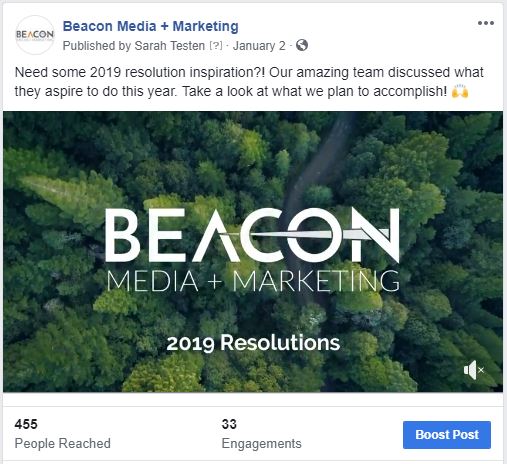


Boosting your posts extends your reach beyond the people following your Facebook page and allows you to target audiences according to the demographics we discussed earlier.

After you click the blue button, you will be prompted to create an audience, set a budget, and decide how long you would like your posts to run. We recommend that our clients spend a minimum of $300-$500 each month, distributed across 2-3 advertisements, in order to gain worthwhile traction with Facebook advertising. That said, it is VERY IMPORTANT that you get your targeting right or your ads will flop.

While boosting posts can be done through Business Manager, running traditional Facebook advertising is accomplished through Ads Manager. In Ads Manager, you can dive deeper into targeting and the A/B testing of your ads as well as the analytics. Ads Manager is too in-depth to get into in this article, but here is a brief summary of how to make Facebook ads that bring in results.

We hope this quick guide helps your orthodontics team get a social media strategy up and out! If you get stuck at any point in this process and would like to work with us, our VP of Marketing Jennifer Christensen is always up for a free consultation. You can also reach out to our President directly at [email protected]!
“Your website is prospective patients’ first impression of your practice.” – #TeamBeacon

Is it time to redesign the website for your orthodontics practice? Digital marketing experts recommend that every business, practice, and organization–regardless of industry–redesign their website every 2-3 years. New products or services, staff, and even changes to website best practices can all mean your site is ready for an update!

Updating your practice website can feel like a daunting task. But we are here for you.

After over 20 years in the marketing industry, we have developed a proven process for our website services that we believe is the greatest thing since sliced bread! It is the very process that we walk every one of our clients through. We hope this process grants you and your team smooth sailing as you tackle one of your biggest projects yet.

1. Meet with Your Orthodontics Team

The first step in redesigning your orthodontics website is to determine why you are doing what you are doing, what your goals are, and what a successful website design looks like to you. Gather all of the key people on your team into one room and ask yourselves these questions. Take some time to look at competitors’ websites, orthodontics websites from across the country, as well as any websites that you generally like the look and feel of, identifying concrete specifications for your own redesign. You may be surprised by the concept you begin to develop through collaboration! Here are just some of the questions that we ask our clients at the beginning of their website services with us:

  • What are you trying to achieve as a practice? What sectors of your practice are you trying to grow?
  • What are the primary and secondary purposes of your website? What do you expect it to accomplish?
  • What information do you want your patients to find quickly on your website? Do you have any primary categories of products or services to highlight prominently?
  • Of the website designs that you like the look and feel of, what features do you like?
  • What type of imagery do you prefer to use? Is there any imagery that you like to stay away from? Do you have any official branding guidelines to adhere to?

We also discuss general marketing information (such as target patients and differentiators) with our clients in order to be as strategic as possible with their website design. Be sure to talk about these important facets of your marketing strategy with your team! Information like who your target patients are and how you stand out in the market can completely change how you choose to position your orthodontics practice online.

2. Map Out A Plan for Your Website Design

Once you have laid the foundation of a strong vision for your new website design, it is time to put your creativity to work! Using the information you gathered during the meeting with your team, you are going to create a sitemap demonstrating all of the pages you want on your site. A sitemap is simply a flowchart, and it can be as simple as a bulleted list. Here is a standard sitemap for a basic, “five-page” website:

  • Home Page
  • About Us
  • Services
    • Service A
    • Service B
    • Service C
  • Blog
  • Contact Us

Now that your sitemap is in place, you are going to create a wireframe for each of these pages, containing all of the design and content elements your team requested.

What is a wireframe, you may ask?

“(A wireframe is) an image or set of images which displays the functional elements of a website or page, typically used for planning a site’s structure and functionality.” – Google

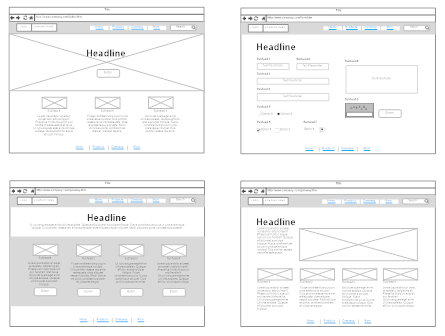
It may sound complicated, but a wireframe is nothing more than a drawing or sketch of what you want your web pages to look like, using only boxes and lines. At this point, you do not want to get too detailed–you will have the opportunity to do that in the development step! Simply outline where you want your images, headers, written content, and buttons on each page. Here is an example wireframe, for your reference:

Source: SmartDraw

If you would like to practice wireframing a good website design, start by looking at some of your favorite websites and trying to imitate their structure with your own wireframe. There are a lot of easy wireframing tools available online. One of them is MockFlow, which offers drag-and-drop wireframing and a free package for basic users.

While you are wireframing your new website design, you will want to be thinking about the written content your team wants on your website and how to execute those concepts on each page. Now is a good time to start writing this content as your vision begins to form, but it is okay to put placeholder content such as “lorem ipsum” in your wireframe for now.

3. Write the Content as an Orthodontics Team

With wireframe in hand, you are now ready to fill in your placeholder text with real, written content that speaks to the soul of your orthodontics practice! There are several important concepts to keep in mind as you go about this process:

#1 Keywords – If one of your goals is for your website to rank on the first page of Google, pay attention to the keywords and phrases prospective patients are using to search for orthodontics services! You will want to incorporate these keywords throughout your text. This is called search engine optimization (SEO). We use the Google AdWords Keyword Planner at Beacon to do our keyword research. It is best practice to focus on one or two keywords per page and place them naturally 5-10 times throughout 400-600 word content, but do not go overboard! Keyword stuffing makes content unreadable–although your website will rank high at first, it will quickly lower in ranking as the Google algorithm learns that everyone who visits your site leaves because they cannot read your content.

#2 “Catchy” Headers – The rate at which people are moving through websites is getting faster and faster as more of the general population become tech savvy. Be sure to use headlines that catch attention at reasonable intervals throughout your content to keep prospective patients engaged. Place relevant keywords in your headers as well to boost your search engine ranks.

#3 Quality & Quantity – Although it is best practice to write 400+ words for each page of your website, do not merely write content for content’s sake. You might put prospective patients to sleep! Keep your content engaging and write in second person, directly addressing “you,” the reader and speaking to the heart of what they want in an orthodontist. Split your content up into paragraphs and use tools like headers, bullet points, and other formatting to keep your content visually interesting and palatable.

Finally, always, always, always include a call-to-action (CTA) at the end of your content! A CTA indicates to the reader what they can do next to act on what they have just read. It should be hyperlinked. For example, a common CTA for an orthodontics practice is “Schedule a Free Consultation,” linked to a contact form.

4. Implement Your Website Design

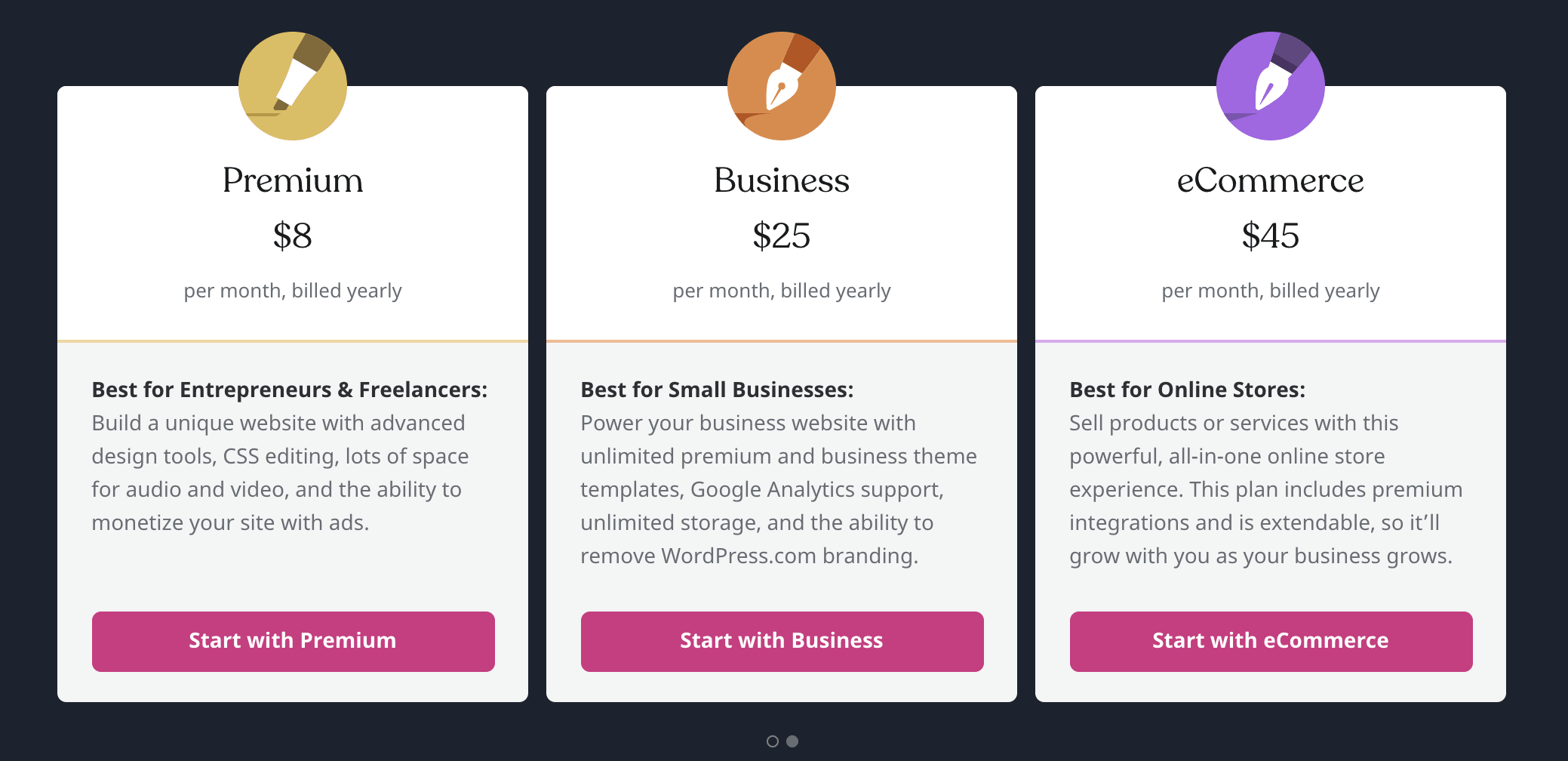
Once you and your orthodontics team are satisfied with your sitemap, wireframe and content, it is time to design your new website! This may not sound like an “easy step” at first glance, but there are actually many useful tools for people who are just getting started with website design. We use a hefty version of WordPress at Beacon that requires custom coding, but the company also offers a variety of packages available for beginners that allow you to do some customizing of your website without touching the code.

Source: WordPress

Your first task once you have established an account with WordPress is to begin the guided setup process and pick a website theme that fits your wireframe! You will then be able to customize your website design within the parameters of a basic package using the options available. Use the colors and fonts of your orthodontics practice, add the images you like, and upload your written content. WPBeginner is a great resource for any questions you may have throughout this process.

5. Set Your Website Design Live!

If you are finished with your website design and you are happy with how it turned out, you are almost ready to press “go!” First, there are a few things you will want to check to make sure everything is in order.

We have created a pre-live checklist for our staff to go through before the launch of every one of our client websites. Here are just a few of the things on that list:

  • Ensure all links across the website, including all buttons, icons, and linked images, are working properly.
  • Check the contact form to make sure it is sending to the correct email address.
  • Look at the website in all major browsers as well as on mobile to ensure it looks good on all platforms.

Most basic WordPress websites are already “live” from the get-go, however, now is the time to take the domain name from your old website and point it to your new one! Your domain name is the address at which your website is located, for example, our website is located at www.beaconmm.com/. Log in to the account you were given when you first purchased your domain and use the tools provided to point it to your new website. You should be able to see your new website at your domain name within a matter of minutes.

Congratulations! You did it! If you have followed all of these steps, you should have a fully-functioning, up-to-date website that is ready for prospective patients.

We are happy to share our proven process with you, however, if you get stuck on any part of this, please let us know! Our team would love to come on board with your website project and help you see it through to completion. If you are interested, please reach out to our VP of Marketing Jennifer Christensen to schedule a free consultation.

Happy marketing!

“Your brand is what people say about you when you’re not in the room.” – Jeff Bezos

It’s time to brand your orthodontics practice. Where do you start? From discovering your unique reputation and identity to selecting the icons, fonts, and colors for your logo, we created this guide to walk you step-by-step through a proper branding process. Enjoy!

What Is a Brand?

Your brand is your visual identity. It communicates the essence of who you are and what you do in the form of a logo, colors, and fonts. When your patients look at these aspects of your brand, they should emotionally connect with what they know about you. A brand should run parallel to an orthodontics practice’s reputation. Done right, it informs that reputation. Done wrong, it detracts. Proper branding bears the following responsibilities:

  • If you have a good reputation, your job is to capture it.
  • If you don’t know what your reputation is, your job is to discover it.
  • If you have a bad reputation, your job is to pivot it.

How do you do all of this using only the tools of form, font, and color?

We’re glad you asked!

The Discovery Process

At Beacon, we guide all of our orthodontics clients through a series of discovery questions to either capture, discover, or pivot their brand. Begin the branding process by gathering all of the key people into one room, sitting down, and giving due-diligence to self-discovery. You may be amazed by what comes together!

You need serious buy-in from your team if you are going to change your reputation. Do not attempt to pivot your brand until everything is in place. Rebranding is not for the faint of heart!

Here are just a few of the questions that we ask our clients:

  • Describe your practice in two sentences or less. What is your “elevator pitch?”
  • A brand is a promise. What is the promise of your brand?
  • What is the current perception of your practice? What is the desired perception?
  • How do you want to position yourself in the marketplace? Are you the “value” company? The expensive boutique? The innovator? The “tried and true?” The academics? The quick-fix? The thought leaders?
  • What is your big-picture mission?

A big portion of our brand discovery meeting focuses on competition, differentiators, and target patients too! Don’t forget to talk about these aspects of your practice and market with your team.

Naming Yourself

Now that you have all of the data about your brand gathered, it is time to give your orthodontics practice a name and a tagline! Names can come as easy as pie or prove to be a real challenge depending on the day and the flow of ideas. Here are a few ways to get the creative juices flowing:

  • Take a look at what your competitors and orthodontics practices out-of-state are naming themselves. Don’t copy but use these names as a starting place for your own, unique thoughts.
  • Consider using the name(s) of your primary orthodontist(s), especially if they are family names that have a good reputation in your community.
  • Decide if you want to use your location (city, region, state) in your name.
  • Think about any nouns or adjectives that struck a chord with who you are when you had your discovery meeting.

It might sound funny, but one of the best ways to find words that resonate with your brand is to use a thesaurus! Perform searches on some of the top words that came out in your discovery meeting and see where they take you!

The Tagline

A tagline is an opportunity to communicate more about who you are than you get with a name and a logo alone. If during the naming process your team had trouble homing-in on just one idea, that’s great! Find a way to incorporate one of your “secondary” concepts in a tagline.

Not every brand needs a tagline, but it can be helpful to go through the process of creating a tagline to discover what the core of your brand’s messaging is going to be. For example, at Beacon we recently redesigned our website using the tagline, “Award-Winning Marketing, Data Driven Results.” This core message is a starting place for everything else we say or show about who we are on the new site, and it carries over into all of our marketing channels, whether that be Facebook or Google advertising, blogging, video marketing, etc.

Picking Icons, Colors, and Fonts

Selecting the icons, colors, and fonts that represent the reputation you have discovered may sound like an insurmountable task to some. “How do spoken words and visual concepts connect?” You may ask. The psychology surrounding colors and forms and how they are mentally and emotionally perceived by us is an interesting topic, but a little too deep for us to get into in this article. Suffice it to say that a lot can be communicated by what you decide to present visually with your brand, making the choice of a practice’s icons, colors, and fonts one of the most important parts of the branding process. Fortunately, there are a lot of easy-to-grasp tools available to help us overcome this challenge.

Iconography

The icon part of your logo is the form that visually represents something about who you are. It could be related to your location, your name, your values, or even something you want your patients to feel when they participate in your services. For example, when we designed a logo for Juneau Youth Services, we chose mountains and an eagle to visually tie-in the facts that their location is Juneau and that JYS youth and families feel freedom when they get the treatment they need.

An icon is an extremely valuable part of a logo because of its versatility. Icons can become art for promotional products, watermarks on branded documents, and even a standalone logo for practices that have achieved brand recognition.

To come up with ideas for your practice’s icon, reflect back on your discovery meeting. Take a look at your name and the tagline you have developed and see if anything comes to mind. We also recommend browsing the iconography of other orthodontics practices on Pinterest, which is a great tool for creating boards of ideas. To search for specific icons that you are considering, we recommend using The Noun Project, which contains over a million curated icons created by artists globally.

The Color Wheel

The colors you choose will elicit emotions in your patients more than any other part of your brand. Make sure you pick colors that communicate what you want! We recently wrote an article on the emotions associated with different colors on the color wheel. Here are just a few of the color-emotion associations we discussed:

  • Red – Depending on what shade it comes in, red can communicate temptation, warning to stop and pay attention, danger, celebration, love, or femininity.
  • Orange – Often associated with food, oranges are appetite stimulating. They can communicate softer versions of red emotions, including light and life.
  • Yellow – Yellow means light and warmth and catches attention too. It can reveal joy, optimism, comfort, and in its gold form, wealth, luxury, and rank.
  • Brown – Earth and wholesomeness are two concepts we associate with brown. Brown is a popular color in outdoorsy, organic, and all-natural circles.
  • Blue – Blue is often used in the health and wellness industry, reminding us of tranquility, mystery, depth, and strength.
  • Green – The color green comes in the most diverse forms of any other color in the world, so it has a wide range of associations from new beginnings to relaxation.
  • Purple – Purple can act either like a red or a blue! On the red side of the spectrum, it is energetic and intense. On the blue side, it is calmer and loftier.

A great tool for selecting the color palette of your brand is Adobe’s online color wheel. Using the color wheel, you can experiment with various colors and the tool will adjust all the colors in the palette so that they go well with the colors you have chosen. Try it out with your team and see what you think!

Typography

Typography is often an afterthought for practices working on their brand. This is unfortunate because, finding the perfect font to fit with your icon, colors, and feel is the finishing touch on a strong logo! Using just “any old font” can make a logo feel disjointed, especially if the font does not fit with the feel and messaging that you are going for.

Visit Google Fonts to take a look at what is available for free online! This tool is especially neat because it allows you to type the text that you want to see in each font, right in your browser.

Matching font and form is often a matter of the gut. As you are scrolling through fonts, think about what each font is making you feel. Now think about why you feel that way.

Maybe you think of one font as “editorial” because you have seen it on a popular news site. Maybe another is “creepy” to you because you have seen it on the cover of a horror film. Your patients probably feel the same way about these fonts, as certain industries gravitate toward certain font feels.

Pick a handful of fonts that elicit the right feels for you, and present them to your team. Depending on what they affirm or deny about your font/emotion choices, you have a font for your logo!

Brand Management

Once icon, font, and colors have come together, you have done it! You have branded your orthodontics practice. The next step is to protect the beautiful brand you have created!

Brand management can be as complex as a corporate policy or a simple as a style guide that tells your team what your icon, font, and colors are and the versions of the logo they have available to them to use. We produce a style guide for each of the clients that we work with. This step is important and not something to skip if you want your brand to work for you.

We hope this guide helps you on your journey to rebranding your practice! If you have any questions about any one of these steps, please feel free to email our Creative Director Adrienne Wilkerson. Adrienne has been branding practices and clinics in the health and wellness industry for over 20 years. She can be reached at [email protected]. If you are interested in hiring Beacon to work with you through the branding process, please reach out to our VP of Marketing Jennifer Christensen. You can schedule a free consultation with Jenn directly!

Once upon a time, reputation management was the sole responsibility of corporate PR departments. We sat back and watched as news outlets reported on scandals and company representatives spoke before press conferences. But before we knew it, the digital age hit and leveled the playing field for everyone. Today, anyone can “report” on what a large company or small practice is doing through social media. The digital age has made it more imperative than ever for industries of all kinds to become involved in “online” reputation management.

Online reputation management is proactively influencing how your patients perceive your practice by influencing the information they find online. Whether you realize it or not, people are talking about your practice, and not becoming involved is almost worse than doing so and not being perfect at it right away. That in mind, it is important that you have a plan. You must be ready to face the feedback you are receiving. Today we are going to talk about what a functional medicine practice can do to rock their online reputation using social media!

Stats to Consider

In case you are not already convinced that online reputation management is important, here are a few stats to consider. According to BrightLocal,

97% of consumers looked online for local businesses in 2017, with 12% looking for a local business online every day

85% of consumers trust online reviews as much as personal recommendations

49% of consumers need at least a four-star online rating before they choose to use a business

Stats like these make it evident that people are creating perceptions of what they believe about businesses (and practices) by the information they find online, first! So what can you do to influence this information?

You Can Do This!

By creating your own content for your functional medicine practice, encouraging positive feedback from your patients, and effectively managing negative feedback, you can outshine information that is creating a negative or neutral reputation for your practice! There are four online platforms through which you can do this, following the PESO model:

  1. Paid Media – Pay-per-click advertising such as Facebook or Google advertising
  2. Earned Media – Free advertising you receive as other practices and industry affiliates talk about you online
  3. Social Media – Where we will be focusing our attention in this blog
  4. Owned Properties – Your practice website, blog, etc. (any online space that you own and from which you can publish content)

On any one of these platforms, you can use an online reputation management strategy to push negative or neutral information down the page. We will be focusing on how to develop an online reputation management strategy for social media!

Have a Plan

1. Find Your Reputation

What is your practice’s current reputation, offline? This is a good place to start. Ask around and see what perceptions your fellow professionals, patients, and industry affiliates have about your practice. Does this match what you want your reputation to be? Now take a look online. If you already have social media, peruse your accounts and see what people are saying about your practice. Take a look at your competitors while you are at it and see what reputations they have created for themselves. Next, plan a meeting with your staff and discuss these things as well as what you as a team would like your unique reputation to be. Maybe you want to be seen as high-tech, genuinely caring, or scientifically-grounded. One company that has succeeded at creating a strong online reputation is Wendy’s, most famous for its snarkiness on Twitter. We do not recommend this tactic for most people, but it is an excellent example of the power of a reputation.

2. Draft a Policy

Now that you have your reputation nailed-down, create a policy for your staff to protect it. In your policy document, outline appropriate and inappropriate topics and/or a post-approval process if you are not comfortable with giving your staff free reign to post and comment on your social media accounts. Establish important ground rules like “never publish sensitive patient or practice information.” Unfortunately, HIPAA was enacted before social media existed, so there are no specific guidelines. However, many have written helpful articles on HIPAA and social media. Use your policy document to set the tone of social media professionalism for your staff. Be sure to include that your practice reserves the right to edit or delete any content that could be harmful to your reputation.

3. Create Your Strategy

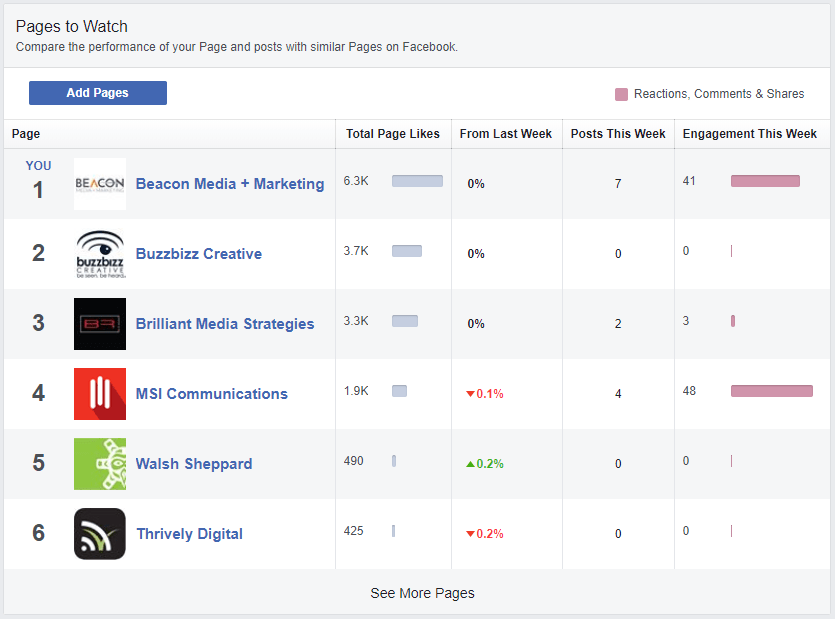
At Beacon, we often start our work on an account by developing a digital marketing strategy and editorial calendar for our clients. This includes the topics or services we are going to focus on, important themes, keywords, and elements of voice, as well as the platforms and media types we will be using. Our goal is to have a foundational document that we can always go back to for direction to keep our mind on the reputation we are establishing. The document also includes a schedule of what types of posts we will publish at what times and should include the person responsible for responding to comments. It is important to publish content regularly, as in, 3-4 times per week if you want to maintain your reputation. If you are at a loss for what kind of content to publish, take a look at your competitors and what is working for them (only do not copy their tactics, learn from them). Facebook Insights has a great tool called “Pages to Watch” that will help you discover which competitors you should be watching:

In your strategy, include the types of posts that encourage your followers to engage positively, such as questions, quizzes, and calls-to-action, like, “Have you recently had an appointment with us? We’d love to know what you think about our care. Review us now at the link below!” Also, include posts that highlight the positive things about your practice. The reason you are publishing content is to proactively create a positive perception about your practice that pushes any negative perceptions that your patients may have out the door!

Finally, you may want to include some important reminders for online reputation management in your strategy, especially if you will be having your staff do the publishing. For example, remind staff to “pause before they post” and check for grammatical errors as well as topics to avoid. The last thing you want is for your reputation to be tainted by something as simple and easy to fix as a grammatical error. Read and re-read our posts. We use Grammarly at Beacon and it is an especially helpful tool for catching these errors. As for topics to avoid, not only should your staff be thinking about no-no topics for your practice, but current trends, news, and cultural perceptions that could cause something they say to be misconstrued. For example, we were writing a post about visiting a particular national park last week until we saw the news that there had just been an accident at that location. Run your post by your fellow professionals, especially if you are unsure. In fact, if you are unsure, it is probably best that you do not publish the post at all and come up with something different. We know that it is a hassle, but it is better to be safe than sorry.

4. Engage with Followers

A significant part of online reputation management on social media is responding to the people who engage with your content! This shows that you are active, listening, and credible. Social media is not unlike any other sphere for social communication. Imagine if you never answered emails, phone calls, were never in office when people came to visit, or only talked about yourself in conversation. What would that do to your reputation? On social media, 32% of followers expect a response within 30 minutes and 42% within 60 minutes. Have a plan to check your practice’s social media platforms throughout the day and respond to comments and messages as they come. In your response, be as friendly, transparent, and as human as possible. Avoid canned, robotic responses, even to negative comments.

5. Optimize Your Profiles

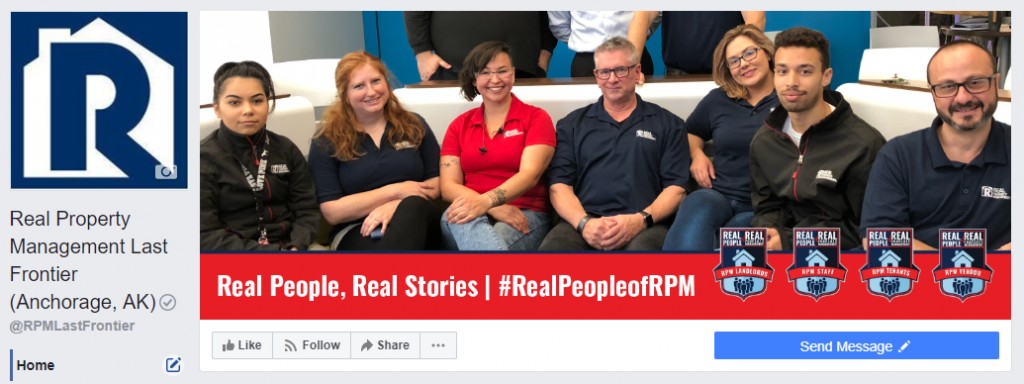
Have you ever visited a social media account and felt like, “Wow, this practice really has their act together.” It is actually surprisingly easy to achieve this reputation for your practice! Take a look at your social media profiles and make sure you have all of the important pieces in place, the profile picture, cover photo, about, bio, description–Fill in all of the gaps. Make sure all of these pieces are consistent, using your colors, logo, fonts, imagery, and voice. Practices look credible and trustworthy when “everything is in its place.” As an example, take a look at the profile picture and cover photo of one of the social media accounts we manage below. Although we are currently running a particular campaign for this client, everything is consistently branded:

We recently wrote a blog on how to optimize your Instagram profile. Take a look if you would like to learn more about this topic.

6. Monitor and Adapt

After everything is in place and your strategy is up and running, it is important that you track the effectiveness of your plan. It is now standard practice for just about every social media platform to provide some form of data analytics. Monitor these analytics and adapt where necessary. See what your audience likes and does not like and continue to refine your ideas about how to effectively manage your online reputation on social media. Although there is a lot of science to social media, it is also an art. Be flexible and willing to change your tactics for your audience if you need to.

Tools for Monitoring

There are a couple tools you can be using to monitor your online reputation in addition to the tools available on your social media platforms. You can setup Google Alerts to tell you when anyone is publishing content about your business, your competitors, or your industry. This is important for finding social media platforms where people are talking about you and you should establish a presence. Social media management tools like Hootsuite allow you to view posts, comments, and messages that mention you or use keywords or hashtags pertaining to your practice on all of your platforms, all in one dashboard. These tools can help you never miss a message.

A lot of groups have done great things for their online reputation by responding to posts in which their followers mention the name of their group, but do not tag them. When followers do not tag you, they do not necessarily anticipate your response. You can look really on top of the ball by responding to these, making your followers feel like, “Wow, they were listening!” Responding to mentions turns around negative feedback and rewards positive feedback, reinforcing this behavior.

A Note on the Negative (Reviews, Posts, Comments, etc.)

Negative feedback is something no one wants to deal with, but how you handle the negative speaks volumes for the reputation of your functional medicine practice! After years of working in the social media space, we have learned a few things about how to respond to negative reviews, posts, and comments. Here are some pieces of advice:

  • Don’t take it personally. This can be particularly difficult for people who genuinely care about what they are doing. We get it. That said, a lot of people don’t realize that they are talking to people behind-the-scenes when they talk to social media accounts. They are angry with their situation and your practice is the face they have chosen to blast with their woes.
  • Use the 20-minute rule. If you are becoming angry or upset, pause and take a breather so that you can respond instead of reacting. Be the bigger person and keep your practice’s reputation intact!
  • It’s okay to hide, delete, and report. In some cases, especially where vulgarities and disparaging language is being used or the commenter is being irrelevant and ridiculous, you should absolutely hide that comment from your wall and possibly report it. Use your best judgment.
  • Be willing to improve. If the negative feedback being given touches on the truth and is a real service issue that you need to take care of, be willing to make changes to your practice and demonstrate that you are taking feedback to heart on social media! This will do powerful things for your reputation and possibly win the commenter over as a follower for life!
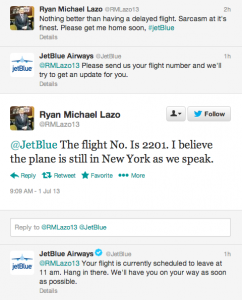
  • Focus on the positive. Be kind and friendly and look for opportunities to turn negative feedback into a positive interaction. We recently had the opportunity to do this with one of our clients in the example below.

Due to the advent of the digital age and social media, reputation management has moved online and is open to everyone. It is now more important than ever for all industries, including functional medicine, to participate in online reputation management! By having a plan that is firmly rooted in policy and strategy documents and backed by a firm understanding of social media, functional medicine practices can rise to the occasion and rock their online reputation. If you are a functional medicine practice and would like to work with an expert partner on your social media, give us a call! We have years of experience working in the field of health and wellness that we would love to share with you and your practice.

ANCHORAGE, Alaska – June 1, 2018 – PRLog — Award-winning inbound marketing agency Beacon Media and Marketing announces the promotion of Jessica Muller, former Account Manager, to VP of Production. Her new role will focus on improving efficiencies in the production of creative work at the company. Muller is promoted just months after she was made Partner and Owner with the company in January of this year.

Two summers ago, Muller came to Beacon with a proposal. “Give me a year, and I will centralize your accounting system,” she said. Muller was connected with Beacon through her husband Rob, a current employee. She was also connected through the Alaska Inbound Marketing Summit (also known as AIMS), a Beacon event that Muller contributed to as Event Coordinator that year. The AIMS event took off, and Beacon knew that Muller had talent. The Beacon team accepted Muller’s proposal–She was brought on to spearhead the accounting department immediately.

After hiring Muller, it was quickly discovered that she had other talents. Not only was she highly skilled in accounting, but she had a knack for marketing and work in other areas as well. She developed a flair for the creative side of Beacon’s work, and started to take on increasing responsibility in campaign management. Jennifer Christensen, the Co-Founder and VP of Marketing at the company, noticed Muller’s abilities. Christensen took Muller on as a right-hand assistant in her work managing client accounts.

By the summer of 2017, Muller was attending exclusive meetings with the executive team in order to get the information she needed to centralize the company’s accounting department. Once the accounting department was in a good place, Muller had more time to pursue her talents in other areas. She started looking at the systems and processes of Beacon and making them increasingly efficient. Her labors paid off when in the fall of 2017, she accepted the Small Business Development Award from the Alaska Chapter of the American Marketing Association on behalf of the Beacon team. The award was the true turning point for Muller’s career.

The executive team credited Muller with the work that earned the AMA award and unanimously voted Muller on as a Partner with Beacon. Christensen went above and beyond and gifted Muller with part of her ownership in the company as well. Effective January 1, 2018, Muller became a fellow Partner and part-owner on the executive team. Just months later, she was made Vice President of Production for her ability to streamline the systems and processes of the company.

“When I came to work at Beacon, I always felt like it was more than ‘just a job,'” Muller says, “I was investing and building something. It was really special to me that they (the executive team) felt that way too–That we are a team, and that what we accomplish is valuable and makes a difference every day. It was particularly special to me that as a group they trusted me to have a voice in leadership, and that as a person Jenn and I had such a great relationship.”

Christensen comments on what motivated her to gift Muller part-ownership in the company, “Long before Jess was given ownership, she had the dedication and character of an owner,” Christensen says, “From day one she cared and gave everything she had for Beacon to thrive, not just survive. She felt like the missing piece–Once we had her on the team, everything started to fall into place. Everyone on the team agreed that it was the right thing to do.”

Adrienne Wilkerson, Co-Founder and President of Beacon echoes Christensen’s statement on Muller’s initiative, “I’m so thankful to have Jess’s considerable talent and insight here at Beacon. Her ability to instinctively anticipate jogs and turns is amazing. She is a joy to work with!”

This June, Muller celebrates her two year work anniversary with the company. Commenting on her vision for the VP of Production position, she says, “I want to make what we do as efficient as possible so we can do it for the most people. I have seen the result of our work have a serious impact on our community. My role will increase our capacity to do that even more.”

About BEACON MEDIA + MARKETING
Beacon Media + Marketing is an Alaska-based digital marketing agency cutting through the fog of the convoluted marketing industry to shed light on real solutions. Their services include everything from social media marketing to corporate branding to web design. Learn more at BeaconMM.com.

Contact
BEACON MEDIA + MARKETING
Jordan Inks
***@beaconmm.com

For Immediate Release

Septmeber 18th, 2015

Contact: Jennifer Christensen
Phone: 907-563-6008
Email: [email protected]

Beacon Media + Marketing Promotes Rob Muller to Vice President of Operations

ANCHORAGE, ALASKA – Beacon Media + Marketing, Alaska’s inbound marketing agency, announced the promotion of Rob Muller to Vice President of Operations on Monday the 14th of September. He will have the responsibility of establishing and implementing procedures and policies to optimize the performance of the Beacon team as a whole.

“Rob has been a huge asset to our company over the past year. We’re excited to see him expand into this new role and are confident he will continue to use his extensive skill set to benefit our clients, vendors and our staff.” Adrienne Wilkerson, President, Beacon Media + Marketing

Mr. Muller joined the company in July of 2014 as the Web Developer and quickly progressed to a senior position, helping lead newer team members.

Mr. Muller is a self-taught web developer that began honing his skills in code and website building for fun during the 1990’s, when the Internet was still new territory. Some of his previous experience includes working for A.T.I.A. and founding and managing his business, Dauntless Development.

Beacon Media + Marketing is the leading inbound marketing agency in the state of Alaska. Inbound marketing focuses on bringing customers to the client, instead of the client seeking the customer. Beacon Media + Marketing uses blogs, SEO, social media marketing and several other tactics to optimize each client’s inbound marketing efforts.

To learn more about the company, visit their website here: https://www.beaconmm.com/