business facebook page

See Our Blogs

Explore insights on SEO, AI, and digital marketing strategies designed to help your business grow, stay visible, and adapt in a constantly evolving online landscape.

Beacon_Icon_resouse

Originally published on April 10, 2017. Updated on May 4, 2020.

Does word-of-mouth networking even work anymore? Or has it been replaced with digital or social media networks? We hear this question a lot. We believe they are both integral to any business’s marketing plan and should be strategically planned and implemented.

Networking is an important part of business. It will help you stay on top of the latest trends in your industry, find new business opportunities, meet prospective partners and clients and build awareness of your own brand. At the end of the day, people do business with people and connections matter.

Benefits of social media networking

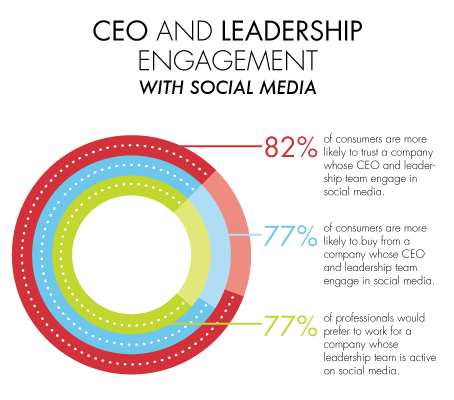
Social media is a fantastic method of networking, in fact, we are big fans! The stats are impressive regarding the power of social media to influence consumers through people networking digitally. For instance:

There are a few best practices that we have found to be helpful for business professionals who want to use social media networking as part of their marketing plan.

  • Focus your time and energy on two social media networks. In Alaska, we have found that Facebook and LinkedIn are a great combo for business-to-business networking (B2B), while Facebook and Pinterest is a good option for business-to-consumer (B2C) industries
  • Be consistent with your interaction. Here are 10 tips to optimize your social media.
  • Offer helpful information that your target audience will find useful in their daily lives. We’re here to add value to their lives by helping them find the products or services they need, so don’t sell your products or services directly. This is important – you can read more about whether marketing is the new sales.

There is no denying the power of networking through social media to a wide range of age groups, but it’s most effective when coupled with word-of-mouth networking. Word-of-mouth is the original and best form of marketing. We can come up with effective digital strategies until we’re blue in the face, but if your product or service is good, people will talk about it. It’s the most effective marketing tool you’ll ever hope to have.

Benefits of word-of-mouth networking

Some refer to this style of networking as “old fashioned” or “traditional” networking. It’s been around since the first product was put up for sale and it’s still incredibly persuasive in purchase decisions. In fact:

  • 3.3 billion brand mentions in 2.4 brand-related conversations happen offline in America ever day
  • 54% of Americans say that their purchase decisions are driven by word-of-mouth
  • 59% of Americans believe offline or word-of-mouth to be highly credible

Word-of-mouth networking gives people a chance to build deeper relationships and increase trust. This increased trust often leads to more qualified referrals, longer professional relationships, and more profitable transactions.

As part of a targeted marketing plan, we recommend business professionals be part of at least three face-to-face networking groups. The best combination is to join two soft touch groups and one referral, focused group.

For example, if you live in Anchorage, AK, you could try:

A referral based organization like BNI is what is called a hard contact referral network because the whole organization’s focus is increasing the business for each member through referrals and word-of-mouth networking. This is also a good option to consider if you’re looking to drive brand awareness quickly.

Secrets to effective networking

No matter your target audience, it’s important to get the most of our networking and leverage the power of both social media and word-of-mouth. Used together, they allow business professionals to be highly effective at not only getting their message out to their target markets but also to build profitable client relationships.

The key, either way, is to follow up. Take your connection to the next level and get to know your new contact as a real person rather than an opportunity to boost your business. If you’ve met online, follow up with an email linking an interesting article or asking for an opinion. If you’ve met in person, follow up with an invitation to coffee or another industry event. No-one wants to stay connected with a robot.

Networking is a two-way street. It’s not just about what they can do for you, but what you can do for them as well. Connect thoughtfully. Ask people about themselves. Talk about their projects. Offer considered thoughts. Give advice if they ask. Successful networking requires give-and-take, but who knows who you’ll meet?

Need help developing your brand? Schedule a free consultation today.
Before we share our three secrets to success with Inbound Marketing, It’s important that one has a basic understanding of what Inbound Marketing is and how it differs from, “Old School” or “outbound” advertising.

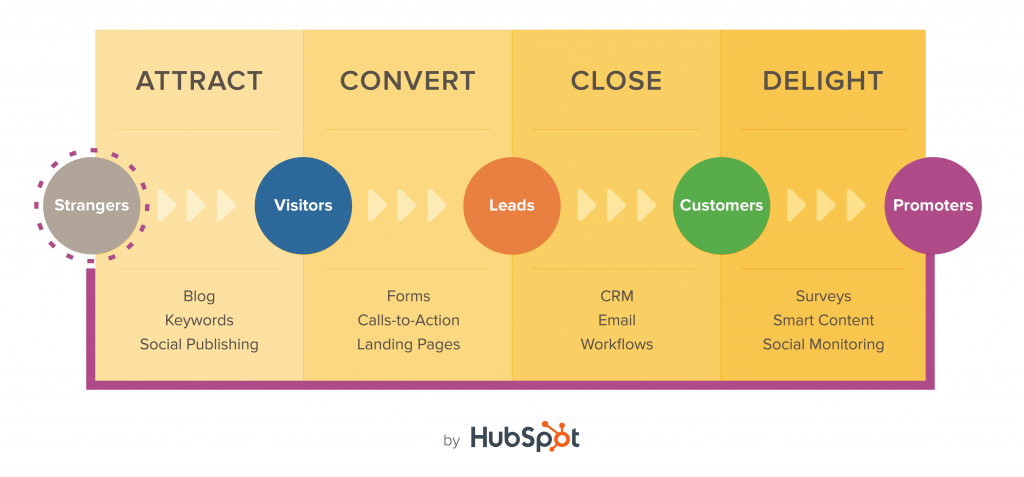
The concept of Inbound Marketing all boils down to common sense. It refers to online marketing activities that direct visitors to you (Inbound), rather than marketers having to go out to get a prospects’ attention (Outbound). Inbound Marketing earns the attention of customers, makes the company easy to be found, and instantly includes your company in the clients conversation of their needs. The Inbound approach draws customers to your website by engaging clients with interesting and valuable content.

“The Inbound Methodology is: The best way to turn strangers into customers and promoters of your business.” Hubspot explains.

When businesses begin to think like their potential customers, that’s when the lightbulb goes on. The statistics are overwhelming. 86% of the buying population no longer trust “outbound advertising” no longer are the days when a business can put out a message about themselves that doesn’t match what the client feedback and experiences are. At best, the message is ignored, at worst, it’s refuted publicly through social media channels. For example, GAP’s attempt last year to present a new logo and image was blasted by followers and fans alike until GAP actually pulled the new branding campaign and reversed its position.

Inbound Marketing

If potential customers don’t trust your business’ “outbound” message, you might ask what’s the point of marketing at all? This is exactly the point- the same people who don’t trust your advertising message do trust their friends reviews and recommendations at a whopping 77% and interestingly they trust Google’s recommendations even more at 92%… That’s where Inbound Marketing comes in. You are delivering information to people that they really are interested in, making sure your reviews and targeted placements are showing up in the correct searches so that they share it and recommend you to their friends. Basically, you are meeting your current and potential new clients where they are at instead of telling them to meet you  on your terms.

You may wonder how you can start applying this to your business.  Here’s Our Three Secrets to Success that have helped us grow our business over 300% and many other businesses in Alaska and beyond using Inbound Marketing.

  1. Learn about your customers. Its not just their demographics, but their interests, and their preferences. How can you start providing helpful information if you don’t know what they are interested in? If you are selling running shoes, your target demographic may be very interested in what the best running trails are in the area. If you are providing those answers and solutions to your clients deeper interests and needs- you will have raving fans indeed.
  2. Be More Helpful! When your potential client interacts with you whether it be on your website, Facebook or Instagram- Are you more helpful than your competitors? Is your website user friendly and easy for them to find what they need? Do you have videos explaining your product or service? Do you respond to questions on social media when they are asked? Being more helpful and easy to work with is a natural extension of the Inbound Marketing process. You’ve already gotten their attention by providing the information they are interested in- now convert them to clients by making it easy to do business with you.
  3. Master Your Niche and Delight Your Fans! If you really want to be successful using Inbound Marketing you need to know your stuff. Work to become an expert in your field and then share that information freely. At first, it seems counterintuitive to give away your expertise, but when you realize that it’s in the the very act of giving away helpful and useful information that establishes you as the expert and the person/company they want to do business with- then- it’s worth it. We’ve put this into practice in our own industry. We founded the Alaska Inbound Marketing Summit, which brings to Alaska the best of the best in the industry from Facebook, Google, Hubspot Partners, LinkedIn, Pinterest & more. This one day annual event with knock your socks off with Inbound Marketing knowledge. We’re giving away our knowledge, connections and best practices to potential clients and competitors alike. Our efforts in putting this event together have produced an incredible fan base, new clients, awards and speaking engagements all over the state. We’ve established our niche and hope to continue to delight our fans for many years to come.

I hope these three secrets of our success inspire you to jump in to this new world of Inbound Marketing. There’s no question that Inbound Marketing is winning the battle in the advertising and marketing world- more and more dollars are being spent on these methods and the stats show that the return on investment yields a triple return from traditional advertising. That’s great news for all my small and medium business friends- saving money on marketing and increasing sales is always a good thing!

If you have questions on how Inbound Marketing can or will help your business – send us a message, tweet, Facebook message, email or even a phone call (907-563-6008). We are truly thrilled and excited to help Alaska become a leader in Inbound Marketing’s best practices!

So, there’s the question. It’s one client rarely asks us out loud, but are often thinking about. “Am I paying too much for this online SEO stuff and how can I find out?”  To best answer that question, I want to explain my background a bit and why I am so fascinated by and love studying, learning and becoming an expert in this field.

My background in sales has given me a strong appreciation for performance and accountability. I started out in commission sales at 19 years old in the furniture and design industry. The commissions helped pay for college and provided a fantastic lifestyle for a 19-year-old student.  I loved the concept that my paycheck was directly related to my performance. There was no one else to blame if I didn’t close a sale and it was certainly a great feeling to be rewarded for providing a good solution for a client. At the same token, I was often suspicious of the marketing/advertising side of the equation in our industry. It seemed harder to measure the value of their performance.

When the ‘internet” age of digital marketing came into being my interest was peaked. Between pay per click advertising (PPC) and website ranking (SEO), I started to see a clearer path to measure performance and success for marketing efforts. It’s one of the reasons that I love digital marketing today. It’s performance based with incredible data provided for our clients and is easy to measure, adjust and improve month over month. For example, with A/B testing, we can measure the copy and style of our ads, website pages, and even graphic design. What language best appeals to a specific audience? For small businesses, where every dollar counts- this type of data and accountability is enormously important and helpful in growing their business.

In fact, for some of our top clients now, we are even using AI (artificial intelligence) to analyze the data results from their Google and social campaigns to provide an in-depth analysis. (You can imagine for a hardcore Star Trek geek in high school, how cool that is for me! )

Let me give you an example of what this means for our clients and how we can answer the question concerning what they are paying for digital marketing. Today provided a perfect real-life example of how we can measure this.

At 10 a.m this morning I had a pre-scheduled client meeting to go over their current digital marketing plan, PPC, social media, SEO, reputation management etc. We’ve been offering these services over the past year and have developed a good rapport and trust with our client.  We regularly go over the monthly reporting on web traffic, sources of clicks through and conversion rates from the generated traffic.

Today, we talked about an opportunity they were presented with to renew a contract outside of our services. They presented the numbers the vendor provided for the past year so that we could measure the effectiveness. The annual numbers showed 26,500 impressions for the advertising category, and 153 click-throughs to their website. We verified the 153 referrals from that source through Google Analytics. From the 153 referrals there was only 1 conversion ( click through to lead) The cost of the advertising placement was $900 per month/$10,800 annually. To determine to direct value of this particular digital advertising- we divided $10,800 by 153- That was an astonishing $70.82 per click through to their website, and with one conversion, $10,800 per lead.

In comparison to their other digital efforts: Facebook, Pinterest, PPC, and blogging are producing clicks through to their website at an average of $1.61 per click with conversions at $40-$82. Being able to measure and understand the numbers allowed them to track their success, compare results from different sources and make good marketing decisions. In this case, they decided the $10,800 was far too much to pay for that digital advertising plan. The monies would be better spent in an area that is getting over a 1000% better return.

This real-life example provides a solid foundation for answering the question “Are you paying too much for your digital marketing” The great thing about numbers is they don’t lie. If you know what you are looking for: cost per impression, cost per click and cost per conversion, then you can evaluate the effectiveness of this type of digital marketing for your business. For every business it’s different, a lead could be worth $200, $2,000 or $20,000. Now you have a way to measure the effectiveness of the money you spend to get the lead.

One note of caution, measuring clicks through to your website and conversions is just one part of your digital marketing plan. There is a strong value of creating a community on Facebook, generating a strong referral source, and reputation management where you ask clients to review your services on Google. I used the example that I did today because it is one very clear metric that you can use as a solid foundation for measuring your effectiveness in digital marketing campaigns.

Our goal, at Beacon Media + Marketing, is that all of our clients would understand the metrics and feel confident that they can make good decisions in spending their hard earned marketing dollars. If you want an independent analysis of your current digital marketing efforts- contact us for a free evaluation and an 8-12 page report provided by a Google Certifed team member. www.www.beaconmm.com or call 907-563-6008 and ask for Jennifer.