March 16, 2020

Chart The Waters

Explore insights on SEO, AI, and digital marketing strategies designed to help your business grow, stay visible, and adapt in a constantly evolving online landscape.
Beacon_Icon_resouse

Lake Tahoe is a popular tourist destination, with over 2.7 million visitors per year. If you’re a small business owner in the Lake Tahoe area you may be wondering how you can capitalize on the ever-growing tourist industry.

It has a great variety of tourist attractions, from the stunning natural beauty and hiking trails, such as Eagle Rock, to winter sports, including some of America’s best skiing. If you prefer a more laid-back approach to vacation, there are stunning beaches as well as high-end shopping and dining along the north shore.  Alongside these are historic sites aplenty, including Tallac Historic Site and the Ed Z’berg Sugar Pine Point.

Lake Tahoe is so stunningly beautiful you don’t have to convince people to visit.

However, the local tourism industry is well-established and highly-competitive, a lot of competition, with activities, beaches, and sight-seeing destinations all vying to catch the attention of visitors. An effective marketing strategy will distinguish your business from others and make sure customers find you first!

Beacon Media + Marketing has an office in downtown Reno, but our story started in Anchorage, Alaska. We have plenty of experience in developing and executing successful marketing stratgies for the competitive outdoor tourism sector. Here, we’ll summarize some of our most successful tricks of the trade, giving you an insider’s view into the world of tourism marketing.

Small business marketing

We mentioned before that we are well-placed for providing insight into marketing for the tourist industry in an area of outstanding natural beauty, which also includes historic sites and plenty for the outdoor sports enthusiast.

Here we’ll summarize some of our tips that are applicable for Lake Tahoe tourism companies, from a series of blogs on marketing for tourism and related businesses that we’ve written.

Blogging

You may have heard that blogging is important to growing your business, and it is. There are a few tricks to effective blogging. The primary thing to remember is that consistency is key! You need to be publishing regularly to get the results you want. Here are some proven methods of blog marketing:

  1. The inbound marketing philosophy is a simple concept. People are online all day, every day – this means that putting quality content in front of them is easier than ever. The core tenet of the inbound philosophy is that if you consistently provide useful content to people, they will remember you and seek you out when they need your services.
  2. People use Google to ask questions, so it’s super effective to answer them. If you’re the one people can rely on when they want to know something, they’ll remember you when they want to buy something.
  3. The waterfall method of blogging is a highly successful, and slightly sneaky, trick for getting your posts to rank on Google! Google highly rates backlinks: that is, other credible websites linking to your blog. Links of this kind act a bit like a referral, but it can be difficult to get links from other websites. So, we do what is called backlinking. This involves using your own website to provide links! A common way of organizing this, which you can use successfully for your Lake Tahoe tourism business, is called the waterfall method.

To see an example of one of our blog waterfalls, and to read more about our blogging strategy, read our blog on blogging for arctic tourism here.

Google Ads

There are two types of Google ads: display ads and search ads. Display ads pop up on websites, they are usually a graphic or image and can be identified by grey “advertisement” text above them. Search ads appear at the top of your search results page, very effective for putting you in your customers’ eye-line.

Google uses an algorithm to determine which ads you see when you search. In the fraction of a second after you press search, it takes an inventory of all the ad accounts that contain keywords or phrases used in your search.

If you want to read about google ads in more detail, including how the algorithm works, and how they can help tourism-related businesses, head over to another blog we wrote here.

Branding

We at Beacon Media + Marketing have a 5-step process for developing a strong brand.

Here is a quick overview:

  1. Understand what branding is. Your brand is your visual identity, it’s what people will think of you
  2. Brand discovery. Your primary focus in this part of the process should be focused on identifying your competition and how you can differentiate yourself from them. You also want to identify your target customers and work out how you can appeal to them.
  3. Naming. Sometimes naming can come naturally, but other times it can be the hardest part of the process, so we offer some advice:
    1. Look at competitors
    2. Consider using names of founders
    3. Consider using your location
    4. Alongside a name, you should come up with a tagline
  1. Choosing iconography, color, and font. The icon is the part of your brand that most people think of when they talk about the “brand” or the “logo”. It is the part of your brand where you can use form, rather than text to communicate your brand. It can be used to represent name, location, and mission in a quick and easily accessible manner.
  2. Management. A mismanaged brand can become messy and inconsistent, which dilutes the effectiveness of your brand. At Beacon Media + Marketing, we provide clients with a style guide that informs staff of what logo, colors, and fonts to use and how to use them.

If you’d like to learn more about branding, you can delve into it in more detail in a blog we wrote, here.

Web Design

Experts recommend that you redesign your website every 2-3 years. Why? Because product changes, staff changes, fashion, and best practices all change rapidly in business and online.

However, we appreciate that this can be a daunting task. We at Beacon Media + Marketing have 20 years of experience in the marketing industry, and a proven process for website design.

You can read about our process in more detail, here.

Meet with your team

Before you get started on your website design, it’s vital to get a handle on what exactly you want to create, what you want to say about your tourism business, and what your goals are.

We recommend gathering all the key people in your business into one room and asking yourselves questions to determine this. It is often helpful to look at some of your competitors and determine what aspects of their website you like, and what you don’t like, to help you generate some ideas .

Map out your design

Now that you have an idea of what your website should look like, and you have some concrete features you’ll need, you can create an outline.

For our clients, we create two documents to provide a guide for the website: a site map and a wireframe.

The site map is simply a flowchart or bullet list of all the pages on your website and the order in which they will derive from one another.

This then provides the foundation for the wireframe, which is a set of images in which you show the elements you want on each page and how they relate to each other.

Despite the technical name, a wireframe is just a rough sketch of what you want your website to look like and where you want the elements to be.

Write the content

Having created the wireframe and left spaces for paragraphs, it is now time to write the content that goes into those boxes. We recommend three best practices for content writing, which will allow you to produce attention-grabbing and engaging content:

  1. Keywords
    • Choosing keywords that people are searching on google, and ensuring you use them throughout your writing, is a good way o rank on Google
  2. Headers
    • Including your keywords in your headers helps Google know what your content is about. Writing catchy headers also helps draw in readers, often people just skim over the text looking for their interests; you want to catch them and keep them interested.
  3. Quality
    • Google can tell if your content is low-quality as people will quickly leave a page if it doesn’t have what they’re looking for or isn’t nice to read. If lots of people do this, Google takes it as a sign that your content is low quality and will be less likely to recommend it.

Develop your website

The site map, wireframe, and content are all going to come together in the final web design. The first step in developing your website is deciding which software to use to build it. We typically recommend WordPress, which is an industry-standard solution that is completely customizable.

When building your website, be sure to stick to your brand guidelines. A well-managed, and cohesive brand is vital for a good-looking website. (Remember, we talked about this earlier!)

Go Live

Once your website is ready to go, it’s time to publish and set it live.

If you’ve found this insight helpful, and want to learn more, be sure to check out our other blogs that go into more detail on each of these topics. Alternatively, if we’ve convinced you that your business could benefit from our expertise, you can schedule a free consultation.

Lots of businesses advertise online, and there’s a good reason why.

Online advertising allows you to identify and target potential customers to maximize the impact of your campaigns. After all, there’s no point advertising boiler installation services to someone who is renting a small apartment in a multi-story building. This field is growing every year. In fact, in 2019, digital advertising revenue in the United States topped $100 billion for the first time. If you’re planning to grow your business in 2020, you need to create a strategy – fast.

If you have your own website and you’ve ever conducted your own research into digital advertising, you’ve almost certainly come across the two heavy hitters: Google AdWords and Facebook Ads. (If you’re interested in learning more, we have a whole blog post dedicated to digital advertising, designed specifically to help HVAC businesses.)

But how do you know if they’re working?

Once you spend time and money setting up your ads, you’re going to want to know how they’re performing. You need to know what the response is and how many people are clicking through to your website. If your hero service is replacing furnaces, are people finding the information they need? If yes, great! If not, what can you do to improve the page to generate new leads?

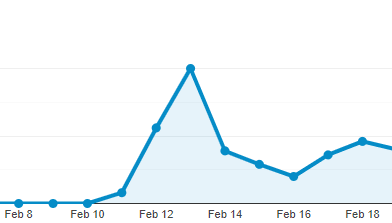
This is where Google Analytics comes in. It’s one of the most popular digital analytics tools available online and it’s free to use. Here’s a snapshot of what you can expect:

Google Analytics

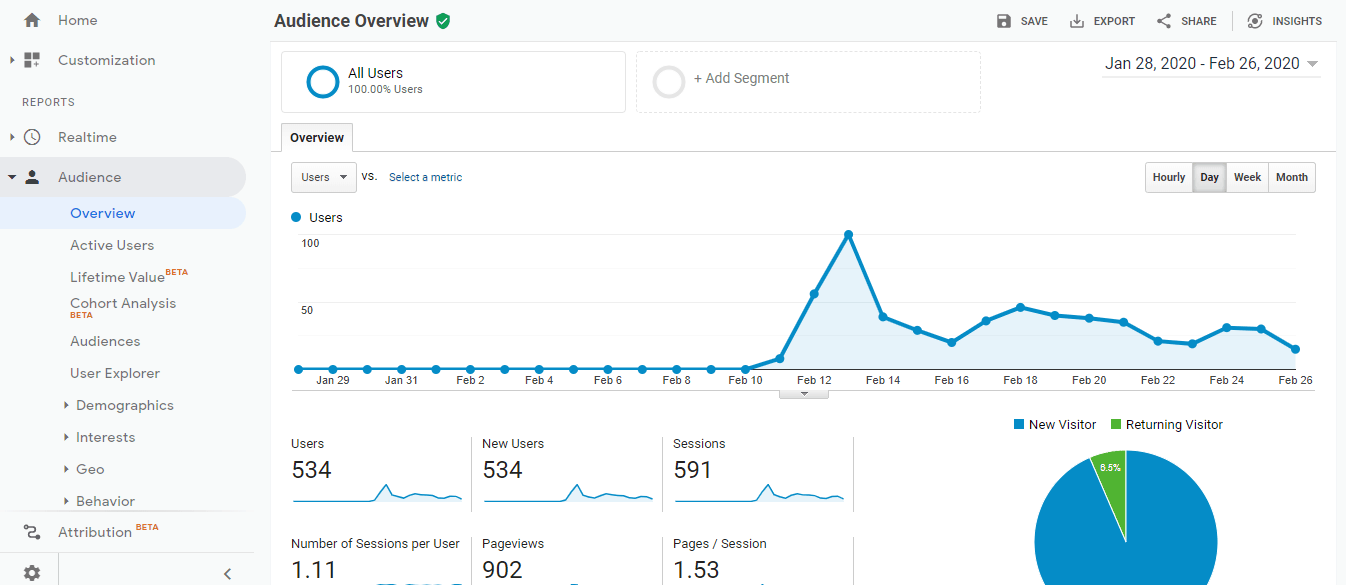
This is a real-life example from HeatSource Mechanical, which has been providing superior products, elite craftsmanship and stellar customer service in the Mat-Su Valley for more than 35 years. The spike on February 13 coincided with an advertising campaign we ran on their behalf on Facebook, increasing traffic from zero on February 10 to 100 in a single day.

Interested in learning more? Read on, friend. Read on.

We would love to help! Our Google Analytics experts are experienced in developing effective strategies for HVAC businesses. Contact us today.

Google Analytics For Beginners

Okay, so what does Google Analytics do? Basically, it takes a deep dive into the numbers behind your website so you can know who’s looking, what they want, and what’s working best for your business. Here are some of the potential insights you will be able to glean:

  • How many people visit your website?
  • Where do they come from?
  • Which pages are the most popular?
  • What products are they most interested in?
  • What services are they most interested in?
  • How did they find your website?

The dashboard is designed to be user-friendly and can generate helpful reports on everything from the demographics, interests and behavior of your clients all the way through your acquisitions and conversions. In other words, this is a super handy tool and a great way to make sure you’re investing your time (and money) into effective strategies that will convert sales.

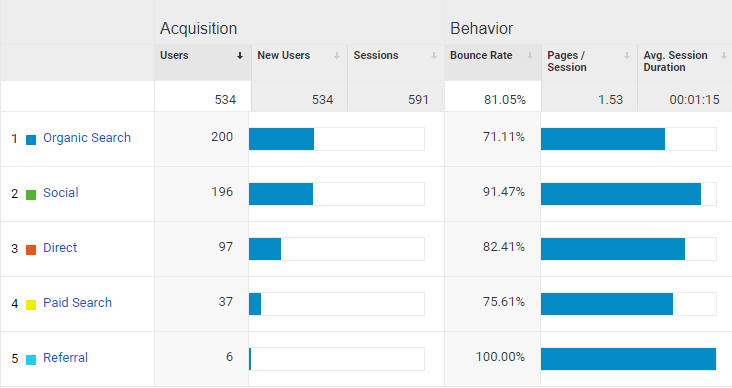
To use another example from our friends at HeatSource Mechanical, here’s a snapshot of the kind of data you can get about acquisitions (meaning new traffic to your website):

Google Analytics

As you can see, it’s very straightforward. This chart shows which strategies are creating the biggest return on investment. We can see that the two biggest drivers are organic searches and social media – in fact, they’re almost equal. As far as digital marketing strategies go, this is a very healthy balance, and it means we should continue advertising in these areas.

OK, that’s great… but I’m still not sure about digital advertising.” No problem, read this blog we created: Do Google AdWords Work For Marketing My Business?

How do I create a Google Analytics account?

Now that you understand what Google Analytics is about, it’s time to create a Google Analytics account. If you already have a Google log-in for a related service like Gmail, Google Drive or YouTube, you’ll be able to use that account. Otherwise, head to google.com/analytics and set yourself up with new one. Make sure to secure your account by selecting the option for two-factor authentication and keeping your password secret.

Fill in the details of your website and then generate the Google Analytics code, which you’ll need to copy and paste onto every page of your website that you plan to track. If you built your website yourself, you can add it into the script, or you can ask your developer to install it.

Next, step up goals to identify the actions you want users to take. For example, do you want people to contact you? Do you want them to sign up for a membership? That way, Google Analytics will know that’s an important metric and start collecting that data.

Google has lots of tutorials to help with this, but if you’d prefer to outsource it, we can help. Schedule a free consultation to learn about our Google AdWords marketing service.

Getting A Google Analytics Certification

When you start looking into Google Analytics, you’ll see a lot of articles talking about certifications. Can you get certified in Google Analytics? Yes. Do you need to? No.

The Google Analytics Academy offers free online courses that help you learn about Google’s measurement tools. There are a range of courses available, from beginner programs that teach you how to set up your account and analyze basic reports, right through to advanced offerings that help you understand the data collection process and more complex analysis and tools.

There are also Google Analytics Mini-Courses available on YouTube, which can help you get started an optimize your strategy. This is a great option if you’re keen to do it yourself.

You don’t have to be certified to be able to use and understand the software. Generally speaking, it’s a very intuitive program, especially once everything is up and running.

HeatSource Mechanical is a good example of a typical HVAC audience overview:

Google Analytics

See? The menu on the left side of the page includes everything you need to know, and the software collates all the data into easy-to-understand graphs and charts. It certainly beats a spreadsheet, doesn’t it? There also are save/export/share buttons at the top right of each page, which makes it very easy to share the data and use it however you need.

However, if you’d like someone to help crunch the numbers, analyze the results and recommend strategies to take your business to the next level, contact us.

Understanding Google Analytics Reports

Google Analytics splits reporting into five main categories: Realtime, Audience, Acquisition, Behavior and Conversions. Each of these categories has a drop-down menu that allows you to explore them in detail. Here is a quick overview with a case study from HeatSource Mechanical.

1. Realtime

Realtime analytics are split into the following sub-categories: overview, locations, traffic sources, content, events and conversions. This gives you an insight into what’s going on with your website at any particular time and is a great way to tell if something is trending well… or if something is broken. It’s most useful for website that experience a high level of traffic.

2. Audience

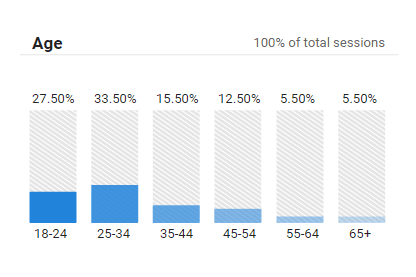
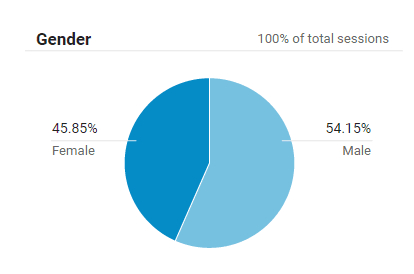
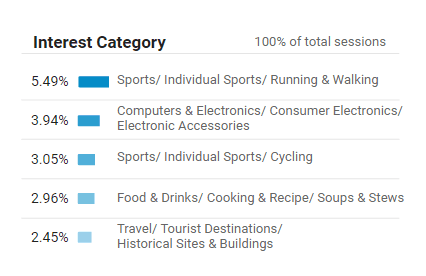
Audience analytics provides a great way to get to know your audience. It drills down into specific detail when it comes to things like demographics, interests, geo, behavior, technology, and more. Who is reading your website? For how long? How many pages do they visit? This kind of information helps you tailor your page so you can give people what they want.

For an HVAC business like HeatSource Mechanical, we would expect to see something like this:

Google Analytics Google Analytics

Google Analytics

Information like this helps you maximize the impact of your messaging. You know that most of your customers will be aged 25-34, most of them are male, and they’re the kinds of people who lead active lifestyles. Because of this, you might go for a light and friendly tone and style with small chunks of text that are easy for a busy person to consume on the go.

3. Acquisition

 The acquisition tab is an incredibly valuable resource. After all, what’s the point of digital advertising if you’re not selling more furnaces and installing more heating systems? It categorizes traffic based on Google Ads, your social media accounts and any campaigns you’re running. You’ll be able to see at a glance what’s working and where you should invest.


 This data shows that search and social outreach is very effective for HeatSource Mechanical. In other words, this client is receiving a lot of traffic from Google and Facebook. There are two ways to drive traffic in this way: posting quality content that is relevant and interesting to prospective customers; and investing in Google and Facebook advertising.

What exactly is “quality content”? Here’s a quick guide to search engine optimization (SEO) which will help the content on your website stand out.

 4. Behavior

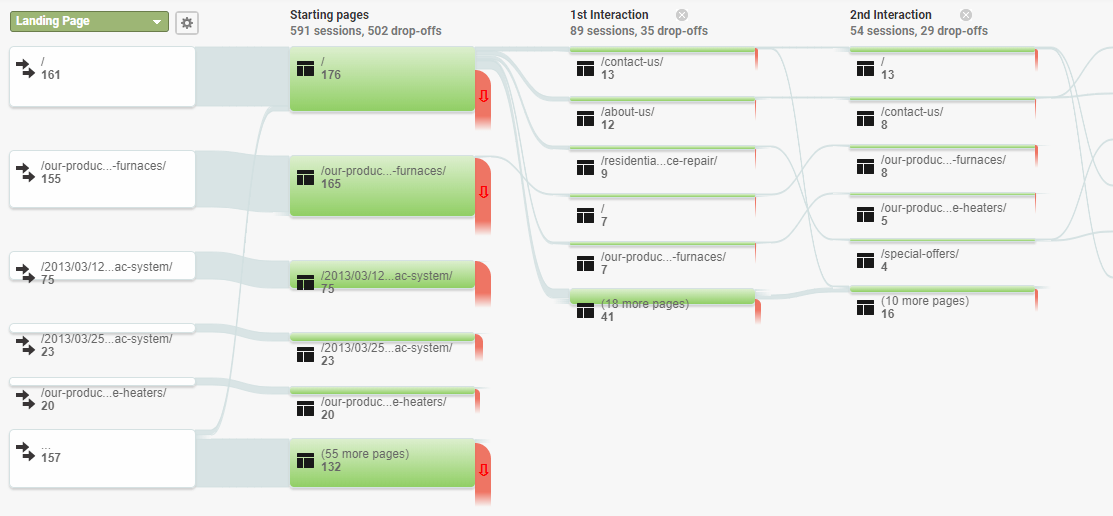
Behavior is a really fun tool (sorry, we love to nerd out about this stuff). This is where you get to know your customers and see how they progress to your site. Which of your pages is most effective at drawing in new customers? What do they read before they leave? How far do they read down each page before they bounce? It also tells you how your page is performing – how long does it take to load each page?

Google Analytics

 In this case, we can see that most of HeatSource Mechanical’s traffic comes through to the homepage, closely followed by the product page – in particular, looking at furnaces. After this first interaction, those who stay on the page either visit the contact page or the about page. This is great! It means customers either want to use your service or learn more about you.

It’s definitely worth making sure both of these pages are polished and that they provide helpful information so you can capitalize on this opportunity to convert a sale.

5. Conversions

This page is relevant once you’ve set up some goals or if you’re running an e-commerce business through your website. It tracks things like the number of people who schedule a free consultation, the number of people who click through and buy a new product, and things like product performance and transaction value. This probably isn’t one for HVAC businesses.

“Okay, okay. That’s all making sense. What else do I need to know?” Here’s a blog that will teach you what analytics you should track.

We’re happy to answer all of your Google Analytics questions. In fact, we’re happy to build your website, set up your social media accounts and develop a killer strategy that will increase awareness of your brand and generate new leads for sales. Contact us today.