content marketing

See Our Blogs

Explore insights on SEO, AI, and digital marketing strategies designed to help your business grow, stay visible, and adapt in a constantly evolving online landscape.

Beacon_Icon_resouse

So, there’s the question. It’s one client rarely asks us out loud, but are often thinking about. “Am I paying too much for this online SEO stuff and how can I find out?”  To best answer that question, I want to explain my background a bit and why I am so fascinated by and love studying, learning and becoming an expert in this field.

My background in sales has given me a strong appreciation for performance and accountability. I started out in commission sales at 19 years old in the furniture and design industry. The commissions helped pay for college and provided a fantastic lifestyle for a 19-year-old student.  I loved the concept that my paycheck was directly related to my performance. There was no one else to blame if I didn’t close a sale and it was certainly a great feeling to be rewarded for providing a good solution for a client. At the same token, I was often suspicious of the marketing/advertising side of the equation in our industry. It seemed harder to measure the value of their performance.

When the ‘internet” age of digital marketing came into being my interest was peaked. Between pay per click advertising (PPC) and website ranking (SEO), I started to see a clearer path to measure performance and success for marketing efforts. It’s one of the reasons that I love digital marketing today. It’s performance based with incredible data provided for our clients and is easy to measure, adjust and improve month over month. For example, with A/B testing, we can measure the copy and style of our ads, website pages, and even graphic design. What language best appeals to a specific audience? For small businesses, where every dollar counts- this type of data and accountability is enormously important and helpful in growing their business.

In fact, for some of our top clients now, we are even using AI (artificial intelligence) to analyze the data results from their Google and social campaigns to provide an in-depth analysis. (You can imagine for a hardcore Star Trek geek in high school, how cool that is for me! )

Let me give you an example of what this means for our clients and how we can answer the question concerning what they are paying for digital marketing. Today provided a perfect real-life example of how we can measure this.

At 10 a.m this morning I had a pre-scheduled client meeting to go over their current digital marketing plan, PPC, social media, SEO, reputation management etc. We’ve been offering these services over the past year and have developed a good rapport and trust with our client.  We regularly go over the monthly reporting on web traffic, sources of clicks through and conversion rates from the generated traffic.

Today, we talked about an opportunity they were presented with to renew a contract outside of our services. They presented the numbers the vendor provided for the past year so that we could measure the effectiveness. The annual numbers showed 26,500 impressions for the advertising category, and 153 click-throughs to their website. We verified the 153 referrals from that source through Google Analytics. From the 153 referrals there was only 1 conversion ( click through to lead) The cost of the advertising placement was $900 per month/$10,800 annually. To determine to direct value of this particular digital advertising- we divided $10,800 by 153- That was an astonishing $70.82 per click through to their website, and with one conversion, $10,800 per lead.

In comparison to their other digital efforts: Facebook, Pinterest, PPC, and blogging are producing clicks through to their website at an average of $1.61 per click with conversions at $40-$82. Being able to measure and understand the numbers allowed them to track their success, compare results from different sources and make good marketing decisions. In this case, they decided the $10,800 was far too much to pay for that digital advertising plan. The monies would be better spent in an area that is getting over a 1000% better return.

This real-life example provides a solid foundation for answering the question “Are you paying too much for your digital marketing” The great thing about numbers is they don’t lie. If you know what you are looking for: cost per impression, cost per click and cost per conversion, then you can evaluate the effectiveness of this type of digital marketing for your business. For every business it’s different, a lead could be worth $200, $2,000 or $20,000. Now you have a way to measure the effectiveness of the money you spend to get the lead.

One note of caution, measuring clicks through to your website and conversions is just one part of your digital marketing plan. There is a strong value of creating a community on Facebook, generating a strong referral source, and reputation management where you ask clients to review your services on Google. I used the example that I did today because it is one very clear metric that you can use as a solid foundation for measuring your effectiveness in digital marketing campaigns.

Our goal, at Beacon Media + Marketing, is that all of our clients would understand the metrics and feel confident that they can make good decisions in spending their hard earned marketing dollars. If you want an independent analysis of your current digital marketing efforts- contact us for a free evaluation and an 8-12 page report provided by a Google Certifed team member. www.www.beaconmm.com or call 907-563-6008 and ask for Jennifer.




We are becoming more visual every day; you’ve heard the phrase “a picture is worth a thousand words” and these social media platforms have proven that to be true. According to the 3M-Corporation, individuals process visuals 60,000 times faster than text. Social media platforms like Instagram, Youtube, Pinterest, and Slideshare are becoming increasingly more popular as visual content drives engagement. According to Simply Measured, just one month after Facebook released their new timeline allowing photos and videos to be shared, engagement increased by 65 percent. So – how can we use visual content to our advantage?

Instagram

  • Use customer posts – If people are talking about your company, use this to your advantage and share it! Plus, customers will enjoy being in the spotlight. (Make sure you get their permission of course.)
  • Use photos of employees – This helps customers feel comfortable, like they know your company and your employees.
  • Do contests – This is just a win-win-win situation. You can interact with customers, customers get the chance to win a prize, and you get your page shared over and over again through use of hashtags, likes, and tagging of your account.
  • Showcase your products in a visually appealing way – If the customer sees a product and it looks bad, do you think they’ll buy it? Probably not, however, if it looks good they already have a nice visual to see themselves using your product.
  • Be unique – Stay true to your audience and your brand.

Youtube

  • Use engaging titles – This is the first thing a potential viewer will see/read. Your title should make them want to watch the video.
  • Use keywords – In your video description, it is important to include keywords so that your video can be found easily. You can also add links back your website and other social medias here.
  • Interact – Pay attention to the comments and respond when you feel it is necessary.
  • Keep it short – Be sure your videos are no longer than about 5 minutes.

Pinterest

  • Have a set strategy – Pin based on your goals and objectives. Why are you pinning? To drive traffic to your website, to boost your brand, increase your sales? Make sure you reflect your goals in your pinning.
  • Be pin friendly – Make sure your website has the “pin it” button. This allows fans of your company to easily pin things from your website.
  • 40-40-20 rule – Keep motivational and educational posts to 40 percent each. Only 20 percent of posts should be about your brand.
  • Help other pinners – This allows you to engage with other companies as well as your customers. Utilize cross promoting as well. The more people you interact with, the more people will interact with you.

Slideshare

  • Use well-designed slides – Again, we are very visual. If you’re going to use a visual platform to express information, it will be crucial that it looks good.
  • Share good content – Follow normal content rules, such as having a good title, use lists or how-tos.
  • Pair with LinkedIn – Post presentations to LinkedIn to stand out from the crowd.

Other Sources

Visual content is important on Facebook and blogs as well. The use of visual content is more for the accompaniment of text content. These visuals are there to help tell the written story. Using visuals on the aforementioned social media platforms is much more direct, as the visual components are the story – they must be able to stand-alone. With the growth in mobile web usage, these apps and websites will become even more popular in years to come. The tools are out there. Start engaging with your customers, they’re waiting!

Alaska’s economy is often referred to as a “3 legged stool. Which means, jobs customary to Alaskans can fit into three primary categories, or “legs”; Petroleum, federal government, and all other sectors. What this means for those of us who have jobs that do not depend on petroleum or the federal government make up the third part of our economy, which is just about equal to that of gas/oil or government alone! According to the Institute of Social and Economic Research at the University of Alaska Anchorage, about 31% of Alaskan residents work in the petroleum sector, while 35% work for the federal government, leaving 34% for all other sectors combined. This economic system has worked great for us in the past; however, with changing times we need to begin diversifying our economy because the petroleum will run out in time.

As stated by AlaskasEconomy.org, we, as Alaskans, have a choice of two paths: a slow decline or a stable and sustained growth. On one hand we use Alaska’s natural resources to generate short-term benefits and forget to think about the future generations of Alaska. The economy will slowly decline as investment in new opportunities decreases. Businesses will struggle to stay afloat, Alaskans will leave due to the lack of job opportunities, and property values will drop as well as many other negative effects. If we take action to diversify our economy, we can see a much brighter future for our state where there are new jobs and thriving businesses.

How can we begin to diversify?

Now that we’re advanced in technology, it opens many opportunities for economic growth. Many jobs are currently done from remote locations, like inbound marketing. Individuals can train themselves from home with many online courses & blogs on the subject manner. This also includes events, such as the Alaska Inbound Marketing Summit where you can learn and develop your skills within social media and inbound marketing from the experts — including network opportunities. This is a perfect time to dive into this new and exciting shift regarding businesses.

As an Inbound Marketing Agency, we are often asked if inbound marketing works for medical practices and physicians. It is generally known that consumers have embraced the internet as a place to research products and services before making a buying decision. Think about the last important purchase you have made. Did your research start on Google? If you’re like most people, it certainly did.

Health Care Information on the Internet

An obvious question now would be: Do consumers use the internet to research health related problems and specific physicians or surgeons or procedures?  The answer is an astounding YES. Perhaps you have seen the stats that prove this point but they are worth repeating:

  1. 80% of internet users seek online health information
  2. 59% of U.S. adults look online for health information

Without question, most people are searching online for information about their doctors, their conditions, and their care.

How Medical Practices Can Benefit From This Shift?

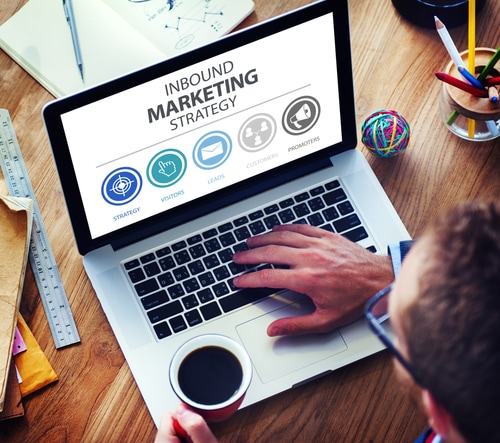
In a sentence, go where the people are- connect with them, engage them and delight them. Inbound marketing is the practice of getting yourself or your business found online when prospects are searching, getting more people to your website and then converting them into customers. This is in contrast to traditional marketing, which includes tactics like magazine and television ads as well as telemarketing.

Inbound marketing is the practice of getting yourself or your business found online when prospects are searching, getting more people to your website and then converting them into customers.

The Four Core Services of Inbound Marketing

Inbound marketing for medical practices is not one specific action but a cohesive system of proven, effective tactics that work together and become greater than the individual pieces.

  1. Building traffic to your website via blogging, SEO and social media
  2. Converting this traffic into leads by providing premium content offers
  3. Converting leads into customers with lead nurturing, lead scoring and email marketing
  4. Measuring and analyzing every step to see what’s working and improve on what is not.

Bottom line? Inbound marketing works. When implemented correctly, you’ll start to see results and new faces and families come through the door. In what ways have you seen inbound marketing practices affect your business?

Google rolled out their Authorship program a few years back, but it seems a bit slow to catch on with mainstream businesses. This is really too bad considering some of the great ranking benefits with Google.

What is Google Authorship you ask? It is a way to connect the blogs you write and publish online to your Google+ account. Personally, I believe it is yet another way Google is trying to get us to use Google+ since it pretty much bombed after they launched it. But the important thing is that increasingly connecting the two is figuring into Google’s search algorithm!

As a business professional, you have taken valuable time to craft and post a blog on your company’s website. Congrats! You’re ahead of the game! So, what happens if someone plagiarizes your hard work? Google makes the case that if you have signed up for their Authorship program, then your original article will show up before the stolen one since you have already established yourself as the author!

Another interesting feature is that you can add a face to your work with Google Authorship. After you have signed up and Google verifies your work, your Google+ image will be proudly displayed beside the search results. We all know that search results with images grab people’s eyes and have higher click rates. This in turn can lead to more traffic back to your site, which is a big part of any content marketing strategy. It seems like a great win-win situation.

Connecting everything is very simple and only takes about five minutes. You can follow this link directly to the Google+ page to get started. Click Here.

I just recently signed up, and am keeping an eye on the ranking for my blogs to see if they increase. If you do decide to connect with Google Authorship, let me know what you think of it. I would really enjoy hearing your thoughts.

There is an old saying “nothing is as constant as change,” and this is perhaps never more true than with SEO (Search Engine Optimization). Google is constant adjusting and improving their highly secretive SEO algorithm to improve the transparency of the user online experience. Then you have the other four top search engines working to keep up with Google and give users a reason to switch: Bing, Yahoo, Ask, and AOL. But considering Google has 900,000,000 (estimated) unique visitors per month and it’s closest competitor, Bing, has 165,000,000, we are going to focus on Google first.

There are big changes afoot in the world of SEO, and have been for several years. It is no longer just a “simple” case of paying for link-building and not having to worry about quality content if your website was overly optimized on the backend. As with social media, most of this change centers around the end user. Now content is king, so it is more important than ever to have dynamic content. This way people want to “backlink” from their website to material on your website. There are some pretty specific ways you can go about doing this, and one company Raka Creative calls it the Inbound Marketing Trifecta. The way they summarize this is fantastic, so I’m not going to reinvent the wheel. Instead I’m going to recognize them as thought leaders in this and put a “backlink”.

Keep these three things in mind when strategizing your SEO:

Dynamic Content

Make sure the story of your buyers is driving the content you are creating and publishing, both on your website and in your blogs. Claim Google Authorship to build trust and thought leader status.

Social Signals

Engage consistently in a conversational and meaningful way with clients, buyers, and other experts in your industry.

Clean Linking

It is important to reach out to vendors, clients, and colleagues and offer to link their quality material on your website and other social media outlets.

Implementing these three areas on a consistent basis strategically positions your website to dominate organic searches in your market. Organic SEO will continue to bring you leads long after the material is posted, unlike paid SEO that will cut off the leads at the same time the payments stop.

So, take some time and identify the keywords you believe people could use to search for you, and weave them into your content, engage on social media, and practice clean linking. These three will be a rock solid foundation for your ongoing, lead-producing, organic SEO strategy.