Websites

See Our Blogs

Explore insights on SEO, AI, and digital marketing strategies designed to help your business grow, stay visible, and adapt in a constantly evolving online landscape.

Beacon_Icon_resouse

Do you know how many people visit your website in a year, month or even a day? We’ve been tracking many of the websites that we’ve created over the last year and have some interesting results from Alaskan as well as global users. First, some general usage facts: 12% of the world’s population that lives in North American and Western Europe can account for 60% of the world’s private spending (www.worldwatch.org). As of 2015, internet usage has penetration the population of the US by 87.9%. For perspective, the average internet usage penetration worldwide is only 46.1% (internetworldstats.com). On the local sites we tracked, visitors came from 15 countries and 16 states.

One question that we ask is where are our visitors spending most of their time and how do they navigate the website? On average, our Alaskan visitors spend about a minute longer than the average user on each site. Home pages still rank very high on visits, but with limited time spent there. Consistently, the most visited pages of the sites we track are About Us and Contact Us. Most of our visitors are spending one to three minutes on the About Us page; this is quite a long time given that the overall average time a person spends on one page is under a minute.

Users’ attention span is shortening so your website needs to be a space where your visitors want to stay, — rather than move on to your competitor’s site. Creating a positive brand experience through a website can result in new connections and, in turn, business.
When creating new websites, we use a grid system, which is a framework for a dynamic and engaging design that isn’t too busy. Whether users know it or not, the grid is a key factor in creating that positive experience, or “aesthetic-usability effect.” Rob Szumski’s blog says it best: “the Aesthetic-Usability effect is the perception that more aesthetically pleasing interfaces are easier to use than less aesthetically pleasing ones.”

By tracking our visitors’ locations, time spent on a site and specific pages, and by creating captivating website designs, we ensure that our users are finding more valuable sources online, so we’re all getting results!
What is a landing page and how can it benefit your medical practice’s website?

You may have a beautifully crafted website that contains valuable content and educational blogs; however, it is easy for visitors to get lost in all the noise. Creating landing pages is the best way to avoid visitors bouncing off of your website. You want to keep visitors’ on your site, exploring the services your clinic offers.

There are two main types of landing pages:

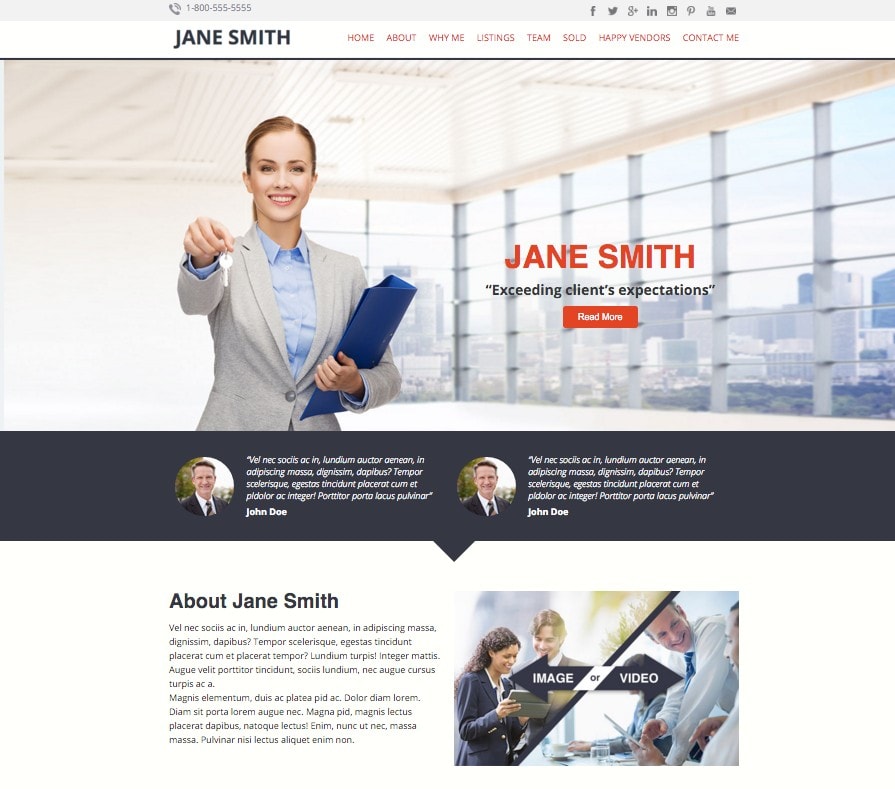
1) Click Through Landing Pages: The purpose of this page is to encourage visitors to click through to another page. A common example is a product or service page that provides information to the visitor that can lead them to towards making a purchase. The next page would be a shopping cart or registration page. Having the landing page, a step before the shopping cart, increases conversions by providing information that helps the visitor make an informed decision.

Screen Shot 2015-12-02 at 1.28.36 PM

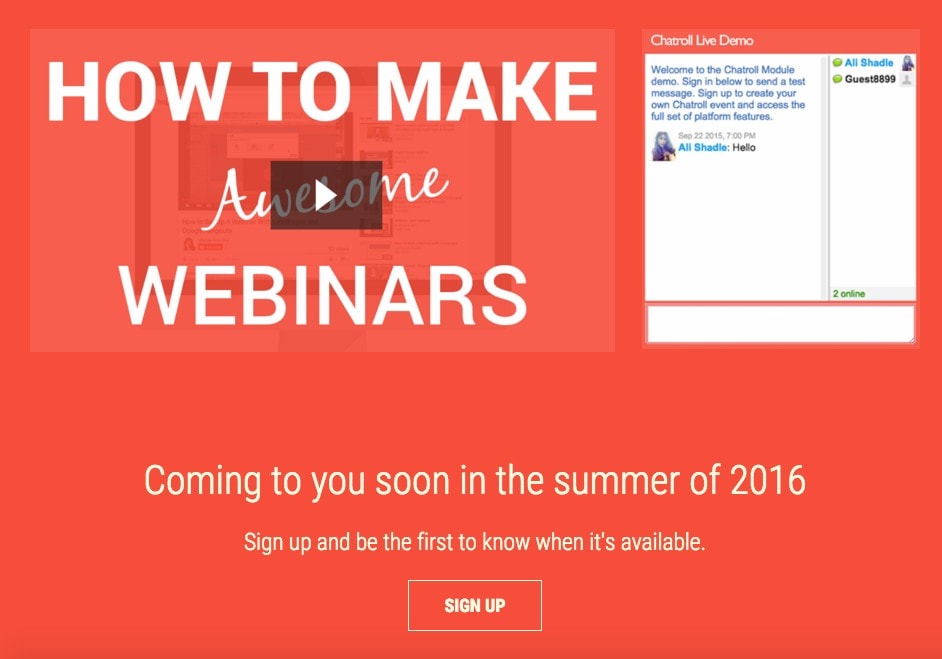
2) Lead Generation Landing Pages: These pages are used to capture useful visitor information. The form can be as simple as asking for their name and email address. From there you can create a connection via email to continue future marketing. The forms are strategically tailored to gain personal data without damaging the conversion rates.

Screen Shot 2015-12-02 at 1.35.46 PM


What are the benefits?

The visitors can find the landing pages through a Pay Per Click ad on Google, a Facebook ad, or a sponsored/promoted post, leaning them to your site. The addition of these product/service pages will not only create a better user experience for your visitors but will also increase the conversion rates for your products or services, nothing but a “win-win” for both parties.

At Beacon we work with a variety of medical clinics to develop landing pages that help convert leads and increase calls to your offices. Give us a call at 907-563-6008 or email us at [email protected] and we’ll chat.

Nowadays there are a number of automatic website builders out there, where you can login and make your own website. They tout things like: “Get an automatically optimized version of your website for mobile in just one click” or “Everything is customizable”. And some of them will do it for free!

So why hire a professional web developer for your business instead of using one of these services?

1) SEO (Search Engine Optimization)

Most of these websites are barely optimized at all for a search engine like Google. This means that if you want visitors to hit your site, you’re going to be fighting an uphill battle. Google has a bot that hits each site it visits and reads through all the data to see what your site is about. And if it finds content that is relevant to what someone has searched for, it returns a link to your site for that person. But the coding behind many of these site builders is not kept up-to-date. They are focused on making it easy to use, not easy for Google to see.

A professional web developer builds your site from the ground up with the absolute current requirements of search engines like Google, Bing, or Yahoo. And there are hundreds of little tweaks that can make sure you look the best to search engines. These are all very important, and they are things you don’t get with these automatic site builders.

2) Keep your Content Safe

Have you ever written a long email to someone with lots of important details… only to have your email program crash and you lose all of it? Many times while working with these builders, you’ll find that one mis-click of a button deletes all the content of a page, or an entire section that was important for your website.

Another way this shows up, is when you’re blogging. Although some sites allow you to create new articles in a blog format, many still don’t. And you end up rewriting the same page of content over and over again in order to keep your site fresh and up-to-date (which is the #1 most important detail for search engines). This is hardly an efficient way of running things.

A professional web developer will use a content management system (CMS) that will keep all of your data backed up, with historical information (like if you change a static page), as well as have full featured archive systems for any user to find articles that you’ve written over the course of your websites life. This provides more entry points for Google and other search engines to bring new visitors to your site.

3) Your Time is Money

These automatic web site builders like to tout how fast and easy it is to do this yourself. But the facts are the same with any of these things you do yourself: they cost you time. A lot of time, that you could spend on your business instead of on Marketing, updating content your website, or researching current internet trends to stay on top.

This is another way that a professional web developer will save the day. They know all about the current trends because it’s their whole business. They can do it faster than you can, and they’ll do it more thoroughly, while you take care of what YOU are good at: your business.

Here at the BEACON offices, we talk a lot about what makes a great website, how to draw visitors to a website, and then how to convert those visitors into leads and clients.

There are several ways to do that, and we’ll cover them all in time. One way, however, is SEO. SEO is probably something you’ve heard of but maybe aren’t sure about. Here’s a brief primer:

SEO stands for “search engine optimization.” What that means is that when people search Google or Bing, they are looking for something specific – and when they hit “enter” on their search, you want your website to be on the front page, at the top of the list. One of the ways to make sure you’re at the top (without paying to be) is to optimize your website for searches. As folks turn away from the Yellow Pages and instead rely on Google to find services, you want to make sure that you have the right keywords to obtain the most visibility.

The best way to figure this out is through Google Keywords. Don’t worry; we’ll do that for you. But basically, if you own a hair salon and you want to attract new customers, you need to figure out what locals are searching for. Are people entering “hair cut Anchorage” or “Anchorage cut and color?” We find out, then organically and smoothly make sure these key words are present in your site’s content.

We @ Beacon really love everything about Social Media: We love the strategy, the contests and excitement generated with every post.  Social Media is exciting, fast paced and challenging. Take a look at our client, Kaleidoscape. Her Facebook page has generated a substantial following in less than 3 months. She has 754 fans, growing every day, and her business isn’t even open yet!  Social Media might be the new bright and shiny tool in our marketing toolbox, but a sparkly new tool can’t replace the basic importance of a hammer or wrench.

The central piece of our client’s online marketing game plan for 2013 still includes the same basic tool that was central in 2012…The website. In fact, for 2013, a top notch website is even more important than last year. A website that generates leads, converts to sales and creates long-term revenue, that’s the meat of the meal. That’s the marketing piece that makes the sales staff AND the accounting staff of a company cheer. It’s a return on investment that grows the company.  Where as social media can have a huge impact on branding, client relations and customer service and certainly should be an important part of your marketing plan; the bottom line is that if your website is lacking you are certainly losing sales.

Let’s take a look at three steps that will create lead generating web sites:

1. Make Contacting You EASY.

Make it easy to call, email or instant chat with you from every page. Prospective/ current customers have less and less patience searching sites. Since 40% are most likely accessing your website through a mobile or ipad device- it’s up to you to make sure they can click and contact. Even if your customers don’t actually call, the presence of a phone number gives credibility and trust. Check out what we designed for IMIG AV. There’s contact information on the right side of almost every page.

2. Avoid Common Website Templates

There are some great templates out there, and we’ve even used them from time to time when a client needs nothing more than an online brochure and has a very limited budget. Making a lead generating website takes investment and strategy. Invest in the best possible website you can afford, and make sure your page’s purpose is clear and the design complements the function. We suggest using Word Press for great form and function. Lastly, common website templates often don’t allow easy social share functions, landing pages and blogs. These items are key components to creating lead generation. Obviously, having a well-designed site can also increase trust and confidence in a prospective client.

3. Measure And Test Results

The best lead generation tactics in the world will not truly benefit your bottom line unless you are able to test and measure your content, call to actions and landing pages. Google Analytics offers free measuring tools. Your content, sources and even demographics of users can be measured and tested throughout the process. The amount of information provided can help you tailor your landing pages, offers and content shared.  There are also various software options to help you automate responses to those possible leads that are visiting your website.

Hopefully we’ve given a few good suggestions on creating more leads from your website. If you have questions on landing pages, blogs or more give us a shout!