Alaska is a place of big ideas! We have a history of tenacious leadership against all odds. Walter Hickel was one of the visionaries who played a major role in our statehood. Charles Edwardson (Etok) fought for and laid the foundation for land ownership among First Peoples in Alaska. These are two examples of the many great Alaskans whose willingness to embrace change and new big ideas have lead us to the entrepreneurial culture we have todayexpertise.
My “big idea” was to bring to Alaska a world class event that provided learning and from the “best of the best” in the field of Inbound Marketing and Social Media. My big idea, became Beacon’s big idea, and grew into the amazing event that just took place in Anchorage on August 27th, 2015. #alaskainbound. www.alaskainbound.com
So why? Why did we think this “bikig idea” was one worth pursuing? There are many reasons why: perfect timing, opportunity and passion came together to create smet. The “big idea” also fit within our overall vision and mission of Beacon Media + Marketing.
It’s Beacon’s vision that Alaska has the opportunity, talent, and resources to not just be a part of the conversation, but to lead it. We are poised on the brink of a new era in Alaska. The global communication revolution we see all around us provides huge opportunities for us too not only survive but to again take the lead.
We are in an enviable position of being in the national and global eye from the political stage, to the Arctic, our natural resources and our unique and incredible people. Are we having influence in that fascination as much as we could? Instead of letting others tell us who we are, we can use the tools Inbound Marketing provides to communicate and influence on a local, national, and international stage. So how do we do that? How do we become part of the conversation that is happening all around us?
First, we learn the most effective methods to communicate that have the most influence. It used to be that the conversations people had in which they shared ideas, shared opinions where usually limited to the water cooler, the barbershop, the family dinner, or a beer at their favorite local spot. Now those conversations are happening across Facebook, Twitter, LinkedIn, Blogging, Blab and more.
If we are able to step up and learn how to communicate well using social media, content creation and visual mediums- it won’t matter if the conversation is happening in Alaska, Japan, India, Egypt, Switzerland, or Brazil we will have the tools to be influencers. This has the ability to affect our State a National and International level, but what about our local economy and businesses?
On a local scale those same conversations are happening about our businesses. Increasing our knowledge and learning these tools have the ability to impact our local economy positively as well. The statistics are clear, 88% of of consumers are more heavily influenced by what their friends say online than what they see in an advertisement. At the bare minimum businesses have to have an online presence, but that is just showing up. 95% of Millennial expect a business to have a Facebook page. 85% of Generation X, and 78% 45-60 year olds.
Local consumers are asking questions and having conversations and reading reviews online. Which bank offers better customer service? Which plumbing company showed up on time? How much does a whale watching tour cost? These conversations are happening whether you are online or not. As business professionals when we participate, consumers develop relationships and trust. This shortens the buying cycle and helps us close leads more efficiently. To be effective marketers it is no longer enough just to have a web page, we have to move beyond “showing up” to actually participating.
93% of buying cycles start with an online search, which is why SEO is vitally important for businesses looking to get found online. If you don’t rank well in search, it’s hard for people to find you. (Marketo)
Three years ago we met with a new property management company, www.rpmlastfrontier.com. Their question to us was: “How do we compete with the established firms, grow rapidly and take over significant market share with a limited budget and no name recognition? That was a tall order and a challenge we were exited to take on because we could see they already had a great product, the right people and the right process. So our answer was two words: Inbound Marketing. Today this amazing company ranks #1 on Google through almost any search related to property management in Anchorage. They have taken over significant market share. They have shown over 100% growth every year. Inbound Marketing has been and continues to be the key to their marketing success.
Not convinced, from our example? Look at the national stats:
- 80% of business decision makers prefer to get company information in a series of articles versus an advertisement. (cmo.com)
- B2B Companies that blog only 1-2 times per month generate up to 70% more leads than those that don’t (Hubspot)
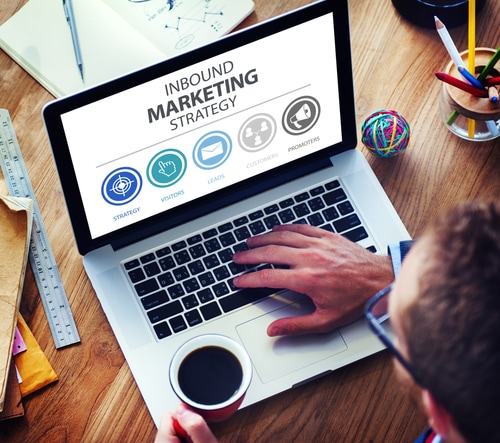
Whether your clientele are local, national or international and whether you are a business or non-profit organization, you need to have an Inbound Marketing strategy. The basic structure of that strategy is going to be similar and is scalable depending on your budget. In fact… Inbound Marketing costs 62% less per lead than traditional outbound marketing. (Hubspot)
To be effective, your strategy needs to have the following pieces.
- Solid, SEO optimized website
- A consistent blogging editorial calendar with original content
- Social media presence on 2-3 channels
- A system for responding to comments and questions coming in through blogs and social media
- A system for following up with qualified leads
- Consistency is key. You will need to dedicate the resources and man-hours to see this through on a daily, weekly, monthly, yearly schedule.
We have given you the big picture….Alaska is a place of big ideas and Inbound Marketing is a big idea. We have talked about the conversation that is happening all around us and how it we cannot afford to not participate. We have given you the outline for an effective strategy. Where do you go from here?
You can learn this and do it yourself. You can delegate it to staff. To do this effectively requires constant learning and adapting to changing trends and best practices. Attending conferences like #alaskainbound is a great place to start. We also encourage people to check out HubSpot’s certification program as a foundation to becoming skilled at Inbound Marketing.
Another option is to partner with an inbound marketing company, like Beacon Media + Marketing. There are many Hubspot Certified companies around the nation and we highly recommend working with one who has been through their program and can show you the results they have already helped other clients achieve.
This is our challenge as Alaskans. Now is the time to step up and lead the conversation locally, nationally, and internationally.