Jennifer Christensen

Chart The Waters

Explore insights on SEO, AI, and digital marketing strategies designed to help your business grow, stay visible, and adapt in a constantly evolving online landscape.
Beacon_Icon_resouse

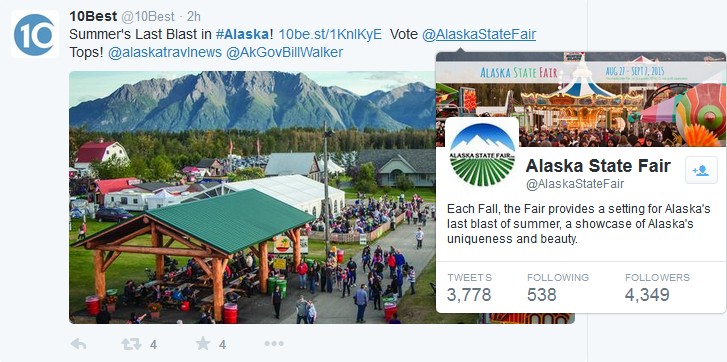
When it comes to Twitter and hashtags (#), many Alaskan Businesses (or Alaskan users) feel like it is the ‘last frontier’ of social media channels; it is an unknown and often avoided. This doesn’t mean there’s not a Twitter market for Alaskans, or that residents of Alaska aren’t tweeting, it simply showcases that Alaska is late to the game and that there are opportunities for many Alaskan business to utilize and leverage Twitter. Let’s think about that.

Take a look at some of the major companies that utilize Twitter: Starbucks, WholeFoods, Sony, etc. They established their online presence in an environment that was also competing for the same goal. What if they began utilizing their online presence before the competition began? That’s the opportunity Alaskans have. Many Alaskan businesses aren’t utilizing their social media accounts, especially Twitter — so the ones that do use it have a head-start in being an authority within their community.

You can always point the finger to the lower 48/international and claim 101 reasons as to why they were able to do such or take hold of the opportunity to also utilize Twitter and grow your base just as the mentioned companies. It’s all about seeking opportunity, not obstacles.

But the question is, do Alaskans actually use Twitter and is there even a market for the network in Alaska?

alaskatwitter

Some of the top Twitter users based in Alaska are: @SarahPalinUSA (w/ 1.17M followers), @CaptJohnathan (w/ 162K followers), & @Goldrush_Parker (w/ 143K followers). It can be said that many of these users have Twitter followers who are outside of Alaska.

Bingo. We need not go any further.

That’s exactly it. That’s what Inbound Marketing is all about. Residents in Alaska aren’t the only ones who may be interested in your business, and they shouldn’t be the only ones you’re interested in reaching — but others as well, outside of Alaska (lower 48 or international). The mentioned Alaskan Twitter users are already a proof of concept that people are interested in Alaska, what it has to offer, and want to know more about it. Be that business.

anc

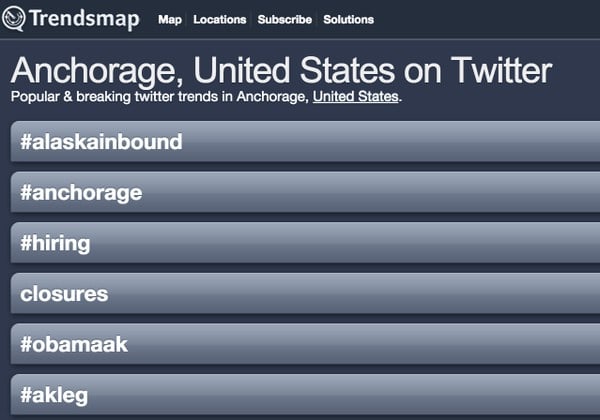
On August 27th, we held the Alaska Inbound Summit and tested the performance of Twitter at our event to see if people would actually engage with the network. Our Twitter hashtag (#AlaskaInbound) became the #1 trending topic in Anchorage within a matter of hours during our event. Twitter works and for many businesses it is becoming a viable market. The question is, are you going to cease the opportunity now or watch the reaps of another business that decides to utilize it?

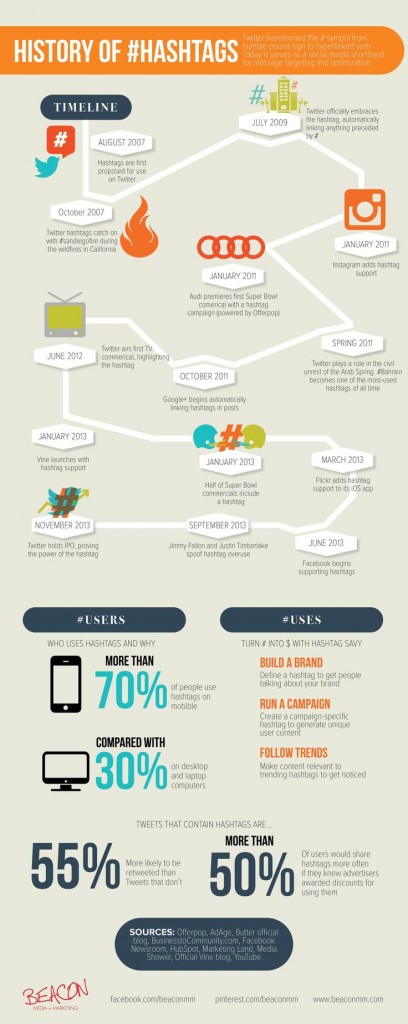
To understand more about how Twitter & Hashtags can work for business, we’ve created this article with you in mind:

Hashtag

AIMS 2015 is anything but your “normal” Alaskan business event. Never before has there been a group of digital marketing and social media experts in Alaska for one day to teach us best practices. So why did we decide to host this summit and bring all these rockstar marketers to our great state? The answer is in the enormity of change that is happening all around us and how it’s affecting our businesses.

It’s hard to deny that the way we market, even the way we communicate is transforming right before our very eyes. As businesses, we’re competing in a new environment that’s incredibly complex – yet filled with unique and exciting opportunities for our companies and our clients. Marketing technology expert, Scott Brinker, described this seismic shift: “What’s really happening is that marketing itself is changing fundamentally. It’s really hard to quantify all these changes that are happening.” We often seem to have more questions than answers. Phrases like “proven methods” are being replaced by concepts like “A/B testing” and “client relevant social media marketing.”

At Beacon Media + Marketing we view this incredible time that we are living in as the greatest shift in communication since in the invention of the printing press. Information is being disseminated on a much larger scale more rapidly than ever before. Marketing opportunities are available to more businesses and the playing field has been leveled. With these advances in digital media and technology we are also seeing many industries radically disrupted as they struggle to adapt and keep pace with the speed of the change. Travel Agencies to online retailers- the shift is no longer just in certain industries, it’s our entire marketing worldview has changed and is continuing to change.

Historically, companies and brands reached out to their consumers and prospects to tell them what they should think about their brands. Advertising agencies told the general public how to buy, when to buy and what to buy. Now with the powerful emergence of social media a dynamic and fundamental shift has occurred. Consumers and the general public has influence and access to much more information. They have many channels to use to communicate their likes, dislikes, and assorted opinions. The way companies interact must be to inform, educate and participate in the conversations that are already happening all around us. Then when consumers choose to buy, they are choosing brands they already have a relationship with. Why do they feel like this? Because they see the company that choose to have a digital conversation with them as the experts, as trustworthy.

With these changes come all kinds of opportunity, and that’s where the Alaska Inbound Marketing Summit (AIMS) is relevant to our current experience– it’s about bringing the best in the industry to Alaska and having the opportunity to spend a day learning, growing and applying this new method of marketing to our businesses and marketing teams. If you can harness the power of Inbound Marketing, you will not only thrive in this changing time, but perhaps be a recognized leader yourself. #AIMS2015 www.alaskainbound.com

The # has been labeled many names, including the math sign, pound sign, and hashtag. But what are the origins of its wide use? Originally it was used in IT to highlight a special meaning, C (programming language) for special keywords, and within Internet Relay Chat networks to label groups and topics. Today, the hashtag has become a standard symbol within social media platforms, and more specifically, Twitter.

The Value of #’s

On Twitter, hashtags (#) simply label tweets (a message of 140 character) related to a specific topic (e.g. Artificial Intelligence). For example, say your American clothing company grew exceptionally via Inbound Marketing and it was time to open a second office internationally. You decide it’s best to open the second office in Seoul, South Korea. Once that’s set, you go on Twitter and tweet: “We’re glad to announce our first international office will be in #Seoul by Summer 2016″.

This simple tweet not only informs your followers, but branches into a niche discussion. You’re able to reach a new pool of users by being relative to the common topic: #Seoul. Users who are interested in the current discussions regarding #Seoul can now see your post and engage if they choose to. So, as an example, you receive a tweet from a user stating “Finally, an American clothing shop in #Seoul! Excited!”. Likewise, you can create your own # for your brand. Do keep in mind that adding over two #’s will decrease the tweet engagement, so keep it between one and two #’s within a tweet.

As ridiculous as hashtags might seem to marketing veterans who remember a time before Twitter and Facebook, the younger generation and potential customers/clients don’t. To them, using hashtags is as natural and common as typing their query into the search box. — Steve Cooper | Contributor at Forbes

The Popularity & History of #’s

Essentially, the hashtag became popular due to being able to create a subset of a niche topic within a general message (e.g. “I’m traveling the U.S., I wonder how #Colorado will be like!”). The concept of # became popularised by Twitter users, in which Twitter utilized by hyperlinking #’s so users can directly go to the specific topic. The # has also extended to other social media platforms including Facebook, Instagram, and Google+. Its easy and effective; who would’ve known that a simple # behind a word could double your engagement and bring more traffic than without?

Hash


We are becoming more visual every day; you’ve heard the phrase “a picture is worth a thousand words” and these social media platforms have proven that to be true. According to the 3M-Corporation, individuals process visuals 60,000 times faster than text. Social media platforms like Instagram, Youtube, Pinterest, and Slideshare are becoming increasingly more popular as visual content drives engagement. According to Simply Measured, just one month after Facebook released their new timeline allowing photos and videos to be shared, engagement increased by 65 percent. So – how can we use visual content to our advantage?

Instagram

  • Use customer posts – If people are talking about your company, use this to your advantage and share it! Plus, customers will enjoy being in the spotlight. (Make sure you get their permission of course.)
  • Use photos of employees – This helps customers feel comfortable, like they know your company and your employees.
  • Do contests – This is just a win-win-win situation. You can interact with customers, customers get the chance to win a prize, and you get your page shared over and over again through use of hashtags, likes, and tagging of your account.
  • Showcase your products in a visually appealing way – If the customer sees a product and it looks bad, do you think they’ll buy it? Probably not, however, if it looks good they already have a nice visual to see themselves using your product.
  • Be unique – Stay true to your audience and your brand.

Youtube

  • Use engaging titles – This is the first thing a potential viewer will see/read. Your title should make them want to watch the video.
  • Use keywords – In your video description, it is important to include keywords so that your video can be found easily. You can also add links back your website and other social medias here.
  • Interact – Pay attention to the comments and respond when you feel it is necessary.
  • Keep it short – Be sure your videos are no longer than about 5 minutes.

Pinterest

  • Have a set strategy – Pin based on your goals and objectives. Why are you pinning? To drive traffic to your website, to boost your brand, increase your sales? Make sure you reflect your goals in your pinning.
  • Be pin friendly – Make sure your website has the “pin it” button. This allows fans of your company to easily pin things from your website.
  • 40-40-20 rule – Keep motivational and educational posts to 40 percent each. Only 20 percent of posts should be about your brand.
  • Help other pinners – This allows you to engage with other companies as well as your customers. Utilize cross promoting as well. The more people you interact with, the more people will interact with you.

Slideshare

  • Use well-designed slides – Again, we are very visual. If you’re going to use a visual platform to express information, it will be crucial that it looks good.
  • Share good content – Follow normal content rules, such as having a good title, use lists or how-tos.
  • Pair with LinkedIn – Post presentations to LinkedIn to stand out from the crowd.

Other Sources

Visual content is important on Facebook and blogs as well. The use of visual content is more for the accompaniment of text content. These visuals are there to help tell the written story. Using visuals on the aforementioned social media platforms is much more direct, as the visual components are the story – they must be able to stand-alone. With the growth in mobile web usage, these apps and websites will become even more popular in years to come. The tools are out there. Start engaging with your customers, they’re waiting!

As an Inbound Marketing Agency, we are often asked if inbound marketing works for medical practices and physicians. It is generally known that consumers have embraced the internet as a place to research products and services before making a buying decision. Think about the last important purchase you have made. Did your research start on Google? If you’re like most people, it certainly did.

Health Care Information on the Internet

An obvious question now would be: Do consumers use the internet to research health related problems and specific physicians or surgeons or procedures?  The answer is an astounding YES. Perhaps you have seen the stats that prove this point but they are worth repeating:

  1. 80% of internet users seek online health information
  2. 59% of U.S. adults look online for health information

Without question, most people are searching online for information about their doctors, their conditions, and their care.

How Medical Practices Can Benefit From This Shift?

In a sentence, go where the people are- connect with them, engage them and delight them. Inbound marketing is the practice of getting yourself or your business found online when prospects are searching, getting more people to your website and then converting them into customers. This is in contrast to traditional marketing, which includes tactics like magazine and television ads as well as telemarketing.

Inbound marketing is the practice of getting yourself or your business found online when prospects are searching, getting more people to your website and then converting them into customers.

The Four Core Services of Inbound Marketing

Inbound marketing for medical practices is not one specific action but a cohesive system of proven, effective tactics that work together and become greater than the individual pieces.

  1. Building traffic to your website via blogging, SEO and social media
  2. Converting this traffic into leads by providing premium content offers
  3. Converting leads into customers with lead nurturing, lead scoring and email marketing
  4. Measuring and analyzing every step to see what’s working and improve on what is not.

Bottom line? Inbound marketing works. When implemented correctly, you’ll start to see results and new faces and families come through the door. In what ways have you seen inbound marketing practices affect your business?

We live in the most exciting and disruptive communication era since the printing press. The introduction of the Internet to mainstream life in the 1990’s was the beginning of one of the most monumental changes in the way our society relates and shares information. It has provided the opportunity for creative disruption in many industries and advertising is right at the core.

Harvard Business School professor and disruption guru Clayton Christensen says that a disruption displaces an existing market, industry, or technology and produces something new and more efficient and worthwhile. It is at once destructive and creative.

Connectability

Social media is a catalyst for mobile and visionary businesses to partner with enterprising companies to drive forward the transformational process through which brands and consumers communicate. There are more tools than ever before in the hands of small businesses to interact with their consumers and build report. These mediums are not going away; in fact they are getting smarter and more business savvy day by day.

Facebook, Google, Twitter, Pinterest, LinkedIn and more know that to continue to grow, they need to provide businesses with a way to reach their consumers. After all, for most of these companies, the businesses are the ones willing to spend money to connect directly with their target audiences. And better yet, beyond just reaching them visually, we now have the opportunity to engage with our consumers through the entire buying cycle.

Accessibility

In today’s world, creative disruption has challenged the traditional notion that the public only knows what they need to know. Now transparency is demanded of brands. People want to know whom they are thinking about buying from or working with. If provided a choice, we will do business with people we know, like and trust. The Internet and social media provide consumers with accessibility to a company’s culture and personality. They will decide to do business based on how connected they believe they are and their “friends” appear to be. Often we see the online connect supersedes the face-to-face interaction.

Credibility

10-12 years ago people were reluctantly getting behind websites. The general consensus was that “I guess they aren’t going away. I suppose I need one.” Today, most of your consumers won’t consider you a viable company if they cannot find you on the web.

We are consistently hearing almost the same verbiage about social media and inbound marketing. “I guess it’s not going away. I guess I need to blog. I guess I need a Facebook page.” And it is true. Today’s consumers want to engage with a product or a service before, during and after the sales process. They want it to be easy and they want it to meet them where they are.

What does this mean for us as a marketing agency?

For Beacon, this means the continued opportunity to bring creative disruption to the traditional agency world. Yes, what we offer small business’ is indeed new, but more efficient and absolutely worthwhile. We believe that it can and will transform small businesses, the way they market, and how they interact with their consumers. We know for a fact that these small businesses will see their marketing dollars go farther than ever before. This creates space for growth, innovation, new jobs, and economic stimulation. Almost 80% of new jobs in our US economy over the past 30 years have been created by small business. So imagine how much we could bolster that number if the advertising ROI was increased.

The 2015 Vision

Do we believe one nimble company with vision can be a catalyst for creative disruption, for change in our community? Absolutely! Every business we get to help is a ripple that goes out and affects other businesses, other communities, other lives. And that is what makes me, makes us, excited to look forward at what 2015 has to offer. It is going to be a dynamic year for growth, change, and innovation!

ANCHORAGE, AK – (December 1, 2014) Beacon Media + Marketing is excited to announce the addition of Business Development Manager, Neisha Jones, to its team.

Jones has led a successful career for over 15 years in marketing, management, communications and business development. Her past endeavors include long term management positions at Nordstrom and Coach. Ms. Jones also founded an etiquette consulting firm dedicated to helping her clients polish their professionalism, enhance interpersonal skills, and improve their personal brand.

“Beacon is particularly excited to collaborate with Ms. Jones in the continued growth and expansion of Beacon Inbound Marketing Services. Her vast experience from Management at Coach to Entrepreneurship brings innovative resources to Beacon Media + Marketing.” stated Jennifer Christensen, V.P. of Beacon Media+Marketing.

Jones and the rest of the team at Beacon Media+Marketing are committed to innovation, creativity and measurable results for clients in the field of Inbound Marketing and Design.

During the festive holidays of Thanksgiving and Christmas, there is often much talk about being thankful. Many of my friends have been setting the example by recording what they are thankful for daily on Facebook. There is generally more focus on conversations of helping others in need, articles written and even news stories focusing on needs in our community.

I know this time of year can be difficult for some people, but for me it has always been a favorite. Certainly the ties to my faith and my family are highlighted this time of year, but even before I had my faith and my children- this time of year always made me feel a little happier, brighter and even more hopeful.  It seems like we are a little nicer to each other, more reflective in the goodness around us and less striving for “things” instead of relationships with people. 

According to Merriam-Webster’sthankful means “conscious of benefits received” Being conscious of something means being aware of. So, thankful is being aware of something you have received.  It makes sense that this time of year is a little brighter- we are more conscious of what really matters. 

This is the first year that I have noticed the impact of thankfulness on our business.  I am more “conscious” and aware of the many incredible gifts that are right in front of me.  The clients that have grown with us and we’ve developed meaningful relationships with.  The employees that have brought incredibly positive attitudes and loyalty in working for a company with high growth and demands.  The vendors that have consistently been there to provide great service on tight deadlines. My business partner, who always brings out the very best in me.

10333244_701873353242467_8592427936553736892_o

My focus has been with a mindset of gratitude and thankfulness for the past few weeks and the most amazing things have been happening. The very things that I’ve been focusing on with gratitude have gotten even better.  Solutions to problems that I’ve been stuck on for some time have been making themselves clear. My relationships with clients, vendors and employees alike have improved.  One client gave a raving testimonial about our company to an important group of people on our behalf last week. We’ve been working together for over a year now and although I knew he was pleased with our services, it struck me that it wasn’t a coincidence that they did this now. I’ve been actively engaged in expressing and demonstrating my gratitude for their business. 

I only have anecdotal evidence, but I am convinced that the mindset shift of thankfulness has made me a better business person these past few weeks. I am intentionally treating others with the appreciation that I genuinely feel towards them. Even if it hadn’t had an impact on our bottom line, I know it’s had a significant impact on me. I’m happier, more hopeful and although it seems that my pace is less frantic, I’m actually more productive. 

Now, to bring this attitude of gratitude into the New Year! 

We’ve noticed a trend in the past few years that this time of year our clients tend to refocus, reengage, and start digging in deep to their business growth. It’s no coincidence that it matches the time that kids are going back to school. Whether you have more free time because the kids are now in their routine, or you just naturally focus more on work when the fishing starts to wind down- this is a great time of year to dig in and grow your business.

Investigate

1. Investigate the changes in the market concerning reaching new customers. There have been major shifts in social media, SEO and Email marketing that are greatly affecting businesses. The businesses that are staying current on the newest trends are growing at an even faster pace. Reevaluate your marketing plan. Do you have a clear ROI on the dollars being spent? We suggest an internal audit to evaluate what marketing pieces are producing the biggest results. If you are not tracking where your leads are coming from start NOW!

Gather Your Statistics

2. Get great stats on your website for FREE! Your website is a foundational component to your business. We love to routinely monitor the level of its effectiveness. Here is a great tool; the detailed information provided helps you with SEO, Content Management and your ranking compared to competitors on Google.

Engage in The Social Movement

3. Go Social. If you haven’t dove into the deep end of social media marketing yet- Do it! The way that our entire culture has changed in the past 5-10 years is a shift so dramatic that it’s being compared to the to the invention of the printing press. Consumers are in control and want to be a part of the conversation. 88% do not trust, nor want to be sold via advertising. If you need some help and inspiration on getting your social media rocking- we love the folks at Post Planner and Canva.

We’re in the refocus & reengaging mode at the Beacon office as well. Pencils are sharpened, creative inspiration flowing and our clients strategies and social media classes are growing again. Reach out to me if you have any questions on this blog or any fun marketing questions in general. It’s what we love to do!

When you hit your junior year of college you suddenly hear the word internship thrown around a lot. It sounds something like “oh, I interned for this very elite company in Seattle,” or “you will need to update your resume if you ever want to get an internship.”

Suddenly you realize that maybe waltzing into an office and handing them a resume with a list of your college achievements may not suffice. You need the real life experience that your fellow students are getting.

So how do you find an internship?

Google. Search high and low for whatever opportunities there are that relate to your major. Once you’ve compiled a long list of numbers and email addresses, start contacting them. It’s important not to be shy or doubt yourself. Chances are most of the businesses you call “won’t be looking for an intern at the moment,” or simply won’t ever answer your call. Don’t give up.

When I set out to find my internship I called almost every advertising agency in Anchorage that I could find, yet most of the companies that said they would get back to me never did. By chance, I happened to come across a growing startup agency, Beacon Media + Marketing on Facebook. At this point I doubted they were even looking, but sent them a message on Facebook just to make sure.

Lo and behold someone actually contacted me and told me I could send in a resume and a cover letter. I did so eagerly, and before I knew it, I was meeting with them for an interview to discuss interning for the summer. During the interview I expressed my eagerness to work with them and my desire to meet all of their expectations. To my pure delight, I was offered the internship.

Some may not be as excited for a smaller agency as they are for the big corporate offices in major cities. I think those people are mistaken. I have learned that working with a small agency (I work in a comfortable sized office with five other women) offers many benefits you would never get when you are working in a giant building and have little recognition by your employers.

Instead of feeling inferior, I was immediately welcomed into their small family-like office. I was able to learn their dynamic quickly and where I fit in. When working in a small office, you get to know each other faster.  This makes it easier to walk up and ask your boss a question, or in some cases swivel in your chair and call out your questions. At Beacon I feel like part of a team, which makes it easier for me to learn and get a full experience

So when looking for an internship, don’t be afraid to be persistent and try all your options. If the opportunity for a small business presents itself, don’t immediately snub your nose at it. There is a good chance it will be a lot more beneficial and rewarding than you think.