April 14, 2020

Chart The Waters

Explore insights on SEO, AI, and digital marketing strategies designed to help your business grow, stay visible, and adapt in a constantly evolving online landscape.
Beacon_Icon_resouse

Originally published on March 30, 2015. Updated on April 14, 2020.

Most of us have been asked at one point or another to describe our target market. Usually, we rattle off a series of demographics, casting some wide nets in the hope of landing a good catch. “Middle-aged women,” we say. “Men aged 40-50 with kids,” we guess. “High-income homeowners in this ZIP code,” we tell our marketing agencies.

Historically, these demographics shaped the way marketers constructed their message to potential buyers. However, the advent of social media has significantly changed the way we market, because now we can deliver extremely targeted messaging directly into the pockets of those most likely to buy from our clients.

This dynamic shift requires that we go deeper than just identifying our target market. We need to find out who is buying from us and why. Thankfully, there are many tools at our disposal. We can ask our customers why they chose us. We can find out what search terms are trending on Google. We can find out what are the most popular kinds of tutorial videos. We can see what’s popular on social media and analyze the strategies of our competitors to see what works.

Once we’ve done that, we can create a buyer persona.

Want to skip ahead? Schedule a free consultation today.

What are buyer personas?

According to leading inbound marketing company HubSpot, they are “semi-fictional representations of your ideal customer based on real data and some select educated speculation about customer demographics behavior patterns, motivations, and goals.” In short, they are who you are trying to reach.

Look at it this way: instead of trying to attract and engage some 3 billion people on the internet, focus on those most likely to become the type of clients that excitedly promote you to their connections.

Dave, for example, could be a 45-year-old man who owns his own home and has a wife, two kids and a hairy pet dog. He probably needs his ducts cleaned. Great! How can your HVAC business connect with him?

Or take Jessica, a 42-year-old who works part-time in an office job, who has one child in kindergarten and one in elementary school. She needs to go to the dentist and figures she’ll bring the kids along for their first check-ups. Awesome! What’s going to make her choose your clinic over a competitor?

They’re both about the same age, living in the same area, with young families, but they have different needs so they’ll respond to different messaging. That’s why it’s so important do to your research. The more you know about your ideal customer, the better you can find out how you can best add value to their lives.

Dave, for example, might want to know exactly what a duct cleaning entails and what nasties are lurking in his air vents. Jessica might want a dentist that specializes in kids. Once you’ve identified their need, you can create a marketing campaign to cater to their interests and help solve their problems.

Read more: Is marketing the new sales?

How to create a buyer persona

The most effective buyer personas are always centered on the question of “why?” Why will someone need to buy your products or enlist your services? Focusing on their motives will help you create a marketing campaign centered around the content they’re likely to search for and consume before making a decision to purchase.

Alternatively, you can think of it this way: What is their problem? How will you solve it?

“When you intimately know your player personas and communicate to them in a personal way, you skyrocket your changes of turning them from just a contact in your database into a lifelong customer,” Hatchbuck Chief Sales and Marketing Officer, Jonathan Herrick, explained in an interview with Inc. Magazine.

Personas will help your business become more competitive, so it’s important to give them some thought and make sure they’re well-crafted. They will help you focus on sending the right message to the right customer, which will lead to more leads and a higher conversion rate. Ultimately, it’s about boosting your bottom line and making your marketing budget go as far as possible.

Read more: 10 tips for optimizing your social presence

Focusing your sales funnel

Modern customers are very well-informed. Social media and search engines mean they can find exactly what they need, when they need it. Inbound marketing is a philosophy centered around the idea of making yourself as easy-t0-find as possible. In the communication age, when people are hungry for content, you need to be searchable. You need to provide people with the value you’re looking for and make the path to purchase smooth.

The first step is awareness. Unless you have the right content, people will not stick around long enough to engage with your company, your products and services. Personas are key because they help you create the right content, which will attract visitors. Find out what your customers like to consume, what questions they need answered and what information they’re looking for. Use that as a starting point and create content accordingly.

Once the customer has landed in your digital eco-system, provide what they need, and do it quickly. Don’t play games or waste their time. It’s important that your website is up-to-date, well-organized and fast-loading with strong calls to action that encourage the website visitor to take the next step, whether that’s scheduling a free quote or booking an appointment. Education is critical in this phase – make it clear why they should choose you.

As soon as the customer engages with you, respond in kind. If they ask for more information, call them within 24 hours. If they reply so a post on social media, give a positive response. If they schedule an appointment, send an auto-generated email thanking them for their booking and confirming the details. Engage, engage, engage.

The final step is conversion. When you sell the product or deliver the service, ensure the customer’s needs are fully met. Seamless and high-quality service will significantly increase the chance of them becoming a repeat customer – and better yet, recommending you to their friends, family, and neighbors.

After all, word of mouth is still the most powerful tool in any marketing plan.

Ready to optimize your marketing strategy? Schedule a free consultation today.

How to get your tourism business on Google My Business

You’ve probably seen the business panel on the right-hand side of your Google search results, this is Google My Business. It gives searchers and customers many options for interacting with your tourism business.

Here we’ll go through the process of how you can set up your Google My Business for best results, all the way from claiming your listing to interacting with reviewers. We’ll also consider some of the potential pitfalls.

If you’re not sure about whether Google My Business is for you, consider this: your Google My Business listing already exists. You need to claim yours and maintain it, otherwise, someone else could claim it and cause damage to your tourism business by providing incorrect information.

Claiming your listing on Google My Business

The first step to making the most of Google My Business for tourism marketing is to claim your listing. If you are an established business, it likely already exists and you just need to claim it.

You can do this by heading to https://www.google.com/business/ and following the instructions there.

If your business is new, you may need to create a listing yourself, but Google makes it easy for businesses to get online, as it adds value to their search engine.

Once you’ve claimed your listing, this isn’t the end of the process, in fact, it’s only the beginning!

You then need to provide all the information requested by Google, and it is important that this is as exhaustive as possible, as everything you provide will be used by Google to work out what your company does. This information allows them to more accurately suggest your business to customers.

Getting your tourism business on Google Maps

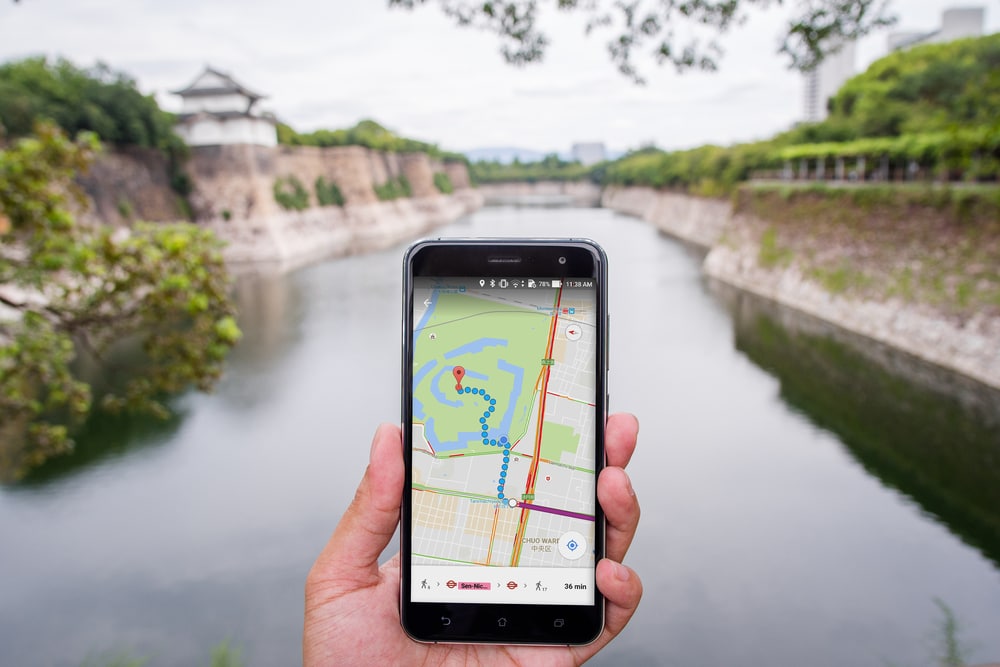
Getting on Google Maps is a simple as claiming your Google My Business listing! Literally, you just claim your listing and add your address and Google automatically adds you to Maps.

It is important to be consistent with your address across the internet, so decide whether you’re using abbreviations, like St., or the whole word, Street. This helps Google understand that Google My Business, your website, mentions on other websites, etc. are all actually the same business.

It should be no surprise that being on Google Maps is vital to running a successful tourism business. Many people use Google Maps, rather than Google Search to find places to eat, or activities to take part in. Google Maps has a function that allows users to search for, for example, “ski rental” in the area immediately around them. They are then presented with all the businesses nearby that provide that service, along with their business hours, links to services and prices, time to get there, directions, and reviews!

If all this is available to customers, why would they use, and trust, a tourism business that either doesn’t show up at all or has a poorly maintained listing?

Many consumers, especially young people, will be put off by the appearance of a business not being tech-savvy.

Posting on Google My Business

Posts on Google My Business are somewhere between ads and social media posts. They will show up in the Google My Business listing on Google search, as well as in Google Maps.

You can have a lot of fun with posts on Google My Business! They can be used to post information about events, images, a call-to-action, or you can use it to link to another site.

For example, if you run a restaurant you could use your Google My Business posts to talk about an upcoming happy hour, to encourage people looking for your type of food to come in!

If you were to post an hour or two before it starts, then people who are looking for somewhere to eat that night might be convinced.

Alternatively, if you run a rental business for outdoor sports and you have a new product in, you could use your Google My Business posts to advertise that!

Posting is even more significant to mobile searchers as it shows more prominently on the screen. In fact, Google My Business listings can fill the whole screen of a Google Search results page on mobile! Compare this with the box on the right-hand side of your results page on a browser and it’s clearly more noticeable for customers.

Of course, it’s important to make sure your postings are regular, otherwise, your business will look unprofessional and possibly lazy. If the most recent post is about a months-old special, it will reflect badly.

Bookings on Google My Business

A great asset to your customers is being able to see the relevant information at a glance, as well as being able to take any actions they want, all in one place.

The most common things people look for on Google are hours, directions, and in the case of restaurants, menus. If you display all this on Google My Business and then provide a quick booking form for people to book a table at your restaurant, a tour with your company, or a day renting your equipment, it makes it much easier to do business with you!

Connecting with customers on Google My Business

One of the more surprising features of Google My Business is the ability to have people send you text messages!

This allows you to directly connect with customers, allowing for a better experience for them. It also gives your reputation with Google a boost, as they love community engagement.

The messaging feature allows you to receive these messages as texts on your phone, or to have them sent to Google’s own app, Allo, so you can keep personal and professional messages separate.

Reviews on Google My Business

It may be no surprise that reviews are important!

If you regularly use Google to look up businesses when comparing who to use, you’ll know how disconcerting a low star rating or prevalence of reviews can be.

Equally, the number of reviews is important as well. If a business has lots of reviews it suggests that they have a good number of customers, whereas businesses with fewer reviews may be struggling to find custom.

Reviews and star ratings are highly visible on Google My Business, making them a useful distinguisher between competitors.

There are some fascinating statistics out there about the usefulness of reviews.

BrightLocal’s Local Consumer Review Survey 2018 found that:

  • 86% of consumers read reviews for local businesses (including 95% of 18-34 year-olds)
  • Consumers read an average of 10 online reviews before being able to trust a local business
  • 40% of consumers only take into account reviews written in the past 2 weeks
  • 57% of consumers will only use a business of it has 4+ stars
  • 80% of 18-34 year-olds have written online reviews – compared to just 41% of consumers over 55
  • 91% of 18-34 year-old consumers trust online reviews as much as personal recommendations
  • 89% of consumers read businesses’ responses to reviews

This clearly demonstrates the importance young people place on reviews, and this importance will only grow as these people, and even younger consumers, grow older and make up a larger share of the population.

Particularly relevant for business owners is the statistic about responses to reviews. It’s not enough merely to provide good service, you should thank people when they give good reviews and also make sure to write a good response to bad reviews.

A response to a bad review that addresses the concerns of the reviewer and explains how those issues are being improved can count as much as a good review in deciding whether to trust a business.

Services and menus for tourism businesses

If you run a restaurant, many times people are looking you up online to find your menu. It is therefore really useful to have your menu as easily accessible as possible.

This also applies to lists of services that you might want to advertise if you run a rental business, for example! Do you rent out bicycles or kayaks? Have multiple offers with different pricing options? Having your price list on google my business makes it easier than ever for customers to decide that they want to use you, rather than your competitors.

Things to be aware of with Google My Business

Hopefully, this insight has persuaded you that Google My Business is an invaluable tool for your tourism business. However, it is important to bear some things in mind when managing your listing.

  • If you don’t claim your listing, someone else can.
  • Suggest an Edit button – anyone can “suggest” an edit, but often these “suggestions” go live without notifying you, so people could use this to cause harm to your business
  • Know this place? Answer quick questions button – Google uses this to gain extra info about businesses, but it is potentially open to exploitation as anyone can use it to give false information about your business.

Therefore, it is important to make sure you not only claim the listing yourself but also maintain it and regularly check to make sure the info is still correct.

If you’re convinced of the benefits of having a well-maintained Google My Business listing but want to make sure it’s well crafted and receives regular checks, schedule a free consultation with us today!

We at Beacon Media and Marketing have extensive expertise in running online marketing for tourism businesses, including Google My Business!