COVID-19

See Our Blogs

Explore insights on SEO, AI, and digital marketing strategies designed to help your business grow, stay visible, and adapt in a constantly evolving online landscape.

Beacon_Icon_resouse

It’s a tough time to be in business. We know it. You know it. Your customers know it.

Many sectors are going through a period of uncertainty as the latest public health advice requires them to fundamentally change the way they trade. Businesses all around the United States are scrambling to adapt and find new ways to secure their revenue streams.

With the right digital marketing strategy, however, it could be a real opportunity for growth.

The secret to success? Simply stop selling.

Tip 1: Shift your focus

“Wait a second,” we hear you thinking. “What did you just say? Aren’t you a digital marketing company? Isn’t the whole point of marketing to convert sales?”

Yes it is. You’re not wrong, but bear with us for a moment.

Ken Okonek is the Director of Sales and Marketing at Beacon Media + Marketing. He says current circumstances are perfect for building genuine and lasting connections within your local community. The trick is putting your sales initiatives on hold and shifting your focus to the people around you.

“We need to come from a place that is empathetic and grateful. We can’t just capitalize and try to get every dollar that we can, because that comes through in the wrong way,” he says.

“Right now, you should not be trying to sell anything. You should be branding your vision of where you want to be and what you want to do. Dollars will eventually come, but they will stem from a relationship. That’s what you want to have with your people, a long-term connected relationship.”

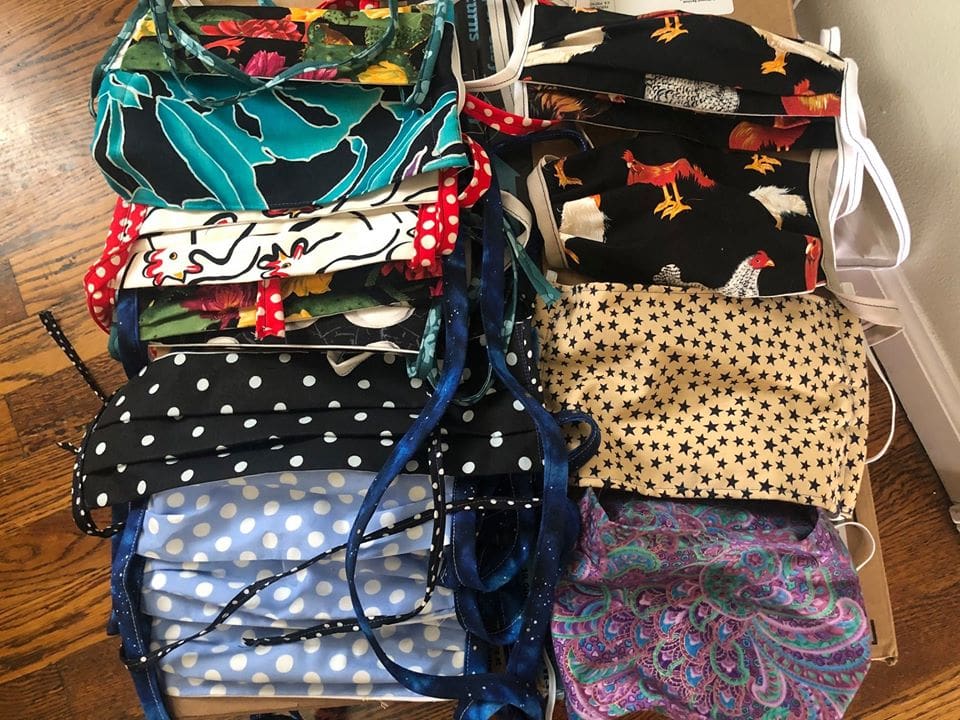
Anchorage businesswoman Lorie Hardin, who runs Birch Dispute Resolution, is one example. She provides certified divorce coaching, mediation and parenting services. In recent weeks, however, she has found herself leading a group of 3,300 sewers from all around Alaska who are donating a lot of time to stitching surgical-style masks to assist healthcare providers.

Looking for a way to help your business pivot? Have questions about digital marketing in a crisis? Simply need a sounding board for new ideas? Join our new Facebook group.

Tip 2: Stay relevant

Many businesses are facing tough times, there’s no doubt about it. However, Ken says shifting your focus from the short-term to the long-term can help you build the momentum to push through.

He says the key to long-term success from a digital marketing perspective is simply to make sure you’re relevant.

“This thing that we’re dealing with is a short-term time frame. The long-term is so much more important. Knowing how to speak to an audience, create content that has value, build your brand, build your awareness, building engagement within your community is so important right now.”

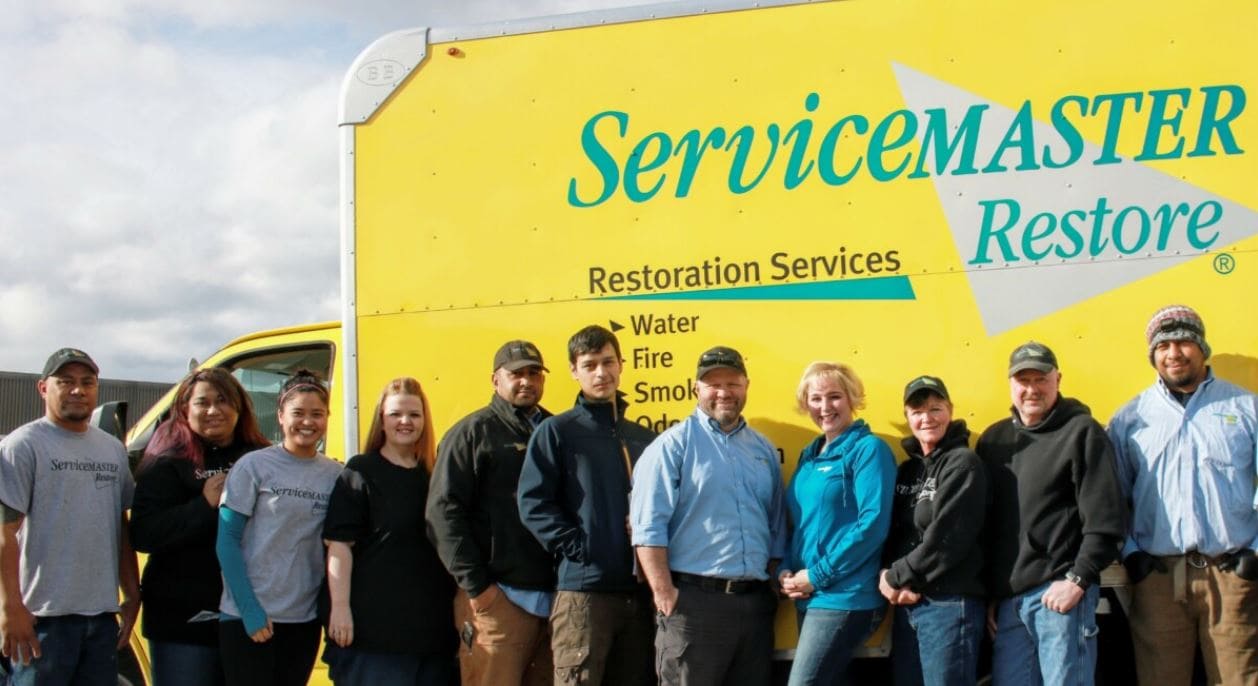
Businesses everywhere are keeping tabs on what their local communities need and springing into action to help. ServiceMaster of Alaska is one example. It’s a home restoration business that typically assists clients with things like water removal, fire damage, mold damage and odors.

Right now, however, a dedicated crew has stepped up to help local businesses disinfect their premises in a bid to keep their workers safe and slow the spread of the COVID-19 virus.

Tip 3: Get creative

There has never been a better time to think outside the box and start trying new things.

In some ways, the fact that it’s a tough time for businesses across the board presents a perfect opportunity to take some risks. Ken explains that revising your digital marketing strategy and reassessing your strengths and weaknesses now may help your business become more solid than ever.

“Right now, you have an opportunity to maybe diversity or spread out your [streams] of income. That way, when we do get into this new normal where we can all get outside and engage with people again, you might have a different revenue stream, or a couple of revenue streams, that you didn’t have before,” he explains.

“We have a unique opportunity right now because of the market to be able to pivot, to shift some perspective in the way we’re helping people in the marketplace. This could be a huge opportunity, not just for you to be able to get through these tough times – because believe me, we all understand that there is tough time we’re dealing with right now as a country.”

Tip 4: Help others

Once incredibly positive thing us that we’re all going through this together. We all have something in common and it’s in everyone’s best interests that our businesses survive.

Jennifer Christensen is a co-founder and the Vice President of Marketing at Beacon Media + Marketing. She says it’s critical that we help each other transition into the “new norm.”

“I talked to somebody recently who is working with their competitors for the first time because they recognize that hey, if we can all work together and help each other get through this, we’re all going to end up being better off at the end,” she explains.

“We want to help everybody rise up. If we can all be successful – well, successful right now means something different. It means helping people through it,” she explains.

Beacon Media + Marketing is a digital marketing agency with top-tier remote working capabilities and a passion for helping businesses grow. This is definitely one of those areas where you really have to walk the talk, which means we always take our own advice.

We’re offering three giveaways to help you adapt to working from home:

  1. FREE Chatbox installation. The first 10 businesses to respond will receive a chatbox installation on their website. A chatbox is the easiest way for customers to reach out to you with questions and concerns and it will make staying on top of enquiries a breeze.
  2. FREE Zoom training. Zoom is a video conferencing tool that will make it easy to touch base with your team and run staff meetings as normal. Not only does this make sure your business can run as normal, but regular contact can ensure everyone copes with the change.
  3. FREE Livestream training. Facebook livestreams are a great way to connect with your customers to keep them informed of what’s happening and make sure you’re still responding to their needs. Our videographer can answer all your questions.

Contact us at [email protected] and we’ll help you get started.

For more stories about businesses finding ways to pivot, as well as crisis communication tips, digital marketing advice and a sounding board for ideas, join our Facebook group.
Alaskan businesses are facing unprecedented times. Many have been forced to temporarily close their doors. Many have transitioned to working from home as best they can. Many are looking outside the box to see how they can keep trading in the midst of a health crisis.

Some have found themselves able to help their communities in new ways.

ServiceMaster of Alaska is one of them. The home restoration business, based in Anchorage, has always prided itself on being local. They know, for example, what it’s like to experience a bust pipe at 2:00 a.m. or find your not-so-friendly neighborhood bear or moose wreaking havoc on your property. It normally deals with things like water removal, fire damage, mold damage or odors.

Right now, however, it’s bidding for jobs to help Alaskan businesses disinfect their premises in a bid to slow the spread of COVID-19, a highly infectious illness also sometimes referred to as coronavirus.

It’s not the front line of the crisis, but it’s a pivot designed to better serve the community.

“We have a dedicated crew that has stepped up, and they’re ready and trained for COVID cleaning,” says Kara MacDonald, Vice President and Director of Communication of ServiceMaster of Alaska.

“We’ve sent out quite a few generic bids to a lot of companies preparing to be proactive, just in case. We’re actually finishing up a job today that was our first larger-size COVID disinfect clean-up for a company. We’re very good about privacy, this is a sensitive topic. We take this very seriously.”

RELATED: Alaska business owner thinks outside the box to make a difference

Embracing new technologies

Like many Alaskan businesses, ServiceMaster of Alaska is actively embracing new technologies as it looks for new ways to support its client base. In recent weeks, team members have actually used FaceTime to talk to customers about upcoming projects.

Kara says sometimes you have to be a little creative in the way you solve problems.

They’re also delivering products at people’s doors and doing everything they can to help their customers stabilize their properties until the crew can get in to begin the restoration.

“We’ve gotten very familiar with FaceTime and other technology,” she says.

“We’ve actually been called on to help our adjustors because a lot of them are saying their companies won’t let them go into homes to do inspections right now.”

Looking for a way to help your business pivot? Have questions about digital marketing in a crisis? Simply need a sounding board for new ideas? Join our Facebook group.

Pivoting Your Business

Maintaining company values

The change of direction reflects the business’s goal of restoring peace of mind to Alaskans. They’ve been doing it for the past 50 years, so it makes sense that they’ve been so quick to respond.

“I always say hopefully you never need us, but if you do, you know who you need to call. This is one of those times we’ve had to set up quickly,” says Kara.

“Our crew, they’ve been so good about following the CDC guidelines and making sure we’re safe and our customers are safe. That’s first and foremost. We’ve also had support from our corporate office, making sure we’re following the right protocol and doing the right procedures and that our products are approved on the right EPA and CDC lists.”

The United States now has the third-highest rate of infection, behind Italy and Spain. At the time of writing, there have been at least 143 confirmed cases of COVID-19 in Alaska.

RELATED: Setting yourself up for success while working from home

Supporting other businesses

Businesses are taking it very seriously and doing what they can to help slow the spread. Kara says it’s been amazing to see how the business community has come together.

“I joke that we’re all frenemies, but we’re in this together,” she laughs.

“You know what? We’re Alaska strong. We’re going to get through this. We’re contacting other fellow industry owners and we’re sharing and communicating. I think that’s only making us better. I lean on my team. I lean on my faith and my family and other female entrepreneurs of Alaska.”

She says it’s important to continue thinking outside the box, embracing technology, and focusing on what you can to do better help your clients through this period of uncertainty.

“For us, the key is education – staying true to what we do and who we are – and giving information to the public. We let them determine what they need from us and what we can do to help them.”

For more stories about businesses finding ways to pivot, as well as crisis communication tips, digital marketing advice and a sounding board for ideas, join our Facebook group.

The past few weeks have radically transformed the way Americans work. Working from home has been steadily increasing in popularity as internet infrastructure improves and increasing numbers of employers accept the idea as a way to decrease overheads, retain talent and boost morale.

U.S. Census data indicated that about 5.2 per cent of Americans worked from home in 2017. Of course, it’s not possible for everyone. Statistics from the Department of Labor, calculated during 2017-2018, indicate that it’s really only possible for 29 per cent of the population.

Adjusting to working from home

We don’t yet have any available statistics to share about the number of people who have started working from home since the World Health Organization declared a pandemic.

However, we’ve seen a spike in the number of our friends, co-workers and customers who are doing their best to run their businesses from home. We feel confident in assuming that, at this stage, everyone who is capable of working from home is doing so as they follow the latest public health advice.

Working from home is vastly different to working from the office.

Sure, you still communicate with your team members every day. You still generate new leads. You still meet your deliverables. You still start and finish at the same time.

But it’s different.

In many ways, it’s positive. No commute! Work in pajamas! Abundant snacks! Unlimited cuddles with your cat! Unlimited cups of coffee! The last one, at least, explains all the exclamation points.

It can also be challenging. You may be feeling lonely and isolated. Perhaps your motivation has taken a dip. You might find yourself getting distracted frequently or hitting mental blocks.

Need help? Here’s a remote working survival guide for small businesses.

Looking for a way to help your business pivot? Have questions about digital marketing in a crisis? Simply feeling a bit isolated and looking to connect with others in the same boat? Join our new Facebook group.

Setting up a home office

The Beacon Media + Marketing team has offices in Reno, NV, and Anchorage, AK. However, we’ve been set up to support remote working for a few years now. We’d love to share some tips and tricks, as well as glimpses of some of our own home workspaces, to help you find your working from home mojo.

Working From Home

1. Michelle, Account Manager:

“To keep myself productive, I’ve kept my schedule the same as if I were still going to the office. That means waking up early, getting my workout in and keeping my morning routine that I love! Also, I sit on a ball to keep myself comfortable. My dog loves sitting next to me and helping.”

Working From Home

2. Jake, Videographer:

“Trying to keep a very regular schedule has been big for me. I also make sure my family knows my work hours so I can get things done without distractions.”

Working From Home

3. Ken, Director of Sales + Marketing:

“I make a list the night before with the timelines I’d like to achieve or work on throughout the day so make sure I stay on track and get everything done.”

4. Sarah, Social Media Manager:

“Having a warm beverage, like coffee or tea to sip on, and usually some music or video playing in the background really helps me stay focused.”

5. William, Account Manager:

“Setting boundaries between ‘work time’ and ‘personal time’ has helped. Also, letting others know when I’m ‘on the clock’. Lilly Grace keeps my soul happy – she’s the best work aid I have!”

Working From Home

6. George, Google Ads Specialist:

“Staying hydrated and taking a short walk whenever I hit a roadblock really helps me get back on track, especially when I’ve been feeling tired or unmotivated.”

Working from home

7. Beth, Art Director:

“When I have a lot of things to do, I find that turning off text messaging and turning off alerts for social media helps make sure I get everything done on time.”

Working From Home

8. Sara, Bookkeeper:

“I’ve only worked this job from home, never from the office. I try to have fairly set times that I dedicate to getting work done. Mostly, my mornings are work times, then after that I try to stay off the computer as much as possible.”

If you’re interested, you can meet everyone in #TeamBeacon here.

Working from home tips

It’s really important to acknowledge the fact that your day at home will flow differently to you day at the office. Some days, you might find yourself super-focused and free of distractions, burning through your whole day’s work in four hours. Other days, you might find yourself side-tracked by snacks, laundry, your neighbor’s obnoxiously loud weed whacker, or literally any of a million other things.

That’s okay. You will have good days and bad days, just like you would in your normal routine.

You never know, you might have a flash of inspiration and end up starting a movement like this local business owner in Anchorage, AK. We’re finding a new norm, so let’s not rule out any possibilities.

One thing we wholeheartedly recommend is making sure you collaborate with your co-workers. Reach out to them frequently via instant messages and emails and schedule time for phone calls or video calls when you can, just to touch base and connect with someone.

Sometimes, it’s the little things that make all the difference.

For more stories about businesses finding ways to pivot, as well as crisis communication tips, digital marketing advice and a sounding board for ideas, join our Facebook group.

The last four days have seen something phenomenal happen in Alaska.

More than 1,800 people from all around the state have picked up their sewing kits, united by a common cause: to make as many surgical-style masks as possible in the coming weeks.

Alaska Mask Makers is the brainchild of Anchorage businesswoman Lorie Hardin, who thought of the idea while she was watching news and immediately sprang into action.

Creative Solution

Lorie runs Birch Dispute Resolutionwhich offers certified divorce coaching, mediation and parenting services. Her business specializes in helping families dealing with trauma, high-conflict situations and custody issues.

Needless to say, the idea pretty much came from left field.

“I think everyone is feeling a sense of unease at not being able to affect things around us, and just general anxiety,” she says.

“One of my best friends is immuno-compromised and there’s nothing I can do to help. I was watching nurses try to make face masks for themselves on the news, so I created the group to help. By the end of the day we had 350 people wanting to help.”

Among them were registered nurse Tara Nelson, seamstress Ashley Olanna and UAA economics student Violet Kaye, who have now joined the leadership team.

Together, they’re connecting the group with local health facilities and developing patterns that comply with hospital recommendations.

Looking for a way to help your business pivot? Have questions about digital marketing in a crisis? Simply need a sounding board for new ideas? Join our new Facebook group.

Desperate Measures

“These are desperate measures,” Lorie explains, noting that authorities around the country are warning that shortages of medical supplies, including face masks, are imminent.

“I want to be clear, these are not PEE masks. The CDC made the recommendation to use a bandana in desperate times, and we thought this would work. We’re not making any claims about them, but we hope they might help.”

The plan is to distribute them to members of the community, such as healthcare workers, who understand that they’re a makeshift defense and do not provide 100% protection.

They are, however, better than nothing – especially in the face of a highly-infectious virus.

The group is already in contact with major hospitals, and they’re also planning to distribute them to health clinics, assisted living facilities, first responders and anyone else who may need them.

Emergency Masks

Incredible Growth

More than 400 masks were made in the campaign’s first four days. They’re being sewn as far and wide as Tok, Kotzebue, Fairbanks, Anchorage and the Matanuska-Susitna Valley. Lorie herself laughs and says she’s been so busy organizing the response that she hasn’t had time to stitch a single one.

“We wanted to support the community in any way we could. Right now, we’re just starting, so maybe the hospitals won’t want our masks. But in six weeks’ time, if they have nothing left, we’ll have them ready,” she says.

“I have a background in trauma informed care, I’m a mediator, and when something like this happens we can go from functioning okay to being more vulnerable quickly. One way we can keep ourselves more resilient is to keep a schedule and focus on something outside ourselves.”

A lot of the sewers have said as much, telling Lorie they felt helpless sitting at home watching the news, not knowing what they could do to make a difference in a crisis.

“It’s so much bigger than me,” she says. “I’m a tiny piece in this process.”

Next steps

She’s now busy organizing “team captains” in each area to collate the masks and make sure they’re delivered to the right places in each area. She’s also trying to streamline the Facebook group to ensure people joining the campaign can find the information they need as quickly as possible… all while running her business remotely and trying to home-school her children.

At the moment, efforts are based largely on surgical-style masks, but Lorie is already anticipating a potential pivot to include surgical-style caps. Most of them are being made of pure quilter’s cotton, but she also says that may change as supplies dwindle and the CDC issues new advice.

“We need to be flexible,” she says. “We don’t know what’s going to happen next.”

If you would like to get involved, please contact Alaska Mask Makers on Facebook.

For more stories about businesses finding ways to pivot, as well as crisis communication tips, digital marketing advice and a sounding board for ideas, join our Facebook group.