Alaska Marketing

See Our Blogs

Explore insights on SEO, AI, and digital marketing strategies designed to help your business grow, stay visible, and adapt in a constantly evolving online landscape.

Beacon_Icon_resouse

Partnering with a digital marketing agency is an exciting step in every company’s journey. Based on our experience, there are a few different reasons clients look for a marketing partner:

  • They’re beginning a strong growth phase and need to generate more leads.
  • They’re changing their image or going in a new direction and need awareness.
  • They’re chasing big new business goals and need to bring their communities along.

Marketing is a vital part of every business strategy. The U.S. Small Business Administration recommends spending 7-8% of your gross revenue on marketing, with a 50/50 split between digital and traditional methods. This is simply because businesses don’t exist without customers. Marketing is just as essential as the design of your products, delivery of your services, and excellence of your customer experience. If things are going well, it’s a great way to carry your momentum and level-up. If things are going badly, it’s a great way to refresh your image, reset, and move into a new phase.

In this blog, we’re going to run you through the basics of working with a marketing partner. What is a digital marketing agency? How do you choose a digital marketing agency? Most importantly, what can you do to maximize ROI and get the most bang for your buck?

Want to talk to a real person? We get that. Give our friendly team of digital marketing experts a call today.

What is a digital marketing agency?

A digital marketing agency is essentially a business growth partner. They will talk to you about your business, find out about your business goals, learn about your mission and values, and then develop a strategy to help build awareness of your brand and generate as many new leads as possible.

It’s really important to note that this isn’t about sending money into an internet black hole and simply hoping for the best. It’s about using a range of digital tools, and proven strategies, to directly impact your bottom line. You should see direct results within about 90 days of coming on board.

As a quick overview, this includes:

Getting your business to rank on Google

This can be done a few different ways, but usually we combine a great new website optimized with strong keywords, an active Google My Business profile, targeted Google Search Ads, and a comprehensive blogging strategy that keeps your website active.

Building a network of engaged followers on social media

If you already have social media accounts, you’ll know it takes a surprising amount of time to create content and engage with your followers. A digital marketing will help you create a content strategy that captures your tone of voice and directly works toward your business goals, as well as a content calendar that means you never run out of things to post, and they’ll engage with your followers on your behalf. This can be done on Facebook, Instagram, LinkedIn, Twitter, and more.

Sending targeted ads to the right kinds of people

The best thing about digital advertising is that you don’t have to send them to everyone (although you can if you wish!). Instead, you can target the kinds of people who are most likely to actually want or need your products and services to address a pain point, which maximizes your ROI. This increases the chance that every ad impression will lead to a conversion (this is marketing jargon that simply refers to a sale). Agencies can do this through Google Display Ads, Facebook Ads, and more.

Educating your customers about how you can help them

The best way to do this is through content marketing. This includes a logical and well-organized website, an active blog page, polished video marketing, and active social media accounts.

Creating a streamlined sales funnel to capture the right people

A sales funnel refers to the journey people take from first becoming aware of your brand to completing a sale. There are a few common steps they all share, and your marketing partner will be able to streamline the process to help you attract the right people and give them a great experience:

    1. Exposure: A prospective customer first becomes aware of your products or services.
    2. Discovery: They are interested in learning more and become an online follower.
    3. Consideration: They are now a “qualified lead” and educate themselves about you.
    4. Conversion: They complete a sale and officially become a customer.
    5. Retention: They have a good experience and either come back again or refer you to others.

This is where all the pieces of the puzzle tie together. First, people will learn about your businesses through targeted digital advertising, or social media, or a direct Google search. Second, they’ll click through to your Google My Business profile, social media page, or website. Third, they’ll look around to find out if you’re the right fit for them. Fourth, they’ll buy a product or schedule a service. Fifth, you can give your marketing partner a high-five, because you’ll know the strategy worked.

Want to find out more about digital marketing services? Get noticed with the right mix of creativity and technology.

How do you choose a digital marketing agency?

There are a few different factors that you should consider in choosing a digital marketing partner.

The most important is obviously track record. You need to know that your investment is going to pay dividends, in the form of new leads, because marketing should be an investment, and not a risk. The best way to assess this is by looking for case studies and testimonials on their website, and by checking out their reviews on Google My Business. You’ll be able to get a pretty good overview of the quality of work they deliver, the types of clients they work with, and their success rate.

The next most important thing is culture. A digital marketing agency isn’t just a robot at the end of an email, and honestly, it would be a waste to treat them as such. You should think of them as a business partner, who is just as committed to helping your business grow as you are, so it’s really important that you’re a good fit for each other. Their website will give you a good overview of this, but you could also check out their social media accounts to get an idea about their brand personality. If all goes to plan, you may end up working with them for a long time, so it’s important to choose well.

After that, you need to look at things details like capability, budget, and business goals.

As a general rule, it’s probably best to start by looking at partnering with a digital marketing agency about the same size as your business. If you’re a start-up, consider a start-up, because they’ll be just as hungry and agile as you are. If you’re medium-sized, consider a medium-sized agency, because they will have solid strategies in place, with a consistent client base, and they’ll be looking to level-up too. If you’re on the cusp of big business, consider a top-tier agency, because they’ll have the resources and processes to support your business goals. That way, you’ll be able to work well together.

Want to talk numbers? Find out how much it costs to hire a digital marketing agency.

How can you maximize ROI?

Good marketing needs good communication. It’s as simple as that. To create a great partnership with a digital marketing agency, and maximize the impact of your campaigns, you need to be very clear about what you want to achieve. This will help your marketing partner design the strongest possible strategy, and deliver the best possible campaign, to ensure you grow in the right direction. Then, once you’ve set your campaign goals, you’ll need to provide prompt and honest feedback.

As we said right at the start, you should aim to allocate at least 7-8% of your revenue toward your marketing budget, and you should aim to make every dollar of this work as hard for you as it possibly can. Help your marketing partner help you by letting them know exactly what you want. That way, they can make all the necessary adjustments to ensure you always put your best digital foot forward. At the end of the day, it’s about helping your business grow, scale, and thrive.

Ready to get started? Schedule a free consultation!

The digital revolution has done so much to democratize marketing in the last few years. Now small, local HVAC businesses can compete with bigger companies on a much more equal footing.

Here, we’ll look at three low-cost, and in some cases, free, methods to get huge reach and effective targeting as part of your HVAC marketing strategy.

Prefer to chat to a person? We get it. Give us a call.

Building sales funnels in HVAC marketing

Sales funnels are a widely used marketing technique that you can use to draw in new customers for your business. The basic premise in HVAC marketing is that you start by making people aware of your business and gradually draw them down the levels of the funnel, giving them the information they need, until they decide to become new customers. It’s called a funnel because it starts broadly – i.e. who are you? Then the information gets more specific as they go further along. What’s your full range of services? Then what’s a special offer specific to their needs? Then how do they contact you? The focus narrows until you’ve given them precisely what they need to address the issue they’re having. It’s important to keep this in mind as you design your website and build your strategy from there.

Read more: Capture more qualified leads with landing pages

Awareness is key to good HVAC marketing

Awareness is the first stage in a HVAC marketing funnel. At this point, your main concern is with getting as many people to see your content as possible. You’re trying to convert people from general consumers to prospective leads. These people will remember you next time they need HVAC services. At this stage quantity is as good as quality, you want good coverage, but you also need to make sure that when people read your content or see your ads, they aren’t put off by low quality.

A big part of HVAC marketing is education

Next, you want to be putting out content that answers people’s questions. This shows them the problems they are having, even ones they don’t know they are having, and how you can fix those problems. We like to recommend that you include helpful advice on how people to fix these problems themselves. This breeds goodwill and helps make people trust you so that they remember you as a helpful, trustworthy business next time their A/C unit or furnace needs its annual service.

Read more: Is marketing the new sales?

HVAC marketing relies on engagement

The third stage of the funnel, when it comes to a good HVAC marketing strategy, is engagement. This really requires quality production. Every time someone clicks on one of your ads, or a link in one of your blogs, they will be taken to what we call a “landing page.” It is important that this is just as high quality as the ad or the blog. The purpose of all these ads, blogs, landing pages, and so on, is to get people to reach out to them, to walk into your metaphorical showroom.

The best part of HVAC marketing is conversion

Finally, we come to the thin end of the funnel, conversion. At this point, people are actively coming to you. They know who you are, they know what services you provide, and they have a good impression of your business. Now that, you’ve got them coming to you, you need to sell to them. Let’s continue our showroom metaphor. They want to buy a product that you sell or use a service that you provide. What you have to do is prove to them that they want to buy from your business, not your competitor. At this point, you’re no longer really doing digital marketing, but rather you’ve transitioned into sales.

Ready to get started? Schedule a free consultation.

Social media is key to HVAC marketing

Social media is another incredibly powerful HVAC marketing tool that has made the job of small companies easier than ever before. Because platforms like Facebook have such huge reach, with more than 2/3 Americans using it, you can market directly to your most likely buyers. It’s an essential element of every strategy, because unlike the broad funnel of your website, waiting to catch interested customers, you can use social media more like the nozzle of a vacuum cleaner.

The advantage of social media, and advertising platforms like Google, is targeting. Social media platforms gather huge amounts of data about their users which allow them to model those people really accurately. This means that you can target ads to people and be confident that they are more likely to succeed than traditional ads. The real advantage with social media is that you can do this, while still advertising to huge numbers of people, which makes your sales funnel very effective.

Social media is useful in other respects as well. It allows you to create a community following around your brand, with real person-to-person interaction and gives your customers a direct line to your business for reviews. Some may see this as a benefit only for the customer, but your business can benefit as well, as long as this is done right. When you post content on your Facebook page, you open yourself up to the whole world, and anyone can say anything. This means that any negative reviews you receive can be responded to directly. When doing this, it’s important to do it well though! You have an opportunity to turn a negative review into a positive with a well-reasoned, polite response. We often find that these actually give a better impression of a business than great reviews alone.

Read more: Is your social media producing results?

Blogging can boost HVAC marketing efforts

We briefly mentioned blogging in our sales funnel walkthrough, and here we’ll discuss how to make sure your blogs have maximum effect. Blogging may not be an obvious HVAC marketing strategy, but it’s essentially a method to game Google’s search algorithms, known as Search Engine Optimization.

Whenever someone searches for something on Google, the search engine searches through everything on the internet to bring you the most relevant results. It works out what is relevant based on various criteria some of which we’ll list here, along with the way you can meet those criteria:

  • Relevance: Google calculates relevance based on the amount of time users spend on the search results provided for a given search term. If someone searches “HVAC near me” and they click the first result and realise it isn’t what they’re looking for, they click the back button quickly and Google interprets this as the page having low relevance. You, therefore, need to make sure that your blogs are relevant to the title and keywords you’re using.
  • Questions: You’re probably aware that Google searches are often used to answer questions. A great strategy for blog writing is to find out what questions are being asked, using services like Answer The Public, which allows you to find out what the most common questions are for certain keywords. Just type in the name of service or product you want to sell, find out what people want to know about it, and answer that question. Make sure you link to a page where people can either buy the product online or a contact form so they can get in touch.
  • Backlinks: Google uses links on webpages as a sort of review system. If someone links to your site, it means they think it is good. However, getting other websites to link to yours can be challenging, so we use the practice known as backlinking. This involves linking between pages on your own website, to accrue multiple “recommendations” of your own content.

Ready to develop your strategy? Call our friendly team.

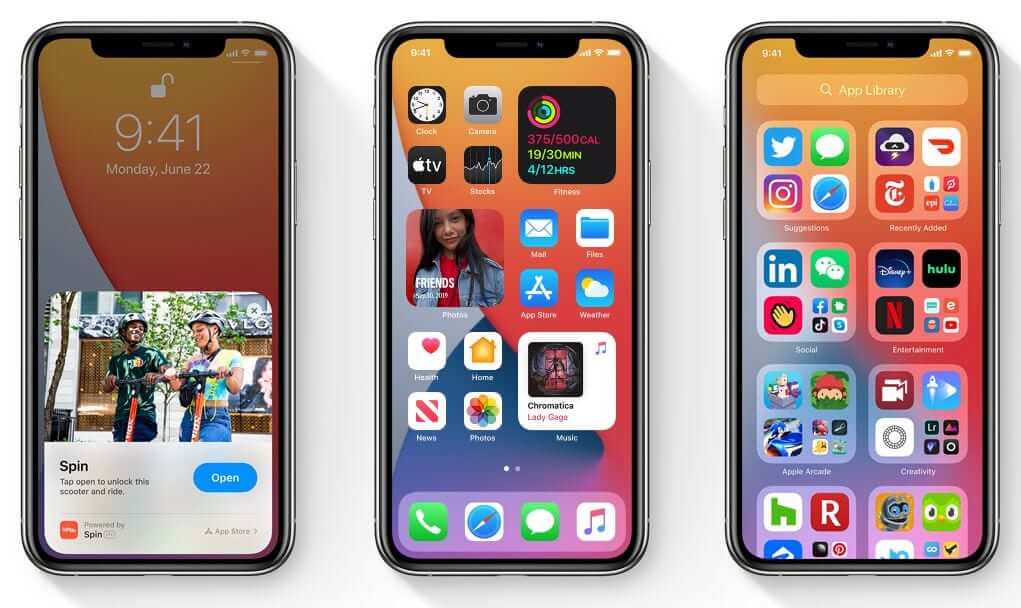
Apple is officially one step closer to taking over the world. In 1984, the Macintosh computer convinced the public they needed personal computers. In 2007, the release of the iPhone made Apple technology essential to life and business in the 21st century. Now, the new Apple iOS 14 upgrade is directly challenging tech juggernauts Facebook and Google in a battle to rule the internet.

The upgrade, announced in August, promises fresh new features designed to make sure peopleโ€™s private lives are actually private. Appleโ€™s product page declares, โ€œprivacy is a fundamental human right and at the core of everything we do,โ€ promising users more control over the data they share and more transparency into how itโ€™s used.

When iOS 14 rolls out, a new feature in the App Store will help people understand the privacy practices of every app before itโ€™s downloaded, and a new privacy report button allows them to better understand how websites treat your privacy. Most importantly, users will have the option to stop sharing personal information with advertisers.

Want to talk about how this will affect your business? Talk to us today.

How will the Apple iOS 14 upgrade affect Facebook?

The effects of the Apple iOS 14 upgrade are likely to be significant for Facebook advertising.

Facebook announced that it could lead to a more than 50% drop in its Audience Network advertising business. Itโ€™s complicated, but bear with us a second. The drop could occur because iOS 14 will not collect a type of data known as an Identifier for Advertisers (IDFA) number. This is a unique device identification code which allows advertisers to target potential customers based on Facebook data.

The Facebook Audience network is a nebula of internet real estate that allows advertisers to boost Facebook and Instagram campaigns onto thousands of high-quality apps on the internet. Itโ€™s designed to help advertisers reach more of the people they care about in the places they spend most of their time online. In a new blog post, Facebook says more than 1 billion people see at least one Audience Network Ad every month. Itโ€™s a powerful tool to boost brand awareness and engagement.

Itโ€™s important businesses take note, because according to Statista, there are currently more than 100 million iPhone users in the United States, which accounts for about 45% of all smartphone users. If all users block their data, an enormous amount of the Facebook advertising market will disappear.

Make the most of Audience Network while you can. Get started.

How will the Apple iOS 14 upgrade affect Google?

And what about Google? Well, experts such as the team at Coywolf say a significant update to the Applebot support page, and an increase in crawling from Applebot, may signify that apple is planning to launch a search engine of its own. Google is currently the default search engine on Safari, which ensures that iPhone, iPad and Mac users search with Google. Google pays a handsome amount for this privilege, but rumors are rampant that this deal may be about to end.

Considering Apple is incredible well-resourced, itโ€™s in a really good position to develop its own search engine, keeping all that incredibly valuable data in-house. This would enable it to develop its own advertising proposition and challenge Googleโ€™s monopoly on the search and display market.

Again, this takes out a huge proportion of the market, so itโ€™s important to watch for updates.

Google is currently unchanged. Let’s develop a strategy.

Is the Apple iOS 14 upgrade the end of digital advertising?

One really thing to point out here is that at this point is that people using the Apple iOS 14 upgrade will still see ads on Facebook, but theyโ€™ll have to deliberately opt-in to see them on the Audience Network. Audience Network typically accounts for anywhere from 50-75% of campaign results, so while itโ€™s significant, it doesnโ€™t mark the end of the digital advertising world.

Further, Android will be unaffected, and itโ€™s unclear if it will follow suit. These users will see the ads displayed as banner ads, video ads, and interstitial ads on third-party websites right around the internet. That means youโ€™ll still theoretically be able to target 55% of the smartphone advertising market through Facebook and Google advertising. Phew. Breathe a sigh of relief.

Digital advertising isn’t going anywhere. Need some help?

How can I work around the Apple iOS 14 upgrade?

When the update goes through, thereโ€™s no doubt it will significantly affect online advertising. That means itโ€™s important business owners get ahead of the curve in terms of looking for alternative forms of digital advertising and investing in organic engagement on Facebook and Instagram.

Itโ€™s still early days, so we donโ€™t fully know how it will roll out and what the effect will be, but to make sure our clients are as prepared as possible, weโ€™re recommending five strategies to consider:

  1. SEO-targeted blogs

The first and most obvious solution is to invest in content that will bump up your websiteโ€™s rank on Google. At this point, Googleโ€™s services will be unchanged, so seize the opportunity to double-down on your search engine optimization strategy and reap the rewards of a ranking at the top of the list.

Use a tool like Google Trends or Keyword Tool to find out what your customers are searching, then create content around it. You might find it helpful to answer frequently asked questions, create step-by-step guides to problems you commonly solve, or comment on the latest news in your industry. Just make sure you capitalize on any potential opportunities to insert those keywords so Google can find your blog when people are searching for it. This includes the heading, subheadings, and text.

Read more: How to write a blog post to grow your business

  1. Google Ads

Google Ads are a wonderful way to make sure people can find you when they need you most. There are two main types, Search and Display, which can be used to target people in different ways. Search ads are linked to keywords, popping up at the top of the results page when people search like terms. Display ads, meanwhile, are designed to put your brand in front of customers who are likely to need your products and services and build brand awareness through exposure. Both run on a pay-per-click model, which means they can be a very cost-effective way to attract interest and generate leads.

Read more: Make Google Ads work for your business

  1. Google My Business

Google My Business is the information panel that appears at the right of the screen when you search for businesses in your area. Itโ€™s essentially the modern version of a phone book listing, allowing people to find out all the essentials at a glance: address, opening hours, phone number, reviews, and much more. Theyโ€™re free to set up, all you need to do is claim your listing and fill in the details.

According to BrightLocal, 64% of consumers have used a Google My Business listing to find the address or phone number of a local business, so an active profile can put your business right at the fingertips of potential customers. Itโ€™s basically a digital sign post pointing people to your store.

Read more: Google My Business is the perfect tool for marketing

  1. YouTube ads

YouTube is one of Googleโ€™s most successful products. Itโ€™s an advertising giant and is comparable to Facebook, Instagram and Google in terms of reach and effectiveness. Itโ€™s very effective if youโ€™re targeting young men, because an estimated 62% of YouTube users are males and the largest percentage of them are aged 25-34. However, itโ€™s so big that you can target any demographic.

This can be a really cost-effective option, because you only pay for impressions when ads are actually viewed, not skipped. You can also dial in on specific interest areas, maximizing the chance your ad will be seen by the right people, and it offers real-time insights that tie in with Google.

Read more:ย Why is corporate branding important?

  1. LinkedIn ads

LinkedIn is an amazing resource for B2B marketing (we donโ€™t recommend it for B2C marketing, so definitely opt for Google Ads if this is your goal). An estimated 57% of users access LinkedIn through mobile, meaning you can deliver your messaging straight to the pockets of your consumers. It has a high trust value and itโ€™s a fantastic way to target professionals in a very detailed way.

The best way to run LinkedIn ads is to target people aged 30-49 and be prepared to spend more than you typically would on Facebook and Google. Itโ€™s definitely more expensive to run, but it can pay big dividends once you connect to the right communities and start generating high-quality leads.

Want to develop a marketing strategy? Give us a call.

Itโ€™s time to scale your business. Congratulations! Itโ€™s taken a lot of hard work, paired with many long hours, endless cups of coffee, creative problem solving, and commitment to get to this point. Now that youโ€™ve entered a growth phase, itโ€™s time to think strategically about next steps.

The best way to generate new leads and convert sales is to invest in marketing. The construction industry requires a unique approach, due to the large investment typically required to start work on new projects, which is why trust and transparency must come first in any strategy you implement.

Here, weโ€™ll run you through a marketing plan tailored for construction companies.

Want to skip ahead? Schedule a free consultation.

Digital marketing 101: Strategizing for growth

There are lots of different elements that go into a successful digital marketing campaign. Historically, sales have been driven by word of mouth. You did a great job on someoneโ€™s home, so they recommended you to a friend, who recommended you to a cousin, who recommended you to a grandparent, who recommended you to a neighbor. Great! Youโ€™ve had jobs lined up back-to-back for a whole yearโ€ฆ and then the internet came along and changed sales funnels forever.

Todayโ€™s client has access to a tremendous amount of information, and itโ€™s all available at their fingertips. According to Think With Google, 53% of people say they always do research before they buy to ensure theyโ€™re making the best possible choice. If you donโ€™t have a strong online presence, youโ€™re automatically excluding more than half of your prospective client base.

A great website will form the basis of your entire construction marketing campaign (you can read more about that here). Once thatโ€™s up-to-date and running well, you can look at marketing services. Typically, that means a combination of digital advertising, social media marketing, and content marketing (this can mean a few things, but weโ€™re going to focus on video) to ensure as many people know about you as possible. These will hit three key pillars: reach, engagement, and transparency.

Also Visit: construction contractors near me

Maximizing reach with digital advertising

When we talk about digital marketing, we mean Google Ads and Facebook Ads. These are awesome tools when it comes to building brand awareness in your community, because they allow you to target the types of people most likely to utilize your service. For example, if you find that most of your business comes from college-educated women aged 40-45 with young kids, living in your city, you can select these options in the back end and your ads will be distributed accordingly.

Both Google Ads and Facebook Ads operate on pay-per-click (PPC) models, which can be very cost-effective. You can set a budget, a number of days, and a maximum amount youโ€™re willing to bid per click. After that, the price depends on the amount of competition in your local area.

Youโ€™ll need to include a click-through link for each ad you make, so direct traffic to the most helpful page on your website to maximize the chance of the digital passer-by becoming a genuine lead. If your goal is brand awareness, your homepage is a great option. If youโ€™re showcasing a particular service, link to your services page. If you have a special offer, create a dedicated landing page.

There are a few different ways you can configure your ads to maximize their impact. Google Ads, for example, can be created with either search of display functionality. Search ads are linked to keywords โ€“ theyโ€™re they first couple of results that pop up at the top of every results page. Display ads, on the other hand, appear as visual ads on Google assets all over the internet.

Where possible, we recommend A/B testing both Google Ads and Facebook Ads so you can optimize the wording, imagery, and call to action to ensure your getting the best value.

Read more: Learn about Google Ads or Facebook Ads in greater detail

Boosting engagement with social media marketing

Once your website is up and running, you can also develop a social media strategy. Social media is great, because you can keep you finger on the pulse of whatโ€™s happening in your community and connect directly with customers (and prospective customers) in a casual and fun way.

Itโ€™s perfect for the construction industry, because it capitalizes on peopleโ€™s natural nosiness. Everyone wants to know whatโ€™s going on in their area, and you can use this to your advantage if you factor curiosity into your strategy. Keep people informed. Give them a sneak peek into new developments. Let them know about permits that have been approved and invited them to share the experience when you break ground on new projects.

Social media is a beast that needs to be constantly fed. In a perfect world, that means daily updates, but that might not be practical for you. To get the most value for your time, we recommend putting a bit of thought into choosing the platform (or platforms) where you can maximize your impact.

A Facebook page is essential. This is the largest social media platform, particularly among homeowners, and itโ€™s a great way to connect with members of your community. If you do a lot of commercial projects, then we recommend a LinkedIn page as well. This will allow you to connect with other business leaders and key decision makers, ensuring your finger is on the pulse of all upcoming RFPs in your area. If you specialize in some way, for example, with architecture or design, you might also consider an Instagram account as a way to showcase your craftsmanship.

They key to social media success is consistency. Consistency, consistency, consistency. This means consistently posting new content, as well as consistently interacting with your community. Reply to all comments on your own page, and then like and comment on some posts from other people in your area. Allocate a few minutes each day to click and scroll to boost your engagement.

Want to outsource this? Read about our social media management service

Highlighting transparency with content marketing

When was the last time you read an entire blog? Okay, youโ€™re reading this one, but only because youโ€™re invested in the topic and looking for specific advice. Video is the way of the future, and no digital marketing strategy is complete without video elements. Why tell your customers something if you can show them? Video conveys authenticity and transparency, because it allows your clients to get an idea of who you are and what youโ€™re about. It proves your legitimacy.

Videos can be as formal or as informal as you like, but they do need to look good. You can stream a live video from a jobsite on your mobile phone for free, or hire a professional videographer to help you shoot a few videos to feature on your website and social media platforms. Either way, its important to ensure you can be seen and heard, which means you need to think about light and sound. You also need to think strategically about what youโ€™re going to say. Indulging peopleโ€™s curiosity is great, but rambling is not. Try to keep each video focused on one main point.

Need some help to get started? Schedule a free consultation.

Exceptional customer service should be at the heart of specialty construction marketing.

Weโ€™re often asked if inbound marketing works for specialty construction companies, including builders, roofers, painters, landscapers and more. The short answer is yes, because customers use the internet as their primary tool to research services before making decisions.

The secret to making it work is to think of it as a customer service tool more than a sales tool. More often than not, customers will come to you with a problem. For example, they may need to make space for their growing family, update a kitchen or bathroom to increase functionality, or repair a leaking roof or damaged wall. Your digital presence should be dedicated to helping them.

We get it โ€“ marketing is probably the last thing on your never-ending to-do list, but itโ€™s a really important thing to consider when youโ€™re planning to scale your business.

Stay tuned and weโ€™ll run you through the basics of construction marketing strategy.

Want to talk to a real person? Schedule a free consultation.

Step 1: Refresh your website

If you have a website, great! We recommend overhauling it every 2-3 years to ensure all the information is up-to-date, that the look and feel is fresh and accessible, and that all the technology is working properly. A great website will form the foundation to your entire marketing strategy, because it provides prospective customers with the chance to make sure youโ€™re the real deal.

If you donโ€™t have a website, no problem! Itโ€™s entirely possible to build a website yourself, but itโ€™s a pretty big undertaking and youโ€™ll need to get up to scratch with the technical side of things pretty quickly. We recommend hiring a professional marketing company, because theyโ€™ll be able to get you up and running much quicker, while optimizing the content for readability and SEO.

(Donโ€™t worry, weโ€™ll explain SEO in a minute.)

Theyโ€™ll expect to see an informative home page, an about page that explains who you are and what youโ€™re about, and a service page that explains exactly how your business can help them. Youโ€™ll need to have a clear and simple contact page, to make it easy for people to reach out to you, and we recommend listing your phone number on every page so they donโ€™t have to search for it. Basically, itโ€™s a digital store front, and you want to create the best first impression possible. Focus on creating an exceptional experience right from the start.

Green-lighting a job in the construction industry, whether B2B or B2C, usually requires a sizeable investment, so customers will want to know who you are and why they should trust you. To that end, we recommend including some photography โ€“ people are much more likely to trust a website with photographs, because itโ€™s easier to confirm that theyโ€™ll be dealing with a real person.

Read more: 5 website design trends you need to watch this year

Step 2: Register for Google My Business

You may not have heard of Google My Business, but itโ€™s an absolute essential. Itโ€™s a free tool for businesses to manage their online presence across Google, which includes both its Search and Maps functionality. This is really important when it comes to local leads.

For example, if someone Googles โ€œgeneral contractors near me,โ€ the search result will include a map of your local area with pins on all the relevant businesses in the area who have Google My Business. Theyโ€™re generally listed in order of SEO-friendliness (thereโ€™s that word again, we promise weโ€™ll get to it soon!), with an option to click through to the website or get directions.

According to BrightLocal, 64% of consumers use Google My Business to find addresses and phone numbers of local businesses. Itโ€™s the modern version of a telephone book, and an absolute no-brainer in terms of generating new leads. Google says that businesses with complete profiles are likely to get seven times as many clicks as those without.

Aside from appearing in search, Google My Business is also a great way to let people know what hours you work, when youโ€™re closed for holidays, updates that affect your business (the COVID-19 outbreak is a great example), as well as photographs of your work to increase your credibility. Communication is the key to good service.

Importantly, it also has a reviews function. Asking happy customers to write a quick review is also a great way to improve your credibility, and may boost leads.

Remember, this is about serving the customer, so you need to make it easy for them.

Read more: 10 tips to improve your websiteโ€™s ranking on Google

3. Boost your SEO

A-ha! Hereโ€™s that paragraph we promised at the start. SEO means โ€œsearch engine optimization,โ€ and it refers to a group of strategies designed to make sure people can find you when they need you. The easiest way to do this is to ensure your website ranks on Google for related searches.

So how do you do that? You need to find out all the keywords people are likely to type into Google to find businesses like yours โ€“ for example, general contractor, plumbing services, electrical services, tiling services, and so on. One great way to do this is by typing a few different options into the search bar and seeing what Google Autocomplete returns. You can also use tools like Google Trends to see what topics are ranking in your area and compare different words to see whatโ€™s stronger.

Once youโ€™ve identified the keywords, you need to make sure you include them on your web pages. Again, theyโ€™re like signs at the front of a store. Whatโ€™s inside? What do you offer?

Another strategy that can significantly boost your SEO is to start a blog that answers commonly-searched questions. For example, how to fix a leaking tap? How to fix a hole in the wall? How do I select the right contractor? How much do contracting services cost? These serve two purposes: first, they include searchable phrases that might help your website rank higher on Googleโ€™s results page. Second, they immediately position you as being an expert and your business as being helpful.

This shows prospective customers that your customer service is top-notch, right from your very first interaction with them. Donโ€™t worry about giving information away for free, the truth is that talking people through common problems step-by-step simply helps them understand whatโ€™s required before they go ahead and engage your services. Transparency is the key to trust.

Read more: How to write a blog that will help grow your business

Digital customer service

Nothing replaces a personal connection and a beautiful construction job. However, with more customers searching for local services online than ever before, itโ€™s a digital marketing strategy is just as important when it comes to growing your construction business. A credible website, a current Google My Business listing, and a helpful blog will give prospective customers a taste of the service on offer and encourage them to take the next step toward engaging your services.

And who knows? It might start with patching a hole in a wall, then turn into a new deck, a kitchen renovation, and a whole new build. The possibilities are limitless.

Ready to scale your business? Schedule a free consultation.

Ahh, new customers. The best thing in the business world. Itโ€™s a surefire way to tell your marketing strategy is working and that your business is on the cusp of scaling up. Exciting times!

Get your marketing strategy right, and each new customer could become a lifelong patient. Do it wrong, however, and you may find them walking out the door (never to return) โ€“ or worse, leaving a negative review. Marketing is all about customer expectations. You need to find something that ignites their interest at the start, then ensure you teach them enough about who you are and what you offer to ensure nothing takes them by surprise when they actually come to see you.

In this post, weโ€™re going to take you through the fundamentals of branding, which includes finding your niche and separating yourself from your competitors. Weโ€™ll use two of our clients โ€“ South Anchorage Dental Center and Mandanas Dental โ€“ as examples. As youโ€™ll see, they both operate in the competitive market of Anchorage, Alaska, but cater to vastly different clientele.

Prefer to chat over the phone? Schedule a free consultation.

Fundamentals of dental branding

First, letโ€™s quickly compare the two dental centers.

South Anchorage Dental Center (SADC) is a thriving dental practice that specializes in family dental care and convenience. The two dentists, Dr. Broc Brimhall and Dr. Derek Green, use cutting-edge techniques to provide a vast number of dental procedures, enabling patients to receive all their dental needs under one roof, and they love working with kids. Its branding is blue-toned, which is calming, with a uniquely Alaskan logo that includes a Dall sheep. Its website includes plenty of images, designed to create a friendly look and feel that welcomes the whole family.

Mandanas Dental is run by Dr. Owen Mandanas, who worked in general dentistry for 17 years before pivoting her practice towards integrative dentistry. That means she acknowledges the significant impact oral health has on the entire body, and looks to help patients find the safest and most natural solutions to meet their needs. She is incredibly passionate about wellness, and can helps patients with issues such as sleep apnea. Her branding is green, purple and orange, which creates a feminine and earthy tone. Her logo represents the sun and the mountains, and the website includes lifestyle shots โ€“ such as kayaking โ€“ to emphasize the focus on wellness.

As you can see, branding tells an entirely different story for each business.

Both are exceptional dental practices, with a commitment to providing the best care possible, but they have different focuses that are likely to align with different types of patients. Branding is important, because the goal of marketing is to help businesses connect with clients and meet their needs. That means we need to ensure the right patients find the right practice.

Read more: Why is corporate branding important? (VIDEO)

Dental marketing

Finding your niche in business

So how do you develop a brand that tells your dental practiceโ€™s unique story? How can you make sure you stand out from your competitors? The answer is to find your niche.

The best place to start is with your companyโ€™s mission statement. By this, we donโ€™t mean airy statements filled with nice-but-vague buzzwords. What is your purpose? A mission statement should be a simple and clear sentence that drills down to the heart of why youโ€™re in business. What matters to you and why? Why are you a dentist? What aspect of practice interests you most?

Once youโ€™ve identified your vision, you can start marketing. You can develop business goals that align with the purpose set out in your mission statement. You can develop clear and actionable steps to achieve those goals. You can define your company culture, which will empower your team members to make decisions and work to the best of their abilities. You can grow.

You can also develop messaging that ties it all together.

Take SADCโ€™s mission statement: โ€œCome as a patient, leave as family.โ€ It says a lot about the values of the practice, they kind of experience they strive to achieve, and the type of people they want to attract. It also shows their commitment to helping patients achieve lifelong oral health.

The Mandanas mission statement is equally strong: โ€œWhere healthy living, healthy breathing, healthy sleeping, and dentistry meet.โ€ Itโ€™s very compelling for clients interested in integrative dentistry, because it clearly identifies the practiceโ€™s focus on holistic dental treatment.

As you can see, both are simple and innately practical. Tying your marketing strategy back to this statement will ensure your messaging is clear and easy for prospective customers to understand. Theyโ€™ll be able to quickly figure out whether youโ€™re the right fit for them or not before making contact, which will make sure your leads are as highly-qualified as possible.

Read more: 3 reasons why having a mission statement matters

Bringing your brand to life on social

Once youโ€™ve found your niche, created your mission statement, and developed your brand, itโ€™s time to start sharing your brand story with the public.

The best way to do this is on social media โ€“ and for the purposes, of this post, weโ€™re going to focus on Facebook. Itโ€™s the biggest social media network in the world, and its focus on engagement and connections means itโ€™s perfect for local businesses. It also has a sophisticated advertising platform available in the form of Facebook Ads. (Weโ€™re not going to discuss that today, but you can learn more here about what Facebook Ads are and how you can use them.)

Successful social media strategies require consistency. Regularly sharing interesting content with your audience maximizes the chance that people will see it, interact with it, and click through to learn more. Once you have them on your website, you can convert them into a lead. It may start slow, but trust us when we say your audience will grow over time.

The next question is what to actually share. You may find it helpful to develop a content strategy, planning out posts a week, a month, or even a few months ahead. This will ensure you always have something up your sleeve and that everything you post ties back to your overarching content strategy. As a general rule, we recommend an 80/20 rule โ€“ 80% of your content should serve, while 20% of your content should sell. People use Facebook in their free time, and no-one wants to have brand messages shoved down their throats. They do want to be informed and entertained, however, so keep this in mind when youโ€™re developing your content plan.

Read more:ย 10 tips for optimizing your social media presence

Itโ€™s also important to make sure your content is visually captivating. Youโ€™ll only get a second to catch someoneโ€™s eye as theyโ€™re scrolling through their feed, so we recommend using video wherever possible, and ensuring every other post includes an image.

Here is an example so you can see what we mean:

Itโ€™s also important to capitalize on newsworthy events that affect your patients. This is a great way to โ€œsellโ€ while still being incredibly helpful and making sure they donโ€™t miss out on important dates โ€“ for example, July 1st, which is when Medicaid plans renew.

Hereโ€™s an example of a really helpful prompt with a great image:

Now you have enough information to get started! If youโ€™d like to talk to the experts about making your dental center stand out from the crowd so you can grow and scale your business, give us a call. Our branding and social media marketing experts would love to help.

Ready to start? Schedule a free consultation.